

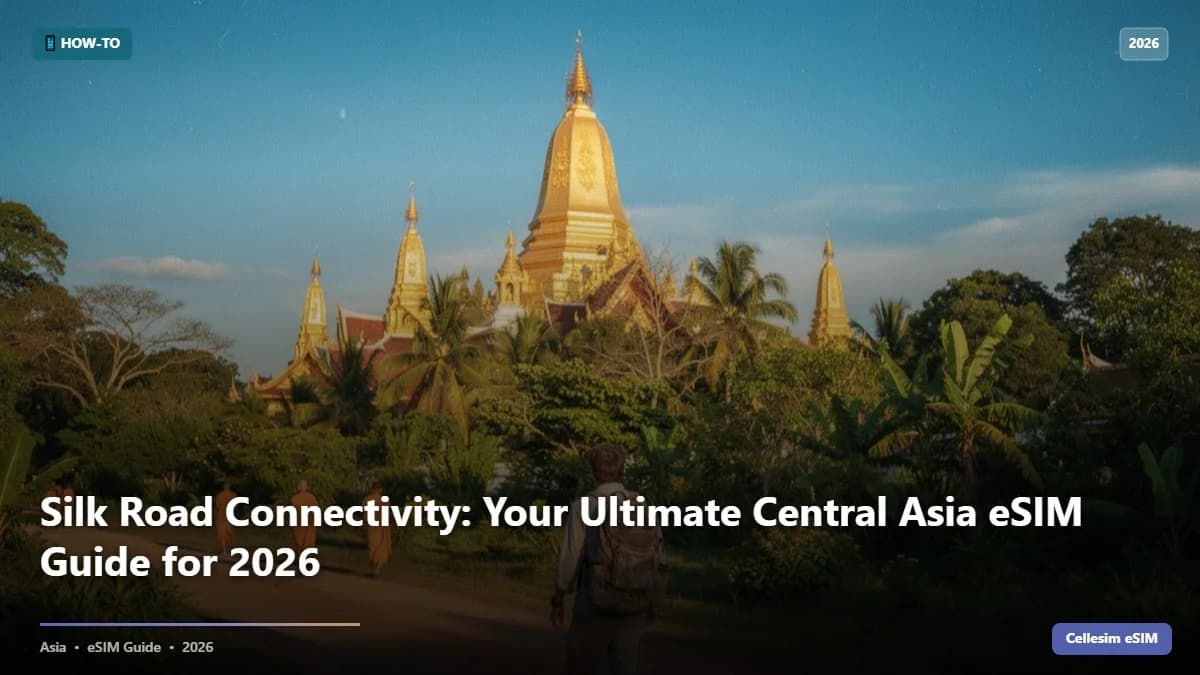
เชื่อมต่อเส้นทางสายไหม: คู่มือ eSIM เอเชียกลางฉบับสมบูรณ์ปี 2026
Central Asia. The very name conjures images of ancient Silk Road caravans, towering mountains, endless steppes, and vibrant bazaars. It's a region of unparalleled beauty, deep history, and burgeoning tourism. As more travelers discover the wonders of Uzbekistan, Kazakhstan, Kyrgyzstan, Tajikistan, and Turkmenistan, staying connected becomes increasingly vital. Gone are the days of hunting for local SIM cards, navigating language barriers, and swapping tiny chips. Welcome to the future of travel connectivity: the eSIM. And in 2026, it's more essential than ever for your Central Asian adventure.
Why Central Asia in 2026?
Central Asia is experiencing a renaissance. Governments are actively promoting tourism, improving infrastructure, and easing visa restrictions. New flight routes are opening, luxury hotels are appearing alongside traditional guesthouses, and the internet infrastructure is rapidly advancing. From the mesmerizing turquoise domes of Samarkand to the pristine alpine lakes of Kyrgyzstan, the region offers a diverse array of experiences for every type of traveler. Whether you're a history buff, an avid hiker, a culinary explorer, or simply seeking an off-the-beaten-path adventure, Central Asia in 2026 is calling.
The Evolution of Connectivity: Why eSIM is Your Best Friend
Remember the pre-smartphone era of travel? Paper maps, guidebooks, and relying on strangers for directions. Then came physical SIM cards, offering local rates but with the hassle of physical installation and potential loss. Now, eSIM technology has revolutionized how we stay connected abroad, and nowhere is this more apparent than in a multi-country trip through Central Asia.
What is an eSIM?
An eSIM (embedded Subscriber Identity Module) is a digital SIM card that allows you to activate a cellular plan from a carrier without needing a physical SIM card. It's built directly into your compatible smartphone or device. Instead of swapping physical cards, you simply scan a QR code or enter a few details, and your device is connected.
Benefits of Using an eSIM in Central Asia
- Instant Activation: Purchase your plan online and activate it before you even land, ensuring you have data the moment you step off the plane.
- Multi-Country Convenience: This is where eSIMs truly shine for Central Asia. With a regional eSIM, you can seamlessly switch between countries (Uzbekistan, Kazakhstan, Kyrgyzstan, etc.) without buying a new SIM in each one. Providers like Cellesim offer excellent regional plans specifically designed for this type of travel.
- No Physical Swapping: Forget fumbling with tiny cards, paper clips, or worrying about losing your home SIM. Your physical SIM slot remains free for your primary SIM.
- Cost-Effective: Often, international eSIM plans offer competitive rates compared to expensive roaming charges or the hassle of finding local deals.
- Flexibility: Easily switch between different eSIM plans or top up your existing one directly from your phone.
- Enhanced Security: No physical card to lose or have stolen, making your connection more secure.
Choosing Your Central Asia eSIM: Key Considerations for 2026
The eSIM market is growing rapidly, with numerous providers offering diverse plans. Here's what to look for when selecting your Central Asia eSIM in 2026:
1. Device Compatibility
First and foremost, ensure your smartphone or device supports eSIM technology. Most newer iPhones (XS and later), Google Pixel phones (3 and later), and many Samsung Galaxy models (S20 and later) are compatible. Always double-check your device specifications before purchasing.
2. Regional Coverage vs. Single-Country Plans
For a multi-country Central Asian journey, a regional eSIM plan is highly recommended. These plans cover multiple countries (e.g., Uzbekistan, Kazakhstan, Kyrgyzstan, Tajikistan) under a single data package, saving you time, money, and hassle. Cellesim, for instance, provides robust regional eSIM options that are perfect for a comprehensive Silk Road itinerary.
If you're only visiting one country, a single-country eSIM might offer slightly better rates or more localized features, but the convenience of a regional plan often outweighs the small cost difference.
3. Data Allowance and Validity Period
Estimate your data needs. Are you a heavy streamer, or do you just need maps, messaging, and occasional browsing? Plans range from 1GB for a few days to unlimited data for longer trips. Also, consider the validity period – do you need data for 7 days, 15 days, or 30 days? Choose a plan that aligns with your travel duration.
4. Network Speed and Reliability
While most major eSIM providers partner with reliable local networks, it's worth checking reviews if you have specific concerns about a particular country. In 2026, 4G LTE coverage is widespread in Central Asia's major cities and tourist areas, with 5G slowly rolling out in select urban centers. However, expect slower speeds or limited connectivity in remote mountainous regions or vast desert areas.
5. Customer Support
Good customer support is invaluable, especially when traveling in a region where language barriers can be a challenge. Look for providers offering 24/7 support via chat, email, or phone, preferably in English. Companies like Cellesim pride themselves on responsive and helpful customer service.
6. Price and Transparency
Compare prices across different providers for similar data allowances and validity periods. Be wary of hidden fees or overly complex pricing structures. Choose a provider with clear, upfront pricing.
Recommended eSIM Strategy for Central Asia in 2026
Here’s a practical approach to leveraging eSIMs for your Central Asian adventure:
- Pre-Purchase a Regional eSIM: Before you leave home, purchase a regional eSIM plan from a reputable provider like Cellesim. Choose a plan with enough data and validity for your entire trip across multiple countries.
- Install Before You Fly: Most eSIMs can be installed and activated even before you reach your destination. This means you'll have data the moment your plane lands, allowing you to order a taxi, navigate to your hotel, or message loved ones immediately.
- Keep Your Home SIM Active (Optional): If you need to receive calls or SMS to your primary number, you can keep your physical home SIM card active while using the eSIM for data. Most phones allow you to designate which SIM is used for data, calls, and messages.
- Monitor Data Usage: Regularly check your data usage through your phone's settings or the eSIM provider's app/portal to avoid running out unexpectedly. Top-ups are usually easy to purchase if needed.
- Have a Backup Plan: While eSIMs are incredibly reliable, it’s always wise to have a backup. Know where you can find Wi-Fi (hotels, cafes) or consider downloading offline maps (like Google Maps or Maps.me) for navigation in areas with patchy coverage.
Beyond Connectivity: Essential Travel Tips for Central Asia
While your Cellesim eSIM will keep you connected, here are a few other tips for a smooth journey through Central Asia:
- Visa Requirements: Check visa requirements well in advance for each country you plan to visit. Many countries offer visa-free travel or simplified e-visas for various nationalities.
- Currency: Each country has its own currency. While USD is often accepted in tourist areas, it’s best to use local currency for daily expenses. ATMs are common in cities.
- Language: Russian is widely spoken and understood across the region, especially in older generations. Local languages like Uzbek, Kazakh, Kyrgyz, Tajik, and Turkmen are also prevalent. Learning a few basic phrases in Russian or the local language will go a long way.
- Transportation: Domestic flights, trains, shared taxis, and buses are common modes of transport. For inter-city travel, consider booking trains in advance, especially in Uzbekistan.
- Cultural Sensitivity: Central Asia is predominantly Muslim, and modesty in dress is appreciated, especially when visiting religious sites. Always ask permission before taking photos of people.
- Health & Safety: Consult your doctor regarding vaccinations. Drink bottled water only. Be aware of your surroundings, especially in crowded markets.
Conclusion: Embrace the Future of Travel
Central Asia in 2026 offers an adventure of a lifetime, blending ancient history with modern advancements. The convenience and efficiency of eSIM technology, particularly regional plans from providers like Cellesim, are indispensable for navigating this incredible region. By choosing the right eSIM, you ensure seamless connectivity, allowing you to share your experiences, navigate with ease, and stay in touch with loved ones, all while immersing yourself fully in the magic of the Silk Road. So, prepare your bags, charge your compatible device, install your Cellesim eSIM, and get ready to connect to the heart of Asia like never before!