By 2026, staying connected when you travel isn't just nice to have, it's essential. Mobile technology has come a long way, giving us the eSIM, a tiny chip that's changed how we get cellular data abroad. But with so many options out there, picking the right eSIM provider can feel like a headache. This guide is here to clear things up. We'll explain what eSIM providers are, how they work, how they compare to old-school SIM cards, and give you the knowledge you need to pick the best one for your trips in 2026.
Whether you're always on the go internationally, traveling for work, or just want an easier way to manage your phone's connection, knowing your eSIM choices is really important. Cellesim stands out as a top global eSIM provider, offering easy data plans in over 200 countries. It's a solid pick for your next adventure.
- What Exactly is an eSIM Provider?
- How Does an eSIM Provider Work? The Technology Explained
- The Evolution of Connectivity: From Physical SIM to eSIM
- eSIM Device Compatibility in 2026
- eSIM Provider vs. Traditional Physical SIM: A Technical Comparison
- Key Benefits of Using an eSIM Provider for Everyday Users
- Debunking Common eSIM Myths in 2026
- Security and Privacy Considerations with eSIM Providers
- The Future of eSIM Technology: iSIM and Beyond
- Getting Started with Your First eSIM Provider
- Frequently Asked Questions
What Exactly is an eSIM Provider?
An eSIM provider is a company that sells digital SIM cards, or eSIMs, for your phone or other mobile devices. Unlike the physical SIM cards you slide into your phone, an eSIM is a tiny chip built right into your device. You can program it remotely with different network plans. When you buy an eSIM plan from a provider like Cellesim, you're essentially getting a data package delivered digitally, usually as a QR code. This code has all the info your device needs to download and activate your cellular plan, so no more swapping physical cards.
These providers work by partnering with local mobile network operators (MNOs) all over the world. This lets them offer smooth connectivity in tons of countries without you having to buy a new local SIM everywhere you go. For example, Cellesim offers eSIM plans that cover over 200 countries. You can switch between networks or plans really easily. This is a huge win for international travelers who want things convenient, affordable, and instantly connected, without the hassle of hunting for SIM card vendors or paying crazy roaming fees.
The big advantage of an eSIM service provider is that it centralizes global mobile data access. Instead of juggling multiple physical SIMs, you manage digital profiles right from your phone's settings. This makes staying connected on your travels much simpler, giving you flexible data packages that fit different trip lengths and data needs. A good eSIM provider also offers solid customer support, so you can get help and troubleshoot issues no matter where you are.
How Does an eSIM Provider Work? The Technology Explained
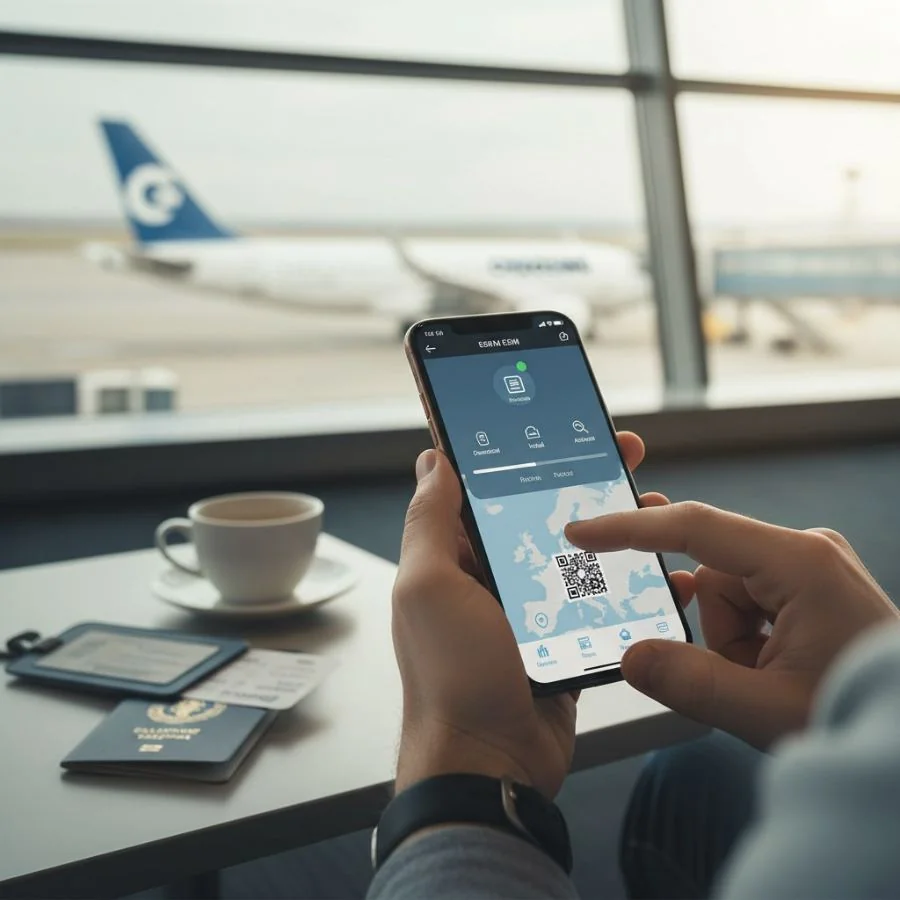
At its heart, an eSIM uses something called remote SIM provisioning (RSP). This means your device's built-in SIM chip can download new subscriber profiles over the air, rather than needing a physical card swap. When you get an eSIM from a provider, you usually get a QR code in your email within minutes. This QR code isn't just a picture; it's a secure data package that tells your device how to connect to a specific network and activate your data plan.
The process is super easy: you scan the QR code with your compatible smartphone, and your device then talks to the eSIM provider's server. This server sends the necessary profile - including your phone number (if you get one), network settings, and data allowance - right to your phone's eSIM chip. Think of it like downloading an app instead of installing software from a CD. Once the profile is on your phone, your device connects to the local network, and you're online. This whole thing often takes less than two minutes, giving you instant connectivity.
The tech behind eSIMs follows standards set by the GSMA (Global System for Mobile Communications Association). This ensures everything works smoothly and securely across different devices and networks worldwide. This standardization means providers like Cellesim can offer a wide range of plans that work with many devices, from iPhones to Android phones and even some smartwatches. For more detailed instructions, check out Cellesim's complete eSIM setup guide.
The Evolution of Connectivity: From Physical SIM to eSIM Timeline
The journey from the very first SIM card to today's eSIM is a story of things getting smaller and more digital. SIM cards started out the size of credit cards back in 1991. Over the years, they kept shrinking: mini-SIM (1996), then micro-SIM (2003), and finally the common nano-SIM (2012) that most phones used until recently. Each size reduction was about saving precious internal space in phones that were getting thinner and packed with more features.
The idea of an embedded SIM, or eSIM, really started to take off around 2010 when the GSMA began working on a standard for remotely managed SIMs. Here are some key moments in its adoption:
- 2016: The Samsung Gear S2 smartwatch was the first consumer device with an eSIM, showing what it could do for wearable tech.
- 2017: The Google Pixel 2 was one of the first smartphones to include eSIM tech, though at first it was mainly for Google Fi users.
- 2018: Apple jumped on board with the iPhone XS, XS Max, and XR. These phones offered dual SIM with one physical and one eSIM. This was a huge moment for getting more people aware of and using eSIMs.
- 2020s onwards: More phone makers, like Samsung, Google, Huawei, and others, started putting eSIMs into their top phones. The trend really sped up, especially in the USA, where iPhone models became eSIM-only by 2022.
- 2026: This year, eSIM technology is widely supported on tons of devices. It's quickly becoming the preferred way to get mobile connectivity, especially for international trips, remote work, and smart IoT devices. Experts expect this shift to continue, with some predicting that physical SIM cards will mostly disappear in many markets by 2026.
This timeline shows a clear move towards fully digital and integrated ways to connect, driven by convenience, device design, and what a connected world needs.
eSIM Device Compatibility in 2026
Before you buy an eSIM plan, it's super important to make sure your device can actually use it. In 2026, most flagship smartphones from the last few years now support eSIM technology. This covers a wide range of models from Apple, Samsung, Google, and other brands. Beyond phones, eSIMs are also showing up in many tablets and smartwatches, making them useful for even more people.
Here's a quick look at popular devices that support eSIMs as of 2026:
Just remember, device compatibility can change depending on where you bought your device. For instance, some iPhone 14 and 15 models sold in the USA are only eSIM, while others in different regions might still have a physical SIM slot. Always double-check your specific device model and region to confirm eSIM support. You can find a detailed and up-to-date list on Cellesim's supported devices page or by looking at your device manufacturer's specs.
eSIM Provider vs. Traditional Physical SIM: A Technical Comparison
Understanding the core differences between an eSIM and a traditional physical SIM card is key to really appreciating what an eSIM provider offers. Both do the same basic job - connecting your device to a cellular network - but how they do it and your experience using them are quite different.
The main technical benefit of an eSIM is that you can reprogram it. A physical SIM is "locked" to a specific profile until you swap it out. An eSIM, on the other hand, can hold multiple profiles from different carriers. This means you could have your home country's plan on one eSIM profile and a Cellesim eSIM for Europe on another, switching between them with just a few taps in your phone's settings. This flexibility is a game changer for international travel. No more hunting for local SIM cards or dealing with expensive roaming fees. For a deeper dive, read our comparison of eSIM vs physical SIM.
Travel Europe Smarter in 2026 with Cellesim
Get seamless high-speed data across 42 countries in Europe. Instant setup, no hidden fees. Join 50,000+ satisfied customers worldwide.
Buy Europe eSIM
Key Benefits of Using an eSIM Provider for Everyday Users
The perks of choosing an eSIM provider go way beyond just international travel. For regular phone users in 2026, eSIMs offer a bunch of practical benefits that make managing your mobile connection easier, more flexible, and more affordable.
One of the biggest advantages is dual SIM functionality. Many modern smartphones can use both a physical SIM and an eSIM at the same time. This means you can keep your main phone number for calls and texts (on your physical SIM) while using an eSIM for data. You might use a different local carrier for better rates, or a travel eSIM provider like Cellesim when you're abroad. This setup is especially handy for business travelers who need their primary number to stay reachable but also want affordable local data.
Cost savings are another huge reason people switch. When you choose an eSIM from a global provider, you can often get data plans for much less than the expensive international roaming packages your home carrier offers. For example, a Cellesim data plan for the USA can be far cheaper than an international day pass that might cost $10-$15 or more per day, often with slower speeds. This helps you avoid those nasty "ghost roaming" bills where background apps secretly use up tons of data and money.
The convenience and instant activation from eSIM providers are unmatched. Buy your plan online, get a QR code by email, and activate it in minutes from anywhere in the world. No need to visit a store, wait for something to be shipped, or fiddle with tiny physical cards and tools. This is super valuable for last-minute trips or when you land in a new country and immediately need maps, ride-sharing apps, or emergency services.
Plus, eSIMs are better for the planet because they reduce plastic waste from discarded physical SIM cards. They also make your device more secure, since a built-in chip can't be easily removed if your phone is lost or stolen. This makes it harder for unauthorized people to get to your service. With Cellesim, you get all these benefits along with 24/7 email support in 24 languages, making sure over 50,000 happy customers have a smooth experience.
Debunking Common eSIM Myths in 2026
Even though eSIMs are getting more popular, several myths about the technology are still floating around in 2026. As a leading eSIM provider, Cellesim wants to clear up these misunderstandings and give you the real facts so you can make smart choices.
Knowing these facts helps clear up the mystery around eSIMs, showing how they're a secure, flexible, and convenient way for anyone to stay connected, anywhere. For more info, read our article 5 Common eSIM Myths Debunked.
Security and Privacy Considerations with eSIM Providers
Security and privacy are huge deals in our digital lives, and eSIM technology, when used by a trustworthy eSIM provider, offers strong protections. The way eSIMs are built gives them some natural security advantages over physical SIMs.
First, since an eSIM is built right into your device and can't be physically pulled out, it greatly lowers the risk of SIM swapping fraud. This kind of fraud usually happens when someone tricks a carrier into moving your phone number to a new physical SIM. With an eSIM, a physical swap like that is impossible. All profile changes and setup happen digitally, protected by encryption and authentication rules set by the GSMA.
eSIM profiles are downloaded and managed through a secure remote process. This means your data plan information is sent securely over the air (OTA) using encrypted channels, keeping it safe from being intercepted. Good international eSIM providers like Cellesim follow strict data protection rules, making sure your personal and connection data is handled with extreme care. Cellesim, for instance, securely processes payments with credit/debit cards, PayPal, Alipay, and local payment methods, keeping your financial info private.
What's more, managing your eSIM profiles directly from your device settings gives you more control over your connection. You can easily switch profiles, turn them off, or delete them when you don't need them anymore. This reduces the digital trail linked to your travel plans. While no technology is completely foolproof, the digital nature and standard security protocols make eSIMs a secure choice for mobile connectivity in 2026, often more secure than physical SIMs.
The Future of eSIM Technology: iSIM and Beyond
Mobile connectivity isn't stopping with eSIMs. The industry is always innovating, and in 2026, people are talking more and more about technologies that build on the eSIM foundation, like integrated SIM (iSIM) and advanced multi-eSIM management. These developments promise even better efficiency and integration, especially for the Internet of Things (IoT) and future smart devices.
iSIM (Integrated SIM) is the next big thing. Unlike an eSIM, which is a separate chip on your device's circuit board, an iSIM puts the SIM functionality directly into the device's main processor. This makes things even smaller, freeing up more space inside the device, potentially cutting manufacturing costs, and possibly using less power. For you, this could mean thinner, lighter devices, or more room for bigger batteries and other parts. For IoT, iSIM offers a very scalable and secure way to build connectivity into tons of devices, from smart appliances to industrial sensors.
Beyond iSIM, the future will likely bring more advanced multi-eSIM management capabilities. While today's devices can hold several eSIM profiles, the experience for switching between them and managing them easily is still improving. Future updates from eSIM providers will aim to make this process even more intuitive, maybe with AI that suggests the best network based on your location or how you're using data. Imagine a device that automatically turns on the cheapest data plan when you cross a border, without you having to do anything.
Another growth area will be putting eSIMs into even more non-traditional devices, like drones, smart luggage, and even cars. This widespread adoption will further cement the role of the global eSIM provider as a key player in bringing ubiquitous connectivity to an increasingly connected world. Cellesim is actively keeping an eye on these advancements to make sure our offerings stay at the cutting edge of mobile data technology.
Getting Started with Your First eSIM Provider
Starting your eSIM journey with an experienced provider like Cellesim is super easy. In 2026, activating your first eSIM plan just takes a few simple steps, making sure you get connected quickly and without any fuss, whether you're at home or already on your trip.
First, check if your device is compatible. Like we talked about in Section 4, make sure your smartphone, tablet, or smartwatch supports eSIM technology. Most devices released in the last few years work with eSIM, but a quick check in your settings or on Cellesim's compatible devices page will confirm.
Next, pick your eSIM plan. Head over to the Cellesim website, cellesim.com, and browse our wide selection of data plans. You can choose a plan for a specific country, like Japan or Turkey, a regional plan for continents like Asia or Africa, or even a Global eSIM Plan that covers 127 countries. Think about how much data you'll need and how long your trip is. Our plans are priced well, and you can pay with credit/debit cards, PayPal, Alipay, and various local payment methods.
Once you've chosen, buy and get your eSIM. After you successfully complete your purchase, Cellesim will instantly send your eSIM QR code to your email address within minutes. This means you can buy your plan right before you travel, or even after you land, for immediate activation.
Finally, activate your eSIM. Just scan the QR code with your device's camera or type in the details from the email. Your phone will walk you through the quick installation. Once it's installed, you can turn on the eSIM profile in your phone's cellular settings and start using data right away. For detailed, device-specific setup instructions, check out our interactive setup guide.
Cellesim wants to make global connectivity easy and stress-free. Our 24/7 email support at [email protected], available in all 24 supported languages, means help is always there if you run into any problems. Join over 50,000 happy customers who've enjoyed easy travel connectivity with Cellesim in 2026.
Discover Your Perfect eSIM Plan for Any Destination in 2026
Stay connected in 200+ countries with Cellesim's flexible and affordable eSIM data plans. Enjoy instant activation and 24/7 support.
Explore All eSIM PlansJoin 50,000+ satisfied travelers worldwide.
Frequently Asked Questions
What is an eSIM provider?
An eSIM provider is a company that sells digital data plans that you download onto an embedded SIM (eSIM) chip in your compatible device. Instead of a physical card, you get a QR code or activation code to install the plan, giving you instant, easy connectivity in various countries. Cellesim is an international eSIM provider with plans for over 200 countries.
How do I know if my phone is compatible with an eSIM?
Most newer smartphones, tablets, and smartwatches released since 2018-2019 can use eSIMs. For iPhones, models XS, XR, and newer support eSIM. For Android, look for Samsung Galaxy S20 series or newer, Google Pixel 3 or newer, and some Huawei, Oppo, and Xiaomi models. You can usually check your device's cellular settings for an "Add eSIM" or "Download a SIM" option, or look at Cellesim's compatible devices list for 2026.
Can I use my regular phone number with an eSIM?
Yes, you absolutely can. Many eSIM-compatible devices have dual SIM functionality. This means you can use your physical SIM for your main phone number (for calls and texts) and an eSIM for data services. So, you keep your home number active for calls and SMS while getting affordable data from your eSIM provider abroad.
Is it cheaper to use an eSIM provider than international roaming?
Most of the time, yes. International roaming fees from traditional carriers can be really expensive, often $10-$15 or more per day for limited data. eSIM providers like Cellesim offer local or regional data plans that are much more affordable and have clear pricing. This helps you avoid shocking bills when you travel in 2026.
How quickly can I activate an eSIM after purchase?
Activation is almost instant. Once you buy an eSIM plan from Cellesim, the QR code arrives in your email within minutes. As long as you have a Wi-Fi connection to download the profile, you can activate your eSIM moments after getting the QR code, even before you leave home or right when you land at your destination.
What if I have issues with my eSIM from Cellesim?
Cellesim offers 24/7 email support at [email protected]. Our support team is available in all 24 languages to help you with any questions or troubleshooting you might need, making sure you have a smooth and connected experience throughout your travels in 2026.
See also: eSIM vs physical SIM