The core dilemma often boils down to two factors: ease of acquisition versus the overall data value, especially when you're managing multiple devices for little ones. We're breaking down both options to help you make an informed choice before you even leave LAX.
Understanding Telkomsel Tourist eSIM
Telkomsel is Indonesia's largest mobile network operator, which naturally makes their Tourist eSIM an attractive option for visitors. The allure is straightforward: direct access to the widest network coverage, especially vital when you find yourself venturing beyond the bustling streets of Jakarta or the well-trodden paths of Bali to places like Komodo National Park.
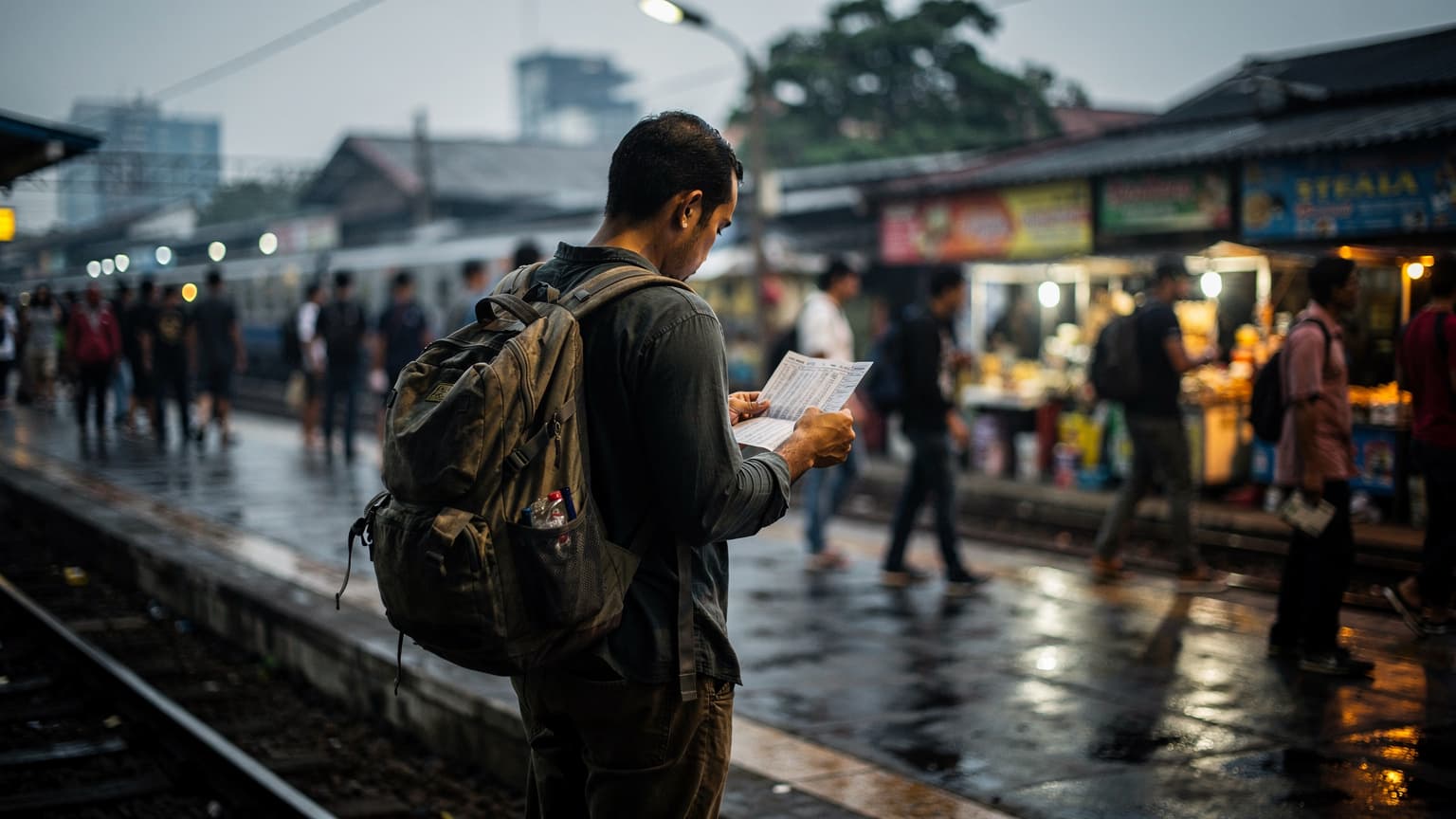
Their Tourist eSIM is typically purchased upon arrival, either at the airport (think Ngurah Rai International in Denpasar or Soekarno-Hatta in Jakarta) or at official Telkomsel outlets. This means dealing with queues, paperwork, and potentially language barriers after a long flight from LAX. For a family with jet-lagged children, this can be a less-than-ideal start to a holiday. I've found that any obstacle between me and a taxi with two overtired kids is an obstacle I'd rather avoid.
Pricing for Telkomsel's Tourist eSIM plans varies, but they generally offer packages with a set amount of data valid for a specific duration, usually 30 days. These plans are designed for individual users, meaning if you need data for multiple devices, you're looking at either multiple eSIMs or relying heavily on personal hotspots, which can drain your phone's battery faster than a toddler discovers hidden sweets.
| Feature | Telkomsel Tourist eSIM | Third-Party eSIM (e.g., Cellesim) |
|---|---|---|
| Purchase Process | On-arrival at airport/store, requires registration. | Pre-purchase online, instant QR code delivery. |
| Coverage | Directly on Telkomsel's extensive network. | Often leverages Telkomsel or other major networks, check specific plan. |
| Family Device Support | One eSIM per device, or hotspot from primary. | Easier to manage multiple eSIMs for various devices through a single account. |
| Flexibility | Fixed plans, limited options for top-ups or extensions. | Wide range of data packages, durations, and top-up options. |
The Third-Party eSIM Advantage for Families
This is where providers like Cellesim truly shine for families. The primary benefit is the ability to purchase and activate your eSIM plan before you even board your flight. Imagine landing, switching on your phone, and having immediate data. No queues, no forms, just connectivity. This alone is worth its weight in gold when you're herding a family through customs.
Third-party eSIMs often aggregate services from multiple local carriers, which can sometimes even provide a more robust connection in certain areas. For example, some eSIMs specifically designed for Indonesia might hop between Telkomsel and another strong network like XL Axiata, ensuring you're always on the best available signal. This is a subtle yet significant advantage, especially if your itinerary includes a mix of urban exploration and remote island hopping.
Another key aspect is the flexibility in data plans. Unlike Telkomsel's often rigid tourist packages, third-party providers typically offer a broader spectrum of data allowances and durations. This means you can tailor a plan that precisely fits your family's needs, whether it's a modest plan for light browsing and maps, or a hefty one for two kids streaming Disney+ on their iPads during downtime at the hotel (yes, we've all been there).
The ability to manage multiple eSIMs from a single account on platforms like Cellesim simplifies things immensely. Instead of juggling several physical SIM cards or individual Telkomsel activations, you can buy a data package for your phone, and separate, perhaps smaller, packages for your children's iPads or a dedicated travel router. This offers granular control over data usage, a godsend for managing screen time and preventing unexpected overages.
Data Needs for the Modern Traveling Family
Let's be realistic: travel with children in 2026 means travel with devices. My kids' iPads are loaded with everything from Minecraft to educational apps, and a good chunk of that content needs internet. Even if you pre-load movies on Netflix or Disney+, there's always the unexpected craving for a new game download or a video call with grandma. This is where understanding your family's data consumption is paramount.
For two children streaming standard-definition video, you're looking at roughly 0.7-1 GB per hour per device. If they're watching for two hours a day, across two devices, that's already 2.8-4 GB daily. Add in your own navigation, social media, email, and keeping up with the parents-of-travellers Facebook group, and a 20GB plan for a two-week trip can vanish quicker than a plate of nasi goreng. (Pro tip: always round up your data estimates, then add 50% more for safety.)
| Activity | Estimated Data Usage (per hour) | Typical Family Use Case |
|---|---|---|
| Video Streaming (SD) | 0.7 - 1 GB | 2 kids streaming Disney+ for 2 hours/day = 2.8 - 4 GB daily |
| Video Streaming (HD) | 2 - 3 GB | Occasional movie night for the whole family |
| Online Gaming | 50 - 150 MB | Roblox or Switch Online sessions for kids |
| Social Media/Browsing | 100 - 300 MB | Parents checking emails, Instagram, news |
| Maps/Navigation | 5 - 20 MB | Daily routing with Google Maps or Waze (offline maps are your friend!) |
Parental control features are also something to consider. While an eSIM itself doesn't offer parental controls, having a dedicated data line for a child's device allows you to manage their usage independently. Many third-party apps like Google Family Link or Apple Screen Time can be configured to work over any data connection, allowing you to set limits or monitor activity. With AT&T back home, you might be used to their family plan controls, but abroad, an independent eSIM gives you similar oversight without the hefty international roaming fees. You can find more general tips on managing travel tech for kids in our eSIM FAQ section.
Don't forget the importance of offline resources. Before you even leave home, download offline maps for areas like Nusa Penida in Google Maps and preload entertainment on apps like YouTube Kids and Netflix. This significantly reduces your reliance on constant, high-bandwidth connectivity, saving your precious data for when it's truly needed.
Connectivity Beyond the Mainland: Cruises and Theme Parks
Indonesia offers incredible opportunities for island hopping and exploring, which often means extended periods on ferries or even multi-day cruises. Connectivity on these voyages can be notoriously spotty or incredibly expensive via satellite. Neither Telkomsel's Tourist eSIM nor a standard third-party eSIM will provide reliable data when you're far out at sea. For true off-grid navigation, sometimes a dedicated GPS device still beats your phone.
However, once you dock at ports like Lombok, Gili Trawangan, or even while sailing close to the coast, your eSIM will kick back in. Telkomsel generally has decent coastal coverage around major islands. With a third-party eSIM, you'll benefit from its ability to connect to the strongest available network, which might give you a slight edge in more remote port towns.
Theme parks, like Trans Studio Bali or Jakarta's Ancol Dreamland, present their own connectivity challenges. Large crowds can congest local networks, leading to slower speeds. Here, the sheer network capacity of Telkomsel might give it a slight advantage, as they are the dominant local player. However, a good third-party eSIM leverages this same infrastructure, so the difference might be negligible. The real challenge is often the battery life of your devices constantly searching for signal amidst the rides and attractions.
Make sure your devices are fully charged before hitting a theme park, and consider a portable charger. I've learned the hard way that a dead iPad means a very long wait in line for the next attraction.
Who Should Choose Which: A Clear Recommendation
For the typical family travelling to Indonesia for half-term in 2026, my recommendation leans heavily towards a third-party eSIM provider like Cellesim. The convenience, flexibility, and proactive planning it allows simply outweigh the marginal benefits of Telkomsel's direct Tourist eSIM.
When you're comparing your home carrier's (AT&T's) day-pass options against an eSIM, the savings are usually substantial. AT&T's international day pass, while convenient, typically costs around $10 a day. For a two-week trip, that's $140 just for one phone. A Cellesim plan offering ample data for the entire family will almost certainly be more cost-effective. Plus, the ability to manage multiple lines from one account makes juggling devices (and their data needs) much simpler.
The downside of a third-party eSIM? Occasionally, you might find a plan that relies on a secondary network partner that isn't quite as robust as Telkomsel in the most rural, untouched corners of Indonesia. However, for 95% of family travel itineraries, covering popular destinations like Bali, Java, and Lombok, the coverage will be more than adequate, and often indistinguishable from Telkomsel's direct service.
| Scenario | Best Choice | Reasoning |
|---|---|---|
| Family with multiple devices, priority on convenience | Third-Party eSIM (e.g., Cellesim) | Pre-purchase, easy management of multiple lines, flexible data plans. Avoids airport queues. |
| Solo traveler, minimalist approach, okay with airport queues | Telkomsel Tourist eSIM | Direct access to Telkomsel's network, potentially slightly better rates for very specific low-data needs. |
| Business traveler needing absolute top-tier reliability everywhere | Third-Party eSIM with strong local partnerships or Telkomsel direct (after arrival for guaranteed top-up access) | Reliability is key; pre-booked third-party offers peace of mind before landing. |
| Short trip (under 5 days), light data use | Third-Party eSIM | More tailored, cost-effective short-term plans are usually available from third-party providers. |
My advice is to get your Indonesia eSIM sorted well before you pack your bags. Pre-load your kids' devices with entertainment, download your offline maps, and activate your eSIM. It's one less thing to worry about when you're trying to find that perfect spot on Seminyak beach, or navigating a busy street market in Yogyakarta.
Frequently Asked Questions
Can I use Telkomsel Tourist eSIM on multiple devices for my family?
The Telkomsel Tourist eSIM is designed for single-device use. If you want data for multiple family devices, you would either need to purchase individual eSIMs for each device or rely on tethering from your primary phone, which can quickly drain its battery and data.
How much data will my family need for a two-week trip to Indonesia in 2026?
For a family with two children, expect to use a significant amount of data. If two kids stream 2 hours of SD video daily, that's already 2.8-4 GB. Including parental browsing, maps, and other apps, a 20-30 GB plan for the two-week duration is a sensible starting point. Always err on the side of more data.
Can I manage screen time or parental controls with an eSIM?
An eSIM itself doesn't offer parental controls. However, by giving a child's device its own eSIM, you can use built-in features like Apple Screen Time or Google Family Link, which work over any data connection, to set limits and monitor usage effectively.
What about connectivity on cruise ships or remote islands in Indonesia?
Standard Telkomsel Tourist eSIMs or third-party eSIMs will not provide reliable data far out at sea. Connectivity improves when close to shore or docked at major islands. For deep-sea travel, satellite internet (often expensive and slow) is typically the only option. Always pre-download content for these periods.
Is it better to buy a Telkomsel Tourist eSIM at the airport or a third-party eSIM online?
For families, purchasing a third-party eSIM online before departure is generally better. It eliminates the need for airport queues, paperwork, and potential language barriers upon arrival, ensuring you have immediate connectivity the moment you land.
Will my AT&T phone work with an Indonesian eSIM?
Yes, if your AT&T phone is unlocked and supports eSIM technology, it will work with an Indonesian eSIM. Most modern smartphones are eSIM compatible. Just ensure your device isn't locked to AT&T's network, which is common if you haven't paid off your device.