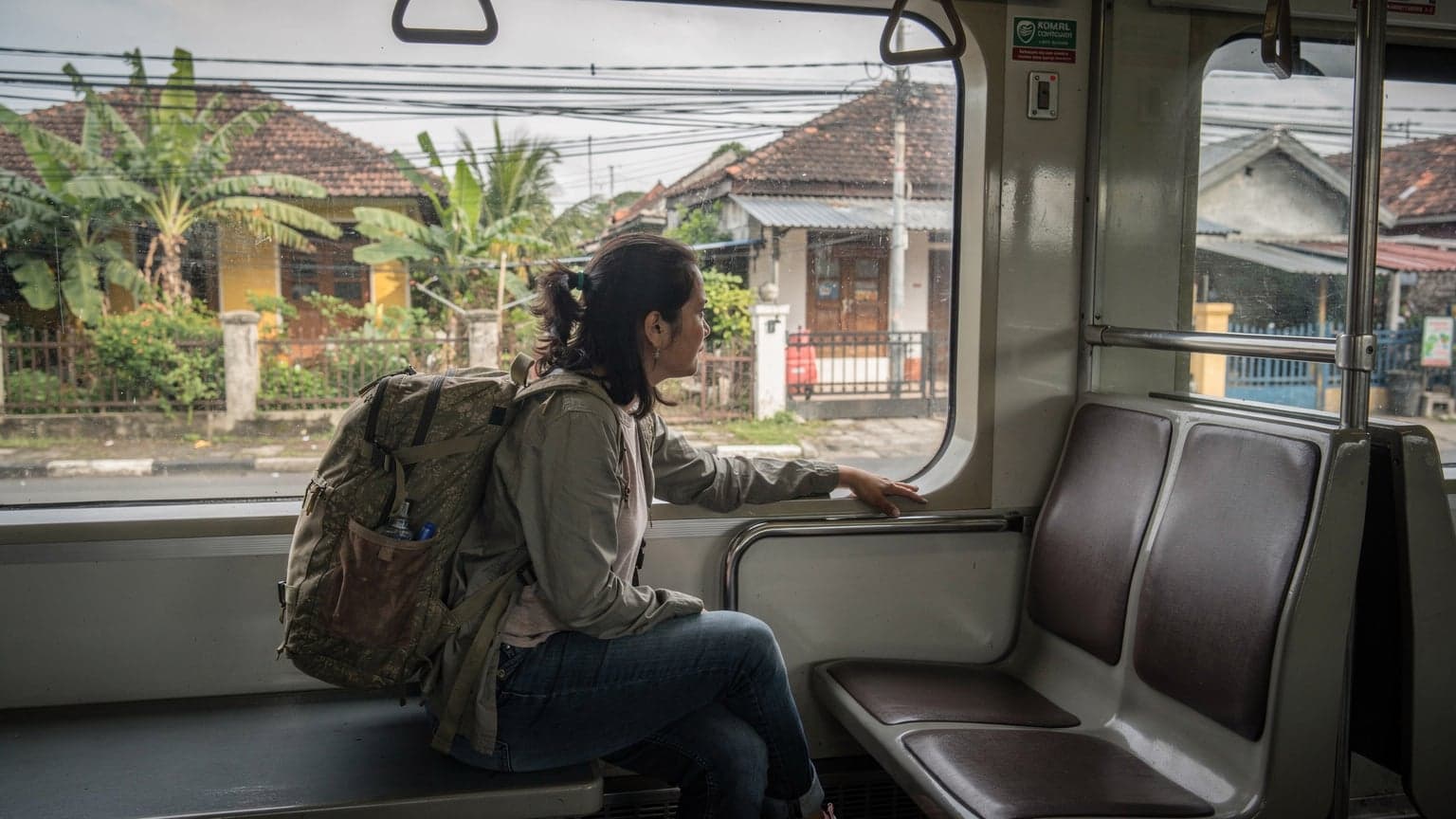
Heading to Indonesia for Thanksgiving 2026? Perhaps you're planning a surf trip to Uluwatu, exploring the temples around Borobudur, or just island-hopping through the Gilis. Whatever your adventure, one of the first things you'll sort out, after that long flight from JFK, is how to stay online. Your AT&T roaming day-pass might seem convenient, but trust me, those charges add up faster than a Jakarta taxi in peak hour traffic. The real question is: should you opt for Telkomsel's Tourist eSIM, or is a global provider like Cellesim a smarter move?
Telkomsel Tourist eSIM: What it is, and how it works
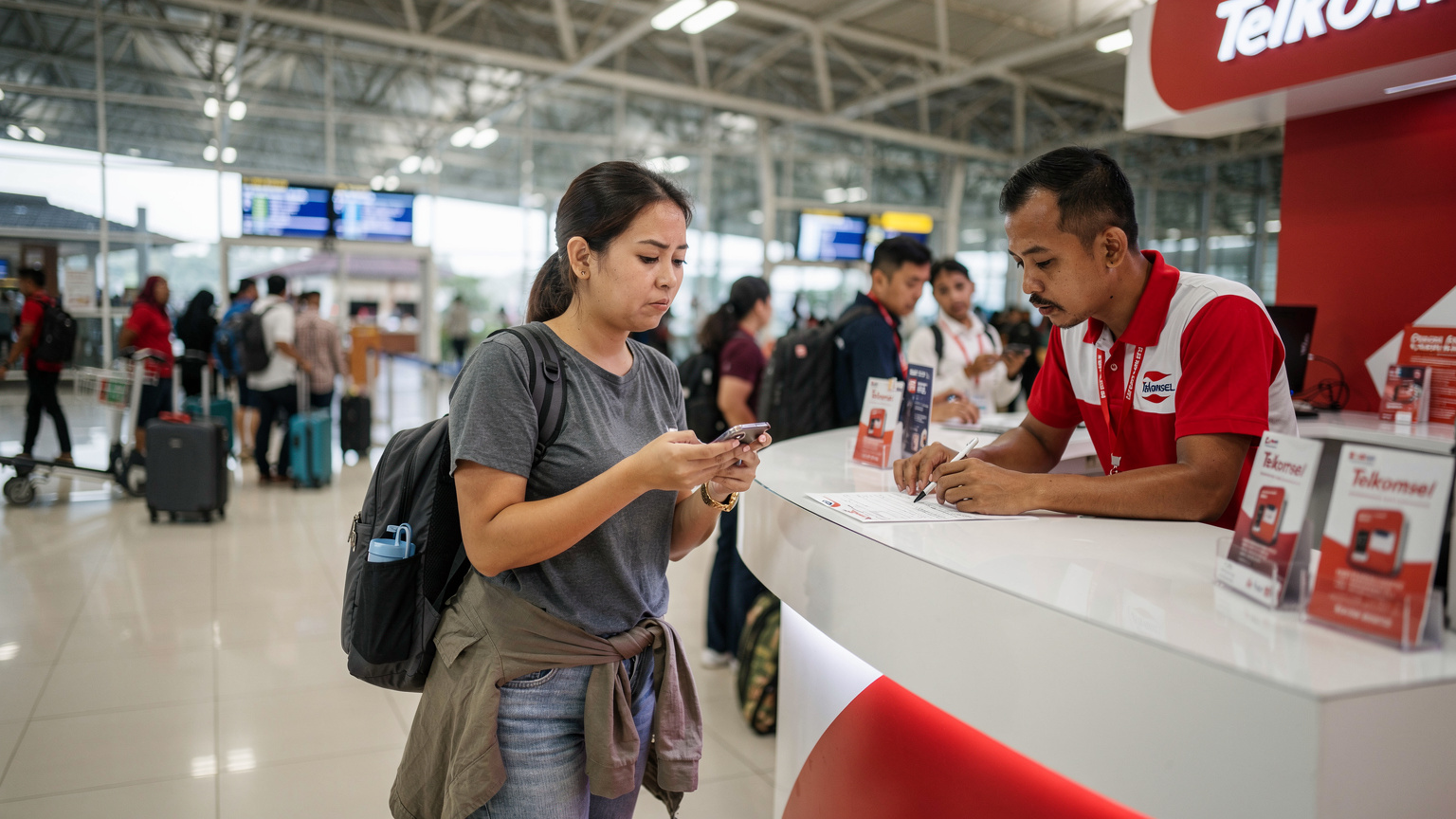
Telkomsel is Indonesia's largest mobile network operator, a household name across the archipelago. When you land at Soekarno-Hatta (CGK) in Cengkareng, or Ngurah Rai (DPS) in Denpasar, you'll see their kiosks everywhere. For years, the physical Telkomsel Tourist SIM card has been the go-to for visitors. You'd buy it, they'd register your passport, and you'd be online. Now, they offer an eSIM version.
The idea is straightforward: scan a QR code, download the profile, and you're connected. It sounds great in theory, especially if you've ever fumbled with a tiny SIM ejector tool at a busy airport terminal, trying to swap cards while juggling luggage (I've definitely been that person, once losing my AT&T SIM in a taxi from Paris-Nord to Le Marais). The Telkomsel Tourist eSIM packages usually include a set amount of data, sometimes with local call minutes, valid for a specific duration, typically 30 days. You'd expect to pick one up right at the airport or a dedicated Telkomsel Grapari store, like the one on Jalan Raya Kuta in Bali, which is usually open from 9:00 AM to 5:00 PM, Monday through Saturday.
However, there's a catch. Indonesia has strict regulations regarding phone registration. Every device used with a local SIM or eSIM needs to be registered with the Directorate General of Customs and Excise. For tourists, this usually means a simplified process at the point of purchase, but it can still be a bureaucratic hurdle, particularly if you try to register a Telkomsel eSIM online before arrival, which often isn't possible for the tourist variant. Your phone's IMEI number is tied to your passport, and if you exceed a certain value (around $500), you might even owe import tax. This is a crucial detail that often catches travelers off guard, especially those coming from countries with more relaxed phone policies.
Cellesim Indonesia eSIM Solutions: An Overview
Cellesim, on the other hand, operates as a global eSIM provider. This means they partner with local networks, in Indonesia's case often Telkomsel itself or sometimes XL Axiata, to offer data plans. The key difference here is that Cellesim plans are typically data-only and don't involve the same IMEI registration complexities as a local Telkomsel eSIM. You buy the plan online, usually before you even leave JFK, receive a QR code via email, and activate it when you land. This bypasses the need to visit a physical store or deal with local registration procedures.
Think of it like this: your AT&T phone, when roaming, connects to a local network without AT&T needing to register your device with the Indonesian government. Cellesim uses a similar principle, leveraging roaming agreements to provide connectivity without turning your phone into a 'local' device in the eyes of Indonesian customs. This is a significant advantage, especially for shorter trips, like a Thanksgiving break, where you don't want to spend precious vacation time queuing up.
Cellesim offers various packages for Indonesia, ranging from smaller data bundles for a week to larger ones for a month or more, giving you more flexibility than some of the fixed Telkomsel tourist bundles. They focus solely on data, so if you need a local phone number for Grab or Gojek (Indonesia's ubiquitous ride-hailing and delivery apps), you'll still be relying on your primary number for verification, or using Wi-Fi for VoIP calls.
Coverage and Speed: Telkomsel vs. Cellesim
This is where the rubber meets the road. What good is a cheap eSIM if you can't get a signal in Ubud or on a remote island off Lombok?
Telkomsel, being the dominant local player, generally offers the broadest coverage across Indonesia. They have infrastructure even in more remote areas, thanks to decades of investment. If you're planning to venture far off the beaten path, say to Raja Ampat or parts of Sulawesi, Telkomsel's network is often the only game in town. Their 4G/LTE speeds are generally reliable in urban centers like Jakarta's Sudirman district or Seminyak in Bali, though congestion can occur during peak times.
Cellesim, as mentioned, often uses Telkomsel's network (or XL Axiata's) through roaming agreements. So, in many cases, the underlying network quality you experience with Cellesim will be identical to Telkomsel. However, there can sometimes be differences in priority. Local SIMs and eSIMs from the primary operator might get slightly higher network priority during times of congestion. This isn't usually an issue for typical browsing or messaging, but if you're trying to stream 4K video during a crowded festival in Yogyakarta, you might notice a difference.
Here's a quick comparison of what to expect:
| Feature | Telkomsel Tourist eSIM | Cellesim Indonesia eSIM |
|---|---|---|
| Primary Network Provider | Telkomsel | Usually Telkomsel, sometimes XL Axiata |
| Coverage Extent | Most extensive across Indonesia | Very good in populated areas, relies on partner network's reach |
| Typical Speeds | Excellent 4G/LTE in urban areas, good in rural | Excellent 4G/LTE in urban areas, good in rural (dependent on partner) |
| Network Priority | Highest (local operator) | High (roaming agreement) |
For most travelers staying in popular tourist zones like Bali, Java, or Lombok, both options will provide perfectly adequate coverage and speed. If your itinerary involves serious off-grid exploration, Telkomsel might offer a marginal advantage, but you'd need to confirm coverage for your specific remote destination.
Pricing and Data Packages: Which is More Affordable?
This is usually the deal-breaker for budget-conscious travelers, especially those who meticulously compare the hidden fees of US carriers against affordable eSIM plans for South America or Europe. Prices for Telkomsel Tourist eSIMs vary, but they are generally competitive within the local market. For example, a 30-day package with 25GB of data might cost around 150,000-200,000 IDR (roughly $10-$14 USD). Keep in mind, these prices can fluctuate, and airport kiosks sometimes have slightly inflated rates compared to official Grapari stores.
Cellesim, being a global provider, sometimes has slightly higher per-gigabyte costs compared to what a local Telkomsel user might pay for a long-term plan. However, compared to a Telkomsel Tourist eSIM, the difference is often negligible, and sometimes Cellesim can even come out cheaper, especially for smaller data packages or shorter durations. The real cost savings with Cellesim often come from avoiding the phone registration hassle, which could, in some extreme cases, lead to import taxes if your phone is new and expensive.
Let's look at a hypothetical comparison for a typical 10-day Thanksgiving trip to Indonesia with moderate data usage:
| Feature | Telkomsel Tourist eSIM (Approx.) | Cellesim Indonesia eSIM (Approx.) |
|---|---|---|
| Data Included | 15-20GB | 10GB, 20GB, or 30GB options |
| Validity Period | 7, 15, or 30 days | 7, 15, 30 days, and longer multi-country options |
| Estimated Cost (USD) | $8 - $15 | $7 - $18 |
| Local Calls/SMS | Often included | Data only (use VoIP apps) |
| Hidden Fees/Taxes | Potential IMEI registration tax (if phone value exceeds $500 USD) | None |
When considering cost, remember that the lowest dollar amount isn't always the cheapest option when you factor in your time and potential headaches. Spending an hour navigating bureaucracy at a Grapari store on Jalan Bypass Ngurah Rai just to save a dollar or two isn't my idea of a vacation bargain. For a truly budget-focused approach, remember to compare the cost per gigabyte, which is what I always preach to my fellow backpackers and students.
Activation and Ease of Use: Which is Less Hassle?
This is often the deciding factor for many travelers, myself included. After a long-haul flight, the last thing you want is a complicated setup process. I still remember the time I bought a local SIM in Istanbul and spent a solid hour trying to register it, only to find out the store closed for lunch and wouldn't reopen until 2:00 PM (it was 12:30 PM). It's those little frictions that add up.
Telkomsel Tourist eSIM: The activation process typically requires you to present your passport at a Telkomsel Grapari store or an authorized reseller. They will scan your passport, record your IMEI, and then provide the eSIM QR code. While this ensures compliance with local laws, it's a physical interaction that takes time. If you arrive late at night, many kiosks might be closed, leaving you reliant on airport Wi-Fi until the next morning. Furthermore, if you're traveling with family, each device needing a local eSIM might require individual registration, which can become tedious. (I've seen families with multiple phones struggle with this.)
Cellesim Indonesia eSIM: This is where global eSIMs shine. You purchase the plan online before your trip. The QR code arrives in your email almost instantly. Once you land, connect to the airport Wi-Fi, scan the QR code in your phone's settings, and you're good to go. There's no passport check, no IMEI registration, and no need to find a physical store. This process takes minutes, and you can do it from the comfort of your departure lounge at JFK before you even leave, or while waiting for your luggage at Ngurah Rai. This simplicity is a major selling point, especially if you're arriving during odd hours or just want to hit the ground running.

Who Should Pick Which: My Final Recommendation
For most travelers heading to Indonesia, especially for typical tourist durations like a Thanksgiving holiday, a global eSIM provider like Cellesim is the far more practical and less stressful option. The ability to activate your data plan before you even leave home, without dealing with local regulations or physical store visits, is a huge convenience. It means you can land, turn on your data, and immediately order a Grab from the airport to your hotel in Canggu, or find directions to the nearest ATM in Kota Tua. Purchasing an eSIM for Indonesia from Cellesim significantly streamlines your arrival experience.
That said, Cellesim isn't without its own minor downside: you won't get a local Indonesian phone number, which can be occasionally handy for local services or if you need to make traditional phone calls. However, for 99% of travelers, WhatsApp, Google Maps, and other online apps are more than enough. If you’re truly off-grid and need a local number for something critical, you could consider a cheap physical SIM as a secondary option, but for data, Cellesim covers you.
If you're planning an extended stay (say, several months), or if your trip involves extremely remote areas far from any major towns, then a Telkomsel Tourist eSIM might be worth the extra effort for potentially deeper network reach and the local phone number. But for the vast majority of visitors on a two-week holiday, the ease of Cellesim simply can't be beaten.
Ultimately, the choice comes down to weighing convenience against a tiny potential cost saving or marginal network advantage in very specific, niche scenarios. For me, after years of travel headaches, I'll always prioritize getting connected quickly and without fuss. That means skipping the airport queues and the IMEI registration process, and going with a global eSIM every time.
Frequently Asked Questions
Do I need to register my phone's IMEI number if I use a Telkomsel Tourist eSIM in Indonesia in 2026?
Yes, if you're using a Telkomsel Tourist eSIM, your phone's IMEI number will need to be registered with Indonesian customs. This process usually happens when you purchase the eSIM at a Telkomsel Grapari store or an authorized reseller, using your passport for verification. If your phone's value exceeds approximately $500 USD, you might also incur import taxes.
Can I activate a Cellesim Indonesia eSIM before I arrive in Indonesia in 2026?
Absolutely. You can purchase and receive the QR code for your Cellesim Indonesia eSIM before you even depart from JFK. The activation itself can be done at any time, typically when you land and connect to airport Wi-Fi, making for a seamless transition into local connectivity.
Will a Cellesim eSIM provide a local Indonesian phone number for calls and SMS in 2026?
No, Cellesim eSIMs are data-only plans. They do not provide a local Indonesian phone number. For calls and messaging, you'll need to rely on internet-based applications like WhatsApp, FaceTime, or Google Meet, using your existing primary number for verification if needed.
Is Telkomsel's network coverage truly better than what I'd get with Cellesim in Indonesia in 2026?
Telkomsel, as the largest local operator, generally has the most extensive network coverage, particularly in very remote areas. However, Cellesim often partners with Telkomsel itself (or XL Axiata), meaning you'll usually get comparable coverage and speeds in all major tourist destinations and urban areas. The difference would only be noticeable if you're venturing truly off-grid.
What happens if my phone's IMEI isn't registered for a local Indonesian eSIM in 2026?
If your phone's IMEI isn't properly registered with Indonesian customs, any local SIM or eSIM (like Telkomsel's) might be blocked after a certain period, usually 30-90 days. This regulation is to prevent the use of illegally imported phones. Global roaming eSIMs, like Cellesim, are exempt from this requirement.
Can I use my AT&T roaming plan in Indonesia instead of an eSIM in 2026?
You can, but it's typically far more expensive. AT&T's international roaming day-pass rates can add up quickly, often costing $10-$15 per day, which becomes significant over a week or two. An eSIM offers a much more cost-effective solution for data connectivity compared to traditional carrier roaming.