


For your Autumn 2026 travels, a multi-country eSIM provides seamless, cost-effective connectivity across popular fall foliage routes and festival destinations by allowing you to switch between local networks without physically changing SIM cards, saving you the hassle and expense of buying new data plans in each country.
Why Autumn 2026 is the Perfect Time for a Multi-Country eSIM
There’s a certain magic to autumn travel, isn't there? The air turns crisp, the scent of woodsmoke hangs low, and landscapes ignite in a riot of color. From the sugar maples ablaze in Vermont to the golden larches dusting the Swiss Alps, it's a season that beckons exploration across diverse geographies. Planning these multi-stop adventures, however, often comes with a familiar headache: how do you stay connected without breaking the bank or wrestling with finicky local SIM cards at every border crossing?
I've been there, fumbling with a tiny SIM ejector tool at Zurich Hauptbahnhof after a long flight, trying to get online before catching the S-Bahn to my AirBnB in Kreis 4. Or the time I landed in Boston's Logan Airport, needing to coordinate with a friend driving up from Providence, only to realize I'd forgotten to order a new local SIM for my unlocked iPhone. The answer, increasingly, is a multi-country eSIM. For Autumn 2026, as more travelers opt for extended, cross-border journeys, this technology isn't just a convenience, it's a necessity.
The Allure of Autumn Travel 2026
Autumn 2026 promises a spectacular display. New England's foliage typically peaks in early to mid-October, while many European wine and harvest festivals kick off in September and run through early November. Think the Oktoberfest celebrations in Munich's Theresienwiese, running from late September into early October, or the smaller, more intimate wine festivals dotting the Mosel Valley in Germany. Each offers a unique cultural immersion, but they also mean crossing borders, changing currencies, and traditionally, dealing with new mobile carriers.
That's where the multi-country eSIM steps in, streamlining your digital life so you can focus on the crunch of fallen leaves underfoot or the clink of glasses at a bustling market, rather than worrying about roaming charges. It’s about having reliable access to Google Maps for navigating the winding backroads of the Berkshires, or quickly translating a menu at a tiny trattoria in Italy's Dolomites, without a moment of digital panic.
Chasing Color: New England and the Canadian Rockies
Few places on Earth rival the autumn spectacle of New England and the Canadian Rockies. These regions are prime destinations for leaf-peepers and outdoor enthusiasts, offering a kaleidoscope of natural beauty.
New England's Vibrant Tapestry
Imagine driving Vermont's scenic Route 100, from Stowe down to the Green Mountain National Forest, surrounded by maples, oaks, and birches exploding in reds, oranges, and golds. Or perhaps you're exploring the charming coastal towns of Maine, like Kennebunkport, with its historic homes framed by fiery trees. Connectivity here is crucial, especially when you're off the main highways and relying on GPS to find that perfect farm stand or covered bridge.
I remember a trip through New Hampshire's White Mountains, trying to meet up with a hiking group near Franconia Notch. My old phone, locked to a US carrier, struggled with signal in some of the more remote areas, and buying a local prepaid SIM felt like a waste for just a few days. Had I known about eSIMs then, I could have easily activated a USA eSIM Guide 2024: Navigating Data Plans and Coverage with Cellesim and skipped the stress.

Canadian Rockies: Majesty and Mobile Access
Further north, the Canadian Rockies offer a different kind of fall splendor. While known for their snowy peaks, early autumn brings stunning larch tree displays, turning entire valleys golden against the turquoise lakes of Banff and Jasper National Parks. Hiking around Lake Louise or Moraine Lake in late September, you'll want to share those breathtaking vistas instantly. A multi-country eSIM ensures you can transition smoothly from US networks to Canadian carriers like Bell or Rogers without a hitch, whether you're driving across the border from Montana or flying into Calgary.
European Charms: Alpine Foliage and Cultural Celebrations
Europe in autumn is a blend of natural beauty and rich cultural traditions. From the dramatic peaks of the Alps to historic city centers hosting harvest festivals, there's always something to discover.
The Alps: A Golden Tapestry
Imagine the Swiss Alps, not just in their winter white, but draped in the golden hues of autumn larches, particularly around Zermatt or the Engadin Valley. Or the Dolomites in Italy, where the vibrant reds and yellows of deciduous trees contrast sharply with the pale grey rock faces. Hiking these trails, you'll use apps like AllTrails or Komoot, and for that, consistent data is non-negotiable. Trying to find a SIM card shop in a small alpine village after 6 PM, when most shops close, can be a real challenge.
My experience trying to buy a local SIM in a small town in the Austrian Tirol, near Innsbruck, after the only mobile shop had closed for the day (at 5 PM, naturally), taught me a valuable lesson. I spent an evening relying on spotty hotel Wi-Fi, wishing I'd prepped better. A multi-country eSIM, covering countries like Switzerland, Austria, and Italy, would have meant uninterrupted access from the moment I landed in Geneva or Milan, through my train journeys on the SBB or Trenitalia.
Oktoberfest and Beyond: Germany's Fall Festivals
Beyond the foliage, Europe truly shines with its autumn festivals. Oktoberfest in Munich is the most famous, of course, drawing millions to the Theresienwiese for beer and Bavarian culture. But there are countless smaller wine and harvest festivals throughout Germany, France, and Italy. Navigating these bustling events, coordinating with friends, or simply sharing your experiences on social media requires reliable mobile data.
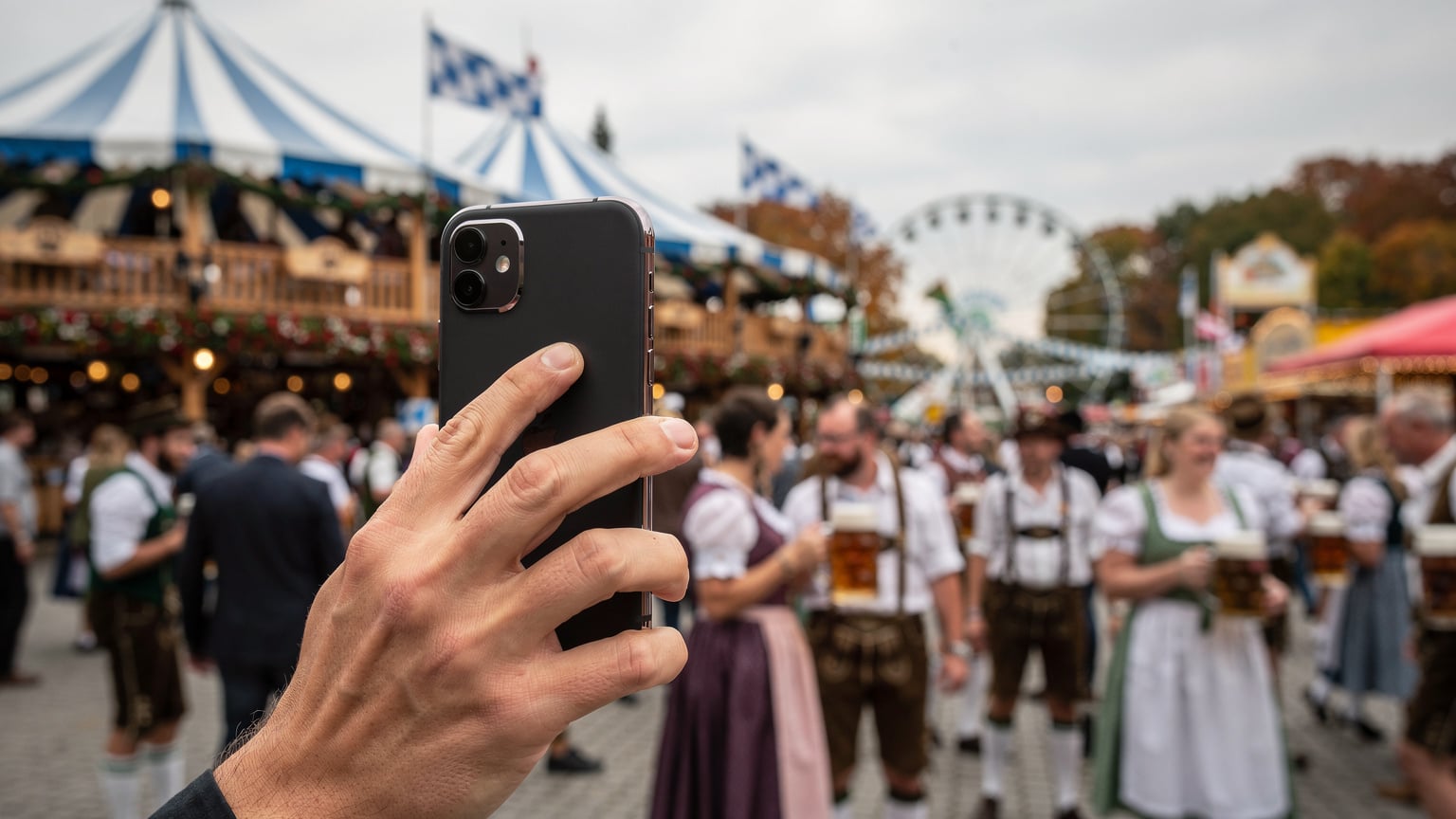
An eSIM designed for Europe allows you to seamlessly jump from Germany to Austria, or even to the Alsace region of France, where wine harvest festivals are in full swing. No more frantically searching for a Deutsche Telekom or Vodafone shop in Marienplatz, just scan a QR code and you're good to go. It's truly a game-changer for multi-destination trips, as I've found when comparing Nomad eSIM vs. Cellesim: An Engineer's Deep Dive for International Data 2026.
The eSIM Advantage: Beyond the Physical SIM
For those still accustomed to physical SIM cards, the concept of an eSIM might seem a bit abstract. But once you experience its benefits, there's no going back. It's a fundamental shift in how we manage mobile connectivity, especially for frequent international travelers.
No More Swapping Tiny Chips
The most immediate advantage is the elimination of physical SIM card swapping. I can't tell you how many times I've dropped a tiny SIM card on a grimy airport floor, or misplaced the ejector tool when I needed it most. With an eSIM, your phone (like the iPhone 17 eSIM Setup: Activating for Seamless 2026 International Travel) has a digital SIM embedded directly into its hardware. You simply download and activate a data plan from your chosen provider, often before you even leave home.
This means no more hunting for local phone shops, trying to decipher foreign language instructions, or worrying about compatibility issues. It's a digital transaction, usually done through an app or a QR code, giving you control over your connectivity from anywhere with a Wi-Fi connection.
Multiple Profiles on One Device
Another killer feature of eSIMs is the ability to store multiple profiles on a single device. You can have your home carrier's plan active, alongside several international eSIMs. This is incredibly useful for a multi-country autumn trip. You could have one eSIM for your New England leg, another for your Canadian Rockies portion, and perhaps a third for a broader European region, all managed from your phone's settings.
This flexibility allows you to switch between plans depending on your current location or data needs, ensuring you always have the best coverage and price. It's a far cry from my early travel days where I'd have a Ziploc bag full of old physical SIM cards, each tied to a different country.
Selecting the Right Multi-Country eSIM Plan
Choosing the right eSIM plan is crucial for a smooth autumn adventure. It’s not just about the cheapest option, but the one that best fits your travel style and data consumption.
Coverage Where You Need It
First and foremost, check the coverage map for your specific destinations. A multi-country eSIM might cover 'Europe,' but ensure it includes the specific regions you're visiting, especially if you're venturing into more rural areas of the Scottish Highlands or the Black Forest. Providers typically partner with local carriers, so understanding which networks your eSIM will utilize is key. For example, a European eSIM might leverage Telefonica, Orange, and Vodafone networks, giving you robust coverage across most of the continent.
I've always found it prudent to double-check the fine print, especially regarding network partners. There was one time, years ago, when I bought a regional SIM card that promised 'Europe-wide' coverage, only to find myself with patchy 2G service in rural Slovenia when I really needed to call a guesthouse in the Julian Alps. Don't make my mistake, do your homework!
| Region | Key Countries Covered | Primary Network Operators |
|---|---|---|
| North America | USA, Canada, Mexico | AT&T, T-Mobile, Verizon (USA); Bell, Rogers, Telus (Canada) |
| Europe | France, Germany, Italy, Spain, Switzerland, UK, Austria, etc. (40+ countries) | Deutsche Telekom, Vodafone, Orange, Telefonica, Swisscom |
| Asia-Pacific | Japan, South Korea, Thailand, Australia, New Zealand, etc. | NTT Docomo, SK Telecom, AIS, Telstra |
Data Allowances and Validity Periods
Consider your data usage habits. Are you a heavy streamer, or do you mostly use data for maps and messaging? Multi-country eSIMs come with various data allowances (e.g., 5GB, 10GB, unlimited) and validity periods (e.g., 7 days, 15 days, 30 days). For a two-week autumn foliage road trip through New England and then up into Quebec, a 15-day, 10GB plan might be perfect. If you're hopping around Europe for a month, a larger, longer-term plan makes more sense.
Remember, it's often more cost-effective to buy a slightly larger data package upfront than to run out and have to top up mid-trip. Those top-up prices can sometimes be surprisingly steep, especially when you're in a pinch.
Real-World Connectivity Stories from the Road
Having traveled to over 80 countries, I’ve collected my fair share of connectivity tales, both triumphs and tribulations. The shift to eSIMs has genuinely simplified my life, but it’s the specific moments where it truly shines that stick with me.
Navigating the Autobahn and Alpine Passes
One autumn, I was driving from Garmisch-Partenkirchen in Bavaria, through Austria's Innsbruck, and then into the Dolomites of Italy. This involved three border crossings in a single day. In the past, this would have meant swapping SIMs twice, or incurring hefty roaming charges. With a Cellesim multi-country European eSIM, I had continuous data, whether I was on the German Autobahn, navigating through the Brenner Pass, or looking for a specific agriturismo near Bolzano. The GPS on my phone, running off a reliable 4G signal from whichever local carrier (Telekom.de, A1 Telekom Austria, or TIM Italia) Cellesim partnered with, never skipped a beat. This freedom to navigate without a second thought is priceless.
The peace of mind knowing I wouldn't lose navigation mid-mountain pass was worth every penny. No more pulling over to find a Wi-Fi signal just to get directions to the next village.
Festival Logistics and Friend-Finding
Another memorable autumn was spent between Oktoberfest in Munich and the Cannstatter Volksfest in Stuttgart. Both are massive, sprawling events, and meeting up with friends in the midst of tens of thousands of people requires constant communication. My phone became my lifeline, not just for messages but for using apps like 'What3words' to pinpoint our exact location amidst the tents and rides in Cannstatter Wasen. Having a strong, consistent signal from the moment I arrived at Munich's Hauptbahnhof, through my journey on the Deutsche Bahn to Stuttgart, meant I could coordinate without stress. It’s these kinds of logistical challenges that make a robust, multi-country eSIM a non-negotiable travel companion.
Activating Your Multi-Country eSIM, A Step-by-Step Guide
Getting your eSIM up and running is surprisingly straightforward, a far cry from the old days of punching out micro-SIMs or dealing with activation codes at a foreign kiosk. Here’s how it generally works:
Before You Depart
- Check Device Compatibility: Ensure your smartphone is eSIM compatible and unlocked. Most newer iPhones (XS and later) and Android flagships (Samsung Galaxy S20 and later, Google Pixel 3 and later) support eSIM. If you’re unsure, a quick search for your phone model's specifications will confirm it.
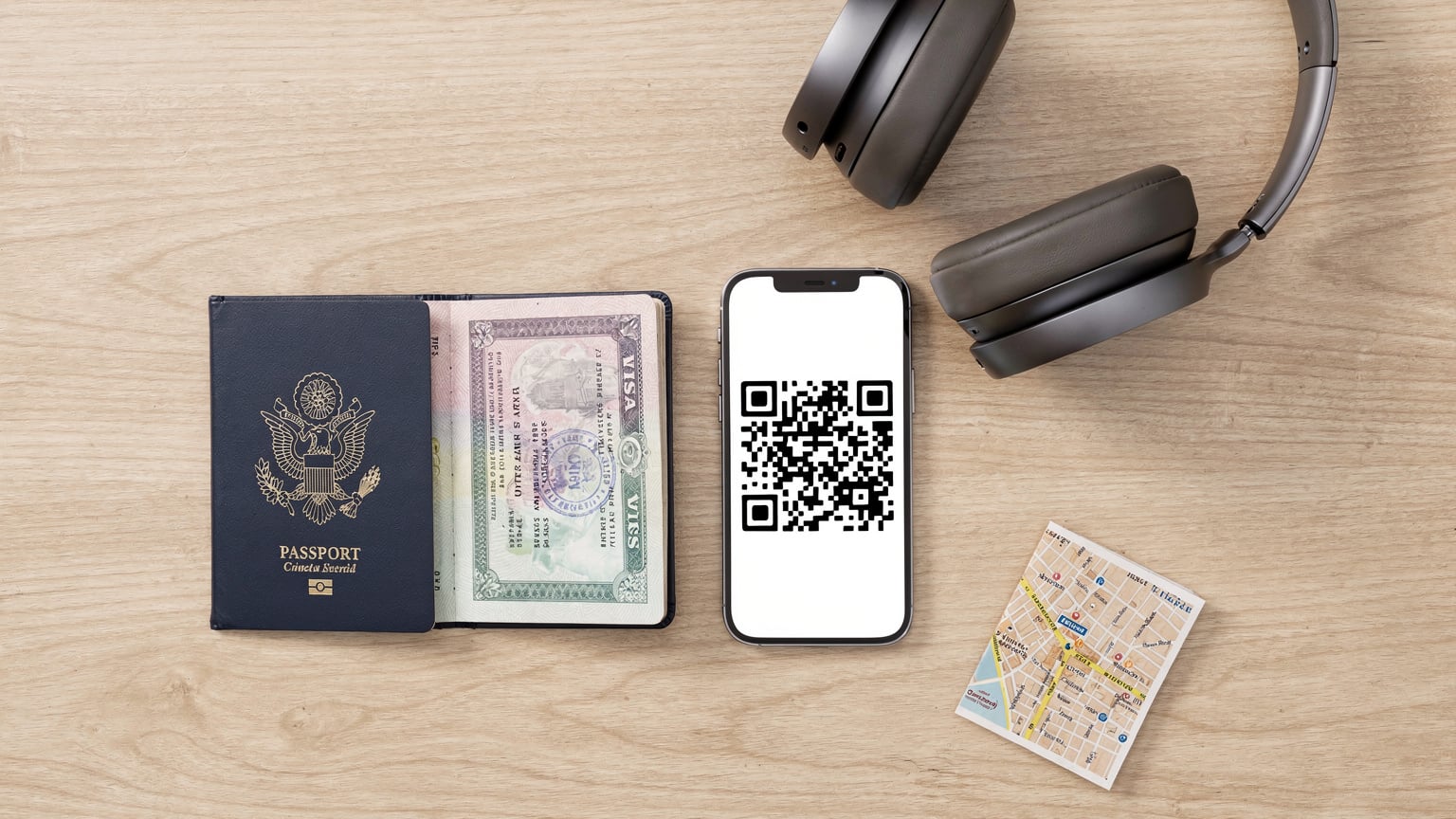
- Purchase Your eSIM Plan: Visit the Cellesim website and select a multi-country or regional plan that covers your autumn destinations. Choose your data allowance and validity period. You'll receive an email with a QR code and manual activation details.
- Install the eSIM Profile (Home Wi-Fi Recommended): Open your phone's Settings app. For iOS, go to 'Cellular' or 'Mobile Data,' then 'Add eSIM.' For Android, it's usually under 'Network & internet' > 'SIMs' > 'Add more' or similar. Scan the QR code provided by Cellesim. If scanning isn't an option, you can enter the details manually. I always do this at home, on a stable Wi-Fi connection, a day or two before departure. This prevents any last-minute airport panic.
- Label Your eSIM: Once installed, your phone will prompt you to label the new eSIM. Give it a clear name, like 'Europe Travel' or 'Autumn USA/Canada,' so you can easily distinguish it from your primary home SIM.
Upon Arrival at Your Destination
- Enable Your eSIM: Once you land, go back to your phone's 'Cellular' or 'Mobile Data' settings. Select your newly installed travel eSIM and toggle it ON.
- Disable Data Roaming for Primary SIM: Crucially, ensure your primary SIM's data roaming is turned OFF to avoid unexpected charges. You can usually keep it active for calls and texts if needed, but make sure data is handled by the eSIM.
- Enable Data Roaming for eSIM (If Applicable): Some eSIMs require you to enable data roaming in your phone's settings, even though you are not 'roaming' in the traditional sense. This allows it to connect to partner networks. Cellesim will specify if this is necessary for your particular plan.
- Enjoy Seamless Connectivity: Your phone should now automatically connect to a local partner network. You're online, ready to navigate, translate, and share your autumn adventures. If you run into any snags, remember that our FAQ page has a wealth of troubleshooting tips.
Troubleshooting Common eSIM Issues on the Go
Even with the most robust systems, occasional hiccups can occur. As Cellesim's Technical Support Lead, I've seen it all, from