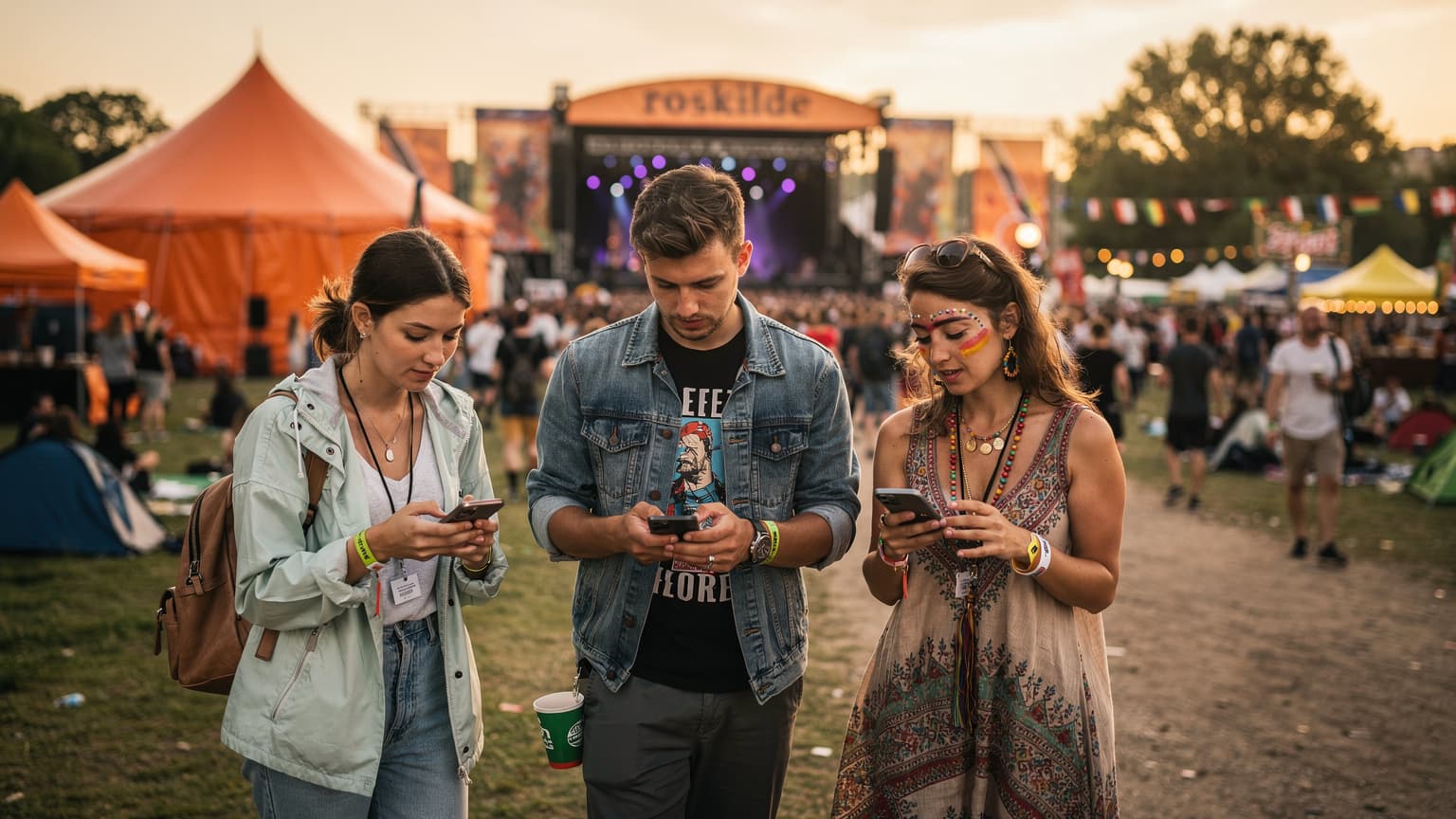
The Budget Reality: Why an eSIM is Your Best Festival Companion
Let's talk money first. My last multi-festival trip, which included Sziget in Budapest, Primavera Sound in Barcelona, and a week of chilling out in between, cost me exactly €280 for data over 21 days. That got me 45GB of data, averaging 2.14GB per day. And yes, that covers all the Instagram stories, WhatsApp calls to coordinate with friends, Google Maps to navigate new cities, and even a few hours of streaming during those dreaded overnight train rides. Most of that cost, as you'd expect, went to my eSIM. But here's the best part: it was still cheaper and way less of a headache than any other option.
When you're hitting the European festival circuit, you're not just going to one event. You're on a proper quest. That means different countries, different cities, and absolutely no patience for your phone not working. Regular roaming plans from your home carrier are a joke, often charging €10-€15 a day for very little data. Physical local SIMs? They're fine for one country, but just try buying one at Budapest Keleti pályaudvar's tiny kiosks after a 12-hour bus from Krakow, only to ditch it a week later when you cross into Slovakia. It's a waste of cash and precious festival time.
An eSIM, on the other hand, is made for this kind of travel. It's a digital SIM, already in your phone, letting you switch plans with a tap. No physical cards needed. If you want to know more about how this tech actually works, check out How Does an eSIM Work? Your No-Nonsense Guide to Digital Connectivity in 2026. This flexibility is key. It lets you buy a regional European data plan, covering many countries, before you even leave your house.
Seriously, think about it. You're probably already spending a good chunk of change on festival tickets (a major electronic music festival in Belgium Full Madness Pass is not cheap, is it?), transport (FlixBus, Ryanair, whatever's cheapest), and accommodation (Hostelworld's best dorms). Data shouldn't be another hidden cost or something you constantly worry about. An eSIM simplifies everything, giving you a predictable expense and a solid connection.
Local SIMs vs. eSIMs: The True Cost for Festival Hoppers
I've been there, trying to haggle for a SIM card at a tiny kiosk in some random corner of Rome's Termini station. Sometimes it works out, like getting a TIM Tourist SIM for €20 with 25GB in Italy. Other times, you get ripped off, or you waste hours of daylight trying to understand local plans in a language you don't speak. This is exactly where an eSIM shines for anyone going to multiple festivals.
To be fair, let's look at the cheapest local physical SIM option in a typical festival hotspot, say, Germany for Rock am Ring. You'd likely find a Telekom Prepaid Magenta Mobil M plan. For about €15, you might get 8GB for 4 weeks. That's decent if you're staying in one country. But the moment you cross into Belgium for Rock Werchter, that SIM is useless, or you're hit with crazy roaming fees. Then you'd have to do it all again, finding a local Proximus or Orange SIM, probably paying another €15-€20.
Now, compare that to a Cellesim regional Europe plan. Let's say you pick a 30GB plan valid for 30 days across 32 European countries. That would cost you roughly €45-€50 (prices can vary a bit). That one purchase covers you from Portugal's NOS Alive to Hungary's Sziget, without a single interruption. You pay once, and you're done. No panic at the border about losing connection, no hunting for kiosks, no language barriers.
The numbers don't lie, especially if you're hitting 2-3 festivals or just traveling a lot. Three local SIMs at €15-€20 each? That's €45-€60, and you still have to deal with activating them, registering, and managing multiple phone numbers. Plus, you often lose any leftover data when you throw away the SIM. With an eSIM, any unused data can sometimes be topped up or even used for your next trip, depending on the provider and plan. It's a smart move for budget-conscious travelers.
| Feature | eSIM (Cellesim Regional) | Local Physical SIM (e.g., German Telekom) | Home Carrier Roaming (e.g., Vodafone UK) |
|---|---|---|---|
| Cost (21 days, 3-country trip) | €45-€70 (depending on data) | €45-€60 (3 separate SIMs) | €210-€315 (€10-€15/day) |
| Ease of Setup | Pre-purchase & activate digitally | Find kiosk, activate in-person, registration often needed | Automatic, but costly |
| Cross-Border Functionality | Seamless, automatic network switch | Country-specific, new SIM needed for each country | Seamless, but very expensive |
| Data Retention | Single plan, data usable across all covered countries | Data tied to specific country SIM, often lost on exit | Data pool resets daily/weekly, subject to daily fees |
| Number Management | Keep primary number active for calls/SMS | New local number for each SIM, primary number inactive | Keep primary number, but calls/SMS also expensive |
Choosing Your eSIM Provider: What to Look For (and Avoid)
Not all eSIM providers are created equal. Just like not all hostels have working showers. When you're picking an eSIM for your festival trip, you need to be smart. Don't just grab the cheapest option, because cheap often means unreliable, and you really don't want to be stranded without Maps trying to find your way from the Sziget ferry back to your Airbnb at 3 AM.
Here's what I look for:
- Coverage Area: Does it cover every country on your itinerary? A pan-European plan is best. Cellesim, for example, has packages that cover the entire EU/EEA, so you're connected from Portugal to Poland without a hitch.
- Data Volume vs. Validity: Make sure your expected data use matches the plan's length. A 10GB plan for 7 days might be perfect for one festival, but if you're on a month-long trip, you'll need something bigger, like a 30GB or 50GB plan for 30 days.
- Network Partners: Who are the local carriers? A good eSIM provider works with major national networks, not some obscure MVNO (Mobile Virtual Network Operator) that only works outside big cities. Look for well-known names like Vodafone, Orange, Deutsche Telekom, or EE.
- Top-Up Options: Can you easily add more data if you run out? This is super important. You don't want to buy a whole new plan in the middle of a festival. Cellesim offers simple top-ups right from their app or website.
- Customer Support: What if something goes wrong? Is there 24/7 chat support? I've run into problems before, and a quick response can totally save your trip.
Stay away from providers that offer