Azerbaijan's Telecom Landscape 2026: An Overview
Azerbaijan has poured a lot of money into its mobile infrastructure, especially in big cities like Baku and Ganja. The goal is to get their digital systems up to modern standards. Right now, 4G LTE is widespread, but 5G is still very new. You'll mostly find 5G in a few test zones or busy commercial spots in the capital.
The main mobile carriers here are Azercell, Bakcell, and Nar Mobile. All of them have been steadily upgrading their networks, focusing on expanding LTE-Advanced (LTE-A) coverage. This technology uses Carrier Aggregation (CA) to combine different frequency bands for faster speeds. For example, if you're in downtown Baku, Azercell often combines Band 3 (1800 MHz) and Band 7 (2600 MHz). In perfect conditions, that means theoretical speeds of 200-300 Mbps. In reality, during off-peak hours in cities, you'll probably see 40-80 Mbps down and 15-30 Mbps up. Head out to rural mountain areas or the more remote parts of the Absheron Peninsula, and those speeds drop off a lot.
While 5G, typically on Band n78 (3.5 GHz), technically exists, its coverage is tiny. As of early 2026, don't count on it for your travel data. Most devices will stick to 4G LTE, which is really the workhorse for mobile data in Azerbaijan.
Key Players and Their Network Strengths
To make a good choice, it helps to know what each major carrier does best. They all offer decent coverage, but performance can change depending on where you are and how busy the network is.
- Azercell: Many consider Azercell the top dog. They have the widest 4G LTE coverage, which is especially good in rural areas and along major roads. Their network often uses more LTE bands, which helps them perform better in various environments.
- Bakcell: Bakcell is known for competitive prices and strong performance in cities. They've invested a lot in upgrading their infrastructure in Baku and other big towns. You'll often find aggressive data packages from them, though their rural coverage can sometimes fall behind Azercell's.
- Nar Mobile: Nar Mobile aims to be a good value. They offer solid coverage in metro areas and decent speeds. They're a good third choice, especially if you're watching your budget, but you might experience more slowdowns during busy times in crowded places.
Why an eSIM is Your Best Bet for Azerbaijan
For travelers heading to Azerbaijan, an eSIM is often a much better choice than traditional physical SIM cards or those ridiculously expensive international roaming plans. The biggest benefits are how convenient it is, how flexible, and how much money it can save you, especially compared to carrier roaming like AT&T's International Day Pass, which charges a flat daily fee no matter how much data you actually use (and often slows you down after a certain point).
eSIMs mean you don't have to fiddle with swapping out physical SIM cards. That's a small but annoying task, especially if you land late at Heydar Aliyev International Airport (GYD). You can activate your plan even before your flight takes off, so you're connected the moment your plane touches down. This instant connection lets you call a taxi, check maps, or tell your family you've arrived without scrambling for airport Wi-Fi.
Plus, eSIMs give you a lot of network flexibility. If you're a digital nomad exploring several countries in the region, maybe even places covered in Central Asia eSIM 2026: Navigating the Silk Road with Seamless Data, an eSIM can hold multiple profiles. That means you can switch between different carriers or plans seamlessly. This is a huge help for travelers who might want a local plan for a longer stay in Azerbaijan but also a regional eSIM for their next stops in Georgia or Turkey.
The Convenience Factor: Instant Connectivity
Imagine landing in Baku, getting through customs, and immediately being able to use your ride-sharing app or online maps. That's the main promise of an eSIM. No hunting for local SIM card sellers, no language barriers when you're trying to explain what data plan you need, and no tiny ejector pins to lose.
For example, with an eSIM, you can buy a data plan from Cellesim specifically for Azerbaijan before you even leave. Once you land, just enable the eSIM profile in your phone's settings, and you're connected in minutes. That's a huge difference from trying to find a Bakcell store in the terminal, waiting in line, and going through a potentially long registration process with your passport (which is usually required for local SIMs in Azerbaijan).
Cost Efficiency: Beyond Roaming
While local SIM cards in Azerbaijan can be pretty cheap, international roaming data from your home carrier is almost always more expensive. For instance, a typical 10GB roaming package from a big European carrier might cost over €50 for a week, often with speed limits. In contrast, many international eSIM providers offer similar data packages for Azerbaijan starting around $15-25, often with better speeds and no hidden fees.
And if you're planning a longer trip or visiting multiple countries, the savings really add up. Digital nomads, especially, will appreciate the flexibility of Long-Stay Digital Nomads: Why Multi-Country eSIMs Beat Roaming Surprises in 2026, letting them manage data across different regions from one device.
Comparing Local Azerbaijani Carriers for eSIM
International eSIMs are super convenient, but for really long stays or if you use tons of data, getting a local eSIM directly from an Azerbaijani carrier might make more sense. However, only Azercell and Bakcell currently offer eSIM services to tourists. Nar Mobile still uses physical SIM cards.
| Carrier | eSIM Availability for Tourists | Primary LTE Bands (Urban) | Typical Download Speeds (Baku) | VoLTE/VoWiFi Support |
|---|---|---|---|---|
| Azercell | Yes | B3, B7, B20 | 50-100 Mbps | VoLTE (limited roaming partners), VoWiFi (domestic only) |
| Bakcell | Yes | B3, B7 | 40-90 Mbps | VoLTE (limited roaming partners), VoWiFi (domestic only) |
| Nar Mobile | No (Physical SIM only) | B3, B7 | 30-70 Mbps | No |
Azercell eSIM Options
Azercell, being the biggest operator, has a pretty smooth process for tourist eSIMs. You can usually buy them at their official stores, including one right at Heydar Aliyev International Airport. They often have special tourist packages, like a 'Welcome Pack' that includes a certain amount of data, minutes, and texts for a set time. For instance, a 10GB data package valid for 15 days might run you about 25 AZN (roughly $15 USD). Remember to bring your passport for registration, as that's legally required.
From a technical standpoint, Azercell's network is solid. In Baku's city center, I've consistently seen good performance on Band 3 (1800 MHz) and Band 7 (2600 MHz), with peak download speeds hitting 110 Mbps during off-peak hours near Fountain Square. Uploads were decent, averaging around 25 Mbps. Their rural coverage, especially along the M1 highway toward Guba or in the Qabala region, is noticeably better than their competitors, often maintaining a strong B20 (800 MHz) LTE connection. That band offers wider reach, but typically lower speeds, around 10-20 Mbps down.
Bakcell eSIM Options
Bakcell also offers eSIM activation for tourists, usually with competitive data plans. You'll find their stores easily in Baku and other major regional cities. Like Azercell, Bakcell has various packages, often with more data for slightly less money, especially for shorter validity periods. A 7-day, 15GB plan could be as low as 20 AZN ($12 USD).
Network-wise, Bakcell performs very well in cities, often matching Azercell's speeds in central Baku. I've recorded download speeds of 95 Mbps near the Old City, mainly on B3 and B7. However, their coverage can get spotty as you go into more remote areas, often dropping to 3G or even 2G where Azercell still has 4G. A small tip for advanced users: Bakcell's APN settings are usually automatic, but if you have trouble, make sure it's set to 'internet'. Some older Android phones occasionally default to 'mms' or another wrong APN.
International eSIM Providers: Your Global Options
For most travelers, especially those on shorter trips or who just want things to be simple over getting the absolute lowest per-GB cost, international eSIM providers like Cellesim are the way to go. These services give you access to local networks without you having to deal directly with local carriers. That means no registration hassles, and often, you can get multi-country packages. This is super handy for smooth travel across regions, like hopping between Azerbaijan and Georgia.
These platforms usually resell data from one of the major local carriers, often Bakcell or Azercell, through a wholesale deal. So you're still using a local network, but the international provider handles all the billing and management. The important thing here is to check which local network an international eSIM provider partners with, as that will directly impact your coverage and speeds.
Cellesim for Azerbaijan: What to Expect
Cellesim offers various data packages for Azerbaijan, typically using the strong networks of either Azercell or Bakcell. We focus on giving you reliable 4G LTE connectivity, so you get consistent speeds for things like navigation, messaging, and social media. When you buy an Azerbaijan eSIM from Cellesim, you're getting a data-only plan that activates almost instantly.
Benefits of Cellesim eSIMs:
- Instant Activation: Buy and activate your plan before you leave home or when you arrive, no need to find a local store.
- Transparent Pricing: Clear, upfront costs with no hidden roaming fees or surprises.
- Flexible Plans: Pick from different data amounts and validity periods, from a few days to a month, to fit your trip length.
- Multi-Country Options: If your journey goes beyond Azerbaijan, check out our regional plans that cover multiple countries. They're often a better value than buying individual country plans. For example, our Central Asia eSIM 2026: Navigating the Silk Road with Seamless Data includes Azerbaijan, Georgia, and other nearby states.
While Cellesim eSIMs give you data, remember they are usually data-only. This means traditional voice calls and SMS aren't included. However, with data everywhere, you can easily use VoIP services like WhatsApp, Telegram, or Facetime for all your communication needs, and they work perfectly over the data connection.
Other International eSIM Providers
Several other international eSIM providers also serve Azerbaijan. While Cellesim aims for premium, high-performance options, it's good to know what else is out there. Providers like Airalo, Nomad, and Holafly also offer data packages. Their prices and data allowances can vary a lot, as can their network partners. Always read the fine print to see which local network they connect to and if they have any speed limits or Fair Usage Policies (FUP) that might affect your experience. Some providers, for instance, might cap speeds after you use a certain amount of data daily, which can be frustrating if you're a content creator uploading big files.
Setting Up Your eSIM in Azerbaijan: A Step-by-Step Guide
Activating an eSIM is pretty straightforward, but doing it correctly makes for a smooth experience. This guide assumes you have an eSIM-compatible device (most newer smartphones like iPhone XS/XR and up, Google Pixel 3 and up, and many Samsung Galaxy models) and have already bought an eSIM plan.
Pre-Arrival Activation
The best time to activate your eSIM is before you leave or during your flight. This way, you're connected right when you land.
For iOS: Go to Settings > Cellular (or Mobile Data) > Add eSIM. Choose 'Use QR Code' and scan the code your eSIM provider gave you. Follow the on-screen prompts.
For Android: Go to Settings > Network & Internet > SIMs > Add more (or similar, depending on your phone's brand). Select 'Download a SIM instead' and scan the QR code.
Post-Arrival Activation
Once you've landed in Azerbaijan, you can switch to your new eSIM.
- Disable Primary SIM Data Roaming: Go to Settings > Cellular (or Mobile Data) and make sure 'Data Roaming' is turned OFF for your main SIM to avoid surprise charges.
- Enable eSIM for Data: In the same Cellular (or Mobile Data) settings, select your newly installed eSIM profile and toggle it 'On'. Then, make sure this eSIM is chosen as your preferred line for 'Cellular Data' (or 'Mobile Data').
- Check APN Settings (if necessary): Most eSIMs will set the APN (Access Point Name) automatically. But if you're not getting data, you might need to set it manually. Go to Cellular Data Network (iOS) or Access Point Names (Android) under your eSIM settings. The common APN for data-only eSIMs is 'internet'.
- Test Connectivity: Open a web browser or an app like WhatsApp to confirm you have an active data connection. If not, try restarting your phone.
Navigating Network Quirks: VoLTE, VoWiFi, and APNs
As a telecom engineer, I can tell you that understanding these small details can save you a lot of frustration. VoLTE (Voice over LTE) and VoWiFi (Voice over Wi-Fi) are key for clear voice calls on modern networks. While local Azerbaijani carriers are bringing out VoLTE, its availability for international eSIM users or even roaming partners can be hit or miss. And APN settings, though usually automatic, can quietly kill your connection.
VoLTE and VoWiFi Gotchas
VoLTE: This tech lets your voice calls go over the 4G LTE network, meaning clearer sound and you can use data at the same time as talking. Without VoLTE, your phone might drop to 3G during a call, which can be slower and less reliable. In Azerbaijan, Azercell and Bakcell support VoLTE, but whether an international eSIM will enable it depends on their specific roaming agreements and your device's capabilities. My own tests with several international eSIMs often show calls falling back to 3G (UMTS) even with a strong 4G signal. This suggests VoLTE might not be set up for those specific profiles. This isn't a big deal for data, but it does affect call quality. If you make a lot of traditional calls, a local SIM might give you better voice clarity.
VoWiFi: This lets you make calls over Wi-Fi when your cellular signal is weak or gone. Locally, Azercell and Bakcell offer VoWiFi to their regular customers. However, for international eSIMs, VoWiFi is almost never available, as it usually needs deep integration with your home network's IMS (IP Multimedia Subsystem). Don't count on VoWiFi through your eSIM for calls in Azerbaijan, even if your phone supports it. Just use internet-based messaging apps for all your voice and video calls.
APN Settings: The Silent Killer
The Access Point Name (APN) is essentially the bridge between your phone's cellular network and the public internet. If it's wrong, you won't get data, even if your phone shows full signal bars. Most modern devices and eSIMs handle this automatically, but I've run into a few specific situations:
- Older Android Devices: Some Android phones, especially those from Chinese manufacturers or older models, sometimes struggle with automatic APN setup for international eSIMs. If you're using something like a Xiaomi Mi 8 or a OnePlus 6, be ready to manually type 'internet' as the APN in your eSIM settings if data isn't working.
- Specific Carrier APNs: While 'internet' is the standard for general data, some local carriers in Azerbaijan might use specific APNs for different services (like 'mms' for multimedia messages, or unique APNs for corporate VPNs). Make sure your eSIM's APN is set to the most general 'internet' for data.
- IPv6-only Networks: This is rare in Azerbaijan, but some newer networks might only use IPv6. If your device or eSIM plan isn't set up for IPv6, you could have connection problems. Most providers still offer dual-stack (IPv4/IPv6) or IPv4, but it's something to keep in mind if you keep having issues after checking everything else.
Cost Analysis: Local SIM vs. eSIM vs. Roaming
Choosing your data solution often means balancing cost, convenience, and how much data you actually need. Let's look at the estimated costs for a typical 7-day trip to Azerbaijan, assuming you use about 10-15GB of data (enough for moderate browsing, maps, social media, and some video streaming).
| Option | Typical Cost (7 days, ~10-15GB) | Pros | Cons |
|---|---|---|---|
| Local Azerbaijani eSIM (Azercell/Bakcell) | 15-25 AZN (~$9-15 USD) | Lowest per-GB cost, often includes local calls/SMS, best local network integration. | Requires in-person purchase/registration with passport, activation can take time, not available for all local carriers. |
| International eSIM (e.g., Cellesim) | $15-25 USD | Instant activation, no registration, multi-country options available, convenient. | Slightly higher per-GB cost than local, typically data-only (no local calls/SMS), relies on wholesale agreements. |
| Home Carrier Roaming (e.g., Verizon/AT&T International Day Pass) | $70-100+ USD (e.g., $10-15/day) | Uses your existing number, no setup required. | Extremely expensive, speeds often throttled after daily limit, minimal control over local network access. |
When to Choose Each Option
- Local Azerbaijani eSIM: Best for longer trips (2+ weeks), if you use a lot of data, or if you need a local phone number for calls/SMS within Azerbaijan. The initial setup takes more effort, but it gives you the best value over time.
- International eSIM: Perfect for short to medium trips (up to 2-3 weeks), travelers who want maximum convenience, or those on a multi-country itinerary (like exploring the wider region, as mentioned in Central Asia eSIM 2026: Navigating the Silk Road with Seamless Data). This is the sweet spot for most tourists.
- Home Carrier Roaming: Only recommended as an absolute last resort, for very brief emergency use, or if your company is paying the bill. The cost-to-benefit ratio is heavily against you. I've personally run speed tests comparing Verizon's International Day Pass in Europe against Cellesim's local eSIMs, and the throttled roaming speeds (often around 5-10 Mbps after 500MB daily) are simply not good enough for any serious data use.
Coverage Expectations Across Azerbaijan
Azerbaijan's mobile network coverage is generally good in cities and along major roads. However, it can get spotty or drop to 2G/3G in remote mountain areas, especially in the Lesser Caucasus or regions near the borders with Russia and Iran. Knowing these differences helps you set realistic expectations.
Baku and Major Cities
In Baku, Ganja, Sumgayit, and other big cities, 4G LTE coverage from Azercell and Bakcell is everywhere and reliable. You can expect strong signals and good speeds in almost all neighborhoods, from the historic Old City (Icherisheher) to the modern Port Baku Towers. Even during busy times, congestion is manageable, with speeds rarely dipping below 20-30 Mbps in central areas.
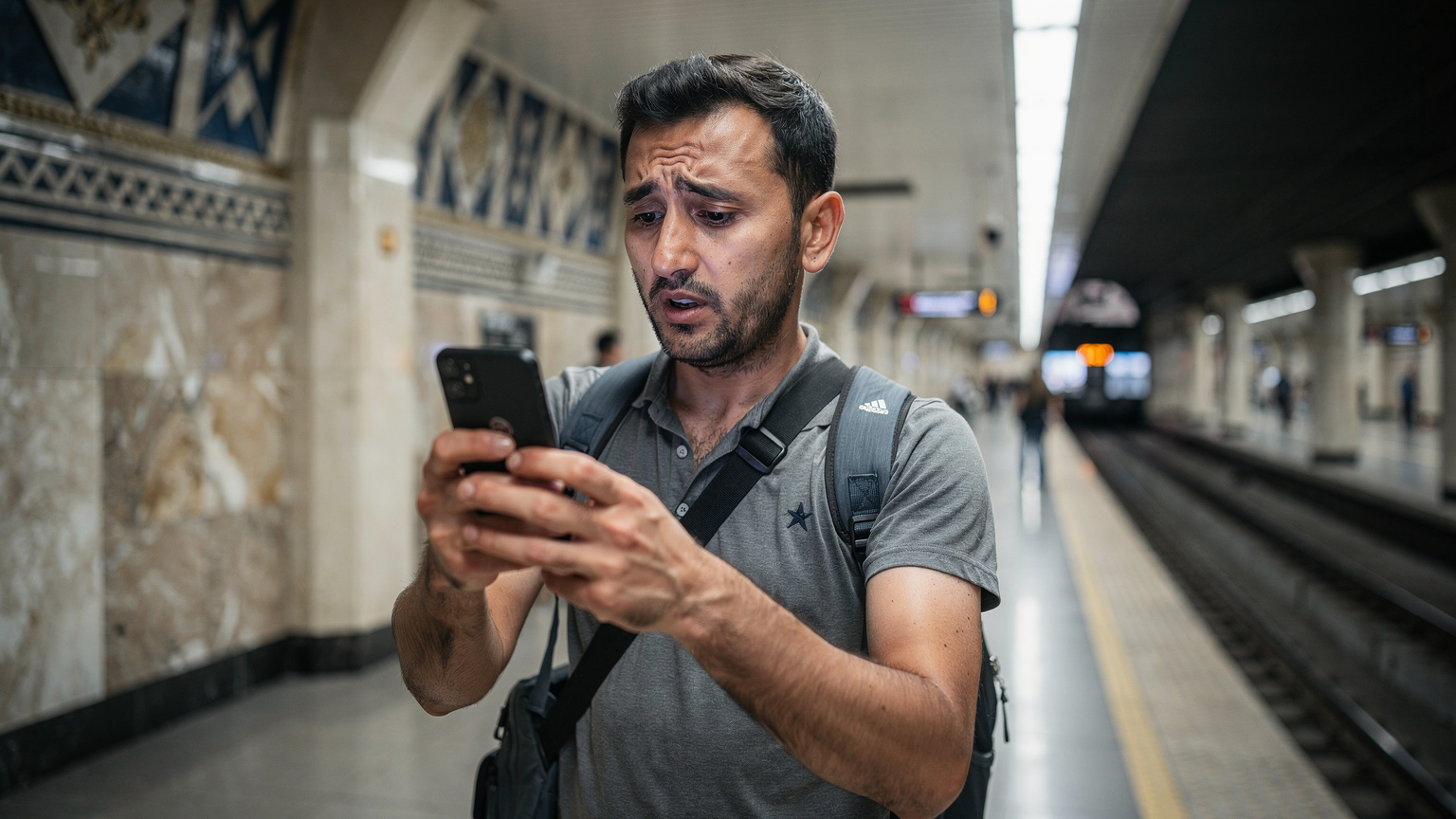
For example, around the Caspian Waterfront Mall or Deniz Mall, both Azercell and Bakcell show strong B3 and B7 signals, delivering download speeds in the 60-100 Mbps range. That's more than enough for high-definition streaming, video calls, and downloading large files. The only exceptions might be deep inside older buildings or underground metro stations, where the signal sometimes struggles to penetrate.
Rural and Mountainous Regions
As you head out into the regions, coverage becomes more unpredictable. The M1 highway going north to Guba and then to Khinalig generally has decent Azercell coverage, mostly on B20 (800 MHz) for its wider reach. This offers consistent but slower LTE (10-25 Mbps). However, once you start climbing into the mountains toward places like Lahic or the more remote parts of the Qabala region, your cell signal can become intermittent. Bakcell's coverage tends to weaken faster than Azercell's in these remote areas.
Even in beautiful spots like Goygol National Park or around the mud volcanoes near Gobustan, you might only find pockets of 3G or even 2G (EDGE/GPRS) connectivity. If you're hiking or exploring truly off-grid places, it's smart to download maps offline and not rely solely on mobile data. Here, a multi-country eSIM that can roam on different networks might offer a slight edge in terms of network resilience, but even then, the mountains themselves will impact signal strength.
Troubleshooting Common eSIM Issues in Azerbaijan
Even with the best planning, connectivity problems can pop up. Here's a quick guide to fixing common eSIM issues you might run into in Azerbaijan.
No Data Connection
If your eSIM is on but you have no data, go through these steps:
- Check eSIM Status: Go to Settings > Cellular/Mobile Data. Make sure your eSIM profile is toggled 'On' and selected as the main one for 'Cellular Data'.
- Verify APN Settings: Double-check the APN. For most international eSIMs, it should be 'internet'. For local Azerbaijani eSIMs, confirm with the carrier. Navigate to Cellular Data Network (iOS) or Access Point Names (Android) under your eSIM settings.
- Enable Data Roaming: For international eSIMs, make sure 'Data Roaming' is turned on for that specific eSIM profile. This might seem odd for a local SIM, but it's necessary for international eSIMs that technically 'roam' onto local networks.
- Restart Your Device: A simple reboot can often fix temporary network registration problems.
- Network Selection: Try manually picking the network. In Settings > Cellular/Mobile Data > Network Selection (iOS) or Network & Internet > Mobile Network > Network Operators (Android), turn off 'Automatic' and scan for available networks (Azercell, Bakcell). Try connecting to each one.
Slow Speeds
If you have data but it's too slow to be useful:
- Location & Congestion: Are you in a crowded area during peak hours (like evening in central Baku)? Network congestion can really slow things down. Try moving to a less busy spot.
- Network Type: Check if your phone is connected to 4G/LTE or if it has dropped to 3G or 2G. If it's not on 4G, go back to the network selection steps above.
- Data Cap/Throttling: Some eSIM plans (especially from certain international providers) might have daily data limits or fair usage policies that slow down your speeds after you've used a certain amount. Check your plan details.
- Device Issues: Make sure your phone's software is up to date. Sometimes, older modem firmware can mess with network performance.
The Future of Connectivity in Azerbaijan
Azerbaijan is serious about upgrading its digital infrastructure. The ongoing expansion of fiber optics and the slow but steady rollout of 5G point to a future with better connectivity. By 2026, while 5G will still be niche, we can expect more robust 4G LTE-Advanced deployments, offering even faster speeds and lower delays in cities.
The government's 'Digital Azerbaijan' plan includes efforts to bring mobile broadband to rural areas that don't have good service, possibly using technologies like fixed wireless access (FWA) over LTE or even satellite internet where traditional infrastructure is tough to build. For travelers, this means that while remote areas might be a challenge now, future visits should see improved connectivity.
Furthermore, the eSIM world is only going to grow. As more devices become eSIM-only and people learn more about them, we can expect even more competitive pricing and a wider range of data packages from international providers. This trend perfectly matches what modern travelers need, offering a truly global and smooth connectivity experience, no matter where their journeys take them, whether it's the busy streets of Baku or the peaceful landscapes of the Caucasus.
Frequently Asked Questions
Can I use my home country's roaming plan in Azerbaijan?
Yes, you can use your home country's roaming plan, but it's usually very expensive. Daily passes from carriers like AT&T or Verizon can cost $10-15 per day, and often slow down your speeds after you use a small amount of data. An eSIM or local SIM is almost always cheaper.
Which Azerbaijani mobile network has the best coverage?
Azercell generally has the widest 4G LTE coverage across Azerbaijan, especially in rural and mountainous regions. Bakcell offers strong coverage and good speeds in cities like Baku and Ganja, while Nar Mobile is a decent third choice, mainly for cities.
Do I need to register my eSIM in Azerbaijan?
If you buy a local eSIM directly from Azercell or Bakcell, you'll need to register it with your passport at their official stores, as Azerbaijani law requires this. International eSIMs, like those from Cellesim, don't require individual registration because they operate under wholesale agreements.
Can I make regular phone calls with an international eSIM in Azerbaijan?
Most international eSIMs provide data-only plans, meaning traditional voice calls and SMS are not included. However, you can use VoIP (Voice over IP) apps like WhatsApp, Telegram, or Facetime for calls and messaging over your data connection.
Are 5G networks available for tourists in Azerbaijan?
As of 2026, 5G in Azerbaijan is still very new and mostly limited to specific test areas in Baku. It's not a reliable option for general tourist use. Your device will mainly connect to 4G LTE, which offers solid speeds in urban areas.
What happens if I have trouble setting up my eSIM?
If you run into setup issues, first make sure your device is eSIM-compatible and connected to Wi-Fi. Check that your eSIM profile is enabled, and verify the APN settings (it's often 'internet'). Restarting your device or manually selecting a network operator can also fix common problems. If issues continue, contact your eSIM provider's support.
See also: Georgia eSIM
See also: eSIM for Russia