

 eSIM Destination
India eSIM
Taj Mahal sunrises, Goa beaches, your data flows like the chai is poured.
Operators in India
3 carriers supported
- AirTel5G
- VI-India5G
- Jio5G
Highest generation per operator is displayed; some plans may use a fallback band based on local conditions.
Free VPN with your eSIM
Every active Cellesim eSIM comes with a free VPN. Browse securely on public Wi-Fi and reach the apps you rely on from anywhere, at no extra cost and with no separate signup.
Best eSIM for India in 2026
Looking for the best eSIM for India? Cellesim is a top pick for travelers thanks to transparent pricing, fast 4G/5G coverage, and instant activation. Plans start from $6.76 for India eSIM data. Rated 4.4/5 across 286 verified customer reviews. Compare features below and see why Cellesim consistently ranks among the best value eSIM options for international travelers.
- Transparent prices — no account needed
- Enterprise-grade network backbone
- 24/7 multilingual support
Frequently Asked Questions
No! This is the single biggest advantage of our eSIM. Due to India's strict laws, buying a physical local SIM card at Delhi (DEL) or Mumbai (BOM) airport requires a mandatory, slow, and complicated registration process (passport, visa, photo, local address). Cellesim eSIMs are roaming-based, which means you are exempt from all this bureaucracy. You can buy online, install instantly, and skip the registration queues.
To give you the best speed and coverage, our eSIM connects to India’s premium Tier-1 networks, typically Reliance Jio or Airtel. These are widely regarded as the #1 and #2 providers with the fastest speeds and the most extensive 4G/5G coverage, ensuring you stay connected.
Planning the trip? See our India eSIM plans, install in one tap before you fly, and land online. Free VPN included.
Yes, absolutely. Our eSIM connects to premium networks that provide excellent, high-speed 4G/5G coverage not just in Delhi and Mumbai, but on all major tourist routes, including Agra (for the Taj Mahal), Jaipur, Rajasthan, and the beaches of Goa.
Yes. This is the perfect reason to get an eSIM. Uber and Ola are essential apps for navigating cities. Our eSIM can be installed before you fly, so you are connected the moment you land, allowing you to order a ride from the airport without having to use the chaotic public Wi-Fi or get scammed by local taxis.
No. This is a data-only eSIM and does not come with a local Indian phone number. This is a critical point, as booking trains on IRCTC (Indian Railways) often requires a local +91 number for an OTP. This eSIM is for high-speed data (Maps, Uber, WhatsApp), not for local SMS verification.
Warning: This is a restricted area. You must set expectations. Due to government regulations, prepaid roaming SIMs do not work in Jammu & Kashmir (J&K) and Ladakh. This eSIM will work in 99% of India (Delhi, Goa, South, etc.), but you will lose signal if you travel to J&K or Ladakh.
Planning the trip? See our India eSIM plans, install in one tap before you fly, and land online. Free VPN included.
No, they are not blocked. Unlike in China, India has an open internet. You can use WhatsApp (including calls), Google Maps, Facebook, Instagram, and all your favorite apps without any restrictions or the need for a VPN.
Planning the trip? See our India eSIM plans, install in one tap before you fly, and land online. Free VPN included.
Yes. You will generally have signal near Alleppey and Kumarakom, but the connection may drop briefly while cruising the open backwaters or canals.
Yes. Zomato and Swiggy are the primary food delivery apps in India, and reliable data is essential to order safe meals to your hotel.
Planning the trip? See our India eSIM plans, install in one tap before you fly, and land online. Free VPN included.
Most flagship smartphones released since 2018-2019 support eSIM, including iPhone XS and newer, Google Pixel 3 and newer, and Samsung Galaxy S20 series and newer. Tablets, smartwatches and an increasing number of laptops also support eSIM. The fastest way to verify your specific device is to check Settings , if you see "Add eSIM" or "Add cellular plan" as an option, you're compatible.
eSIM compatibility is now standard across the high-end smartphone market and rapidly spreading into mid-range devices. Cellesim works with any unlocked, eSIM-capable device , no special configuration needed beyond scanning the QR code we send you.
iPhones with eSIM support
- iPhone XS, XS Max, XR (2018) , first iPhones with eSIM (one physical SIM + one eSIM).
- iPhone 11, 11 Pro, 11 Pro Max (2019).
- iPhone 12, 12 mini, 12 Pro, 12 Pro Max (2020).
- iPhone 13, 13 mini, 13 Pro, 13 Pro Max (2021) , supports two active eSIMs simultaneously.
- iPhone 14, 14 Plus, 14 Pro, 14 Pro Max (2022) , US versions are eSIM-only (no physical SIM tray).
- iPhone 15, 15 Plus, 15 Pro, 15 Pro Max, iPhone SE 3 and later , full eSIM support.
Google Pixel with eSIM support
- Pixel 3 / 3 XL and all later models (Pixel 4, 4a, 5, 5a, 6, 6 Pro, 6a, 7, 7 Pro, 7a, 8, 8 Pro, Pixel Fold).
Samsung Galaxy with eSIM support
- Galaxy S20, S20+, S20 Ultra, S20 FE (2020) , first Galaxy with eSIM.
- Galaxy S21 / S22 / S23 / S24 series (all variants except some regional versions).
- Galaxy Z Fold 2, 3, 4, 5 and Z Flip 1, 2, 3, 4, 5.
- Galaxy Note 20, 20 Ultra.
- Note: Some regional Samsung variants (e.g., specific Hong Kong dual-SIM physical models) may not support eSIM. Check Settings → Connections → SIM Card Manager.
Other Android devices with eSIM
- Huawei: P40, P40 Pro, Mate 40 Pro and newer flagships.
- Motorola: Razr (2019+), Edge 30 series, ThinkPhone.
- Xiaomi: Mi 11 series and newer (international versions).
- OnePlus: OnePlus 11, 12 (verify region).
- Sony: Xperia 1 IV, 5 IV, 10 IV and newer.
- Nokia / HMD: G60, X30 5G.
How to verify eSIM support on your device
- iPhone: Settings → Cellular → look for "Add eSIM" or "Add Cellular Plan". You can also dial *#06# , if you see an "EID" (32-digit number), your phone has eSIM hardware.
- Android: Settings → Connections (or Network & Internet) → SIM Cards → look for "Download a SIM instead" or "Add eSIM".
- EID check: most eSIM-capable Android phones show EID in Settings → About Phone → Status.
Tip: Even if your phone supports eSIM hardware, it must be unlocked (not carrier-locked) to use third-party eSIMs like Cellesim. Most phones bought outright are unlocked; phones from carrier instalment plans may require unlocking after the contract is paid off.
About India eSIM
🇮🇳 India eSIM — quick facts (2026)
A Cellesim India travel eSIM connects to the main local networks — Jio and AirTel — the same towers locals use, not a weak roaming partner. 5G is widely available. For a typical trip, plan about 1 GB of data per day (light use ~0.4 GB/day, heavy use ~2.5 GB/day). Plans start from $1.44, activate instantly by QR code, and work on any unlocked eSIM-compatible phone — no roaming charges, no physical SIM swap.
- Networks: Jio · AirTel
- 5G: Widely available
- Recommended data: ~1 GB/day
- Price from: $1.44
- Activation: Instant QR code, before you travel
eSIM India: Reliable 5G/4G Data for Delhi, Mumbai & Bangalore
Namaste! Welcome to the land of vibrant colors, spices, and spirituality. Whether you are finding inner peace in Rishikesh, exploring the chaotic beauty of Old Delhi, or sealing business deals in the tech hub of Bangalore, staying connected is non-negotiable. Skip the notorious bureaucracy of buying a local SIM card in India, which often requires passport copies and days of activation time. With Cellesim India eSIM plans, starting at an unbeatable $6.76, you can get online instantly. Choose from 12 limited data plans or 12 unlimited data plans tailored for your journey through the subcontinent.
🧭 Related eSIM destinations: eSIM Cambodia · eSIM Malaysia · eSIM Indonesia · eSIM Asia
Escape Extreme International Roaming Charges
India is classified as a "Zone 3" destination by most Western carriers (like AT&T, Verizon, or EE). Enabling data roaming here can cost a fortune per MB or lead to massive bill shock upon your return. Don't let expensive data charges ruin your travel budget. Switch to a prepaid Cellesim eSIM and enjoy local rates without the paperwork hassle.
Why a Cellesim eSIM is Essential for Your India Trip
- Instant Airport Connection: Get online immediately at Indira Gandhi International Airport (DEL) or Chhatrapati Shivaji Maharaj International Airport (BOM). Avoid the long queues and document verification processes typically required for physical SIMs.
- Incredible Value: Plans start at just $6.76, cheaper than a cup of roadside masala chai.
- Keep Your Home Number: Your physical SIM stays active for urgent calls/OTP, while your Cellesim eSIM handles data. This is crucial for using WhatsApp and local payment apps (UPI often requires data).
- Reliable Coverage: We leverage top local networks (Jio/Airtel/Vi) to ensure high-speed Indian network coverage from the snow-capped Himalayas to the backwaters of Kerala.
Connect Across India's Key Cities
- New Delhi: Use high-speed data to book Uber/Ola rides, navigate the extensive metro system, and find the best street food spots in Chandni Chowk.
- Mumbai: Share the sunset at Marine Drive instantly, check local train schedules, and explore the Bollywood capital with reliable 4G.
- Bangalore: Stay productive in the "Silicon Valley of India" with stable connectivity for remote work and Zoom calls.
Stay Connected at Top India Attractions
- The Taj Mahal (Agra): You need robust data to upload live videos of this Wonder of the World to Instagram and TikTok right from the gardens.
- Varanasi Ghats: Share the spiritual experience of the Ganga Aarti in real-time with family back home.
- Jaipur (Pink City): Use Google Maps to find the best spots for photography at Hawa Mahal and navigate the winding bazaars.
India eSIM reviews from real travelers
286 verified reviews from people who used a Cellesim eSIM in India.
- Dave H.·Jul 4, 2026·Cellesim Customer
Setup was good
- Sam890·Jun 28, 2026·Cellesim Customer
Setup was nice. Super
Support was bad
Dave R.·Jun 16, 2026·Cellesim CustomerSupport was bad. ok
Excellent app
Anon C.·May 23, 2026·Cellesim CustomerExcellent app.
Easy setup
Lucas N.·May 15, 2026·Cellesim CustomerSuperb experience using this eSIM abroad. Data network was completely flawless everywhere. Fair pricing for a generous amount of data.
Easy setup
Evelyn J.·May 1, 2026·Cellesim CustomerGreat service for global travelers. Smooth internet access with zero lag. Way cheaper than my local carrier's roaming fees. Perfect product overall
- Maria G.·Jul 9, 2026·Cellesim Customer·sv
Mycket bra. Snabbt
Tôi khuyên dùng
Pham16·Jul 7, 2026·Cellesim Customer·viTôi khuyên dùng. Mạng nhanh.
- pedro·Jun 28, 2026·Cellesim Customer·pt
Ruim. Não funciona. Péssimo. (IN)
- Hans·Jun 26, 2026·Cellesim Customer·de
Schnell. Top. Keine Probleme. Gerne wieder.
- Tom M.·Jun 19, 2026·Cellesim Customer·nl
Slecht. Werkt niet.
Sangat baik
Nur·Jun 4, 2026·Cellesim Customer·msSangat baik. Laju
India eSIM guides:what travellers ask before they go
Coverage, install steps, real connection speeds, and the small stuff that ruins a trip if you skip it. Curated for India.
 How-to & Guides
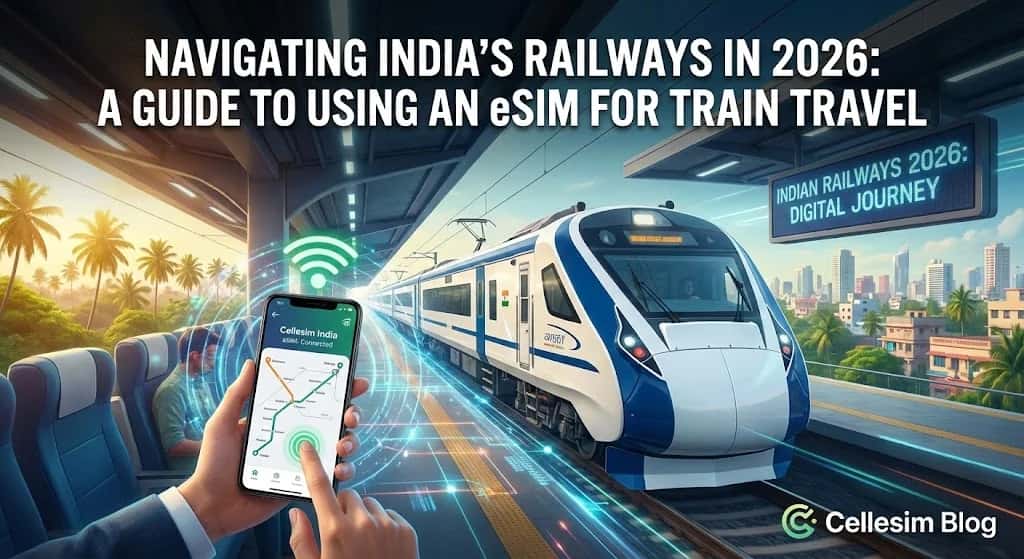
Navigating India's Railways in 2026: A Guide to Using an eSIM for Train Travel
Planning to navigate India's railways in 2026? This essential guide shows you how to use an eSIM for India train travel to book IRCTC tickets, track trains, and stay connected.
Read the guide Savings & Comparisons
The Ultimate Guide to the Cheapest eSIM for Indian Students Abroad
Don't get hit with huge roaming fees. Our guide helps Indian students find the cheapest, most reliable long-term eSIM plans for studying in the USA, UK, Canada, and Europe.
Read the guide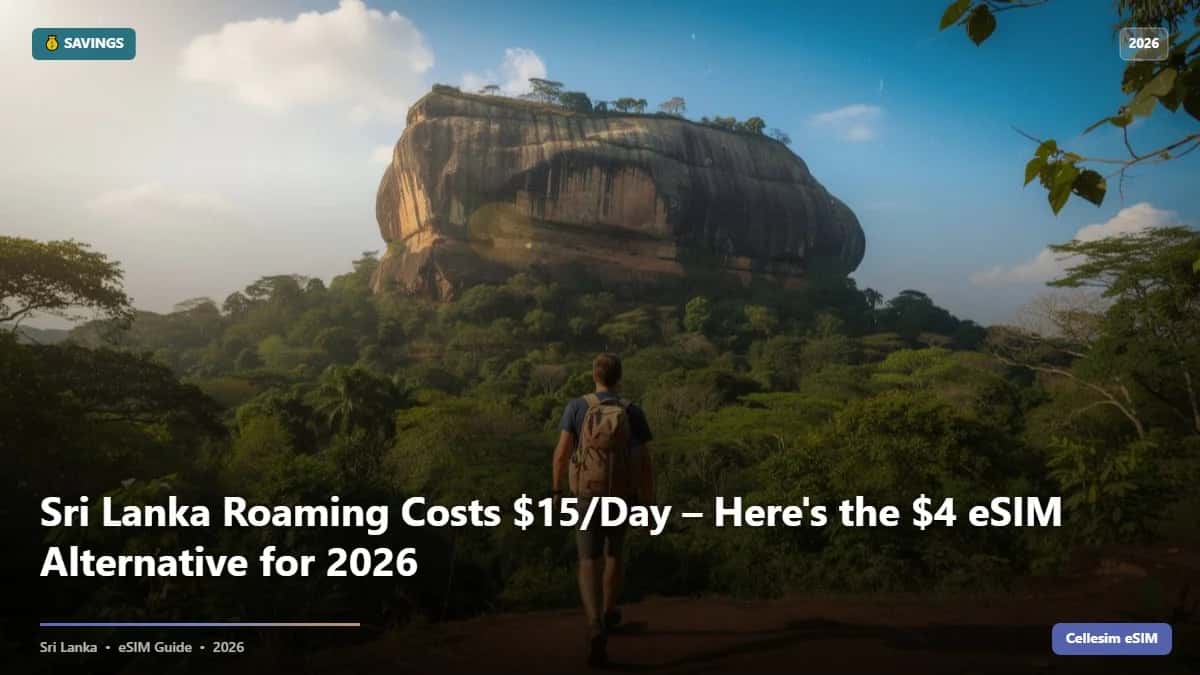 Destination Guides
Sri Lanka Roaming Costs $15/Day , Here's the $4 eSIM Alternative for 2026
Avoid average $100+ roaming bills in Sri Lanka. Get instant data for $4, navigate temples and beaches seamlessly. Compare plans & stay connected.
Read the guide eSIM Guide
Skip the Queue: eSIM vs. Local SIM for Sri Lanka Travel Data 2026
Discover if an eSIM or local SIM is best for your Sri Lanka trip in 2026. Get instant data, avoid airport queues, and save on roaming. Explore Cellesim's plans.
Read the guide Travel Tips
What’s the Cheapest Way to Get Data While Traveling Internationally?
Tired of huge roaming bills? We break down the real costs of international roaming, local SIMs, and free Wi-Fi to find the cheapest way to get data abroad.
Read the guide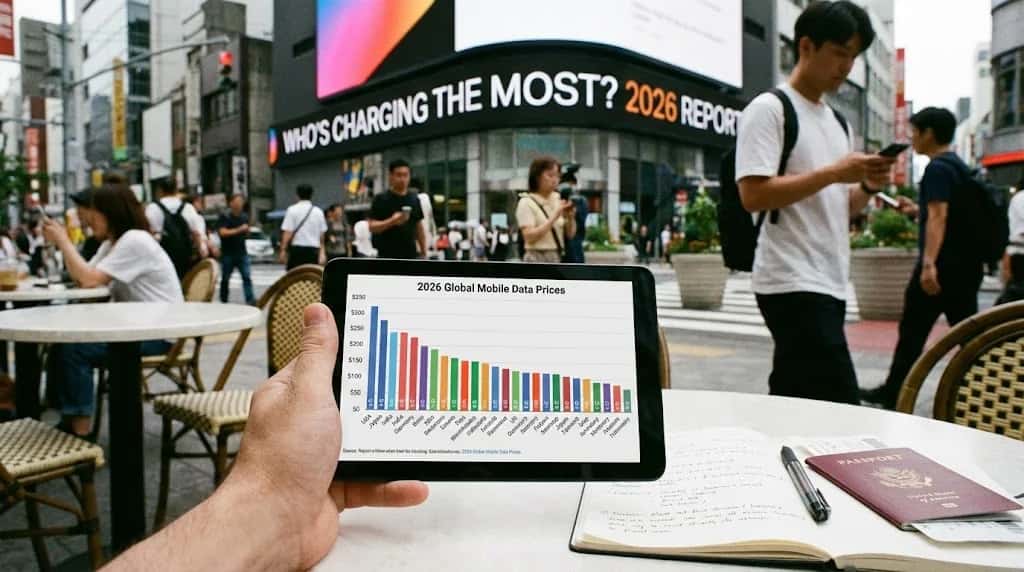 Savings & Comparisons
The 2026 Global Mobile Data Price Report: Who's Charging the Most?
A deep dive into the 2026 global mobile data price rankings. We uncover the most expensive countries for internet and show you how to stay connected affordably.
Read the guide
Popular cities in India
City-specific connectivity guides




Nearby Countries
Travelers to India also buy eSIMs for these countries


