

 eSIM Destination
Israel eSIM
Israel: compare travel eSIMs for maps, messages, and mobile data.
Israel: mobile networks
3 carriers supported
- Hot Mobile5G
- Cellcom5G
- Pelephone5G
Highest generation per operator is displayed; some plans may use a fallback band based on local conditions.
Free VPN with your eSIM
Every active Cellesim eSIM comes with a free VPN. Browse securely on public Wi-Fi and reach the apps you rely on from anywhere, at no extra cost and with no separate signup.
Israel: choose an eSIM for your trip
Choose how much data you need and for how long. Before you buy, check that your phone is compatible and that the plan covers where you're going. Israel: plans start from $3.59. 4.6/5 · Based on 13 reviews Compare the plans below, including details on activation, hotspot use, and top-ups.
- Compare price and how much data you get
- Check networks and coverage
- Contact support if you need help
Frequently Asked Questions
Yes, WhatsApp, FaceTime, and other video/voice calling apps work normally over mobile data throughout Israel.
You can freely use popular communication apps like WhatsApp, FaceTime, Skype, Zoom, and Google Meet to make video and voice calls to friends, family, or for work purposes while traveling in Israel. There are no known government restrictions or throttling on these services in the country.
When using an eSIM from our service, your device will automatically connect to the strongest available major mobile network in Israel, ensuring reliable data speeds for your calls. The specific network partner may vary depending on your chosen plan, but all major networks support these communication services without issue.
Planning the trip? See our Israel eSIM plans, install in one tap before you fly, and land online. Free VPN included.
Yes, an eSIM is generally easier and more convenient than buying a local physical SIM card upon arrival at Ben Gurion Airport (TLV) for travel in Israel. Purchasing a physical SIM card at the airport often involves waiting in lines, navigating potential language barriers, and dealing with registration processes, which can be time-consuming after a long flight.
With an eSIM, you can purchase and activate your data plan before you even depart, or immediately upon landing, ensuring instant connectivity. This means you avoid the hassle of finding a vendor, swapping cards, or worrying about losing your primary SIM. Our eSIMs connect to the strongest available major networks in Israel, such as Partner, Cellcom, or Pelephone, providing reliable coverage across the country.
In Israel, your eSIM will connect to one of the major local mobile networks, such as Cellcom, Pelephone, or Hot Mobile, ensuring wide and reliable coverage.
Our eSIMs are designed to provide reliable coverage by automatically connecting to the strongest available major network across Israel. This ensures you have optimal service whether you're exploring the bustling cities of Tel Aviv and Jerusalem, or venturing into more remote areas. You won't need to manually select a network; your device will connect seamlessly. The exact network your eSIM utilizes can vary depending on the specific plan you choose, but it will always be one of the established, high-quality providers known for their extensive infrastructure.
- Cellcom
- Pelephone
- Hot Mobile
No, roaming in Israel is generally not free with EU, UK, or US mobile plans, and can incur significant charges.
Israel is not part of the European Union or European Economic Area, so the 'Roam Like At Home' regulations do not apply. This means that using your existing SIM card from an EU, UK, or US provider for data, calls, or texts while in Israel will almost certainly lead to high international roaming fees. These costs can quickly add up, especially for data usage, which can be expensive even for basic browsing or using navigation apps like Google Maps or Waze upon arrival at Ben Gurion Airport (TLV).
To avoid unexpected bills, consider using an eSIM for affordable data connectivity. Our eSIMs automatically connect to the strongest available major network in Israel, ensuring you stay connected without the high roaming costs. You can then use popular local ride-hailing apps like Gett or Yango, or communicate via VoIP apps like WhatsApp or FaceTime, which work normally over data in Israel.
Planning the trip? See our Israel eSIM plans, install in one tap before you fly, and land online. Free VPN included.
Yes, ride-hailing apps like Gett, Yango, Uber, and Bolt work reliably across major Israeli cities, including Tel Aviv and Jerusalem, when using your eSIM for data. Your eSIM provides the essential internet connection needed for these apps to locate you, find available drivers, and process your ride requests seamlessly.
While Uber and Bolt operate, Gett and Yango are also widely used and very popular for ordering taxis in Israel. We recommend downloading your preferred apps before your trip and setting up your payment method. Your eSIM automatically connects to the strongest available major network in Israel, ensuring you have a stable connection for navigation and communication with your driver. The exact network can vary by plan.
- Ensure location services are enabled on your phone for accurate pickups.
- Compare prices across different apps for the best rates, especially during peak hours.
- Confirm your driver's details (car model, license plate) before getting in.
Yes, you will generally have mobile coverage in most remote regions of Israel, though it can be less consistent in very isolated areas.
Israel has a robust mobile network infrastructure, with major local networks extending service into many less populated areas. Regions like parts of the Negev Desert, Arava Valley, or the Golan Heights generally have good service along main routes and in populated settlements. However, deep wadis, very remote hiking trails, or extremely isolated spots might experience intermittent or no signal. Your eSIM will automatically connect to the strongest available major network, ensuring the best possible service wherever you are. For extensive off-grid exploration, it's always wise to download offline maps.
Yes! This is the most important question for visitors. Our eSIM is a roaming plan that connects to Israeli networks (like Cellcom or Partner). These networks have extensive 4G/5G coverage across both Israel and the main tourist areas of the West Bank (e.g., Bethlehem, Hebron, Ramallah). You can use one single plan for your entire trip.
Planning the trip? See our Palestine eSIM plans, install in one tap before you fly, and land online. Free VPN included.
This specific plan is valid only within Israel and Palestine. This is a critical point. If you are on a "Holy Land" tour and cross the Allenby Bridge or Wadi Araba border into Jordan, your connection will stop. For this, we highly recommend our Middle East Regional eSIM which covers both Israel and Jordan.
Planning the trip? See our Jordan eSIM plans, install in one tap before you fly, and land online. Free VPN included.
No! This is the #1 roaming trap. Israel is NOT a member of the European Union (EU). Your "Roam Like at Home" (RLAH) plan does not apply. Most US/UK/EU carriers (like AT&T, Verizon, T-Mobile, or UK's Vodafone/O2) will charge you extremely high international roaming "Day Pass" rates (e.g., $10-$15 per day). A Cellesim eSIM is a one-time prepaid fee that is significantly cheaper.
Planning the trip? See our Israel eSIM plans, install in one tap before you fly, and land online. Free VPN included.
Yes, 100%. Buying a physical "Tourist SIM" at Ben Gurion (TLV) Airport is famously expensive and slow. It requires waiting in long queues and going through a mandatory passport registration process. Our eSIM is 100% digital, requires no ID registration, and can be installed before you fly, so you are connected the moment you land.
About Israel eSIM
Israel eSIM — Data plans
$3.59. Compare data allowance, validity and the total package price in the plan list. Check coverage, hotspot support and any fair-use limits before buying.
Install with Wi-Fi before departure. Check when your selected plan starts; installation and activation are not always the same. Network speed varies by location, device and plan.
eSIM Israel: Reliable 5G/4G for Tel Aviv, Jerusalem & Haifa
Welcome to Israel, a nation where ancient history and cutting-edge technology meet. Whether you're flying in for business in the tech hub of Tel Aviv, exploring the sacred history of Jerusalem, or visiting the port city of Haifa, a high-speed, reliable internet connection is essential.
🧭 Related eSIM destinations: eSIM Palestine · eSIM Qatar · eSIM United Arab Emirates · eSIM Middle East
Stay connected across Israel with Cellesim's Israel eSIM plans, starting at just $3.59. Choose from 17 limited and 16 unlimited plans.
CRITICAL: Avoid Astronomical "Rest of World" Roaming Fees!
Compare data allowance, validity and the total package price in the plan list. Check coverage, hotspot support and any fair-use limits before buying.
A Israel eSIM is the only smart, predictable, and cost-effective way to get high-speed local data. Get connected the moment you land at Ben Gurion Airport (TLV) and avoid the bill shock.
Why a Cellesim eSIM is Essential for Your Trip to Israel
- Instant (TLV) Airport Connection: Get online the moment you land at Ben Gurion (TLV) Airport. This is critical for coordinating transport (like Gett or a taxi) or contacting your hotel.
- Prevent Extreme Bill Shock: Our 1 GB plan is vastly cheaper than what you would pay for just 2-3 megabytes of data roaming. You know the cost upfront.
- Keep Your Home Number: Your eSIM handles the data, so your primary SIM (and your WhatsApp number) remains active for essential calls and texts.
- Premium 5G/4G Speed: Israel has an excellent, fast 5G/4G infrastructure. We partner with top-tier local operators (like Cellcom or Partner) to give you the best speeds.
Stay Connected in Israel's Key Cities
Our plans are designed to keep you connected where it matters most:
1. Tel Aviv
The modern heart of Israel, a center for business, technology, and vibrant social life. An eSIM for Tel Aviv is essential for business emails, navigation, and sharing your moments from the beach promenade.
2. Jerusalem
A city of immense historical and religious significance. A Jerusalem eSIM is vital for using maps to navigate the Old City's winding alleys, accessing digital guides, and sharing your experiences.
3. Haifa
A major port city in the north, home to the stunning Baha'i Gardens. A reliable connection in Haifa is perfect for both business travelers and tourists.
Need Unlimited Data for Business in Tel Aviv?
For professionals on assignment in Tel Aviv, journalists, or long-term visitors who need constant data, we offer 16 different Israel Unlimited Data eSIM plans.
Best eSIM for Israel: Your Ultimate Travel Data Solution
Planning your trip to Israel? Ditch the traditional SIM card and discover the best way to stay connected. Our Israel eSIM offers a seamless travel experience, providing abundant data without the hassle of physical cards. It's the smart, prepaid choice for every tourist.
- Affordable & Prepaid: Get connected for as little as $3.59.
- Unlimited Data Options: Stay online without worrying about limits.
- Instant Activation: Receive your QR code via email immediately.
- No Roaming Fees: Enjoy local rates, avoiding expensive charges.
How much does an eSIM for Israel cost?
An eSIM for Israel can cost as little as $3.59, depending on your chosen data plan and duration. We offer a range of affordable prepaid options to suit every traveler's budget and data needs.
Is an eSIM worth it in Israel?
Absolutely! An eSIM for Israel is incredibly worth it. It provides instant connectivity, often with unlimited data options, and saves you from searching for local SIM cards or paying exorbitant roaming fees. It's the convenient and cost-effective solution for modern travel.
Can I buy an Israel eSIM online before travel?
Yes, you can easily buy your Israel eSIM online before you even depart. Simply choose your desired plan, complete the purchase, and you'll receive your eSIM QR code instantly via email, ready for activation upon arrival.
Israel eSIM reviews from real travelers
Based on 13 reviews
Highly recommended
Sophia I.·May 8, 2026Flawless network setup for international roaming. Never lost signal, even inside buildings. Setup was extremely quick and straightforward
Fast 5G data
James S.·May 6, 2026Used this for data on my recent vacation. Smooth internet access with zero lag. Fair pricing for a generous amount of data. Perfect product overall.
highly recommended
David D.·Apr 24, 2026Exactly what I needed for my trip. Smooth internet access with zero lag. Activation via QR code took less than two minutes.
saved me money
Noah E.·Mar 25, 2026Used this for data on my recent vacation. The connection was much better than hotel wifi. No need to look for physical SIM cards anymore. Will definitely choose this service again.
Perfect for travel
Mason D.·Mar 23, 2026Used this for data on my recent vacation. The 5G speeds were incredibly fast and stable. Installation instructions were very clear. Will definitely choose this service again.
Perfect for travel
David E.·Mar 10, 2026Exactly what I needed for my trip. Data network was completely flawless everywhere. Setup was extremely quick and straightforward. Solid 5 stars from me.
Muy recomendado
Juan D.·May 4, 2026·esExcelente experiencia con esta eSIM. El internet funcionó de maravilla para mapas. La configuración con el código QR tomó un par de minutos. Sin duda volveré a usar Cellesim.
Einfache Einrichtung
Christian O.·Apr 30, 2026·deToller Service für Reisende. Internet lief absolut flüssig. Keine physische SIM-Karte mehr nötig
Hızlı ve sorunsuz
Zeynep L.·Apr 20, 2026·trHarika bir global eSIM deneyimi. Navigasyon ve aramalar sorunsuz çalıştı. Normal roaming ücretlerine kıyasla çok ekonomik
geç aktivasyon
Mustafa I.·Apr 2, 2026·tri̇nternet iyi çekiyor ama ilk kurulumda hattın gelmesi biraz zaman aldı
Veloce e comodo
Alessandro B.·Mar 13, 2026·itperfetta per avere internet subito. velocità 5g eccellente e costante. molto più economico del roaming classico. lo userò sicuramente di nuovo
Fácil de usar
Carlos M.·Mar 10, 2026·ptMuito prático para ter dados móveis. Velocidade 5G excelente. Muito mais barato que a minha operadora. Recomendo muito!
Israel eSIM guides:what travellers ask before they go
Coverage, install steps, real connection speeds, and the small stuff that ruins a trip if you skip it. Curated for Israel.
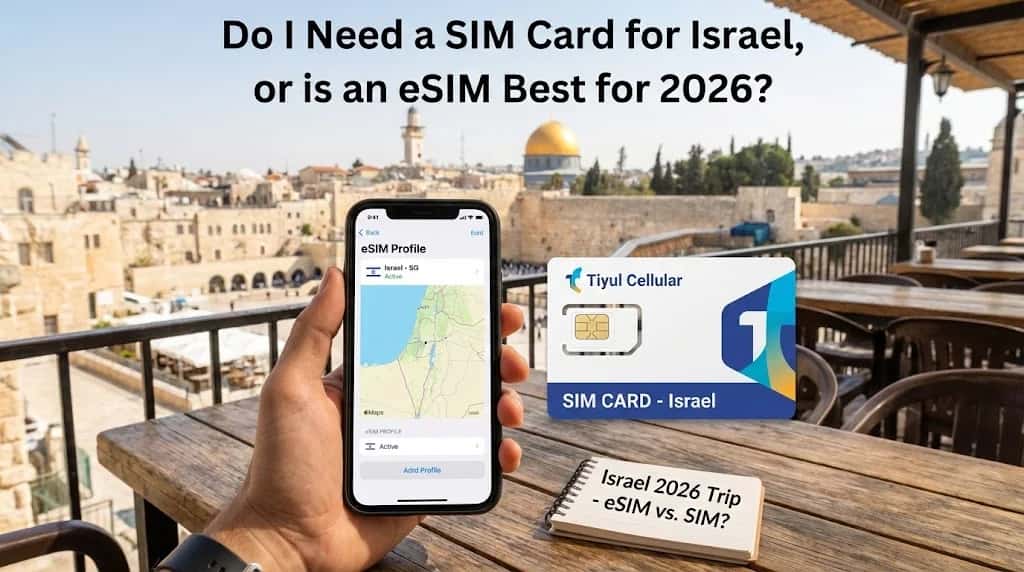 eSIM Guide
Do I Need a SIM Card for Israel, or is an eSIM Best for 2026?
Explore the benefits of using an eSIM for your trip to Israel. This guide covers setup, compatibility, and why it's superior to physical SIMs for travelers in 2026.
Read the guide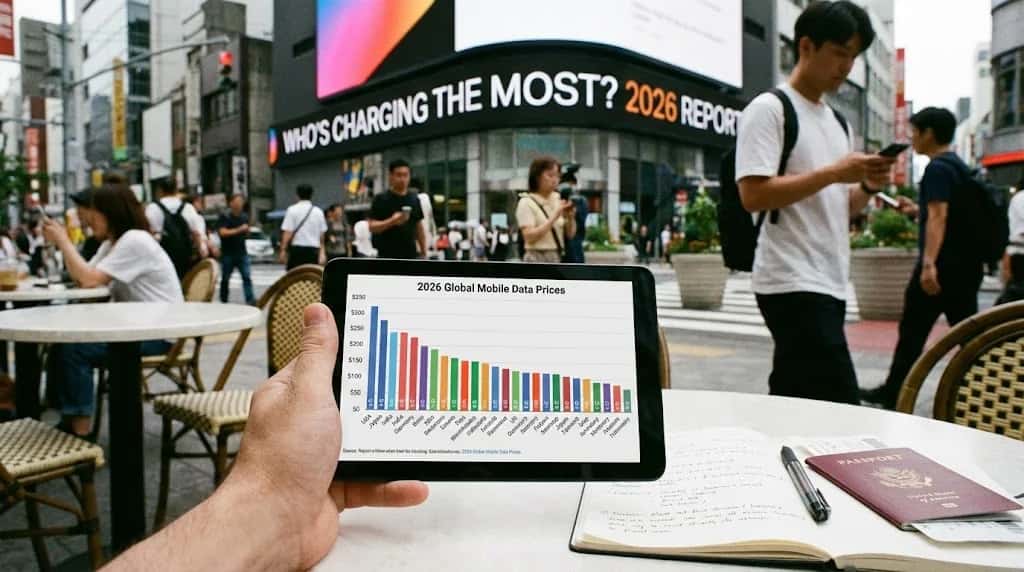 Savings & Comparisons
The 2026 Global Mobile Data Price Report: Who's Charging the Most?
A deep dive into the 2026 global mobile data price rankings. We uncover the most expensive countries for internet and show you how to stay connected affordably.
Read the guide
Nearby Countries
Check coverage for every stop on your trip.


