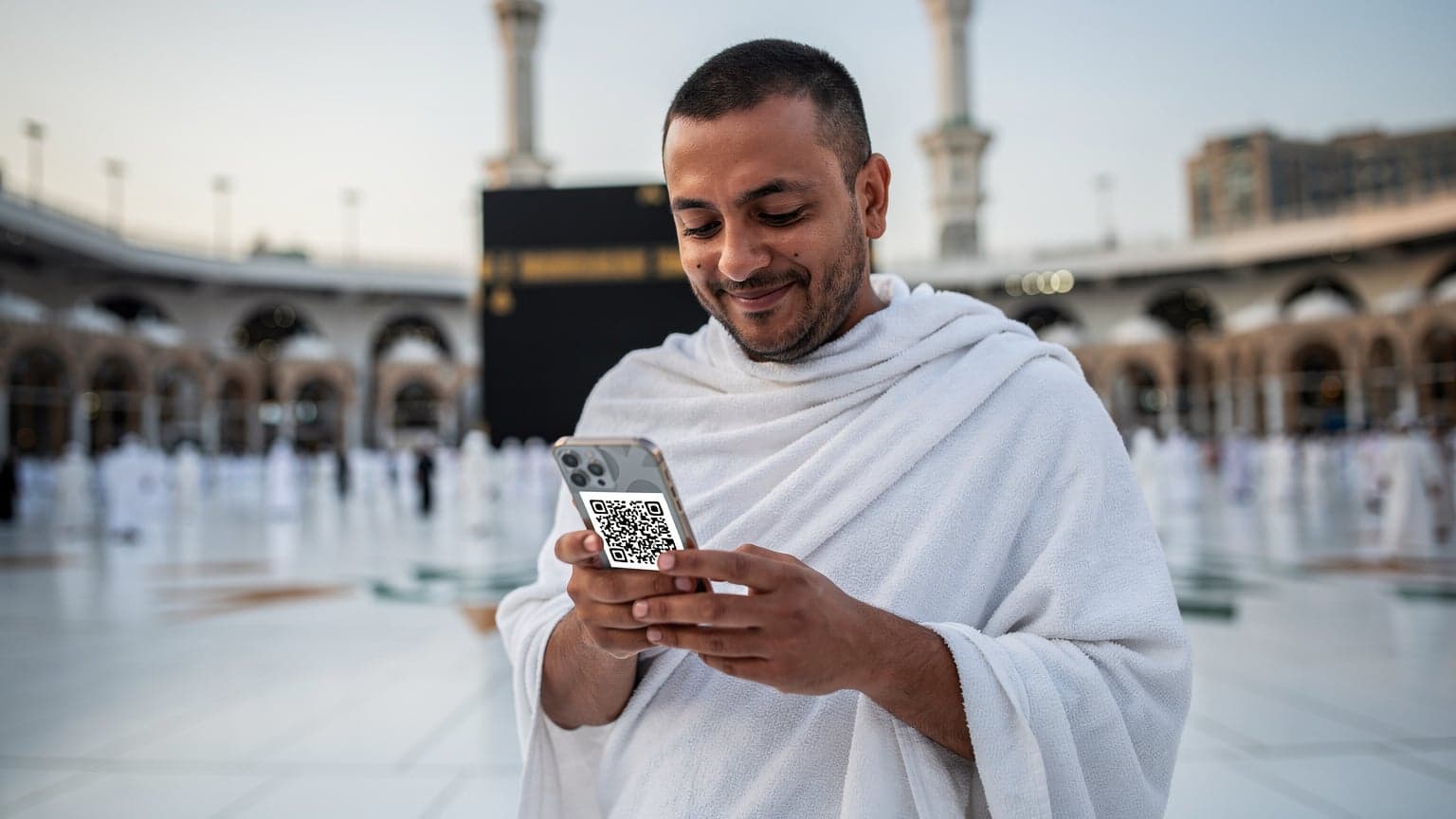
Why an eSIM Is Essential for Your Umrah
Embarking on Umrah is a deeply spiritual journey, but even in sacred spaces, practicalities like staying connected cannot be overlooked. In 2026, an eSIM isn't just a convenience, it's a fundamental tool for pilgrims, offering a blend of affordability, security, and immediate access to vital services. Forget the hassle of searching for local SIM card vendors in unfamiliar airports or navigating language barriers, an eSIM streamlines your connectivity from the moment you land at King Abdulaziz International Airport (JED) in Jeddah or Prince Mohammad Bin Abdulaziz Airport (MED) in Medina.
Consider the primary use cases during Umrah: communicating with family back home, using navigation apps like Google Maps or Waze to find your way around Mecca and Medina, accessing religious apps for prayer times and Qibla direction, and keeping up with essential travel updates. All these rely on a stable data connection. A physical SIM, while functional, introduces friction. You might lose your home SIM card, or your device might not have an accessible SIM tray, especially if you're using a newer iPhone model purchased in the US that's eSIM-only. This is where the eSIM shines, offering a seamless digital activation process that can be completed before you even depart.
The Logistical Advantage Over Physical SIMs
The core advantage of an eSIM lies in its provisioning process. Instead of a physical chip, your phone's embedded SIM (eSIM) receives a profile over the air. This eliminates the need to physically swap cards, which can be particularly challenging when you're managing luggage, navigating crowds, and focusing on your spiritual duties. For pilgrims, time is precious. Every minute spent on connectivity issues is a minute diverted from devotion. An eSIM allows you to arrive in Saudi Arabia with data already active, or activate it within minutes of arrival, bypassing queues and bureaucracy.
Security and Convenience for Pilgrims
Beyond the logistical ease, eSIMs offer enhanced security. There's no physical card to misplace or have stolen. If your phone is lost, your eSIM profile is typically tied to your device and can often be remotely managed or transferred (though this varies by provider and device). This reduces the risk of unauthorized access to your mobile number. From a convenience standpoint, managing multiple profiles on a single device is a game-changer. You can keep your home country's number active for receiving critical calls or two-factor authentication SMS, while simultaneously using a Saudi Arabian eSIM for local data. This dual-SIM, dual-standby (DSDS) capability is invaluable for international travelers.
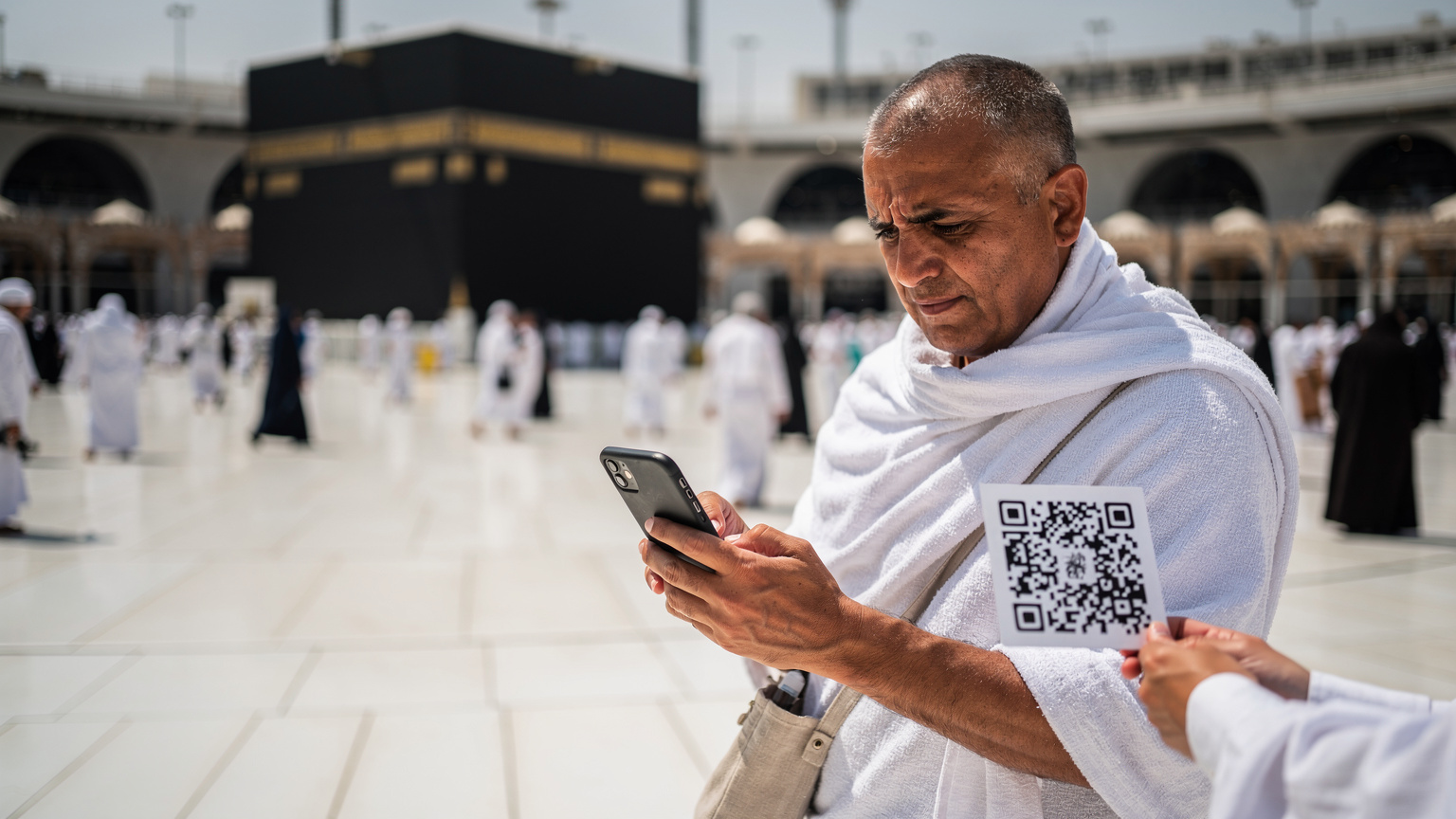
Understanding Saudi Arabia's Mobile Network Landscape
Saudi Arabia boasts a modern and rapidly expanding mobile network infrastructure, driven by major players like STC, Mobily, and Zain. These carriers have invested heavily in 4G LTE and 5G deployment, particularly in urban centers and pilgrimage sites. Understanding their network specifics is crucial for choosing an eSIM that delivers consistent performance.
Carrier Aggregation (CA) is a key technology employed by Saudi carriers. This allows devices to combine multiple frequency bands to achieve higher theoretical speeds and better coverage. For example, STC often aggregates bands like B3 (1800 MHz), B7 (2600 MHz), and B20 (800 MHz) for LTE, providing robust performance even in densely populated areas like the Grand Mosque precincts. For 5G, the primary standalone (SA) and non-standalone (NSA) bands include n78 (3500 MHz) and n41 (2500 MHz), offering significant speed uplifts if your device supports them and you're in a covered area. Mobily and Zain utilize similar spectrum portfolios, though their specific CA combinations and 5G deployment strategies might differ slightly.
Major Carriers: STC, Mobily, and Zain
Each of Saudi Arabia's primary mobile network operators offers a distinct service profile:
- STC (Saudi Telecom Company): Often considered the incumbent, STC generally provides the broadest coverage, especially in remote areas and along major highways connecting pilgrimage cities. In Mecca and Medina, their 4G LTE network can deliver average download speeds of 50-150 Mbps, with 5G speeds potentially reaching 300-800 Mbps in optimal conditions. Their network is robust and reliable, a solid choice for critical connectivity.
- Mobily: A strong competitor, Mobily has invested heavily in urban 5G coverage. Their network performs exceptionally well in cities like Jeddah, Mecca, and Medina, often matching or exceeding STC's speeds in these core areas. Typical 4G LTE speeds range from 40-120 Mbps, with 5G reaching 250-700 Mbps. Mobily is a good option for those staying primarily within urban and pilgrimage zones.
- Zain Saudi Arabia: While slightly smaller than STC and Mobily, Zain has aggressively expanded its 4G LTE and 5G networks, particularly targeting youth and data-heavy users. Their urban coverage is strong, with 4G LTE speeds around 30-100 Mbps and 5G speeds from 200-600 Mbps. Zain can be a cost-effective choice without significant compromise on performance in key areas.
It's worth noting that actual speeds are always subject to network congestion, time of day, and your device's capabilities. During peak Umrah seasons, network cells in Mecca and Medina experience extremely high traffic loads, which can temporarily reduce throughput even on high-capacity bands.
Coverage and Speed in Holy Cities
In Mecca and Medina, coverage from all three major carriers is generally excellent, particularly within and around the Grand Mosque and the Prophet's Mosque. The cellular infrastructure in these areas is designed to handle immense user density. You'll find strong 4G LTE signals (utilizing bands like B3, B7, B40, and B41) indoors and outdoors, and 5G is increasingly prevalent in the central areas. Even within the Haramain high-speed rail stations, like those in Mecca and Medina, you can expect consistent connectivity. Upload speeds typically hover around 10-30 Mbps on 4G LTE, which is more than sufficient for video calls and uploading photos.
| Carrier | Primary LTE Bands | Typical 4G LTE Download Speed (Mecca/Medina) | Typical 5G Download Speed (Mecca/Medina) |
|---|---|---|---|
| STC | B3, B7, B20, B40, B41 | 50-150 Mbps | 300-800 Mbps (n78, n41) |
| Mobily | B3, B7, B20, B40, B41 | 40-120 Mbps | 250-700 Mbps (n78, n41) |
| Zain | B3, B7, B40, B41 | 30-100 Mbps | 200-600 Mbps (n78) |
Top eSIM Providers for Umrah 2026
When selecting an eSIM for Umrah, pilgrims have several excellent options, ranging from global eSIM aggregators to local Saudi Arabian carriers offering direct eSIM services. The choice often boils down to balancing convenience, price, and data allowances. Here, we'll focus on providers known for their reliability and ease of use for international travelers.
Cellesim: A Tailored Solution for Pilgrims
Cellesim stands out by offering curated eSIM plans specifically designed for travelers, including those on pilgrimage. Our packages for Saudi Arabia are competitive, often leveraging the robust networks of major local carriers like STC or Mobily through roaming agreements. This means you get excellent coverage and speeds without the complexity of dealing directly with a foreign carrier. Cellesim plans typically offer fixed data bundles (e.g., 5GB, 10GB, 20GB) for durations ranging from 7 to 30 days, which aligns perfectly with typical Umrah durations. The activation process is straightforward, using a QR code, and our customer support is geared towards helping travelers quickly resolve any issues.
Other Global eSIM Providers: Airalo, MobiMatter
Several other global eSIM marketplaces also offer plans for Saudi Arabia. Airalo is a well-known player, often providing plans from regional partners that connect to local networks. Their packages are generally data-only, similar to Cellesim, and come in various sizes and validity periods. MobiMatter is another strong contender, frequently offering slightly larger data bundles for similar prices, making them attractive for heavy data users. When comparing these, pay close attention to the specific local network partner they use, as this directly impacts your coverage and speed experience. Always verify if Holafly discount codes are genuinely cheaper for your data needs, or if a provider like Cellesim offers a better base rate.
Local Carrier eSIM Options: STC, Mobily, Zain
For those who prefer to deal directly with a local provider, STC, Mobily, and Zain all offer eSIMs. However, purchasing and activating these can be more involved for a non-resident. You typically need to visit a physical store, present your passport for registration (mandatory under Saudi law), and often navigate a process that's primarily designed for residents. While these plans might offer better per-GB rates for very large data volumes or longer durations, the initial setup can be a hurdle. For most Umrah pilgrims, the convenience of a global eSIM provider that handles the local carrier integration is a significant advantage. Be aware that some local plans might not support VoLTE or VoWiFi for international devices, which can be a gotcha if you rely on voice services over LTE (though most pilgrims use VoIP apps like WhatsApp or Telegram anyway).
Comparing Data Plans and Pricing
Choosing the right eSIM plan involves more than just looking at the headline price. You need to consider data allowance, validity period, network coverage, and any additional features. For Umrah, a balance of sufficient data for navigation, communication, and spiritual apps over a typical 7-14 day period is usually ideal.
Data Allowance and Validity Periods
Most eSIM providers for Saudi Arabia offer plans ranging from 1 GB to 30 GB or more. For a typical 7-10 day Umrah, 5-10 GB is generally sufficient for moderate usage, including daily navigation, messaging, light social media, and occasional video calls. If you plan to stream more content or make frequent video calls, consider a 15-20 GB plan. Validity periods usually span 7, 15, or 30 days. It's crucial to select a plan whose validity covers your entire stay to avoid mid-trip top-ups or service interruptions.
| Provider | Data Allowance | Validity | Estimated Price (USD) | Local Network Partner |
|---|---|---|---|---|
| Cellesim | 5 GB | 7 Days | $12.00 | STC/Mobily (best available) |
| Cellesim | 10 GB | 15 Days | $20.00 | STC/Mobily (best available) |
| Cellesim | 20 GB | 30 Days | $35.00 | STC/Mobily (best available) |
| Airalo (Sawa plan) | 5 GB | 7 Days | $13.50 | STC |
| Airalo (Sawa plan) | 10 GB | 15 Days | $22.00 | STC |
| MobiMatter (Mobily plan) | 10 GB | 14 Days | $19.00 | Mobily |
Note: Prices are estimates and subject to change. Always check the provider's website for the most current rates.
Understanding Data-Only vs. Full-Service eSIMs
Most eSIMs offered by global providers like Cellesim are data-only. This means they provide internet access but do not include a local phone number for calls and SMS. For voice communication, pilgrims typically rely on VoIP apps such as WhatsApp, Telegram, or FaceTime Audio/Video, which work seamlessly over data. If you absolutely require a local Saudi phone number for specific purposes (e.g., local taxi bookings, hotel calls), you might need to consider a physical SIM from a local carrier upon arrival or a more expensive