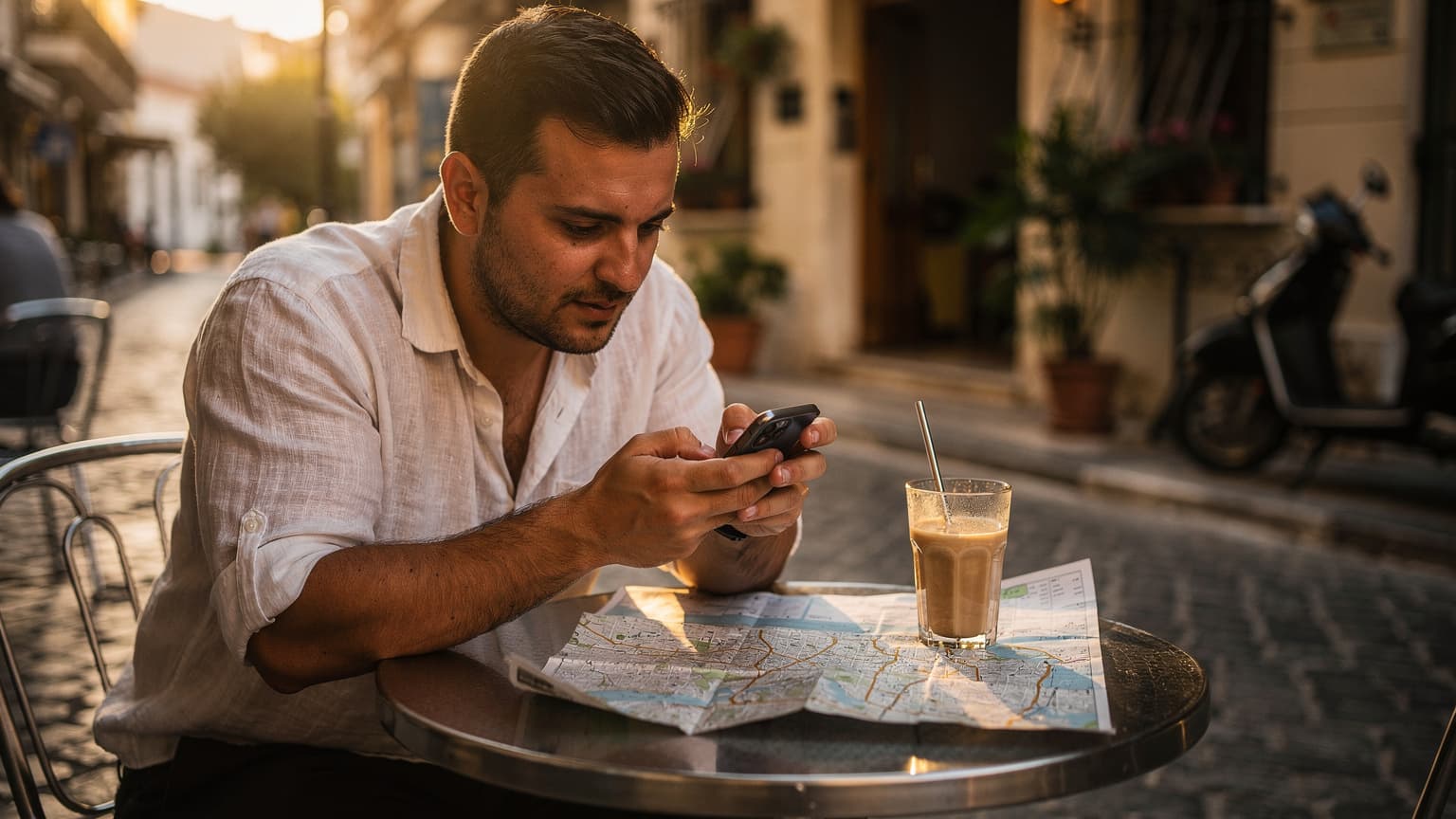
Your US carrier will connect in Greece but relying on AT&T or Verizon international passes costs up to ten dollars a day while severely throttling your speeds after minimal usage. For island hopping across the Aegean Sea in 2026, purchasing a prepaid digital data plan ensures you connect directly to premium local networks like Cosmote for a fraction of the price.
The Brutal Reality of Greek Island Connectivity
The Aegean Sea is a beautiful black hole for mobile data.
I have spent the better part of four years living out of a suitcase, rotating through different countries every one to three months. When I first planned my extended stay in Greece, I assumed the connectivity would mirror the rest of western Europe. I pictured myself seamlessly answering emails from the deck of a catamaran while sailing past ancient ruins. The reality hit me about forty minutes outside the port of Piraeus when my phone dropped completely offline just as I needed to verify a client document.
(Trust me, I learned this the hard way while trying to upload a massive video file somewhere between Kythnos and Serifos on a Tuesday afternoon.)
The problem is not a lack of infrastructure in Greece. The problem is how your home network interacts with that infrastructure. When you land in Athens with a United States based SIM card, your phone has to beg local cell towers for permission to use their bandwidth. The local networks prioritize their own paying subscribers first. You are placed at the absolute bottom of the priority list.
Why the Aegean Sea Kills US Carrier Signals
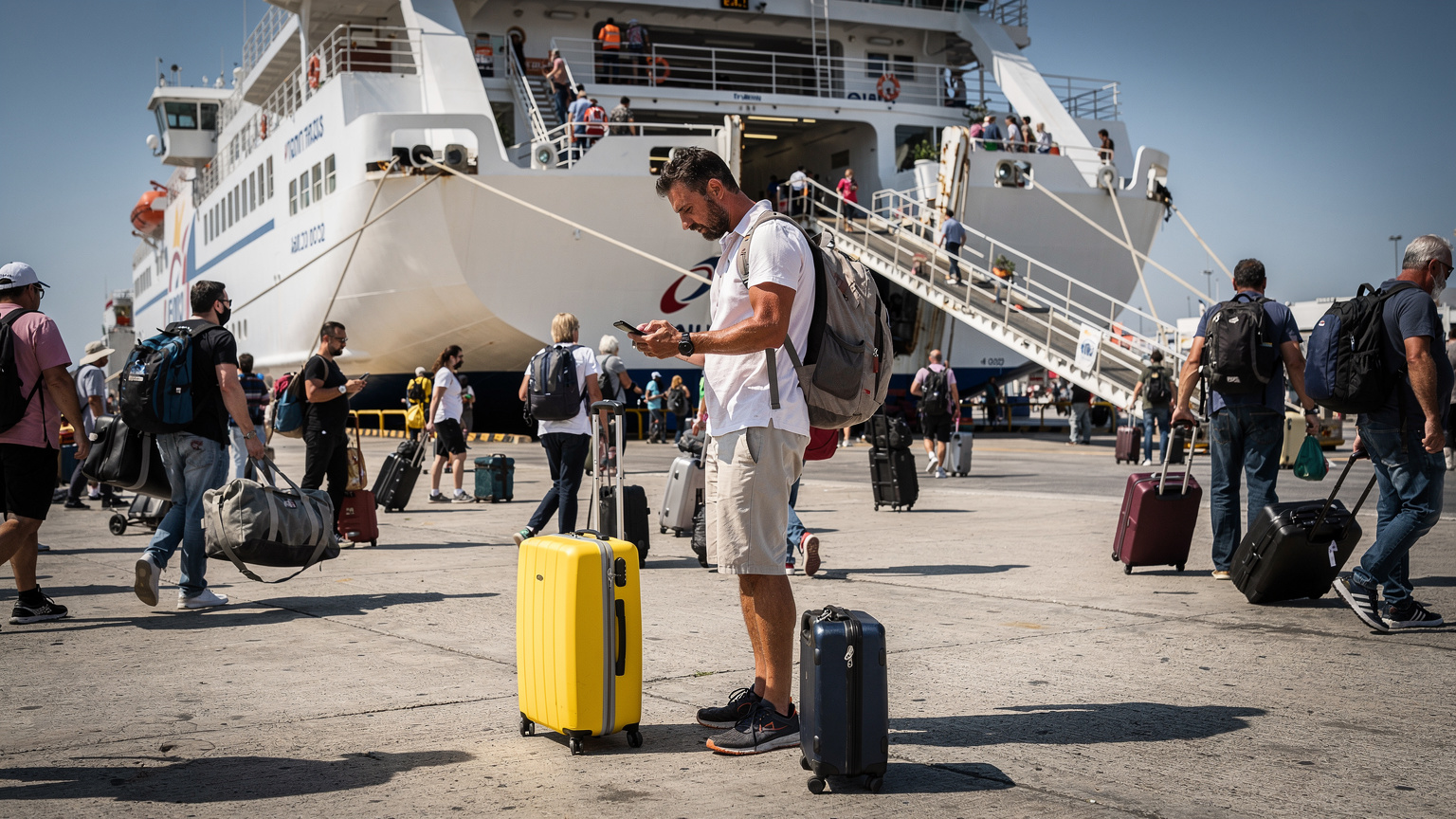
Cellular signals operate on specific radio frequency bands. In North America, companies like T Mobile and AT&T utilize completely different frequency bands than European providers. While modern smartphones contain antennas capable of reading multiple frequencies, they struggle to maintain a strong lock when switching between distant towers scattered across hundreds of rocky islands. A local Greek SIM connects directly to Band 20 or Band 3 towers which are optimized for long distance over water transmission. Your roaming US profile often fails to authenticate fast enough as the boat moves out of range.
The Mykonos to Santorini Dead Zone
If you look at a map of the Cyclades, the route from Mykonos down to Santorini looks like a straight shot. You board a high speed ferry like the Seajets WorldChampion Jet and expect a smooth ride. What nobody tells you is that the aluminum hull of these fast ferries acts like a giant faraday cage blocking radio waves. Unless you are standing on the very back deck fighting the wind, your US roaming signal will completely vanish for the entire two hour journey. Having a local profile installed ensures that the moment you pass an inhabited island like Naxos or Ios, your phone instantly grabs the passing tower signal without waiting for international roaming authorization.
AT&T and Verizon International Passes Analyzed
Paying your home carrier for international access is a massive trap.
Most travelers from the United States receive a text message upon landing that casually offers international roaming for ten dollars a day. It sounds incredibly convenient. You do not have to change any settings. You just start using your phone exactly as you would at home. But when you are traveling for weeks or living abroad as a digital nomad, that daily fee becomes an astronomical expense.
(I have seen fellow travelers cry over cellular bills exceeding four hundred dollars because they forgot to turn off cellular data while sleeping.)
| Provider Plan | Daily Cost | Monthly Total | Speed Cap |
|---|---|---|---|
| Verizon TravelPass | $10.00 | $300.00 | Throttled after 2GB daily |
| AT&T International Day Pass | $12.00 | $120.00 (capped at 10 days) | Subject to local network limits |
| T Mobile Magenta Max | Included | Included | Severely throttled at 256kbps |
| Local Digital Plan | $0.50 | $15.00 | Uncapped 5G where available |
The Ten Dollar a Day Trap
The daily pass system operates on a rigid twenty four hour clock based on your home timezone. If you land in Athens at noon and send a single text message to your family, you trigger the ten dollar charge. If you wake up the next morning in Greece and check your email over cellular data, you might cross the midnight threshold back in New York and trigger a second ten dollar charge. Two days of basic connectivity just cost you twenty dollars. Over a month long stay, this is entirely unsustainable for anyone managing a travel budget.
Speed Throttling After Two Gigabytes
Even if you accept the daily fee, you are not getting premium service. Verizon restricts your high speed data usage to just two gigabytes per day. Once you exceed that limit, your connection is throttled down to 3G speeds. Two gigabytes might sound like plenty but a single hour long video conference call easily consumes that allowance. Uploading a batch of high resolution photos to cloud storage will burn through it in minutes. When you hit that invisible wall, simple tasks like loading Google Maps or checking ferry schedules become agonizingly slow.
Why I Switched to Local Networks in Greece
Stop fighting with expensive roaming agreements and just use what the locals use.
During my second month in Greece, I realized I was wasting hours of my life waiting for web pages to load while sitting in cafes where the locals were streaming high definition video without a care in the world. I decided to test the big three Greek telecom operators directly. The difference in quality was staggering. By securing a local digital profile before my trip, I completely bypassed the roaming bottleneck.
(If you are curious about similar setups in other countries, read my guide on eSIM for German Travelers which details the exact same priority network issue on the Deutsche Telekom grid.)
Cosmote vs Vodafone vs Nova
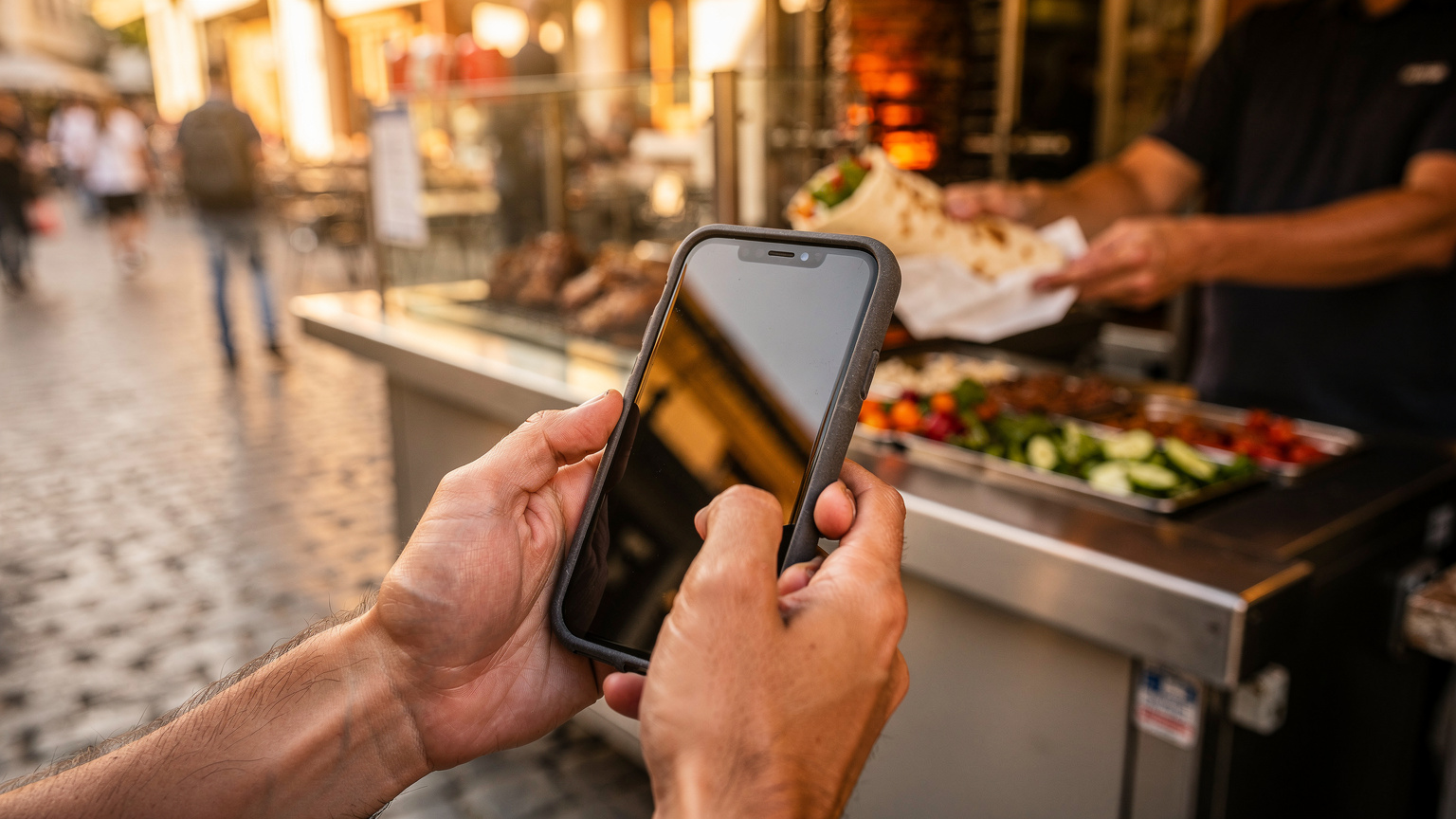
Greece has three major mobile network operators. Cosmote is the undisputed king of coverage. They are formerly the state owned telecom monopoly and they own the vast majority of the physical cell towers scattered across the remote islands. If you are heading to smaller islands like Folegandros or Amorgos, Cosmote is your only reliable option. Vodafone Greece is a solid second choice with excellent coverage in major cities like Athens and Thessaloniki but they occasionally struggle with deep indoor penetration. Nova is the budget option. They recently rebranded from their old name Wind but their rural coverage remains incredibly patchy.
The True Cost of a Monthly Data Habit
When you purchase eSIM for Greece directly, you tap into these local networks at wholesale prices. I typically consume about thirty gigabytes of data every month while working remotely. If I tried to buy that much high speed data through a US carrier add on package, I would go bankrupt. With a local digital profile, a massive data bucket costs less than a casual dinner in a taverna. It completely changes how you interact with your phone while traveling. You stop hunting for insecure public wifi networks and you start living freely.
Ferry Cruising Keeping Your Connection Alive
Your connectivity strategy dictates whether a ferry ride is productive or a total waste of time.
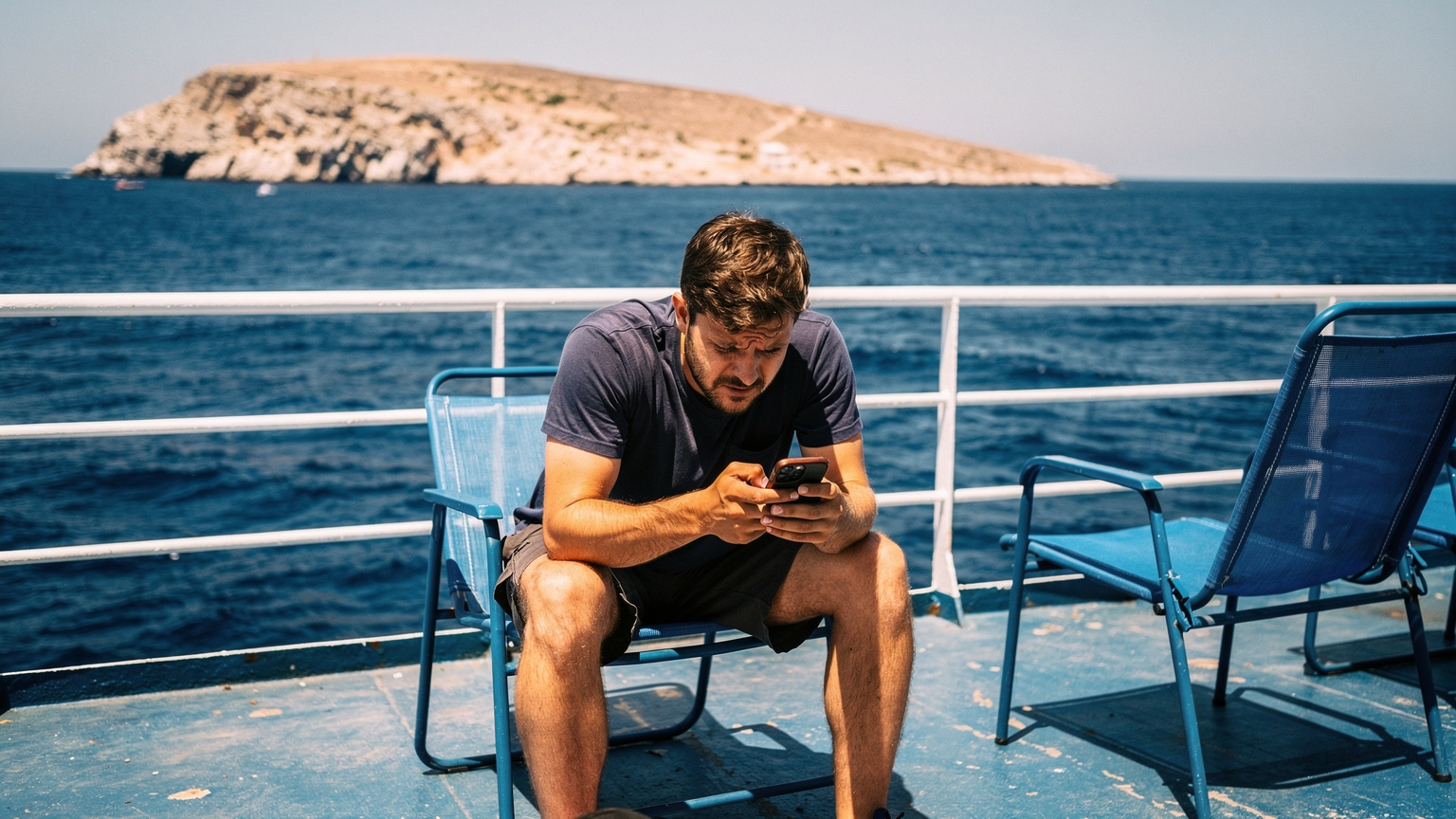
Island hopping requires spending significant portions of your week on boats. The conventional ferries like Blue Star take their time, offering open air decks where signals can reach your phone. The high speed catamarans are sealed metal tubes. Understanding how to manage your connection across these different vessels is crucial for any long stay traveler trying to maintain a normal work schedule.
(I once missed a crucial client deadline because I assumed the ferry wifi would actually work. Spoiler alert: it never works.)
| Ferry Operator | Vessel Type | Signal Penetration | Best Place to Sit |
|---|---|---|---|
| Blue Star Ferries | Conventional Passenger Ship | Excellent on outer decks | Top deck cafe near the stern |
| Seajets | High Speed Catamaran | Terrible inside cabin | Window seats near the rear doors |
| Hellenic Seaways | Mixed Fleet | Moderate | Upper level lounge areas |
| Fast Ferries | Conventional Ro Ro | Good | Outdoor seating rows |
Booking Tickets on Ferryhopper Mid Transit
The most important application on your phone in Greece is Ferryhopper. It is the only reliable way to check real time schedules and book tickets. Because ferry schedules change constantly due to high winds, known locally as the Meltemi, you often need to rebook tickets while already in transit. If your US carrier is throttling your data speed to a crawl, the Ferryhopper payment gateway will simply time out and fail. Having a direct local connection ensures that your booking goes through instantly even if you are passing a remote island with limited tower bandwidth.
The High Speed Catamaran Wifi Myth
Do not be fooled by the signs advertising onboard wifi. Yes, the boat has a router. Yes, you can connect your laptop to it. But that router is relying on the exact same cellular networks that your phone uses. When the boat moves out of range of a shore tower, the entire ship loses internet. Furthermore, you are sharing a single cellular backhaul with five hundred other bored tourists trying to stream Netflix. The bandwidth per user is functionally zero. Your only hope for getting work done is tethering directly to your own phone using a premium local data plan.
Working Remotely From the Cyclades
Stop trying to answer emails from a sun lounger.
The digital nomad fantasy sells an image of a laptop resting on a beach towel next to crystal clear water. The reality involves blinding sun glare, overheating batteries, and sand destroying your expensive keyboard switches. If you actually want to get work done while living in Greece for a few months, you need a proper setup with reliable infrastructure.
(My first week in Santorini was a disaster of dropped video calls and sweat soaked shirts before I finally learned how to build a proper routine.)
Rent Anchors Naxos vs Paros
Finding a place to live that supports remote work requires careful planning. I spent two months renting a beautiful apartment in Chora on the island of Naxos for twelve hundred euros a month. Naxos is large enough to have a permanent year round population which means their fiber optic infrastructure is surprisingly robust. Paros is slightly more expensive, hovering around fifteen hundred euros for a similar setup, but offers a more polished cafe culture. Always demand a screenshot of a speed test from your landlord before signing a lease. Do not trust them when they say the internet is fast.
Coworking Spaces That Actually Have Fiber
When the Airbnb internet inevitably fails, you need a backup location. In Athens, I practically lived at a coworking space called Stone Soup. They have dedicated fiber lines and proper ergonomic chairs. On the islands, the options are thinner. In Naxos, look for a place called Philia. In Heraklion on Crete, check out Comeco. These spaces charge around fifteen to twenty euros for a day pass. Having a reliable cellular data plan means you can tether your laptop as a backup if the coworking space experiences a rare outage.
Essential Apps That Require Uninterrupted Data
Your smartphone is your remote control for navigating modern Greece.
Without a reliable data connection, you are effectively blind. The days of navigating with a paper map and hailing taxis by waving your hand are completely over. The local infrastructure relies heavily on digital applications that require constant authentication with remote servers.
(If you think Greece is strict about digital apps, you should read my breakdown on Japan Trip 2026: Roaming Costs $250 , Here's How eSIM Saves You 90% where losing signal literally traps you in train stations.)
FREENOW for Late Night Port Transfers
Uber exists in Athens but it functions purely as a dispatch service for regular yellow taxis. The actual application that every local uses is called FREENOW. When your ferry arrives at the port of Piraeus at midnight, you will find a chaotic sea of shouting drivers trying to overcharge tourists. You need to open FREENOW, request a ride, and coordinate a pickup spot amidst the madness. If your US carrier data is lagging or disconnected, the app will fail to lock your GPS location and you will be stuck negotiating an inflated cash fare in the dark.
Banking Auth Apps and Dual SIM Setups
One of the most terrifying moments for a digital nomad is getting locked out of their bank account. Many United States banks still rely on SMS text messages for two factor authentication. When you are roaming in Greece, those text messages often fail to deliver because of complex international routing issues. Alternatively, modern banking apps require a secure data connection to generate a token.
How to configure your device for banking abroad:
- Keep your primary US SIM card active in your phone settings but turn off cellular data switching.
- Enable Wi Fi Calling on your US line before you leave your home country.
- Install your Greek digital data profile and set it as the primary line for all cellular data.
- Force your US line to route its calls and text messages over the cellular data connection of your Greek profile.
- Receive your banking SMS messages instantly without paying any roaming fees.
The Schengen Clock and Visa Realities
Time moves differently when the immigration office is watching.
It is incredibly easy to fall in love with the Mediterranean lifestyle and decide to extend your stay. However, United States citizens are bound by the strict rules of the Schengen Area. You cannot simply rent an apartment in Crete and stay for the entire summer without tracking your days meticulously.
(A friend of mine accidentally overstayed by three days and was hit with a massive fine and a stern warning at the Athens airport passport control.)
The Ninety Day Rule for Digital Nomads
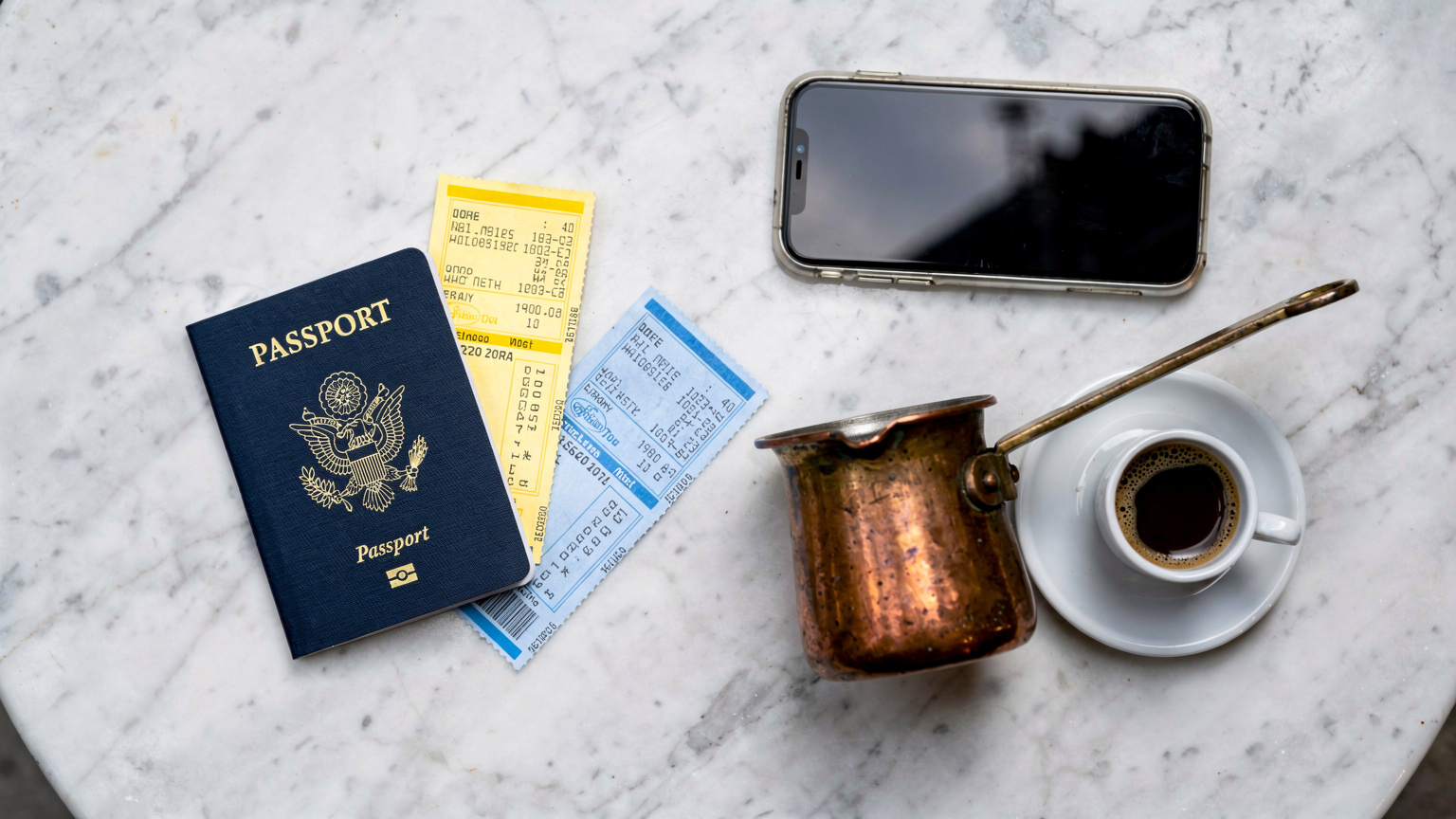
The law states that you can only remain inside the Schengen Area for ninety days within any rolling one hundred and eighty day period. Every single day counts, including your day of arrival and your day of departure. Greece is a strict enforcer of this rule. If you plan to stay longer, you must apply for a specific digital nomad visa which requires proving a monthly income of at least three thousand five hundred euros and navigating a labyrinth of local bureaucracy. Always keep a digital tracker app on your phone to count your remaining days.
Pausing US Plans While Abroad
If you are maximizing your ninety day limit, paying for your home cell phone plan becomes a massive waste of money. Most major carriers allow you to pause your service for up to ninety days at a time. By suspending your expensive home plan and relying entirely on a cheap local digital profile, you can save hundreds of dollars over the course of your trip. Just remember to reactivate your home service the day before you fly back to the states.
Step by Step Setting Up Your Travel Data
Preparation prevents panic at the baggage claim.
Do not wait until you land in Athens to figure out your connectivity strategy. The public wifi at Eleftherios Venizelos Airport is notoriously slow and requires SMS verification which you might not be able to receive. The smartest move is to purchase and install your digital profile while you are still sitting at your departure gate.
(If you are traveling with friends from Europe, direct them to my guide on eSIM for Spanish Travelers to ensure everyone in your group stays connected.)
| Setting Menu | iOS Instructions | Android Instructions |
|---|---|---|
| Cellular Data | Select your new travel profile as primary | Toggle mobile data to the new profile |
| Data Roaming | Turn ON for the travel profile only | Enable roaming for the travel SIM |
| Default Voice Line | Keep set to your home carrier | Keep set to your primary number |
| Allow Data Switching | Turn OFF to prevent accidental charges | Disable auto data switching |
Installing Your Profile Before JFK Departure
The installation process takes less than five minutes but requires a stable internet connection.
- Purchase your digital data package through a reliable provider while at home.
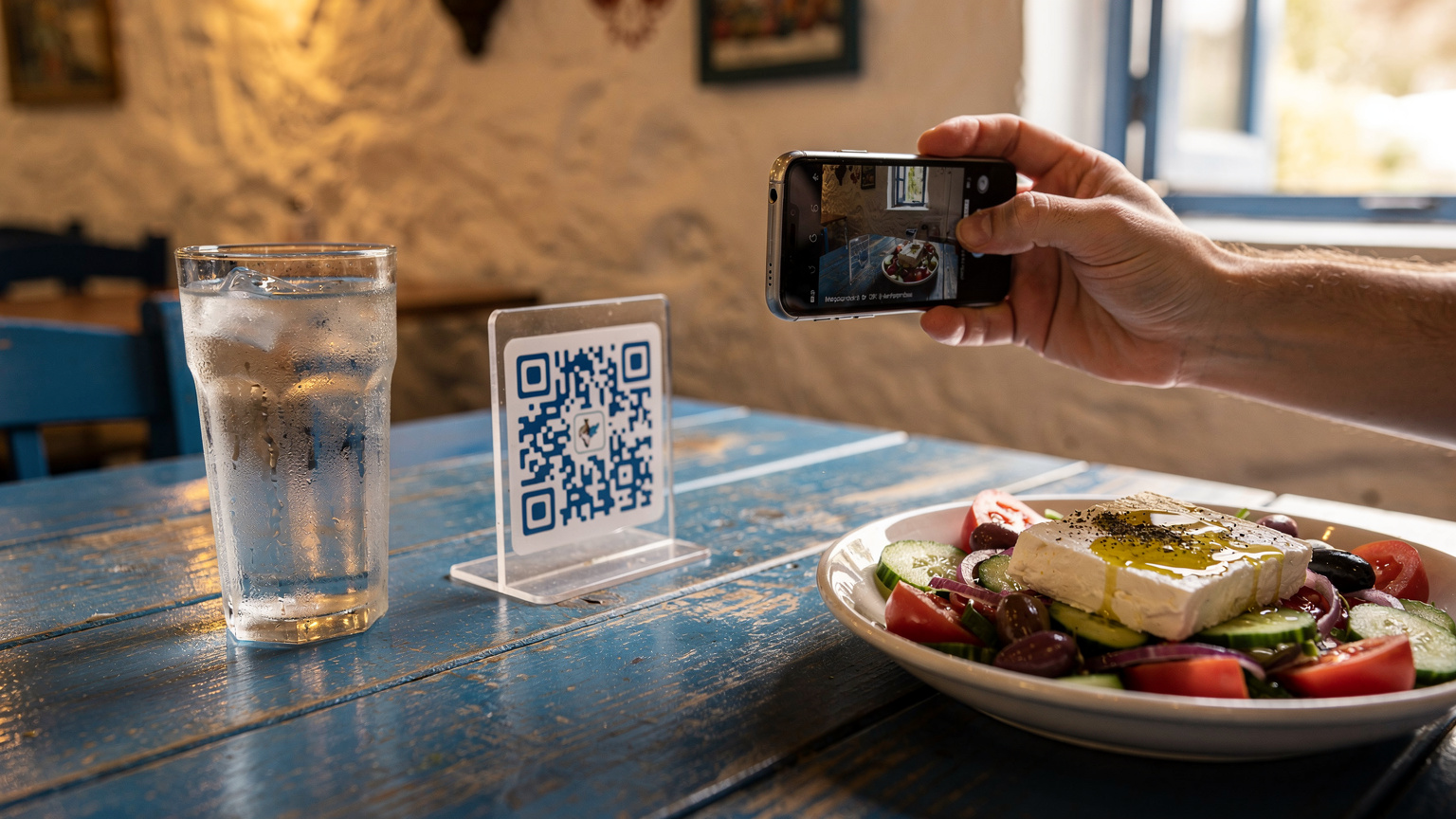
- Open the confirmation email and locate the installation QR code.
- Go to your phone settings and select add cellular plan.
- Scan the code and label the new profile clearly as Greece Travel.
- Leave the new profile disabled until your plane touches down in Athens.
Managing Dual SIM Settings on iOS
Modern iPhones handle dual networks brilliantly if you configure them correctly. The most critical step is ensuring that your phone does not accidentally use your home carrier for background data tasks while in your pocket. Go to your cellular settings and explicitly turn off the toggle for allow cellular data switching. This forces the phone to only pull data from your cheap local package while keeping your home number active purely for incoming emergency calls.
Troubleshooting Common Aegean Network Drops
Sometimes the technology just refuses to cooperate.
Even with the best local network setup, you will occasionally encounter dead zones or strange routing issues when hopping between islands. The Greek cellular grid is complex, relying on microwave links between mountaintops to bridge the gaps between islands. When a link goes down, your phone might get confused.
(If you ever find yourself completely stuck, read the extensive frequently asked questions page for deeper technical troubleshooting steps.)
Manual Network Selection Tricks
By default, your phone automatically selects the strongest network tower. However, sometimes the strongest tower is actually congested with thousands of tourists. You can override this behavior.
- Turn off automatic network selection in your cellular settings menu.
- Wait for the list to populate which can take up to two minutes while the phone scans all available frequencies.
- Force connect to a different provider if your current signal is showing full bars but no data is loading.
- Revert to automatic once you arrive at your final destination for the day.
When to Toggle Airplane Mode
When you arrive at a new port, your phone might still be desperately clinging to a faint signal from the island you just left. This prevents it from locking onto the massive tower sitting right in front of you. Toggling airplane mode on for ten seconds and then off again clears the radio cache. It forces the modem to scan the immediate area and negotiate a fresh connection with the closest tower. It is a cliché piece of advice but it solves ninety percent of connectivity complaints on boats.
Battery Drain on Poor Signal Days
Your phone burns a massive amount of battery power when it struggles to find a signal. If you are on a long ferry ride where you know the coverage is terrible, do not leave your phone hunting for towers. Switch it to airplane mode to preserve your battery for when you actually arrive and need to order a taxi. Always carry a high capacity power bank in your day bag. A dead phone in a foreign port is a massive security risk.
Final Thoughts on Connectivity in the Mediterranean
Do not let bad internet ruin a good trip.
Greece offers an incredible quality of life for long stay travelers and digital nomads. The food is phenomenal, the people are welcoming, and the landscapes are stunning. The only significant friction point is managing your digital life across a fragmented archipelago. By ditching your expensive home carrier roaming plans and embracing local digital data profiles, you remove the stress of connectivity entirely. You save your budget for things that actually matter, like another plate of fresh calamari in a seaside taverna.
Frequently Asked Questions
Will my AT&T plan work on the Greek islands?
Yes, but AT&T charges twelve dollars a day for their International Day Pass. While it provides access, your speeds may be throttled depending on local network congestion, making a local digital profile much more cost effective.
Do the high speed ferries in Greece have reliable wifi?
No. The onboard wifi on ferries like Seajets relies on the same cellular towers your phone uses. Because hundreds of passengers share that single connection, it is functionally useless for anything beyond basic text messaging.
Can I still receive SMS messages from my US bank if I use a local data plan?
Yes. By utilizing Wi Fi Calling features and dual SIM capabilities on modern smartphones, you can force your US number to receive SMS texts over the data connection of your local digital profile without incurring roaming charges.
Which Greek cellular network offers the best coverage for remote islands?
Cosmote provides the most comprehensive coverage across the remote Cyclades and smaller islands. Vodafone is a strong second choice, while Nova tends to struggle with rural and inter island connectivity.
Is my phone compatible with digital prepaid plans in Greece?
Most modern devices manufactured after 2019, including the iPhone 11 and newer, fully support digital profiles. You simply need to ensure your device is unlocked by your home carrier before attempting to install a new plan.