

 eSIM Destination
Saudi Arabia eSIM
Saudi Arabia: compare travel eSIMs for maps, messages, and mobile data.
Saudi Arabia: mobile networks
2 carriers supported
- STC5G
- Zain Saudi Arabia5G
Highest generation per operator is displayed; some plans may use a fallback band based on local conditions.
Free VPN with your eSIM
Every active Cellesim eSIM comes with a free VPN. Browse securely on public Wi-Fi and reach the apps you rely on from anywhere, at no extra cost and with no separate signup.
- 4.7(30)
- 5G
- Digital setup
- Refund policy
Data Plans / Unlimited
7 days
30 days
Saudi Arabia: mobile networks
2 carriers supported
- STC5G
- Zain Saudi Arabia5G
Highest generation per operator is displayed; some plans may use a fallback band based on local conditions.
Free VPN with your eSIM
Every active Cellesim eSIM comes with a free VPN. Browse securely on public Wi-Fi and reach the apps you rely on from anywhere, at no extra cost and with no separate signup.
Saudi Arabia: our plans at or below the market median
We compare our Saudi Arabia plans with the public prices of other eSIM providers. The plans below cost the same as or less than the median price for the same data and validity.
- 1 GB · 7 days45,99 krmarket median 51,21 kr · 10% below
- 3 GB · 30 days102,33 krmarket median 102,33 kr
- 20 GB · 30 days399,47 krmarket median 404,60 kr · 1% below
Competitor prices checked on Oct 19, 2026. Prices change; the price shown at checkout is final.
Saudi Arabia: choose an eSIM for your trip
Choose how much data you need and for how long. Before you buy, check that your phone is compatible and that the plan covers where you're going. Saudi Arabia: plans start from $4.49. 4.7/5 · Based on 30 reviews Compare the plans below, including details on activation, hotspot use, and top-ups.
- Compare price and how much data you get
- Check networks and coverage
- Contact support if you need help
Frequently Asked Questions
Yes, an eSIM is generally much easier and more convenient than buying a physical SIM card upon arrival at Saudi Arabian airports.
Upon landing at King Khalid International Airport (RUH) in Riyadh or King Abdulaziz International Airport (JED) in Jeddah, you'd typically need to locate a mobile network kiosk, wait in line, present your passport for registration, and sometimes even provide fingerprints. This process can be time-consuming, especially after a long flight, and may involve language barriers or limited operating hours.
With an eSIM, you can purchase and activate your data plan before you even depart, ensuring immediate connectivity the moment you land. This means you can instantly use ride-hailing apps like Uber or Careem, navigate, and communicate without any airport hassle. Our eSIM automatically connects to the strongest available major network in Saudi Arabia, and the exact network can vary by plan. WhatsApp and FaceTime calls work normally over data in Saudi Arabia, so you can stay in touch seamlessly.
Yes, popular ride-hailing apps like Uber and Careem function seamlessly across Saudi Arabia when using your eSIM for data connectivity.
These apps rely on a stable internet connection to locate drivers, track rides, and process payments. Your eSIM provides this essential data, allowing you to easily book transportation in major cities like Riyadh, Jeddah, and Dammam, as well as other populated areas. Careem, in particular, is widely used throughout the Kingdom and often offers more localized services, while Uber also has a strong presence. The eSIM automatically connects to the strongest available major network in Saudi Arabia, ensuring reliable service for your ride-hailing needs. The exact network can vary by plan. For a smooth start to your trip, we recommend downloading these apps and setting up your account before you arrive, ideally while connected to Wi-Fi.
Planning the trip? See our Saudi Arabia eSIM plans, install in one tap before you fly, and land online. Free VPN included.
Yes, most major video and voice calling apps like WhatsApp and FaceTime work reliably over data in Saudi Arabia, as previous restrictions have largely been lifted.
Historically, there were some restrictions on Voice over IP (VoIP) services in Saudi Arabia, but these have largely been eased. Travelers can now typically use popular applications such as WhatsApp, FaceTime, Skype, and Google Meet for calls without needing a VPN.
For a seamless experience, ensure you have a stable data connection. An eSIM provides a convenient way to get online, automatically connecting you to the strongest available major network in Saudi Arabia, ensuring your calls remain clear and uninterrupted. The exact network provider may vary depending on your specific eSIM plan.
Planning the trip? See our Saudi Arabia eSIM plans, install in one tap before you fly, and land online. Free VPN included.
No, roaming in Saudi Arabia with an EU, UK, or US plan is typically not free and will likely result in high charges.
The "roam like at home" regulations do not apply in Saudi Arabia for EU plans. UK and US mobile providers also treat Saudi Arabia as an out-of-bundle destination, leading to premium rates for calls, texts, and especially mobile data. These costs can quickly accumulate whether you're in Riyadh, Jeddah, or elsewhere. An eSIM provides an affordable data alternative to avoid unexpected bills.
Our eSIMs connect to major local networks like STC, Mobily, or Zain, ensuring reliable coverage across the Kingdom. While the specific network your eSIM uses can vary by plan, it will automatically connect to the strongest available major network. Popular communication apps such as WhatsApp, FaceTime, and Skype generally work normally over data in Saudi Arabia, as most VoIP restrictions have been eased. Having a local data connection is highly convenient, whether you land at King Khalid International Airport (RUH) in Riyadh or King Abdulaziz International Airport (JED) in Jeddah, or use ride-hailing services like Uber or Careem.
Our eSIM for Saudi Arabia automatically connects to the strongest available major mobile network, ensuring reliable coverage across the country.
In Saudi Arabia, the primary mobile network operators are STC, Mobily, and Zain. Our eSIMs are designed to provide seamless connectivity by partnering with one or more of these leading providers. This means your device will automatically connect to the network offering the best signal strength and data speeds in your current location, whether you are in major cities like Riyadh or Jeddah, or exploring other parts of the Kingdom.
The exact network partner your eSIM utilizes can vary based on the specific plan you select, as well as the real-time network conditions. However, you can expect robust connectivity for navigation, communication, and staying connected online throughout your travels in Saudi Arabia. This ensures you have consistent internet access for all your needs.
Planning the trip? See our Saudi Arabia eSIM plans, install in one tap before you fly, and land online. Free VPN included.
Mobile coverage in the remote regions of Saudi Arabia can be intermittent, especially in vast desert areas and very sparsely populated zones.
While major cities and main highways are generally well-covered by the dominant networks like STC, Mobily, and Zain, venturing far off the beaten path will naturally lead to areas with limited or no signal. Saudi Arabia has made significant investments in telecommunications infrastructure, but the sheer size and challenging terrain of some remote areas mean that universal coverage is not yet a reality. Your eSIM will automatically connect to the strongest available major network, which helps maximize your chances of getting a signal wherever possible. However, it's always wise to manage expectations when exploring truly isolated locations.
For travel to very remote areas, consider downloading offline maps and informing others of your travel plans, as relying solely on mobile data for navigation or communication might not be feasible.
Planning the trip? See our Saudi Arabia eSIM plans, install in one tap before you fly, and land online. Free VPN included.
No, they are NOT blocked! This is the most important question. Unlike in the UAE (Dubai), Saudi Arabia allows you to make calls on WhatsApp, FaceTime, Messenger, and other VoIP apps. Our eSIM provides high-speed data so you can easily make video calls to your family from Makkah or Madinah.
Planning the trip? See our Saudi Arabia eSIM plans, install in one tap before you fly, and land online. Free VPN included.
Yes, absolutely. This plan is perfect for Hajj and Umrah. Our eSIM connects to premium local networks (like STC or Mobily) that have installed high-capacity 5G/LTE towers in Makkah and Madinah. You will have a strong signal inside the Masjid al-Haram (Grand Mosque), at your hotel, and in the tent cities at Mina and Arafat.
Yes, 100%. Buying a physical "Hajj SIM" at Jeddah or Madinah airport requires you to wait in very long queues and go through a mandatory biometric (fingerprint) and passport registration process. Our eSIM is 100% digital, requires no ID registration or fingerprints, and can be installed before you fly, so you are connected the moment you land.
Saudi Arabia is covered by our multi-country plans, which currently connect to Mobily and Zain in Saudi Arabia.
Every plan card on our Saudi Arabia eSIM page lists the exact network that plan connects to, so check it before you buy if a specific operator matters to you. After you land, your phone joins the plan's network automatically; you do not need to choose it by hand. If you see no signal, make sure data roaming is turned on for the eSIM line.
About Saudi Arabia eSIM
Saudi Arabia eSIM — Data plans
$4.49. Compare data allowance, validity and the total package price in the plan list. Check coverage, hotspot support and any fair-use limits before buying.
Install with Wi-Fi before departure. Check when your selected plan starts; installation and activation are not always the same. Network speed varies by location, device and plan.
eSIM Saudi Arabia: 5G Internet for Riyadh, Jeddah, Makkah & AlUla
Welcome to the Kingdom. Whether you are performing your holy pilgrimage to Makkah and Madinah, attending a high-stakes business conference in Riyadh, or exploring the ancient heritage of AlUla. Cellesim Saudi Arabia eSIM plans keep you connected effortlessly starting from just $4.49. Choose from 9 flexible data bundles and 16 unlimited options, designed for pilgrims, tourists, and business travelers alike.
🌍 Visiting more than one country? eSIM Middle East
️ Warning: Avoid Roaming Fees & Airport Queues!
Travelers to Saudi Arabia often face two major challenges:
- The "Fingerprint" Queue: Buying a local physical SIM card at Jeddah (JED), Riyadh (RUH), or Madinah (MED) airports often requires mandatory biometric fingerprinting and passport scanning. This results in long, exhausting lines after your flight.
- Roaming Charges: For most international carriers, Saudi Arabia falls into the most expensive roaming zone. Using navigation apps or video calling family can result in massive bill shock. With a Cellesim eSIM, you skip the airport queues completely and enjoy instant connectivity at affordable local rates.
Connectivity for Pilgrimage (Umrah/Hajj) & Business
Reliable internet is not a luxury; it is a necessity in the Kingdom. Cellesim connects you to top local 5G/4G networks.
- For Umrah & Hajj: Losing your group or family in the crowds of the Grand Mosque (Haram) is a common worry. Stay connected with WhatsApp, share your live location, and use the Nusuk app without issues in Makkah and Madinah.
- For Business: Reliable high-speed 5G is essential for video calls and emails while commuting between meetings in Riyadh's business district.
- ️ For Tourism: Navigate the desert roads to AlUla, share instant high-quality videos of Hegra, and book rides via Uber or Careem.
The Digital Advantage: Connected Upon Arrival
Whether you land at King Khalid International Airport (RUH), King Abdulaziz International Airport (JED), or Prince Mohammad Bin Abdulaziz Airport (MED), your connection is instant.
- Instant Online: You are connected the moment you land. No waiting in lines.
- Transparent Pricing: Plans from $4.49. No hidden fees.
- Keep Your Number: Your WhatsApp, iMessage, and 2FA bank codes remain active on your primary home number.
- Hotspot Included: Share data with family members or connect your laptop.
Connected in Key Saudi Cities
- Riyadh: Use maps to navigate the bustling capital, book a Careem ride, and stay productive.
- Jeddah: Enjoy the Red Sea breeze and share moments from Al-Balad without buffering.
- Makkah & Madinah: Essential for keeping in touch with your travel companions during rituals.
Travel Tip: Visiting the Region?
Many travelers combine a trip to Saudi Arabia with a stopover in Dubai or Abu Dhabi. Don't forget to stay connected there too. Check our plans for the United Arab Emirates.
Travelling for Hajj or Umrah?
Stay connected throughout your pilgrimage with a Saudi Arabia eSIM — see our Hajj & Umrah eSIM guide.
Your Best eSIM for Saudi Arabia Travel Data
Planning your adventure to Saudi Arabia? Don't get caught without connectivity. The best way to ensure seamless travel data is to buy a prepaid eSIM. Say goodbye to expensive roaming fees and the hassle of physical SIM cards. Our eSIM offers unlimited data options, perfect for every tourist exploring the Kingdom.
- Affordable prepaid plans starting from $4.49
- Flexible unlimited data packages available
- Instant activation via QR code – no physical card needed
- Eliminate expensive international roaming charges
How much does an eSIM for Saudi Arabia cost?
Our Saudi Arabia eSIM plans start from just $4.49, offering excellent value for your travel data needs. Pricing varies based on data allowance and validity period, with options including unlimited data.
Is an eSIM worth it in Saudi Arabia?
Absolutely! An eSIM for Saudi Arabia is incredibly worth it. It provides instant connectivity, often with better rates than traditional roaming, and the convenience of not needing a physical SIM card. It's the best option for modern travelers.
Can I buy a Saudi Arabia eSIM online before travel?
Yes, you can easily buy your Saudi Arabia eSIM online before you even depart. Purchase your prepaid plan from anywhere, receive it instantly via email, and activate it upon arrival. This ensures you have data from the moment you land.
Saudi Arabia eSIM reviews from real travelers
Based on 30 reviews
Flawless connection
Mason W.·May 17, 2026Exactly what I needed for my trip. Excellent coverage throughout my stay. No need to look for physical SIM cards anymore.
Perfect for travel
Oliver Z.·May 7, 2026flawless network setup for international roaming. never lost signal, even inside buildings. installation instructions were very clear. perfect product overall.
very reliable
Mason C.·Apr 26, 2026QR code setup took way too long. They advertise 5G but I was mostly on LTE. Good.
Highly recommended
Olivia J.·Apr 26, 2026Great service for global travelers. The bandwidth was perfect for maps and streaming. Activation via QR code took less than two minutes. An absolute lifesaver for travel.
Highly recommended
Robert H.·Apr 14, 2026highly convenient for international travel. the bandwidth was perfect for maps and streaming. activation via qr code took less than two minutes. solid 5 stars from me
Highly recommended
Harper M.·Apr 3, 2026Very happy with the connectivity. The 5G speeds were incredibly fast and stable. Way cheaper than my local carrier's roaming fees.
Schnelles Internet
Felix P.·May 13, 2026·deHervorragende Erfahrung mit dieser eSIM. Sehr gute Abdeckung während der gesamten Reise. Viel günstiger als herkömmliche Roaming-Gebühren. Werde ich beim nächsten Mal definitiv wieder buchen.
eenvoudig instellen
Sem Q.·May 11, 2026·nlGeweldige ervaring met deze eSIM. Zeer snelle en stabiele 5G-verbinding. Eenvoudige activatie via de QR-code. Zeker een aanrader!
Sehr empfehlenswert
Maximilian Y.·May 2, 2026·deToller Service für Reisende. Überall stabiles Netz und keine Abbrüche. Die Aktivierung war super unkompliziert
Gran cobertura
Isabel E.·Apr 24, 2026·esExcelente experiencia con esta eSIM. Buena cobertura en todas partes. Mucho más económico que el roaming tradicional. Excelente servicio en general.
Hızlı ve sorunsuz
Mustafa G.·Apr 23, 2026·tryurtdışı seyahatleri için muazzam bir kolaylık. seyahat boyunca tek bir kopma bile yaşamadım. normal roaming ücretlerine kıyasla çok ekonomik.
Excelente conexión
Maria Y.·Apr 14, 2026·esExcelente experiencia con esta eSIM. El internet funcionó de maravilla para mapas. La configuración con el código QR tomó un par de minutos.
Saudi Arabia eSIM guides:what travellers ask before they go
Coverage, install steps, real connection speeds, and the small stuff that ruins a trip if you skip it. Curated for Saudi Arabia.
 Destination Guides
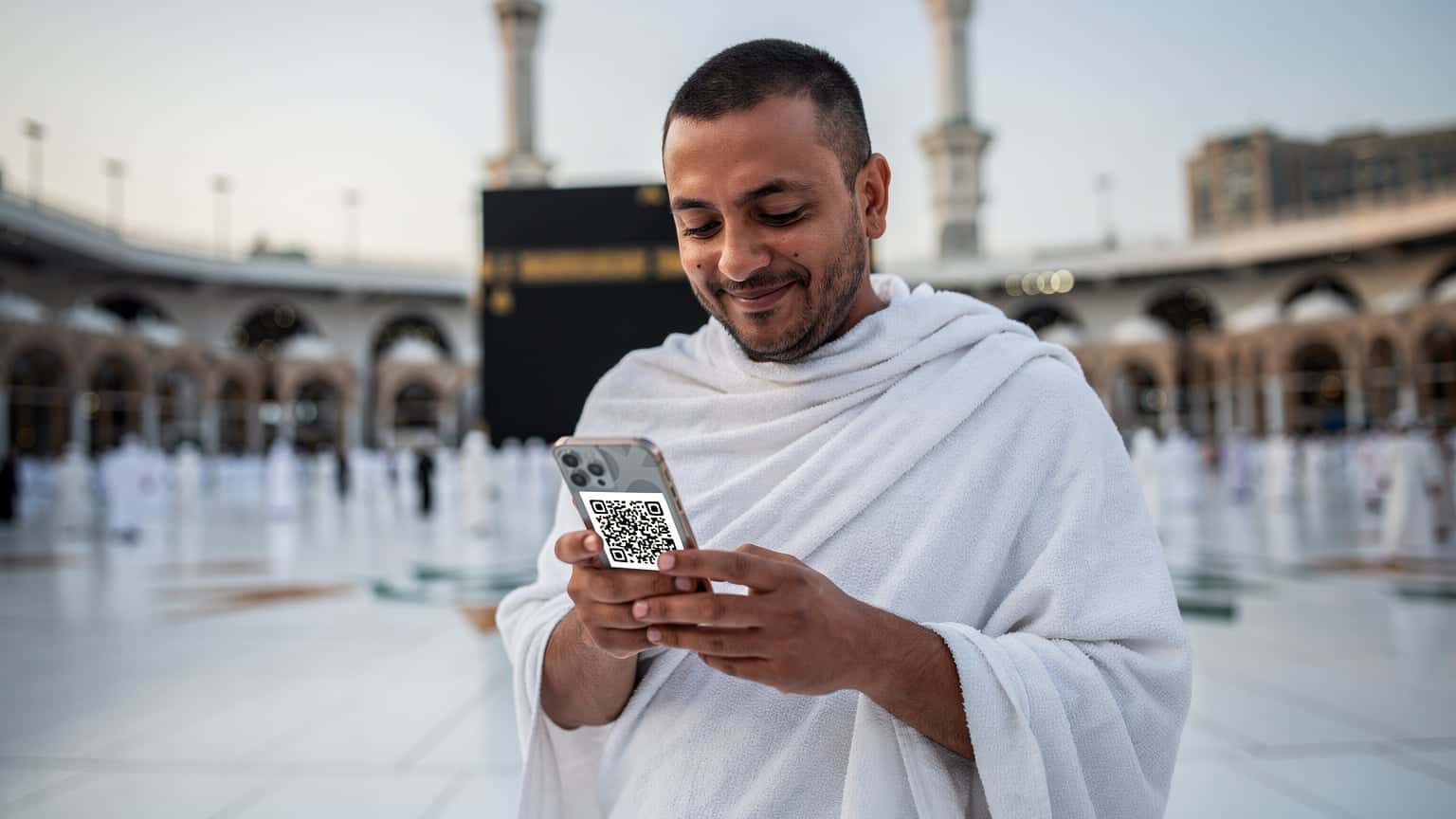
eSIM for Umrah 2026: Affordable Data & Reliable Connectivity in Saudi Arabia
Performing Umrah in 2026 requires reliable connectivity to stay in touch with family, navigate, and access essential apps. This guide cuts through the noise, comparing eSIM options for Saudi Arabia to ensure pilgrims find affordable data and robust network performance without hidden costs.
Read the guide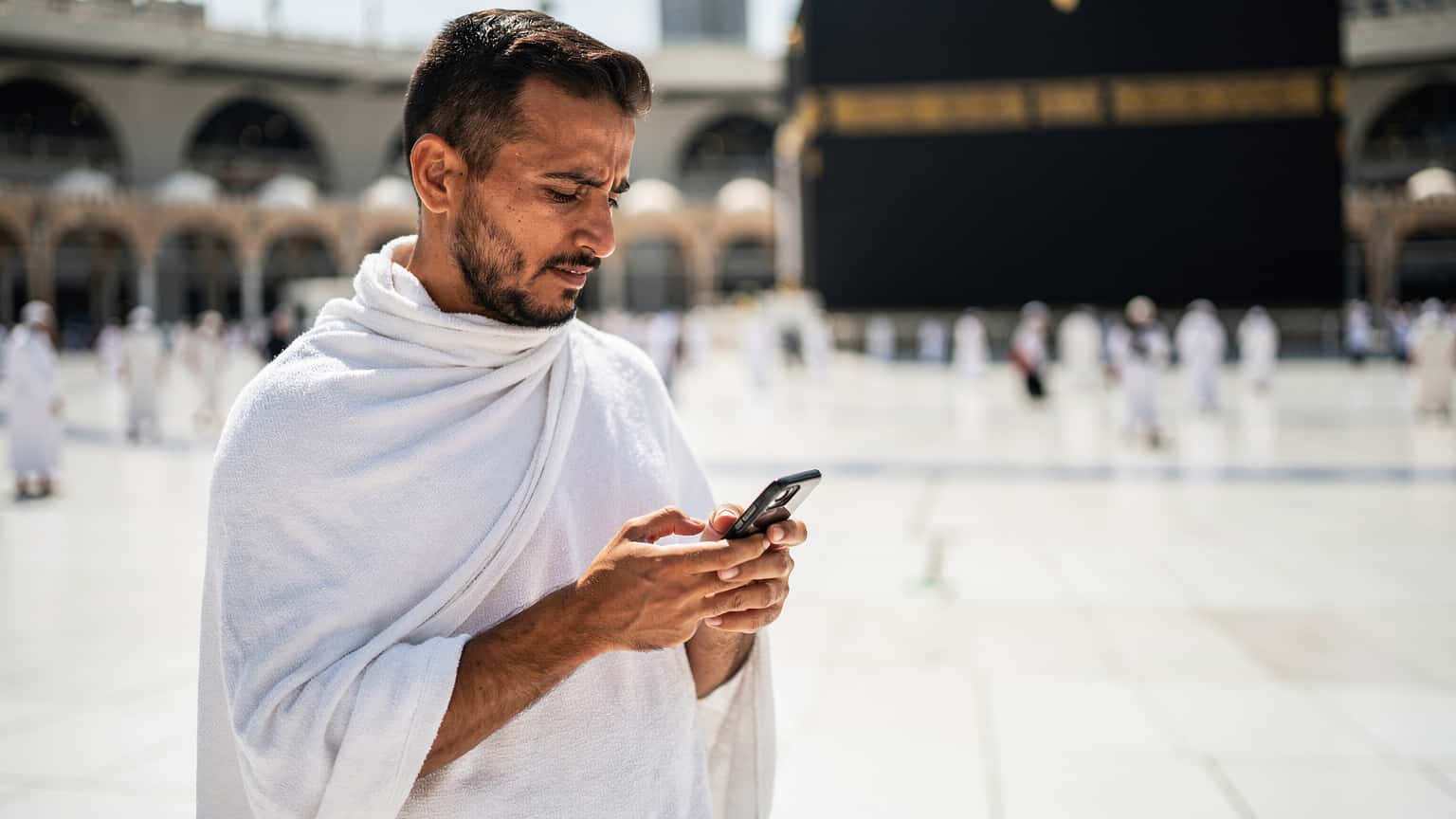 Destination Guides
eSIM for Umrah 2026: Stay Connected in Saudi Arabia Affordably
Pilgrims heading to Saudi Arabia for Umrah 2026 face a critical decision about connectivity. An eSIM provides a cost-effective and convenient solution, allowing you to maintain contact with loved ones and access essential travel apps without the exorbitant fees of traditional international roaming. This guide will walk you through the technical nuances and practical benefits, ensuring a seamless digital experience during your spiritual journey.
Read the guide Events & Festivals
Umrah Data Guide 2026: Avoid The Huge Saudi Roaming Fees
Planning your pilgrimage in 2026? The biggest hidden cost is staying connected. Discover how to bypass brutal roaming charges and secure cheap Saudi data before you even land.
Read the guide Events & Festivals
Stay Connected in Mecca & Medina: Why an eSIM for Hajj 2026 is Your Best Choice
Don't worry about roaming fees during your pilgrimage. Get an affordable, instant "eSIM for Hajj" and stay connected. Find the best Hajj internet package here.
Read the guide
Saudi Arabia: Popular cities
City-specific connectivity guides


Nearby Countries
Check coverage for every stop on your trip.


