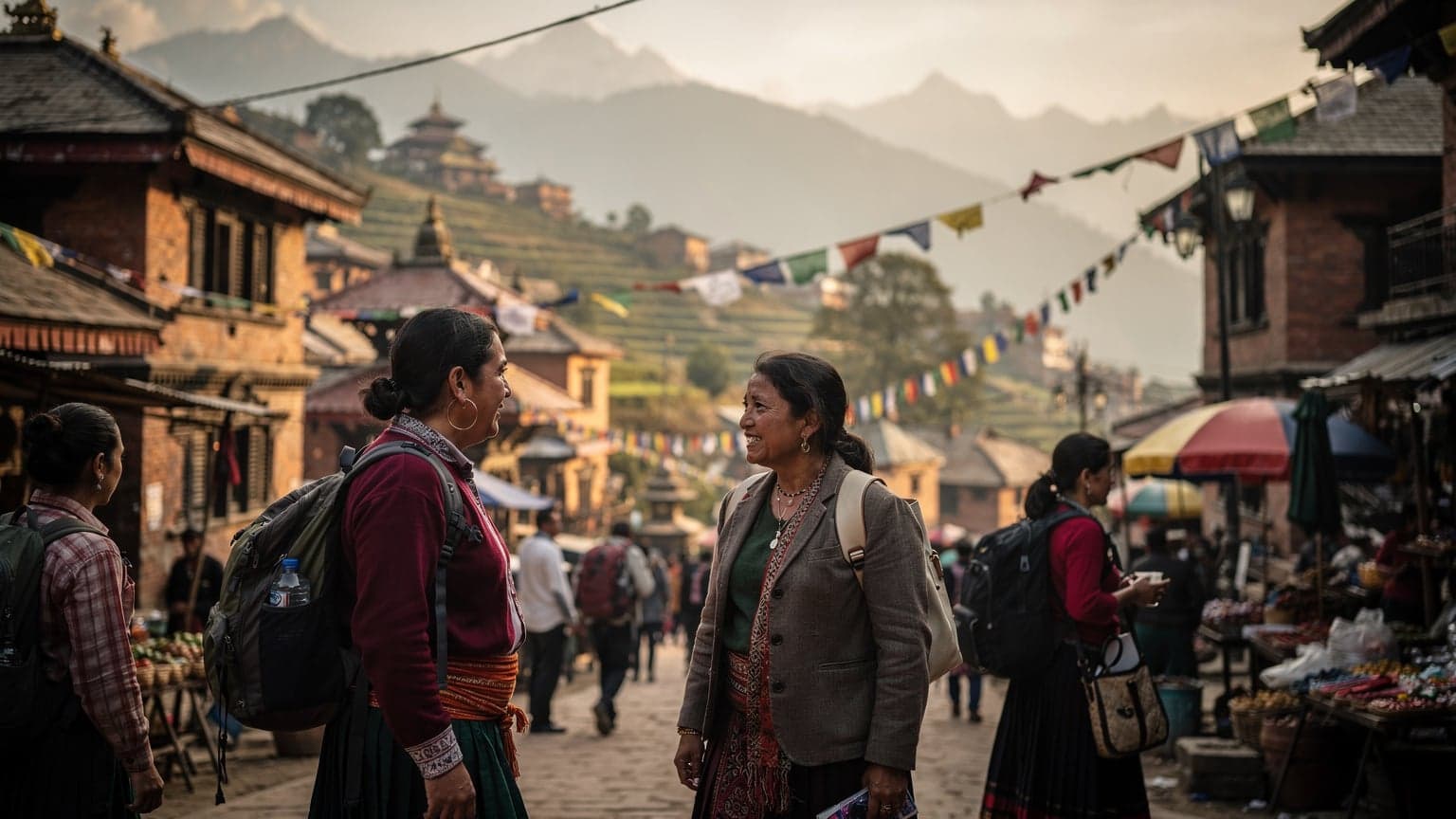
Nepal is a land of profound natural beauty and rich cultural heritage, where the world's highest peaks meet ancient traditions, offering travellers a unique blend of adventure and spiritual discovery beyond its famous mountains.
Nepal is the Only Country with a Non-Rectangular Flag
You'll notice it immediately, whether you’re strolling through the bustling streets of Thamel or waiting for your flight at Tribhuvan International Airport. Nepal’s national flag isn’t the standard rectangle we’re used to seeing. Instead, it’s made up of two overlapping triangular pennants, a truly unique design that stands out on the global stage. The crimson red represents the bravery of the Nepali people, while the blue border symbolises peace.
The two triangles themselves have a deeper meaning, representing the Himalayas and the country's two major religions, Hinduism and Buddhism. The sun and moon symbols within the flag are said to represent the hope that Nepal will last as long as these celestial bodies. It’s a beautifully intricate piece of symbolism, one that you can appreciate even more when you see it waving against a clear Himalayan sky.
Deciphering the Double Pennant
Historically, many flags, especially those of princely states, weren't rectangular. Nepal simply retained this traditional form, which speaks volumes about its deep connection to its past. It wasn't until 1962 that its current design was officially adopted, codifying a long-held tradition. You might spot older variations in some remote villages, perhaps in the Annapurna region, but the double pennant is the one you’ll see everywhere else, from government buildings in Singha Durbar to local teahouses.
It Has Its Own Distinct Calendar
Ever been somewhere where the date felt… off? In Nepal, you might find yourself in an entirely different year. The country follows its own official calendar, called Bikram Sambat (B.S.). This Hindu calendar is approximately 56 years and 8 months ahead of the Gregorian calendar. So, if it's 2026 where you are, it's already well into 2083 or 2084 in Nepal.
This can lead to some interesting moments, especially when booking tours or trying to figure out local holidays. I remember trying to coordinate a festival in Bhaktapur’s Durbar Square, and the dates just weren't aligning with my planner. A quick chat with a local shopkeeper explained the calendar difference, and suddenly everything made sense. Most official documents and tourist services will list both dates, but it's always good to be aware of the local system.
Navigating Nepali Time
The Nepali New Year, known as Bisket Jatra, usually falls in mid-April. This is a huge celebration, particularly in the city of Bhaktapur, where an enormous chariot is pulled through the streets. If you're planning to be in the country around that time, expect vibrant festivities, but also anticipate that some businesses might have altered opening hours. For instance, many smaller family-run shops in Patan's Mangal Bazaar might close for the entire day, whereas larger establishments in Lazimpat, Kathmandu, generally remain open.
The Birthplace of Buddha is in Nepal
Yes, Siddhartha Gautama, the Buddha, was born in what is now modern-day Nepal. His birthplace, Lumbini, is a UNESCO World Heritage Site and a profound pilgrimage destination for Buddhists worldwide. It's located in the Rupandehi District of the Terai plains, far from the towering Himalayan peaks most people associate with Nepal.
The site itself is incredibly serene, a stark contrast to the bustling energy of Kathmandu. You can visit the Maya Devi Temple, which marks the exact spot of Buddha's birth, and see the Ashoka Pillar, erected by Emperor Ashoka in 249 BC to commemorate his pilgrimage there. Wandering through the Sacred Garden, you’ll find monasteries built by Buddhist communities from various countries, each with its own architectural style. It's a place that truly invites quiet contemplation.
A Pilgrimage to Lumbini
Reaching Lumbini usually involves a flight to Bhairahawa Airport (Gautam Buddha Airport) and then a short taxi ride. While the site is a place of profound spiritual significance, it's also a testament to international cooperation, with different nations having built their own monasteries. Some of these are truly architectural marvels, like the Great Drigung Kagyud Lotus Stupa, which invites visitors from 6:00 AM to 6:00 PM daily. Just remember to dress respectfully, covering shoulders and knees, as you would in any sacred space.
The Kumari, A Living Goddess
In Nepal, particularly among the Newar community of Kathmandu Valley, there is a tradition of worshipping a living goddess known as the Kumari. This young girl is chosen from a specific caste (the Shakya clan of the Newari community) and is believed to be the embodiment of the Hindu goddess Taleju. She lives in a special residence, the Kumari Ghar, in Kathmandu's Durbar Square, and makes public appearances during certain festivals.
The selection process is rigorous, involving a series of ancient rituals and tests to determine if she possesses the divine qualities. She holds her status until she reaches puberty, after which a new Kumari is chosen. It’s a fascinating, complex tradition that offers a glimpse into the deep spiritual fabric of Nepali society. I once caught a glimpse of the Kumari during Indra Jatra, a major festival, and the reverence shown by the crowd was palpable.
Respecting the Tradition
When visiting the Kumari Ghar, remember that photography of the Kumari herself is generally not allowed, out of respect for her sacred status. You can usually visit the courtyard of Kumari Ghar from 9:00 AM to 5:00 PM, though her appearances are less frequent and often brief. It’s a profound cultural experience, but one that requires sensitivity and adherence to local customs. The Kumari tradition underscores the unique blend of Hindu and Buddhist beliefs that permeate Nepali life, particularly in the ancient heart of Kathmandu, like the Basantapur area.
Dal Bhat is More Than Just a Meal
If you spend any significant time in Nepal, you’ll become intimately familiar with dal bhat. It's the national dish, a staple consisting of lentil soup (dal), steamed rice (bhat), and a variety of vegetable curries (tarkari) and pickles (achar). But it's more than just sustenance; it's a cultural institution.
For many Nepali people, dal bhat is eaten twice a day, every day. It’s nourishing, filling, and incredibly versatile, with regional variations in the spices and vegetables used. On a trek, your guide will likely tell you, “Dal bhat power, 24 hour!” and they’re not wrong. It provides sustained energy for long days on the trail. I've had countless plates of dal bhat, from simple roadside eateries in Pokhara to guesthouses high up in Namche Bazaar, and each one tasted a little different, reflecting the local produce and family recipes.
The Dal Bhat Experience
Often, dal bhat is served 'all you can eat,' with servers circling to offer refills of rice, dal, and tarkari. It’s a generous gesture that speaks to Nepali hospitality. You might find a spicy radish pickle or a tangy tomato achar to add a kick to your meal. Don't be shy about asking for seconds; it's part of the tradition! While there are countless other delicious Nepali dishes, from momos (dumplings) to thukpa (noodle soup), dal bhat remains the heart and soul of the Nepali culinary experience.
Nepal is a Paradise for Bird Watchers
While everyone talks about the mountains, Nepal's diverse ecosystems, from subtropical jungles to alpine meadows, make it an incredible destination for bird watching. It boasts an astonishing array of bird species, with over 800 recorded, including many rare and endangered ones.
You don't need to be a seasoned ornithologist to appreciate the avian wonders. Even around Kathmandu, within the Shivapuri Nagarjun National Park on the city's northern fringe, you can spot various species. For a dedicated birding experience, the Koshi Tappu Wildlife Reserve in the eastern Terai region is a prime spot, known for its migratory waterfowl and various raptors. The best time for bird watching is generally from October to March, when migratory birds are abundant. Keep an eye out for exotic pheasants, colourful sunbirds, and even eagles soaring high above the valleys.
Where to Spot the Feathered Friends
Beyond Koshi Tappu, which is open from 6:00 AM to 6:00 PM, areas like Chitwan National Park (famous for rhinos, but also a bird haven) and the wetlands around Pokhara offer excellent opportunities. Even walking along the paths near Phewa Lake in Pokhara, I’ve seen some stunning kingfishers. Remember to bring a good pair of binoculars and a field guide. For serious trekkers, even the high-altitude trails can surprise you with sightings of Himalayan monals or impeyan pheasants, the national bird of Nepal, with its iridescent plumage.
Many Ethnic Groups and Languages Flourish
Nepal is a mosaic of cultures and ethnicities, home to over 125 distinct ethnic groups and more than 123 spoken languages. While Nepali is the official language, you'll hear a multitude of tongues as you travel. This incredible diversity is reflected in the country's customs, festivals, and culinary traditions.
The Newar people, indigenous to the Kathmandu Valley, have their own rich culture and language (Nepal Bhasa). The Sherpas, renowned for their mountaineering prowess, have their own distinct language and cultural practices in the Everest region. In the Terai plains, you'll find communities speaking Maithili, Bhojpuri, and Tharu. This cultural tapestry makes Nepal a endlessly fascinating place to explore, where every village can feel like a new discovery.
Connecting Across Cultures
While Nepali is widely understood, especially in tourist areas, learning a few basic phrases in the local language can go a long way. A simple “Namaste” (hello/goodbye) and “Dhanyabad” (thank you) will be greatly appreciated. In the more remote regions, having a local guide can be invaluable for navigating language barriers and truly understanding the nuances of local customs. I've found that a bit of effort in communication often opens doors to incredible experiences, whether it's sharing a cup of chiya in a small village teashop or getting directions to a hidden temple.
Rhino Sightings Are Possible in the Lowlands
When you think of Nepal, you probably picture snowy peaks, not rhinos. Yet, in the southern lowlands, particularly in Chitwan National Park, you have an excellent chance of spotting the endangered one-horned rhinoceros in its natural habitat. This UNESCO World Heritage Site is a conservation success story, with rhino populations steadily increasing thanks to dedicated efforts.
Chitwan offers jungle safaris, either by jeep or on foot (with a trained guide, of course), and canoe trips along the Rapti River, where you might also spot gharials (a type of crocodile) and various birdlife. The park operates year-round, but the best time for wildlife viewing is usually from October to March when the weather is milder and the vegetation less dense. Just remember to book your safari through reputable operators in Sauraha to ensure ethical wildlife encounters.
Planning Your Chitwan Adventure
To truly immerse yourself in the park, consider staying a few nights in one of the lodges around Sauraha, the main entry point to Chitwan. Most lodges offer packages that include safaris, cultural programs (like Tharu stick dances), and meals. The park generally permits entry from 6:00 AM to 6:00 PM. I’d recommend an early morning safari for the best chances of spotting wildlife, including deer, monkeys, and if you’re very lucky, a leopard or even a Bengal tiger. It’s a completely different side of Nepal, away from the mountain trails, but equally captivating.
The Sacred Bagmati River
Flowing through the Kathmandu Valley, the Bagmati River holds immense religious significance for both Hindus and Buddhists. It’s often compared to the Ganges in India, particularly for its spiritual importance. Along its banks, you'll find numerous temples and cremation ghats, most notably at Pashupatinath Temple.
Pashupatinath, another UNESCO World Heritage Site, is one of the most sacred Hindu temples in the world. While non-Hindus are not permitted inside the main temple, you can observe the cremation rituals from the opposite bank of the Bagmati River. It’s a powerful and humbling experience, offering a raw glimpse into Hindu traditions surrounding life, death, and rebirth. The atmosphere is solemn, yet full of life, with sadhus (holy men), pilgrims, and locals going about their daily routines.
Witnessing Tradition at Pashupatinath
The Pashupatinath Temple complex is vast and can be explored for hours. It’s open from 4:00 AM to 9:00 PM, though specific areas have different timings. Early mornings are particularly atmospheric. Remember to be respectful of the rituals taking place, maintaining a quiet demeanor and avoiding intrusive photography. The area around the river, particularly on the eastern bank near the Arya Ghat, is where most cremations occur. It's a place of profound spiritual energy, a cornerstone of Nepali religious life in the heart of Kathmandu.
A Unique Way to Greet
In Nepal, the traditional greeting is “Namaste” or “Namaskar,” accompanied by pressing the palms together in front of the chest, fingers pointing upwards, and a slight bow. It’s a beautiful gesture that means “I bow to the divine in you.” This isn't just a polite custom; it's deeply ingrained in the culture and signifies respect.
While handshakes are becoming more common in urban areas, especially among younger generations or in business settings, using Namaste is always appropriate and appreciated. It’s a wonderful way to connect with locals and show your respect for their traditions. I've found that starting an interaction with a sincere Namaste often leads to warmer responses and a more genuine connection, whether I'm haggling for pashminas in Thamel or ordering food in Pokhara's Lakeside district.
The Art of Namaste
When you offer a Namaste, make eye contact and smile. It’s a simple gesture, but it carries a lot of meaning. You'll hear it constantly, from children to elders, and quickly find yourself adopting it naturally. This cultural nuance is one of the many small things that make travel in Nepal so enriching, fostering a sense of connection that goes beyond transactional interactions.
Nepal's Surprisingly Good Connectivity
For a country often associated with remote mountain ranges, Nepal offers surprisingly robust mobile connectivity, especially in urban areas and along popular trekking routes. This is a game-changer for me, someone who often finds themselves coordinating festival logistics from remote corners. Back in the day, getting a local SIM meant a whole song and dance, often requiring passport photos and endless paperwork at a Ncell or Nepal Telecom shop in, say, Putalisadak. Now, an eSIM makes it wonderfully simple.
A Cellesim Nepal eSIM starts at just $11.20 and offers over 17 plans, ensuring you can stay connected whether you're navigating the crowds of Indra Jatra in Durbar Square or trying to find your way to a meditation retreat outside Nagarkot. It saves you the hassle of hunting down a physical SIM card, which is particularly useful if you arrive late at night or on a public holiday when shops might be closed.
How to Get Connected with eSIM in Nepal
Getting a Cellesim eSIM for Nepal is straightforward. It means you can activate your data plan before you even land, ensuring you have connectivity from the moment you step off the plane. This has saved me countless times, especially when I needed to quickly call a taxi via a local ride-sharing app like Pathao or Tootle from the airport. No more desperate searches for airport Wi-Fi that barely works, or dealing with language barriers to buy a local SIM.
Here’s a quick rundown:
- Check eSIM Compatibility: Ensure your phone supports eSIM technology. Most newer smartphones, like the iPhone 11 and later, are compatible. If you’re unsure, you can often find this information in your phone's settings or by checking the manufacturer's website. If you're using an older model, you might need to look into unlocking your iPhone for eSIM.
- Purchase Your Cellesim Nepal eSIM: Visit the Cellesim website, select Nepal, and choose a data plan that fits your travel duration and usage needs. Plans start from 1GB for a few days up to larger bundles for longer stays.
- Activate Your eSIM: You’ll receive an email with a QR code. Scan this code using your phone's camera or enter the details manually in your settings. Follow the prompts to install the eSIM. This usually takes less than a minute.
- Enable Data Roaming: Once installed, ensure that your new eSIM profile is selected for mobile data and that data roaming is enabled (don't worry, with an eSIM, this activates your Cellesim data, not your home carrier's expensive roaming).
I've relied on eSIMs extensively, especially when hopping between countries for various festivals, from Glastonbury to a major electronic music festival in Belgium, and the instant connectivity makes a massive difference. It's particularly useful when you're in a pinch, trying to confirm a hostel booking in the Jyatha area of Kathmandu, or looking up bus schedules for the GreenLine or Sajha Yatayat bus from Kathmandu to Pokhara.
| Feature | Cellesim Nepal eSIM | Local Physical SIM (e.g., Nepal Telecom, Ncell) |
|---|---|---|
| Activation Time | Minutes, before you land | Hours, requires in-person registration with passport/photo |
| Convenience | Fully digital, no physical swap | Requires finding a store, queues, potential language barrier |
| Cost (Entry Level) | Starts at $11.20 for various plans | Similar, but often with initial purchase + data package |
| Dual SIM Use | Keep your home SIM active for calls/texts | Requires dual-SIM phone or swapping out home SIM |
| Flexibility | Easy to switch plans or countries via app | Requires visiting a store for changes, tied to one country |
It's worth noting that even with a local SIM, sometimes the data speeds can be unpredictable, especially outside major cities. Having a reliable eSIM for Indonesia or an eSIM for UK festivals has shown me the power of choice, and Cellesim gives you that for Nepal too.
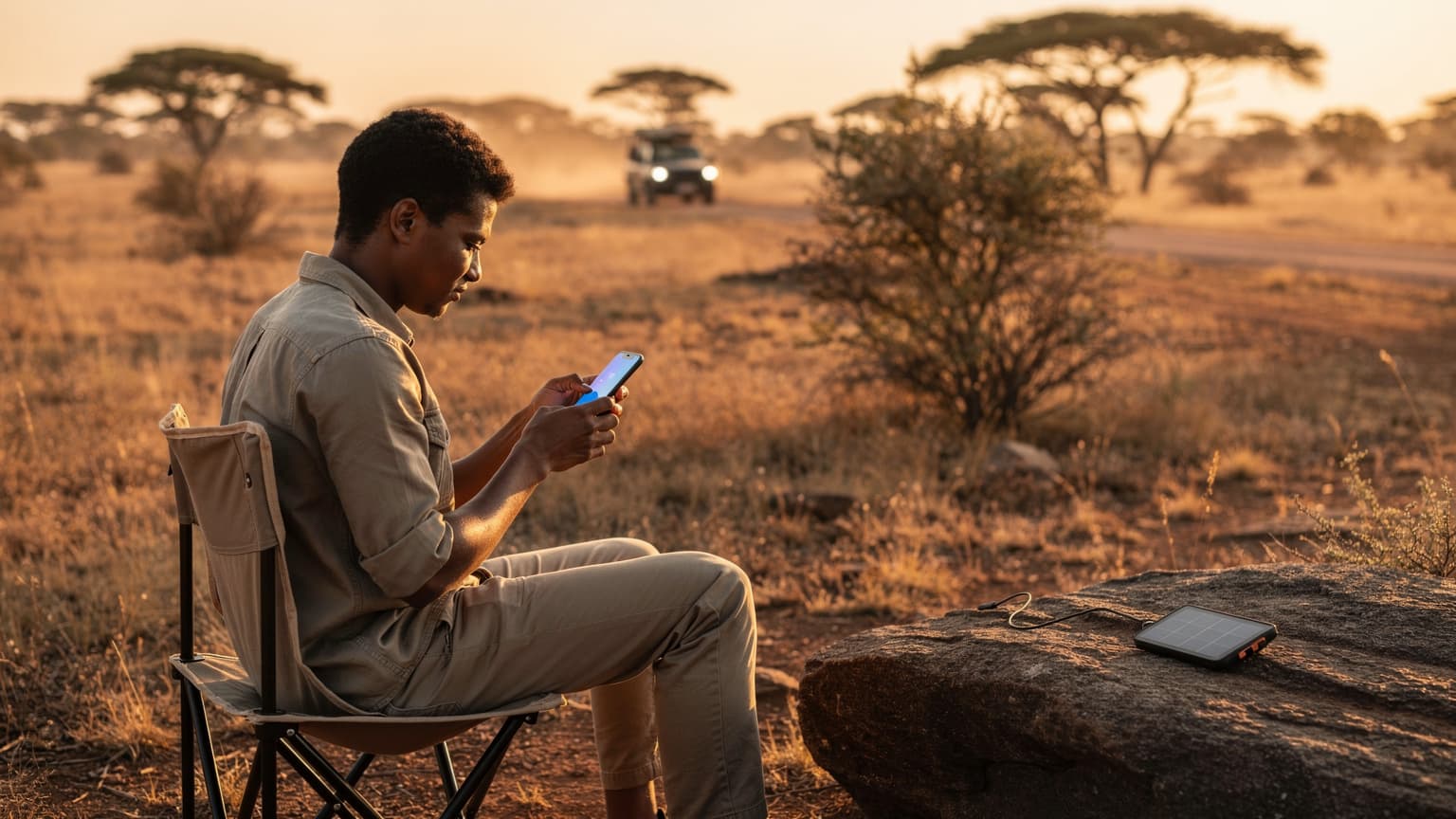
Even in some remote trekking regions, like parts of the Everest Base Camp trail, you might find surprisingly good 4G coverage. However, always download offline maps (like Maps.me or Gaia GPS) and important documents before heading into truly isolated areas. A portable power bank is also non-negotiable, as charging points can be sparse and expensive in higher altitudes.
Common Connectivity Challenges and eSIM Solutions
I've had my share of connectivity nightmares. Once, in a small town outside Chiang Mai, Thailand, my physical SIM stopped working. It was a weekend, and every phone shop was closed. I was completely disconnected. With an eSIM, managing multiple profiles and troubleshooting is often just a few taps away. It means less time stressing about connectivity and more time soaking in the vibrancy of places like the Garden of Dreams in Kathmandu.
| Challenge | Physical SIM Pain Point | eSIM Solution |
|---|---|---|
| Arrival Connectivity | No data upon landing, difficult to call taxi or navigate | Activate before departure, instant data on arrival |
| Running Out of Data | Must find a store to top up, potential queue and language issues | Purchase more data directly from the Cellesim app, instantly |
| Keeping Home Number | Requires physically swapping SIMs, risk of losing home SIM | Both SIMs active, easily switch between data plans |
| Lost/Damaged SIM | Complete loss of connectivity, requires new purchase | If phone is intact, eSIM remains, or easy re-installation |
The Birthplace of the Gurkhas
Nepal is famously the homeland of the Gurkhas, legendary soldiers known for their bravery, loyalty, and their distinctive curved knife, the kukri. Their reputation for courage and tenacity has been forged over centuries, serving in various armies, most notably with the British Army and the Indian Army.
The term 'Gurkha' originally referred to soldiers from the Gorkha Kingdom, which played a pivotal role in unifying modern Nepal. Today, it represents a proud martial tradition deeply embedded in Nepali identity. You'll find monuments and museums dedicated to their history, particularly in places like the Gorkha District itself. Their motto, “Better to die than be a coward,” speaks volumes about their spirit.
A Legacy of Valor
While you won't encounter active Gurkha regiments on your typical tourist trail, their presence is felt in the national pride and resilience of the Nepali people. Many families have a history of Gurkha service, and the stories of their heroism are passed down through generations. The Gurkha Museum in Pokhara, open daily from 8:00 AM to 4:30 PM, provides a fascinating insight into their history and contributions, showcasing uniforms, medals, and weaponry.
The Land of Eight-Thousanders
When someone mentions Nepal, images of towering mountains immediately spring to mind, and for good reason. Nepal is home to eight of the world's ten highest peaks, known as the 'Eight-thousanders,' mountains that rise over 8,000 meters (26,247 feet) above sea level. Of course, Mount Everest (Sagarmatha to Nepalis) is the most famous, but Dhaulagiri, Annapurna I, Kangchenjunga, Lhotse, Makalu, Cho Oyu, and Manaslu also call Nepal home.
These majestic giants aren't just for seasoned climbers. Many travellers come to Nepal to trek in their shadow, experiencing the incredible landscapes and Sherpa culture along trails like the Everest Base Camp trek or the Annapurna Circuit. The views, even from lower altitudes, are breathtaking and truly humbling.
Treks for Every Level
Whether you're aiming for a strenuous multi-week expedition or a gentle day hike, Nepal has a trek for you. The Poon Hill trek in the Annapurna region offers stunning sunrise views of Dhaulagiri and Annapurna without requiring extreme fitness. For something closer to Kathmandu, the Shivapuri day hike provides panoramic views of the valley and the Langtang range. Always plan your treks for the post-monsoon season (September-November) or pre-monsoon (March-May) for the best weather and clearest mountain views. Even for a short hike, like to Nagarkot, remember sturdy shoes and layers, as the mountain weather can change quickly.
Cows Are Sacred and Protected
In Nepal, cows are considered sacred animals, deeply revered in Hinduism as a symbol of wealth, fertility, and purity. Killing cows is illegal, and you'll often see them wandering freely through city streets and rural villages, unbothered by traffic or pedestrians. They have the right of way, even in the busiest intersections of Kathmandu, such as around the bustling Ason market.
This reverence means that beef is not typically consumed by Hindus in Nepal. This is an important cultural point to remember, especially when dining out. Most restaurants cater to this, offering a wide range of vegetarian and other meat dishes. It's a vivid example of how religious beliefs are woven into the fabric of daily life.
Understanding the Sacred Cow
You'll quickly get used to seeing cows resting in unexpected places, from temple courtyards to the middle of a road. They are generally gentle creatures, and locals treat them with respect, often offering them food. This cultural practice extends to oxen and buffaloes, which are essential for farming in rural areas but are also treated with a degree of reverence, especially during festivals like Tihar, the festival of lights, where animals are worshipped.