

 eSIM Destination
France eSIM
France: compare travel eSIMs for maps, messages, and mobile data.
France: mobile networks
1 carrier supported
- Orange5G
Highest generation per operator is displayed; some plans may use a fallback band based on local conditions.
Free VPN with your eSIM
Every active Cellesim eSIM comes with a free VPN. Browse securely on public Wi-Fi and reach the apps you rely on from anywhere, at no extra cost and with no separate signup.
France: choose an eSIM for your trip
Choose how much data you need and for how long. Before you buy, check that your phone is compatible and that the plan covers where you're going. France: plans start from $3.59. 4.4/5 · Based on 446 reviews Compare the plans below, including details on activation, hotspot use, and top-ups.
- Compare price and how much data you get
- Check networks and coverage
- Contact support if you need help
Frequently Asked Questions
You can usually install the eSIM over Wi-Fi before leaving. Check the activation policy of the selected package: some validity periods start on installation, while others start when the eSIM connects to a supported network. Follow the instructions supplied with your purchase.
An eSIM is a digital SIM profile installed on a compatible, unlocked device. After installation, select it for mobile data and follow the package instructions, including the data-roaming setting if required. Supported networks and coverage are listed in the selected package details.
Check the exact model and regional variant in our device compatibility guide. The phone must support eSIM and be unlocked. A model family name alone does not guarantee support in every market.
The Cellesim package is prepaid for its included data and covered destinations. Your home SIM is billed separately: making or answering calls, sending texts or using data on that line may trigger roaming fees. Check your home carrier settings and disable automatic mobile-data switching if you do not want it to use that line.
Check the package details for voice and SMS support. A data-only package does not supply a local phone number or ordinary mobile calls. Messaging and calling apps can use its data allowance. Calls on your home SIM remain subject to that carrier’s charges.
It depends on the roaming benefits included in your home plan, your destination and how you use each SIM. Check your carrier account before buying extra data. Compare the whole trip’s data allowance, validity, calls and total cost with the available France packages.
Only the destinations listed in the selected package’s coverage are included. Do not assume a France package covers a neighbouring country. For a multi-country trip, check each stop against a suitable Europe package before buying.
Coverage and speed can change between stations, tunnels, buildings and train routes. A supported network or 5G label does not guarantee uninterrupted service throughout the Paris Metro or a TGV journey. Download tickets and essential maps before travelling.
Use the network information shown for your selected package. Available operators can differ between packages and providers; a general list of French mobile networks is not a promise that every plan can use all of them. Coverage and speed also depend on location and device.
Install over a reliable Wi-Fi connection before departure if the package’s activation policy allows it. Keep the installation instructions available offline and check exactly when validity begins. See the CDG arrival guide for arrival planning.
About France eSIM
France eSIM — Data plans
$3.59. Compare data allowance, validity and the total package price in the plan list. Check coverage, hotspot support and any fair-use limits before buying.
Install with Wi-Fi before departure. Check when your selected plan starts; installation and activation are not always the same. Network speed varies by location, device and plan.
🏙️ Paris
eSIM France: Reliable 5G/4G for Paris, Nice & Lyon
Dreaming of a croissant by the Seine? Whether you are navigating the artistic streets of Montmartre, conducting business in La Défense, or relaxing on the French Riviera, a stable internet connection is your best travel companion. Don't waste time hunting for public Wi-Fi. Cellesim France eSIM plans offer instant, high-speed connectivity starting at just $3.59. Choose from 8 limited plans for budget travelers or 10 unlimited plans for those who need constant connection.
🧭 Related eSIM destinations: eSIM Malta · eSIM Poland · eSIM Portugal · eSIM Europe
Escape Extreme International Roaming Charges
For travelers from outside the EU (USA, Asia, UK, etc.), France is a "Zone 2" or "Zone 3" destination. Traditional carriers often charge massive daily roaming fees or throttle your speed. With Cellesim, you pay one transparent, upfront fee. No contracts, no hidden charges, no bill shock.
Why a Cellesim eSIM is Essential for Your France Trip
- Instant Airport Connection: Get online the moment you land at Charles de Gaulle Airport (CDG) or Orly Airport (ORY). Bypass the queues at Relay shops or local SIM kiosks.
- Massive Cost Savings: Plans start at $3.59, ignificantly cheaper than a single coffee in Paris.
- Keep Your Home Number: Your physical SIM remains active for 2FA banking codes and emergency calls, while you use the eSIM for data. WhatsApp works seamlessly.
- Reliable Coverage: Access the top local networks (Orange/Bouygues/SFR infrastructure) for 4G/LTE and 5G speeds across the country.
Connect Across France's Key Cities
- Paris: Order a Bolt or Uber easily after a night out in Le Marais.
- Nice: Share sunny beach photos from the Promenade des Anglais instantly.
- Lyon: Find the best "Bouchon" restaurants using live maps.
Stay Connected at Top France Attractions
- Eiffel Tower: Skip the line by buying digital tickets on your phone and share live videos from the summit.
- Louvre Museum: Download the audio guide app to navigate the massive corridors and find the Mona Lisa.
- Palace of Versailles: Use GPS to explore the vast gardens without getting lost.
Following the 2026 Tour de France?
The Tour rolls through France for three weeks. Stay online across every stage with one eSIM — see our Tour de France 2026 eSIM guide.
Best France eSIM for Travel: Your Ultimate Data Card
Planning your trip to France? Ditch the hassle of physical SIM cards and discover the best way to stay connected. Our prepaid eSIM for France offers incredible value, ensuring you have reliable data throughout your journey. Easily buy your digital SIM card online before you even depart, making it the perfect solution for every tourist.
- Cheap & prepaid data plans for every budget
- Enjoy unlimited connectivity in France
- Instant QR code delivery for quick activation
- No expensive roaming charges, ever
How much does an eSIM for France cost?
Our France eSIM plans start from just $3.59, offering a range of options to suit your data needs and trip duration. You can find excellent value, especially compared to traditional roaming fees.
Is an eSIM worth it in France?
Absolutely! An eSIM for France is incredibly worth it. It provides seamless, instant connectivity, often at a much lower cost than international roaming. Enjoy the convenience of having data from the moment you land, making navigation, communication, and sharing your experiences effortless.
Can I buy a France eSIM online before travel?
Yes, you can! You can easily buy your France eSIM online well before your travel dates. Simply choose your preferred plan, complete the purchase, and you'll receive an instant QR code via email for activation. It's the most convenient way to ensure you have internet access as soon as you arrive.
France eSIM reviews from real travelers
Based on 446 reviews
- Anonymous·Jun 27, 2026
I tried it without any issues. The esim was nice.
good coverage.
Traveler U.·Jun 23, 2026good coverage. !!
Excellent service. 👍
Traveler268·Jun 22, 2026Excellent service. 👍
- User199 C.·Jun 17, 2026
Great connection
Total waste of
Traveler H.·Jun 11, 2026Total waste of money in FR. The connection was bad.
Brilliant app
Mike A.·Jun 9, 2026Brilliant app.
Rapide. Excellent. Parfait
hugo·Jul 4, 2026·frRapide. Excellent. Parfait. Top. (FR
- Priya L.·Jul 3, 2026·hi
शानदार. बढ़िया काम कर रहा है.
FR seyahatimde denedim
Can I.·Jun 30, 2026·trFR seyahatimde denedim, tavsiye ederim. Tekrar kullanırım. Kurulum çok iyi.
Ça marche. Très
Hugo M.·Jun 28, 2026·frÇa marche. Très bien. Aucun problème. ...
Top. Heel goed
emma·Jun 20, 2026·nlTop. Heel goed
- Oksana K.·Jun 16, 2026·uk
Швидко. Рекомендую!
France eSIM guides:what travellers ask before they go
Coverage, install steps, real connection speeds, and the small stuff that ruins a trip if you skip it. Curated for France.
 Destination Guides
Fun Facts About France: 15 Surprising Things to Know Before Your Family Trip
France is more than just Eiffel Tower selfies and croissants. As a seasoned parent-travel planner, I've uncovered some truly delightful and practical insights that will make your family's next French adventure smoother, more connected, and infinitely more interesting.
Read the guide Travel Styles / Personas
The Savvy French Traveler’s Guide to International eSIMs
Traveling outside the EU? Avoid shocking roaming bills from your French carrier. This guide explains how to choose the best eSIM for your international trips for affordable, instant connectivity.
Read the guide News
NewsUK EU Roaming Charges 2026: Your Guide to Avoiding Bill Shock
It's official: major UK mobile networks are set to increase EU roaming charges by 2026. Understand why these post-Brexit fees are returning and discover how an eSIM can save you from bill shock on your next European trip.
Read the guide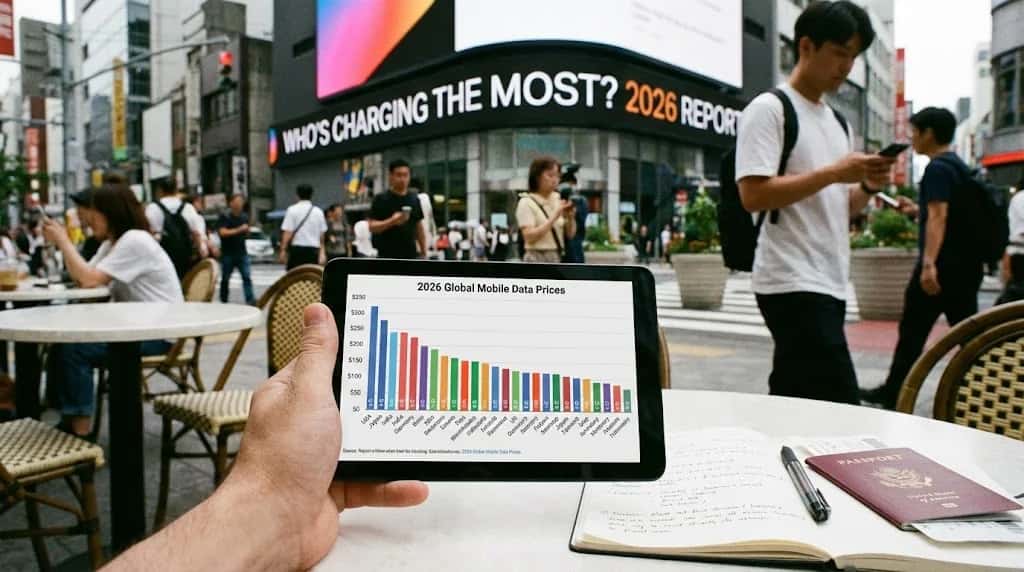 Savings & Comparisons
The 2026 Global Mobile Data Price Report: Who's Charging the Most?
A deep dive into the 2026 global mobile data price rankings. We uncover the most expensive countries for internet and show you how to stay connected affordably.
Read the guide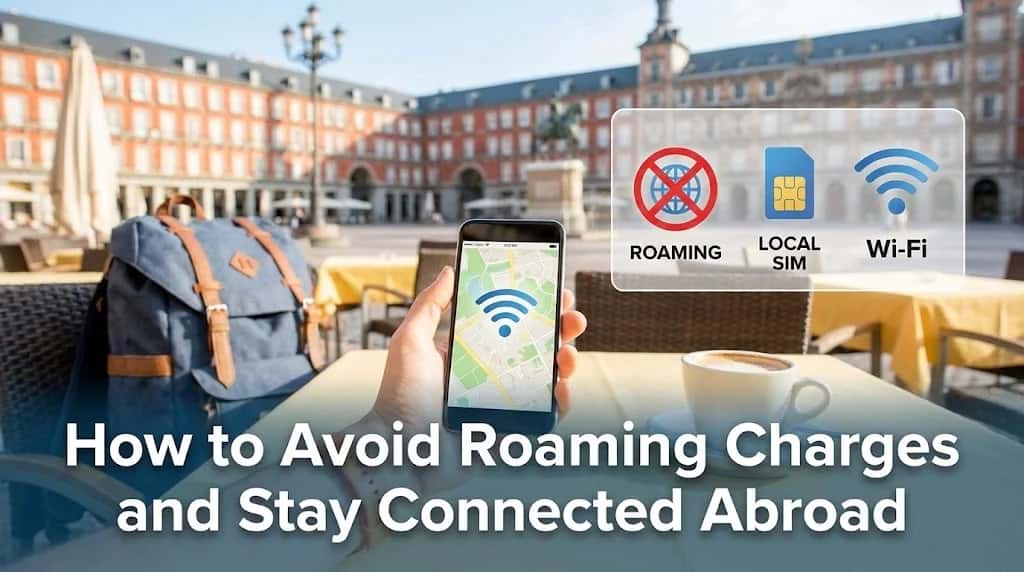 How-to & Guides
How to Avoid Roaming Charges and Stay Connected Abroad
Don't let a massive phone bill ruin your trip. Discover the best strategies to avoid roaming charges, from the convenience of a travel eSIM to smart data-saving habits.
Read the guide News
NewsThe Paris Public Transport Digital Pass is Coming in 2026: What Travelers Need to Know
Paris is phasing out paper metro tickets for a digital pass by 2026. Discover how this new NFC system will work, what it means for your trip, and why an eSIM is now essential for navigating the city.
Read the guide News
NewsTravel Alert: Don't Fall for the New EU Airport WiFi Scam
Heads up, Europe-bound travelers: A sophisticated EU airport wifi scam is on the rise. Learn to identify fake hotspots and see why an eSIM is the best way to keep your data safe.
Read the guide Travel Tips
The Savvy Traveler’s Guide to Tourist Scams in Europe & Asia
Traveling to Europe or Asia? Our expert guide breaks down the most common tourist scams, from classic taxi tricks to modern digital dangers, and shows you how to stay safe.
Read the guide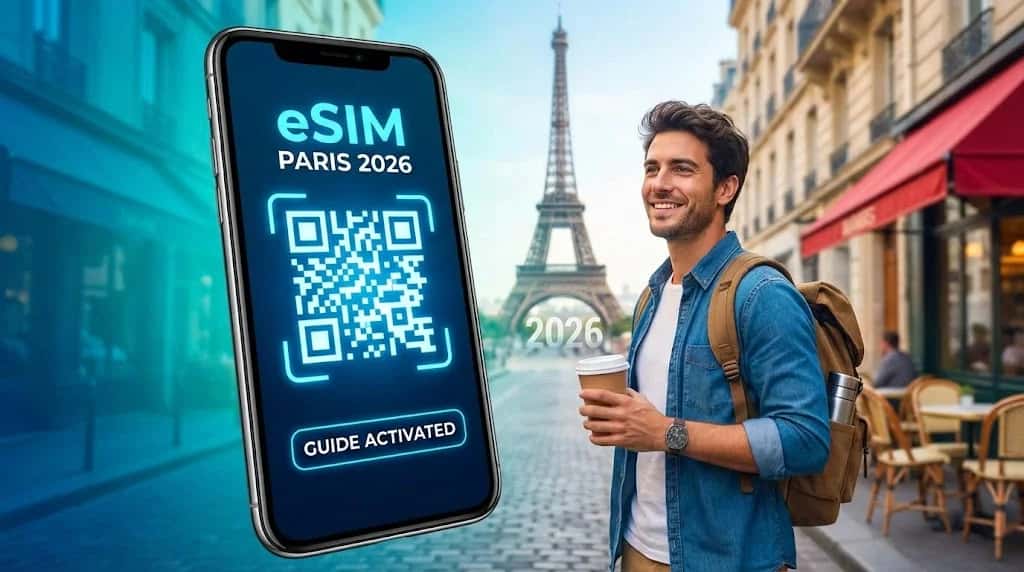 How-to & Guides
Your Step-by-Step Guide on How to Use an eSIM in Paris for a Flawless 2026 Trip
Planning a romantic trip to Paris? Our step-by-step guide shows you exactly how to use an eSIM to get instant, affordable mobile data, avoid roaming fees, and stay connected seamlessly in 2026.
Read the guide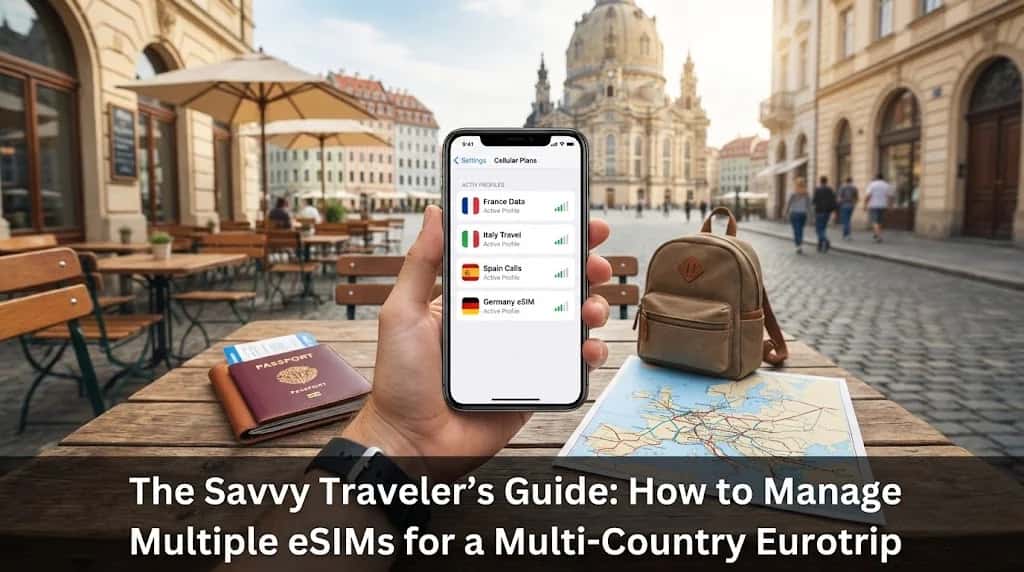 How-to & Guides
The Savvy Traveler's Guide: How to Manage Multiple eSIMs for a Multi-Country Eurotrip
Planning a multi-country Eurotrip? Our expert guide shows you how to strategically manage multiple eSIMs for seamless, affordable data from Paris to Prague.
Read the guide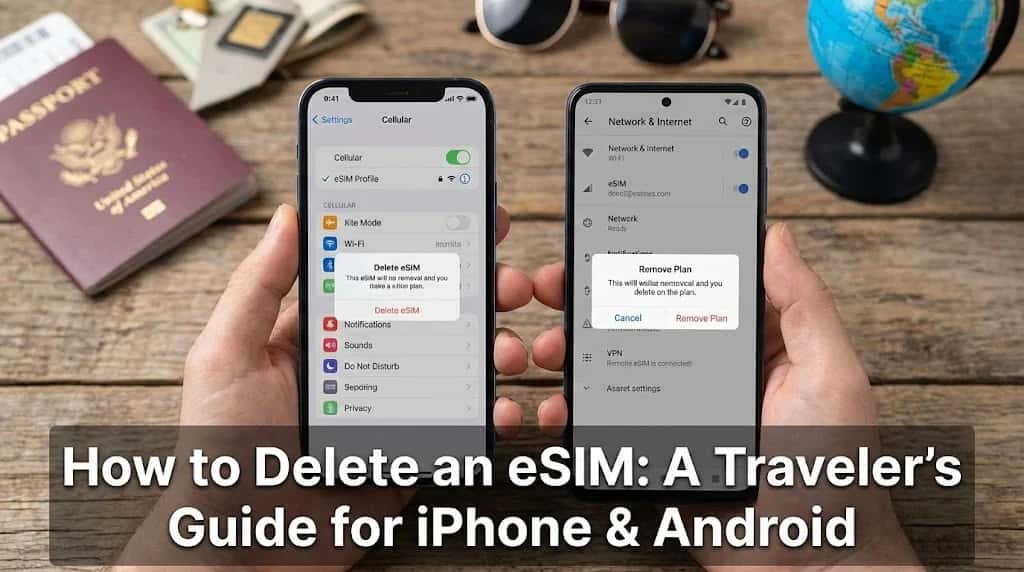 How-to & Guides
How to Delete an eSIM: A Traveler's Guide for iPhone & Android
Keep your phone organized by learning how to delete an eSIM after your trip. Our step-by-step guide for iPhone and Android makes travel eSIM management simple.
Read the guide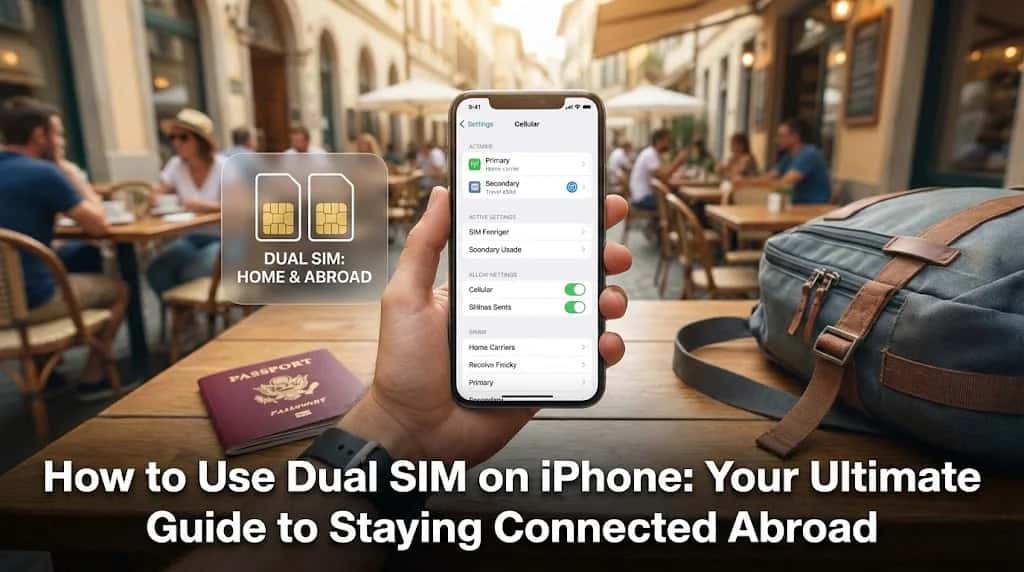 How-to & Guides
How to Use Dual SIM on iPhone: Your Ultimate Guide to Staying Connected Abroad
Unlock your iPhone's full potential for travel. This guide provides step-by-step instructions on how to use dual SIM to make calls on your home number while using affordable data from a travel eSIM abroad.
Read the guide
France: Popular cities
City-specific connectivity guides


Nearby Countries
Check coverage for every stop on your trip.


