T-Mobile eSIM for US Travelers: Activation, Roaming Costs & Smart Alternatives 2026
We've all been there: scrambling before a big trip, juggling passports, packing lists, and, inevitably, the phone plan. For US travelers, T-Mobile has often been the easy choice, especially with its enticing "free" international roaming. But with eSIMs becoming standard and 2026 just around the corner, what's the real story for T-Mobile users heading overseas? Let's break down T-Mobile eSIM activation, clarify those roaming costs (or the lack thereof), and explore some truly smart alternatives to keep you connected without emptying your wallet.
Understanding T-Mobile's International Roaming Policy (2026 Perspective)
T-Mobile's biggest selling point for international travel has always been its included international roaming in many plans. This usually means you can use your phone in over 215 countries without buying extra international passes. Sounds amazing, right? And often, it is! However, there are important details to grasp, especially as we look toward 2026.
What's Included (and What's Not)
Most T-Mobile postpaid plans, like Magenta, Magenta MAX, and Go5G, come with unlimited data and texting in over 215 countries. The catch? That data usually crawls at 2G speeds (either 128 kbps or 256 kbps, depending on your specific plan). For basic messaging, quick email checks, and light map use, 2G can work. But for anything data-heavy - think video calls, streaming, or downloading large files - 2G is painfully slow.
Voice calls back to the US from international spots typically cost 25 cents per minute. If you're calling within your international destination or to other international numbers, expect higher charges. Some premium plans might throw in some high-speed data or free international calls, so always double-check your exact plan details.
High-Speed Data Options with T-Mobile
If 2G speeds aren't going to cut it, T-Mobile offers International Passes as an add-on. These passes give you faster data, and sometimes included international calls, for a set period. For instance, you could buy a pass for 5GB of high-speed data over 10 days. These can be handy for shorter trips or when you absolutely need reliable, fast data for work or navigating.
T-Mobile eSIM Activation for US Travelers
For US T-Mobile customers, an eSIM typically serves to activate a new T-Mobile line or move an existing physical SIM to an eSIM on a compatible phone. However, when you're traveling internationally, the conversation around T-Mobile eSIMs often shifts to using a secondary eSIM for local data, all while keeping your T-Mobile line active for calls and texts.
Activating T-Mobile on eSIM (Pre-Travel)
If you're already a T-Mobile customer with a physical SIM and your phone supports eSIMs, you can usually convert your physical SIM to an eSIM through your T-Mobile account or by calling customer service. This frees up your physical SIM slot, which is a major benefit for travelers who want to use a local or travel eSIM abroad.
To do this, you'll generally:
- Make sure your device is eSIM compatible (most newer iPhones, Google Pixels, and Samsung Galaxy phones are).
- Log into your T-Mobile account online or through their app.
- Look for an option to manage your SIM or transfer to eSIM.
- Follow the on-screen instructions, which usually involve scanning a QR code or entering a manual activation code.
- Alternatively, visit a T-Mobile store or call customer service; they can walk you through the process.
It's best to do this before you leave the US. Once your T-Mobile line is an eSIM, it lives digitally on your phone, leaving you free to install other eSIMs for data when you travel.
Using T-Mobile eSIM Abroad (Dual SIM Functionality)
The real advantage of eSIMs for T-Mobile users while traveling is dual SIM functionality. Your T-Mobile line (now an eSIM) can stay active for receiving calls and texts (even if data is at 2G speeds), while you activate a separate travel eSIM for high-speed data. This setup is incredibly efficient:
- You keep your main US number active for important calls or two-factor authentication.
- You get fast, local data speeds from your travel eSIM, avoiding T-Mobile's slow 2G roaming or expensive passes.
- You can choose to turn off data roaming for your T-Mobile line to prevent any accidental usage, making sure your travel eSIM handles all data.
Roaming Costs and Hidden Fees with T-Mobile (2026 Projections)
While T-Mobile’s "free" roaming sounds great, it’s important to understand the costs that can still pop up, even by 2026 standards:
- Voice Calls: As mentioned, calls often cost 25 cents per minute back to the US. If you make a lot of calls, this adds up fast.
- High-Speed Data Passes: These are an extra cost, ranging from $5 to $50 or more depending on data amount and duration. While they can be a good value compared to some carriers, they aren't "free."
- Premium Text Numbers: Texting premium numbers or shortcodes abroad can incur charges not covered by your plan.
- Cruise Ships/Airlines: Roaming on cruise ships or airplanes is almost always extra and extremely expensive. T-Mobile's standard roaming does NOT apply in these situations.
- Unsupported Countries: If you visit one of the few countries not covered by T-Mobile's international roaming, you'll face very high pay-per-use rates. Always check the T-Mobile international roaming page for your specific destination.
The main takeaway for 2026 is that while basic connectivity is included, truly high-speed, reliable data and extensive calling will likely still cost extra with T-Mobile, or you'll need to use smart alternatives.
Smart Alternatives: The Power of Travel eSIMs (Cellesim & Beyond)
This is where travel eSIMs really shine, offering a better experience for many travelers, especially when paired with your T-Mobile eSIM. Instead of relying only on T-Mobile’s roaming, you can buy a dedicated data eSIM for your destination.
Why a Travel eSIM is Superior for Data
- High-Speed Data: Travel eSIMs, like those from Cellesim, give you full-speed 4G/5G data by connecting directly to local networks. No more frustrating 2G speeds.
- Cost-Effective: For many destinations, buying a data-only eSIM can be much cheaper than T-Mobile's high-speed data passes, especially for longer trips or if you use a lot of data.
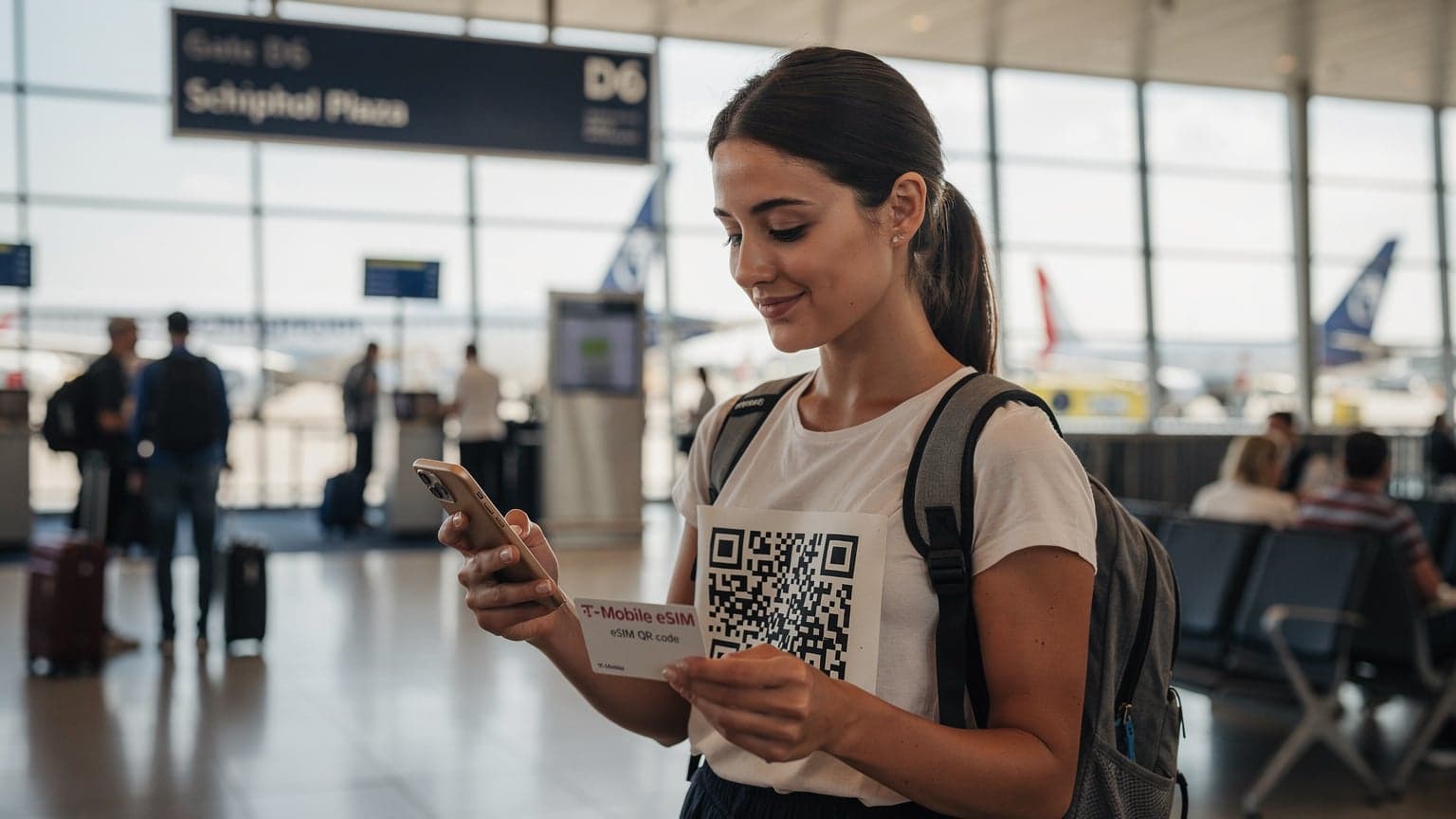
- Easy Activation: Buy online, get a QR code, scan it, and activate. It's often quicker and simpler than dealing with physical SIM cards.
- Local Numbers (Optional): Some travel eSIM providers offer plans that include a local phone number, which can be useful for local bookings or contacts.
- Flexibility: Choose plans based on how much data you need, how long it's valid, and specific regions (e.g., a regional Europe eSIM).
- Keeps T-Mobile Line Active: As discussed, you can keep your T-Mobile eSIM active for calls/texts while using the travel eSIM for data.
Introducing Cellesim: A Smart Travel eSIM Option for 2026
When you're thinking about travel eSIMs, providers like Cellesim stand out. Cellesim offers a wide array of data plans for many countries and regions, specifically designed for travelers. They focus on delivering reliable, high-speed internet at competitive prices, making them an excellent choice to complement your T-Mobile setup.
With Cellesim, you can:
- Browse Destination-Specific Plans: Easily find an eSIM plan for France, Japan, Mexico, or a multi-country plan for Europe.
- Select Data & Validity: Choose plans that match your trip length and data usage habits - from 1GB for a few days to 20GB for a month.
- Enjoy Seamless Connectivity: Connect to strong local networks, ensuring reliable internet for maps, social media, communication, and streaming.
- Avoid Bill Shock: Pay upfront for your data, so there are no surprises or unexpected roaming charges.
How to Use Cellesim with Your T-Mobile eSIM
- Ensure T-Mobile is on eSIM: If your T-Mobile SIM isn't already an eSIM, convert your physical SIM to an eSIM before you travel. This not only frees up your physical SIM slot (if you ever needed a local SIM card) but, more importantly, allows for dual eSIMs.
- Purchase Cellesim eSIM: Head to the Cellesim website, pick your destination and the data plan you want. Complete the purchase.
- Install Cellesim eSIM: You'll get an email with a QR code. Scan this QR code on your eSIM-compatible phone (usually through Settings > Cellular/Mobile Data > Add eSIM). Follow the prompts to install it.
- Configure Dual SIM Settings: Once installed, go to your phone's cellular settings.
- Set your Cellesim eSIM as the primary line for "Cellular Data."
- Keep your T-Mobile eSIM active for "Voice & SMS."
- Crucially, turn OFF "Data Roaming" for your T-Mobile eSIM to prevent accidental 2G data usage and charges.
- Enjoy High-Speed Data: You're now connected with fast data via Cellesim, while still able to receive calls and texts on your T-Mobile number.
Final Thoughts for 2026 Travelers
For T-Mobile US customers traveling internationally in 2026, you've got some great options. While T-Mobile's included 2G international roaming is a decent starting point for basic connectivity, it's usually not enough for how we travel today. The smart move is to use your phone's eSIM capabilities.
By keeping your T-Mobile line active on an eSIM for calls and texts, and adding a high-speed data eSIM from a provider like Cellesim, you get the best of both worlds: staying connected to your US number while enjoying blazing-fast, affordable data wherever your adventures take you. Plan ahead, know your options, and look forward to a truly connected and stress-free international journey!