

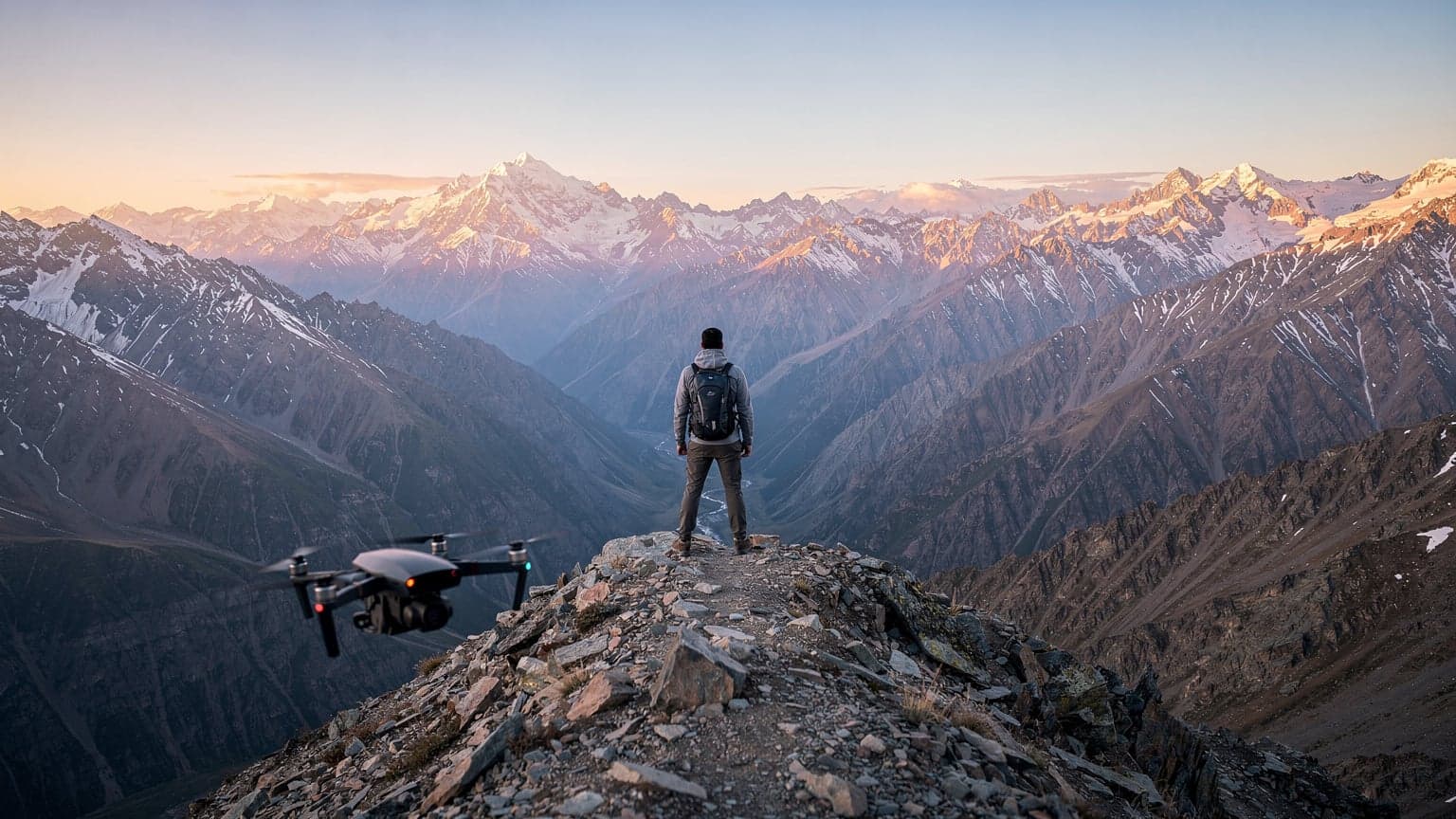
Tajikistan is a mountainous Central Asian country known for its dramatic landscapes, rich Persian-influenced culture, and ancient Silk Road history. It offers travellers a blend of high-altitude adventure, vibrant bazaars, and warm hospitality, making it a truly unique destination for those seeking off-the-beaten-path experiences.
A Land of Towering Peaks and Glaciers
When you picture Central Asia, vast steppes might come to mind, but Tajikistan is a different beast entirely. Over 90% of the country is mountainous, dominated by the majestic Pamir and Alay ranges. It's often called the 'Roof of the World' for good reason. I've traversed a fair share of high-altitude terrain in my travels, from the Himalayas to the Andes, but the sheer scale of the Pamirs, especially when you're passing through places like the Bartang Valley, is something else. This isn't just about pretty views, it's about a way of life carved by the mountains, where communities are isolated for months by snow and rely on ancient routes.
These mountains are also home to immense glaciers. The Fedchenko Glacier, for instance, is one of the longest glaciers outside the polar regions. Its meltwater feeds into major rivers, a lifeline for the entire region. The air up there, even in summer, carries a crispness that reminds you of its raw power. If you plan to explore the higher reaches, remember that passes like the Ak-Baital, sitting at over 4,655 meters (15,272 ft), are usually only accessible from June through September. Beyond that, heavy snowfalls can make transit impossible, even for the most seasoned drivers.
The Ferghana Valley Connection
While much of Tajikistan is mountainous, its northernmost region touches a small part of the fertile Ferghana Valley, shared with Uzbekistan and Kyrgyzstan. This historical region, particularly around the city of Khujand, offers a stark contrast to the rugged Pamirs. Here, you'll find bustling bazaars like the Panjshanbe Bazaar in Khujand, vibrant with fresh produce and artisan crafts. It's a key agricultural area, and the cultural exchange with its neighbours is palpable. When I was navigating the taxi system from the border near Konibodom to Khujand, it felt like stepping into a different country altogether, a testament to the valley's unique identity.
Persian Roots in a Turkic Sea
Tajikistan stands out in Central Asia for its strong Persian heritage. While its neighbours largely speak Turkic languages, Tajik is a dialect of Persian, closely related to Dari in Afghanistan and Farsi in Iran. This linguistic connection is a huge differentiator. It means that centuries of Persian literature, poetry, and philosophy have deeply influenced Tajik culture.
You'll notice this heritage immediately, whether it's in the architecture of older buildings in Dushanbe's Rudaki Park area, the intricate patterns of textiles, or the melodious cadence of conversations. This Persian thread runs through everything, offering a fascinating cultural depth that surprised me on my first visit. It's not just a language; it's a window into a different cultural narrative within Central Asia.
Ancient Samarkand and Bukhara Ties
Historically, cities like Samarkand and Bukhara, now in Uzbekistan, were major centers of Tajik-Persian culture and learning. Many Tajiks still consider these cities to be an integral part of their heritage. This historical connection is a sensitive point, but it underscores the deep, shared cultural legacy that transcends modern borders. Imagine having your ancestral cultural capital just across an international border, a place you might need a separate visa or a specific transit route to reach. It's a poignant reminder of how fluid borders once were along the Silk Road.
The Pamir Highway: A Road to the Sky
The M41, famously known as the Pamir Highway, is one of the world's highest international roads, traversing the Pamir Mountains. It's not just a road, it's an experience. My own journey along a segment of it, from Khorog to Murghab, was a test of both endurance and awe. It's a rugged, often unpaved route that demands respect, offering unparalleled views of jagged peaks, remote villages, and high-altitude lakes like Karakul.
For anyone considering this adventure, remember that road conditions vary wildly, especially after winter thaws or heavy rains. Local marshrutkas (shared taxis) ply sections of it, but hiring a sturdy 4x4 with an experienced driver is often the most reliable way to navigate its more remote stretches. Don't expect blazing fast data speeds up there, either; this is where you truly disconnect, or at least, you hope your Pixel 9 eSIM setup has a fighting chance on the sparse cell towers.
High-Altitude Lakes
Along the Pamir Highway, you'll encounter stunning high-altitude lakes. Karakul Lake, a saline lake believed to be formed by a meteorite impact, is one of the most striking. Its deep blue waters, framed by stark, dramatic mountains, create an almost alien landscape. There are small, rudimentary guesthouses in the nearby village of Karakul where you can stay, offering a glimpse into the resilient lives of the local Pamiri people. Sleeping there, under a blanket of stars at over 3,900 meters (12,800 ft), is an unforgettable, if chilly, experience.
Language and the Tajik Script
As mentioned, Tajik is an Indo-European language. What's particularly interesting is its script. While it's a form of Persian, it's written in the Cyrillic alphabet, a legacy of the Soviet era. This can be a bit disorienting if you have some Farsi or Dari under your belt, which use the Perso-Arabic script. Seeing familiar words rendered in Cyrillic is a unique linguistic twist.
However, you'll find that many younger Tajiks, especially in urban areas like Dushanbe's central shopping districts, also have some grasp of Russian, which remains an important lingua franca. Learning a few basic Tajik phrases, like 'Salom' (hello) and 'Tashakkur' (thank you), goes a long way. Locals truly appreciate the effort, even if your pronunciation is far from perfect.
| Common Tajik Phrases | Cyrillic Script | Pronunciation (Approx.) |
|---|---|---|
| Hello | Салом | Sah-LOM |
| Thank you | Ташаккур | Tah-shah-KOOR |
| How are you? | Чӣ хел? | Chee KHEL? |
| Goodbye | Хайр | KHAYR |
| Yes / No | Бале / Не | Bah-LEH / Neh |
Resurgence of Perso-Arabic?
There have been discussions and movements to reintroduce the Perso-Arabic script in Tajikistan, aligning more closely with its cultural roots. However, it's a complex issue with deep historical and political implications. For now, Cyrillic remains the standard. This duality is something you'll encounter frequently, a subtle nod to the country's layered history, much like finding a classic Soviet-era Lada still humming along the roads of the Ismoili Somoni district.
Hospitality is Paramount
Tajik hospitality is legendary, especially in rural areas. Visitors are often welcomed with open arms, invited into homes for tea and meals, even if language barriers exist. It's a genuine, heartfelt warmth that defines the travel experience there. I remember getting stuck in a small village near Kulob due to a sudden downpour, and within minutes, a family had invited me in, offering a warm floor to sleep on and a steaming bowl of plov.
Refusing an offer of tea or food, especially in a rural home, can be seen as impolite. Always accept, even if you can only manage a small sip or bite. It's a gesture of respect and connection. This cultural emphasis on welcoming strangers is a beautiful aspect of Tajik life, something you won't easily forget.
The Culture of Chaikhana
Tea houses, or chaikhana, are central to Tajik social life. They're not just places to drink tea, but hubs for conversation, relaxation, and community gathering. You'll find them everywhere, from bustling city centers to quiet mountain villages. Spending an afternoon in a chaikhana in, say, the Shohmansur district of Dushanbe, watching men play backgammon and chat over endless cups of green tea, is an authentic way to experience local life. (And perhaps the only place you'll find reliable Wi-Fi outside of your accommodation.)
The Ancient City of Penjikent
For history buffs, the ruins of ancient Penjikent are a must-see. Located in the Sughd region, this archaeological site was once a thriving Sogdian city on the Silk Road, dating back to the 5th to 8th centuries. Excavations have uncovered well-preserved homes, temples, and murals, offering a vivid glimpse into the pre-Islamic history of the region. Walking through the remains, you can almost hear the echoes of merchants and scholars who once passed through.
Visiting Penjikent feels like stepping back in time, away from the modern hustle. The site typically opens around 9:00 AM and closes by 5:00 PM, though it's always wise to check locally, especially during national holidays like Navruz in March, when schedules can shift.
Sogdian Merchants and the Silk Road
The Sogdians were renowned traders and cultural intermediaries along the Silk Road, playing a crucial role in connecting East and West. Penjikent was one of their key urban centers. Their influence stretched far beyond their homeland, leaving a legacy of art, trade, and linguistic exchange that shaped Central Asia for centuries. It's a rich history that often gets overshadowed by more famous Silk Road cities, but one that's incredibly rewarding to uncover.
Dushanbe, The Capital City
Dushanbe, the capital of Tajikistan, is a surprisingly green and modern city, especially considering its mountainous surroundings. Its name means 'Monday' in Tajik, referring to its historical role as a Monday market town. Today, it's a city of wide boulevards, impressive monuments, and numerous parks. The Rudaki Park and the adjacent Flagpole Park, home to one of the world's tallest flagpoles, are focal points of urban life. Strolling through these areas in the evening, you'll see families out walking, couples enjoying ice cream, and a general air of relaxed modernity.
While Dushanbe is developing rapidly, it still retains a distinctly Central Asian charm. Public transport, primarily marshrutkas and local buses, is efficient for navigating the city's main arteries, though Google Maps isn't always perfectly accurate for real-time arrivals. I still rely on asking locals at the stops, especially around the main Aini Square. For something like a Samsung Galaxy S26 for Expats, its integrated mapping might be better, but for older models, a bit of local interaction is key.
The Ishaqi Market
No visit to Dushanbe is complete without exploring the local markets. The Ishaqi Market, though perhaps less grand than the Panjshanbe Bazaar in Khujand, is a vibrant place to experience daily life. Here you can find everything from fresh produce and spices to local textiles and handicrafts. It's a sensory overload in the best possible way, with the aroma of spices mingling with the chatter of vendors and the vibrant colors of fabrics. It's also an excellent spot to pick up some local dried fruits, a staple snack throughout the country.
Traditional Tajik Cuisine
Tajik cuisine shares many similarities with other Central Asian dishes, but with its own distinct flavors. Plov (pilaf) is king, a hearty rice dish typically made with meat (often lamb or beef), carrots, onions, and sometimes chickpeas. Each region, even each family, seems to have its own special plov recipe. It's a communal dish, often eaten from a shared plate. Another staple is kurutob, a yogurt-based dish, especially popular in the Pamirs, often served with bread and herbs.
Don't miss the fresh bread, called non or lepyoshka, baked in traditional clay ovens (tandyr). It's served with almost every meal and is incredibly delicious. When I was visiting a small village near Qalai Khumb, I spent an afternoon watching a woman bake non in her outdoor tandyr, a mesmerizing process that resulted in the most fragrant bread I've ever tasted.
Green Tea as a Way of Life
Green tea (chai sabz) is the national beverage, consumed throughout the day, often with every meal. It's not just a drink; it's a ritual, a symbol of hospitality and social connection. Guests are always offered tea, and it's poured with specific customs, often a small amount at a time to ensure it stays warm and requires frequent refills, encouraging conversation. Black tea (chai siah) is also available, but green tea dominates.
Navigating Connectivity on the Road
Staying connected in Tajikistan, especially outside of Dushanbe and Khujand, can be a challenge. While major cities have decent 4G coverage, venturing into the Pamirs means expecting patchy or non-existent service. I've been in situations where my Verizon 'International Day Pass' simply couldn't find a signal for hours along the Pamir Highway, leaving me scrambling for a local SIM. The pain point of not being able to confirm guesthouse bookings or simply let family know I was okay is a real one for any seasoned traveler.
This is where a Tajikistan eSIM can be a lifesaver. Cellesim offers plans starting at just $4.41, with over 19 options to suit different data needs. Crucially, Cellesim's eSIMs for Tajikistan also support SMS, which is vital for OTPs (One-Time Passwords) and other verification processes that often pop up when you're trying to access banking apps or online services abroad. Having that SMS capability on a data-only eSIM is a feature I always look for, especially when crossing borders where local SIM cards might be a hassle to register immediately. Think about those crucial moments when you need to confirm an international payment, or even just log into your email for directions, and suddenly your phone decides it's a paperweight. That's a frustration I wouldn't wish on anyone.
| Connectivity Option | Pros | Cons | Best For |
|---|---|---|---|
| Cellesim Tajikistan eSIM | Instant activation, supports SMS for OTPs, multiple plans, competitive pricing. | Requires eSIM-compatible phone, initial setup can be unfamiliar for some. | Digital nomads, remote workers, travelers needing reliable verification codes. |
| Local Physical SIM | Potentially cheaper for long stays, wide availability in cities. | Registration can be bureaucratic, language barrier, may not support all phones. | Long-term residents, those comfortable with local procedures. |
| International Roaming (e.g., AT&T) | Convenience of using your home number. | Extremely expensive, often poor speeds, limited coverage in remote areas. | Emergency use only, short trips where cost is no object. |
For more insights on keeping your laptop connected while on the go, you might find my thoughts on eSIM for PC: Staying Connected on Your Laptop Abroad in 2026 useful. It details how I maintain high-speed connectivity for my work, even from remote corners of the world.
Wi-Fi Availability
Wi-Fi is generally available in hotels and guesthouses in larger towns, but don't expect blazing speeds or consistent reliability outside of Dushanbe. In remote Pamiri homestays, Wi-Fi is often non-existent. It's a good idea to download offline maps (like Maps.me) and any essential travel documents before you venture out of urban centers. I still keep a small, portable hard drive with downloaded movies and books for those long stretches without service, a habit born from years of relying on questionable hotel Wi-Fi.
The Fascinating History of Samani
Ismoil Somoni, often referred to as Ismail Samani, is a revered figure in Tajikistan's history, considered the founder of the first Tajik state. He was a powerful emir of the Samanid Empire, which ruled over a vast territory in Central Asia from the 9th to 10th centuries. His legacy is deeply ingrained in modern Tajikistan, from the towering monument in Dushanbe to the national currency, the Somoni. He's a symbol of national identity and sovereignty.
Learning about figures like Somoni helps you appreciate the deep historical pride in Tajikistan. It's not just a land of mountains, but a land with a profound historical narrative that resonates strongly with its people. The statue of Ismoil Somoni in central Dushanbe, near the Presidential Palace, is a testament to his enduring significance, a constant reminder of the country's ancient roots.
The Samanid Empire's Cultural Impact
The Samanid Empire was a golden age for Persian culture, fostering a renaissance in art, science, and literature. Scholars like Avicenna and poets like Rudaki flourished under their patronage. This period laid much of the groundwork for the rich cultural traditions that Tajiks proudly uphold today. It's a reminder that beneath the Soviet-era veneer, a vibrant, ancient civilization has always thrived.
The Nuances of the Tajik Somoni
The official currency of Tajikistan is the Somoni (TJS), named after Ismoil Somoni. While larger establishments in Dushanbe might accept credit cards, cash is king, especially outside the capital. Always carry a good supply of small denominations, particularly when venturing into rural areas or visiting local bazaars. ATMs are available in major cities but can be scarce or out of service elsewhere. I've had more than one frantic search for a working ATM in places like Khorog, only to find the two available machines were both offline for the day.
It's generally recommended to exchange USD or Euros into Somoni at official exchange offices or banks upon arrival. Avoid unofficial money changers. The main banks, like Orienbank, usually operate from 9:00 AM to 5:00 PM on weekdays, with reduced hours on Saturdays.
Bargaining in the Bazaars
Bargaining is a common practice in bazaars and smaller shops, especially for souvenirs and non-essential items. It's an expected part of the interaction, a friendly negotiation rather than an aggressive confrontation. Start by offering a bit less than the initial price and meet somewhere in the middle. It's all part of the cultural experience. (Just remember, it's generally not done in supermarkets or formal restaurants.)
Cultural Norms and Dress Codes
Tajikistan is a predominantly Muslim country, and while not as conservative as some of its neighbours, it's wise to dress modestly, especially when visiting religious sites or rural areas. For women, this means covering shoulders and knees. A headscarf is not strictly required for everyday wear but is respectful to carry for mosque visits. Men should also opt for trousers rather than shorts in most public settings.
Beyond clothing, general politeness and respect for elders are highly valued. Always greet people with a handshake (men with men, women with women, or women with men if offered first) and use both hands when offering or receiving items, especially food or gifts. These small gestures go a long way in showing respect.
Visiting Mosques and Shrines
If you plan to visit a mosque or a holy shrine, remember to remove your shoes before entering. Women should cover their heads. These are places of worship, and showing respect for local customs is paramount. Taking photos is usually allowed, but always ask permission, especially if people are in your shot. This applies not just to religious sites, but generally when photographing people in rural areas, too.
Frequently Asked Questions
Do I need a visa to visit Tajikistan?
Visa requirements vary by nationality. Many countries, including most EU nations and some Asian countries, can apply for an e-Visa online, which simplifies the process. It's always best to check the latest regulations with the Tajik Ministry of Foreign Affairs website well in advance of your trip.
Is Tajikistan safe for tourists?
Tajikistan is generally considered safe for tourists, with friendly locals. However, like any travel destination, it's wise to take standard precautions, such as being aware of your surroundings, securing valuables, and avoiding unlit areas at night. Exercise caution when traveling on mountain roads, especially during adverse weather conditions.
What is the best time of year to visit Tajikistan?
The best time to visit Tajikistan largely depends on your planned activities. For trekking and exploring the Pamir Highway, the summer months (June to September) offer the most accessible conditions. Spring (April-May) and autumn (September-October) are ideal for lower-altitude cultural tours, with milder weather and vibrant landscapes.
What kind of electrical outlets are used in Tajikistan?
Tajikistan uses Type C and Type F electrical outlets, common in Europe and Russia. The standard voltage is 220V at a frequency of 50Hz. Travelers from countries with different plug types or voltages will need a suitable adapter and potentially a voltage converter for their devices.
Can I drink tap water in Tajikistan?
It is generally not recommended to drink tap water in Tajikistan. Stick to bottled water, which is widely available in cities and towns. For treks in remote areas, consider carrying a water filter or purification tablets to ensure safe drinking water from natural sources.
What are the common forms of transportation within Tajikistan?
Within Tajikistan, common forms of transportation include shared taxis (marshrutkas) for intercity travel, which are a popular and affordable option. In cities like Dushanbe, public buses and marshrutkas cover most routes. For exploring the Pamir Highway, hiring a private 4x4 with a driver is often the safest and most comfortable choice.