
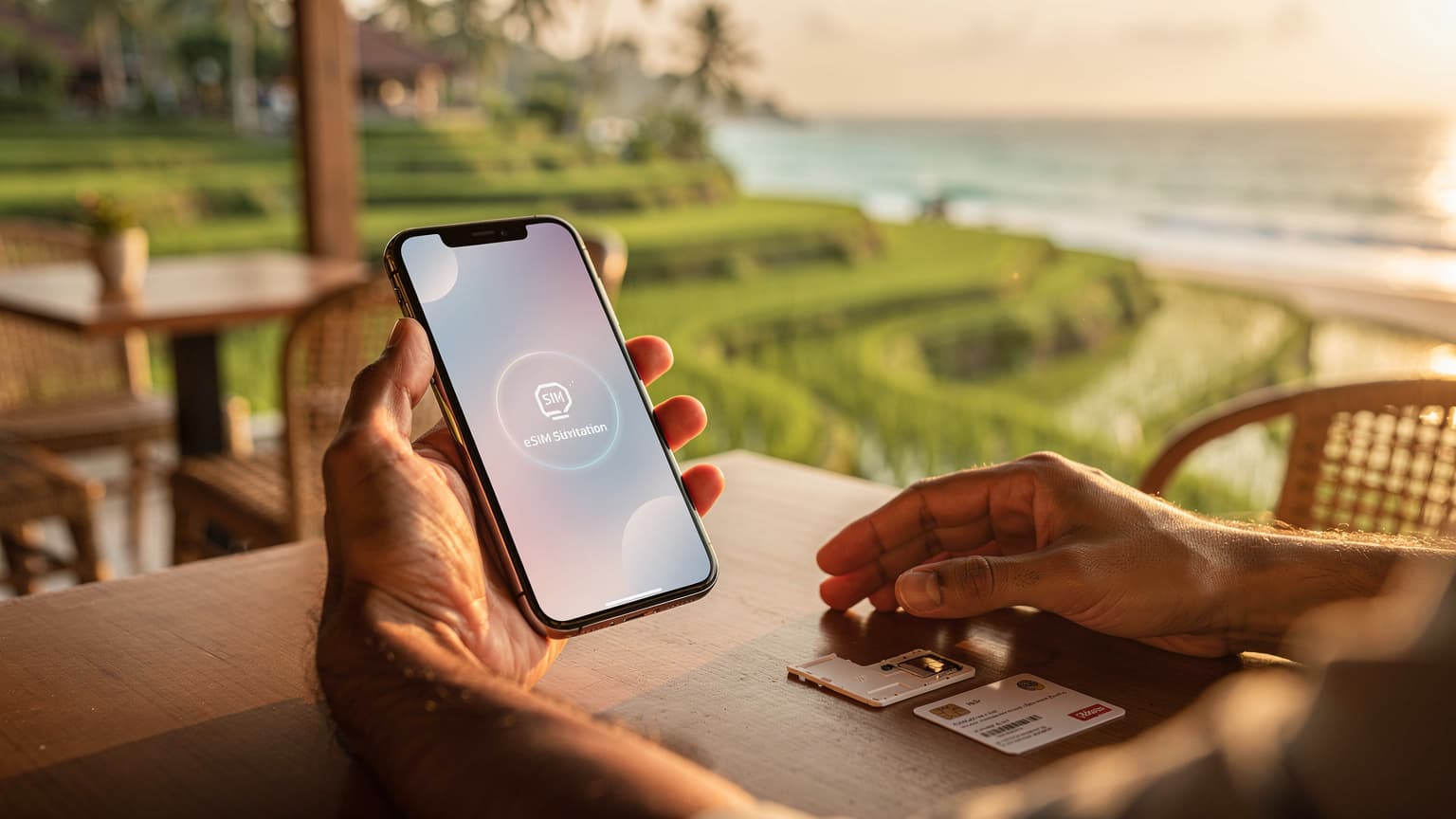
Indonesia's Network Evolution in 2026: Telkomsel's Dominance
Indonesia, a nation comprising thousands of islands, presents a unique challenge for mobile network operators. In 2026, Telkomsel remains the undisputed leader in terms of coverage and capacity, particularly outside major urban centers like Jakarta and Surabaya. They operate a robust network infrastructure, heavily invested in both 4G LTE and emerging 5G deployments.
For travelers, understanding this landscape is critical. Telkomsel has progressively refarmed legacy 3G (UMTS) spectrum, primarily on the 2100 MHz (Band 1) and 900 MHz (Band 8) frequencies, to bolster their 4G LTE (FDD-LTE) footprint. This means that while you might still encounter residual 3G in very remote areas, the vast majority of your connectivity will be on 4G LTE, primarily utilizing Band 3 (1800 MHz), Band 8 (900 MHz), and Band 1 (2100 MHz). In larger cities and tourist hubs like Bali, they also leverage Band 5 (850 MHz) and have begun integrating Band 40 (2300 MHz) for TDD-LTE capacity, particularly useful in dense areas. Their 5G rollout, while still nascent compared to more developed markets, is concentrating on the n3 (1800 MHz) and n40 (2300 MHz) bands, with future plans for the n78 (3.5 GHz) C-band spectrum. This blend ensures a strong foundational network that extends far beyond the typical tourist trails, from the bustling streets of Jakarta to the serene beaches of Lombok.
Telkomsel's Market Share and Coverage Footprint
Telkomsel commands roughly 55-60% of the Indonesian mobile subscriber market, a significant lead over competitors like Indosat Ooredoo Hutchison and XL Axiata. This market dominance translates directly into superior network coverage, especially in less populated regions. While other operators might offer competitive pricing in urban centers, Telkomsel's reach into rural areas and inter-island connectivity is unparalleled. For instance, if you're planning a trip to the remote reaches of Flores or exploring the jungles of Kalimantan, Telkomsel is often your only reliable option. Their network maps consistently show 4G LTE coverage reaching upwards of 95% of populated areas, with average download speeds in major cities ranging from 30 Mbps to 80 Mbps, and upload speeds typically between 10 Mbps and 30 Mbps. Of course, these are theoretical maximums and subject to local network congestion.
The Telkomsel Tourist SIM Card: Traditional but Tedious
For years, the physical Telkomsel tourist SIM has been the default choice for visitors. These SIM cards are typically purchased upon arrival at airports such as Soekarno-Hatta (CGK) in Jakarta, Ngurah Rai (DPS) in Bali, or Juanda (SUB) in Surabaya, or from official Telkomsel outlets in major cities. The process, however, is far from seamless.
Purchasing a physical SIM requires in-person registration, which involves presenting your passport and having your IMEI (International Mobile Equipment Identity) number recorded. This is a government mandate designed to combat the grey market of imported phones. While well-intentioned, it creates a bottleneck for travelers. The registration process can take anywhere from 15 minutes to an hour, depending on the queue and the efficiency of the vendor. Furthermore, the data packages offered on these physical tourist SIMs are often fixed, with less flexibility than what might be available for local users or through digital channels.
Activation Hassles and IMEI Registration
The primary friction point with physical SIMs is the mandatory IMEI registration. When you buy a local SIM card in Indonesia, your phone's IMEI must be registered with the Ministry of Industry (Kemenperin). If your phone's IMEI is not registered, or if it was purchased abroad and has not paid the import tax, your local SIM may stop working after a short period, typically 90 days. For short-term tourists, this 90-day window is usually sufficient, but the initial registration at the airport or official store can be cumbersome. Staff members often need to manually input your details, scan your passport, and ensure the IMEI is correctly linked. It's a bureaucratic hurdle many travelers would prefer to avoid, particularly after a long flight (a situation that might be familiar to those navigating Uzbekistan's connectivity requirements).
Limited Flexibility and Package Options
Tourist SIM packages are generally designed for simplicity, offering a set amount of data, calls, and SMS for a predefined validity period (e.g., 30 days). While this can be straightforward, it often lacks the granular control that more digitally-savvy travelers appreciate. You might find yourself overpaying for bundled minutes you'll never use, or running out of data prematurely with no easy way to top up specific data allocations without visiting another store or navigating complex SMS codes. The pricing can also be less competitive than plans available through Telkomsel's digital channels or via eSIM providers.
Telkomsel eSIM for Tourists: A Digital Paradigm Shift
The advent of Telkomsel eSIM support marks a significant shift towards digital convenience for travelers. An eSIM, or embedded SIM, is a digital SIM that allows you to activate a cellular plan from a carrier without needing a physical nano-SIM card. For a telecom engineer, the elegance of remotely provisioned credentials is clear, eliminating physical logistics entirely. This is particularly advantageous in a country like Indonesia, where physical SIM procurement can involve queues, language barriers, and bureaucratic processes.
With a Telkomsel eSIM, you can purchase a data plan online, receive a QR code via email, and activate it on your compatible device before even landing in Indonesia. This means you step off the plane with immediate connectivity, bypassing the airport hustle entirely. It's a level of seamless integration that traditional SIMs simply cannot match, especially for those who travel frequently or visit multiple countries (much like the benefits found with regional eSIMs for Africa).
Advantages of eSIM over Physical SIM
- Instant Activation: No physical installation, no waiting in line at the airport. Activate with a QR code or manual entry.
- Remote Purchase: Buy and manage your plan from anywhere in the world, before your trip.
- Dual SIM Functionality: Keep your home SIM active for calls and SMS while using the eSIM for data, eliminating the need to swap cards. This is a critical feature for business travelers who need to receive calls on their primary number.
- Environmental Impact: Reduced plastic waste from physical SIM cards.
- Security: eSIMs are less prone to physical damage or loss compared to tiny physical SIM cards.
Who Should Consider a Telkomsel eSIM?
Telkomsel eSIM is ideal for:
- Frequent Travelers: Those who regularly visit Indonesia or other countries and want to avoid the hassle of physical SIM cards.
- Business Travelers: Professionals who need immediate, reliable connectivity upon arrival and want to keep their primary number active.
- Digital Nomads: Individuals who value flexibility and remote management of their mobile plans.
- Tourists with Short Stays: Anyone on a short holiday who wants to maximize their time exploring rather than dealing with administrative tasks.
- Users of eSIM-Only Devices: Modern iPhones (like the US versions of iPhone 14/15/16) and some Android flagships are eSIM-only, making this the only viable option for local service.
Activating Your Telkomsel eSIM: Step-by-Step
Activating a Telkomsel eSIM is a straightforward process, typically involving a QR code. However, ensuring your device is eSIM-compatible is the first and most crucial step. Most flagship smartphones released since 2018 support eSIM functionality.
Here's a general procedure for activating your Telkomsel eSIM:
- Purchase Your eSIM Plan: Acquire a Telkomsel eSIM plan from their official website or a reputable eSIM provider like Cellesim (you can find options for Indonesia eSIM here). You will typically receive an email with a QR code and manual activation details.
- Ensure Wi-Fi Connection: Before installation, ensure your phone is connected to a stable Wi-Fi network. This is essential for downloading the eSIM profile.
- Access Your Phone's Settings:
- For iOS (iPhone): Go to Settings > Cellular (or Mobile Data) > Add eSIM.
- For Android: Go to Settings > Network & Internet (or Connections) > SIMs (or Mobile Network) > Add eSIM (or Download a SIM). The exact path can vary slightly between manufacturers like Samsung, Google Pixel, or Xiaomi.
- Scan the QR Code: Your phone's camera will open. Scan the QR code provided in your purchase email. If scanning isn't possible, choose the manual entry option and input the SM-DP+ Address and Activation Code provided.
- Confirm and Activate: Follow the on-screen prompts to confirm the installation. Your phone will download the eSIM profile. You may be asked to label your new eSIM (e.g., "Indonesia Data").
- Set Data Roaming Preferences: Once activated, go back to your Cellular/Mobile Data settings and ensure your new Telkomsel eSIM is selected for mobile data. You might need to toggle off data roaming for your home SIM to prevent unexpected charges.
Troubleshooting Common eSIM Activation Issues
While generally smooth, eSIM activation can occasionally hit a snag. One common issue is a weak Wi-Fi connection during the profile download, which can cause the installation to fail. Another is mistakenly scanning a QR code multiple times, which some systems interpret as an invalid attempt. If you encounter an error, try restarting your phone, ensuring you have a strong Wi-Fi signal, and then retrying the scan or manual entry. If problems persist, contacting your eSIM provider's support team with the error message is the next step.
Data Packages and Pricing: A Direct Comparison
When evaluating Telkomsel's physical tourist SIM against their eSIM offerings (or a third-party eSIM that uses Telkomsel's network), the core consideration often comes down to data volume and price. While Telkomsel's direct eSIM offerings are still maturing, third-party providers leveraging Telkomsel's robust infrastructure offer highly competitive and flexible data packages tailored for tourists.
Generally, physical tourist SIMs from Telkomsel tend to offer bundled packages that include a mix of data, local calls, and SMS. For example, a common package might be 25GB of data with 50 minutes of local calls and 100 SMS for 30 days, priced around IDR 150,000 (approximately £8.00 - £8.50, depending on exchange rates). The challenge here is often that a significant portion of the data might be allocated for specific apps (e.g., social media or video streaming) rather than general internet use, or split into day/night usage, which can be confusing.
eSIM providers, on the other hand, typically offer pure data packages with varying validities, allowing you to choose exactly how much data you need without unnecessary extras. This often translates to better value for money if your primary need is internet access.
| Feature | Telkomsel Physical Tourist SIM | Telkomsel Network eSIM (via Cellesim) |
|---|---|---|
| Purchase Method | In-person at airport/store | Online, via email QR code |
| Activation | Manual registration, IMEI check, 15-60 min wait | Instant, via QR code scan, 2-5 min |
| IMEI Registration | Mandatory, can be complex for foreign phones | Generally not required for short-term data-only eSIMs (provider-dependent) |
| Data Packages | Bundled (data + calls + SMS), often with usage restrictions | Pure data, flexible volumes & validity, no restrictions |
| Typical Price (15-30 days, ~10-20GB) | IDR 100,000 - 200,000 (£5.50 - £11) | £7 - £15 (depending on data volume and provider) |
| Flexibility | Limited top-up options, fixed validity | Easy top-up online, varied validity options |
| Voice/SMS | Included (local) | Data-only (use VoIP apps like WhatsApp/FaceTime) |
Frequently Asked Questions
Is Telkomsel eSIM available for tourists in Indonesia?
Yes, Telkomsel has introduced eSIM support, making it available for tourists. This allows for a much more convenient way to get connected without needing a physical SIM card, avoiding the often lengthy registration process at airports or retail outlets upon arrival.
What is the main advantage of using a Telkomsel eSIM over a physical tourist SIM?
The primary advantage is convenience and speed of activation. With an eSIM, you can purchase and activate your data plan online before your trip, receiving a QR code for instant setup. This bypasses the need for in-person registration, passport checks, and IMEI verification required for physical SIMs, saving you significant time and effort upon arrival.
Do I still need to register my phone's IMEI with a Telkomsel eSIM?
For data-only eSIMs from third-party providers, IMEI registration is generally not required for short-term tourist use (typically up to 90 days). If you purchase a direct Telkomsel eSIM that includes a local number, the IMEI registration might still be a factor, though the process is often streamlined digitally compared to physical SIMs. Always check specific eSIM product details.
Can I make calls and send SMS with a Telkomsel eSIM for tourists?
Most tourist-focused eSIM plans from Telkomsel or third-party providers are data-only. This means you won't get a traditional Indonesian phone number for calls and SMS. However, you can use Voice over IP (VoIP) applications like WhatsApp, FaceTime, or Telegram for communication, leveraging the data connectivity provided by the eSIM.
What network bands does Telkomsel use in Indonesia?
Telkomsel utilizes a range of network bands for its 4G LTE and emerging 5G services. Key 4G LTE bands include Band 3 (1800 MHz), Band 8 (900 MHz), and Band 1 (2100 MHz). For capacity, they also use Band 5 (850 MHz) and Band 40 (2300 MHz) for TDD-LTE. Their 5G rollout primarily uses n3 (1800 MHz) and n40 (2300 MHz), with n78 (3.5 GHz) planned for the future.
Will my phone support Telkomsel's VoLTE and VoWiFi services with an eSIM?
While Telkomsel supports VoLTE (Voice over LTE) and VoWiFi (Voice over Wi-Fi) on its network, compatibility with international eSIMs can be inconsistent. Data-only eSIMs typically do not enable these features directly. If you manage to get a Telkomsel eSIM with a local number, VoLTE/VoWiFi support often depends on your phone's specific software build for the Indonesian market and Telkomsel's provisioning for non-local devices. It's not guaranteed.
What should I do if my Telkomsel eSIM isn't working after activation?
First, ensure your phone's mobile data settings are configured to use the Telkomsel eSIM, and data roaming is enabled for that profile if necessary. Check your APN settings, which should typically be 'internet' for Telkomsel. If issues persist, try restarting your device or toggling airplane mode. If all else fails, contact your eSIM provider's customer support for guided troubleshooting, providing them with any error messages you received.
Hidden Costs and Data Allocations
One aspect to scrutinize with physical SIMs is how data is allocated. Telkomsel, like many operators in the region, might segment data into