

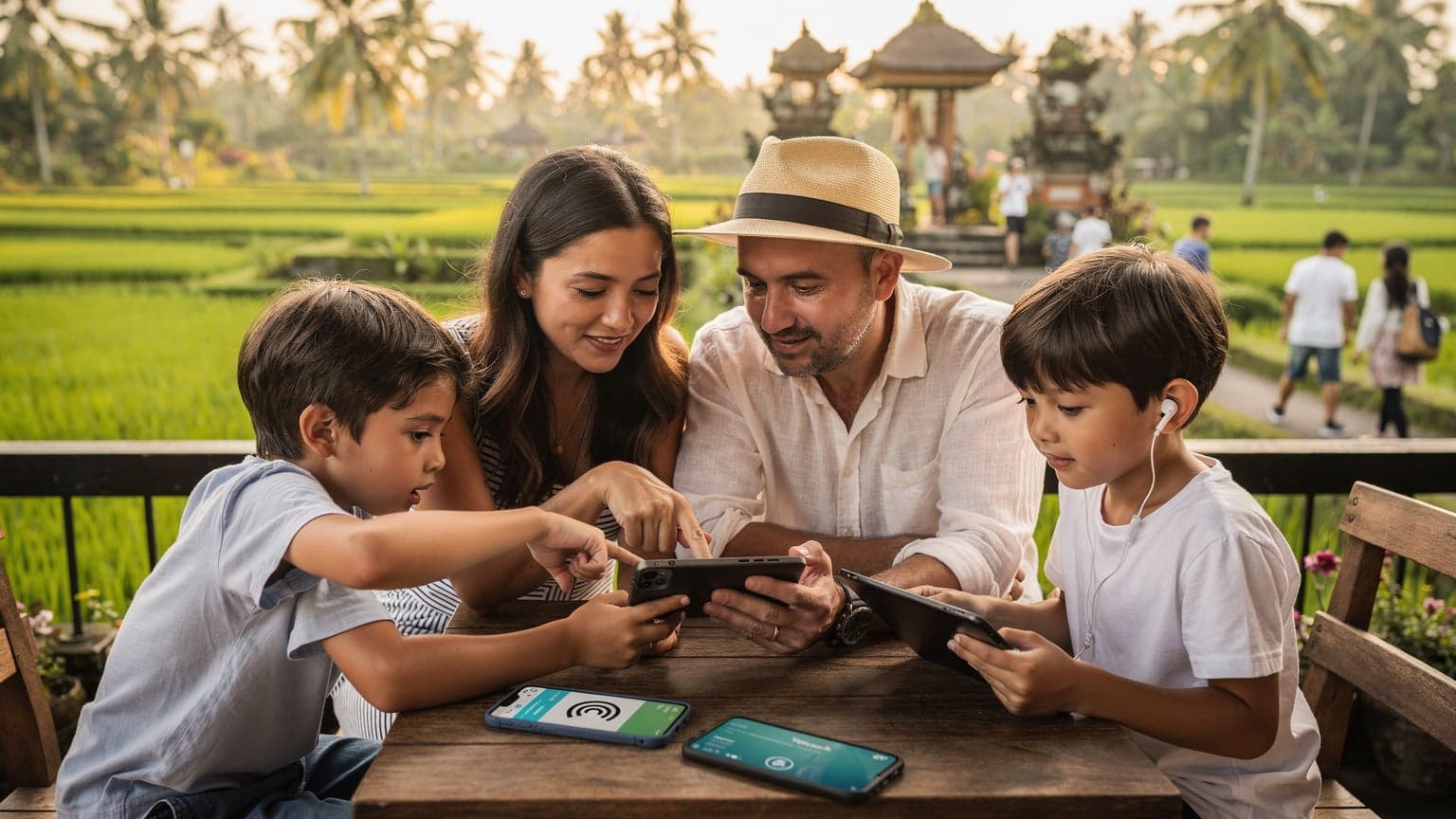
For families heading to Indonesia, specifically Bali, the Telkomsel Tourist eSIM offers robust coverage and competitive pricing, making it a strong contender for your travel data needs. However, simply buying a plan isn't enough when you've got a small army of device-wielding children in tow; careful planning is key to keeping everyone connected without breaking the bank or your sanity.
Telkomsel Tourist eSIM: What It Offers
Telkomsel is Indonesia's largest mobile network operator, known for its extensive coverage, even in more remote parts of the archipelago. Their tourist eSIM plans are designed for short-term visitors, offering various data allowances that are perfectly adequate for adult usage, but we need to consider the family-sized data appetite.
For instance, a standard plan might offer 25GB for 30 days, which sounds like plenty for one person. When you add two kids who might be streaming Disney+ or playing Roblox on their iPads, that 25GB can vanish faster than a scoop of gelato on a hot Bali day. We're talking about a multi-device scenario here, where your phone becomes the hub for everyone.
You can purchase a Telkomsel eSIM directly from Cellesim before you even leave home. This means no scrambling at Ngurah Rai International Airport after a long flight, trying to figure out which kiosk has the best deal. Trust me, arriving with connectivity already sorted is a game-changer when you have tired kids in tow.
Data For The Whole Family: No More Buffering
This is where my 'family travel planner' hat truly comes on. Two kids, aged 4 and 12, often mean two iPads, maybe a Nintendo Switch, and your own phone, which becomes the emergency hotspot. My personal rule of thumb for family travel: double the data you think you'll need, then add another 50% for good measure. A 50GB plan might sound extravagant for a two-week trip, but consider this: Telkomsel eSIM for Tourists 2026: Your Family's Connectivity Playbook will remind you that streaming high-definition content like Disney+ can chew through 3GB per hour, per device. If two kids are watching separate shows for just two hours a day, that's 12GB gone. Suddenly, that 50GB looks a lot more reasonable.
My advice: look for plans offering at least 50-75GB for a typical two-week family trip. Remember, you can always top up if needed, but it's far less stressful to have a buffer. We learned this the hard way when the younger one's iPad ran out of data mid-flight for a pre-downloaded movie (thanks, parental controls), and then decided to chew through our shared hotspot on an un-downloaded episode of Bluey. Never again!
Pre-Trip Prep: Apps, Offline Maps, and Parental Controls
Before you even step on that long-haul flight, your data strategy should be in full swing. This is where Indonesia eSIM from France: Your Pre-Trip Data Checklist for 2026 really comes into its own.
- Pre-load Everything: Download all movies, shows, audiobooks, and games onto kid devices before you leave your home Wi-Fi. This dramatically reduces data consumption on the go. Think Netflix, Disney+, and even YouTube Kids downloads.
- Offline Maps: Crucial for navigating unfamiliar streets, especially if you're venturing off the beaten path in places like Munduk or Sidemen. Google Maps allows you to download entire regions for offline use. This is a lifesaver for finding that elusive warung without using precious data.
- Parental Controls: Most phones and tablets have robust parental control features. Set data limits for individual apps on your kids' devices if they are on their own eSIM, or use your phone's hotspot controls to limit their data usage. For example, on an iPhone, you can restrict background app refresh and cellular data for specific apps under 'Screen Time' settings. On Android, 'Digital Wellbeing' offers similar controls. Make sure these are active on the eSIM line too!
These small steps make a huge difference, ensuring you're not constantly battling for bandwidth or facing unexpected charges because someone decided to stream 4K YouTube videos in the back of a Grab car.
Connectivity in the Wild: Theme Parks and Beyond
One of my biggest concerns when planning family trips is always connectivity in high-density areas, like theme parks or even on a cruise. If you're planning a day at Waterbom Bali or visiting a local animal park, you'll want reliable data for finding each other, checking wait times (if applicable), or even just managing the inevitable Endonezya'ya mı gidiyorsunuz? Telkomsel Tourist eSIM bir seçenek, ama çoğu zaman cebinize uygun değil. Ben €40/gün bütçesiyle seyahat eden biri olarak, size Bali'de gerçekten para kazandıracak alternatifleri ve taktikleri göstereceğim. Landing in Indonesia from France with your EE plan still active can mean huge roaming charges. The smart move is to set up your Indonesian eSIM before you even leave Heathrow. Here's exactly how to do it, step by step, so you're connected the moment you land. İstanbul'a ilk kez geliyorsanız veya uzun zaman sonra geri dönüyorsanız, veri bağlantısı en son endişeniz olmalı. Özellikle LAX'ten uzun bir uçuştan sonra, Sabiha Gökçen'de veya İstanbul Havalimanı'nda pasaport kontrolünden geçtikten sonra yapacağınız son şey, yerel bir SIM kart için kuyruğa girmektir. Neyse ki, Turkcell eSIM, bu süreci baştan sona değiştiriyor.Related reading
 Travel Tips
Telkomsel Tourist eSIM: Endonezya'da Veri Harcamasını Azaltma Yolları (2026)
 Sophie Clarke
 Travel Tips
Indonesia eSIM: How to Get Connected from France Before You Fly (2026)
 Ethan Caldwell
 Travel Tips
Turkcell eSIM: İstanbul Gezinizde Veri Tuzağına Düşmeyin (2026)
 Charlotte Davies