Choose Telkomsel for a local line; choose a travel eSIM for the shortest setup
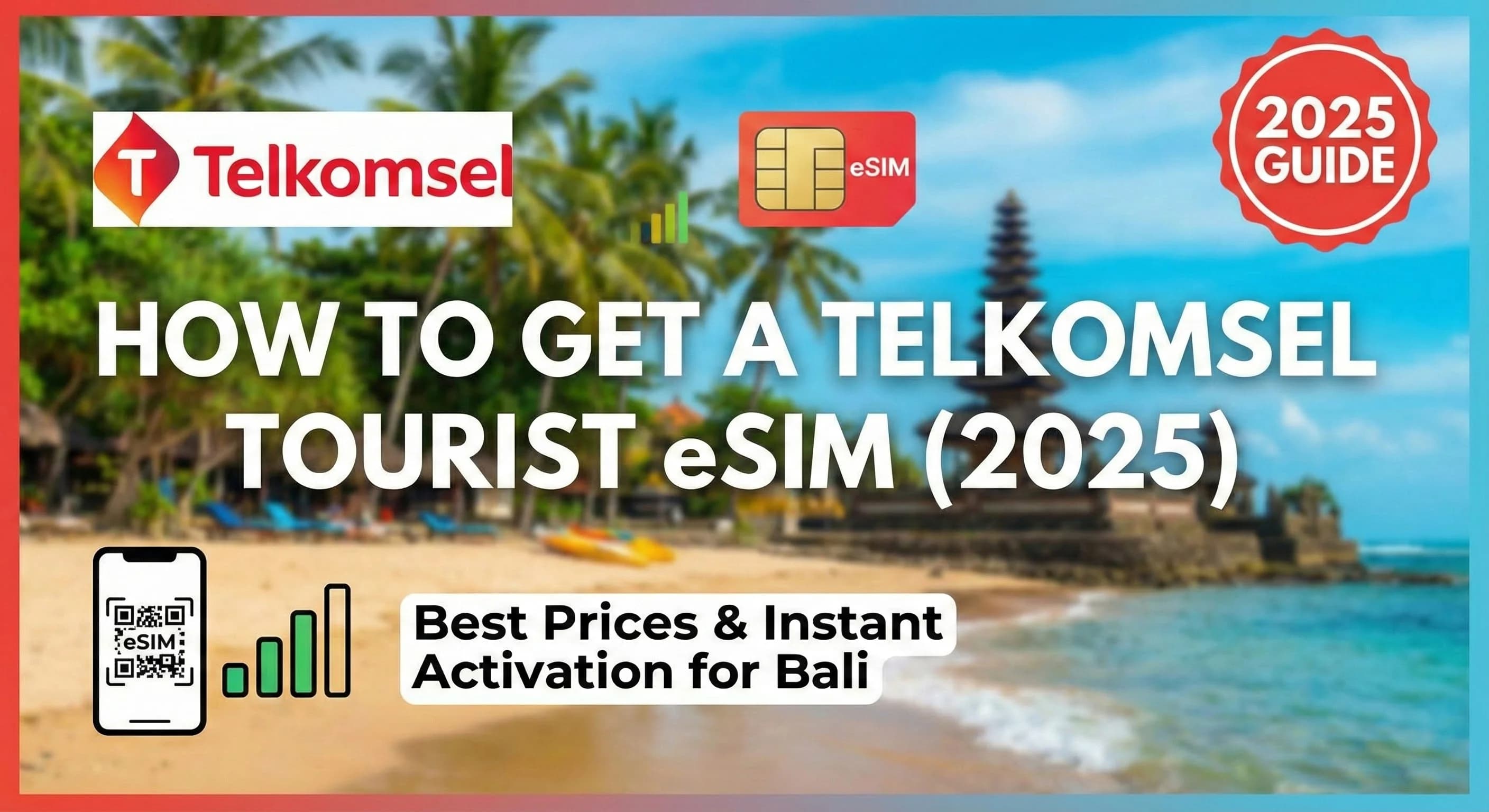
Telkomsel’s current official Tourist Prepaid Card costs Rp150,000 and includes 25GB on Telkomsel networks plus 25 minutes of local calls. Collection requires the confirmation email, passport and phone IMEI. It is a strong option when you want a +62 local number and Telkomsel service. A Cellesim Indonesia eSIM is a separate data-only travel product: it can be installed before departure and avoids local SIM pickup, but you must check the selected plan’s listed partner networks rather than assume every plan connects to Telkomsel.
Official tourist price: Rp150,000
Telkomsel currently lists 25GB valid across its network technologies and 25 minutes of local voice calls. Prices and inclusions can change, so recheck before ordering.
Passport and IMEI are part of pickup
Telkomsel’s tourist FAQ tells customers to bring the booking confirmation, passport and IMEI when collecting the card.
Travel eSIM does not mean Telkomsel
A travel plan can use one or more Indonesian partner networks. The network shown for the selected package is the source of truth; Cellesim and Telkomsel are different providers.
Telkomsel Tourist Prepaid vs Cellesim Indonesia eSIM
The right answer depends on whether you value a local number and named operator more than pre-trip installation and a no-counter arrival.
| Compare | Cellesim travel eSIM | Telkomsel Tourist Prepaid |
|---|---|---|
| Purchase & setup | Buy online and install before the flight | Order and collect through the official tourist-SIM process |
| Passport / IMEI at pickup | No Indonesian SIM handover or local-line registration counter | Confirmation email, passport and IMEI are required for collection |
| Network | Use the partner network(s) listed for the exact package; do not assume | Telkomsel network, with the tourist quota usable nationally |
| Phone number & calls | Data-only; WhatsApp stays on your usual number | Indonesian number with 25 minutes of local calls in the current offer |
| Best for | Fast airport exit, maps, Grab/Gojek and short stays | Travellers who specifically want Telkomsel and a local +62 number |
Is a Cellesim Indonesia plan “Telkomsel-powered”?
Only describe a plan as using Telkomsel when the current package details explicitly name Telkomsel. Partner networks can differ by supplier, package tier and date. If Telkomsel access is essential, verify the exact plan before purchase or choose Telkomsel’s own Tourist Prepaid product.
Telkomsel eSIM and Tourist Prepaid are not interchangeable terms
Telkomsel offers eSIM services, but its current general English eSIM page says foreign citizens need KITAS validation for a new prepaid eSIM number. Its Tourist Prepaid Card has a separate passport-and-IMEI process. Confirm that a tourist eSIM—not merely a domestic eSIM—is available for your eligibility and pickup location.
What matters after landing at Bali DPS
You will likely need data immediately for your transfer, hotel messages and ride apps. Installing a travel eSIM before departure minimizes arrival steps. A local Telkomsel line is worth the extra process when you need local voice service, a +62 number or Telkomsel specifically.
- Save the travel-eSIM QR code before the flight.
- For Telkomsel pickup, have the confirmation, passport and IMEI ready.
- Do not delete an installed eSIM unless support tells you to; QR reuse rules vary.
Fastest travel-eSIM setup for Indonesia
Install at home; start consuming the plan only according to the activation rule shown with your package.
- 1Check that your phone supports eSIM and is carrier-unlocked.
- 2Choose the Indonesia plan by data, validity and listed partner network.
- 3Install on reliable Wi-Fi and label the line “Indonesia”.
- 4At DPS, select it for mobile data and enable roaming on the eSIM line only.
Telkomsel tourist questions
Does every Indonesia travel eSIM connect to Telkomsel?
No. Partner networks differ. Check the exact package details or ask support before buying if Telkomsel is a requirement.
Do I need a passport for Telkomsel Tourist Prepaid?
Yes. Telkomsel’s official pickup FAQ asks for the confirmation email, passport and IMEI.
Which is better for a one-week Bali trip?
A travel eSIM is usually the simpler data-only arrival. Telkomsel Tourist Prepaid is the clearer fit if you need a local number, local minutes or Telkomsel specifically.
Compare Indonesia eSIM plans
Check data, duration and the listed network for each plan. Install before departure so Grab, Gojek, maps and hotel messages are ready after landing.