

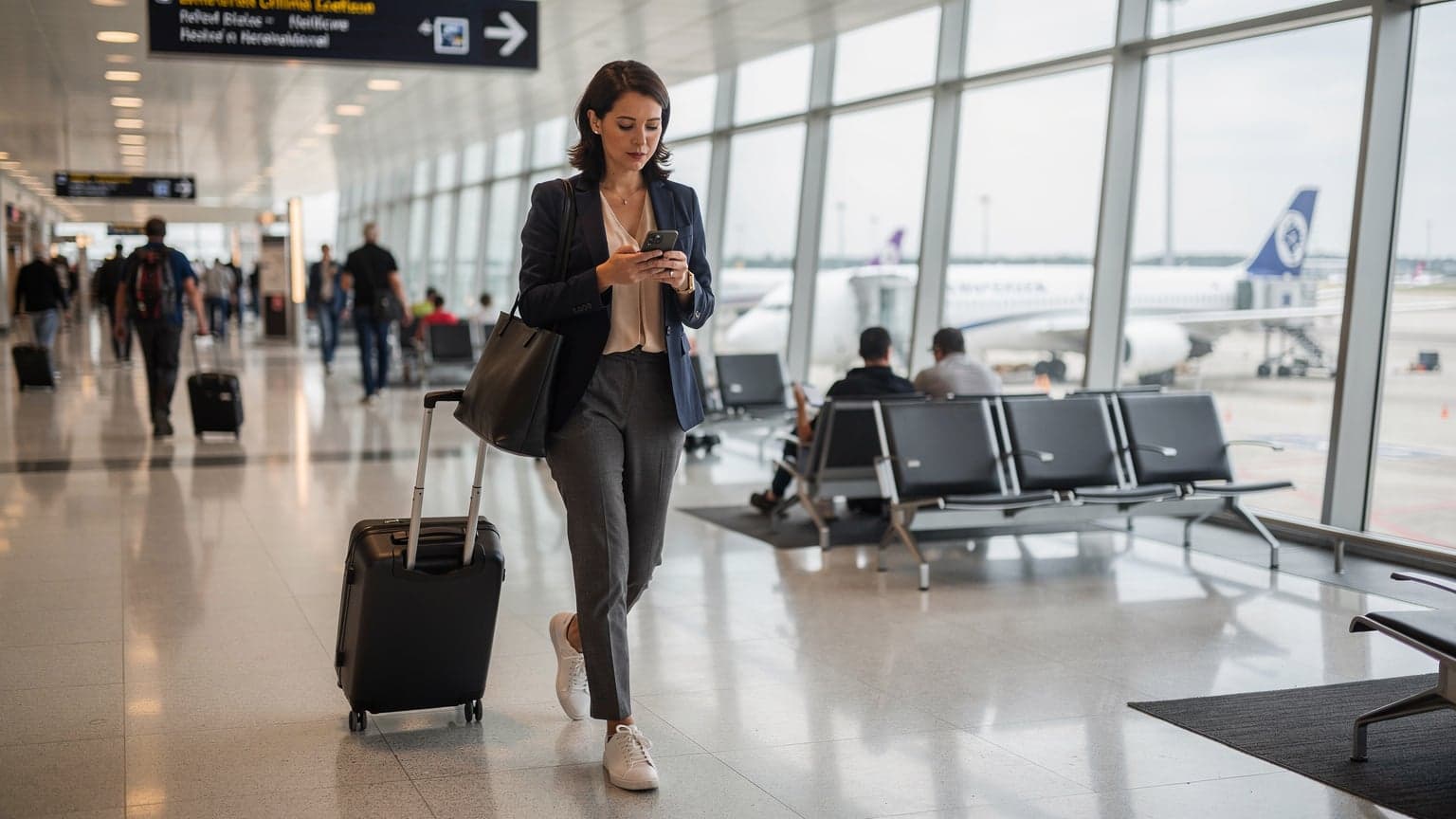
For Thanksgiving 2026 travel, an eSIM offers a flexible and cost-effective solution for staying connected, whether you're traveling domestically within the US or venturing internationally to destinations like Mexico or Europe. It eliminates the need for physical SIM cards, allowing for easy plan activation and management directly from your device, often at significantly lower rates than traditional carrier roaming.
Why Thanksgiving 2026 Demands Smarter Connectivity
Thanksgiving is notorious for being one of the busiest travel periods in the United States. In 2026, we anticipate continued growth in both domestic and international journeys, driven by recovering global travel and the desire for family reunions. This surge puts immense pressure on existing cellular infrastructure, making reliable connectivity more critical than ever.
Consider the sheer volume: AAA projects tens of millions of Americans hitting the roads and skies for the holiday. This means congested cell towers, particularly in dense urban areas and around major transportation hubs. Having a robust and flexible data solution isn't just a convenience; it's a necessity for navigation, coordinating with family, entertainment during delays, and even critical communication.
My experience as a telecom engineer tells me that peak usage times, like the Wednesday before Thanksgiving or the Sunday return, will stretch network capacity to its limits. During these periods, even well-provisioned macro cells on common bands like T-Mobile's B2/B66 or Verizon's B13/B66 can see significant throughput degradation. This is where a strategic approach to your mobile data, potentially leveraging multiple carriers via eSIM, can make a tangible difference.
The Challenge of Peak Travel Data Demands
During high-traffic events, network congestion can lead to significantly reduced speeds. What might be a typical 100-200 Mbps download speed on T-Mobile's n41 (mid-band 5G) in off-peak hours could drop to 10-20 Mbps, or even single digits, when thousands of users are simultaneously streaming holiday movies or video calling relatives. This phenomenon, known as **cell breathing**, occurs when increased user load causes cell coverage areas to shrink and signal-to-noise ratios to degrade. It's not about signal strength, but about available capacity.
For travelers heading to smaller towns or rural areas, the challenge shifts from congestion to coverage gaps. Your primary carrier might have excellent coverage in major metropolitan areas, but struggle once you're off the interstate. An eSIM allows you to easily provision a local plan from a different network operator, potentially filling these gaps without the hassle of locating a physical SIM card vendor in an unfamiliar place.
Domestic vs. International Considerations
While the core need for reliable data remains, the specifics differ significantly between domestic and international travel. Within the US, the primary goal is often to augment or find an alternative to your existing plan if coverage is weak in your destination or if you face data caps. Internationally, the focus shifts to avoiding exorbitant roaming charges and gaining access to local network speeds and stability. For those considering international travel, Cellesim offers a range of options, including multi-country eSIMs like those discussed for Argentina & Brazil 2026: Multi-Country eSIM That Actually Works, which can be invaluable for broader trips.
Understanding eSIM for Your Thanksgiving Trip
An eSIM, or embedded Subscriber Identity Module, is essentially a programmable chip built directly into your smartphone or other compatible device. Instead of swapping physical plastic cards, you download and activate a cellular plan digitally. This technology has been a game-changer for travelers, particularly since the iPhone 17 Pro Dual-eSIM and other flagship devices standardized its use, simplifying global roaming and local data acquisition.
The primary advantage for Thanksgiving travel is flexibility. You can activate a data plan for a specific region, or even a specific country, without committing to a long-term contract or paying daily international roaming fees. This agility is especially useful when travel plans are fluid or when you're visiting multiple locations, each with different network strengths.
How eSIM Activation Works
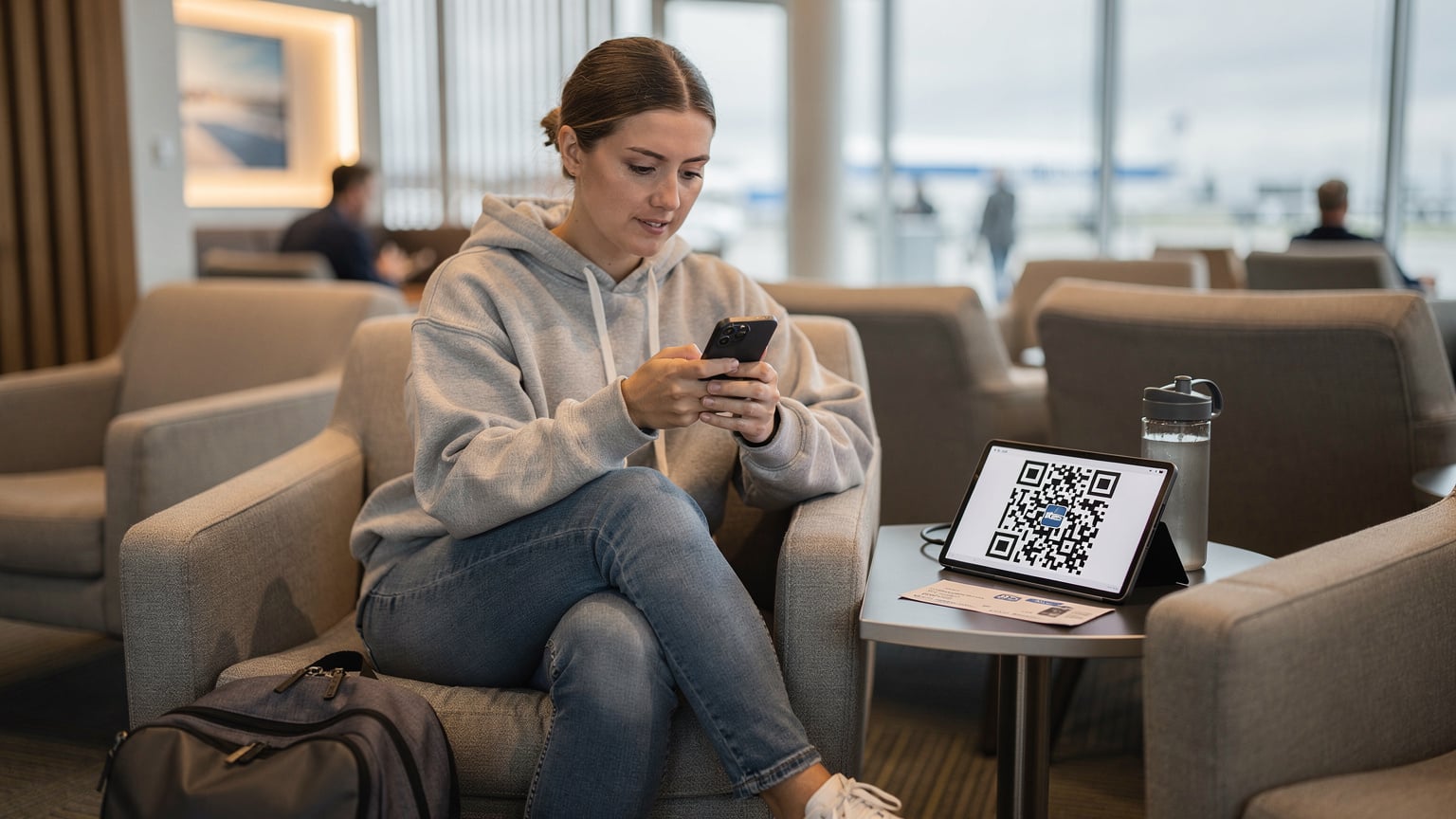
Activating an eSIM is a straightforward process. Most providers, including Cellesim, offer two primary methods:
- QR Code Scan: This is the most common and easiest method. After purchasing a plan, you receive a QR code via email or on the provider's website. You then navigate to your phone's cellular settings (typically 'Cellular Data' or 'Mobile Network'), select 'Add eSIM' or 'Add Data Plan', and scan the QR code. Your phone does the rest, downloading the profile and setting up the connection.
- Manual Entry: Less common but still available, this involves entering specific network details (SM-DP+ Address, Activation Code, and optional Confirmation Code) manually into your phone's settings. This is useful if you can't scan a QR code, perhaps due to a broken screen or a secondary device without a camera.
Once activated, the eSIM profile functions just like a physical SIM, providing access to calls, texts, and data on the local network. You can often switch between your primary physical SIM/eSIM and your travel eSIM with a few taps, giving you control over which network you use for data, calls, and messages.
Dual SIM Dual Standby (DSDS) Capabilities
Modern smartphones with eSIM capabilities typically support Dual SIM Dual Standby (DSDS). This means your phone can have two active connections simultaneously, for example, your primary US number (on a physical SIM or an eSIM) and a Cellesim travel eSIM for data. While both lines are 'on standby' to receive calls and messages, only one can actively use data at any given moment. You can designate which line handles cellular data, which is especially useful for maintaining your primary number for calls and texts while using the eSIM for affordable data. This feature is particularly valuable for devices like the Pixel 10 Pro, which offers advanced multi-country eSIM management.
Domestic US Travel: eSIM vs. Your Home Plan
Even within the United States, an eSIM can be a strategic tool. While your primary carrier (Verizon, AT&T, T-Mobile) likely offers nationwide coverage, there are scenarios where an eSIM from a different MVNO (Mobile Virtual Network Operator) or a regional carrier can provide superior performance or cost savings, especially in areas with poor coverage from your primary provider.
For instance, if you're traveling from a T-Mobile dominated city to a rural area where AT&T or Verizon have stronger infrastructure (due to different spectrum holdings, e.g., AT&T's B14 FirstNet deployment), an eSIM allows you to temporarily access that network. This is particularly relevant for those visiting family in less populated regions where network congestion might not be the issue, but rather the sheer lack of contiguous coverage.
Filling Coverage Gaps and Boosting Speeds
Consider a scenario where you're driving from New York City to a small town in upstate New York for Thanksgiving. Your T-Mobile 5G might be fantastic in the city on n41 and n71, but as you head north, coverage could become spotty, relying heavily on B12 and B71, which offer wider reach but lower capacity. If AT&T or Verizon have denser macro cell deployments or better low-band spectrum penetration in that specific rural area, an eSIM provisioned with a plan on one of those networks could provide a significant uplift in usable data speeds and reliability. I've seen situations where a user on T-Mobile might get 2-5 Mbps, but switching to an AT&T eSIM could yield 30-50 Mbps in the same location due to better local infrastructure.
| Carrier & Band (Example) | Typical Speed Range (Congested) | Benefit of eSIM Alternative |
|---|---|---|
| T-Mobile (n41/n71) | 5-20 Mbps DL / 1-5 Mbps UL | Access to Verizon/AT&T in rural areas with B13/B14 for better coverage. |
| Verizon (B13/n5) | 10-30 Mbps DL / 2-8 Mbps UL | Access to T-Mobile in urban areas with n41 for higher capacity. |
| AT&T (B14/B66) | 8-25 Mbps DL / 2-6 Mbps UL | Alternative for capacity or specific regional coverage. |
Another use case is avoiding deprioritization. Some unlimited plans from major carriers can be deprioritized during network congestion. An eSIM plan from a different provider might not be subject to the same deprioritization rules, offering more consistent speeds when the network is under strain.
Data-Only eSIMs for Domestic Use
For domestic travel, many users primarily need data. Data-only eSIMs are often more affordable and simpler to manage. You can keep your primary US number active for calls and texts, and use the eSIM for all your internet needs. This is particularly useful for tablets or secondary devices that might not have a primary voice plan.
Thanksgiving Abroad: Mexico and Canada Connectivity
For Americans heading north to Canada or south to Mexico for Thanksgiving, eSIMs offer substantial savings and better performance compared to traditional international roaming packages from US carriers. These are popular destinations, and their local networks are robust, making eSIMs a no-brainer.
For instance, in Mexico, carriers like Telcel, AT&T Mexico, and Movistar offer excellent 4G LTE and 5G coverage in major cities like Mexico City, Guadalajara, and Cancun, extending into popular tourist regions. Telcel, for example, heavily utilizes bands like B2, B4, B5, B7, and B66 for LTE, and n41, n78 for 5G, providing good speeds. A Cellesim eSIM Mexico plan can tap directly into these networks, delivering speeds far superior to what you'd typically get with throttled roaming data.
roaming often comes with significant limitations. Verizon's 'TravelPass,' while convenient for short stints, can quickly add up to $70-$100 over a week-long trip, and its daily activation can sometimes be triggered unexpectedly. T-Mobile's "included" roaming, while seemingly free, is typically throttled to 2G/3G speeds (128-256 Kbps) after a small high-speed allowance (e.g., 5GB per month), rendering it practically unusable for modern applications like video calls, high-resolution navigation, or streaming. These throttled speeds are a major pain point for engineers accustomed to reliable, high-bandwidth connectivity.
An eSIM, conversely, gives you direct access to full 4G LTE/5G speeds from local Mexican carriers like Telcel, AT&T Mexico, or Movistar. This means you're utilizing the same robust infrastructure as local residents, often at a fraction of the cost, with transparent data allowances and no hidden daily fees. For example, a Cellesim eSIM plan for Mexico could offer 10GB of high-speed data for 30 days at a price point significantly lower than a week of daily roaming passes.
Canada: Seamless Northern Connectivity
For those heading north to Canada for Thanksgiving, eSIMs offer equally compelling advantages. Major Canadian carriers such as Bell, Rogers, and Telus provide excellent 4G LTE and 5G coverage, particularly along the Windsor-Quebec City corridor and in major metropolitan areas like Toronto, Vancouver, and Montreal. These networks utilize a strong mix of LTE bands (e.g., B2, B4, B7, B12, B13, B17, B66) and 5G bands (e.g., n78, n66), ensuring fast and reliable service.
US carrier roaming in Canada often mirrors the Mexican situation: daily fees of $10-$15 or included roaming with severe speed restrictions. A Cellesim eSIM for Canada will connect you directly to these robust local networks, bypassing expensive US carrier roaming fees and providing the high-speed data you need for navigation, communication, and staying connected with family back home.
Optimizing Your eSIM for Peak Travel Performance
As an engineer, you appreciate efficiency and control. Here’s how to get the most out of your eSIM during your Thanksgiving travels:
- Monitor Data Usage Regularly: Use your phone's built-in data usage tracker (Settings > Cellular/Mobile Data) to keep an eye on your consumption. This helps prevent unexpected top-ups and ensures you don't run out of data mid-trip.
- Prioritize eSIM for Data: In your phone's cellular settings, ensure your Cellesim eSIM is selected as the primary line for "Cellular Data." Keep your physical US SIM active for calls and texts if you need to receive them, leveraging the Dual SIM Dual Standby (DSDS) capability.
- Disable Data Roaming for Your Home SIM: To avoid any accidental charges from your primary US carrier, explicitly turn off "Data Roaming" for your physical SIM line while traveling internationally. This is a critical step to prevent bill shock.
- Leverage Wi-Fi When Available: While eSIMs provide excellent mobile data, always connect to secure Wi-Fi networks when available (e.g., hotel, airport, trusted cafes) to conserve your eSIM data allowance.
Real-World Savings: eSIM vs. Traditional Roaming
Let's put some numbers to the savings, based on typical Thanksgiving travel scenarios:
Scenario 1: Family Trip to Cancun, Mexico (7 Days)
Traditional US Carrier Roaming (e.g., Verizon TravelPass): $10/day x 7 days = $70.00. Often with data caps or deprioritization after a certain threshold.
Cellesim eSIM (e.g., 10GB for 30 days): Approximately $25-$35 (depending on specific plan). Full 4G LTE/5G speeds from local networks. Significant savings and better performance.
Savings: Up to $45!
Scenario 2: Cross-Border Shopping in Vancouver, Canada (3 Days)
Traditional US Carrier Roaming (e.g., AT&T International Day Pass): $15/day x 3 days = $45.00. Or T-Mobile's throttled "included" data.
Cellesim eSIM (e.g., 5GB for 15 days): Approximately $15-$25. Unrestricted high-speed access to Canadian networks.
Savings: Up to $30!
These examples clearly illustrate that eSIMs offer not just convenience but tangible financial benefits, making them the smarter choice for data-hungry travelers.
Your Thanksgiving 2026 eSIM Checklist
Preparing your connectivity for Thanksgiving 2026 doesn't have to be complicated. Follow this simple checklist:
- Verify Device Compatibility: Ensure your smartphone supports eSIM. Most iPhones (XS, XR, 11 series, 12 series, 13 series, 14 series, 15 series) and many newer Android flagships (Samsung Galaxy S20 and newer, Google Pixel 3 and newer) are eSIM compatible.
- Choose Your Cellesim Plan: Visit Cellesim's eSIM page and select a data package that suits your destination (US, Mexico, Canada, or global) and your expected data usage. Consider how much you'll rely on navigation, video calls, social media, and streaming.
- Purchase and Activate: Buy your eSIM plan online. You'll receive a QR code or manual details for activation. It's often best to activate your eSIM before you depart, while you still have a reliable internet connection, or upon arrival in your destination.
- Configure Settings:
- Once installed, label your eSIM for easy identification (e.g., "Mexico Data," "Canada Travel").
- Set this new eSIM as your default for cellular data in your phone's settings.
- Remember to disable data roaming for your primary US physical SIM to prevent unexpected charges.
- If you need to receive calls or texts on your US number, ensure your physical SIM remains active for voice and SMS (DSDS).
Conclusion: Engineer Your Perfect Thanksgiving Connection
For the discerning engineer, Thanksgiving 2026 travel demands a connectivity solution that is robust, efficient, and cost-effective. Traditional roaming plans from US carriers often fall short, plagued by high costs, slow speeds, and opaque terms. eSIM technology, particularly through a trusted provider like Cellesim, offers a superior alternative, providing direct access to local high-speed networks, significant cost savings, and the flexibility to manage your connectivity with precision.
Don't let unreliable data or exorbitant roaming fees detract from your holiday. Engineer your Thanksgiving trip for seamless connectivity, whether you're navigating bustling city streets, sharing holiday moments with family, or simply staying productive on the go.
Ready to upgrade your Thanksgiving travel experience? Explore Cellesim's range of eSIM plans and secure your high-speed, cost-effective connection today.