Destination Guides

TIM eSIM Italy 2026: Navigating Connectivity Without Roaming Fees

Post-Brexit RoamingEE/Vodafone vs. eSIMBusiness Travel TechLondon Tech SceneReliability Testing

James Sterling UK Business Travel & Roaming Analyst · Cellesim UK Based in London's financial district, James Sterling is the Lead Analyst for Cellesim UK. With the return of roaming charges post-Brexit, James specializes in corporate connectivity solutions. He rigorously compares the daily roaming fees of major UK carriers like EE, Vodafone, and O2 against eSIM alternatives. James ensures that business travelers to the EU and USA maintain enterprise-grade connectivity without the exorbitant expense.

This article was created with AI assistance and reviewed by our editorial team for accuracy.

Activating a TIM eSIM for Italy in 2026 is a straightforward process for tourists and digital nomads, offering a reliable alternative to physical SIM cards and avoiding prohibitive roaming charges. You can acquire a TIM eSIM directly from TIM stores or through online providers before or upon arrival, ensuring seamless mobile data and call services across Italy's extensive network.

Why TIM eSIM Italy Makes Sense for 2026

Look, I've been on the road for four years, and if there's one thing I've learned, it's that connectivity isn't a luxury, it's the foundation of everything. Especially in a place like Italy, where getting lost in a labyrinth of ancient streets is charming until you actually need to find your Airbnb in Trastevere at 10 PM. For 2026, the TIM eSIM for Italy isn't just a convenience, it's a solid strategy to avoid the headache of traditional roaming or hunting down a physical SIM card the moment you land, jet-lagged, at Fiumicino.

For UK business travelers, post-Brexit roaming charges from carriers like EE and Vodafone are no joke. A quick trip into the EU can easily stack up daily fees that quickly eclipse the cost of a dedicated eSIM. I've run the numbers, and for even a week-long stay, opting for a data plan for Italy via an eSIM often proves more economical. The peace of mind alone, knowing you're not going to get a bill with an extra zero at the end, is worth the upfront research.

My WhatsApp groups are full of nomads sharing horror stories about slow airport Wi-Fi, or trying to register a local SIM when their passport isn't scanned correctly. An eSIM sidesteps most of these issues. You activate it before you even leave home, or with a QR code at your leisure. No fumbling with tiny trays, no language barriers in a bustling phone shop. It's about efficiency, and that's something you learn to value when your office is literally wherever you can get a decent Wi-Fi signal.

The Cost of Roaming vs. eSIM

Let's be blunt about the cost. If you're coming from the UK, your carrier will likely charge you upwards of £2-£3 per day for roaming in Italy. That's £21 for a week, or nearly £90 for a month, just to use your existing plan. Compare that to a TIM eSIM plan offering 30GB for €20-€30, and the math isn't even close. For a month-long stint, say, splitting your time between Florence and Bologna, that's a significant saving you can put towards a few more aperitivos or, more practically, towards the €800-€1200 a decent studio in the Santo Spirito neighbourhood might set you back.

Why Physical SIMs are a Hassle

Beyond the cost, there's the sheer hassle of physical SIMs. I remember trying to get a local SIM in India, only to find out I needed to link it to my Aadhaar number, which, as a foreigner, I didn't have. Or in Brazil, where some banking apps demanded a local SIM for registration, creating a major roadblock for setting up local accounts. While Italy isn't as strict, there's still the paperwork, the activation wait, and the general faff. An eSIM bypasses all of that, letting you keep your home SIM active for SMS verification codes while using the eSIM for data. It's a dual-SIM setup, without the physical card swap.

Acquiring Your TIM eSIM: The Practicalities

Getting your hands on a TIM eSIM isn't rocket science, but knowing the avenues available can save you time and frustration. My preference is always to sort connectivity before I land, so I can hit the ground running. TIM, as one of Italy's major carriers, has made their eSIMs reasonably accessible.

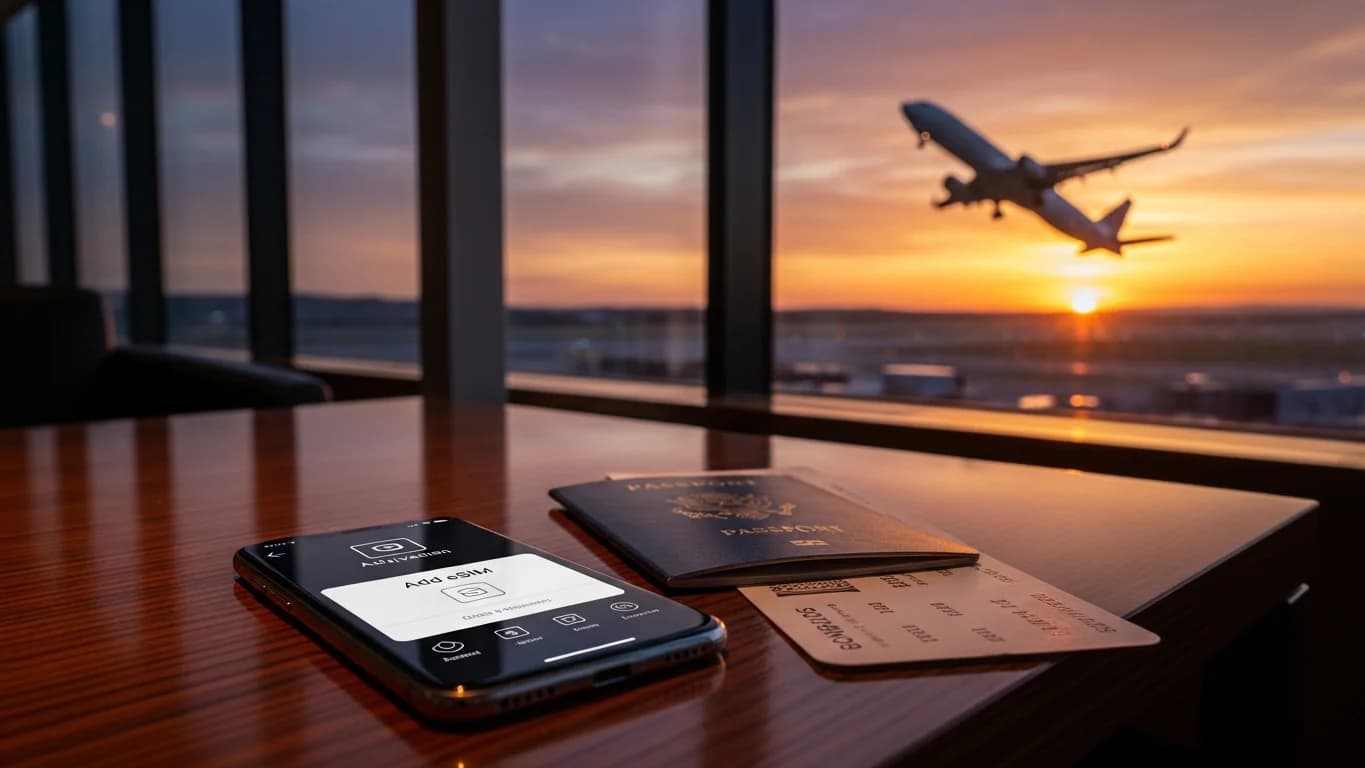
A traveler diligently reviewing their eSIM activation QR code on their phone, while their passport and a small Italian phrasebook rest on a wooden table, suggesting preparedness for their trip.

Buying Direct from TIM Stores

If you prefer the direct approach, TIM stores are ubiquitous across Italy. You'll find them in major cities like Rome, Milan, Florence, and even smaller towns. When you walk in, ask for a 'TIM Tourist Pass' or a 'TIM International eSIM' package. Be prepared with your passport, as they'll need to register your identity, a standard requirement in Italy. The staff might not always be fluent in English, especially outside the main tourist hubs, so having a few key Italian phrases ready (like "eSIM per turista, per favore" or "quanti giga?") can smooth things over. Expect to pay around €25-€35 for a plan, depending on data allowances, and the eSIM itself might have a small activation fee, typically €5-€10.

Online Purchase Options

For those who like to have everything sorted pre-departure, several online retailers and eSIM providers offer TIM plans or plans that leverage TIM's network. This is often my go-to. You purchase online, receive a QR code via email, and activate it when you're ready. This means you can land at Leonardo da Vinci Airport, connect to the airport Wi-Fi briefly, scan your QR code, and have data before you even reach the taxi stand. No need to hunt for a store, no queues, no language barrier. Just make sure your phone is eSIM-compatible before you commit. Most modern iPhones (XS and newer), Google Pixels (3a and newer), and Samsung Galaxies (S20 and newer) support eSIM.

What to Look for When Buying an eSIM

When you're comparing options, don't just look at the price. Consider:

  • Data Allowance: How much do you realistically need? If you're relying on Google Maps, WhatsApp, and the occasional video call, 10-20GB for a two-week trip is usually plenty.
  • Validity Period: Does it match your trip length? Some plans are for 7 days, others 15, some 30.
  • Calling/SMS: Do you need local calls? Many tourist eSIMs are data-only, relying on VoIP apps like WhatsApp or Google Meet for communication.
  • Activation Process: Is it a simple QR code, or does it require an app download and registration?

TIM eSIM Plans for Travelers: What to Expect

TIM's offerings for travelers are generally competitive, designed to capture the tourist market. They understand that most visitors need data for navigation, social media, and communication, with less emphasis on extensive local calling.

TIM typically offers packages aimed at short to medium-term visitors. These often include a decent amount of data, sometimes a small allowance for calls within Italy, and occasionally some international minutes to specific countries. For example, a common offering might be TIM Tourist: 30GB of 4G/5G data, 200 minutes of calls within Italy, and 200 international minutes to select countries, valid for 30 days, priced around €29.99. These plans are pretty standard across the major Italian providers, so it's worth checking Vodafone IT and WindTre if you're comparing.

Plan NameData AllowanceValidityCalls/SMSApprox. Price
TIM Tourist (2026)30 GB (4G/5G)30 Days200 Mins (IT), 200 Mins (Intl)€29.99
TIM Data Tourist50 GB (4G/5G)15 DaysData Only€24.99
TIM Easy Travel10 GB (4G)7 DaysData Only€14.99

These plans are usually straightforward. What you pay is what you get. Just make sure to read the fine print regarding activation fees and any auto-renewal clauses, though most tourist plans are pay-as-you-go and expire automatically.

Data-Only vs. Voice and Data

For most digital nomads and modern travelers, a data-only eSIM is perfectly sufficient. WhatsApp, Telegram, Signal, and FaceTime handle all communication needs. Even for calling Italian restaurants for a reservation, Google Translate's conversation mode or a quick message on WhatsApp Business works wonders. However, if you're planning a longer stay or need to interact extensively with local services that might not use messaging apps, a plan with included Italian minutes can be beneficial. For example, if you're trying to set up utilities for a longer rental in, say, Testaccio in Rome, having a local number makes things significantly easier. I spent a month there once, and the local Pizzeria da Remo only took phone orders, so that local number came in handy.

Activating Your TIM eSIM: Step-by-Step

Activating an eSIM is generally simpler than a physical SIM, but it still requires a few steps. The beauty of it is that you can often do this from your sofa before you even leave, or from the comfort of your hotel room after a long travel day.

Pre-Arrival Activation via QR Code

This is the preferred method for anyone who values their time. When you purchase an eSIM online, you'll typically receive an email with a QR code and detailed instructions. I always recommend doing this when you have a stable Wi-Fi connection. It just avoids any potential data-related issues during the setup.

  1. Ensure Wi-Fi Connectivity: Connect your device to a stable Wi-Fi network before starting.
  2. Open Settings: On an iPhone, go to Settings > Cellular > Add eSIM. On an Android, it's usually Settings > Network & Internet > SIMs > Add eSIM (exact path may vary by manufacturer).
  3. Scan QR Code: Use your phone's camera to scan the QR code provided by TIM or your eSIM provider. If you received the QR code on the same phone, you might need to manually enter the activation details, which will also be provided.
  4. Follow On-Screen Prompts: Your phone will guide you through adding the cellular plan. You'll likely be asked to label the new eSIM (e.g., "TIM Italy" or "Travel Data") and choose which SIM to use for data, calls, and texts. I always set the eSIM for data and keep my primary SIM for calls and texts, especially for those two-factor authentication codes from my home bank.
  5. Enable Data Roaming (for eSIM only): Crucially, make sure 'Data Roaming' is turned ON for your new TIM eSIM. This sounds counter-intuitive when trying to avoid roaming, but for an eSIM from a local provider, it simply means allowing the eSIM to connect to the local Italian network. It does NOT incur roaming charges from your home provider.
  6. Test Connection: Once activated, try browsing a website or sending a message. If it works, you're good to go.

In-Store Activation with Assistance

If you opt to buy your TIM eSIM in a physical store, the staff will usually assist you with the activation process. It's often quicker than trying to navigate it yourself if you're not tech-savvy or if you encounter an unexpected issue. They'll scan the QR code for you, or handle the physical SIM if you decide against an eSIM, and ensure it's working before you leave the store. Just confirm with them that data is working before you head out. I've seen too many people walk out, only to find their data isn't active. Don't be that person. Test it right there.

A close-up of a person's hands delicately holding a smartphone, with fingers poised over the screen as if navigating settings or scanning a QR code for eSIM activation, set against a blurred background of a modern airport lounge.

Network Coverage and Speed Across Italy

TIM boasts one of the most extensive and reliable networks in Italy. For most travelers, especially those sticking to cities and popular tourist routes, coverage will be excellent. However, knowing what to expect in different regions can help manage expectations.

TIM 4G and 5G Reach

TIM has invested heavily in its 4G and 5G infrastructure. In major metropolitan areas like Milan, Rome, Naples, and Turin, you can expect robust 5G coverage and speeds that will easily handle streaming, video calls, and large downloads. In smaller towns and along major highways, 4G coverage is pervasive and generally strong. I've worked from co-working spaces in Bologna like BASE Milano and shared apartments in Venice's Cannaregio district, and TIM's signal has consistently been solid, allowing for uninterrupted video calls. Even in places like Lecce, down in Puglia, the connectivity held up.

Region/CityTIM 4G CoverageTIM 5G AvailabilityTypical Download Speed
Rome / LazioExcellent (>99%)High (Urban areas)150-300 Mbps
Milan / LombardyExcellent (>99%)High (Urban areas)200-400 Mbps
Florence / TuscanyVery Good (98%)Moderate (City center)100-250 Mbps
Naples / CampaniaGood (95%)Moderate (City center)80-200 Mbps
Rural Areas / MountainsFair to Good (70-90%)Limited to None20-80 Mbps

Coverage in Rural and Mountainous Areas

While TIM's coverage is generally strong, like any network, it can become spottier in very remote or mountainous regions. If you're planning on hiking in the Dolomites or exploring the more secluded parts of Sardinia, it's wise to download offline maps (Google Maps allows this) and perhaps not rely solely on mobile data for critical navigation. I've had situations where even in some of the smaller villages in Umbria, data could be a bit flaky. This isn't unique to TIM, but rather a characteristic of rural connectivity globally, a lesson I learned the hard way trying to find a specific agriturismo outside Orvieto.

Local SIM vs. eSIM for Long Stays in Italy

For a quick holiday, an eSIM is a no-brainer. But what if you're planning to hunker down for a few months, perhaps working remotely from a sun-drenched apartment in Palermo? This is where the choice between a local physical SIM and an eSIM gets a bit more nuanced.

Advantages of a Physical TIM SIM for Extended Periods

If you're staying for several months, especially if you're trying to integrate a bit more locally, a physical TIM SIM might offer some slight advantages. Often, the long-term local plans come with more generous data allowances or better rates for local calls and SMS. Crucially, a local physical SIM gives you a consistent Italian phone number, which can be essential for things like setting up utility bills, registering with a local doctor, or even just getting a loyalty card at the local Conad supermarket. Some apps, particularly those related to local transport or banking, might occasionally require a traditional local number for verification. Also, for visas that require proof of local contact, a physical SIM is sometimes preferred over an eSIM, though this varies by country and consulate.

When an eSIM Still Wins for Digital Nomads

Despite those points, for me, the eSIM usually still wins, even for longer stays (up to 3 months, given Schengen visa limitations). The primary reason is flexibility. I can switch between providers if TIM isn't cutting it in a particular area, or if a better deal pops up. I also get to keep my primary UK number active, which is vital for banking two-factor authentication and staying in touch with family. I've lived in places where local SIM registration was a bureaucratic nightmare, requiring multiple visits and obscure documents. The eSIM bypasses that. When I was in China last year, the China eSIM firewall bypass for under €30 was a lifesaver, and that kind of agility is what an eSIM provides. It saves me the headache, allowing me to focus on my work and enjoying the local espresso.

Troubleshooting Common TIM eSIM Issues

Even with the best planning, sometimes things go sideways. Having spent enough time wrestling with connectivity issues in various corners of the globe, I've got a few go-to troubleshooting steps for eSIMs.

No Service or Slow Data Fixes

If your TIM eSIM isn't connecting or data is painfully slow, start here:

  1. Check eSIM Profile Status: Go to your phone's cellular settings. Make sure the TIM eSIM profile is enabled and not paused or turned off.
  2. Toggle Airplane Mode: Turn on Airplane Mode for 30 seconds, then turn it off. This often forces your phone to re-register with the network.
  3. Restart Your Phone: The oldest trick in the book, but often effective. A full restart can resolve temporary software glitches.
  4. Verify APN Settings: In rare cases, the Access Point Name (APN) settings might need manual configuration. For TIM, the common APN is 'ibox.tim.it' or 'wap.tim.it'. You can usually find this under Cellular Data Network settings. Most eSIMs configure this automatically, but it's worth checking if all else fails.
  5. Network Selection: Try manually selecting the TIM network. Go to cellular settings, then Network Selection, and turn off automatic. Wait for a list of available networks to appear, then select TIM.
  6. Check Data Roaming Setting: As mentioned before, ensure data roaming is ON for your TIM eSIM profile.

Contacting TIM Customer Support

If you've tried everything and still have no joy, it's time to contact TIM customer support. Their English-speaking support can be reached by dialing 119 from your TIM number, or +39 339 9119 from a non-TIM number. Be prepared for a potentially long wait time, especially during peak hours. Having your passport details and the ICCID (SIM card number) of your eSIM handy will speed up the process. It's also worth trying their social media channels, as I've found that sometimes gets a quicker response than phone support.

A person looking frustrated and concerned at their smartphone screen, perhaps experiencing a connectivity issue, while sitting at a café table with an empty coffee cup, reflecting a common travel frustration.

eSIM Alternatives for Italy, Beyond TIM

While TIM is a solid choice, it's not the only game in town. Depending on your needs and travel patterns, other eSIM providers or multi-country eSIMs might offer better flexibility or pricing. Always good to have options, especially when you're jumping countries often. Remember, for a reliable cross-border experience, checking alternatives is key, much like how I'd advise looking at Cosmote eSIM Greece 2026 if you're heading southeast from Italy.

Other Italian Carriers with eSIM Options

Italy has a competitive mobile market. Vodafone IT and WindTre are the other two major players, and both offer eSIMs for tourists and locals. Vodafone IT often boasts slightly better coverage in very remote areas, while WindTre can sometimes have more aggressive pricing, especially for data-heavy plans. It's worth checking their websites for current tourist deals before you commit. Often, the differences are minor, but sometimes one provider will have a flash sale or a package that perfectly aligns with your data needs.

Global and Regional eSIM Providers

This is where things get really interesting for long-stay nomads. Instead of a single-country eSIM, you might consider a regional eSIM for Europe or a global eSIM. Providers like Cellesim offer multi-country eSIMs that cover Italy and many other European nations, allowing you to seamlessly cross borders without changing eSIMs. This is incredibly useful if you're doing a grand European tour, perhaps hopping from Italy to France, then Germany. It means one less thing to worry about when you're dealing with border crossings or trying to find a train ticket. For instance, if your itinerary takes you to the US after Italy, a USA eSIM for Tourists 2026 might be your next purchase, or a global plan could cover both. This removes the need to buy a new eSIM for each country, simplifying your digital life.

Staying Connected on a Budget in Italy

Travel, especially long-term travel, is all about balancing experiences with expenses. Connectivity is a core expense, but there are ways to keep it in check without sacrificing reliability.

Leveraging Free Wi-Fi and Co-working Spaces

In Italy, free Wi-Fi is widely available in cafes, restaurants, and public spaces, though quality can vary wildly. Many cities also have decent public Wi-Fi networks. For reliable work, however, nothing beats a dedicated co-working space. In Rome, spaces like Talent Garden Ostiense offer excellent internet and a productive environment, with daily passes around €20-€30. In Milan, I've spent countless hours at Copernico Isola, where the Wi-Fi is rock solid. Even a cafe like Orsonero Coffee in Milan offers strong, free Wi-Fi with your cappuccino. Don't underestimate the power of these spots to conserve your mobile data.

An inviting interior shot of a bustling co-working space in Milan, Italy, filled with modern furniture and natural light, featuring people working on laptops and chatting, conveying a sense of productive urban connectivity.

Data Saving Tips for Your Trip

Even with a generous data plan, it's wise to adopt some data-saving habits:

  • Download Offline Maps: Before you leave your accommodation or a Wi-Fi zone, download the relevant regions in Google Maps. This saves data on navigation.
  • Stream on Wi-Fi: Save your Netflix, YouTube, or Spotify streaming for when you're on Wi-Fi. It's a massive data drain.
  • Update Apps on Wi-Fi: Configure your phone to only update apps over Wi-Fi. Those background updates can eat through gigabytes.
  • Disable Background App Refresh: Many apps refresh data in the background even when not in use. Turn this off for non-essential apps in your phone's settings.
  • Monitor Data Usage: Regularly check your data usage through your phone's settings or the TIM app (if available). This helps you stay within your allowance and avoid unexpected top-ups.

Ultimately, a TIM eSIM for Italy in 2026 is a smart, efficient way to stay connected. It frees you from the antiquated hassles of physical SIMs and the predatory pricing of roaming. Do your research, pick the right plan, and enjoy Italy without worrying about your connection. It's one less thing to break on the road, and that, for a nomad, is priceless.

Frequently Asked Questions

Can I use my TIM eSIM immediately upon arrival in Italy?

Yes, if you purchase and activate your TIM eSIM online before your trip, it should be ready to use the moment you land in Italy. For in-store purchases, activation usually takes a few minutes, allowing immediate use.

Do I need to show my passport to get a TIM eSIM in Italy?

Yes, Italian law requires all mobile phone users, including tourists, to register their identity with a valid passport when acquiring a SIM or eSIM from a local provider like TIM, even for data-only plans.

Will my existing phone number work with a TIM eSIM?

Your existing phone number on your primary physical SIM will remain active for calls and SMS. The TIM eSIM will provide a separate Italian number (if it includes calling) or purely data connectivity, allowing you to use both simultaneously on compatible dual-SIM devices.

What if my phone isn't eSIM compatible?

If your phone doesn't support eSIMs, you will need to purchase a physical TIM SIM card upon arrival in Italy. These are available at TIM stores, airport kiosks, and various electronics retailers, still requiring passport registration.

Can I top up my TIM eSIM data plan?

Yes, most TIM tourist eSIM plans can be topped up with additional data or extended validity periods directly through the TIM app, their website, or at TIM stores. Check the specific terms of your plan for top-up options and pricing.

Is TIM 5G available with all eSIM plans?

TIM's 5G network is generally included with most of their modern eSIM data plans, particularly the tourist-focused packages. However, 5G availability depends on your device's compatibility and your physical location within TIM's 5G coverage zones.

See all eSIM FAQs →

TIM eSIM Italy 2026: Get Connected, Ditch Roaming Hassles