
Tour de France 2026: Unveiling the Grand Départ and Route Highlights
Ah, the Tour de France. The sheer spectacle, the drama of the mountains, the blur of the peloton, and the relentless pursuit of the yellow jersey. For a family of cycling enthusiasts, it’s more than just a race, it's an immersive cultural journey. The 2026 edition promises to be particularly thrilling, kicking off with its Grand Départ in the vibrant city of Barcelona, Spain, before crossing the Pyrenees and venturing deep into the heart of France. This means a multi-country adventure right from the start, a detail that, for a seasoned travel planner like myself, immediately flags a crucial item on the checklist: connectivity.
We’re talking about navigating two distinct countries, often moving between stages quite rapidly. One day you could be soaking in the architectural marvels of Gaudí in Barcelona, the next you're cheering from a charming village in Occitanie, France. This kind of dynamic travel demands a data solution that moves as seamlessly as the cyclists themselves. Traditional roaming charges from a home carrier can turn an otherwise well-budgeted trip into a financial sprint to the finish line, especially when you factor in the data demands of a modern family. (I've been there, staring at a bill that made my eyes water more than a climb up Mont Ventoux.)
The Barcelona Kick-Off and Early Spanish Stages
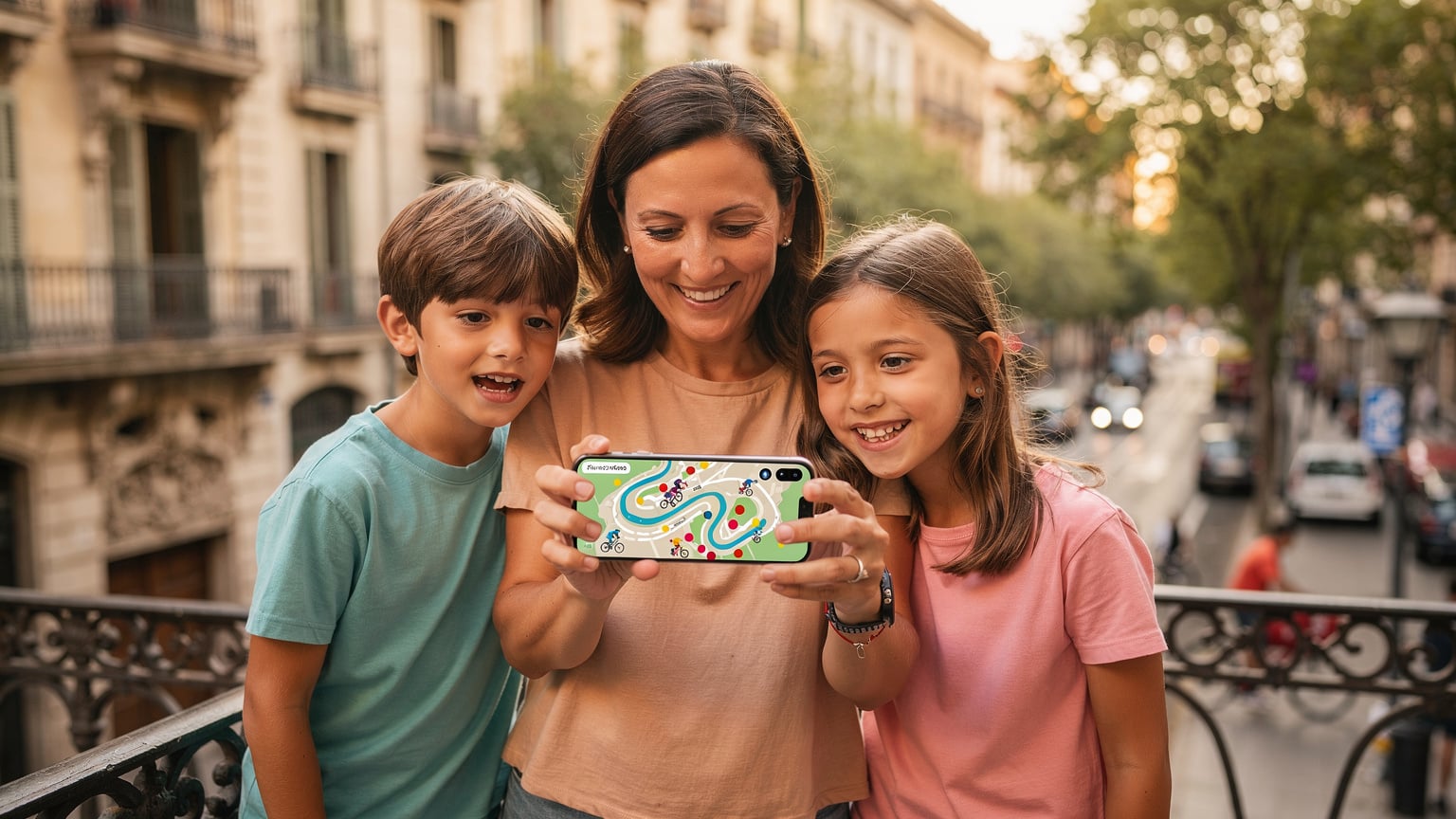
Barcelona's energy will be palpable as the Tour begins. Imagine the kids, wide-eyed, watching the world's best cyclists race past the Sagrada Familia or along the Barceloneta beachfront. Staying connected here is paramount, not just for catching the live race commentary on Eurosport or the official Tour de France app, but also for navigating the city, finding a kid-friendly tapas spot near the Gothic Quarter, or simply letting the teenagers update their TikToks (because, let's be real, that's their Tour de France). Having a reliable eSIM from the moment you land at El Prat is a game-changer for easing into your Spanish adventure without scrambling for Wi-Fi.
The Pyrenean Crossing and French Frontiers
Once the race leaves Spain and heads into the Pyrenees, the landscapes change dramatically, and so might your connectivity options if you're relying on a single-country plan. The beauty of a multi-country eSIM is that it handles this transition effortlessly. No need to swap physical SIM cards at the border, no fumbling with tiny trays while trying to keep an eye on a spirited 8-year-old. This seamless shift is a godsend when you're focusing on finding the perfect spot to view a mountain stage, or, more realistically, trying to distract the kids with an episode of Bluey on Disney+ while waiting for the peloton to pass.
Why an eSIM is Your Peloton Power-Up for Multi-Country Travel
For years, I swore by local SIM cards. They were certainly better than exorbitant roaming. But then came eSIMs, and honestly, it felt like discovering clipless pedals after years of toe clips – a revelation. For a trip as complex as following the Tour de France across two countries, an eSIM isn't just convenient, it's practically essential for maintaining sanity.
Think about it: you're likely arriving in Spain, spending a few days there, then crossing into France. With a traditional physical SIM, you'd either buy an expensive multi-country roaming package from your home carrier (often with stingy data limits), or you'd buy a Spanish SIM, use it up, then try to find a French SIM card retailer somewhere near the border, which is hardly ideal when you're trying to keep a schedule. An eSIM eliminates all of that fuss. You purchase a regional plan covering both Spain and France, activate it digitally, and your phone simply switches networks as you cross the border, often without you even noticing.
simplicity and efficiency, especially when traveling with children. Every minute spent fumbling with tech is a minute lost from experiencing the vibrant atmosphere of the Tour. With an eSIM, you're not just buying data; you're buying peace of mind. Before you even leave home, you can purchase and activate your plan. Land in Barcelona, and your phone connects automatically. Cross into France, and it seamlessly switches networks. No hunting for shops, no language barriers, no tiny tools for SIM trays. Just uninterrupted connectivity, letting you focus on the race, the kids, and the incredible journey.How Much Data Do We Really Need for a Family Following the Tour?
This is where many families underestimate. Following the Tour de France isn't just about checking emails; it's about live tracking the peloton, streaming highlights, navigating unfamiliar towns, keeping the kids entertained with their favourite shows or games, and sharing those unforgettable moments instantly. For a family of four (two adults, two children) over a 7-10 day period covering both Spain and France, we recommend a generous data plan. Here’s a breakdown of typical usage:
- Adults (2): Navigation (Google Maps, Waze), race tracking (official TdF app, Eurosport), social media, communication (WhatsApp, calls), occasional streaming. Budget at least 1-2 GB per person per day.
- Children (2): Streaming (Disney+, Netflix), gaming (online games), social media (TikTok, Instagram), video calls. Depending on screen time, this can easily be 2-4 GB per child per day.
Considering this, a shared plan of 50 GB to 100 GB for a week to ten days is a realistic and comfortable estimate for a family. This might seem like a lot, but it prevents stressful data rationing and unexpected top-ups, which can be more expensive. Look for plans with generous allowances or even unlimited options for peace of mind. Remember, you can always monitor usage and top-up if needed, but starting with ample data is always better.
What Kind of eSIM Plan Do I Need for the Tour de France 2026?
When selecting your eSIM, focus on these key criteria to ensure a smooth experience:
- Multi-Country Coverage: Absolutely essential. Ensure the plan covers both Spain (for the Grand Départ) and France. Regional Europe plans are ideal.
- Adequate Data Allowance: Based on our earlier discussion, aim for 50 GB to 100 GB for a family trip of 7-10 days. Cellesim offers a range of flexible plans to suit different needs.
- Validity Period: Match the plan's validity to your trip duration. Don't get a 7-day plan for an 8-day trip!
- Network Reliability: Cellesim partners with top local carriers in each country, ensuring you get strong, consistent signal, even in more rural areas of the Pyrenees or French countryside.
- Ease of Management: Look for an eSIM provider with a user-friendly app or portal for monitoring data usage and easy top-ups.
For the Tour de France 2026, a Cellesim regional Europe eSIM is your best bet. It offers seamless connectivity across Spain and France, allowing you to focus on the race and your family adventures.
Will Parental Controls on My Kids' Devices Still Work with an eSIM?
Absolutely. Your existing parental controls (e.g., Apple Screen Time, Google Family Link, app-specific controls) function independently of your network provider. An eSIM simply provides the internet connection; it doesn't interfere with how your device manages content access or screen limits. So, you can rest assured that your digital boundaries for the kids remain firmly in place, whether they're streaming Bluey in Barcelona or gaming in the French Alps.
How Do I Ensure My Kids' iPads or Nintendo Switch Consoles Stay Connected?
Most kids' devices like iPads, portable gaming consoles (Nintendo Switch, Steam Deck), or even secondary phones often don't have eSIM capabilities themselves. The easiest and most cost-effective way to get them online is to use your smartphone's personal hotspot feature. With your Cellesim eSIM providing a strong, reliable connection, you can share your data with multiple devices. This means:
- One main data plan: You only need to manage data for your primary eSIM-enabled phone.
- Instant connectivity: Kids' devices connect to your hotspot just like they would to home Wi-Fi.
- Centralised control: You control when and where the hotspot is active, helping manage screen time.
Just be mindful that using a hotspot consumes your phone's battery faster, so a portable power bank is a wise addition to your Tour de France kit.
Can I Use My Primary Phone Number for Calls and Texts While Using an eSIM?
Many travellers worry about losing access to their primary phone number when using an eSIM. Good news: with modern smartphones, you can often use both your home SIM (for calls/texts) and your eSIM (for data) simultaneously.
- Dual SIM Functionality: Most newer iPhones (XS and later) and many Android devices support Dual SIM, meaning you can have a physical SIM and an eSIM active at the same time, or even two eSIMs.
- Configuration: In your phone's settings, you can designate your home SIM for calls and SMS, and your eSIM for mobile data. This means friends and family can still reach you on your familiar number, while your Cellesim eSIM handles all your internet needs without incurring expensive roaming charges.
Just be aware that receiving calls or texts on your home number while abroad might still incur charges from your home carrier, depending on your plan. For outgoing calls, consider using VoIP apps like WhatsApp, FaceTime Audio, or Google Meet, which rely on your eSIM data and are usually free.
Conclusion: Your Seamless Tour de France Adventure Awaits
Following the Tour de France 2026 with your family promises an unforgettable adventure, from the bustling streets of Barcelona to the majestic climbs of the Pyrenees and the vibrant French countryside. Staying connected is no longer a luxury but a necessity, especially when juggling logistics, navigation, and keeping the entire family entertained.
An eSIM from Cellesim provides that essential connectivity with unparalleled ease and reliability. It removes the stress of physical SIM cards, offers flexible data plans tailored to your family's needs, and ensures you're always just a tap away from race updates, navigation, or that crucial video call home.
Don't let connectivity worries detract from the spectacle. Plan ahead, get your Cellesim eSIM, and focus on creating lasting memories as you chase the peloton across two incredible countries. Your hassle-free Tour de France 2026 experience starts here.
Ready to power up your Tour de France adventure? Explore Cellesim's range of multi-country eSIM plans today and secure your seamless connection.
See also: Jersey eSIM