Heading to the United States in 2026? Whether you're picturing yourself wandering through New York City, tackling trails in a national park out West, or just chilling on a Miami beach, staying connected is non-negotiable. Forget expensive traditional roaming and the headache of hunting for a physical SIM card the moment you land. An eSIM for the United States is a much smarter move, giving you instant, reliable, and affordable mobile data right when you step off the plane. Cellesim has a bunch of United States eSIM plans to keep you online in all 50 states, letting you skip the confusing local carriers and those sky-high roaming bills.
- Overview of the United States: Why Visit in 2026?
- Connectivity & Network Coverage Across the USA in 2026
- How to Get an eSIM for the United States with Cellesim
- Top US Cities & Areas with eSIM Coverage Tips
- Airport Arrival in the US: Get Connected Instantly
- Day Trips & Nearby Destinations with Seamless eSIM Coverage
- Local SIM vs. eSIM vs. Roaming for US Travel in 2026
- Budget Breakdown: What Tourists Spend on US Connectivity in 2026
- Practical Travel Tips for the United States in 2026
- Related Destinations & Multi-Country eSIM Options for North America
- Frequently Asked Questions

Overview of the United States: Why Visit in 2026?
The United States is huge and incredibly diverse, offering travel experiences you won't find anywhere else. Think bustling cities and famous landmarks on the East Coast, stunning natural beauty out West, and lively cultural spots in the South - there's truly something for everyone in 2026. The country stretches from the Atlantic to the Pacific, featuring everything from deserts and mountains to prairies and coastlines, each with its own vibe and attractions. Big cities like New York City, Los Angeles, and Miami pull in millions of visitors with their incredible entertainment, food, and culture.
When to visit the US really depends on where you're going. Summer (June-August) is prime time for national parks and beaches. Cities like New York are fantastic in spring (April-May) and fall (September-October), with great weather and fewer crowds. Florida and California are popular all year, especially if you're looking for a warm escape in winter. If you're coming from another country, you'll likely need an ESTA visa waiver or a traditional visa, so make sure to get that sorted well before your 2026 trip. No matter when or where you travel in the United States, having a good internet connection will make your trip better, helping with navigation, bookings, and sharing your adventures with friends and family.
Connectivity & Network Coverage Across the USA in 2026
Getting online in the United States in 2026 is usually pretty easy, but it helps to know how the networks work. The US has a strong infrastructure, mainly covered by three big carriers: AT&T, T-Mobile, and Verizon. These networks offer wide 4G LTE coverage in cities and suburbs, and 5G is quickly popping up in major cities and along main travel routes. You can generally expect speeds of 30-100 Mbps in most populated areas, which is plenty fast for streaming, video calls, and using navigation apps. Cellesim works with these top local networks to give travelers the best speeds and coverage.
While big cities like Chicago, San Francisco, and Orlando have awesome network coverage, remember that rural and remote spots, especially in the vast western states (think national parks, deserts, and mountains), can still have patchy service - what we call "dead zones." Even in cities, some older subway systems, like certain lines in New York City, are still catching up to full 5G, though they're always improving. If you're heading somewhere really remote, it's smart to download offline maps and any important info beforehand. For most tourist activities, though, your eSIM will provide reliable internet, so you can use your apps, translate on the fly, and share your experiences without a hitch.
How to Get an eSIM for the United States with Cellesim
Getting an eSIM for your 2026 United States trip with Cellesim is super easy. You'll be connected before you even pack your bags. Unlike old-school physical SIM cards that mean waiting or searching for a store after you arrive, an eSIM is all digital. Here's how it works, step-by-step:
- Visit Cellesim.com: Head over to the United States eSIM page on the Cellesim website.
- Choose Your Plan: Pick the data package that fits your trip length and data needs best. Cellesim has options for everyone, from small data bundles for quick trips to bigger plans for longer stays in the USA. Think about how much data you typically use for maps, social media, video calls, and streaming.
- Purchase Securely: Complete your purchase using our secure payment options. We accept credit/debit cards, PayPal, Alipay, and local payment methods. All prices are shown in your local currency.
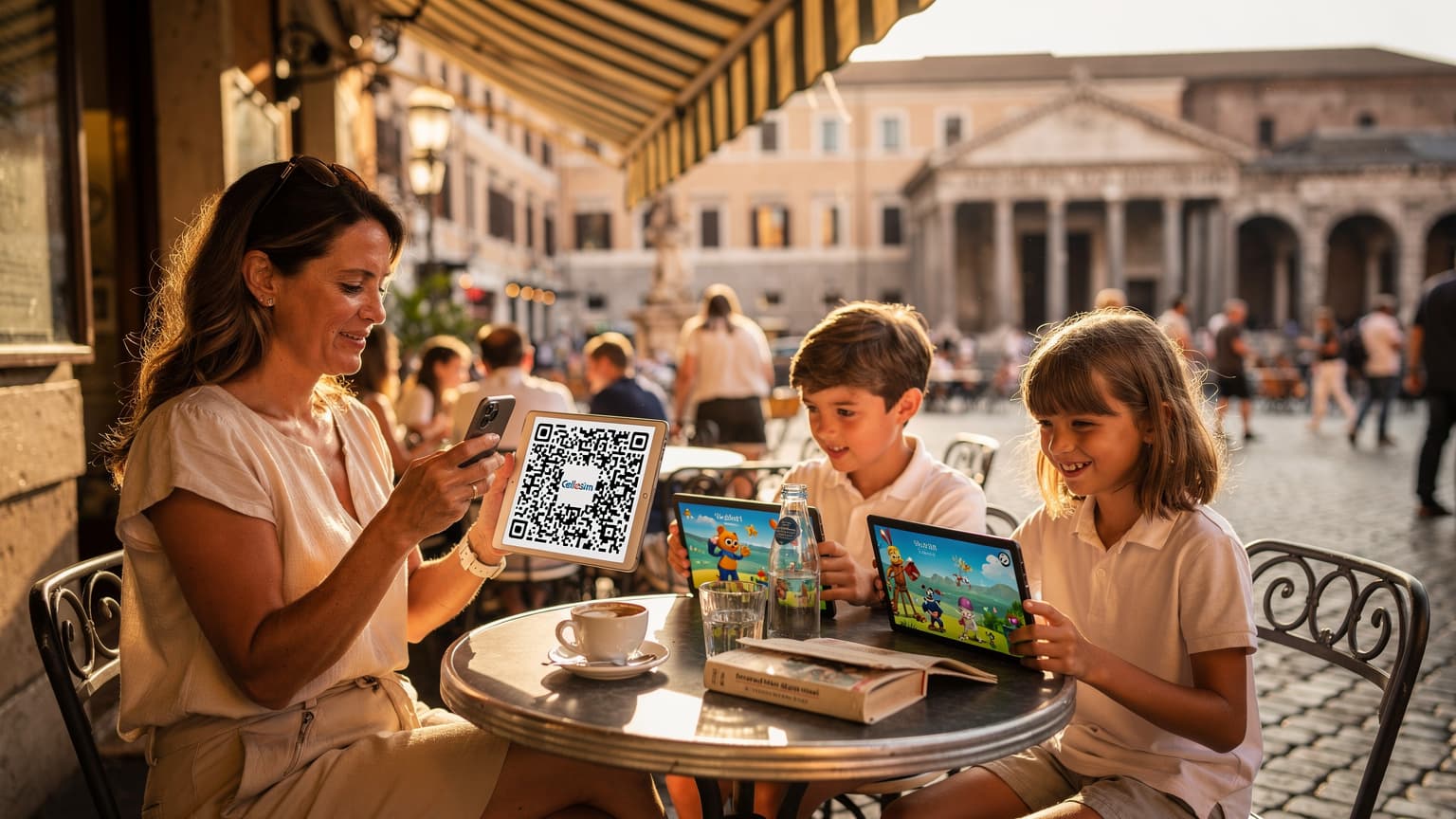
- Receive Your eSIM: Just a few minutes after buying, you'll get an email with a QR code and clear instructions for installation.
- Install Your eSIM: Scan the QR code with your eSIM-compatible phone. It's a quick process, usually under two minutes. If scanning isn't an option, you can manually enter the details. For a visual walkthrough, check out our Interactive Setup Guide.
- Activate Your Plan: Once installed, you can activate your data plan right away or closer to your travel date. Your plan generally starts when it connects to a local network in the United States. Just make sure data roaming is turned on for your eSIM line.
This smooth process means you'll land in the USA already connected, ready to find your way, chat with friends, and share your adventures from the moment you get off the plane.
Stay Connected Across the United States in 2026
Get instant mobile data for your US trip. Fast, reliable, and affordable eSIM plans. Join 50,000+ travelers worldwide.
Buy USA eSIM Now 🇺🇸Top US Cities & Areas with eSIM Coverage Tips
The United States offers so many different experiences, and your eSIM will keep you connected no matter where you go. Here's a look at how connectivity holds up in some popular spots:
- New York City: The five boroughs have amazing coverage from AT&T, T-Mobile, and Verizon. You'll get strong 4G LTE and growing 5G in Manhattan, Brooklyn, Queens, and parts of the Bronx and Staten Island. Even the subway system is getting better cell service, so you can stay connected underground. An eSIM is essential for navigating the subway, grabbing Ubers or Lyfts, and sharing those Times Square moments in real time.
- Los Angeles: LA is spread out, but central areas like Hollywood, Downtown LA, Santa Monica, and Beverly Hills have excellent connectivity. With such a big city, reliable GPS and traffic updates are crucial. Expect solid 5G in the main urban areas.
- Miami: From South Beach to Little Havana, Miami has robust 4G LTE and 5G. This lively city, famous for its beaches and nightlife, heavily relies on mobile data for directions, restaurant bookings, and social media. Just a heads up: the Everglades, a short drive away, will naturally have more limited coverage, so plan accordingly if you're heading into nature.
- Las Vegas: The Strip and nearby urban spots have excellent, fast connectivity from all major carriers. This is key for booking shows, using casino apps, and keeping in touch with your travel group. Speeds are consistently high here.
- San Francisco: Even with its famous hills, San Francisco boasts strong cellular coverage, especially in popular tourist areas like Fisherman's Wharf, Alcatraz, and around the Golden Gate Bridge. This tech-forward city benefits from advanced network infrastructure.
- Chicago: Downtown Chicago, the Magnificent Mile, and the surrounding neighborhoods are well-covered with high-speed 4G LTE and 5G. An eSIM will help you navigate the public transport system and find the best deep-dish pizza.
- Orlando: Home to famous theme parks, Orlando has superb coverage, especially around Walt Disney World and Universal Studios. Park apps and digital maps depend heavily on data, making a Cellesim eSIM a must-have for a smooth park experience.
Airport Arrival & Getting Connected Immediately
One of the most annoying parts of international travel is landing in a new country and immediately having to figure out how to get online. The United States is no different. Big international airports like JFK (New York), LAX (Los Angeles), MIA (Miami), SFO (San Francisco), and ORD (Chicago) usually have free Wi-Fi. But let's be real: airport Wi-Fi is often slow, unreliable, and might even make you sign up with your email, which is tough without an existing connection. Plus, public Wi-Fi networks are generally less secure, so they're not ideal for anything sensitive online.
With a Cellesim United States eSIM, all that stress disappears. You can buy and install your eSIM before you even leave home, meaning your data plan is ready to go the second you land. Just turn on your eSIM line, and you're instantly connected to a fast, secure, and private network. This means you can immediately hail a taxi, let your family know you've arrived, check directions to your hotel, or skip those long lines at airport shops where physical SIM cards are sold at inflated prices. The peace of mind and convenience of having instant connectivity right from the tarmac is priceless for any traveler.

Day Trips & Nearby Destinations with Seamless eSIM Coverage
The US is so big that many travelers add day trips or longer excursions to nearby areas. Your Cellesim eSIM gives you great flexibility for these adventures, though it mainly covers the US. For example, if you're in New York City, taking a day trip to Philadelphia for its history or Boston for its revolutionary past is easy with your US eSIM, since these cities are in the same excellent network coverage zones.
From Los Angeles, a drive down the Pacific Coast Highway to San Diego, or even into the desert around Palm Springs, will keep you well-connected. Similarly, a US eSIM will keep you online whether you're exploring the Florida Keys from Miami or hitting the ski slopes near Salt Lake City. If your plans go beyond the US borders, say a trip that includes Canada or Mexico, Cellesim offers specific regional plans like the North America 3 Countries eSIM. This means you can move between countries without needing a new eSIM, simplifying your connectivity across the continent.
Local SIM vs. eSIM vs. Roaming for US Travel in 2026
When you're traveling to the United States in 2026, you've got a few choices for staying connected. Let's break down the good and bad of each, including how Cellesim's eSIM stacks up:
Local Physical SIM: Buying a prepaid SIM from a US carrier like T-Mobile, AT&T, or Verizon when you arrive might seem like a smart move, but there are catches. First, you have to find a store, which eats into your precious travel time. Second, airport convenience stores often charge a lot more for these SIMs, easily $30-$50 for a basic plan. Third, you might need ID, and installing it means physically swapping out your current SIM, which risks losing it. For short trips, this is usually not the best value.
International Roaming: Sure, it's easy because there's no setup, but roaming with your home carrier is almost always the priciest choice. Providers like Verizon, AT&T, or many European carriers often charge $10-$15 a day for a "travel pass," and that often comes with data limits and slower speeds after you hit a small allowance. This can quickly add up to hundreds of dollars for even a week-long trip, making it a bad deal for most travelers to the United States. Many people find out about the "airplane mode won't save you the $400 ghost roaming trap" after their trip, which really highlights the risks of relying only on roaming.
Competitor eSIMs: Companies like Airalo, Holafly, and Ubigi also offer eSIMs for the USA. While they give you that similar digital convenience, Cellesim stands out with competitive prices and a commitment to fast, reliable connections on the best local networks. For instance, some competitors might advertise "unlimited" data but then drastically slow down your speeds after a small daily cap, making it not truly unlimited. Cellesim focuses on clear, generous data allowances that actually meet real traveler needs. Our eSIM vs. Pocket Wi-Fi vs. Roaming guide goes into more detail on these comparisons.
For most travelers heading to the United States in 2026, a Cellesim eSIM hits that sweet spot of convenience, affordability, and dependable, high-speed internet.
Budget Breakdown: What Tourists Spend on US Connectivity in 2026
Knowing how much data you'll need and what it costs is a big part of planning your United States trip budget. In 2026, connectivity costs can swing wildly depending on your choice. As we mentioned, traditional roaming can easily run you $10-$15 per day, adding $70-$105 to a week-long trip just for basic internet, and possibly much more if you use a lot of data.
A Cellesim USA eSIM offers straightforward pricing, usually between $10-$25 for a week-long trip with plenty of data (like 5GB-10GB). That's way cheaper than roaming and often simpler than dealing with local physical SIMs at the airport. To give you an idea of data usage:
- 1GB of data generally covers: 1-2 hours of video calls, 10-12 hours of social media browsing, 20-25 hours of Google Maps navigation, or sending hundreds of messages via WhatsApp/iMessage.
- 5GB of data is a good, comfortable amount for most travelers on a 7-day trip. It lets you use navigation daily, update social media regularly, make occasional video calls, and do a bit of streaming.
- 10GB of data or more is perfect for longer trips (10+ days), for those working remotely, relying heavily on streaming, or using their phone as a hotspot for other devices.
On average, a tourist spending a week in the United States might spend about $15-$25 on an eSIM for enough data. Any extra costs would be if they choose to make traditional calls or send SMS using their home number (with their physical SIM), though most modern communication is data-based with apps like WhatsApp or FaceTime Audio. This connectivity cost is a small part of your overall travel budget, but it's vital for a smooth trip.
Practical Travel Tips for the United States in 2026
Beyond just staying connected, here are some important practical tips for your 2026 trip to the United States:
- Payments: Credit and debit cards are accepted everywhere. Mobile payment apps like Apple Pay and Google Pay are also widely used. Cash is fine, but many places prefer cards. Venmo is a popular app for local person-to-person payments, but it's mostly for domestic transfers.
- Tipping Culture: Tipping is a big part of the service industry in the US and is generally expected. For restaurants, a tip of 18-25% of the bill is standard for good service. For taxi drivers, bartenders, and hotel staff, 15-20% is usually right. Your eSIM will be handy for quickly calculating tips with a currency converter or calculator app.
- Transportation: Major cities like New York and Chicago have extensive public transportation (subways, buses). In other cities like Los Angeles or Miami, ride-sharing services (Uber, Lyft) are very common. Having reliable data from your eSIM is key for using these apps to book rides and find your way around. For longer distances, domestic flights or Amtrak trains are good options.
- Emergency Services: The universal emergency number in the United States is 911 for police, fire, and medical emergencies. Knowing this number and having a charged phone with a working connection is incredibly important for your safety.
- Digital Messaging: While WhatsApp is popular worldwide, many Americans primarily use iMessage (if they have an iPhone) or standard SMS. Having data for both WhatsApp and your main messaging app through your eSIM ensures you can talk to both international contacts and new local friends.
- Safety: The US is generally safe for tourists, but like any country, be careful in crowded areas, especially at night. Keep an eye on your belongings. Your eSIM boosts your safety by giving you constant access to maps, emergency contacts, and communication.
Related Destinations & Multi-Country eSIM Options for North America
Lots of travelers to the United States also pop over to neighboring countries or explore other parts of North America. Cellesim offers flexible eSIM solutions for these bigger adventures. If your trip involves more than just the US, check out these options:
- Canada: Just north of the US, Canada boasts stunning natural beauty and vibrant cities like Vancouver, Toronto, and Montreal. If you plan to visit both, a dedicated Canada eSIM might be ideal, or a regional plan.
- Mexico: To the south, Mexico offers ancient ruins, gorgeous beaches, and rich cultural experiences in places like Cancun, Mexico City, and the Yucatán Peninsula. Cellesim has excellent eSIM plans for Mexico, keeping you connected whether you're at a beach resort or exploring historical sites.
- North America Regional eSIM: For full coverage across the entire continent, Cellesim's North America 3 Countries eSIM gives you data across the United States, Canada, and Mexico. This is super convenient for road trips or longer tours across several countries, so you don't need to buy separate eSIMs.
- Caribbean: Many visitors to Florida, especially Miami, might take a cruise or fly to nearby Caribbean islands. For these adventurers, Cellesim offers a Caribbean 24 Countries eSIM, perfect for island hopping without worrying about your connection.
Planning your connectivity for multiple destinations ahead of time with Cellesim means a smooth and stress-free travel experience across North America in 2026.
Stay Connected in 200+ Countries Globally
Cellesim offers reliable and affordable eSIM plans for your next international adventure. Instant setup, 24/7 support, and wide coverage.
Trusted by 50,000+ travelers worldwide for seamless global connectivity.
Frequently Asked Questions
Is an eSIM better than a physical SIM for the United States?
Yes, an eSIM is generally better for travelers heading to the United States in 2026. You get it instantly online, avoid the hassle of finding a local store and swapping out physical cards, and you can keep your home SIM active for calls/SMS while your eSIM handles all your data. It’s also often cheaper than international roaming.
Which US networks does Cellesim use for its eSIMs?
Cellesim partners with top local network providers in the United States, including AT&T, T-Mobile, and Verizon. This ensures you get the best 4G LTE and 5G speeds and extensive coverage all across the country.
Can I use my Cellesim eSIM immediately upon arrival in the US?
Absolutely. You can buy and install your Cellesim eSIM before you even leave for the United States. Once you land and turn off airplane mode, your eSIM can activate instantly, giving you immediate mobile data without needing airport Wi-Fi or a trip to a store.
How much data do I need for a trip to the United States?
For a 7-day trip, 5GB of data is usually enough for most travelers, covering navigation, social media, and communication. If your trip is longer or you're a heavy data user (streaming, video calls, using your phone as a hotspot), 10GB or more would be a better choice. You can easily keep an eye on your data usage and top up your Cellesim plan if necessary.
Can I make calls and send SMS with a Cellesim eSIM in the US?
Cellesim eSIMs mainly provide data connectivity. You can use data-based apps like WhatsApp, FaceTime, or Skype for calls and messaging. Your home physical SIM can stay active for traditional calls and SMS on your original number, with any associated roaming charges, while the eSIM handles all your data needs. This "dual SIM" setup is very common among travelers.
Is my phone compatible with an eSIM for the United States?
Most newer smartphones, especially those released after 2019, are eSIM compatible. This includes iPhone XS/XR and newer, Samsung Galaxy S20 and newer, Google Pixel 3 and newer, plus many other flagship devices. You can check Cellesim's compatible devices list or your phone's settings to confirm.
See also: eSIM vs physical SIM
See also: New York eSIM
See also: Arizona eSIM