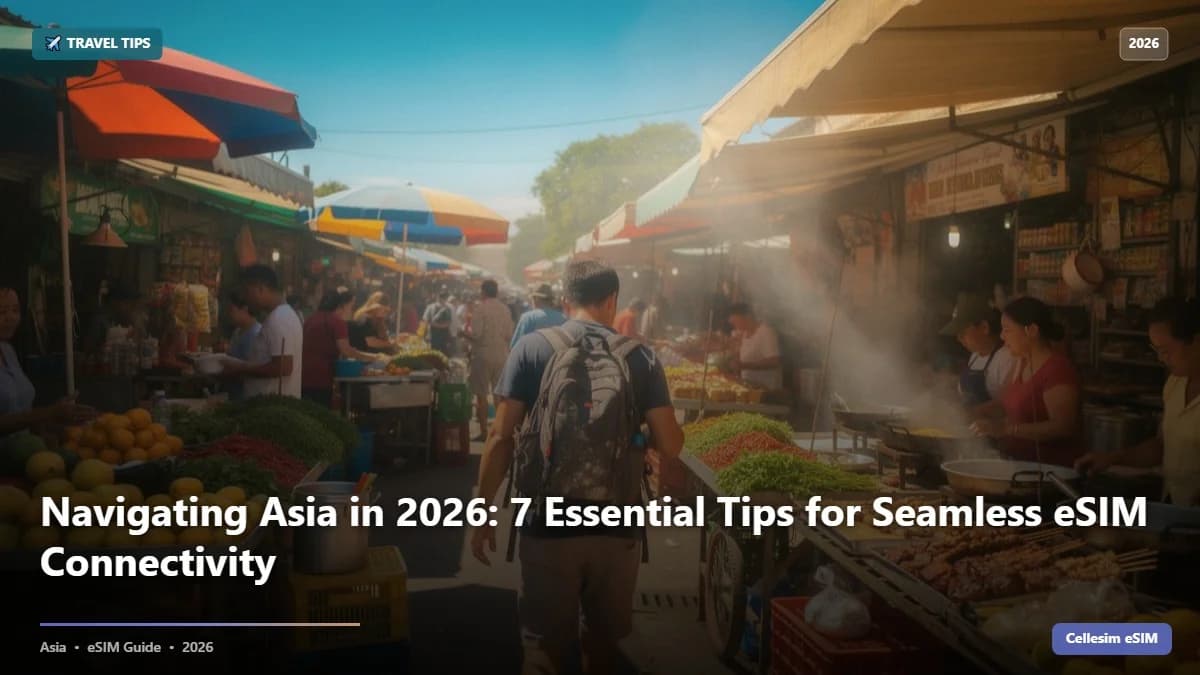
We have all experienced it. You return from a fulfilling trip, rich with memories, only to be confronted by a hefty credit card statement or an unexpectedly large mobile phone bill. That carefree holiday feeling quickly fades. Many believe that budget travel necessitates uncomfortable compromises: cramped hostels, questionable food, or skipping desired experiences. This is a misconception. The key to affordable travel is not about spending less, but about spending smarter. Modern travel hacks leverage technology and strategic planning to reduce costs where they do not impact your experience, allowing you to allocate funds to what truly matters. One of the most significant, yet often overlooked, expenses is mobile data. Understanding how to manage this can significantly alter your travel budget, starting with avoiding excessive roaming fees from the moment you land. These budget travel strategies are designed to enhance your journey, ensuring comfort and rich experiences without financial strain, proving that smart planning can transform your adventures.
- Travel More, Spend Smarter: An Introduction to Savvy Travel
- Smart Planning: Cutting Core Travel Costs
- Connectivity Hacks: Stay Online, Spend Less with eSIM
- Embrace Local Living: Experience More, Pay Less
- Financial Savvy: Managing Your Money Abroad
- Sustainable Savings: Cultivating a Budget-Friendly Mindset
- Seamless Setup: Getting Started with Your Cellesim eSIM
- Frequently Asked Questions
Connect Globally, Save Locally with Cellesim
Experience instant, affordable internet in 200+ countries. Join 50,000+ happy customers.
Explore All eSIM PlansTravel More, Spend Smarter: An Introduction to Savvy Travel
We often equate budget travel with sacrifice: giving up comfort, convenience, or unique experiences. This perception is outdated. Modern travel, powered by technology and informed choices, allows you to significantly reduce expenses without compromising on quality or enjoyment. The goal is not to spend less randomly, but to spend wisely. By identifying areas where costs can be trimmed without affecting your experience, you can reallocate those savings to enhance your trip in meaningful ways.
This guide presents 10 proven travel hacks that combine strategic planning with innovative tools like eSIM technology. These methods ensure you stay connected, travel comfortably, and immerse yourself in your destination, all while keeping your budget intact. From mastering dynamic pricing to embracing local dining, these insights will empower you to travel more often and more richly.
Smart Planning: Cutting Core Travel Costs
Significant savings often originate long before you depart. Strategic pre-trip planning can substantially reduce major expenses like flights and accommodation, freeing up funds for activities and experiences. These smart planning techniques are essential for maintaining comfort while minimizing financial outlay.
Hack 1: Master Dynamic Pricing for Cheaper Flights
Airlines and hotels employ sophisticated algorithms to adjust prices based on demand, time of day, and even your browsing history. Rather than succumbing to these tactics, learn to make the system work in your favor. Utilize flight comparison tools like Google Flights, Skyscanner, and Hopper to monitor prices for your desired routes. Set up price alerts to receive notifications when fares drop. Flexibility with travel dates is a powerful money-saving strategy; flying on a Tuesday or Wednesday is typically more affordable than a Friday or Sunday, often yielding 15-20% savings on airfare.
Consider flying into or out of smaller, alternative airports near your primary destination. These often offer significantly lower fares, even when accounting for a short train or bus transfer. For instance, selecting London Gatwick over Heathrow could save a traveler a substantial amount. A useful, counterintuitive tip: while booking well in advance is generally recommended for popular routes, for less-trafficked destinations or during off-peak seasons, last-minute deals on accommodation can provide excellent value as hotels aim to fill vacant rooms. Always clear your browser cookies or use an incognito window when searching for flights and hotels, as repeated searches can sometimes lead to inflated prices. These minor adjustments represent key travel saving hacks that secure the best deals without unduly impacting your schedule.
Hack 2: Go Beyond Conventional Hotels with Smart Accommodation Choices
While hotels offer comfort, they may not always represent the best value, particularly when the goal is comfortable yet budget-conscious travel. Explore alternatives that provide more space and amenities for your investment. Serviced apartments or aparthotels are excellent options, offering a fully equipped kitchen. This allows you to prepare breakfasts and occasional dinners, saving considerable money on restaurant meals. Such choices also provide more control over your diet, a true travel money hack. These accommodations often include separate living areas, offering a more homely atmosphere and greater privacy than a standard hotel room, ensuring you do not "rough it."
Boutique guesthouses or family-run Bed & Breakfasts often deliver a more authentic local experience, personalized service, and a lower price point than large hotel chains. Utilize the map view on booking platforms like Booking.com or Airbnb to discover hidden gems a few blocks from major tourist areas, where prices can be 20-30% lower without sacrificing convenience or safety. Many offer unique charm and a genuine taste of local life, enhancing your trip without inflating your budget. Research indicates that travelers opting for non-hotel accommodations save an average of 30% on lodging expenses.
Hack 3: Pack Smart, Fly Light to Avoid Hidden Fees
Checked baggage fees are a significant and entirely avoidable expense that can quickly deplete your travel funds. Challenge yourself to travel with only a carry-on. This strategy not only saves money (typically £30-£60 per flight segment with many budget airlines) but also saves valuable time at the airport by bypassing baggage claim. The cornerstone of this hack is smart packing. Employ packing cubes to compress clothes and maintain organization, allowing you to fit more into a smaller bag. Adopt the rolling method for clothes instead of folding to maximize space and minimize wrinkles, keeping your attire neat and presentable.
Curate a versatile capsule wardrobe with items that can be mixed and matched across various outfits. Before you even begin packing, it is advisable to check if your phone is eSIM compatible. This modern travel technology is fundamental to lightweight travel, eliminating the need for physical SIM cards and their associated tools. This proactive approach exemplifies smart travel planning, making your journey smoother and more economical by avoiding unnecessary charges.
Connectivity Hacks: Stay Online, Spend Less with eSIM
Your smartphone can serve as your most powerful money-saving tool while traveling, provided it is configured correctly. From navigating unfamiliar cities to locating the best local eateries, intelligent use of travel technology is crucial for the contemporary traveler seeking affordable solutions without compromising convenience.
Hack 4: Ditch Your Home Carrier's Roaming Plan. Seriously.
This is arguably the most impactful tech hack for any international traveler aiming to save money. Your domestic mobile provider typically levies exorbitant fees for international roaming, a consequence of complex and costly agreements between carriers. Paying £10 per day for a travel pass might seem convenient, but this accumulates to £140 over a two-week trip , a substantial and avoidable expense. The superior solution is an eSIM for international travel.
An eSIM (embedded SIM) is a digital SIM card that enables you to download a local data plan directly to your compatible phone. This provides access to local networks at local prices, often saving you up to 90% compared to traditional roaming. For example, a 10GB data plan with Cellesim for Europe might cost around £15, whereas comparable roaming charges could run into hundreds. You can install your eSIM before departure and activate it instantly upon arrival, ensuring immediate connectivity for ordering a rideshare, translating a menu, or contacting family. This eliminates the need to search for airport Wi-Fi or manage tiny physical SIM cards. Cellesim offers reliable eSIMs covering over 200 countries, serving 50,000+ happy customers globally.
eSIM vs. Traditional Roaming vs. Local SIM: A Cost Comparison
To illustrate the significant savings, consider a typical 7-day trip to Europe with moderate data usage (e.g., 5GB):
| Option | Typical Cost (7 days, 5GB) | Setup Effort | Keep Home Number |
|---|---|---|---|
| Cellesim eSIM | From £10-£20 | Instant (pre-travel) | Yes |
| Home Carrier Roaming Pass | £70-£100+ (£10-£15/day) | Automatic | Yes |
| Local Physical SIM | £15-£30 (plus purchase time) | Store visit & installation | No (or dual SIM required) |
The choice is clear for travelers prioritizing both cost-efficiency and convenience. An eSIM provides the best balance of value, speed, and ease of use. Learn more about eSIM vs international roaming to make an informed decision.
"Switching to an eSIM for my trip to Italy was a game-changer. I saved so much money compared to what my carrier would have charged, and I had internet the moment I landed."
Embrace Local Living: Experience More, Pay Less
Beyond flights and data, daily spending on food and transport can accumulate quickly. Embracing local habits offers significant savings and a more authentic travel experience without feeling like you are "roughing it."
Hack 5: Eat Like a Local, Not a Tourist
Dining out is a major travel expense. Avoiding tourist traps and seeking out local eateries can drastically reduce your food budget. Wander a few blocks away from main attractions to find smaller, family-run restaurants where prices are lower and the food is often more authentic. Look for places frequented by locals; a good sign is a busy restaurant with a menu primarily in the local language, often offering a "menu del día" or daily specials at a fixed, affordable price. Utilize apps like TripAdvisor or Google Maps with local reviews (filter by "cheap eats" or "local favorites") to discover culinary gems.
Visiting local markets is another excellent way to save money and immerse yourself in the culture. Buy fresh produce, bread, cheese, and cured meats for picnics or to prepare simple meals in your apartment kitchen (if you chose a serviced apartment!). This is not only cheaper but also allows you to sample regional delicacies and interact with local vendors. Enjoying a coffee and pastry standing at a bar in Italy is significantly cheaper than sitting at a table in a piazza. Small behavioral shifts can lead to substantial savings over the course of your trip.
Hack 6: Navigate with Public Transport, Not Taxis
Taxis and ride-shares are convenient but expensive, especially in heavily trafficked tourist areas. Most major cities boast efficient and extensive public transportation systems, including buses, trams, and subways. These options are significantly more affordable and often provide a better sense of local life. Purchase a multi-day pass if available, as these typically offer unlimited travel within a set period and often cost less than individual tickets.
Before your trip, download offline maps (e.g., Google Maps) for your destination. This allows you to plan routes using public transport even without an active internet connection. Walking is also an excellent, free way to explore cities, discover hidden alleys, and stumble upon unexpected sights. Many cities are pedestrian-friendly, and a good pair of walking shoes can save you money while keeping you active. Always check official transport websites for real-time updates and ticket information, such as Transport for London for navigating the UK capital.
Hack 7: Embrace Free and Low-Cost Activities
Many of a destination's most enriching experiences cost little to nothing. Instead of focusing solely on paid attractions, explore free options. Numerous world-class museums offer free admission on specific days or evenings (e.g., The British Museum in London, The Rijksmuseum in Amsterdam on certain hours). Check city tourism websites for lists of free walking tours, often led by enthusiastic locals who work on tips.
Parks, botanical gardens, public beaches, and scenic viewpoints provide wonderful opportunities for relaxation and photography without any cost. Attending free cultural events, local festivals, or open-air concerts can offer profound insights into a destination's character. Instead of an expensive guided tour, consider exploring a neighborhood on your own, perhaps with a free audio guide downloaded to your phone. These activities allow for deeper immersion and memorable experiences without straining your budget.
Financial Savvy: Managing Your Money Abroad
Smart financial management extends beyond simply cutting costs; it involves making informed decisions about currency, banking, and insurance to prevent unexpected expenses.
Hack 8: Smart Banking and Currency Exchange
Foreign transaction fees and unfavorable exchange rates can quickly erode your travel budget. Avoid exchanging large amounts of cash at airport kiosks, which often offer the worst rates. Instead, research banks that offer debit or credit cards with no foreign transaction fees. Neobanks or challenger banks (like Revolut, Monzo, or Wise) are particularly good for travelers, providing excellent exchange rates and often fee-free international ATM withdrawals up to a certain limit. Always choose to be charged in the local currency when paying with a card abroad (Dynamic Currency Conversion), as letting the merchant convert the currency usually results in a poorer exchange rate.
Withdraw cash from ATMs belonging to major banks, if possible, and only when necessary. Plan your cash withdrawals to minimize ATM fees, taking out larger sums less frequently. Keep a small amount of local currency for small purchases, but rely mostly on card payments where widely accepted. A dual strategy of a fee-free debit card and a no-foreign-transaction-fee credit card offers both flexibility and protection against unexpected charges.
Hack 9: Travel Insurance - A Smart Investment
While often seen as an additional expense, comprehensive travel insurance is a critical money-saving hack that protects you from potentially catastrophic financial losses. Accidents, illnesses, lost luggage, or trip cancellations can result in bills amounting to thousands of pounds. A good policy covers medical emergencies, trip interruptions, baggage loss, and sometimes even rental car excess. The cost of insurance is a small fraction of what you could pay out-of-pocket for an unforeseen event.
Do not skimp on insurance. Read the policy details carefully to understand what is covered and what is excluded. Compare different providers to find a plan that suits your specific travel needs and budget. For peace of mind and protection against the unexpected, travel insurance is an investment, not an expense. This ensures that a sudden mishap does not turn your budget-friendly trip into a financial disaster.
Sustainable Savings: Cultivating a Budget-Friendly Mindset
Sustaining a budget-conscious approach throughout your trip requires a proactive mindset and simple daily habits.
Hack 10: Track Your Spending
It is easy to lose track of small purchases while traveling, leading to budget overruns. Implement a simple system to monitor your spending. This could be a dedicated spreadsheet, a budgeting app (like Splitwise or Wallet by BudgetBakers), or even a small notebook where you jot down expenses daily. Regularly reviewing your spending allows you to identify areas where you might be overspending and make adjustments in real-time. This awareness helps you stay within your budget without feeling restrictive.
Before your trip, set a realistic daily budget for different categories (food, transport, activities, souvenirs). Stick to it as much as possible, viewing any underspending as a bonus that can be rolled over to the next day or saved for a special treat. Tracking your spending transforms abstract financial goals into tangible, manageable actions, ensuring you return home with both cherished memories and a healthy bank account.
Seamless Setup: Getting Started with Your Cellesim eSIM
Activating your Cellesim eSIM is designed to be straightforward, ensuring you gain instant connectivity with minimal effort. This process streamlines your travel preparation, aligning with the "without roughing it" philosophy.
First, ensure your device is eSIM compatible. Most newer smartphones support eSIM technology. Once you purchase a plan from Cellesim.com, you will receive a QR code via email. Scan this QR code with your phone's camera, then follow the on-screen prompts to install the eSIM profile. This usually takes just a couple of minutes. You can perform this step before you even leave home.
Upon arrival at your destination, simply switch to your Cellesim eSIM for mobile data in your phone's settings. You can keep your primary SIM active for calls and texts if needed, allowing you to keep your WhatsApp number and receive important messages. For detailed, step-by-step instructions, refer to our Interactive Setup Guide. This quick and easy activation process means you can land, connect, and start enjoying your trip without any connectivity worries.
Ready for Seamless, Affordable Travel?
Join 50,000+ happy travelers using Cellesim in 200+ countries. Set up in minutes.
Start Your Connected JourneyTrusted by travelers worldwide. 24/7 email support: [email protected]
Frequently Asked Questions
What is the most effective travel hack to save money?
One of the most effective travel hacks is to ditch traditional roaming and use an eSIM like Cellesim. It offers significant savings on mobile data, often up to 90% compared to home carrier roaming fees, providing instant connectivity at local rates.
How can I find cheap flights without compromising comfort?
To find cheap flights, utilize dynamic pricing strategies: use flight comparison sites, set price alerts, and be flexible with travel dates (mid-week flights are often cheaper). Consider flying into alternative, smaller airports. These methods help save money without sacrificing reasonable flight times or routes.
Are serviced apartments truly more cost-effective than hotels?
Yes, serviced apartments or aparthotels can be more cost-effective. They typically offer more space and a fully equipped kitchen, allowing you to prepare meals and save significantly on dining out. This provides a homely feel and greater privacy, enhancing comfort while reducing expenses.
How much data do I really need for a week-long trip?
The amount of data you need depends on your usage. For a week, moderate users typically consume 5-10GB for navigation, social media, and communication. Heavy users streaming video or frequently uploading might need more. Cellesim offers various data plans to suit different needs.
Is travel insurance necessary for budget travel?
Travel insurance is crucial, even for budget travel, as it protects against unforeseen expenses like medical emergencies, trip cancellations, or lost luggage. While an initial cost, it can prevent significant financial loss, ensuring a budget trip doesn't become a financial disaster.
Can I keep my existing phone number while using a Cellesim eSIM?
Yes, absolutely. When using a Cellesim eSIM for data, you can keep your primary physical SIM active in your phone. This allows you to continue receiving calls and texts on your home number, including WhatsApp messages, without incurring roaming data charges.