AT&T Roaming Plans, A Hard Lesson Learned
I still remember the sting of that phone bill after a three-week jaunt through Southeast Asia back in 2018. I'd optimistically relied on AT&T's then-roaming solution, thinking I'd be savvy enough to use Wi-Fi most of the time. Spoiler: I wasn't. Navigating the chaotic streets of Bangkok's Chatuchak Market, trying to hail a Grab taxi without data was a nightmare, and the brief moments I'd flip on roaming to check a map or message home cost me nearly $300.
That experience, among others, taught me a crucial lesson: your domestic carrier, even one as large as AT&T, rarely offers the best value for international connectivity. It's not just the cost, either, it's the sheer mental load of constantly monitoring usage or worrying about unexpected charges. I've heard too many stories of friends getting back from a lovely trip to Rome's Trastevere neighborhood only to find a colossal bill waiting for them, all because they forgot to turn off cellular data.
For years, the workaround was simple, if a bit cumbersome: buy a local SIM card. I've stood in countless tiny mobile shops, from a crowded Vodacom store in Cape Town to a quiet U Mobile kiosk in Penang, fumbling with paper clips and trying to explain in broken English that I just needed 5GB for a week. It worked, but it was never truly seamless. You'd lose your primary number for calls, miss banking notifications, and sometimes, the setup was just a mess.
What Exactly is an eSIM, and Why Should AT&T Users Care?
An eSIM, or embedded SIM, is essentially a digital SIM card that's built right into your phone. No physical chip to swap, no tiny trays to fumble with. It's a game-changer for travelers, especially those of us who remember the days of needing a different SIM for every country.
For AT&T users, this means your phone, if it's an eSIM-compatible model (most newer iPhones, Pixels, and Samsung Galaxies are, often starting with the iPhone XS or Galaxy S20 series), can hold multiple network profiles. You can keep your AT&T line active for calls and texts (which often come with lower roaming rates or are included in some plans, but check the fine print), while simultaneously activating a separate, data-only eSIM for your international travels. This dual-SIM capability is where the real magic happens.
The Flexibility of eSIM Profiles
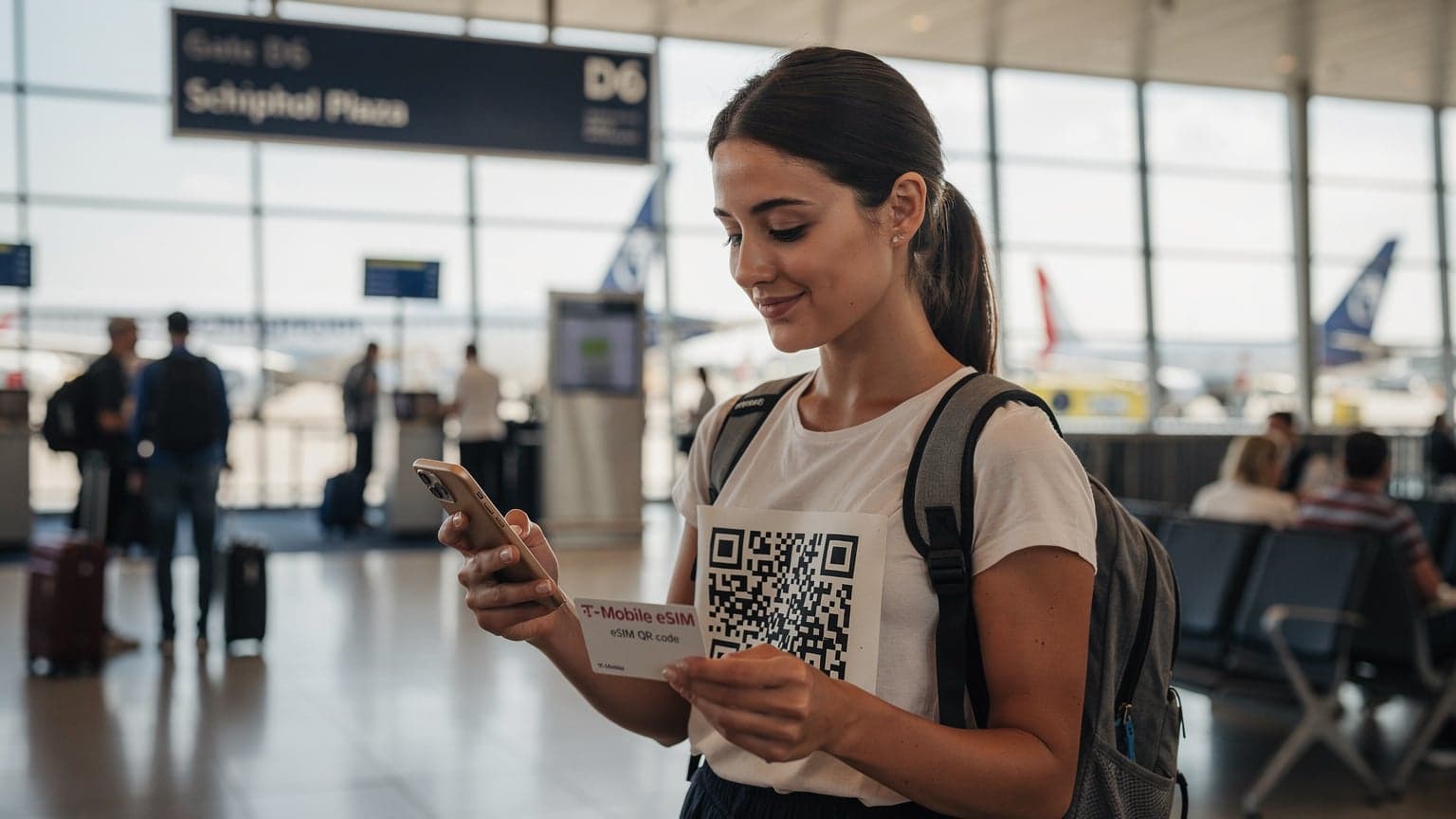
Imagine landing at Narita Airport, taking the JR East Narita Express into Tokyo, and having data ready before you even step off the train. That's the eSIM promise. You purchase a data plan online from a third-party provider, scan a QR code, and within minutes, you're connected. No waiting in line at a SoftBank or au store, no language barriers, and no handing over your passport for registration. I've activated eSIMs while waiting for my bag at the carousel, usually quicker than the luggage even shows up. It's a small victory, but a victory nonetheless.
eSIM Compatibility for AT&T Devices
Most modern smartphones sold by AT&T are eSIM compatible. If you've got an iPhone 11 or newer, a Samsung Galaxy S20 or newer, or a Google Pixel 3a or newer, chances are you're good to go. The key is ensuring your device is unlocked. If you purchased your phone directly from AT&T and haven't paid it off or met their contract terms, it might be locked to their network, preventing you from using an international eSIM. I've had to walk friends through the unlock process more times than I can count, and it's always best to do it well before you leave. You can check your unlock status directly through your AT&T account or by calling their customer service.
The True Cost of AT&T International Roaming: A Breakdown
AT&T offers a few options for international travel, primarily the International Day Pass and AT&T Passport. While convenient for some, the costs can quickly add up, making them far less economical than a dedicated travel eSIM.
AT&T International Day Pass: Convenience at a Price
The International Day Pass (IDP) lets you use your existing AT&T plan's talk, text, and data allowances in over 200 countries for a daily fee. As of early 2026, this fee typically hovers around $10-12 per 24-hour period. It sounds reasonable for a short trip, but it caps at 10 days per billing cycle, meaning if you're traveling for a full month, you're looking at $100-120 in fees, plus whatever your base plan costs. And if you go over your plan's data allowance, standard overage charges apply.
| Feature | AT&T International Day Pass | Third-Party eSIM |
|---|---|---|
| Daily Cost | ~$10-12 per 24 hours (capped at 10 days/billing cycle) | Varies by region/data, often $3-8/day for similar data |
| Data Allowance | Uses your domestic plan's data, subject to overage fees | Dedicated data package (e.g., 5GB, 10GB, unlimited), clear pricing |
| Coverage | 200+ countries | Specific to region/country, often leveraging local top-tier carriers |
| Flexibility | Automatic usage, easy for short trips | Pre-purchase, activate on arrival, switch plans easily |
| Billing | Added to your monthly AT&T bill, can be unpredictable | Paid upfront, no surprise charges |
AT&T Passport: For Longer Stays?
AT&T Passport plans offer larger bundles of data, talk, and text for a flat monthly fee, designed for extended trips. These plans can range from $70 for 2GB up to $140 for 6GB, with talk and text included. While seemingly better than IDP for longer durations, 2GB or 6GB for a month of active travel is often not enough. Trying to navigate unfamiliar cities like Barcelona's Gothic Quarter, constantly checking Google Maps, using local transport apps like TMB, and keeping in touch with family, you'll burn through that data faster than you think. Overage charges on Passport plans are notoriously high, often $10 per additional GB.
How eSIMs Offer a Better Deal for AT&T Travelers
This is where international eSIMs shine. They typically offer data plans at a fraction of the cost, often providing more data for less money. For example, a 10GB eSIM for 30 days in Europe might cost you $25-35, while AT&T's Passport would give you 2GB for $70. The math speaks for itself.
Pay-As-You-Go Control and Transparency
With an eSIM, you know exactly what you're paying for upfront. No hidden fees, no surprise overage charges. You buy a data package, say 5GB for 15 days in Japan, and that's it. If you need more, you simply top up or buy another eSIM. This transparency is a huge relief when you're trying to stick to a travel budget. I've often found myself adding 1GB for about $5-7 extra when I'm running low, a far cry from the $10/GB AT&T charges.
Local Network Speeds and Reliability
Third-party eSIM providers partner with local carriers, meaning you're getting direct access to their network infrastructure. When I was recently in Côte d'Ivoire, my Cellesim eSIM connected to Orange CI's network in Abidjan's Plateau district, giving me excellent speeds that AT&T roaming simply couldn't match. This direct connection often translates to better speeds and more reliable coverage than what you might get through a roaming agreement, which can sometimes prioritize traffic. You can check out more about Côte d'Ivoire: 15 Essential Facts Before Your West African Trip 2026 to prepare for such a destination.
Keeping Your AT&T Number Active for Calls and Texts
One of the biggest advantages of using an eSIM for data is that you can keep your AT&T physical SIM (or eSIM, if your AT&T line is already on an eSIM) active. This allows you to receive calls and texts to your primary US number without incurring massive data roaming charges. You can set your phone to use the AT&T line for voice and the international eSIM for data, a setup I rely on heavily. This is particularly useful for two-factor authentication from banks or for urgent calls from home, ensuring you don't miss anything important.
Choosing the Right eSIM for Your AT&T Device
Not all eSIMs are created equal, and selecting the right one depends heavily on your travel plans and data needs.
Single-Country vs. Regional vs. Global eSIMs
If you're heading to a single destination, a country-specific eSIM is usually the most cost-effective. Providers like Cellesim offer tailored plans for individual nations. If your itinerary involves multiple countries in a region, say hopping between Germany, France, and Italy, a regional eSIM (like a Europe-wide plan) makes more sense. I’ve used these extensively, particularly when moving between countries with the Deutsche Bahn or SNCF trains; it's fantastic to not have to switch SIMs at every border. For truly ambitious, multi-continent trips, global eSIMs exist, but they often come with a slightly higher per-GB cost.
| eSIM Type | Best For | Example Destinations | Typical Cost (10GB/30 days) |
|---|---|---|---|
| Single Country | Dedicated trip to one nation | Japan, India, UK | $20-30 |
| Regional | Multi-country trips within a continent | Europe (Schengen Zone), Southeast Asia, Middle East | $25-40 |
| Global | Long-term, multi-continent travel | USA, UK, Japan, Australia (all in one plan) | $50-80 |
Data Allowance and Validity Periods
Consider your data usage habits. Are you a heavy streamer, or do you just need maps and messaging? Most eSIM plans come with fixed data allowances (e.g., 3GB, 5GB, 10GB, 20GB) and specific validity periods (7 days, 15 days, 30 days). It's always better to slightly overestimate your data needs than to run out mid-trip, especially if you're relying on it for navigation in a sprawling city like New Delhi during Diwali. Speaking of which, for those visiting India, make sure to check out our Diwali 2026: The Essential eSIM Guide for Visiting Family & Friends in India.
Reputable eSIM Providers
Stick with well-known eSIM providers. Cellesim, for instance, offers robust coverage and competitive pricing across various regions. Look for providers with clear pricing, good customer support, and positive reviews. A quick scan of online reviews can save you a lot of headaches later. I’ve personally run into issues with obscure providers whose QR codes simply didn’t activate, leaving me scrambling for Wi-Fi in a foreign airport at 3 AM.
Step-by-Step: Activating Your International eSIM on an AT&T Phone
Activating an international eSIM on your AT&T-locked device is straightforward, assuming your phone is eSIM compatible and unlocked. (If it's locked, you'll need to contact AT&T to get it unlocked first, a process that can take a few business days).
1. Purchase Your eSIM Plan
- Choose your destination and data needs: Browse eSIM plans from a reputable provider like Cellesim. Select the country or region, data amount (e.g., 5GB), and validity period (e.g., 30 days) that fits your trip.
- Complete the purchase: Pay online. You'll usually receive an email containing a QR code or manual activation details almost instantly. Keep this email handy, or print it out as a backup.
- Verify compatibility: Double-check that your phone model is eSIM compatible. Most iPhones from XS onwards, Samsung Galaxy S20 and newer, and Pixel 3a and newer support eSIM.
2. Install the eSIM on Your Device
The process is slightly different for iOS and Android, but both are intuitive.
For iPhones (iOS):
- Go to Settings: Open the 'Settings' app on your iPhone.
- Navigate to Cellular: Tap on 'Cellular' (or 'Mobile Data').
- Add eSIM: Tap 'Add eSIM'.
- Scan QR Code: Choose 'Use QR Code' and scan the QR code you received via email. If you can't scan, select 'Enter Details Manually' and input the SM-DP+ Address and Activation Code provided.
- Label Your Plans: Once installed, you'll be prompted to label your cellular plans. Name your AT&T line 'Primary' or 'AT&T' and your new eSIM 'Travel' or the specific country name.
For Android (Samsung Galaxy, Google Pixel, etc.):
- Open Settings: Go to the 'Settings' app.
- Find Network & Internet: Tap on 'Network & Internet' (or 'Connections' on Samsung).
- Add Mobile Network: Select 'SIMs' or 'Mobile Network' and then 'Add mobile network' or 'Download a SIM'.
- Scan QR Code: Follow the prompts to scan the QR code. Again, a manual entry option is available if scanning isn't possible.
- Configure SIMs: Label your new eSIM and configure your preferences for calls, texts, and mobile data.
Managing Your AT&T Line While Using an eSIM Abroad
This is where the dual-SIM capability really shines and prevents those nasty roaming surprises.
1. Data Usage Settings
Once your international eSIM is activated, you need to tell your phone to use it for data. Go into your phone's cellular settings and designate your new eSIM as the primary line for 'Cellular Data' (iOS) or 'Mobile Data' (Android). Keep your AT&T line active, but ensure its data roaming is turned OFF. This is critical. I've seen too many people forget this step, and then wonder why their AT&T bill is still skyrocketing.
- For iOS: Go to Settings > Cellular > Cellular Data and select your eSIM.
- For Android: Go to Settings > Network & Internet > SIMs, then tap on your eSIM and ensure 'Mobile data' is toggled on. For your AT&T SIM, ensure 'Roaming' is off.
2. Voice and Text Settings
You can set your AT&T line as your default for calls and texts. Most phones allow you to choose which line to use for outgoing calls and messages. For incoming calls and texts, both lines will ring/receive as long as they are active. This means you can still get important calls from family or two-factor authentication codes to your familiar US number, while browsing the web or using apps on your cheaper international data plan. For instance, if you're traveling through Tajikistan, navigating connectivity and safety, it's reassuring to know your primary number is still accessible.
3. Monitoring Data Usage
Keep an eye on your data usage, both through your phone's settings and your eSIM provider's app or website. Most eSIM apps provide real-time tracking, so you know exactly how much data you have left. This prevents you from running out unexpectedly while you're trying to find your way from the Brandenburg Gate to your hotel in Berlin's Mitte district.
Troubleshooting Common eSIM Issues with AT&T Devices
Even with the best planning, sometimes things don't go perfectly. As Cellesim's Technical Support Lead, I've seen it all, and most issues are easily fixable.