Yamoussoukro is the Official Capital, Not Abidjan
Most people, even those who've been around West Africa, assume Abidjan is the capital. It's a common mistake, but it's Yamoussoukro that holds the official title. Abidjan, however, remains the economic powerhouse and the largest city, bustling with commerce, culture, and a distinct energy that truly feels like the heart of the country. I spent a month in the Cocody district of Abidjan, and while Yamoussoukro has its charms, Abidjan is where the action is, hands down. Think of it like Washington D.C. versus New York City, but with significantly more tropical humidity and less reliable traffic lights.
My monthly rent for a decent two-bedroom apartment in Cocody, not far from the Riviera 2 area, was around 300,000 CFA (roughly 500 USD at the time), which is pretty standard for a furnished spot. Groceries and daily expenses would run me another 150,000 CFA, easily.
Navigating Abidjan's Districts
Abidjan is essentially a collection of islands and peninsulas connected by bridges, creating distinct neighborhoods, each with its own vibe. The Plateau is the central business district, all high-rises and busy streets. Marcory and Koumassi are known for their markets and more local feel. For digital nomads, Cocody and Deux Plateaux tend to be popular, offering a good balance of amenities and slightly quieter streets.
I found myself gravitating towards the coworking space at Seedspace Abidjan in Cocody, near the Lycée Classique. Their internet was consistently strong, a rare and precious commodity, especially when I was trying to upload large video files. It was about 75,000 CFA (around 125 USD) for a monthly hot desk. Not cheap, but essential for staying sane.
Cocoa is King: A Global Powerhouse
Cote d'Ivoire is the world's largest producer of cocoa beans. This isn't just a fun fact, it shapes a huge part of the country's economy and its agricultural landscape. Driving through the interior, you'll see vast plantations and local communities deeply intertwined with the cocoa industry. It's a massive operation, influencing everything from trade policies to local employment.
The impact is palpable. You'll see cocoa products everywhere, from artisanal chocolates in upscale markets to local snacks. It's an industry that provides livelihoods for millions, but it also faces challenges around sustainability and fair trade, which are often topics of discussion among locals and expats alike.
The Chocolate Connection
While Cote d'Ivoire produces the raw cocoa, much of it is exported for processing elsewhere. However, there's a growing movement to create more value-added products within the country. Keep an eye out for locally made chocolate bars or cocoa-based drinks, which are often a point of national pride. They might not be on every corner, but they're worth seeking out.
The Basilica of Our Lady of Peace: A Colossal Landmark
In Yamoussoukro, you'll find the Basilica of Our Lady of Peace, which is widely considered the largest church in the world. It's an absolutely monumental structure, larger than St. Peter's Basilica in Rome, though its capacity is smaller. The sheer scale of it is breathtaking, almost surreal against the backdrop of a relatively quiet administrative capital. It was built between 1985 and 1989.
Walking through its enormous doors and seeing the stained glass, it's a profound experience, regardless of your faith. It's a testament to ambition and vision, standing as a dominant feature of the city. You really have to see it to believe it.
Visiting the Basilica
Accessing the Basilica is straightforward. It's open to visitors, and there are often guides available who can share its history and significance. Dress respectfully, as it is an active place of worship. You can easily spend an hour or two just taking in the architecture and the peaceful atmosphere. It's a definite must-see if you make it to Yamoussoukro.
A Diversity of Ethnic Groups and Languages
Cote d'Ivoire is home to over 60 different ethnic groups, each with its own traditions, customs, and languages. This incredible diversity contributes to a rich cultural tapestry. While French is the official language and widely spoken in urban areas, you'll hear a multitude of local languages like Dioula, Baoulé, Bété, and Senufo.
Understanding this linguistic landscape is crucial. Even a few words in a local language can go a long way in rural areas, but French will serve you well in cities like Abidjan. It's a country where traditional practices often blend seamlessly with modern life, creating a unique social dynamic.
Common Phrases to Know
Even if French isn't your strong suit, knowing a few key phrases can make a difference:
- Bonjour/Bonsoir: Hello/Good evening (essential for any interaction).
- Merci: Thank you.
- S'il vous plaît: Please.
- Comment ça va?: How are you?
- Ça va bien: I'm fine.
- C'est combien?: How much is it?
Locals appreciate the effort, and it often opens doors to more welcoming interactions, especially in markets or local eateries. I learned this quickly after attempting a few basic Dioula phrases in Treichville market, which always brought a smile and sometimes a better price.
France's Lingering Influence
As a former French colony, Cote d'Ivoire retains a significant French influence in its language, legal system, education, and even cuisine. This isn't just a historical footnote; it's a living, breathing part of daily life. French expatriates are a visible community, and French businesses have a strong presence.
This means you'll find excellent French bakeries in Abidjan, along with French-style supermarkets. It also means that a lot of official communication, paperwork, and even some local apps for banking or specific services might primarily be in French, or at least require a basic understanding. This is where living in Oxford and brushing up on my French came in handy.
Education and Business Ties
The education system, from primary schools to universities, often follows a French model. Many Ivorians have studied in France, further strengthening these ties. In the business world, French companies are major players in various sectors, from finance to infrastructure, making French a vital language for commerce.
Connectivity Matters for Digital Nomads and Travelers
For anyone working remotely or just relying on their phone for navigation and communication, reliable internet is non-negotiable. While Wi-Fi is available in hotels and some cafes, having your own data connection is crucial, especially for getting around or using ride-sharing apps like Yango.
I've been in places where local SIM card registration can be a bureaucratic nightmare, involving multiple visits and sometimes a local ID that tourists simply don't have. (Think India, where a local SIM is nearly impossible without an Aadhaar card, or Brazil, where CPF is king, making getting connected in India a real challenge for visitors). In Cote d'Ivoire, while local SIMs are obtainable, an eSIM simplifies the process immensely. You can arrive already connected.
Cellesim offers Cote d'Ivoire eSIMs starting at $15.86 with 11+ plans available. This means you can get set up before you even land, bypassing any potential language barriers or registration hassles at the airport. Trust me, after a long flight, the last thing you want to do is hunt for a SIM card shop.
eSIM Setup for Cote d'Ivoire
Setting up your Cellesim eSIM for Cote d'Ivoire is straightforward, usually just a matter of scanning a QR code. Here's how it generally works:
- Purchase Your eSIM: Visit the Cellesim website and choose a Cote d'Ivoire plan that suits your data needs.
- Receive QR Code: You'll get an email with your eSIM QR code and installation instructions.
- Scan and Install: On your compatible device (iPhone, Samsung, Pixel, etc.), go to your cellular settings and select 'Add eSIM' or 'Add Cellular Plan'. Scan the QR code.
- Activate: Follow the on-screen prompts to activate the plan. Make sure data roaming is turned on for your eSIM line once you arrive in Cote d'Ivoire.
For detailed, device-specific instructions, checking the Cellesim FAQ section is always a good idea, as steps can vary slightly between iOS and Android devices.
| Feature | Local SIM | Cellesim eSIM |
|---|---|---|
| Purchase Location | Local stores, airport kiosks | Online before travel |
| Registration | Often requires passport, sometimes local ID | No local registration needed |
| Activation Time | Can take minutes to hours, depending on store | Minutes, usually before landing |
| Physical Card | Yes | No, digital only |
| Cost (starting) | Varies, plus potential for activation fees | $15.86 |
Street Food is a Culinary Adventure
The street food scene in Cote d'Ivoire, particularly in Abidjan, is phenomenal and an absolute must-try. You'll find a dizzying array of delicious and affordable options. From grilled fish (braisé) to attiéké (fermented cassava couscous), aloco (fried plantains), and brochettes (skewered meats), the flavors are bold and satisfying. Don't be shy; some of my best meals were from unassuming street vendors.
My go-to spot was a small maquis (open-air restaurant) in Koumassi that served the best grilled tilapia with chili sauce and attiéké I've ever had. It became my Tuesday night ritual. Expect to pay around 2,000-3,000 CFA (about 3-5 USD) for a hearty meal. It's an experience that connects you directly to the local culture and offers incredible value.
Must-Try Dishes
If you're unsure where to start, here are a few staples:
- Attiéké: A staple side dish, similar to couscous but made from cassava, often served with fish or chicken.
- Kedjenou: A flavorful chicken or fish stew cooked in a sealed pot with minimal water, allowing it to cook in its own juices.
- Garba: Fried tuna served with attiéké, a popular and quick street snack.
- Foutou: Pounded yam or plantain served with a rich sauce.
Always look for places with a steady stream of locals, that's usually a good sign of freshness and quality. And carry some small bills, as vendors often don't have change for large denominations.
The Currency is the West African CFA Franc
Cote d'Ivoire uses the West African CFA franc (XOF), which is pegged to the Euro. This means that if you're coming from a Eurozone country, the exchange rate is fixed, making calculations a bit easier. For everyone else, it's fairly stable, but always keep an eye on the current exchange rate.
While credit cards are accepted in larger hotels, supermarkets, and upscale restaurants in Abidjan, cash is king for smaller purchases, street vendors, and markets. Having a mix of small and large denominations is always a good idea. ATMs are widely available in major cities.
Mobile Money is Prevalent
Mobile money services like Orange Money and Moov Money are incredibly popular and widely used for everything from paying bills to sending money. Many small businesses, including taxis and informal shops, accept mobile money payments. While tourists usually can't set up an account without a local SIM registered to their name, it's good to know how pervasive it is.
For instance, I needed a local number to set up certain delivery apps or to pay for small services that only accepted Orange Money. This is where a dual-SIM phone (or an eSIM that allows you to keep your home number active) comes in handy, so you can receive SMS for verification even if you can't initiate payments. It reminds me of the challenges of Pixel 9 eSIM Setup: Remote Work Resilience for 2026, where having that secondary line is critical.
Transportation in Abidjan is Dynamic
Getting around Abidjan can be an experience in itself. Shared taxis (woro-woro), private taxis, and ride-hailing apps are all common. Shared taxis are cheap but can be confusing if you don't know the routes. Private taxis are more expensive but offer direct travel. For convenience and clear pricing, ride-hailing apps like Yango are often the best bet, especially for those who aren't fluent in French. I used Yango almost exclusively.
Traffic in Abidjan can be intense, especially during peak hours. Factor in extra travel time, always. The city is expanding, and infrastructure projects are ongoing, but gridlock is a regular occurrence. Buses (SOTRA) also operate, but they can be crowded and less intuitive for newcomers.
Ferries and Bridges
Given Abidjan's lagoon-side geography, ferries are a great way to cross between certain districts, like Plateau and Treichville, avoiding road traffic. It's a quick, scenic, and affordable option. The city's many bridges are also crucial arteries, and knowing which bridge connects which area is key to navigating efficiently.
Visa Requirements Can Be Tricky
Visa requirements for Cote d'Ivoire vary greatly depending on your nationality. Many nationalities require a visa in advance, and some can obtain an e-visa. It's absolutely crucial to check the latest requirements well before your trip. Don't assume you can get a visa on arrival, as this is often not the case.
My visa process, as an American, involved an online application, submission of documents, and a waiting period. It wasn't as complex as some countries, but it certainly wasn't instant. Always print out all your documentation, including your visa approval, flight details, and hotel reservations. Border officials are thorough, and having everything readily accessible makes the process smoother. This is a common theme across West Africa, so be prepared.
| Nationality | Visa Requirement | Common Process |
|---|---|---|
| US Citizens | Required | E-visa online application, submit documents |
| EU Citizens | Required | E-visa online application, submit documents |
| ECOWAS Citizens | No visa required | Free movement |
| Other | Varies, check embassy | Consult local embassy or consulate |
E-Visa Process Steps
If you're eligible for an e-visa, here's a general outline of what to expect:
- Visit the Official Portal: Go to the official Ivorian e-visa website.
- Complete Application: Fill out the online form with your personal details, travel itinerary, and accommodation information.
- Upload Documents: Typically, you'll need to upload a scan of your passport, a passport-sized photo, and a copy of your flight booking.
- Pay Fees: Pay the visa fee online using a credit or debit card.
- Receive Approval: Once approved, you'll receive an email with your e-visa pre-enrollment approval. Print this out.
- Finalize on Arrival: Present your pre-enrollment approval, passport, and other documents at the airport upon arrival to get your visa stamped.
Always double-check the website for the most current requirements and fees, as these can change without much notice.
The Art and Craft Scene is Vibrant
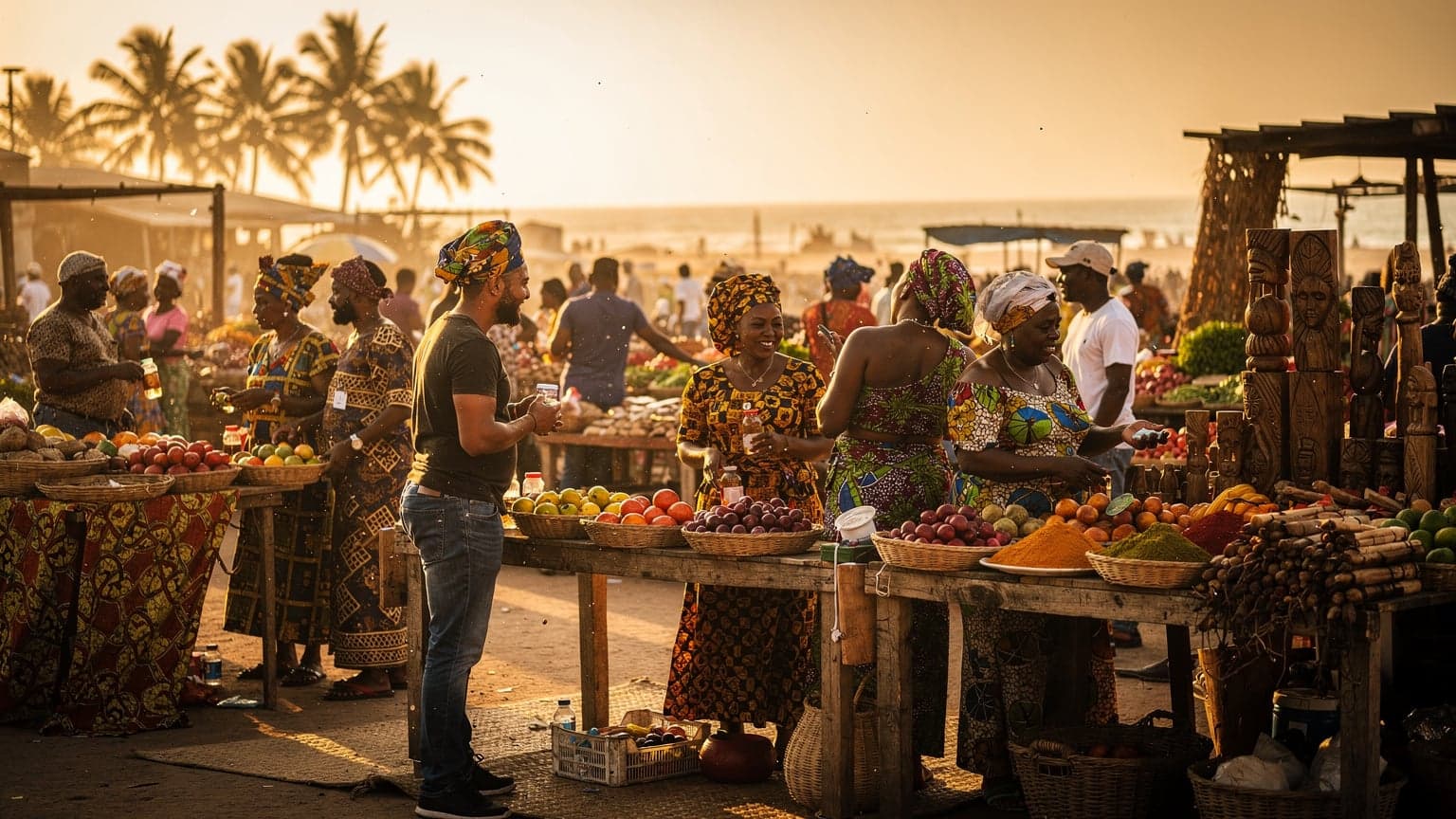
Cote d'Ivoire has a rich artistic heritage, particularly in traditional masks, sculptures, and textiles. Visiting local markets like the Artisan Market in Cocody or the Treichville market will give you a glimpse into this vibrant scene. You'll find intricate wood carvings, colorful woven fabrics (like the famous Kente cloth, though that's more Ghanaian, Ivorian fabrics have their own distinct patterns), and beautiful jewelry.
Bargaining is expected in these markets, so don't be afraid to negotiate. It's part of the experience. Just remember to be respectful and good-natured about it. These pieces make fantastic souvenirs and support local artisans directly.
Understanding Traditional Art
Many traditional Ivorian masks and sculptures are not just decorative; they hold deep cultural and spiritual significance, often used in ceremonies or to represent ancestors. Learning a bit about the meaning behind the art can enhance your appreciation for these skilled craftspeople.
Football is a National Obsession
Like much of Africa, football (soccer) is more than just a sport in Cote d'Ivoire, it's a national passion. The national team, known as 'The Elephants', commands immense loyalty and enthusiasm. When there's a major match, especially involving the national team, the country practically grinds to a halt. Cafes and bars will be packed, and the streets will erupt with cheers or groans depending on the outcome.
It's a fantastic way to experience local culture and connect with people. I watched a few African Cup of Nations matches at a local bar in Yopougon, and the atmosphere was electric. Even if you're not a football fan, it's worth soaking in the collective excitement.