

Why Your Autumn Festival Needs an eSIM
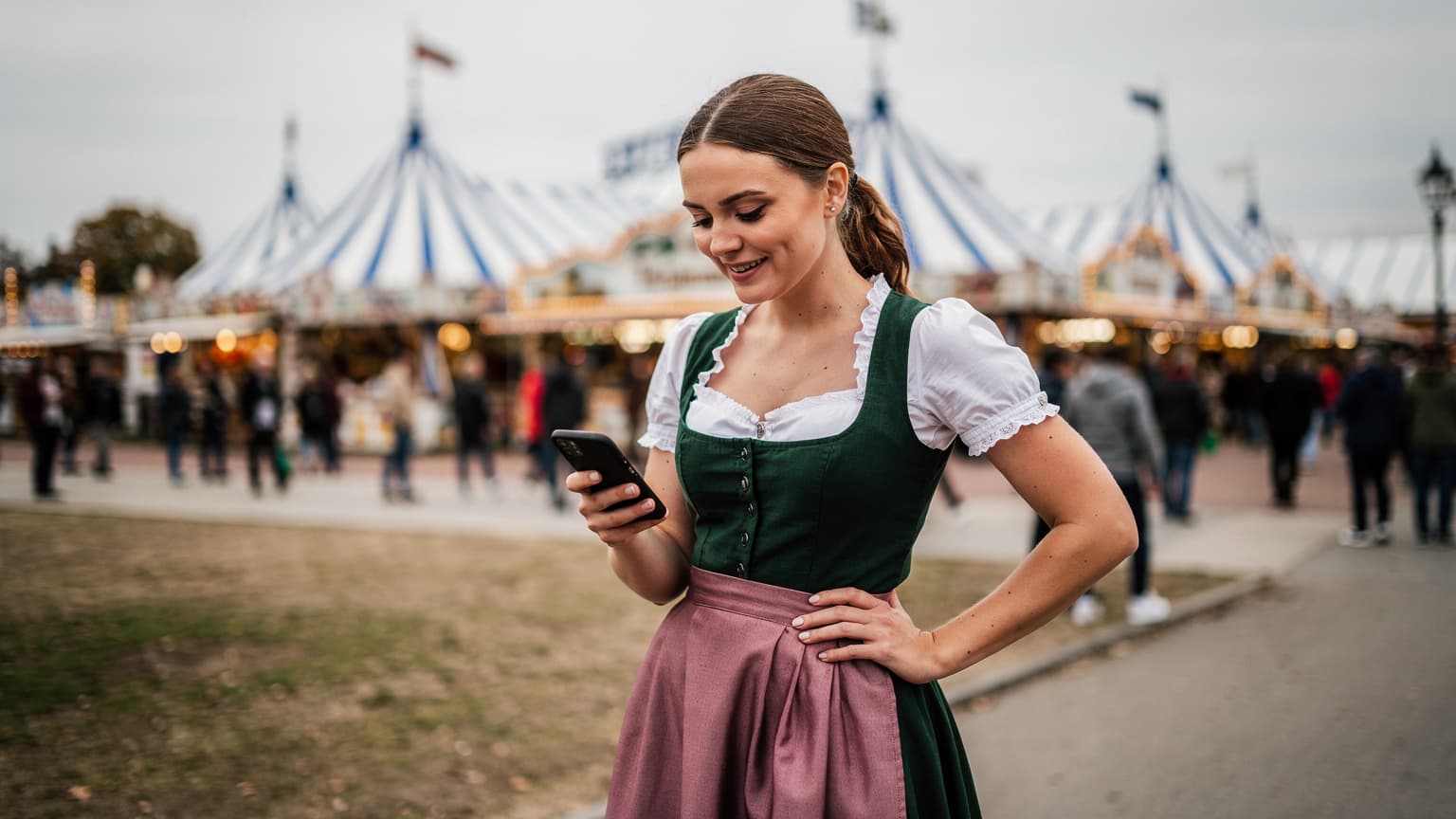
Autumn festivals, whether a vibrant harvest celebration in the Cotswolds or a bustling street party in New Orleans, are defined by moments, and those moments often require reliable data. Imagine trying to coordinate with friends at Oktoberfest's Schottenhamel tent, or locate the best haunted house in Edinburgh, only to find your phone has no signal. Traditional roaming costs can quickly escalate, turning a simple map check into a budget buster. This is precisely where an eSIM shines, offering a pragmatic solution to stay connected without financial surprises.
From a telecommunications perspective, large-scale events like festivals present unique challenges for mobile networks. The sudden, dense influx of users in a confined area creates what's known as a surge capacity demand, stressing base stations to their limits. While carriers deploy temporary cell sites (Cells on Wheels, or COWs) to augment coverage, these are not always sufficient to maintain optimal speeds for everyone. An eSIM, by allowing you to quickly switch between available local networks, can sometimes leverage less congested bands, thereby providing a more stable connection.
The Perils of Public Wi-Fi: Why Cellular is Superior
While public Wi-Fi might seem like a tempting free alternative, it comes with significant drawbacks, especially at crowded festivals. Beyond the often-sluggish speeds due to shared bandwidth, public Wi-Fi networks, particularly unsecured ones, pose considerable security risks. Your personal data, from banking apps to messaging, could be vulnerable to interception. Furthermore, reliability is a major concern; imagine trying to upload a high-resolution photo of a pumpkin festival display only to have the Wi-Fi drop out repeatedly. Cellular data, even when throttled due to congestion, typically offers a more secure and consistent connection, crucial for anything beyond basic browsing.
Avoiding Roaming Charges: The Cellesim Advantage
Traditional international roaming, offered by your home carrier, can be exorbitantly expensive. A typical 1GB roaming package from a major US carrier can cost upwards of $15-20, a price point that makes uploading a few dozen festival photos feel like a luxury. Cellesim's Germany eSIM, for instance, offers competitive rates, often providing several gigabytes for the same price as 500MB on a legacy roaming plan. This economic efficiency means you can share your Oktoberfest experience, navigate through London's Halloween parades, or research local cider mills in Vermont without constantly monitoring your data usage or fearing a bill shock upon return. It's a fundamental shift from reactive budgeting to proactive, predictable connectivity.
Understanding Network Fundamentals for Festival Zones
Festival environments are a microcosm of network engineering challenges. When tens of thousands of people converge, all simultaneously trying to stream, upload, and communicate, the strain on local infrastructure is immense. Understanding how mobile networks operate, particularly in these high-density scenarios, helps set realistic expectations for your eSIM performance. It also explains why an eSIM's flexibility can be a strategic asset.
Carrier Aggregation and Spectrum Allocation
Modern 4G LTE and 5G networks rely heavily on carrier aggregation (CA), a technique that combines multiple frequency bands to achieve higher data speeds and capacity. For example, in Europe, a network might aggregate Band 3 (1800 MHz) with Band 7 (2600 MHz) for LTE, or combine n78 (3.5 GHz) with n1 (2.1 GHz) for 5G. In a crowded festival, while the total available bandwidth might be high, the sheer number of active users means that each user's slice of that bandwidth shrinks. An eSIM allows your device to quickly identify and connect to the strongest, least congested available band offered by a partner network, potentially bypassing a saturated primary band. This dynamic selection, though often automated by your phone, is facilitated by the eSIM's ability to provision multiple carrier profiles.
The Reality of Download and Upload Speeds in Crowds
Carrier coverage maps often show theoretical maximum speeds, typically achieved under ideal, low-congestion conditions. In a festival environment, these speeds are rarely attainable. For instance, while Deutsche Telekom's 5G network in Munich might promise theoretical download speeds of 300-500 Mbps, at Oktoberfest, you're more likely to see actual speeds in the range of 10-30 Mbps download and 2-8 Mbps upload. This is still perfectly adequate for messaging, social media, and even short video calls, but it's important to adjust expectations. For high-bandwidth activities like uploading 4K video clips, patience will be a virtue. The key is stable connectivity, not always peak speed.
Oktoberfest, Munich, Germany: Connecting Amidst the Masses
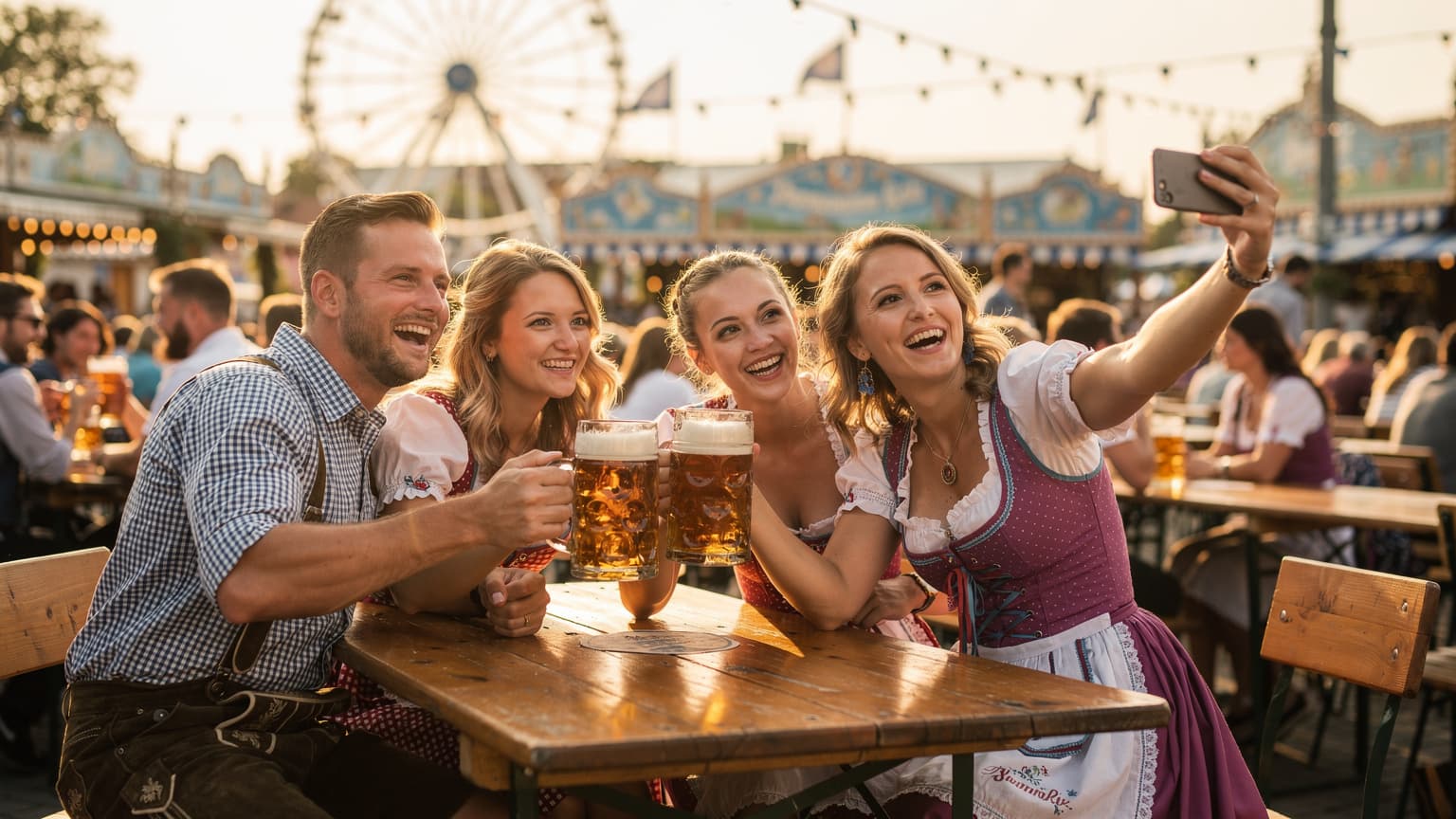
Oktoberfest is an experience like no other, but its sheer scale, with millions of visitors converging on the Theresienwiese, makes mobile connectivity a significant challenge. Navigating the sprawling festival grounds, finding specific beer tents, and coordinating with friends requires a robust data connection. An eSIM is practically indispensable here.
Network Coverage and Performance at Theresienwiese
In Munich, the primary carriers are Deutsche Telekom, Vodafone, and O2 (Telefónica). All three deploy significant temporary infrastructure for Oktoberfest. You'll typically find strong LTE coverage on Band 3 (1800 MHz) and Band 7 (2600 MHz), with 5G on n78 (3.5 GHz) in the main festival area. However, even with augmented capacity, the sheer number of users often means congestion. Expect download speeds to fluctuate wildly, from 50 Mbps during off-peak times to as low as 5-10 Mbps during peak evening hours or when a major event, like the parade, is underway. Upload speeds will likely hover around 2-5 Mbps. While not ideal for live-streaming a concert, it's sufficient for WhatsApp, Google Maps, and sharing photos on Instagram. Cellesim partners with reliable local networks, ensuring you're not left without a connection.
Essential Apps for Oktoberfest Navigation and Communication
Beyond basic communication, several apps become critical at Oktoberfest:
- Oktoberfest Official App: Provides real-time tent capacities, event schedules, and navigation within the grounds.
- Google Maps/Apple Maps: Indispensable for navigating Munich's public transport (U-Bahn, S-Bahn) and finding your way back to your accommodation after a few Maß.
- WhatsApp: The de facto standard for messaging in Germany, crucial for coordinating with your group.
- DB Navigator: For broader train travel if you're venturing beyond Munich.
Ensure your eSIM is active and tested before you arrive. Consider purchasing a Europe eSIM for multi-country travel.
VoLTE and VoWiFi: Making Calls in a Congested Area
Voice over LTE (VoLTE) and Voice over Wi-Fi (VoWiFi) are crucial for making clear calls in congested areas like Oktoberfest. VoLTE routes your calls over the 4G data network, offering superior audio quality and faster call setup compared to legacy 2G/3G circuits. VoWiFi, on the other hand, allows you to make calls over any available Wi-Fi network, which can be a lifesaver if cellular signal is weak indoors (e.g., inside a heavily shielded beer tent). Most modern smartphones with an active eSIM should support VoLTE automatically. However, some older device models, particularly those not originally sold in Europe, might experience issues with VoLTE provisioning on certain partner networks. If you find calls dropping or defaulting to 2G, check your phone's cellular settings for 'VoLTE' or 'Enhanced 4G LTE Services' options. It's a quick fix that can significantly improve your calling experience.
Halloween, London, UK: Spooky Connectivity in the City
London's Halloween celebrations range from elaborate costume parties in Shoreditch to spooky walks in Highgate Cemetery and family-friendly events across various boroughs. The city's dense urban environment, coupled with large public gatherings, demands robust mobile data for navigation, ticketing, and sharing those creatively eerie costumes.
Navigating London's Mobile Landscape
London is served by major carriers like EE, Vodafone, O2, and Three. All offer excellent 4G LTE coverage, typically on Band 3 (1800 MHz), Band 7 (2600 MHz), and Band 20 (800 MHz), with increasing 5G deployment on n78 (3.5 GHz) and n28 (700 MHz). In central London, particularly around popular Halloween event zones like Trafalgar Square or the South Bank, you can generally expect strong connectivity. Average download speeds on 4G LTE might range from 25-70 Mbps, with 5G offering 80-200 Mbps, although these can dip during peak event times. Upload speeds typically fall between 5-20 Mbps. An eSIM from Cellesim connects you to one of these reliable networks, ensuring you're ready for any ghostly encounter.
Public Transport and Connectivity
London's extensive Tube network is a marvel, but underground sections historically meant a complete loss of signal. This is changing rapidly. The Jubilee, Northern, and Central lines, among others, now boast 4G and 5G connectivity even in tunnels and stations. However, coverage is still being rolled out across the entire network. When above ground or in connected Tube sections, your eSIM will maintain its data link, allowing you to check the Transport for London (TfL) app for real-time updates or coordinate meet-ups. Consider an eSIM comparison to see how Cellesim stacks up against competitors for multi-city European travel.
| Carrier (UK) | Primary LTE Bands | Primary 5G Bands | Typical Speeds (Peak Festival) |
|---|---|---|---|
| EE | B3, B7, B20 | n78, n28 | DL: 30-80 Mbps, UL: 8-25 Mbps |
| Vodafone UK | B3, B7, B20 | n78, n1 | DL: 25-75 Mbps, UL: 7-20 Mbps |
| O2 (Telefónica) | B1, B3, B7, B20 | n78, n28 | DL: 20-60 Mbps, UL: 5-18 Mbps |
| Three UK | B3, B20, B32 | n78 | DL: 20-55 Mbps, UL: 5-15 Mbps |
Frequently Asked Questions
How much data do I need for a week at Oktoberfest?
For a week at Oktoberfest, a 5-10 GB eSIM plan is generally sufficient. This allows for daily navigation, social media updates, messaging, and occasional video calls without constant worry. High-resolution photo uploads and extensive video streaming will consume data more rapidly, so consider a larger plan if those are priorities.
Can I use my eSIM for phone calls at festivals?
Yes, if your device and the Cellesim partner network support VoLTE (Voice over LTE) or VoWiFi (Voice over Wi-Fi), you can make and receive calls using your eSIM data plan. Most modern smartphones automatically enable VoLTE, providing clear voice quality over the 4G network. Check your phone settings to confirm VoLTE is active.
What if my eSIM doesn't connect at the festival?
First, ensure your eSIM profile is activated and enabled in your phone's cellular settings. Try restarting your phone, then manually select a network operator from the available list in your settings (rather than automatic selection). Check APN settings if data still isn't working, although this is rare for eSIMs. If issues persist, contact Cellesim support.
Are eSIMs more secure than public Wi-Fi at festivals?
Absolutely. eSIMs utilize secure cellular networks, offering a private connection that is inherently safer than open public Wi-Fi networks. Public Wi-Fi, especially at crowded events, can be vulnerable to eavesdropping and data theft. For sensitive activities like banking or personal messaging, cellular data via an eSIM is always the more secure choice.
Can I top up my Cellesim eSIM data if I run out at a festival?
Yes, Cellesim typically offers top-up options directly through their app or website. If you find yourself running low on data during a festival, you can easily purchase additional data packages to extend your connectivity without needing to buy a new eSIM or physical SIM card. This flexibility is a key advantage of eSIMs.
Will my phone work in rural New England with an eSIM?
Yes, an eSIM will connect you to local US partner networks (like AT&T, T-Mobile, or Verizon), which offer extensive coverage across New England, including many rural areas. However, expect speeds to be lower than in urban centers, potentially around 5-20 Mbps download on LTE, and occasional signal drops in very remote or mountainous regions due to terrain limitations.
Fall Foliage Festivals, New England, USA: Rural Roaming Strategies
New England's autumn charm, with its vibrant fall foliage and quaint harvest festivals, draws crowds to often rural or semi-rural areas. While the density might not match Oktoberfest, connectivity challenges here stem from geographical dispersion and varying tower density. Your eSIM strategy needs to account for this.
Understanding US Network Topography and Coverage
In the US, major carriers like AT&T, T-Mobile, and Verizon dominate. While urban areas have robust coverage, rural New England can be spottier. AT&T and T-Mobile utilize lower frequency bands like Band 12 (700 MHz) and Band 71 (600 MHz) for broad coverage, particularly crucial in areas with challenging terrain or dense forests. Verizon primarily uses Band 13 (700 MHz) for its wide-area LTE. 5G deployment in these rural areas is often on the lower sub-6 GHz bands (n5, n71), providing range over raw speed. When attending a harvest festival in, say, a small Vermont town, your speeds might be lower than in a major city, perhaps 5-20 Mbps download and 1-5 Mbps upload on LTE. But the priority is reliable signal, not necessarily peak performance.
APN Settings and eSIM Compatibility
One often overlooked detail, especially with some older Android devices or unlocked international phones, is the Access Point Name (APN) setting. While most eSIM profiles automatically configure the correct APN, there are edge cases where manual intervention might be needed, leading to 'no data' issues. If you've activated your eSIM but can't get data, navigate to your phone's cellular settings, find 'APN', and check if it's set correctly for the Cellesim partner network. For instance, some T-Mobile US partner networks might require a specific APN like 'fast.t-mobile.com' or 'epc.t-mobile.com'. An incorrect APN can prevent your device from establishing a data connection, even if it shows a signal. This is less common on iPhones, which tend to be more plug-and-play with eSIMs.
Troubleshooting Common eSIM Issues at Festivals
Even with the best preparation, connectivity issues can arise. Festivals are dynamic environments, and a little troubleshooting knowledge can save you a lot of frustration. Most problems are minor and quickly resolved.
Related reading
 Events & Festivals
Summer Festival Circuit 2026: The Savvy Traveller's eSIM Guide for European Music & Arts Events
Europe's summer festival circuit, from Tomorrowland to Sziget, is calling. But staying connected without blowing your budget? That's the real challenge. Forget expensive roaming or hunting for local SIMs. This guide breaks down how an eSIM can save you a fortune and a headache, especially when you're hopping countries.
 Ethan Caldwell
 Events & Festivals
Oktoberfest 2026: Best eSIM for Munich & Bavarian Festivals, Avoid Congestion
Attending Oktoberfest or other Bavarian festivals in 2026? The sheer number of attendees can overwhelm local networks. This guide, from a telecom engineer's perspective, details the best eSIM strategies for reliable data, outlining carrier bands, speed expectations, and crucial setup tips to keep you connected in Munich and beyond.
 Jax TaylorEvents & Festivals
Festival Hopping Europe 2026: Your eSIM Survival Guide for Roskilde, Tomorrowland & Sziget
Europe's summer festivals, Roskilde, Tomorrowland, and Sziget, are incredible, but patchy connectivity can ruin the experience. Forget overpriced roaming or hunting for local SIMs. An eSIM is your best bet for reliable data, group chats, and essential festival app access. Here's how to navigate the digital demands of Europe's biggest music events without a hitch.
 Isabella Cruz
Autumn Festivals 2026: Secure eSIM Data for Oktoberfest &
Related reading
Events & FestivalsSummer Festival Circuit 2026: The Savvy Traveller's eSIM Guide for European Music & Arts Events
Europe's summer festival circuit, from Tomorrowland to Sziget, is calling. But staying connected without blowing your budget? That's the real challenge. Forget expensive roaming or hunting for local SIMs. This guide breaks down how an eSIM can save you a fortune and a headache, especially when you're hopping countries.
Ethan CaldwellEvents & FestivalsOktoberfest 2026: Best eSIM for Munich & Bavarian Festivals, Avoid Congestion
Attending Oktoberfest or other Bavarian festivals in 2026? The sheer number of attendees can overwhelm local networks. This guide, from a telecom engineer's perspective, details the best eSIM strategies for reliable data, outlining carrier bands, speed expectations, and crucial setup tips to keep you connected in Munich and beyond.
Jax TaylorFestival Hopping Europe 2026: Your eSIM Survival Guide for Roskilde, Tomorrowland & Sziget
Europe's summer festivals, Roskilde, Tomorrowland, and Sziget, are incredible, but patchy connectivity can ruin the experience. Forget overpriced roaming or hunting for local SIMs. An eSIM is your best bet for reliable data, group chats, and essential festival app access. Here's how to navigate the digital demands of Europe's biggest music events without a hitch.
Isabella Cruz