Travel Tips

Bolivia eSIM: Which Carrier Connects Best in 2026?

Post-Brexit RoamingEE/Vodafone vs. eSIMBusiness Travel TechLondon Tech SceneReliability Testing

James Sterling UK Business Travel & Roaming Analyst · Cellesim UK Based in London's financial district, James Sterling is the Lead Analyst for Cellesim UK. With the return of roaming charges post-Brexit, James specializes in corporate connectivity solutions. He rigorously compares the daily roaming fees of major UK carriers like EE, Vodafone, and O2 against eSIM alternatives. James ensures that business travelers to the EU and USA maintain enterprise-grade connectivity without the exorbitant expense.

This article was created with AI assistance and reviewed by our editorial team for accuracy.

A traveler holding a smartphone, looking at a map application, against the backdrop of La Paz's cable car system and colourful buildings.
Bolivia, a country known for its staggering altitude and breathtaking landscapes, presents a unique challenge for mobile data. While major cities like La Paz, Santa Cruz, and Cochabamba generally offer decent connectivity, venturing into more remote areas, such as the Salar de Uyuni or the Amazon basin, quickly exposes the limitations of the local infrastructure. For travelers heading to Bolivia in 2026, the choice between Tigo, Entel, and Viva eSIMs isn't just about price, it's about securing foundational network access, especially if you rely on internet-dependent services for navigation or communication.

Bolivia's Mobile Network Landscape 2026: An Overview

Bolivia's mobile network infrastructure is dominated by three main players: Entel, Tigo, and Viva. Each has invested differently in network expansion, leading to distinct coverage profiles across the varied geography of the country. For instance, Entel, being the state-owned operator, often has the most extensive reach in rural and less populated areas, a legacy of its public service mandate. Tigo, a subsidiary of Millicom, and Viva, owned by Nuevatel PCS de Bolivia, tend to focus their denser network deployments in urban centers and along major transport corridors.

When we talk about network performance, we're primarily looking at 4G LTE and, in nascent stages, 5G. As of 2026, 5G deployment in Bolivia is still in its infancy, largely confined to specific districts within La Paz and Santa Cruz, mostly utilizing the n78 band (3.5 GHz) for its initial rollout. For the vast majority of travelers, reliable 4G LTE will be the primary concern. Key LTE bands in Bolivia include B7 (2600 MHz), B4 (AWS 1700/2100 MHz), and B28 (700 MHz APT), with B28 being particularly important for rural penetration due to its excellent propagation characteristics.

A critical consideration for any data-hungry traveler is the concept of Carrier Aggregation (CA). This technology combines multiple LTE frequency bands to increase data speeds and capacity. In Bolivia, while all three major carriers support CA, its actual implementation and the number of aggregated carriers can vary significantly by location. For example, in downtown Santa Cruz, you might see 3xCA on Tigo's network, yielding theoretical speeds upwards of 100 Mbps, but in a smaller town like Tupiza, you might be limited to a single LTE band, resulting in speeds closer to 10-20 Mbps. This variability is precisely why understanding each carrier's strengths is paramount.

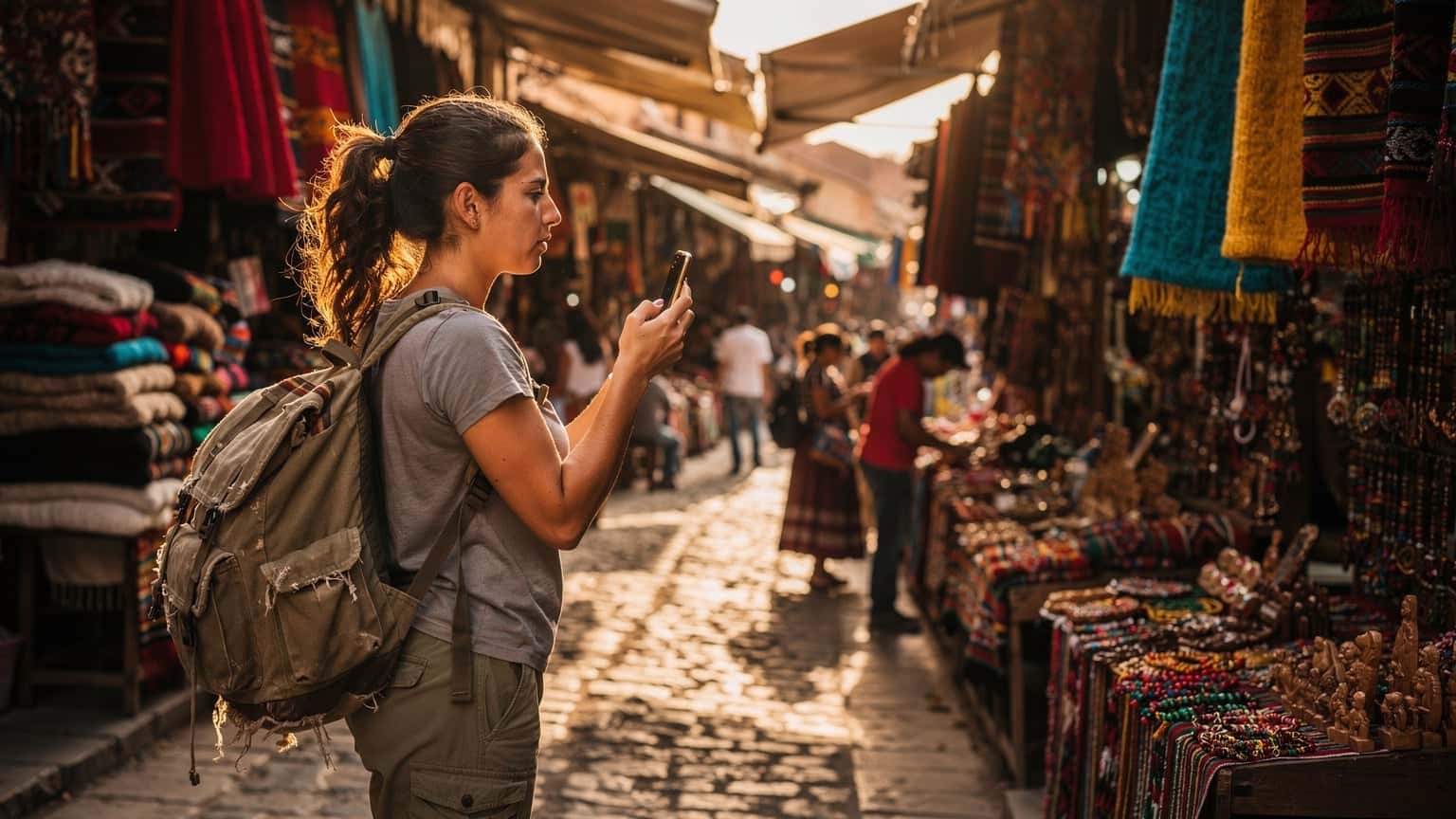
A close-up shot of a smartphone displaying a network signal indicator, held by a person in a local market in La Paz, Bolivia, with colourful textiles in the background.

eSIM Availability and Compatibility: What You Need to Know

For UK business travelers, the move to eSIMs is a no-brainer given the return of roaming charges post-Brexit. However, the landscape for eSIMs in South America, particularly Bolivia, is still evolving. While the major local operators do offer eSIMs for their post-paid and increasingly, pre-paid plans, purchasing these as a tourist upon arrival can be cumbersome. It often involves a visit to a physical store, presenting identification, and navigating potential language barriers. This is where a global eSIM provider, like Cellesim, offering an eSIM for Bolivia, simplifies the process considerably.

Compatibility is another key factor. Most modern smartphones, particularly flagship models from Apple (iPhone XS and newer, including the iPhone 18 eSIM Ön Siparişi: 2026'da Yurt Dışında İlk Günden Bağlantı Kurun), Samsung, and Google Pixel, support eSIM functionality. However, it's always prudent to double-check your device's specifications before you travel. Some regional variants of phones, especially those sold in China or Hong Kong, might lack eSIM support, relying solely on physical SIM slots.

One common technical gotcha relates to APN settings. While most eSIMs from reputable providers will auto-configure APN settings, some Android devices, particularly those running older firmware or specific models from lesser-known manufacturers, might require manual APN entry. The typical APN for Bolivian carriers is usually 'internet' or a carrier-specific variant like 'web.tigo.bo'. If you encounter connectivity issues after installing your eSIM, checking or manually configuring the APN should be your first troubleshooting step.

Deep Dive: Tigo Bolivia eSIM Performance

Tigo is generally considered a strong contender for urban and semi-urban connectivity in Bolivia. Their network is well-developed in the major cities, offering competitive speeds. Based on recent network performance reports and user feedback for 2025-2026, Tigo often leads in download speeds in areas like the Equipetrol district of Santa Cruz or the Sopocachi neighborhood in La Paz.

In these prime areas, Tigo's 4G LTE network can deliver average download speeds ranging from 25 Mbps to 70 Mbps, with uploads typically between 5 Mbps and 15 Mbps. This is often achieved through carrier aggregation on bands B4 and B7, providing a robust data experience. However, once you venture outside these urban cores, particularly into the rural highlands or the eastern lowlands away from major highways, Tigo's coverage can thin out considerably. Signal strength often drops to a single LTE band, or even 3G (UMTS on B5, 850 MHz) in very remote locations, reducing speeds to less than 5 Mbps.

For business travelers who rely on consistent connectivity for video calls or cloud-based applications, Tigo's urban performance is solid. However, be aware of the drop-off in performance and coverage when traveling between cities, especially if you plan to visit national parks or remote towns. One area where Tigo sometimes struggles, particularly compared to Entel, is VoLTE (Voice over LTE) and VoWiFi (Voice over WiFi) implementation. While both technologies are theoretically supported, seamless handoff and consistent call quality over VoLTE can be inconsistent on Tigo's network, especially when roaming internationally. This means your voice calls might drop back to 3G, consuming more battery and potentially impacting call clarity.

A person in a cafe in Santa Cruz, Bolivia, looking concerned at their smartphone, perhaps due to a connectivity issue, with a traditional Bolivian coffee cup on the table.

Entel Bolivia eSIM: Coverage and Speeds

Entel, as the state-owned telecommunications company, has historically prioritized broad geographic coverage, often extending its network to communities that other operators deem less commercially viable. This makes Entel a strong choice for travelers planning extensive trips through Bolivia's diverse regions, including the Altiplano and parts of the Amazon basin.

While Entel's average speeds in urban areas might sometimes lag slightly behind Tigo, its ubiquity often makes up for this. In La Paz and Santa Cruz, Entel's 4G LTE speeds typically range from 20 Mbps to 50 Mbps download and 4 Mbps to 12 Mbps upload. Critically, Entel often maintains 4G LTE coverage in smaller towns and along major intercity routes where Tigo and Viva might drop to 3G or lose signal entirely. Their extensive use of the B28 (700 MHz) band is a key factor here, allowing for broader signal penetration and reach over difficult terrain.

For those travelling to popular, but somewhat isolated, tourist destinations like Copacabana on Lake Titicaca or the city of Sucre, Entel often provides the most consistent 4G LTE experience. This broader reach is invaluable if you're relying on mapping applications or need to stay in touch while off the beaten path. Entel has also made significant strides in VoLTE deployment, offering more reliable high-definition voice calls over LTE compared to its competitors. This is a crucial feature for business travelers who need crystal-clear audio conferencing, a benefit often overlooked until it's absent.

However, Entel isn't without its quirks. Anecdotal reports suggest that Entel's network can be more prone to congestion during peak hours in very densely populated urban areas, sometimes leading to temporary dips in speed. This is a common characteristic of networks with broader, rather than deeper, capacity. IPv6-only assignments are still rare for mobile users in Bolivia, with most carriers, including Entel, still predominantly issuing IPv4 addresses. However, if you happen to get an IPv6-only assignment, ensure your applications and VPNs are compatible, as some older services may struggle.

CarrierPrimary 4G LTE BandsUrban Download Speed Range (Mbps)Rural Coverage StrengthsVoLTE/VoWiFi Support
TigoB4 (1700/2100 MHz), B7 (2600 MHz)25-70Major highways, larger townsAvailable, but inconsistent
EntelB4 (1700/2100 MHz), B28 (700 MHz), B7 (2600 MHz)20-50Extensive, including remote areas, AltiplanoGenerally reliable
VivaB4 (1700/2100 MHz), B7 (2600 MHz)15-40Limited to main cities & adjacent areasLimited, often falls back to 3G

Viva Bolivia eSIM: The Third Contender

Viva, while a significant player, generally occupies the third spot in terms of overall network coverage and performance compared to Tigo and Entel. Their network is primarily concentrated in the largest urban centers, such as La Paz, Santa Cruz, and Cochabamba. If your itinerary is strictly limited to these cities and their immediate surroundings, Viva can provide a functional data experience.

In these urban areas, Viva's 4G LTE network typically offers download speeds between 15 Mbps and 40 Mbps, with upload speeds from 3 Mbps to 10 Mbps. Like Tigo, Viva also utilizes bands B4 and B7 for its LTE services. However, their investment in extending coverage to less populated areas has been more conservative. This means that once you leave the city limits, you're more likely to experience a rapid degradation of service, often dropping to 3G or losing signal entirely. For instance, a drive from Santa Cruz towards the Chiquitania region would quickly highlight Viva's weaker rural footprint.

For tourists, especially those on a budget who only need basic connectivity within cities, Viva might be an option. But for anyone requiring consistent data for work, navigation in unfamiliar territories, or staying connected while exploring Bolivia's vast natural beauty, Viva's limitations become apparent. Their VoLTE and VoWiFi support is also the least developed among the three, often leading to calls dropping to 3G or traditional circuit-switched voice, which can be a significant inconvenience for business calls.

When considering a Bolivia eSIM, it's essential to match the provider's strengths with your travel plans. If you're staying in major cities, any of the three might suffice, but once you venture out, the differences become stark.

A wide shot of a bus station in La Paz, Bolivia, with various buses and people, focusing on the dynamic atmosphere of urban travel and connectivity challenges.

The eSIM Verdict for Bolivia 2026: Which One to Choose?

After dissecting the network capabilities and coverage profiles of Tigo, Entel, and Viva, a clear recommendation emerges for travelers heading to Bolivia in 2026. For comprehensive and reliable connectivity across the widest possible geographical area, Entel is the unequivocal winner. Its state-backed mandate for broad coverage, especially using the crucial B28 (700 MHz) band, means you're far more likely to maintain an LTE signal when exploring beyond the major cities.

Tigo comes in a respectable second, offering excellent speeds in urban hubs, making it suitable for those whose itineraries are primarily city-bound. Viva, while present, should be considered only if your travel is strictly confined to the largest metropolitan areas and you have minimal demands for consistent data outside those zones.

However, even with Entel's superior coverage, it's vital to set realistic expectations. Bolivia's mountainous terrain and vast, sparsely populated regions mean that even the best network will have dead zones. Always download offline maps and critical travel information before venturing into truly remote areas. Furthermore, while an eSIM simplifies activation, you should still consider carrying a portable power bank, as searching for signal in challenging environments can drain your phone's battery rapidly.

For those looking for an easy, pre-activated data solution, a global eSIM provider that aggregates local networks offers the best of both worlds. They typically leverage the strongest local carrier, which, in Bolivia's case, often means Entel's network for optimal reach. This setup avoids the bureaucratic hurdles of local SIM acquisition, allowing you to land and connect immediately. For more insights into seamless travel connectivity, explore our eSIM FAQ.

CriterionEntel (Recommended)Tigo (Urban Focus)Viva (Budget Urban)
Overall CoverageExcellent, especially rural & major routesGood in cities, fair on main highwaysLimited to major urban centers
Urban SpeedsConsistent 20-50 Mbps downloadOften fastest, 25-70 Mbps downloadAcceptable, 15-40 Mbps download
Rural Speeds & ReliabilityBest, maintains 4G where others dropDrops to 3G or no signal in many areasSignificant drop-off, limited service
VoLTE/VoWiFiReliable HD voice over LTEFunctional but can be inconsistentLeast reliable, frequent 3G fallback
Best ForAdventure travelers, business, wide itinerariesCity breaks, digital nomads in major citiesStrictly urban budget travel, minimal data needs

Frequently Asked Questions

Which Bolivian carrier has the best 4G LTE coverage for eSIM users in 2026?

For 2026, Entel consistently offers the most extensive 4G LTE coverage across Bolivia, particularly in rural and intercity areas. This is largely due to its strategic deployment of the 700 MHz (B28) band, which provides superior propagation over challenging terrain compared to Tigo or Viva.

Can I expect 5G speeds in Bolivia with an eSIM in 2026?

While 5G networks are being deployed in Bolivia, they are still in early stages for 2026, primarily limited to very specific, small areas within La Paz and Santa Cruz, mostly on the n78 band. For the vast majority of your trip, you should plan for reliable 4G LTE as your primary data connection.

Are there any APN settings I need to manually configure for my eSIM in Bolivia?

Most reputable eSIM providers will automatically configure APN settings for Bolivian networks. However, in rare cases, especially with certain Android models, you might need to manually set the APN to 'internet' or a carrier-specific setting like 'web.tigo.bo'. Check your eSIM provider's instructions if you encounter connectivity issues.

Will VoLTE and VoWiFi work reliably with a Bolivian eSIM?

VoLTE and VoWiFi support vary by carrier. Entel generally offers the most reliable VoLTE service, ensuring clearer voice calls over its LTE network. Tigo's VoLTE can be inconsistent, and Viva's is the least developed, often falling back to 3G for calls. If HD voice is critical, Entel is the safer choice.

What are the typical download speeds I can expect with a Bolivian eSIM in major cities?

In major cities like La Paz or Santa Cruz, you can typically expect download speeds of 25-70 Mbps on Tigo, 20-50 Mbps on Entel, and 15-40 Mbps on Viva. These speeds are dependent on network congestion, specific location, and the number of aggregated LTE bands available at that moment.

Is it better to buy a local physical SIM or use an eSIM from a global provider for Bolivia?

For convenience and immediate connectivity upon arrival, an eSIM from a global provider like Cellesim is generally preferable. It avoids the process of finding a local store, presenting ID, and potential language barriers associated with purchasing a local physical SIM from Tigo, Entel, or Viva.

See all eSIM FAQs →

Related reading

A woman using her smartphone to navigate a bustling street in Ubud, Bali, with traditional Indonesian architecture in the background.Travel Tips

eSIM GPS Trends 2026: Navigating the Real-World with Data You Can Trust

The conversation around eSIMs and GPS is often overblown with market projections. What actually matters on the ground is whether your navigation works when you need it, and if your data plan can keep up. I've spent years figuring out how to make this work reliably, from the co-working cafes of Canggu to the busy streets of São Paulo. Let's cut through the hype and talk about what's genuinely useful for travelers in 2026.

Charlotte Davies
A traveler smiles, looking at their phone with a Telkomsel eSIM QR code on the screen, while sitting at a cafe overlooking Seminyak Beach in Bali, Indonesia, with palm trees and a vibrant sunset in the background.Travel Tips

Telkomsel eSIM: Bali, Jakarta, and Beyond in 2026

Indonesia is a vast archipelago, and staying connected is key, whether you're chasing waves in Uluwatu or navigating the bustling streets of Central Jakarta. Getting a local SIM used to mean fumbling with tiny cards and passport registrations. Not anymore. With Telkomsel eSIM, you're looking at a much smoother start to your trip.

David "Dave" Miller
A family, including two children aged 8 and 10, walking through the vibrant, bustling streets of Ubud, Bali, with lush rice paddies in the background. The father is checking his phone, displaying an eSIM activation screen, while the children are engaged with their tablets, laughing.Travel Tips

Telkomsel eSIM for Families: Indonesia Data Without the Drama 2026

My kids, bless their digital hearts, can sniff out a weak Wi-Fi signal faster than I can find a decent cup of coffee in a new city. When we touched down in Bali last year, the first question wasn't 'Where's the beach?' but 'Is there Wi-Fi for my Roblox?' Navigating data in a country like Indonesia, especially with a pack of device-toting children, can feel like a high-stakes game. Here's what I learned about Telkomsel eSIMs, and why they became our saving grace.

Ryan Mitchell
Bolivia eSIM 2026: Get Reliable Data with Smart Carrier