


Cellesim vs. Nomad eSIM: Pricing and Plans for Families
As a seasoned family travel planner (and a parent who’s seen the horror show of hotel Wi-Fi trying to support simultaneous Minecraft and Disney+ streams), pricing and plan structures are always my first stop. It’s not just about the sticker price, it's about the cost per gigabyte, especially when you’re feeding multiple devices. My kids, bless their digitally native hearts, view data as an endless resource, so I need plans that scale without breaking the bank.
Cellesim, I’ve found, tends to offer more robust, larger data packages which often translate to a better per-GB cost for families. For instance, if you're headed to Europe for a month and need something to cover multiple phones and a couple of iPads, Cellesim's multi-country options are often more economical. Nomad eSIM, on the other hand, often has a wider array of smaller, more localized plans, which can be fantastic for shorter trips or if you only need data for one or two devices.
| Feature | Cellesim | Nomad eSIM |
|---|---|---|
| Typical Plan Sizes | Larger bundles (10GB, 20GB, 50GB+) | Smaller bundles (1GB, 3GB, 5GB, 10GB) |
| Multi-Country Options | Extensive, with attractive regional packages (e.g., EU-wide) | Available, but sometimes less competitive pricing for large data across many countries |
| Price Per GB (approx.) | Often lower on larger plans, especially for regions like Europe. For instance, a 20GB Europe plan might be around $1.50/GB. | Varies, can be higher for larger bundles, but competitive for small, single-country plans. A 5GB plan could be $2-3/GB. |
| Validity Periods | Typically 15-30 days, some longer options | More varied, from 7 days to 30 days or more |
Crunching the Numbers: Cost Per Gigabyte for a Family of Four
Let's talk real numbers. For our upcoming trip to Italy and France, I calculated that with my two children, aged 9 and 12, each needing their own iPad for educational games, YouTube Kids, and the occasional Roblox session, plus my husband and I needing data for navigation, work emails, and social media, we’d chew through about 40-50GB over two weeks. That’s a lot, especially if we’re relying on it for directions in Venice or looking up restaurant reviews in the Marais.
When I looked at Nomad eSIM, individual country plans for Italy and France, even combined, often meant buying smaller packages that added up. Cellesim, however, offered a Europe-wide 50GB plan for a price that significantly beat stringing together multiple Nomad eSIM smaller bundles. Always check the regional plans, they’re often the hidden gems for multi-country adventures. It’s like buying snacks in bulk versus individual packs at the airport, the savings are real.
For example, if you're hitting the Paris Olympics in 2026, a multi-country European eSIM from Cellesim will likely be your best bet, offering seamless connectivity from the moment you land in Charles de Gaulle until you depart from Rome Fiumicino, all under one plan.
Coverage and Network Quality: Where Will Your Family Roam?
Coverage is non-negotiable, especially when you're trying to navigate an unfamiliar city with tired children or locate your cruise ship terminal. There's nothing worse than being stuck without a signal when you need to use Google Maps or find that emergency gelato place. Both Cellesim and Nomad eSIM generally leverage major local networks, which is a huge plus, but the specifics can vary.
Cellesim often partners with Tier 1 carriers in popular destinations, ensuring reliable speeds and broader coverage, which is crucial when your child absolutely needs to finish their Duolingo lesson to maintain their streak. Nomad eSIM also has strong partnerships, but I’ve sometimes noticed slightly more variability in their specific local carrier choices, which can impact performance in more rural areas or during peak tourist seasons (like trying to get data inside Disneyland Paris).
Navigating Theme Parks and Cruise Ships: The Ultimate Test
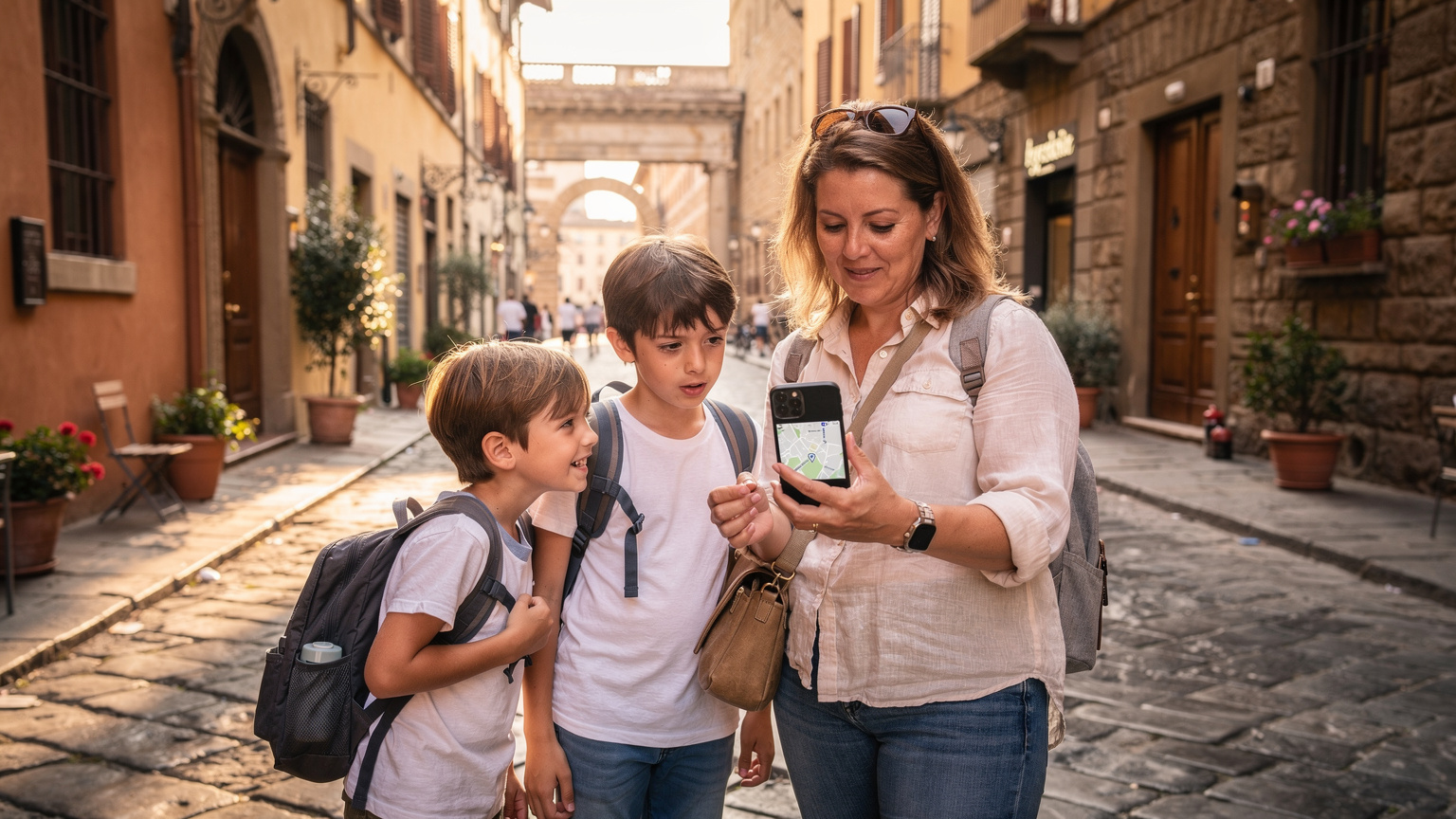
Remember that feeling when you're trying to find your way through the winding paths of a huge theme park, or locate your cabin on a massive cruise ship, and your map app just spins? Connectivity inside theme parks and on cruise ships can be notoriously spotty, even with a local SIM, let alone roaming. My kids, once lost on a Disney World tram route, taught me the hard way how critical a reliable signal is.
Both Cellesim and Nomad eSIM generally perform well in urban areas and popular tourist spots. However, inside sprawling theme parks, where thousands of people are all vying for bandwidth, even the best eSIMs can struggle. My advice for this particular challenge is always to pre-load offline maps (Google Maps allows you to download regions) and have entertainment apps ready for offline use. Check if your eSIM provider specifically mentions partnerships for enhanced coverage in these high-density areas. Some premium Cellesim plans, for example, occasionally offer preferred network access which can make a difference.
Country-Specific Coverage: What to Expect
Before you commit to either, always, always check the specific country's coverage maps on their respective websites. Don't just assume. For example, while both offer excellent service in major European capitals, if your itinerary includes a remote village in the Scottish Highlands or a ferry ride between Greek islands, the nuances of their local carrier partnerships become vital. A quick search for eSIM Italy on Cellesim will show you exactly which local carriers they partner with, like Vodafone IT or TIM, giving you a clearer picture of expected performance.
Data Needs for the Modern Traveling Family
This is where the rubber meets the road. My Facebook group, 'Parents Who Travel (and Keep Their Sanity)', regularly debates this. How much data is 'enough' when you have two kids who view the iPad as an extension of their limbs? The answer, as always, is 'it depends', but for us, it means planning for generous data allowances.
Let’s be honest, those kids aren't just sending texts. They're streaming Disney+, watching YouTube videos of other kids playing Roblox, updating their Pokémon Go status, and FaceTiming grandma. My 9-year-old, bless her heart, once chewed through 5GB of data in a single afternoon watching 'Bluey' episodes on a long train ride. Multiply that by two kids and their various devices, and you're looking at significant data consumption. We're talking 30-50GB for a two-week trip for a family of four, easily. Often, I provision a separate eSIM for each child's iPad, so I can monitor their usage independently.
Pre-loading Apps and Managing Offline Content
This is my golden rule: before you even step foot on the plane, make sure every device is loaded with offline content. Disney+ allows downloads, as do Netflix and Amazon Prime Video. Load up educational games, audiobooks, and podcasts. This isn't just about saving data, it's about having entertainment when you inevitably hit a dead zone, like a remote train tunnel or the depths of a subway system in Tokyo.
- Before You Depart Checklist:
- Download Movies/Shows: Open Disney+, Netflix, YouTube Kids, and download all the content your kids might want to watch.
- Offline Games: Ensure games like Minecraft, Roblox, and any educational apps (e.g., Duolingo, Khan Academy Kids) are fully updated and can run offline.
- Audiobooks/Podcasts: Load up Audible or Spotify with stories and podcasts for quiet time.
- Maps: Download offline maps for all your destinations in Google Maps or similar navigation apps.
- Parental Controls: Double-check screen time limits and app restrictions.
Data Plan Sizing for Streaming and Gaming
Here’s a rough guide I use:
- Light Use (email, maps, light social): 1-3GB per person per week
- Moderate Use (some streaming, heavy social, video calls): 5-10GB per person per week
- Heavy Use (daily streaming for kids, gaming, video calls, work): 10-20GB+ per person per week
For my family of four, where two children stream regularly and my husband and I use data for work and navigation, I usually aim for a minimum of 15GB per device for a two-week trip, totaling around 60GB. This is where Cellesim’s larger multi-country plans often become more cost-effective. You're effectively buying data in bulk, which brings down the per-GB cost significantly compared to smaller, individual plans.
Parental Controls and Device Management with eSIMs
This is a critical, often overlooked aspect of family travel. It’s not just about having data, it’s about controlling how that data is used. My kids are fantastic, but left unchecked, they’d spend every waking moment on their screens. I rely heavily on parental control features, and it’s important to understand how these interact with an eSIM line.

The good news is that parental control features, like Apple’s Screen Time or Google’s Family Link, operate at the device level, not the network level. This means they will work regardless of whether you’re using a traditional SIM, an eSIM, or even Wi-Fi. The eSIM merely provides the internet connection.
Managing Data Consumption Per Device
However, what an eSIM does allow you to do is manage data consumption for each device independently. If you install a Cellesim eSIM on your child’s iPad, you can then:
- Monitor Usage: Track their data usage directly from the eSIM provider’s app (both Cellesim and Nomad eSIM offer this).
- Set Limits: If you purchase a smaller, dedicated plan for their device, they simply run out when it’s gone, acting as a hard cap.
- Pause Data: Some eSIM providers allow you to pause data for a specific line, which is a fantastic feature for enforced screen-free time.
This is a huge benefit over a shared hotspot from your primary phone, where kids might unknowingly chew through your business data. With separate eSIMs, I can give my kids 5GB each and when it’s gone, it’s gone. This creates natural boundaries and encourages them to use Wi-Fi when available.
Activation and Installation: Ease of Use for Harried Parents
When you're trying to corral two children, manage luggage, and navigate customs after a transatlantic flight, the last thing you need is a complicated eSIM activation process. Both Cellesim and Nomad eSIM have streamlined their activation, but there are subtle differences.
Generally, both involve scanning a QR code or entering a manual code. Cellesim’s app is incredibly intuitive, guiding you through the process step-by-step. I’ve found it particularly helpful when activating multiple eSIMs on different devices for the kids. Nomad eSIM is also very user-friendly, with a clean interface that makes finding your plan and activating it straightforward.
A Step-by-Step Guide to eSIM Activation (with Children in Tow)
My preferred method is always to activate before we leave home, or at least before we land. Why? Because doing it while juggling a sleepy toddler and a hangry pre-teen is a recipe for disaster. If you're encountering T-Mobile eSIM QR code not working issues, for example, you definitely want to troubleshoot that from your living room, not a crowded airport terminal.
- Purchase Your eSIMs: Buy your chosen Cellesim or Nomad eSIM plans online a few days before your trip. You'll receive QR codes or activation details via email.
- Load onto Devices (at home): On each compatible device (your phone, kids' iPads), go to Settings > Cellular/Mobile Data > Add eSIM. Scan the QR code or enter the details manually. Do NOT activate the plan yet, just install it.
- Label Your eSIMs: Rename them clearly, e.g., 'Cellesim Italy - Dad', 'Cellesim EU - iPad Kid 1'. This prevents confusion.
- Activate Upon Arrival: Once you land, or shortly before, switch off your primary SIM's data roaming and switch on the eSIM data. For Cellesim, this is usually a toggle within the app or your phone's settings.
- Test Connectivity: Immediately open a browser or an app to ensure data is working. If not, check your APN settings (usually auto-configured but good to know).
Having your data ready to go the moment you land is such a stress reliever. Imagine landing in Singapore for the F1 Grand Prix, and your kids' iPads seamlessly connect, allowing you to instantly look up directions to your hotel without hunting for airport Wi-Fi.

Customer Support: When Things Go Sideways Abroad
Let's be real: technology sometimes has a mind of its own. When you're in a foreign country, potentially battling jet lag and children hyped on sugar, getting quick, effective customer support for your data connection is paramount. I've had my share of frantic moments trying to troubleshoot a connection issue while my kids are asking, 'Is the Wi-Fi broken, Mom?'
Both Cellesim and Nomad eSIM offer customer support, usually via in-app chat or email. My personal experience has been that Cellesim's support tends to be a bit more responsive and comprehensive, especially for complex, multi-device setups. They're good at guiding you through APN settings or checking network status if something isn't quite right. Nomad eSIM's support is generally helpful, but I’ve found response times can vary depending on the time zone.
In my experience, having reliable support is like having an extra emergency contact for your digital life abroad. It’s not just about solving a problem, it’s about peace of mind.
The Value of Multilingual Support
While most communications will be in English, if you're traveling in a non-English speaking country and run into a very specific local network issue, having support that understands the nuances can be invaluable. Cellesim, as a multilingual company, often has support agents capable of assisting in multiple languages, which is a subtle but significant advantage for truly global travelers. This can be especially helpful if you're trying to explain a technical issue that might involve a local carrier.
Real-World Scenarios: Which eSIM Shines Where?
Let’s put this into context with a few typical family travel scenarios.
Scenario 1: Two Weeks in Europe with Teenagers and Their Devices
You’re doing the grand tour: London, Paris, Rome. Your 14-year-old is constantly on TikTok, and your 16-year-old is glued to YouTube. You need reliable, high-volume data across multiple countries. This is where Cellesim's larger, multi-country European plans tend to excel. You can often get 30-50GB plans valid for 30 days across 30+ European countries, giving everyone enough wiggle room for streaming, social media, and Google Maps without constant data anxiety. The per-GB cost will generally be lower, which is a huge win when data consumption is high.
Scenario 2: A Short City Break in Dubai with Young Children
A quick 4-day trip to Dubai, primarily for sightseeing and some splash time at Atlantis Aquaventure. You only need data for essential navigation, booking tickets, and occasional entertainment for a 5-year-old in the hotel. Here, Nomad eSIM’s smaller, targeted plans might be a better fit. You could grab a 5GB plan for Dubai that covers your needs without overpaying for data you won't use. It's more about precision than bulk.
Scenario 3: A Month-Long Digital Nomad Stint in Cape Town
While this might not be strictly 'family travel' for everyone, many parents blend work and travel. If you’re a parent taking your family to Cape Town for a month and need stable, high-speed data for remote work, video calls, and keeping the family connected, a robust plan is crucial. Cellesim's long-term and higher-data plans for South Africa would likely be the stronger contender here, offering the stability and volume needed for a productive 'workation' without worrying about hitting data caps mid-Zoom call.
The Final Verdict: Cellesim or Nomad eSIM?
After many trips and countless comparisons, my recommendation hinges on your family’s specific travel style and data consumption habits. Both Cellesim and Nomad eSIM are excellent providers, far superior to traditional roaming for most travelers, but they cater to slightly different needs.
- Families with High Data Needs: Especially those with multiple streaming kids and devices.
- Multi-Country European Trips: Their regional packs offer fantastic value and seamless transitions.
- Longer Trips (2+ weeks): Where bulk data savings become significant.
- Those seeking strong, responsive customer support.
- Shorter, Single-Country Trips: Where smaller, precise data bundles are sufficient.
- Budget-conscious solo travelers or couples with moderate data needs.
- Those who prefer a very simple, minimalist app interface.
For my family, with two data-hungry kids and a constant need for reliable connectivity for work and navigation, Cellesim generally comes out ahead due to its more generous data allowances at competitive per-GB rates for larger plans. The ability to provision individual eSIMs for each child’s iPad, coupled with the peace of mind of Cellesim's responsive support, makes it my preferred choice for ensuring everyone stays connected (and entertained) without breaking the bank or my sanity.
Ultimately, do your homework. Check both Cellesim and Nomad eSIM’s offerings for your specific destination and travel dates. Compare the per-GB cost for the data volume you anticipate needing, remembering to factor in those Disney+ streams. Happy travels, and may your Wi-Fi be ever strong!
Frequently Asked Questions
Can I use parental controls with an eSIM on my child's iPad?
Yes, parental control features like Apple's Screen Time or Google's Family Link operate at the device level, not the network level. The eSIM simply provides the internet connection, so these controls will function as usual, allowing you to manage app usage and screen time.
How much data should I buy for two kids streaming Disney+ on a family trip?
For two children regularly streaming Disney+ and engaging in other online activities, plan for a minimum of 10-15GB per child per week. For a two-week trip, a total family data pool of 40-60GB is a good starting point, considering your own usage for maps and communication.
Will eSIMs work inside theme parks or on cruise ships?
Esims generally perform well in urban areas and major tourist spots. However, connectivity can be challenging inside densely populated theme parks or on cruise ships due to high demand and specific network infrastructure. Always download offline maps and entertainment beforehand, and check if your eSIM provider offers enhanced coverage in such areas.
Is it better to buy one large eSIM plan or separate plans for each family member?
For families with high data needs and multiple devices, buying one larger, multi-country plan (like those often offered by Cellesim) can be more cost-effective per gigabyte. However, purchasing separate, smaller eSIMs for individual devices (e.g., kids' iPads) allows for better data monitoring and acts as a natural cap on their usage.
Can I activate an eSIM for my family's trip before we leave home?
Yes, you can and should install your eSIMs on all devices before you depart. You'll receive a QR code to load the eSIM profile onto your phone or tablet. You can then activate the plan upon arrival at your destination, ensuring immediate connectivity without travel day stress.
Which eSIM provider is better for multi-country travel in Europe for a family?
Cellesim often provides more competitive pricing and larger data bundles for multi-country European travel, which is ideal for families with high data consumption across several nations. Their extensive regional packages tend to offer better value than stringing together multiple single-country plans from other providers.