

Central Asia eSIM
Central Asia: compare regional eSIMs and check which countries are included before you travel.
Free VPN with your eSIM
Every active Cellesim eSIM comes with a free VPN. Browse securely on public Wi-Fi and reach the apps you rely on from anywhere, at no extra cost and with no separate signup.
- 4G
- Digital setup
- Refund policy
Data Plans / Unlimited
Choose your coverage
also covers: Pakistan, Sri Lanka · not included: Tajikistan
See all countriesShow less
- Kazakhstan
- Kyrgyzstan
- Pakistan
- Sri Lanka
- Uzbekistan
7 days
30 days
Central Asia: choose an eSIM for your trip
Choose how much data you need and for how long. Before you buy, check that your phone is compatible and that the plan covers where you're going. Central Asia: plans start from $3.49. Compare the plans below, including details on activation, hotspot use, and top-ups.
- Compare price and how much data you get
- Check networks and coverage
- Contact support if you need help
Frequently Asked Questions
Look up your phone’s exact model number with the manufacturer to see if it’s listed as compatible, and make sure your phone is not carrier-locked. Seeing an EID number or an “Add eSIM” option in your settings is a good sign, but some phones have regional restrictions. If you’re not sure, please contact our support team before you buy.
Look up your phone’s exact model number with the manufacturer to see if it’s listed as compatible, and make sure your phone is not carrier-locked. Seeing an EID number or an “Add eSIM” option in your settings is a good sign, but some phones have regional restrictions. If you’re not sure, please contact our support team before you buy.
No. An eSIM can be installed only once, and it locks to the first device it is installed on. It cannot be moved to another phone, re-scanned, or reinstalled afterward, and it is non-refundable once installed. Please install your eSIM on the device you plan to keep using. If you are switching devices and need help, contact our support team.
Yes. With Cellesim you top up the eSIM you already installed. You do not scan a new QR code, you do not install a second profile, and your phone number setup does not change.
Open the Cellesim app or your account page, pick a top-up for the eSIM you are using, and the data is added to the same line. The validity period is extended at the same time, so a 7-day plan topped up on day 5 keeps running instead of expiring.
This matters most when you are already travelling: running out of data usually means you have no connection to buy more with. Because the top-up lands on the existing profile, it works as soon as it is processed, without Wi-Fi and without reinstalling anything.
If an eSIM does not work and you have not used the data, we refund it in full to the original payment method. There is no restocking fee and you do not need to return anything.
In practice we check the line on the carrier side first, because most failures are a stuck data session that we can restart remotely in a few minutes. If the line genuinely cannot be made to work in your location, we refund.
To be straightforward about the limit: once a plan has been used, a refund is no longer possible, because the data has already been bought from the network operator on your behalf. In that case we look at a replacement instead. If a plan was never activated, the refund is simple.
Yes. Every Cellesim account has a wallet balance, and you earn 5 USD of store credit for each friend who buys their first eSIM with your referral link.
The credit lands in your wallet automatically once their order completes, and it is applied to your next purchase — you do not need a coupon code. Wallet balance never expires.
Your referral link is in your account. There is no limit on how many people you can refer, and the person you refer also gets a discount on their first order.
Cellesim includes a free VPN with every active eSIM. It is not an add-on, a trial, or a paid upgrade: as long as you have an eSIM plan that is still valid, the VPN is available at no extra charge.
This is unusual in the travel eSIM market. Most providers sell data only, and you buy a VPN separately from a VPN company. A few bundle a paid VPN subscription. With Cellesim the data plan and the VPN come from the same purchase.
It matters because mobile data abroad does not solve everything. Public Wi-Fi in airports and hotels is unencrypted, some services are restricted depending on the country you are connected from, and banking apps behave differently on foreign networks. The VPN covers that part.
Almost always, yes — usually by an order of magnitude. Standard carrier roaming outside your home region is commonly billed per megabyte or as a daily pass of 10-15 USD. A travel eSIM is a prepaid data plan bought at local wholesale rates.
A concrete comparison: a 5 GB / 30-day plan for a single country averages about 28 USD across our catalogue. A daily roaming pass at 10 USD reaches that after three days, and keeps charging.
The exception is regional roaming that your carrier already includes for free — EU-to-EU roaming for EU customers, for example. If your plan covers the country you are visiting at no extra cost, use it. Everywhere else, prepaid data is cheaper.
Less than most guides tell you. Across 278 of our own travel eSIMs, the median customer used 96 MB per day. The average was 158 MB, and even heavy users at the 90th percentile stayed under 350 MB a day.
That means for a one-week trip:
- 1 GB covers a typical traveller — maps, messaging, occasional browsing
- 3 GB is comfortable if you post photos and videos daily
- 5 GB or more only if you stream video or work off mobile data
The common advice of "1 GB per day" reflects home usage on Wi-Fi-free devices, not travel. Most hotels, cafes and airports still give you Wi-Fi for the heavy things. Buy small, and top up if you are wrong — that is cheaper than paying for data you never use.
Buy and install before you fly. Activate after you land. These are two different steps and confusing them is the most common mistake.
Installing writes the profile onto your phone and needs an internet connection — which you have at home and may not have at the airport. Activation happens automatically the first time the eSIM connects to a network at your destination, and that is when the validity period starts counting.
So installing early costs you nothing: a 7-day plan installed three days before departure still gives you 7 full days from the moment you land. Waiting until you arrive means standing in an arrivals hall trying to find Wi-Fi to install a product you already paid for.
About Central Asia eSIM
Central Asia eSIM: The Ultimate Silk Road & South Asia Pass
Retrace the steps of Marco Polo and beyond. From the turquoise domes of Samarkand to the tea plantations of Sri Lanka, this unique regional bundle connects you across diverse landscapes. Whether you are bargaining in the bazaars of Uzbekistan, trekking the Tian Shan mountains in Kyrgyzstan, or exploring the vibrant streets of Lahore, you no longer need to swap SIM cards at every border crossing. With Cellesim's 4-Country Bundle, starting at just $3.49, your connectivity is as seamless as your journey.
🧭 Related eSIM destinations: eSIM Kazakhstan · eSIM Uzbekistan · eSIM Kyrgyzstan · eSIM Tajikistan
One Region, Five Nations, Zero Roaming Fees
Crossing borders in Central and South Asia usually means hunting for a new SIM card or paying exorbitant roaming rates. This single Cellesim eSIM covers Kazakhstan, Kyrgyzstan, Pakistan, Sri Lanka, and Uzbekistan. It is the perfect solution for overland travelers and digital nomads covering this specific route.
Why the Cellesim Central Asia Bundle is Essential
- Border Crossings: Keep your connection active immediately as you cross from Tashkent (Uzbekistan) to Shymkent (Kazakhstan).
- Diverse Coverage: Includes the "Stans" for history, Pakistan for adventure, and Sri Lanka for tropical relaxation.
- Navigation: Vital for using Yandex Go in Central Asia or Uber/Careem in Pakistan and Sri Lanka.
The Nomad's Choice
Experience the fusion of Soviet history, Islamic architecture, and tropical nature without disconnection.
Perfect For:
- Silk Road Travelers: Overlanding through the Stans.
- Backpackers: Multi-country trips on a budget.
- Business: Regional meetings in Almaty and Tashkent.
Central Asia eSIM reviews from real travelers
Be the first to review the Cellesim eSIM for Central Asia.
No reviews yet for Central Asia. Yours could be the first.
Central Asia eSIM guides:what travellers ask before they go
Coverage, install steps, real connection speeds, and the small stuff that ruins a trip if you skip it. Curated for Central Asia.
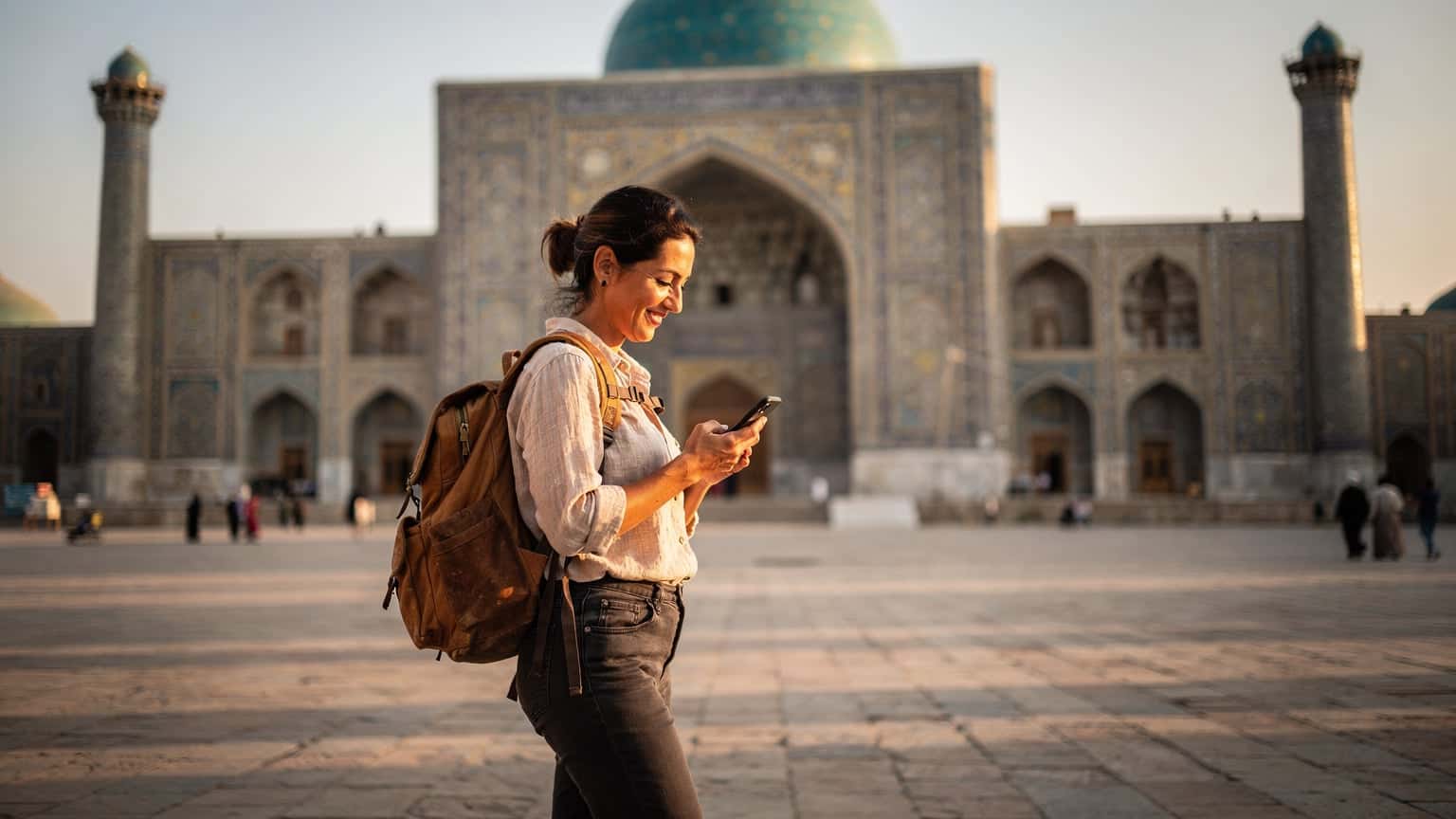 Destination Guides
Central Asia eSIM 2026: Seamless Connectivity on the Silk Road
Venturing across Central Asia in 2026 requires more than just a sturdy backpack and a sense of adventure, it demands reliable connectivity. An eSIM is your digital lifeline, offering seamless data across ancient trade routes, from the bustling bazaars of Tashkent to the sweeping steppes of Kazakhstan, all without the fumbling for physical SIM cards.
Read the guide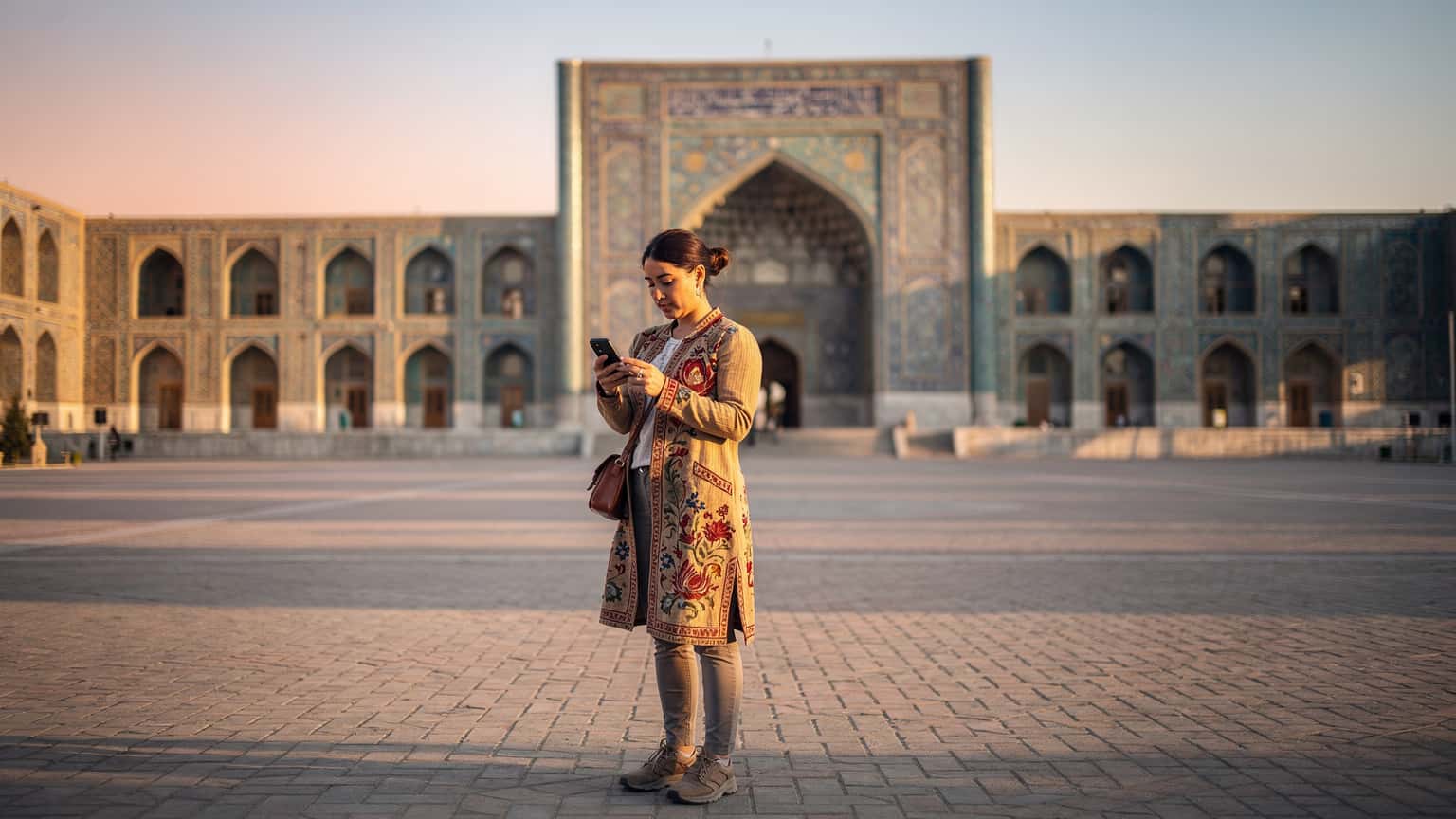 Destination Guides
Central Asia eSIM 2026: Seamless Data Across the Silk Road, A Traveler's Guide
Navigating the ancient Silk Road through Central Asia in 2026 means connecting more than just historical dots. From the bustling bazaars of Tashkent to the serene mountains of Kyrgyzstan, staying connected is no longer a luxury, it's a necessity. An eSIM offers the best way to keep your phone humming without the usual hassle of local SIM cards or exorbitant roaming fees.
Read the guide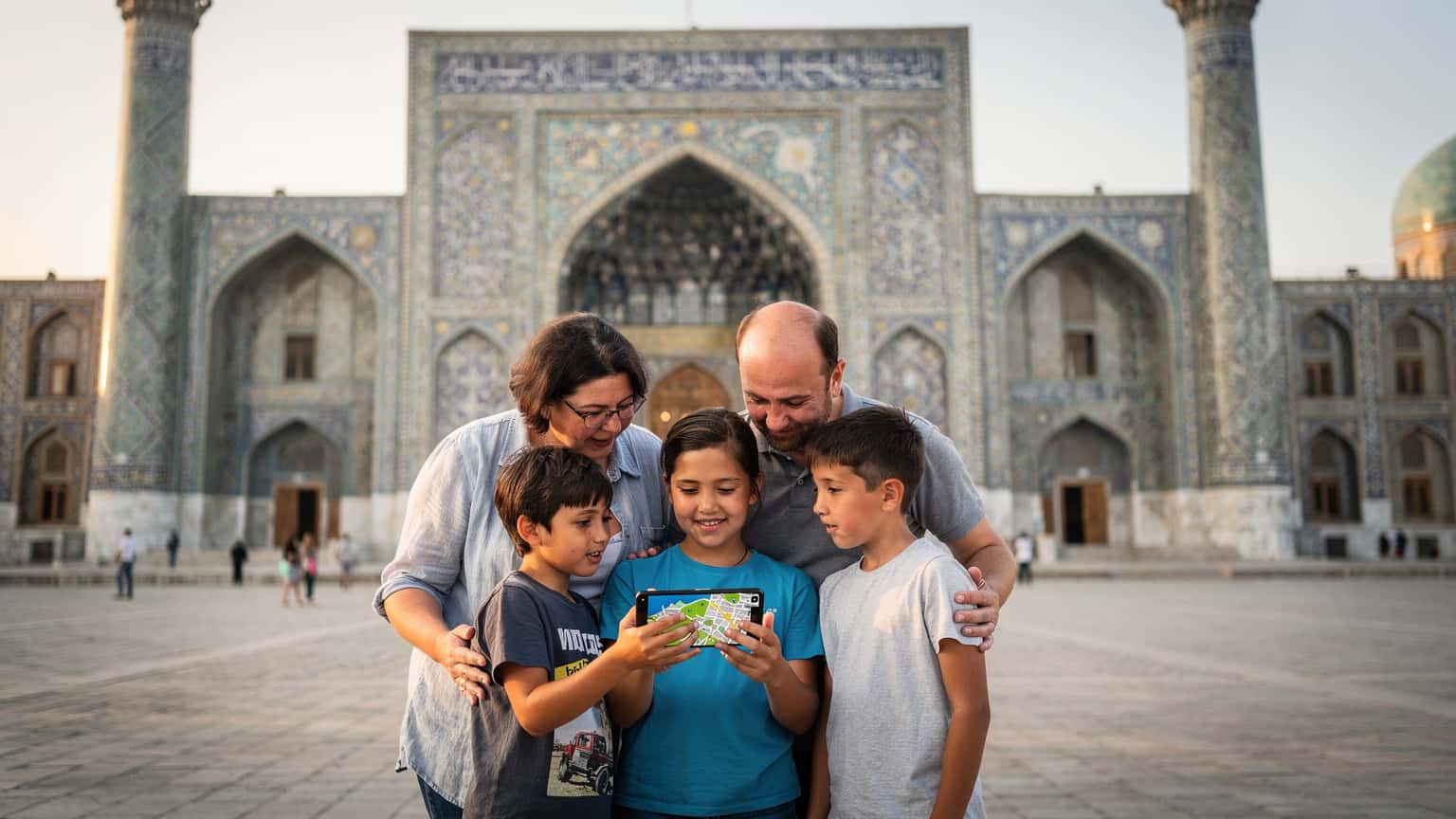 Destination Guides
Central Asia eSIM for Families: Data Plans, Parental Controls & Silk Road Wonders (2026)
Embarking on a family adventure through Central Asia's historic Silk Road calls for meticulous planning, especially when it comes to keeping everyone connected. Finding an eSIM that handles two streaming kids, enables parental controls, and offers reliable multi-country coverage is crucial for a smooth journey across Kazakhstan, Uzbekistan, Kyrgyzstan, and beyond.
Read the guide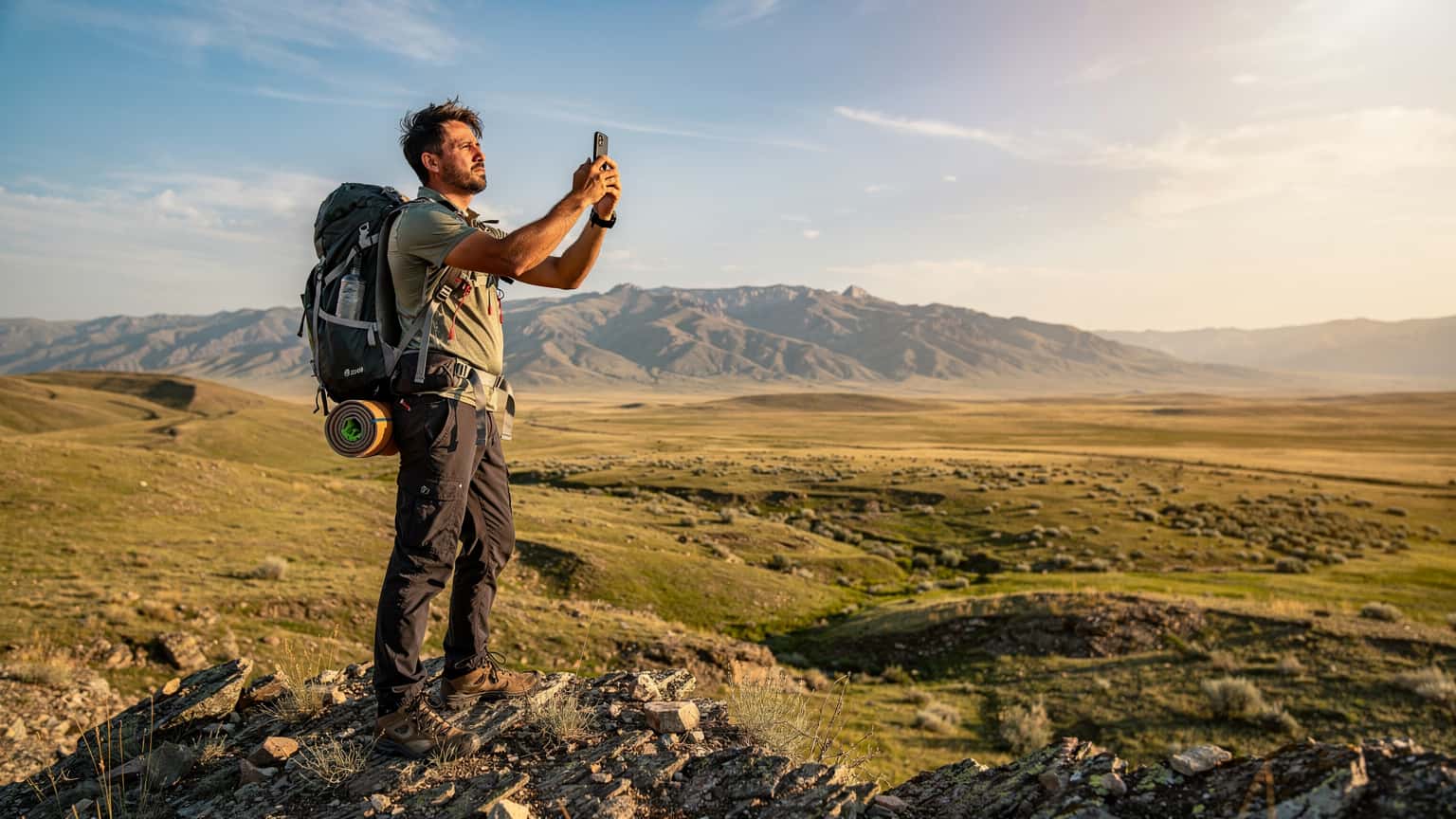 Destination Guides
Central Asia eSIM 2026: Silk Road Connectivity for the Modern Explorer
Journeying the historic Silk Road requires more than just a sturdy backpack and a sense of adventure; it demands reliable mobile data. I've spent weeks traversing Central Asia's vast landscapes, from Almaty's modern streets to Samarkand's ancient bazaars. An eSIM is your crucial companion, ensuring you stay connected without the hassle of physical SIMs or exorbitant roaming charges.
Read the guide Destination Guides
Central Asia eSIM 2026: Your Guide to Seamless Connectivity Across the Silk Road
Planning a journey through Central Asia's historic Silk Road in 2026? Getting reliable mobile data can be surprisingly straightforward with an eSIM. Forget the hassle of local SIM cards, bureaucratic registrations, and language barriers. This guide cuts through the noise, offering practical advice for staying connected from the bustling bazaars of Tashkent to the serene mountains of Kyrgyzstan, ensuring your mapping, communication, and digital nomad needs are met without a hitch.
Read the guide Destination Guides
Central Asia eSIM 2026: Seamless Connectivity Across the Silk Road
Four years on the road have taught me this: reliable data in Central Asia isn't a luxury, it's a lifeline. From Bishkek's co-working spaces to Samarkand's ancient bazaars, I've crisscrossed this vast region. Forget juggling local SIMs, a regional eSIM is the only way to stay connected without the usual headaches.
Read the guide Destination Guides
Central Asia eSIM 2026: Navigating the Silk Road with Seamless Data
My worn passport tells stories of countless border crossings, but the one constant pain point used to be data. Until eSIMs. For a journey as intricate and historically rich as the Silk Road through Central Asia, having seamless connectivity isn't just a luxury, it's a necessity for navigating bustling bazaars and remote mountain passes alike. Let's talk about making it work in 2026.
Read the guide Destination Guides
Central Asia eSIM 2026: Silk Road Data, No Budget Bust
My last Central Asia trip, 18 days across Kyrgyzstan, Uzbekistan, and Kazakhstan, cost me €85 on data with an eSIM. That's about €4.70 a day. Forget hunting for local SIMs or getting scammed at border crossings. This is how you stay online and on budget.
Read the guide