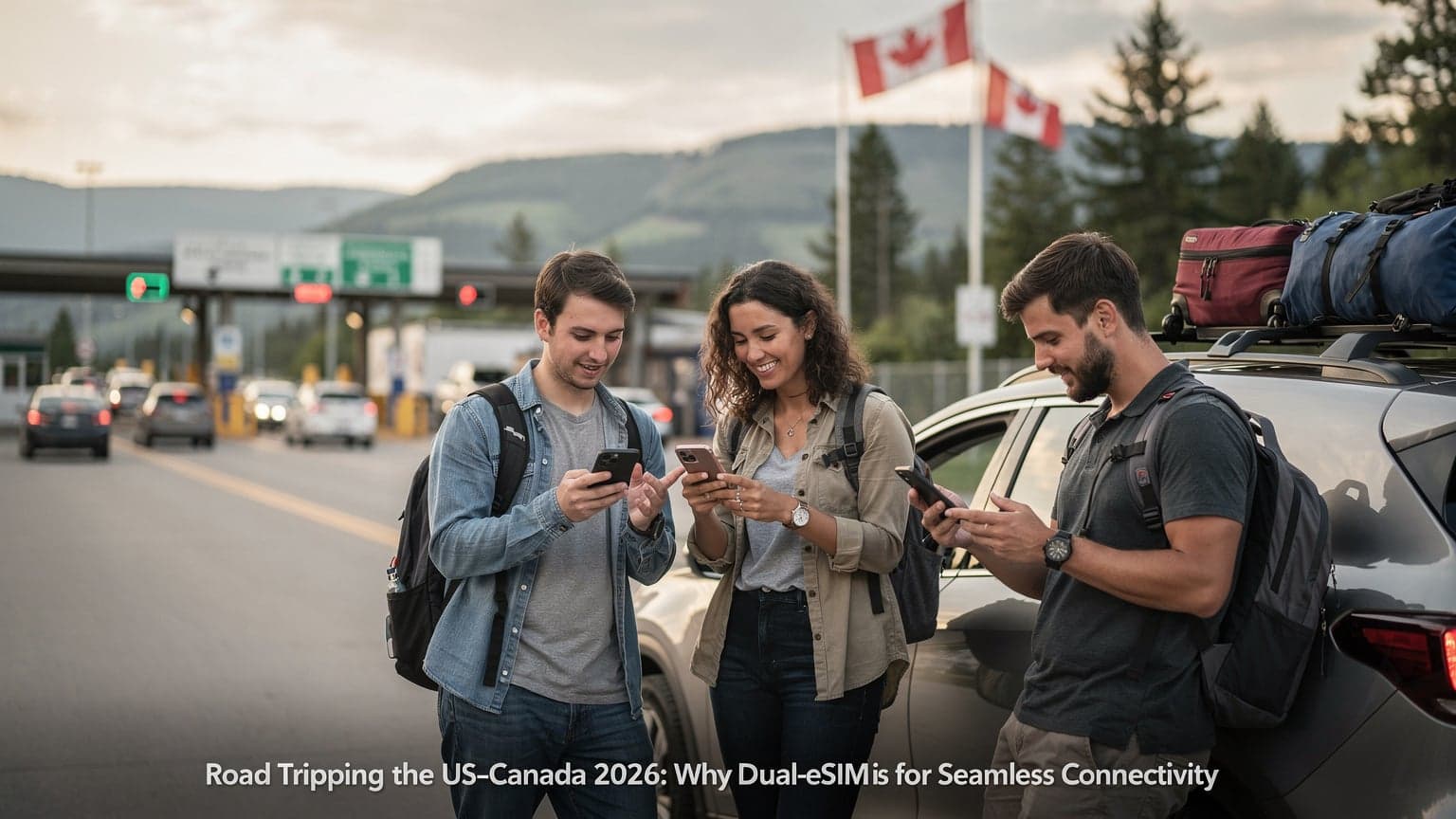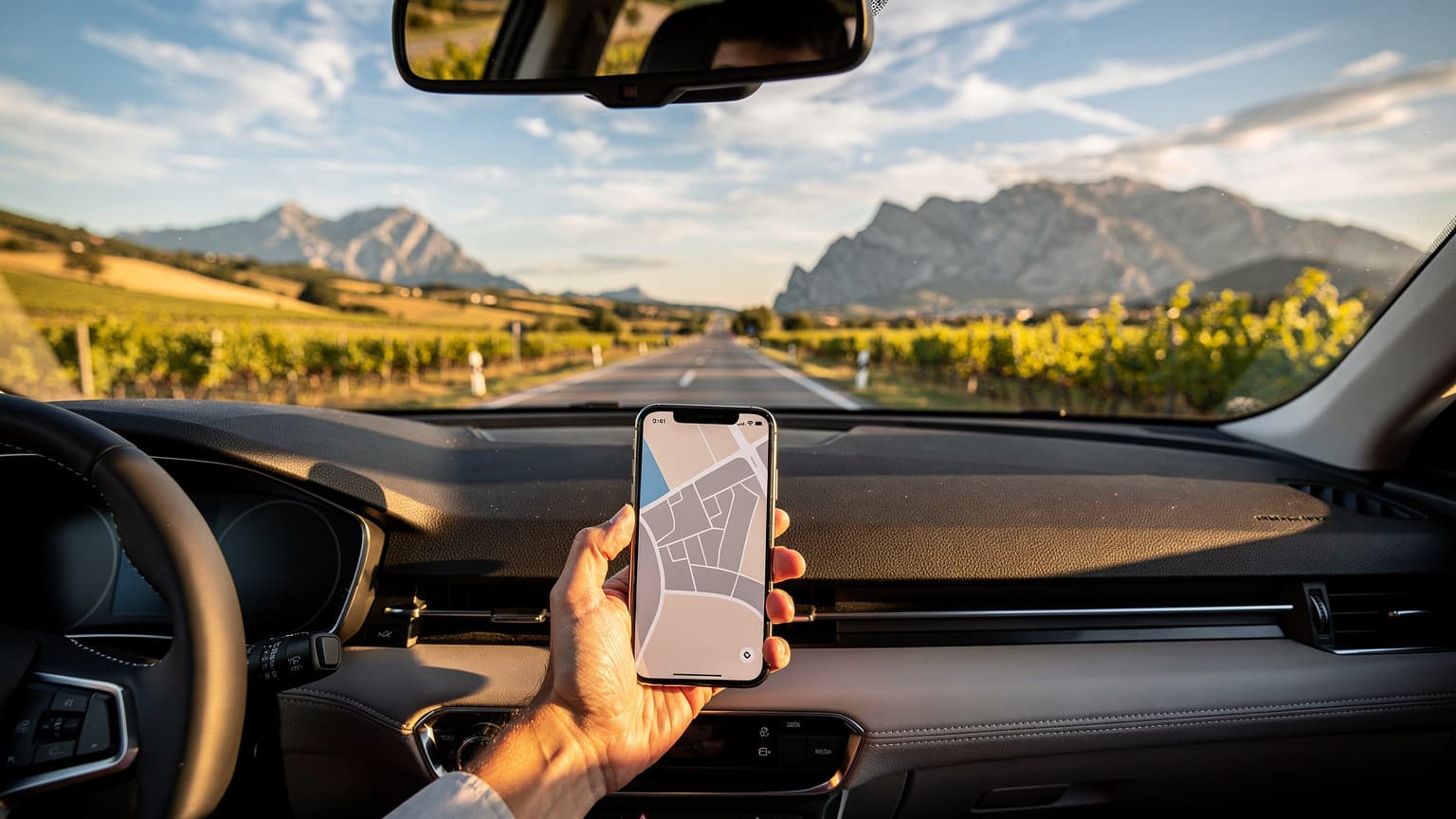
Planning a summer road trip in 2026? A multi-country eSIM is your best bet for staying connected without breaking the bank. Forget expensive roaming fees or frustrating dead zones. An eSIM keeps your GPS running, your music streaming, and your social media updated, no matter how many borders you cross.
The Open Road Calls, But What About Your Data?
Ah, summer. It's the season for sun-drenched highways, spontaneous detours, and that perfect road trip playlist. I still remember a drive years ago, twisting through the Dolomites, heading from Cortina d'Ampezzo towards Bolzano. My co-pilot, bless her heart, had downloaded a few playlists, but nowhere near enough for all the tunnels we hit, each one a guaranteed dead zone. And maps? Forget it. We ended up on a charming, but very long, detour through a tiny village Google Maps didn't even know about. All because we were trying to save a few bucks on international roaming.
That was then. In 2026, things are completely different. For anyone planning a cross-border driving holiday, whether it's through Bavaria and Austria's picturesque villages or across the American Southwest's vast landscapes, reliable data isn't a luxury, it's essential. You need your phone for everything, from finding your way around unexpected road closures (like that time the A10 near Ventimiglia was shut for repairs between 10 AM and 4 PM, forcing a creative coastal route) to simply keeping up with family on WhatsApp. And honestly, those tiny SIM card kiosks at border crossings or in airport arrivals halls, like the ones I've haggled with near Lisbon's Santa Apolónia station, are a pain we can all skip. Especially when you're ready to hit the road.
The Pain of Roaming Fees and the Dreaded Dead Zone
Let's be real, roaming fee horror stories are legendary. I once helped a friend who came back from a week in Morocco with a 400 euro phone bill. His 'international plan' simply didn't cover data in Casablanca's Anfa district. And dead zones? They aren't just in the middle of nowhere. Try driving from one side of Berlin, say Prenzlauer Berg, through Brandenburg and into Poland. You'll hit spots where even powerful networks like Deutsche Telekom or Vodafone struggle, let alone whatever budget provider you have at home. It's enough to make you reach for a paper map. While romantic, that's not exactly efficient when you're just trying to find an open gas station after 9 PM.
Why Your Home Carrier Just Doesn't Cut It for Cross-Border Travel
Your domestic carrier is set up for your life at home. Their international roaming packages are usually an afterthought, a patchwork of agreements with partner networks that rarely give you the speeds or reliability you're used to. And the cost? It's usually through the roof. I remember trying to get a T-Mobile plan to work seamlessly from San Diego to Tijuana, and it was a constant struggle of switching networks and hoping for the best. For frequent border-crossers like me, who might spend a week at a wine festival in Mendoza and then hop over to Santiago for a concert, relying on one carrier for both just doesn't work. It's often cheaper, and definitely less stressful, to just use a T-Mobile eSIM QR Code for consistent global data.
What Exactly is a Multi-Country eSIM?
An eSIM is basically a digital SIM card. Instead of a physical chip you pop into your phone, it's built right into your device. A multi-country eSIM is a data plan that covers several countries or even an entire region, letting you stay connected without swapping physical cards. You buy it online, activate it with a QR code or a few taps in your phone's settings, and boom, you're connected across borders.
The Magic Behind the Digital SIM
The tech behind an eSIM is pretty simple. Your phone has an embedded Universal Integrated Circuit Card (eUICC) that can be loaded with different network profiles. When you buy an eSIM plan, you're essentially downloading one of these profiles onto your phone. This means you can have several eSIM profiles on your device at once, switching between them as needed, or even using one for data and your regular SIM for calls.
Regional vs. Global eSIM: What's the Difference?
For a road trip, the difference between regional and global eSIMs matters quite a bit. A regional eSIM might cover all of Europe, for example. This means you can drive from, say, Paris's 11th arrondissement to Rome's Trastevere, passing through Belgium, Germany, Switzerland, and Italy, without losing signal or getting hit with new charges. It's perfect for a focused multi-country trip. A global eSIM, on the other hand, covers dozens of countries across several continents. While that sounds great, it often costs more and sometimes offers slightly worse data rates in specific countries compared to a regional plan. For a summer road trip, unless you're literally crossing continents, a regional eSIM is usually the sweet spot.
Why a Multi-Country eSIM is Your Road Trip's Best Friend
Picture this: you're cruising along Germany's Romantic Road, past Neuschwanstein, and decide to make a spontaneous detour into Austria. With a multi-country eSIM covering both regions, your Spotify never buffers, Google Maps keeps humming, and your Instagram stories update instantly. No more hunting for local SIM cards at an OMV petrol station, no more desperate searches for Wi-Fi passwords at tiny guesthouses. It's just pure freedom.
Seamless Connectivity Across Borders
The best part of a multi-country eSIM is the smooth transition. No physical swapping, no fumbling with a tiny SIM tray tool at a German Autobahn rest stop. Your phone automatically connects to the strongest available partner network in each country covered by your plan. This means constant access for navigation, communication, and entertainment, whether you're in the busy streets of Vienna's Innere Stadt or the quiet Austrian Alps.
Cost Savings Compared to Traditional Roaming
This is where eSIMs really shine. Traditional roaming fees are designed to make your home carrier money. Multi-country eSIMs offer competitive data packages, often for a fraction of what your home provider would charge for international roaming. I've personally seen travelers pay over 10 euros per megabyte on old roaming plans. That kind of financial hit could pay for several extra nights in a nice hotel. With an eSIM, you know your costs upfront. No bill shock, no nasty surprises.
| Feature | Multi-Country eSIM | Traditional Roaming | Local Physical SIM |
|---|---|---|---|
| Cost Predictability | High, fixed plans | Low, unpredictable bill shock | Medium, but varies per country |
| Cross-Border Seamlessness | Excellent, automatic switching | Good, but often limited data/speed | Poor, requires new SIM per country |
| Activation Difficulty | Easy, QR code scan | Automatic, but often expensive | Moderate, in-person purchase required |
| Physicality | None, digital | Your existing SIM | Physical card swap |
| Dual SIM Capability | Excellent, use with primary SIM | Uses primary SIM, no dual SIM benefit | Requires dual SIM phone or swapping |
Staying Safe and Connected on the Road
Beyond entertainment, reliable data is a safety net. Whether you need to call for roadside assistance, look up emergency services, or just find a safe rest stop late at night, your phone is critical. I once had a flat tire on a deserted highway outside Baku, Azerbaijan, and my Azerbaijan eSIM was the only thing that saved me from a very long walk. Knowing you have consistent data means peace of mind, letting you enjoy the journey instead of worrying about getting stranded.
Personal Anecdotes From the Road: When Connectivity Saved the Day
I've been on the road for more years than I can count. While I love an adventure, I've also had my share of connectivity nightmares. I remember one particularly stressful experience trying to navigate the famously winding roads of Portugal's Algarve region, specifically around Sagres. My rental car's GPS was outdated, and my physical SIM card, bought in Lisbon's Baixa district, decided that once I was west of Faro, data was an optional extra. We were desperately trying to find a specific cliffside restaurant that closed at 2 PM for lunch and reopened at 7 PM for dinner. We missed lunch, of course, and spent two hungry hours staring at a "No Service" icon.
Another time, driving through rural France, trying to find a specific Airbnb near Avignon, my data simply vanished. The host had sent coordinates, but without a connection, they were useless. I spent an hour driving in circles, eventually having to stop at a tiny village cafe and beg for their Wi-Fi password (which was, predictably, 'motdepasse123'). These are the moments that make you truly appreciate a reliable connection.
The Time GPS Saved My Skin in Mexico City
On a recent trip, I landed in Mexico City, renting a car to head down to Oaxaca. Navigating Mexico City's sprawling neighborhoods, especially leaving Benito Juárez International Airport and finding the southern exit to take the 150D, can be a real challenge. My multi-country eSIM (which included Mexico) kicked in the moment I turned on my phone after landing. Google Maps was perfect. I even managed to order a quick coffee from a local app, Rappi, while stuck in traffic near the Coyoacán market. If I'd been relying on a traditional SIM purchase, I'd have been wrestling with a vendor at the airport, probably paying tourist prices, and hoping it worked. Instead, I was connected, calm, and caffeinated.
When Music Streaming Kept the Peace on a Long Haul
Long drives, especially with passengers, need a steady stream of entertainment. I recently drove from Milan's Porta Garibaldi district, through the Simplon Pass, and into Switzerland, ending up in Lausanne. That journey has a lot of tunnels and mountainous terrain. My Cellesim multi-country eSIM kept the music playing, without interruption, even as we switched from the Italian TIM network to Swisscom. The passenger in the back, usually prone to car sickness without a good podcast, stayed happily absorbed. It sounds simple, but uninterrupted entertainment can literally make or break a 10-hour drive.
Choosing the Right Multi-Country eSIM for Your Adventure
Not all eSIMs are created equal. Just like choosing between an Avis or a Hertz for your rental car, there are providers and plans that suit different needs. For a road trip, you want broad regional coverage, a good amount of data, and flexibility.
Factors to Consider: Coverage, Data, and Validity
- Coverage: Does the eSIM cover every country on your itinerary? A European eSIM won't help much if your road trip takes a detour into Algeria, for which you'd need a specific Algeria eSIM. Always check the fine print for specific operators in each country.
- Data Allowance: How much data do you really need? GPS, music streaming, video calls, and social media can eat up a lot. I usually budget at least 2GB per week per person for heavy use, especially if I'm not planning to rely on hotel Wi-Fi.
- Validity Period: Does the plan last for your entire trip? Some plans are for 7 days, others 30, some even 90. Make sure it matches your travel plans.
- Speed and Network: Most eSIMs connect to major local networks, but it's good to check if there are any speed caps or limitations.
Comparing eSIM Providers for Your Road Trip
Many providers offer multi-country eSIMs, each with their own strengths. Cellesim, for instance, has solid regional plans perfect for cross-country drives. Other providers like Nomad also have options, but it's worth comparing them directly. I've often found myself comparing Nomad vs. Cellesim eSIM plans, especially when I need a good balance of coverage and price for longer trips.
| Provider | Typical Coverage | Key Benefit | Best For |
|---|---|---|---|
| Cellesim | Regional (e.g., Europe, Asia, North America) | Strong network partnerships, competitive pricing | Dedicated regional road trips, clear plan options |
| Airalo | Global and Regional | Wide selection of local and regional plans | Frequent travelers with diverse itineraries |
| Holafly | Regional and specific countries | Unlimited data options (often throttled after a threshold) | Heavy data users who prioritize simplicity over speed |
| Flexiroam | Global | Data rollover feature | Travelers with unpredictable data usage |
Budgeting for Your eSIM Plan: Smart Spending for Smart Travel
Just like you budget for gas, hotels, and those must-have roadside snacks, make sure to factor in your eSIM data plan. It's an investment in peace of mind and convenience. You can often find deals, especially after big shopping events. I always look for Post-Prime Day Travel Deals, as many eSIM providers offer discounts then. A typical regional plan for a two-week road trip might cost anywhere from $20 to $50, depending on data allowance, which is a steal compared to what traditional roaming would cost you.
How to Install and Activate Your Multi-Country eSIM
Installing an eSIM is surprisingly easy, often taking less than five minutes. No tiny needles, no fumbling with plastic cards. It's usually just a matter of scanning a QR code or typing a few details into your phone's settings.
The Quick-Start Guide to eSIM Activation
- Buy Your eSIM Plan: Go to the Cellesim website and pick the multi-country plan that fits your road trip. You'll get an email with a QR code and activation instructions.
- Find Your Phone's eSIM Settings: On an iPhone, go to Settings > Cellular (or Mobile Data) > Add eSIM. On Android, it's usually Settings > Network & Internet > SIMs > Add more.
- Scan the QR Code: Use your phone's camera to scan the QR code from Cellesim. If you're using the same phone to see the QR code, you might need to enter the activation details manually.
- Label Your eSIM: Once installed, your phone will ask you to name the new eSIM (e.g., "Travel Data," "Europe Road Trip"). This helps you tell it apart from your main SIM.
- Set Up Data Roaming: For the eSIM, make sure data roaming is turned ON in its settings. For your main SIM, turn data roaming OFF to avoid accidental charges. Set your new eSIM as the default for mobile data.
- Activate When Ready: Most eSIMs activate once you arrive in the covered region. If you're activating before you leave, check that the validity period starts when you need it to.
Troubleshooting Common eSIM Installation Issues
Occasionally, you might run into a problem. I've had phones that couldn't read QR codes in dim light, or found myself trying to activate an eSIM on a plane without Wi-Fi. Here are a few tips:
- Check Device Compatibility: Make sure your phone supports eSIMs. Most newer iPhones (XS and later) and many Android flagship phones do.
- Strong Wi-Fi Connection: You need a stable internet connection to download the eSIM profile. Do this at home before you leave, or in a reliable airport lounge.
- Manual Entry: If the QR code isn't working, look for the option to enter details manually (SM-DP+ Address and Activation Code).
- Contact Support: If everything else fails, reach out to Cellesim's customer support. They're usually quick to help. I've relied on their chat support more than once while stuck in a strange airport.
Common Pitfalls to Avoid with Your eSIM
Even with the best planning, travel can throw you curveballs. And while eSIMs are great, there are still a few traps to avoid.
Forgetting to Turn Off Data Roaming on Your Primary SIM
This is probably the most common mistake. You activate your shiny new eSIM, but forget to disable data roaming on your home SIM. The moment you cross into a new country, your phone might switch to your primary carrier, leading to those dreaded roaming charges. Always double-check your cellular settings. It's a small step that saves big money.
Underestimating Your Data Needs
Remember that road trip playlist? Or the fact that you might be using Waze for live traffic updates for hours on end? While 5GB might sound like a lot, it can disappear quickly if you're streaming, video calling, or using your phone as a hotspot for others. It's always better to slightly overestimate your data needs, or choose a plan with easy top-up options. I've run out of data in the middle of a national park in Patagonia, trying to upload photos, and it was a real drag.
Not Checking Device Compatibility Beforehand
While most modern phones support eSIMs, older models might not. There's nothing worse than buying a plan only to find your device can't use it. Double-check your phone's specifications before you buy. For example, some regional versions of phones (like certain iPhones bought in mainland China) might not have eSIM functionality. It's a quick check that saves a headache.
Real-World Scenarios Where eSIMs Shine
Let's talk specifics. Where do these multi-country eSIMs really make a difference?
Navigating European Capitals and Countryside
Imagine starting your journey in Berlin, taking the BVG U-Bahn to pick up your rental car, then driving through the Black Forest, across the Rhine into France, and eventually down to Barcelona. A European eSIM keeps you connected through all these changes. You can use Citymapper in Berlin, then Google Maps in the French countryside, and finally Moovit to navigate public transit in Barcelona's Gothic Quarter, all without missing a beat.
The North American Grand Tour
Driving from Vancouver, through the Canadian Rockies, down into the US Pacific Northwest, and across to the national parks? A North American regional eSIM means you won't lose signal as you cross from British Columbia into Washington state, or from a T-Mobile network to an AT&T one. This is crucial for those long stretches between cities where roadside assistance might be hours away, and you're relying on your phone for everything from navigation to emergency calls.
Multi-Stop Asia Adventures
Even if you're not driving, a multi-country eSIM is a lifesaver for complex itineraries. Say you're on a two-week trip starting in Bangkok, flying to Chiang Mai for some remote work, then heading to Vietnam. A regional Asian eSIM removes the hassle of buying a new SIM at Suvarnabhumi Airport, then again at Chiang Mai International, and yet again at Tan Son Nhat in Ho Chi Minh City. You're connected the moment you land, whether it's for finding your Grab ride or looking up the best street food stall in Hanoi's Old Quarter.
The Future of Travel Connectivity and eSIMs
Physical SIM cards are quickly becoming a thing of the past, much like paper maps and traveler's cheques. eSIMs aren't just convenient, they're the new standard for modern travel connectivity. More devices, including eSIM for Laptops & PCs, are getting this technology, making it easier than ever to stay connected across all your gadgets.
Why eSIMs Are Here to Stay
The benefits are just too good to ignore. They're more secure, more flexible, and better for the environment (no plastic waste). As global travel becomes more accessible, the need for easy, affordable connectivity will only grow. eSIMs directly address that need, offering a solution that puts the traveler in control.
Preparing for Your Next Adventure with Cellesim
For your next summer road trip, or any international adventure, switch to a multi-country eSIM. It removes a huge layer of travel stress, letting you focus on the moments that truly matter. No more dead zones, no more worrying about roaming fees, just pure, uninterrupted connectivity as you explore the world. Happy travels, and may your GPS always be accurate!
See also: Washington State eSIM