
Why Choose an eSIM for Greece in 2026?
Remember the old routine? Landing after a long flight, groggy and just wanting to get to your hotel, but first, you have to find a telco store and swap out tiny plastic SIM cards. That's a huge time suck, especially at Athens International Airport (ATH).
eSIMs change all that. Instead of fumbling with physical cards, you just download a digital profile to your phone. It's not just convenient; it's genuinely smarter for managing your phone's connection.
- Instant Connection: Buy and activate your data plan before you even leave home. You'll have internet the second you land.
- Keep Your Number: Use your regular phone number for calls and texts, and the eSIM for local data. No crazy roaming charges. This is a lifesaver if people still need to reach you on your home number.
- Total Flexibility: Easily switch between different local carriers or even global eSIM providers if you're traveling beyond Greece.
- Eco-Friendly: No plastic SIM cards to throw away.
And for those of us who travel with a phone and a laptop, eSIMs aren't just for your phone anymore. Some newer PCs and laptops now have eSIM support. That means your laptop can get online directly, without draining your phone's battery by tethering. I covered this in detail in Eradicating Laptop Hotspots: Your PC's eSIM for Uninterrupted Travel, 2026. For digital nomads or anyone working remotely, direct data on your laptop is a game-changer.
The Technical Edge of eSIM Provisioning
From a technical standpoint, eSIMs use Remote SIM Provisioning (RSP) technology, specifically the GSMA's SGP.22 standard for consumer devices. This lets carriers send subscriber profiles over the air. When you scan a QR code, your device talks to a Subscription Management Data Preparation (SM-DP+) server, which then downloads an encrypted profile. This whole process is very secure, as cryptographic keys go straight to a secure chip (eSE) in your device. It's a robust way to keep your network identity safe.
Cosmote Greece Network Overview, 2026
Cosmote is Greece's biggest mobile network, part of OTE, and typically offers the best coverage, especially off the beaten path and on the islands where other carriers might struggle. Their network is solid, with good 4G LTE and growing 5G coverage.
For 4G LTE, Cosmote mainly uses frequency bands B3 (1800 MHz), B7 (2600 MHz), and B20 (800 MHz). Band 20 (800 MHz) is super important for getting a signal indoors and in less populated areas, while B3 and B7 handle higher traffic in cities. For 5G, Cosmote is using n78 (3500 MHz) and n1 (2100 MHz). Band n78, sometimes called C-band, is key for faster 5G speeds because it allows for wider data channels.

Cosmote's 5G Footprint and Expected Speeds
As of early 2026, Cosmote's 5G covers most big cities like Athens, Thessaloniki, and Patras, plus popular islands such as Crete, Rhodes, and parts of Santorini. While network maps show ideal speeds, what you actually get can vary. In central Athens, I've seen 5G downloads on n78 hit 600-800 Mbps during quieter times, with uploads around 80-120 Mbps. In busier spots or on 4G LTE, expect closer to 100-250 Mbps downloads and 30-60 Mbps uploads.
Keep in mind, these are ideal numbers. Your actual speed depends on a lot of things: how many other people are on the network, your phone's modem (like an older Cat.18 LTE versus a newer Snapdragon X65 5G), signal strength, and even local radio interference. Don't expect these speeds every time, but they give you a good idea of what's possible when conditions are good.
Comparing Cosmote to Other Greek Carriers
Greece has three main mobile providers: Cosmote, Vodafone Greece, and Wind Hellas (now called Nova). They all offer good service, but each has its strengths.
| Carrier | 4G/5G Coverage (Urban) | 4G/5G Coverage (Rural/Islands) | Typical Download (Mbps) | Typical Upload (Mbps) |
|---|---|---|---|---|
| Cosmote | Excellent (98%+) | Very Good (95%+) | 100-800 | 30-120 |
| Vodafone Greece | Excellent (97%+) | Good (90%+) | 80-700 | 25-100 |
| Nova (formerly Wind) | Good (95%+) | Fair (85%+) | 60-500 | 20-80 |
When it comes to raw performance and coverage, Cosmote usually comes out on top, especially outside big cities. Vodafone is a solid second place, often matching Cosmote in major urban areas, but their rural coverage can be a bit less reliable. Nova has been investing heavily, but still trails the other two in overall reach, though they often offer aggressive pricing. If you're exploring less-visited islands or remote mainland spots, Cosmote is usually your safest bet for staying connected.
eSIM Availability and Purchase Options
Getting a Cosmote eSIM as a tourist in Greece can be a little trickier than just buying a physical SIM, but it's totally doable. Unlike some other European carriers that make it super easy for tourists to get digital SIMs, Cosmote's direct eSIMs are often more for residents with a Greek ID.
Direct from Cosmote Stores
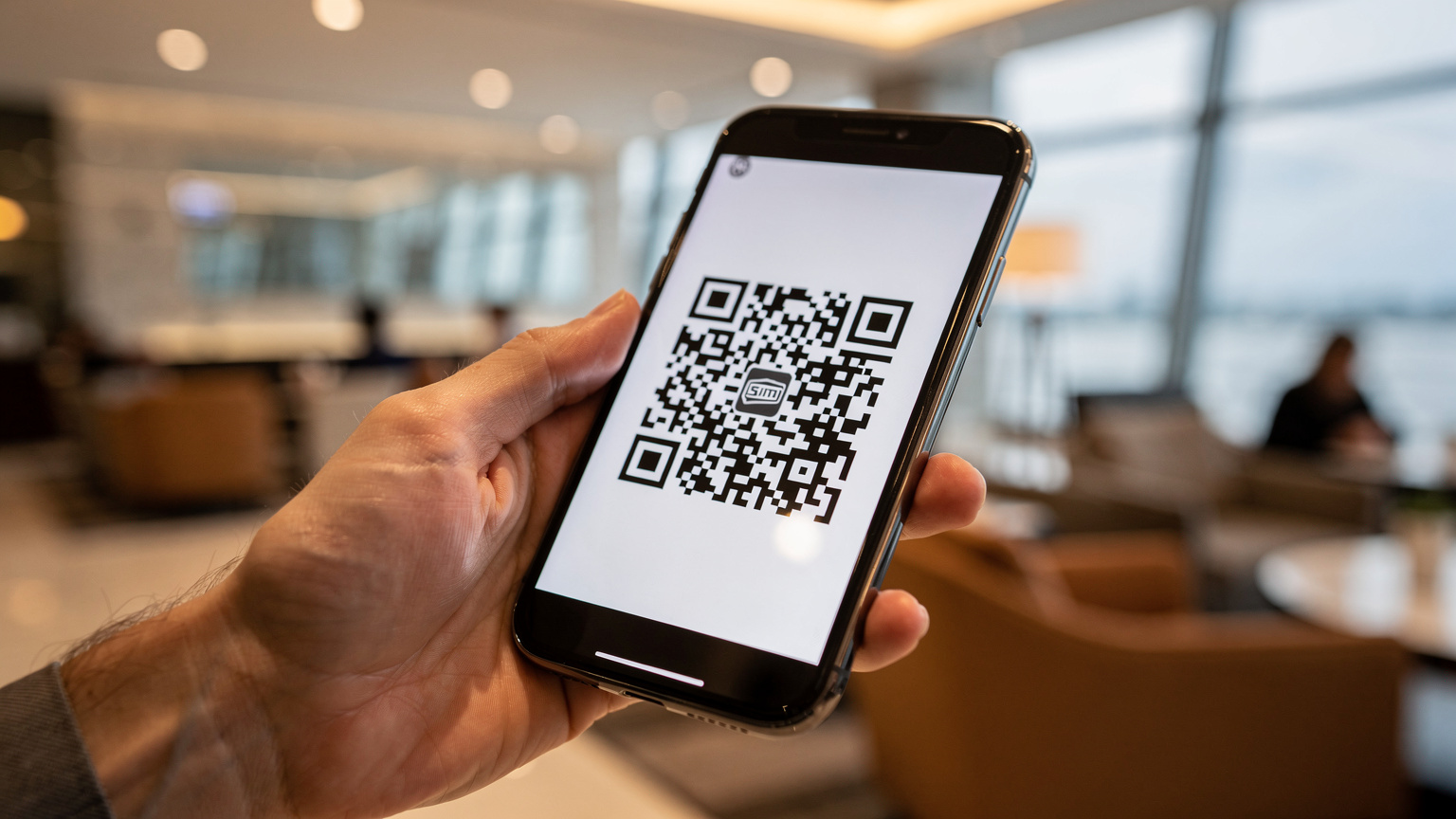
Your most reliable way to get a direct Cosmote eSIM is to actually visit a Cosmote shop. Bring your passport for ID. The staff will give you an eSIM profile, usually as a QR code, which you then scan on your phone. It's a good idea to do this at a bigger store in Athens or Thessaloniki, since smaller island shops might not be as familiar with tourist activations.
Third-Party eSIM Providers
For most international travelers, this is the easiest route. Third-party eSIM marketplaces, like Cellesim, collect plans from various carriers (including ones that use Cosmote's network) and offer them in a simple digital format. The whole process is online: pick your plan, pay, and get a QR code by email to activate immediately. This lets you skip any local registration hurdles you might face when buying directly from a Greek carrier.
For example, if you need a straightforward eSIM for Greece, Cellesim often has good data packages that use Cosmote's infrastructure, without requiring an in-person visit. This is perfect if you arrive late or just want your internet sorted before you even leave home.
Activating Your Cosmote eSIM: A Step-by-Step Guide
Whether you get your eSIM directly from Cosmote or from a third-party, activating it on your device is pretty standard. Here's how to do it:
- Check Your Phone: Make sure your smartphone supports eSIMs. Most newer flagship phones from 2018 onwards (iPhone XS/XR and up, Samsung Galaxy S20 and up, Google Pixel 3 and up) are compatible.
- Find Wi-Fi: You'll need an internet connection to download the eSIM profile. Do this before you travel or as soon as you get to your hotel or an airport with free Wi-Fi.
- Go to eSIM Settings: Open your phone's cellular or network settings.
- For iPhones: Go to Settings > Cellular (or Mobile Data) > Add eSIM.
- For Androids: Go to Settings > Network & internet > SIMs > Add more (or Download a SIM).
- Scan the QR Code: Use your phone's camera to scan the QR code Cosmote or your eSIM provider gave you. If you need to enter details manually, type in the SM-DP+ address and activation code.
- Label Your eSIM: Once the profile downloads, your phone will ask you to name the eSIM (e.g., "Greece Data"). This helps you tell it apart from your regular SIM.
- Set Data Preference: In your cellular settings, make sure your new eSIM is selected for mobile data. You can usually keep your physical SIM active for calls and texts.
- APN Configuration: Most modern eSIMs set the Access Point Name (APN) automatically. But, rarely, especially with older Android phones or certain software versions, you might need to set the APN manually. For Cosmote, the standard APN is usually "internet" or "gint.b-online.gr". If you have data but can't get websites to load, check this setting.
- Restart (Good Idea): A quick reboot can often fix small setup issues and help your phone fully register on the new network.
Data Plans and Pricing for Tourists
Cosmote has various prepaid data plans, though for tourists using eSIMs, you often get them indirectly through third-party providers. If you buy directly, these plans usually include calls and texts, but if you're using an eSIM, you're probably focused almost entirely on data.
Direct Cosmote Prepaid Options
If you buy a Cosmote eSIM in person, you'll likely be offered one of their 'What's Up' or 'Cosmote Neo' prepaid bundles. For instance, a common offer might be 10GB of data, 300 minutes, and 300 SMS for about €15-€20, valid for 30 days. These plans often come with extra data promotions for new sign-ups.

Third-Party eSIM Provider Plans
Platforms like Cellesim usually offer simpler, data-only packages specifically for travelers. These plans often come with different data amounts and validity periods, letting you pick exactly what you need. For example, you might find:
- Small Data Pack: 3 GB for 7 days, around $7-$10 USD
- Medium Data Pack: 10 GB for 15 days, around $15-$25 USD
- Large Data Pack: 20 GB for 30 days, around $30-$40 USD
These prices are estimates for early 2026 and can change with market competition and special offers. The big benefit here is that you're only paying for the data you'll actually use, not unused call minutes or texts (which you'll probably handle through messaging apps anyway).
| Plan Type | Data Allowance | Validity | Approximate Price (USD) | Purchase Method |
|---|---|---|---|---|
| Cosmote Direct Prepaid | 10-20 GB (+ voice/SMS) | 30 Days | $16-$22 | In-store |
| Cellesim Greece eSIM | 3 GB | 7 Days | $7-$10 | Online |
| Cellesim Greece eSIM | 10 GB | 15 Days | $15-$25 | Online |
| Cellesim Greece eSIM | 20 GB | 30 Days | $30-$40 | Online |
Real-World Performance and Coverage
From my own testing across Greece, Cosmote consistently offers better coverage, especially once you leave the big cities. On a recent trip covering Athens, Santorini, and a drive through the Peloponnese, Cosmote always had strong 4G LTE signals, even in some surprisingly remote spots.
In Athens, particularly around Syntagma Square and Plaka, I saw 5G download speeds (on band n78) averaging 200-350 Mbps on weekday afternoons. Uploads were steady at 50-80 Mbps, which is more than enough for uploading high-res photos or short videos. However, during peak tourist times near the Acropolis, speeds could dip to 80-150 Mbps, which is typical for congested areas.
On Santorini, specifically in Oia and Fira, 5G was available but less consistent than in Athens, often switching to solid 4G LTE (B7, B3) with speeds around 100-200 Mbps download. In more isolated parts of the Peloponnese, like the Mani Peninsula, 4G LTE (B20) was the standard, giving reliable 30-80 Mbps downloads. This is where Cosmote really shines, keeping you connected where other networks might drop off.
IPv6-Only and CGNAT Considerations
A quick technical note for tech-savvy users: many mobile networks, including some Cosmote configurations, are shifting to IPv6-only setups, with IPv4 access coming through NAT64/DNS64, or using Carrier-Grade NAT (CGNAT) for IPv4 addresses. This essentially means your device might not have its own publicly accessible IPv4 address. For most people, this won't matter for browsing, streaming, or social media. But if you use specific apps that need direct incoming IPv4 connections (like certain VPN setups, P2P apps, or remote access to personal servers), you might run into issues. Always test essential apps before relying solely on an IPv6-only mobile connection.
VoLTE and VoWiFi Compatibility: The Voice Factor
VoLTE (Voice over LTE) and VoWiFi (Voice over Wi-Fi) are key technologies for modern phone calls. They provide clearer call quality and let you make calls using data networks. Without VoLTE, your phone would drop to older 2G/3G networks for calls, which are slower and offer worse sound quality, especially as 2G/3G networks are gradually being phased out worldwide.
Cosmote's VoLTE/VoWiFi Support
Cosmote fully supports VoLTE and VoWiFi for its direct customers. If you get a Cosmote eSIM or physical SIM directly from them, and your phone is compatible, these services should work flawlessly. This means you'll get clear HD Voice calls over 4G/5G, and if Wi-Fi is available, you can make calls even when your cell signal is weak.

Here's the catch: if you get an eSIM through a third-party provider (like global eSIMs that roam on Cosmote's network), VoLTE and VoWiFi might not be supported. These services often need specific network setup tied to the original carrier that issued the SIM or eSIM. A data-only eSIM gives you great internet, but usually doesn't include VoLTE or VoWiFi. So, for voice calls, you'll need to use apps like WhatsApp, Signal, or FaceTime Audio, which send voice as data.
If making traditional cell calls on a Greek number is really important to you, buying a fully provisioned eSIM or physical SIM directly from Cosmote is your best bet. Otherwise, be ready to use data-based calling apps, which generally work very well on modern mobile data networks.
Troubleshooting Common eSIM Issues
Even with great tech, things can go wrong. Here are some common eSIM problems you might hit in Greece and how to fix them:
- No Data After Activation:
- Check APN: As mentioned, manually check or set the APN to "internet" or "gint.b-online.gr".
- Data Roaming: Make sure data roaming is turned on for your eSIM profile in your phone's settings, even if it's a local eSIM. Sometimes the network treats it like a 'roaming' profile on its own infrastructure.
- Network Selection: Try manually picking the Cosmote network in your phone's cellular settings instead of letting it choose automatically.
- Reboot: A simple restart often fixes temporary issues with network registration.
- Slow Speeds or Dropped Connection:
- Signal Strength: Are you in a low-signal area? Try moving closer to a window or outside.
- Network Congestion: In very busy tourist spots or during big events, networks get overloaded. Try again during off-peak hours.
- Data Cap/Throttling: Have you used up a lot of data and hit a limit that might slow your speeds? Check your plan details.
- eSIM Profile Disappears or Won't Install:
- Stable Wi-Fi: Make sure your Wi-Fi connection is super stable during installation. Interruptions can mess up the download.
- Phone Storage: It's rare, but sometimes low phone storage can cause installation problems.
- Contact Support: If the QR code keeps failing, reach out to your eSIM provider's support (like Cellesim support) or Cosmote directly. The QR code might be expired or invalid.
- Can't Make or Get Regular Calls (but Data Works):
- VoLTE: If you're using a third-party data-only eSIM, you probably won't have VoLTE. Use internet apps for calls.
- Primary SIM Active: If you plan to use your physical SIM for calls, make sure it's active and selected for voice calls.
Alternatives to Cosmote eSIM in Greece
Cosmote is great, but it's smart to look at other options. Sometimes a different choice might work better for your travel style or save you money.
Vodafone Greece and Nova eSIMs
Both Vodafone Greece and Nova (formerly Wind Hellas) also offer eSIMs. Vodafone generally has similar urban coverage to Cosmote and competitive data plans. Nova, while sometimes having slightly less coverage in rural areas, can be a more affordable option, especially for heavy data users in big cities. Like Cosmote, buying an eSIM directly from them might mean an in-person visit and showing your passport.
Global eSIM Providers
Beyond local carriers, many global eSIM platforms offer plans for Greece that use one or more Greek networks (often Cosmote or Vodafone). These services focus on easy buying and activation, which is perfect for tourists who want to avoid local paperwork. Cellesim is one such provider, with various data packages for Greece that are often as competitive as local tourist SIMs, but with the added convenience of digital delivery. This is a top pick for travelers who want a simple setup and immediate internet access.
For example, if your trip includes more than just Greece, a multi-country eSIM might be more practical than buying individual country-specific ones. It's similar to how many travelers check out options like the T-Mobile eSIM Free Trial 2026: Testing Data Abroad Without the Bill Shock for wider European coverage before settling on a plan.
Physical SIM Cards
Even with all the benefits of eSIMs, physical SIM cards are still a good option. You can easily find them at kiosks, convenience stores, and carrier shops all over Greece. They often come pre-loaded with tourist-friendly bundles. The main downside is having to physically swap cards, which can be annoying and you might lose your home SIM.
Optimizing Your eSIM Experience
To really get the most out of your Cosmote eSIM in Greece, a few smart moves can make a big difference in how well it works and how much it costs.
Data Consumption Management
Keep an eye on your data usage. Your phone can show you which apps are eating the most data. Turn off background app refresh for anything you don't absolutely need, and download movies or music over Wi-Fi whenever you can. This is super important if you have a limited data plan or if you plan to use your phone as a hotspot, which can burn through data fast. Remember, even a quick video call home can use hundreds of megabytes in minutes.
APN Settings for Optimal Performance
Even though APN settings usually configure themselves, making sure they're correct can sometimes slightly improve network registration speed or reduce latency. For Cosmote, "internet" is the most common. In rare cases, a carrier might have a special APN for high-speed data or specific services. If your internet feels unusually slow, quickly checking this setting won't hurt. For example, some IoT devices use a different APN than standard mobile broadband; while unlikely for a smartphone, it shows why this setting matters.
Leveraging Wi-Fi Hotspots
Greece, especially in tourist areas and big cities, has plenty of free Wi-Fi hotspots in cafes, restaurants, and hotels. Always use these when they're available to save your eSIM data. Just be careful about security on public Wi-Fi. Using a VPN is always a good idea when you connect to unsecured hotspots. This is a universal best practice, whether you're in Greece or thinking about travel safety, like in France Travel Safety & Advisory 2026.
Pre-downloading Maps and Content
Before you head out for the day, download offline maps using Google Maps or similar apps. Do the same for any movies, podcasts, or music you want to enjoy. This means you won't rely on mobile data as much, which is helpful in areas with weak signal or when you want to save your data for important communication. It's a simple trick that can save you frustration and data, especially when exploring the winding streets of Athens' Plaka or the ancient ruins of Delphi.
Frequently Asked Questions
Can I use my existing US phone number with a Cosmote eSIM in Greece?
Yes, an eSIM allows for dual SIM functionality. You can keep your US physical SIM active for calls and texts on your existing number, while using the Cosmote eSIM for all your data needs. This helps avoid international roaming charges for data.
What kind of speeds can I expect with a Cosmote eSIM in Athens?
In central Athens, on Cosmote's 5G network (band n78), you can expect download speeds ranging from 200-800 Mbps and upload speeds of 50-120 Mbps during off-peak hours. In areas primarily served by 4G LTE, speeds typically range from 100-250 Mbps download and 30-60 Mbps upload, depending on network congestion.
Do Cosmote eSIMs support VoLTE and VoWiFi for voice calls?
Cosmote directly issued eSIMs generally support VoLTE and VoWiFi for native voice calls. However, if you acquire a data-only eSIM from a third-party provider, VoLTE and VoWiFi are typically not supported. In such cases, you'll need to rely on internet-based calling apps like WhatsApp or FaceTime Audio for voice communication.
Where can I purchase a Cosmote eSIM as a tourist in Greece?
Your most reliable option for a direct Cosmote eSIM is to visit a Cosmote retail store in person with your passport. Alternatively, for greater convenience, you can purchase a Greece eSIM plan from a third-party online provider like Cellesim, which will leverage Cosmote's network without an in-person visit.
Are there any specific APN settings I should be aware of for Cosmote eSIM?
For most devices, the APN settings for Cosmote eSIMs are automatically configured. However, if you encounter data connectivity issues, you might need to manually set the APN to 'internet' or 'gint.b-online.gr' in your phone's cellular settings. This is a rare occurrence but worth checking.
Is Cosmote coverage good on the Greek islands like Santorini or Crete?
Cosmote generally offers the most extensive coverage across Greece, including popular islands like Santorini and Crete. While 5G might be more prevalent in major towns, robust 4G LTE coverage (often on bands B7 and B20) is available in most populated areas and even many remote locations on the islands, providing reliable data connectivity.