The Roaming Trap and Its Escapes
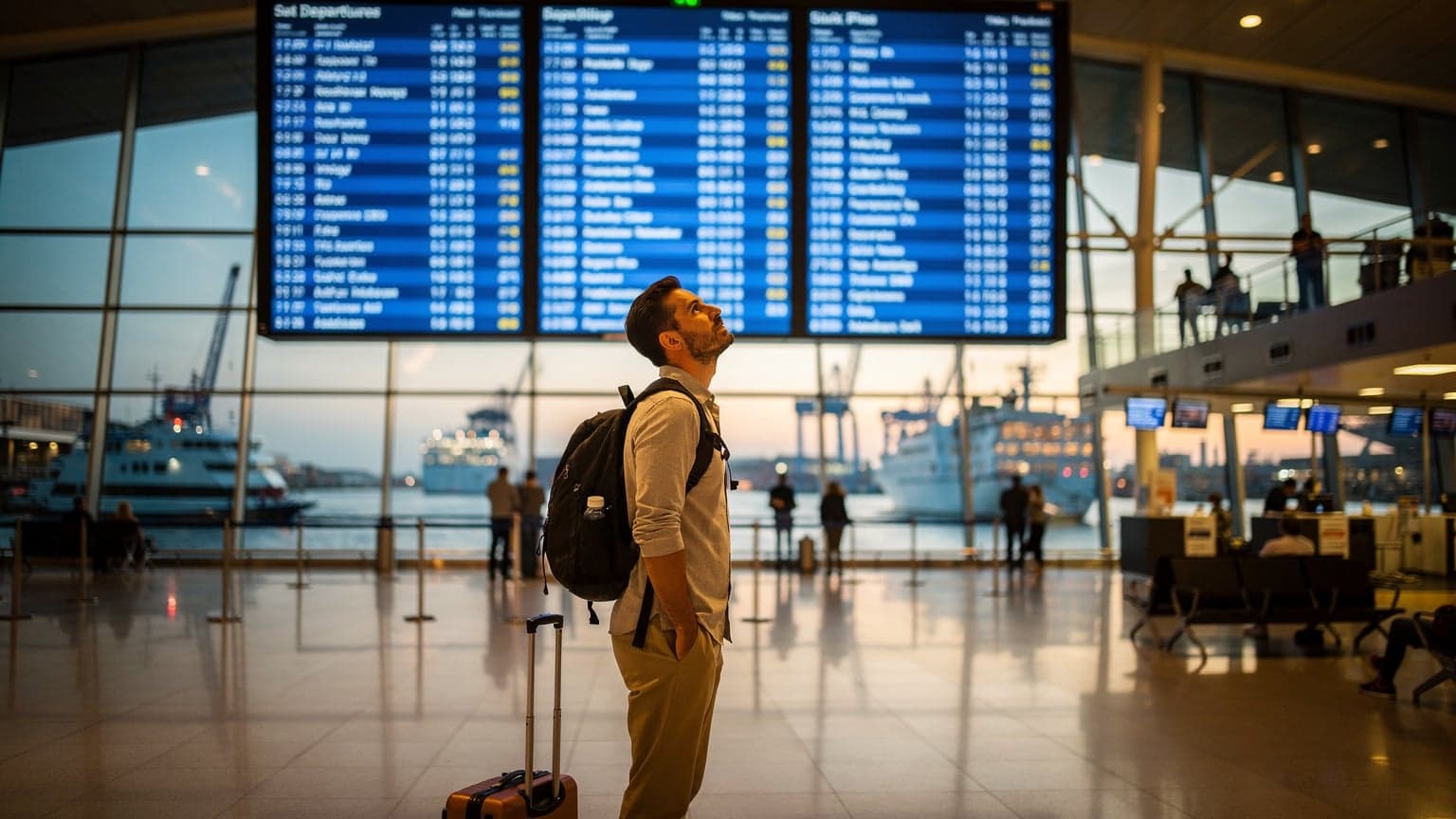
I still remember the time I landed in Bangkok's Suvarnabhumi Airport, eager to tell my family I'd arrived safely, only to find my traditional SIM card wouldn't connect. A quick call to my home provider revealed that international roaming would cost me an arm and a leg, something like 3 USD a minute. I ended up hunting for a local SIM at a small shop near the BTS Asok station, which ate up precious sightseeing time. This scenario, or something similar, plays out for countless travelers every day, especially when you need to make calls from places like Egypt to Poland.
Traditional roaming, where your home carrier extends its service to another country, is notorious for its exorbitant costs. A simple SMS from Egypt to Poland, or a short phone call, can quickly rack up charges that dwarf the price of your entire data plan. This is where the beauty of eSIM technology truly shines, offering a much-needed escape from those dreaded bill shocks.
The Hidden Costs of Old-School Roaming
Beyond the per-minute or per-SMS fees, traditional roaming often comes with hidden charges. Some carriers might charge for receiving calls, not just making them. Others have confusing bundle deals that are hard to track, leaving you guessing until the bill arrives. For example, some Egyptian providers, while offering decent local rates, can levy charges upwards of 5 EGP (around 0.10 USD) per minute for international calls to Europe, not to mention data roaming rates that are simply astronomical if you’re not careful. It's enough to make you hesitant to even pick up the phone.
Why eSIMs Are the Traveler's Secret Weapon
eSIMs, or embedded SIMs, eliminate the need for physical SIM cards. Instead, your phone has a digital SIM profile that you can activate with a local or regional plan. This means you can keep your home SIM active for receiving calls and texts (often free to receive in many countries) while using the eSIM for affordable data and calls via VoIP apps. It's like having two phone lines in one device, without the hassle of swapping tiny plastic cards. I've found this particularly useful for maintaining my US number for banking two-factor authentication while traveling through places like Japan, using an eSIM for Japan for all my local data needs. This flexibility is a game-changer for anyone who needs reliable connectivity without breaking the bank.
eSIM for Egypt: A Game Changer
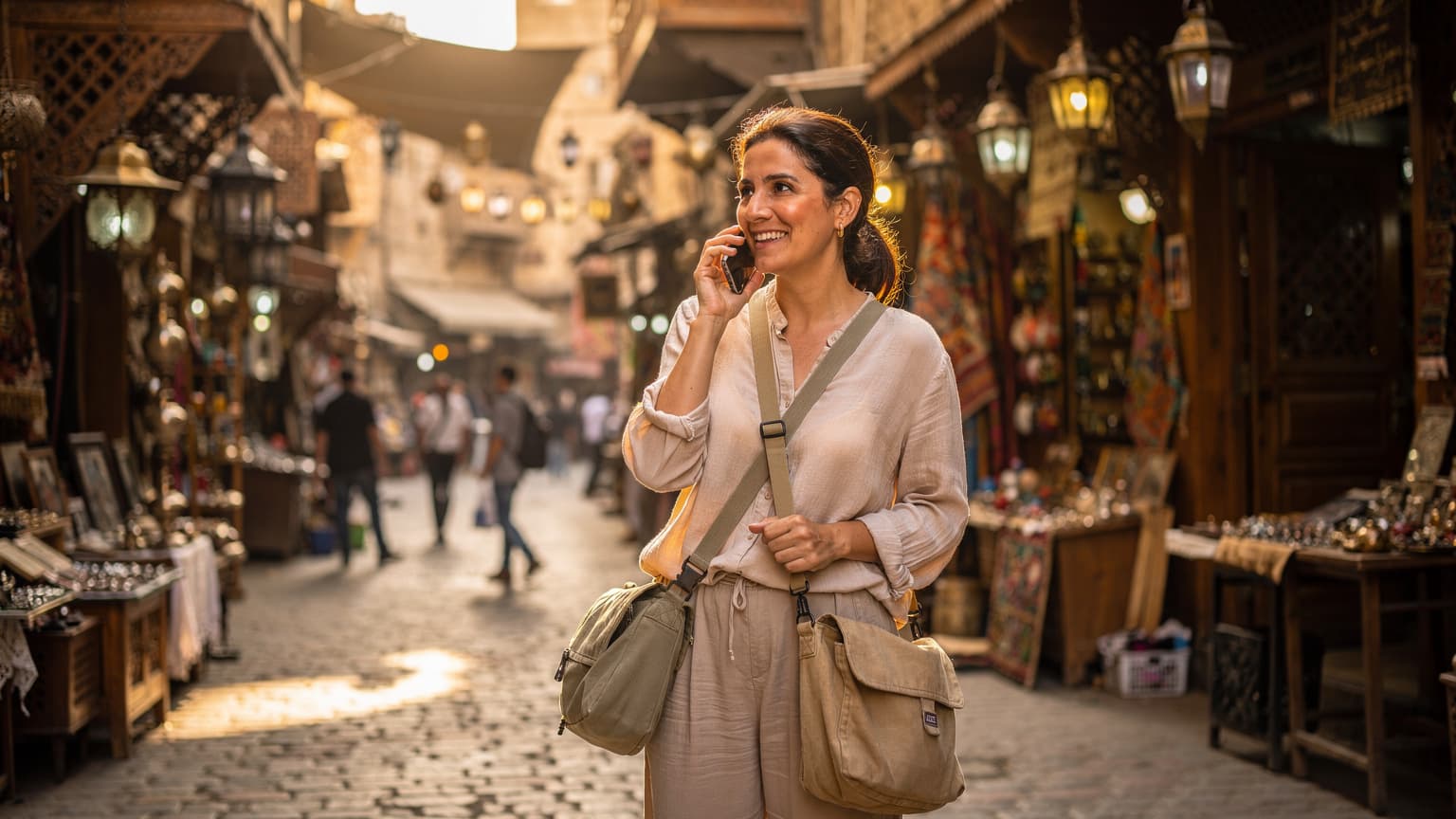
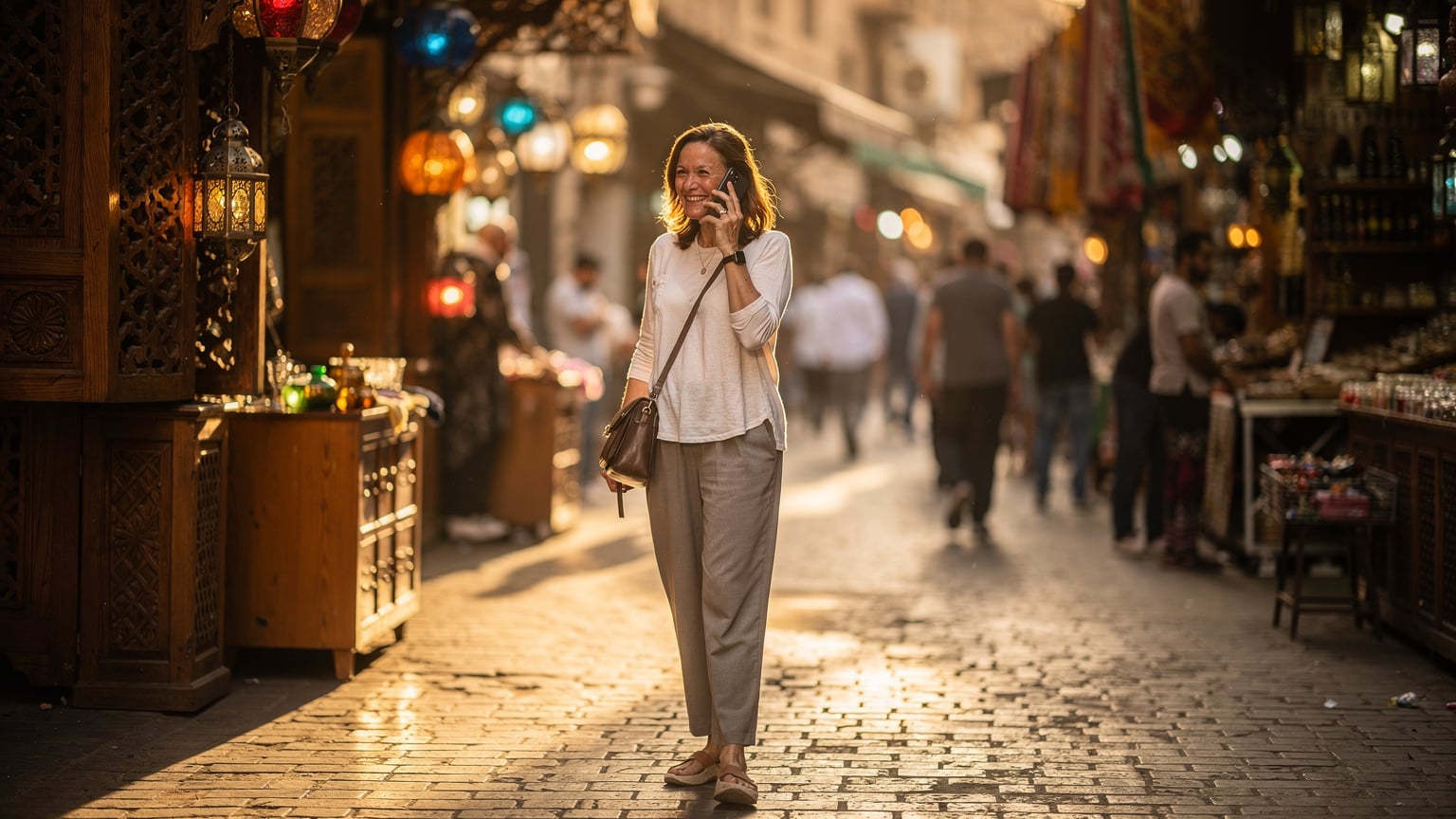
Egypt is a country of incredible contrasts, from the ancient wonders of Luxor to the bustling modernity of downtown Cairo. Staying connected here is essential, whether you're navigating the crowded streets of Al-Darb Al-Ahmar or trying to arrange a felucca ride on the Nile in Aswan. While local SIM cards from providers like Vodafone Egypt or Etisalat Misr are readily available, an eSIM offers unparalleled convenience, especially when your primary concern is making calls back to Poland.
Local SIMs vs. eSIM: The Practicalities
When you land at Cairo International Airport (CAI), you'll find kiosks for local providers like Orange Egypt and Telecom Egypt (WE). Buying a physical SIM is straightforward, but it often involves showing your passport, filling out forms, and sometimes waiting in line. Plus, if your phone is locked to your home network, you might be out of luck. I once spent an hour at a small phone shop in the Dokki district of Giza, trying to explain to a very patient vendor that my phone was indeed unlocked, but he just couldn't get it to register. It was a frustrating morning, to say the least.
eSIMs bypass all that. You can purchase and activate an eSIM plan before you even leave home, or from your hotel room in Zamalek, Cairo. The plan is downloaded directly to your phone. This means you land, switch on your phone, and you're connected. No fumbling with tiny SIM trays, no language barriers, and no worries about losing your primary SIM card.
Coverage and Speed in Egypt
Egypt's major cities, like Cairo, Alexandria, and Sharm El Sheikh, generally have excellent 4G LTE coverage. Even in more remote areas, such as the Siwa Oasis or along the Red Sea coast near Hurghada, you'll often find decent connectivity, though it might dip to 3G in some spots. Providers like Vodafone Egypt and Etisalat Misr offer reliable service. When you use an eSIM, you're tapping into these existing local networks, so your experience will be comparable to using a local physical SIM.
For example, in Heliopolis, Cairo, I've had consistent 4G speeds around 30-50 Mbps download, perfectly adequate for video calls to Poland. Even during peak hours at the Egyptian Museum in Tahrir Square, data speeds hold up well enough for messaging and checking social media.
Choosing the Right eSIM Plan for Egypt and Poland Calls
This is where it gets interesting, as you're not just looking for data, but a way to communicate effectively across borders. Your primary goal is to make calls to Poland from Egypt cost-effectively. This usually means relying on data-driven communication (VoIP) rather than traditional voice calls.
Data-Only or Data and Voice Options
Most eSIM plans for Egypt are data-only. This is usually all you need. With a robust data plan, you can use apps like WhatsApp, Messenger, or Signal for voice and video calls to Poland, which are typically free over Wi-Fi or data. The quality of these calls often surpasses traditional international calls, especially given the costs involved.
Some global eSIM providers might offer plans that include a local number or international calling credits, but these are often more expensive and less flexible than simply using data for VoIP. For instance, a dedicated Cellesim eSIM for Egypt will provide plenty of data for all your communication needs, allowing you to use your preferred messaging and calling apps.
Comparing eSIM Providers for Egypt
When choosing an eSIM, consider the data allowance, validity period, and cost. Here's a brief comparison of what you might find, keeping in mind that prices are estimates and can change:
| Provider | Data Allowance | Validity | Estimated Cost (USD) | Notes |
|---|---|---|---|---|
| Cellesim | 1 GB - 20 GB | 7 - 30 Days | $5 - $30 | Reliable network, easy activation, good for frequent calls via VoIP. |
| Airalo | 1 GB - 10 GB | 7 - 30 Days | $4.50 - $26 | Good basic options, but might be pricier per GB for larger plans. |
| Holafly | Unlimited Data | 5 - 90 Days | $19 - $99 | Unlimited data, but often more expensive; no hotspot tethering. |
| Mobily (local eSIM) | Varies | Varies | Local currency | Limited availability for international purchase, requires local presence. |
When I was planning my trip through Central Asia last year, balancing data needs for work and family check-ins was crucial. I found that a mid-range Cellesim plan often offered the best balance of data and cost-effectiveness, especially since I relied heavily on Wi-Fi at my guesthouses in Bukhara and Samarkand.
Checking for International Calling Add-ons
Some eSIM providers, particularly those offering global or regional plans, might have options to add international calling minutes. Always read the fine print. Often, these add-ons are more expensive than simply using a VoIP app over data. If your Polish contacts are also using WhatsApp, for example, a data-only eSIM is almost always the more economical choice.
VoIP Apps: Your Best Friend for International Calls
This is the real secret sauce to making calls from Egypt to Poland without breaking the bank. Voice over Internet Protocol (VoIP) apps have revolutionized international communication. All you need is a stable internet connection, which your eSIM provides, and the app installed on both your phone and the recipient's phone.
Popular VoIP Applications
- WhatsApp: Ubiquitous globally, WhatsApp offers free voice and video calls over data. It's incredibly popular in Egypt and Poland, making it a reliable choice. I've used WhatsApp to coordinate with tour guides in the Valley of the Kings and to chat with my mom back home from a café in Zamalek.
- Facebook Messenger: If your contacts are primarily on Facebook, Messenger offers similar voice and video calling features.
- Signal: For those prioritizing privacy and security, Signal provides end-to-end encrypted voice and video calls.
- Skype/Viber: These apps also offer free calls to other users and can be used to call regular phone numbers for a small fee, which is often much cheaper than traditional roaming.
Using VoIP to Call Landlines or Non-App Users
What if the person you're calling in Poland doesn't use WhatsApp or needs to be reached on a landline? Many VoIP apps, like Skype and Viber, allow you to purchase credits to call regular mobile and landline numbers anywhere in the world at very low rates. For example, calling a Polish mobile number via Skype might cost you just a few cents per minute, a fraction of what your home carrier would charge for international roaming.
| App | User-to-User Calls | Calls to Landlines/Mobiles (Poland) | Pros | Cons |
|---|---|---|---|---|
| Free (data-based) | No direct option | Extremely popular, easy to use, high quality. | Both parties need the app. | |
| Messenger | Free (data-based) | No direct option | Integrated with Facebook, wide user base. | Both parties need the app, privacy concerns for some. |
| Skype | Free (data-based) | Paid credits (low rates) | Can call any number, good for business calls. | Requires credits for non-app users. |
| Viber | Free (data-based) | Paid credits (low rates) | Popular in Eastern Europe, good call quality. | Requires credits for non-app users. |
Setting Up Your eSIM for Calls to Poland From Egypt
The beauty of eSIM is its simplicity, but a few steps ensure a smooth experience. I've activated countless eSIMs in various corners of the world, from the bustling train platforms of the JR Yamanote line in Tokyo to the quiet cafes of Ubud, Bali, and the process is largely consistent.
Pre-Departure Checklist
- Check Device Compatibility: Ensure your smartphone supports eSIM. Most newer iPhones (XS and later) and Android flagships (Samsung Galaxy S20 and later, Google Pixel 3 and later) do.
- Purchase an eSIM Plan: Select a Cellesim plan for Egypt that suits your data needs. You'll receive a QR code or manual activation details via email.
- Download Essential Apps: Make sure you and your Polish contacts have your preferred VoIP apps (WhatsApp, Messenger, Signal, Skype) installed and updated.
- Set Up Your eSIM Before You Go: While you can activate an eSIM in Egypt, it's often easier to do it while you still have a stable internet connection at home.
Step-by-Step Activation in Egypt
Once you've landed, say at Hurghada International Airport, and you're ready to activate your new eSIM, here's the typical process:
- Enable eSIM: Go to your phone's Settings > Cellular/Mobile Data > Add Data Plan or Add eSIM.
- Scan QR Code: Use your phone's camera to scan the QR code provided by Cellesim. If you have trouble, there's usually an option to enter details manually.
- Label Your Plans: Your phone will likely prompt you to label your primary SIM (e.g., "Home") and your new eSIM (e.g., "Egypt Travel"). This is crucial for managing which line you use for what.
- Set Default for Data: In your phone's cellular settings, set your Cellesim eSIM as the default for mobile data. This ensures your VoIP calls and internet browsing use the affordable eSIM data.
- Disable Data Roaming on Primary SIM: Double-check that data roaming is turned OFF for your primary SIM to avoid accidental charges. You can usually leave voice roaming on if you wish to receive calls.
- Test Connectivity: Once activated, open a browser or a VoIP app to ensure you have a stable internet connection. Try making a test call to a friend or family member in Poland via WhatsApp.

Maintaining Your Primary Number While Using eSIM
One of the biggest advantages of eSIM technology is the ability to keep your primary phone number active. This is particularly useful for receiving verification codes, calls from home, or for contacts who might not be on the same messaging apps. I've personally had moments where a crucial banking transaction needed a code sent to my home number, and having that primary SIM active, even without data roaming, saved me a lot of headaches.
Receiving Calls and Texts on Your Home Number
When you activate an eSIM for data, your primary SIM remains active for calls and texts. Most home carriers do not charge for receiving SMS while abroad. Receiving calls, however, can incur roaming charges, depending on your plan. My usual strategy is to keep my primary SIM active but disable its data roaming entirely. This way, I can receive important texts (like those two-factor authentication codes) without any cost. If someone calls my primary number, I can choose to answer and pay the roaming rate, or let it go to voicemail and call them back using a VoIP app over my eSIM data.
Managing Dual SIM Settings
Modern smartphones with eSIM capability offer robust dual SIM management. In your phone's settings, you can:
- Assign default lines: Choose which line (primary SIM or eSIM) is used for calls, messages, and data.
- Switch data lines: Easily toggle between your primary SIM and eSIM for data if needed (though you'll almost always want your eSIM for data in Egypt).
- Use different numbers for different contacts: Some phones allow you to specify which line to use when calling or texting certain contacts.
This flexibility is priceless, allowing you to use your Cellesim for cost-effective data in Egypt while staying reachable on your primary number for those essential contacts. It's truly like having the best of both worlds. For more nuanced dual SIM management tips, especially if you're traveling through multiple countries, checking out guides like eSIM for India can offer more context.
Real-World Scenarios and Troubleshooting
Even with the best preparation, travel sometimes throws curveballs. Knowing how to handle connectivity issues on the fly can save a lot of stress. I've navigated everything from spotty Wi-Fi in a rural guesthouse in Fayoum to an unexpected network outage in downtown Alexandria.
What if My eSIM Doesn't Connect?
This is a common concern, but usually easily fixed. Here are some troubleshooting steps:
- Restart Your Phone: The oldest trick in the book, but often effective.
- Check APN Settings: Your eSIM provider usually configures this automatically, but sometimes manual input is needed. Check Cellesim's support pages for the correct APN for Egypt.
- Verify Roaming Settings: Ensure your eSIM's data roaming is enabled (this is usually necessary for most international eSIMs to connect to local networks).
- Network Selection: Try manually selecting a network operator in your phone's cellular settings. In Egypt, you might see Vodafone EG, Etisalat Misr, or Orange EG.
- Contact Support: If all else fails, reach out to Cellesim's customer support. They're usually available 24/7 via chat or email, which you can access via hotel Wi-Fi.
Calling Egyptian Numbers with Your eSIM Data
While your primary goal is calls to Poland, you might need to make local calls in Egypt, perhaps to your hotel in Garden City, a taxi driver, or a local restaurant in El Sayeda Zeinab. Since most eSIMs are data-only, you'll still rely on VoIP apps for this. Many local businesses in Egypt use WhatsApp for communication. If they don't, you can use Skype or Viber to call their local Egyptian mobile or landline number for a small fee, just like calling Poland.
Alternatively, if you anticipate many local calls, you could purchase a local physical SIM upon arrival and use your eSIM for data and international calls. However, for most tourists, relying on data for local communication is perfectly adequate. (I've found Google Maps and WhatsApp to be invaluable tools for getting around and communicating in Cairo's sometimes bewildering street network).
The Future of Travel Connectivity: eSIMs and Beyond
The travel landscape is constantly evolving, and how we stay connected is at the forefront of that change. eSIMs are just the beginning, paving the way for even more seamless and integrated global communication. As a digital nomad who relies on robust internet for Zoom calls from Kyoto cafes or beach clubs in Tulum, I can tell you, reliable connectivity isn't just a luxury, it's a necessity.
eSIMs as the New Normal
By 2026, eSIMs are expected to be the standard for international travel. More devices will support them, and more providers will offer competitive plans. The days of hunting for local SIM cards or dreading roaming bills will be a distant memory. This shift means travelers will have greater flexibility and control over their connectivity, often at a fraction of the cost. It’s a similar trajectory to how online booking platforms transformed how we find flights and accommodation, making what was once complex, now delightfully simple.
Integrated Travel Platforms
Imagine a future where your eSIM is integrated directly into your travel planning app. You book your flight, and the app suggests an eSIM plan for your destination, pre-loaded with data and perhaps even some local calling minutes. This kind of seamless integration is already emerging. Companies like Cellesim are at the forefront of this, constantly innovating to provide multi-country plans and user-friendly activation processes. This is especially useful for longer journeys, such as those covered in Autumn Escape 2026: Why Your eSIM is Key for Seamless Fall Foliage & Harvest Festival Connectivity, where you might cross several borders.
What About 5G in Egypt and Poland?
Both Egypt and Poland are actively rolling out 5G networks. In major cities like Cairo, Giza, and Alexandria, you'll find increasing 5G coverage, particularly from Vodafone Egypt and Etisalat Misr. Poland has a more mature 5G infrastructure, with operators like Play and Orange Polska offering widespread coverage in cities like Warsaw, Krakow, and Gdansk. If your phone supports 5G and you're in a covered area, your eSIM will automatically connect to the fastest available network, ensuring crisp, clear VoIP calls to Poland and lightning-fast data speeds. This is crucial for remote workers like me, who need consistent, high-speed internet for video conferencing, no matter if I'm in a bustling café in Kazimierz, Krakow, or a quieter spot in Downtown Cairo. The difference between 4G and 5G when trying to upload large files for work can be significant.
Frequently Asked Questions
Ile kosztuje sms z Egiptu do Polski (How much does an SMS from Egypt to Poland cost)?
Sending an SMS from Egypt to Poland using traditional roaming can cost anywhere from 0.50 USD to 1.50 USD per message, depending on your home carrier's rates. Using a data-only eSIM and messaging apps like WhatsApp or Messenger is free, as it only consumes a tiny amount of data.
Can I use my existing Polish number in Egypt with an eSIM?
Yes, you can keep your Polish number active on your primary SIM while using an eSIM for data in Egypt. You can receive calls and SMS on your Polish number, though receiving calls might incur roaming charges from your Polish provider. Disable data roaming on your Polish SIM to avoid unexpected costs.
Are VoIP calls reliable from Egypt to Poland?
VoIP calls (e.g., WhatsApp, Skype) are generally very reliable from Egypt to Poland, provided you have a stable data connection from your eSIM. Major cities in Egypt offer strong 4G LTE coverage, which is more than sufficient for high-quality voice and video calls.
Do I need a VPN to make calls from Egypt?
No, you do not typically need a VPN to make calls from Egypt using VoIP apps. While some specific apps or services might be occasionally restricted, mainstream communication apps like WhatsApp and Messenger work without issues for calls to Poland.
What's the best way to get an eSIM for Egypt?
The best way is to purchase an eSIM plan from a reputable global provider like Cellesim before your trip or upon arrival. You can buy it online, receive a QR code, and activate it directly on your compatible smartphone without needing to find a physical store.
Can I call Egyptian numbers using an eSIM?
Most data-only eSIMs won't give you a local Egyptian number for traditional calls. However, you can use VoIP apps like WhatsApp (which is widely used in Egypt) to call local businesses or individuals who also use the app. For traditional calls to non-app users, services like Skype or Viber Out allow you to purchase credits to call local Egyptian numbers at low rates over data.