How eSIM Integrates with GPS Technology
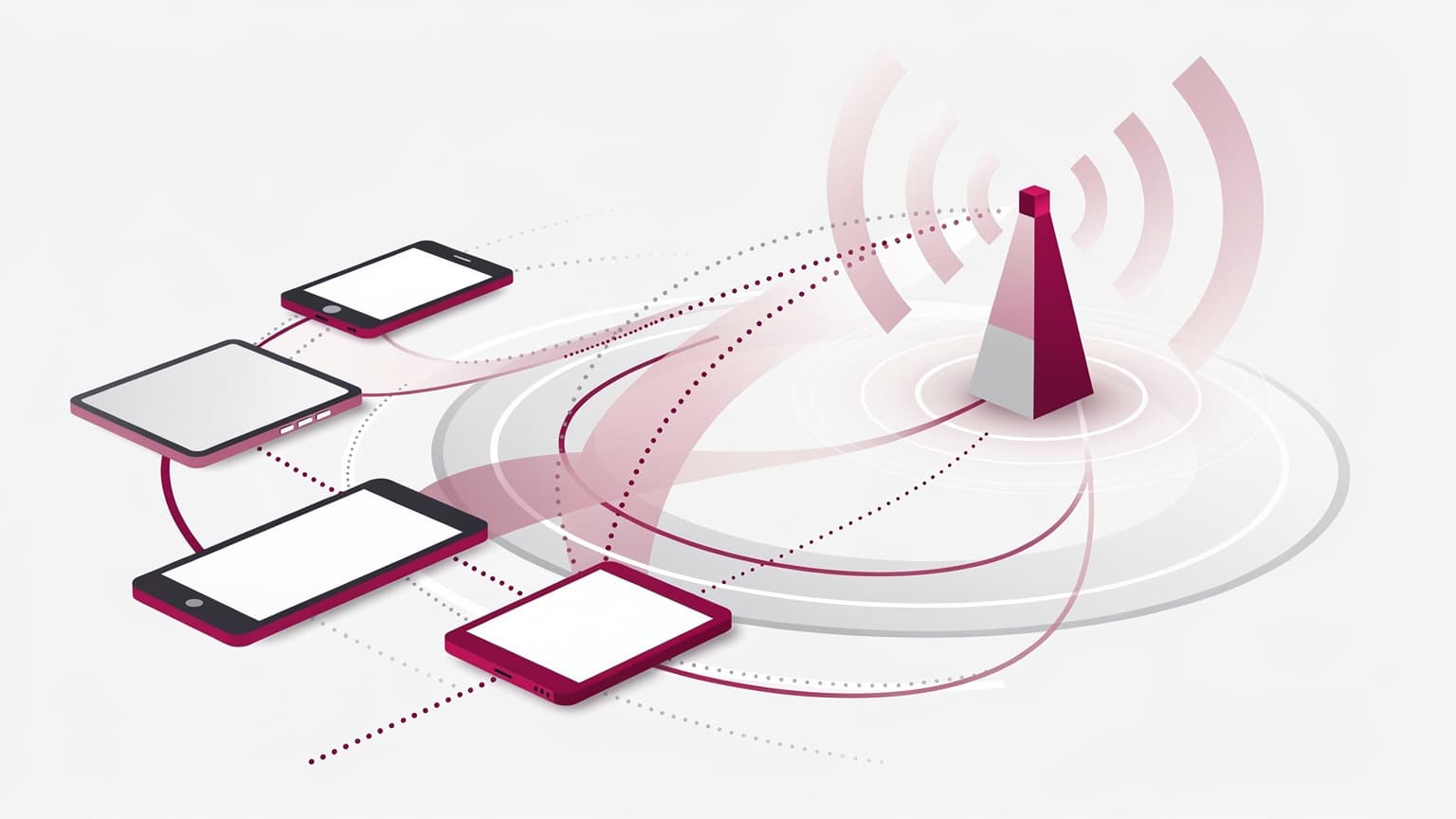
At its core, GPS is a satellite-based navigation system. Your phone's receiver listens for signals from multiple Global Navigation Satellite System (GNSS) constellations, like GPS (US), GLONASS (Russia), Galileo (EU), and BeiDou (China). These signals allow the device to triangulate its position. Where eSIM, or embedded Subscriber Identity Module, enters the picture is in enhancing the Assisted-GPS (A-GPS) component. A-GPS uses network resources to speed up the initial fix time (Time To First Fix, or TTFF) and improve accuracy, especially in challenging environments like urban canyons or indoors.
An eSIM doesn't directly 'do' GPS. Instead, it provides the robust, reliable data connection that A-GPS absolutely depends on. Imagine you're arriving at a new destination, say, getting around the labyrinthine corridors of Tokyo Station. Without a quick data connection, your phone might take several minutes to download the necessary satellite almanac and ephemeris data, leaving you staring at a spinning wheel instead of a helpful map. An active eSIM provides that vital link, allowing your phone to pull this data rapidly from network servers, resulting in near-instantaneous location fixes. This is especially critical when you're moving between different cellular base stations or switching between Wi-Fi and mobile data. The seamless network handoff enabled by eSIM profiles means your A-GPS data stream remains uninterrupted, improving overall location stability.
Key eSIM-GPS Market Trends for 2026
The landscape for eSIM and GPS is rapidly evolving, driven by demand for greater precision and efficiency. For 2026, several key trends are consolidating:
- Increased GNSS Integration: Newer chipsets, like those found in the upcoming iPhone 18, will support more GNSS constellations simultaneously. This multi-constellation support translates directly into better accuracy and availability, particularly in areas with limited sky visibility. More satellites mean more data points for triangulation, leading to a tighter confidence interval for your reported location.
- Precise Positioning Service (PPS) Expansion: While primarily for governmental and military use, the underlying technologies for high-precision GPS are trickling down. Commercial applications are leveraging enhanced differential GPS (DGPS) and Real-Time Kinematic (RTK) corrections via cellular networks. This means your phone could theoretically achieve centimeter-level accuracy in certain areas, though widespread commercial availability for consumer devices is still a few years out.
- Low-Power GNSS Receivers: Battery life remains a critical concern for travelers. Manufacturers are focusing on ultra-low-power GNSS receivers that can maintain location awareness with minimal drain. This is crucial for devices relying heavily on background location tracking, such as smartwatches or IoT trackers, which often utilize eSIMs for their connectivity.
- Hybrid Positioning Systems: 2026 will see a greater reliance on hybrid systems that combine satellite, cellular (cell tower triangulation), Wi-Fi (access point mapping), and even Bluetooth (beacons) for location services. An eSIM's ability to quickly switch between cellular networks or provide a reliable data channel for Wi-Fi assist is fundamental here. For example, if you're deep inside a shopping mall in Jakarta, your Telkomsel eSIM might be providing data for Wi-Fi positioning, which is often more accurate indoors than GPS alone.
Enhanced Accuracy and Precision: What to Expect
Gone are the days when 'being within 10 meters' was considered good enough. Modern applications demand greater precision. For travelers in 2026, this means:
- Lane-Level Navigation: In major cities, expect GPS to guide you not just to the correct street, but to the correct lane on multi-lane highways. This is especially useful when navigating complex interchanges in places like the 'autobahns' of Germany or the intricate expressways around Seoul.
- Indoor Positioning Improvements: While still a challenge, the blend of A-GPS, Wi-Fi RTT (Round Trip Time), and Bluetooth Low Energy (BLE) beacons, all facilitated by robust eSIM connectivity, will make indoor mapping significantly more reliable. Think finding your gate at a sprawling airport or locating a specific store in a multi-story mall without wandering aimlessly.
- Faster Fix Times: As mentioned, A-GPS relies on network data. With 5G networks, especially those leveraging mmWave (millimeter wave) on bands like n258 or n261, the data transfer rates for A-GPS assistance data are incredibly fast. This translates to near-instantaneous location fixes, even from a 'cold start' where your device has no prior satellite information.
Consider the typical accuracy variations you might encounter:
| Location Environment | Typical GPS Accuracy (2024 Baseline) | Projected eSIM-Enhanced A-GPS Accuracy (2026) | Key Contributing Factor |
|---|---|---|---|
| Open Sky (Rural) | 3-5 meters | 1-2 meters | Multi-GNSS, RTK-lite corrections |
| Urban Canyon (City Center) | 10-30 meters | 3-5 meters | A-GPS with 5G, hybrid positioning |
| Indoor (Mall/Airport) | 20-50 meters (if any) | 5-10 meters | Wi-Fi RTT, BLE beacons, robust data backhaul |
Frequently Asked Questions
Does an eSIM have its own GPS chip?
No, an eSIM itself does not contain a GPS chip. The GPS receiver is part of your phone's internal hardware. The eSIM provides the cellular data connection that assists the phone's GPS (A-GPS) by downloading satellite data quickly, improving fix times and accuracy.
Will eSIMs make GPS tracking more precise?
While eSIMs don't directly enhance GPS precision, their ability to provide stable, high-speed data connections for A-GPS (Assisted GPS) significantly improves how quickly and reliably your device can get an accurate location fix. This is especially true in urban areas or when moving between different network cells, where rapid data access is crucial for downloading ephemeris data.
How does 5G impact eSIM-GPS performance for travelers?
5G networks, especially those using higher frequency bands like n78 in Europe or n41 in the US, offer much lower latency and higher bandwidth. This speeds up the delivery of A-GPS assistance data, leading to faster Time To First Fix (TTFF) and more consistent location updates, even in challenging environments. For travelers, this means quicker map loading and more responsive navigation.
Are there any privacy concerns with eSIMs and location tracking?
The privacy concerns with location tracking remain largely the same, regardless of whether you use a physical SIM or an eSIM. Your phone's operating system (iOS/Android) controls app access to location data. An eSIM simply provides the network connection, so the privacy implications relate more to app permissions and carrier data retention policies than to the eSIM technology itself. Always review app permissions and your carrier's privacy policy.
Can I use an eSIM for GPS if I don't have a data plan active?
Your device's standalone GPS receiver can function without a data plan, but it will take much longer to get a location fix (a 'cold start'). This is because it needs to download satellite almanac and ephemeris data directly from the satellites, which is slower. An active data plan via eSIM enables A-GPS, which uses network assistance to provide a much faster and often more accurate location.
Does VoLTE or VoWiFi affect my GPS accuracy when traveling?
VoLTE (Voice over LTE) and VoWiFi (Voice over Wi-Fi) primarily manage voice calls over data networks. They don't directly impact GPS accuracy. However, if your device is struggling to maintain a stable VoLTE connection due to poor signal (e.g., in a remote area on Band 28), it might indicate a broader network issue that could also slow down A-GPS data retrieval. A stable data connection, whether for voice or GPS assistance, is key.
This table illustrates a significant improvement, especially in challenging environments. The ability of an eSIM to maintain a consistent, high-speed connection, even when switching between local carrier networks, is a silent hero in these accuracy gains.

Battery Life Implications and Optimization
More accurate GPS often means more processing and more frequent data transfers, which inevitably impacts battery life. For 2026, the trend is towards smarter power management.
The power consumption of a GNSS receiver is directly related to how frequently it's active and how many satellite signals it's tracking. Modern phones employ sophisticated algorithms to balance accuracy with power efficiency. For instance, your device might use a lower-power, less accurate positioning mode when stationary or when the screen is off, only kicking into high-precision mode when active navigation is detected. An eSIM's role here is subtle but important: by allowing for quick, efficient data acquisition for A-GPS, it minimizes the time the GPS radio needs to be fully active, thereby saving power.
However, there are still edge cases. Devices with poorly optimized location services, or apps that constantly request high-accuracy location in the background, can still drain your battery quickly. For example, some older Android phones might struggle with aggressive location polling, especially if the APN settings are not perfectly configured for low-power idle states. Always check your phone's battery usage stats for Landing at Athens International? Don't get stuck searching for Wi-Fi. A Cosmote eSIM can get you online before you even clear customs, saving you the hassle of physical SIM cards and inflated tourist prices. Here's how to ensure you're connected from the moment you step off the plane. Bringing the family to Indonesia? You're probably already juggling flight details, hotel bookings, and the crucial question of how to keep everyone connected without breaking the bank. When it comes to Telkomsel eSIMs for tourists, it's not always a straightforward yes or no, especially when you're thinking about those data-hungry kids and their iPads. Indonesia is a backpacker's paradise, but navigating data plans can be a headache. You've heard of Telkomsel eSIM, but is it truly the best bang for your rupiah? I've crunched the numbers, comparing it head-to-head with Cellesim, to find out which option keeps more cash in your hostel fund.Related reading
Travel TipsCosmote eSIM in Greece: Skipping Tourist Traps & Staying Connected (2026)
Sarah Jenkins
Travel TipsTelkomsel eSIM for Tourists: Navigating Indonesia with Kids (2026)
Rachel KimTelkomsel eSIM vs. Cellesim: The Budget Backpacker's Data Showdown in Indonesia 2026
Mike Donovan