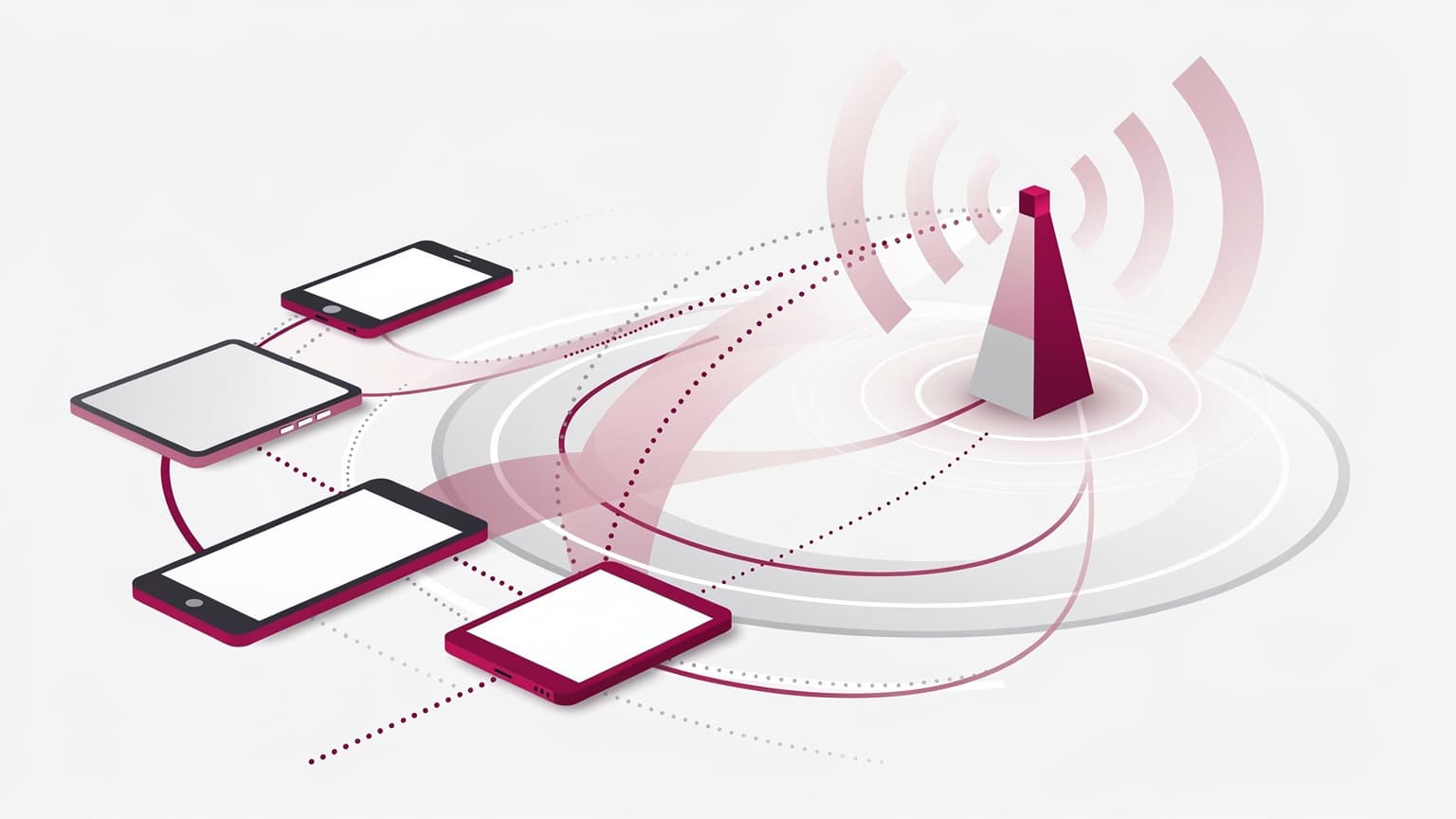
For years, a dedicated GPS tracker was the obvious choice for keeping tabs on your luggage or ensuring safety. But now, with eSIM technology, your phone can do so much more. This article compares the old way to the new, focusing on what business and leisure travelers in 2026 really care about: how reliable it is, how much it costs, and how convenient it makes your trip.
We're looking at two different approaches here: the standalone GPS tracker, which mainly gives you location data, and your eSIM-enabled smartphone, which brings together strong GPS capabilities with a ton of other ways to connect. My opinion, shaped by years of helping corporate clients untangle roaming charges in London and managing my own personal trips, is that the eSIM is quickly becoming the better option for most people traveling internationally. It's not just about finding your way around Shinjuku, it's about staying connected without paying a fortune for traditional roaming from carriers like Vodafone or EE.
Standalone GPS Trackers: The Legacy Choice
Remember those big GPS units we used to carry, or the little tracking pucks you’d hide in a checked bag? They're still around, and they still have their uses. These devices are built for one thing: telling you where they are. They typically use a mix of GPS, cellular networks (often older 2G for better battery life), and sometimes Wi-Fi to pinpoint their location. For example, if you're tracking valuable cargo on a ship crossing the Atlantic, where you won't get cell service for days, a satellite-enabled tracker might be your only real choice.
I once had a moment of panic flying into Athens, landing at Eleftherios Venizelos, only to discover my luggage had taken an unexpected detour to Lisbon. A simple Bluetooth tracker I'd put in my suitcase was useless once it left the baggage claim area. What I really needed was something with wider network access. Dedicated GPS trackers, even though they usually need their own subscription and charging, can still offer peace of mind for specific situations, especially when you need to track something that won't be near your phone or a Wi-Fi hotspot.
| Feature | Dedicated GPS Tracker | eSIM-Enabled Smartphone |
|---|---|---|
| Primary Function | Location tracking only | Multi-functional: GPS, communication, data, apps |
| Connectivity | Built-in cellular (often 2G/3G), sometimes satellite | eSIM for diverse 4G/5G networks, Wi-Fi, Bluetooth |
| Battery Life | Days to weeks (single purpose) | Hours to a day (multi-purpose, heavy usage) |
| Cost (Device) | £20 - £200+ (plus subscription) | £300 - £1200+ (existing device) |
| Complexity | Relatively simple, single app interface | Sophisticated, multiple apps, OS integration |
However, for the average traveler, the market for these devices is shrinking. The cost of a separate device, plus a monthly subscription (which can run from £5 to £15 for basic cellular tracking), often outweighs the benefits unless your need is very specific, like tracking a valuable bicycle through the narrow streets of Amsterdam's Jordaan district or keeping an eye on a child at a busy theme park.
eSIM-Enabled Smartphones: The Modern Travel Companion
This is where things get exciting for most of us. Modern smartphones, especially those from the iPhone 15 generation and newer, are incredible hubs for connectivity. It's not just about making calls or scrolling Instagram; it's a deeply integrated system of location services, mapping apps, and easy data access through eSIM. Setting up an eSIM before you fly, say, to Bali or Japan, is now as simple as scanning a QR code. That means you're connected the moment you land at Ngurah Rai International or Narita Terminal 1. No more struggling with local SIM cards at airport kiosks that close at 10 PM. If you need a step-by-step guide, check out How to Buy an eSIM Online Before You Travel.
My own experiences with physical SIM cards have always brought little annoyances: tiny trays that get lost, having to find a local store, and language barriers when trying to explain a data problem. I remember during a trip to Mexico City, I spent an hour trying to buy a Telcel SIM in the Roma Norte neighborhood, only to find the small shop didn't take international credit cards. With an eSIM, those headaches disappear. You can manage your plan from an app, activate it remotely, and switch between local networks easily. This is especially handy for business travelers who might need to swap between a work-grade connection and a more affordable personal plan in the same city, perhaps while riding the ATM in Milan.

The real strength of eSIM technology is how it uses the strong, existing cellular infrastructure, often connecting to multiple local carriers through one plan. This gives you much more flexibility and usually better coverage than a dedicated tracker that might be stuck on a single, less-than-ideal network. For example, in a country like Indonesia, an eSIM can get you on Telkomsel's wide network without the fuss of buying a local SIM card, as explained in Telkomsel eSIM for Tourists 2026. Location data isn't just for "where am I?" It's for ride-hailing apps, restaurant reservations, currency converters, and even finding your way back to your Airbnb in the winding alleys of Venice's Castello district.
Cost Efficiency: A Tale of Two Bills
Here’s where the eSIM truly shines for the smart traveler looking to save money. A dedicated GPS tracker, as I mentioned, has an upfront device cost and a recurring subscription. Let's say you buy a decent unit for £80 and pay £10 a month for two years. That adds up to £320. Now, let's look at the eSIM.
You already own your smartphone. The "device cost" is spread out over its lifespan, which you'd pay for anyway. Your only extra expense is the eSIM data plan itself. For many short trips, a regional eSIM plan can be as little as £10-£20 for several gigabytes of data. Even for longer stays, a monthly plan in the £20-£40 range for solid data is typical. Think about the savings for a business traveler who frequently crosses borders. Instead of paying daily roaming charges from their main UK carrier, which for networks like EE or O2 can be £2-£6 per day in the EU, an eSIM offers a predictable, and often much lower, rate. Over a year of frequent EU trips, this difference can easily be hundreds of pounds.
| Category | Dedicated GPS Tracker (Typical) | eSIM-Enabled Smartphone (Typical) |
|---|---|---|
| Device Cost | £80 - £200+ (new purchase) | £0 (leverages existing phone) |
| Subscription/Data Cost (per month) | £5 - £15 (for cellular tracking) | £10 - £40 (for data plan, varies by region/data amount) |
| Total Annual Cost (excluding phone) | £140 - £380+ | £120 - £480 (highly variable by usage) |
| Hidden Costs | Battery replacements, separate charging cables | Potential data overages if not monitored |
| Value Added | Single-purpose location tracking | Navigation, communication, entertainment, productivity tools |
When I was last in New York City, taking the A train from JFK to Howard Beach and then connecting to the MTA subway system into Manhattan, having reliable data from my eSIM was essential for real-time train updates and navigating the complex stations. My colleagues who stuck with their traditional UK roaming plans constantly worried about data limits, or worse, faced unexpected charges later. Is 5GB Data Enough for a Week Abroad? is a good starting point for figuring out your actual data needs.
Reliability and Coverage: Where the Rubber Meets the Road
Reliability is everything when you're relying on technology while traveling. A GPS signal itself is pretty consistent worldwide, but how that signal is communicated and accessed makes all the difference. Dedicated trackers often use specific, sometimes older, cellular bands, which can limit their reach in certain countries or even within a city. I've seen trackers completely lose network connection in some less developed parts of southern Italy, for example, outside major cities like Naples, where the infrastructure isn't as strong.
eSIMs, on the other hand, give you access to modern 4G and 5G networks, which means faster, more consistent data speeds and wider coverage. A Cellesim eSIM, for instance, often partners with multiple local network operators in a given region. This means if one network is weak, your phone can smoothly switch to another, ensuring you stay connected. This is a game-changer when you're trying to hail a taxi in a busy area like Gangnam in Seoul or trying to confirm a meeting time for a client in the financial heart of Frankfurt.

The biggest problem for dedicated trackers is often their need for a direct line of sight for the best GPS performance and a strong cellular signal to send data. Indoors, underground on the U-Bahn in Berlin, or in dense city areas, their performance can really suffer. A modern smartphone, with its advanced antennas and access to Wi-Fi (which also helps with location services), often works better than dedicated trackers in these tricky environments. For business travelers who absolutely cannot lose connection, the eSIM is the clear leader. iPhone 15/16/17 eSIM Activation shows just how robust this technology has become.
Security and Privacy Considerations
When you're dealing with location data, security and privacy are always top concerns. Dedicated GPS trackers, by design, are constantly broadcasting their location. While this is what they're for, you need to think carefully about who has access to that data and how it's stored. Many cheaper trackers use less secure ways to send data, and their apps might have questionable privacy policies. The last thing you want is for your luggage's location, or worse, your own movements, to be easily accessible to bad actors.
With an eSIM-enabled smartphone, you have much more control. You can turn location services on and off for specific apps, and your data is usually encrypted and sent over secure, modern cellular networks. You're relying on the strong security of your smartphone manufacturer (like Apple or Google) and your eSIM provider, who are held to higher standards than many small tracker makers. For business travelers, this is non-negotiable. Protecting sensitive client information and ensuring data integrity is crucial, making the secure environment of a modern smartphone with an eSIM a much safer bet than a potentially vulnerable, single-purpose tracker. Always double-check your device's location settings before going into unfamiliar territory, especially if you're using public Wi-Fi in a cafe in Paris's Le Marais district.

Of course, the downside of putting all your eggs in one basket is that if your phone is lost or stolen, you lose both your communication and tracking abilities. However, this is lessened by features like 'Find My iPhone' or 'Find My Device,' which use network triangulation even without an active cellular connection in some cases, and the option to remotely wipe your phone. The sheer convenience of having one device handle everything often outweighs this single risk for most travelers.
The Verdict: Who Should Choose Which?
For the vast majority of international travelers in 2026, the eSIM-enabled smartphone is clearly the better choice. It means fewer devices to carry, lower costs, better network reliability, and a multi-functional platform that does far more than just basic location tracking. For anyone who needs to stay connected, navigate new cities, talk to colleagues or family, and manage travel plans, the eSIM is the undisputed winner.
Think of it this way: I've been stranded more times than I care to admit with dead batteries or incompatible SIM cards. My worst memory was trying to arrange a pick-up in a remote village in Bolivia, with no data, after my local SIM mysteriously stopped working. I only wish I'd had an eSIM then. Now, with a reliable eSIM, whether I'm driving on the winding roads of Cote d'Ivoire or trying to find a specific vendor in a crowded market, I have peace of mind.
So, who should still consider a dedicated GPS tracker?
- High-Value Asset Tracking: If you need to track something extremely valuable that's separate from you (like a shipping container, an expensive camera drone, or an antique suitcase) where a phone might not always be present.
- Extreme Environments: For situations where a smartphone might not survive (like deep-sea diving or extreme mountaineering), or where incredibly long battery life is crucial without anyone needing to intervene.
- Basic, Non-Interactive Child/Pet Monitoring: A simple, tough tracker for a child's backpack or a pet's collar, where the only goal is to report its location, not to communicate or interact in complex ways.
But for the typical business traveler needing to check emails on the go, the holidaymaker getting around the intricate streets of Rome, or the backpacker coordinating meet-ups in Southeast Asia, the eSIM is the clear winner. It's the smart evolution of travel connectivity, making your journey simpler and keeping you connected without the old headaches.
Frequently Asked Questions
What is the primary difference between eSIM and a dedicated GPS tracker for travelers?
The main difference is what they do. An eSIM gives you full cellular data and communication on your existing smartphone, with GPS navigation as just one of many features. A dedicated GPS tracker, however, is a single-purpose device designed only for reporting location, often with limited communication and needing a separate device and subscription.
Are eSIMs reliable for GPS navigation in remote areas?
eSIMs use modern 4G and 5G cellular networks, which are generally more widespread and dependable than the older 2G/3G networks often used by dedicated trackers. In remote areas, if there's any cellular signal, an eSIM is likely to connect. True GPS on a smartphone uses satellites and doesn't always need a cellular signal, though data helps with map downloads and live traffic updates.
Is it cheaper to use an eSIM or a dedicated GPS tracker for international travel?
For most travelers, an eSIM is much cheaper. You use your phone, so you don't have to buy a separate tracker. eSIM data plans are often more flexible and cost-effective than international roaming from traditional carriers or the monthly subscriptions for dedicated trackers, especially for short to medium-length trips.
Can an eSIM help me find my lost luggage?
While an eSIM on your phone can help you talk to airlines or use 'Find My' features if your phone is in your luggage and connected, it doesn't directly track luggage unless the luggage itself has an eSIM-enabled device. For dedicated luggage tracking, you'd need a small, independent tracker with its own cellular connectivity (which could be an eSIM-enabled IoT device).
Do dedicated GPS trackers have better battery life than eSIM-enabled smartphones?
Generally, yes. Dedicated GPS trackers are built for one job, so they can save power and last from days to weeks on a charge. Smartphones, with all their features and powerful processors, usually last about a day with normal to heavy use, meaning they need charging more often.
What kind of security considerations should I have with location data from these devices?
With an eSIM-enabled smartphone, you have precise control over which apps can access your location data, and your data is sent securely using modern encryption. Dedicated trackers can sometimes use older, less secure methods, and their apps might have different privacy policies. Always check privacy settings and choose well-known brands for any device that sends location information.