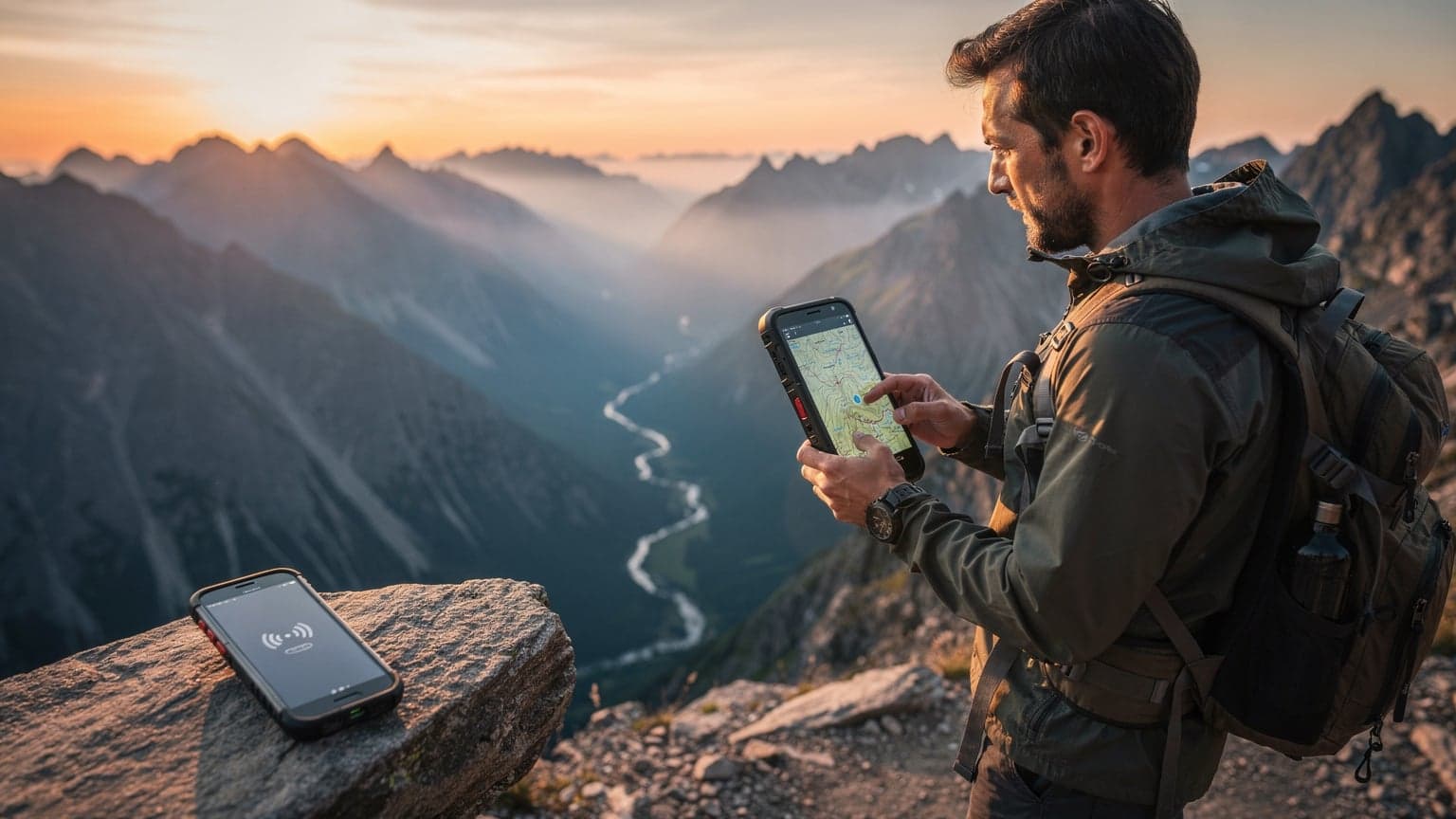
eSIM Phone GPS: The Limitations No One Talks About
Look, I get it. The allure of having one device for everything is strong. Your phone handles your calls, your banking apps (some, like the Brazilian Nubank or India's Aadhaar linked services, actually demand a local SIM for full functionality), and increasingly, your data with an eSIM. But for GPS, phones, even with the latest eSIM tech, have fundamental limitations that dedicated units simply don't. It's not about the data plan, whether it's AT&T's exorbitant day-pass or a Telkomsel Tourist eSIM for Indonesia. It's about hardware and design priorities.
First off, battery drain. Running Google Maps or Apple Maps, constantly refreshing location, with your screen on, absolutely chews through your phone's battery. Try navigating through the maze of streets around La Paz's Mercado de las Brujas for a few hours, then tell me your phone is still charged enough to call a ride or translate a menu. Dedicated GPS units are built for endurance, often lasting 15-20 hours on a single charge, without needing to worry about cellular signal strength for core navigation.
Then there's signal acquisition. Phones use a combination of GPS, GLONASS, Galileo, and cellular triangulation. When you're in a dense urban canyon, like the financial district in London, or deep in a valley, your phone struggles. Dedicated devices, particularly those with external antennae ports or larger internal antennae, lock onto satellites faster and maintain that lock more reliably. I've had more than one frustrating experience trying to pinpoint a specific address in the narrow back alleys of Kyoto with my phone, while a buddy's Garmin was humming along perfectly.
Real-World Performance Comparison: 2026 Metrics
In 2026, the technology has certainly advanced on both fronts. eSIMs have made data access abroad incredibly simple, often bypassing the need for physical SIM cards entirely, and offering competitive rates compared to home carrier roaming options (looking at you, AT&T, with your daily fees). However, data connectivity is not always GPS functionality.
Consider offline maps. While many phone apps offer offline map downloads, they can be cumbersome, eat up significant storage, and aren't always as detailed or up-to-date as dedicated maps on a GPS unit. I've spent enough time in places like Bolivia, where connectivity is spotty at best, to know that having truly reliable offline maps is non-negotiable. For context, getting around La Paz for 15 days on a mere 40 dollars of data is a tight squeeze, and if your data goes out, your phone's navigation goes with it, unless you've planned ahead with massive downloads. This is where options like eSIM in Bolivia become crucial for communication, but not necessarily for primary navigation.
| Feature | eSIM-Enabled Smartphone | Dedicated GPS Device |
|---|---|---|
| Satellite Acquisition Speed | Good (relies on cellular assist) | Excellent (dedicated antenna, faster lock) |
| Offline Map Reliability | Variable (app-dependent, storage intensive) | Superior (pre-loaded, detailed, frequently updated) |
| Battery Life (Navigation) | Poor to Moderate (2-6 hours typical) | Excellent (15-20+ hours) |
| Durability | Fragile (general-purpose device) | Rugged (often water/shock resistant) |
| Cost of Ownership | High (device cost + data plans) | Moderate (one-time purchase, map updates) |
Another point is environmental resilience. Most phones aren't built to withstand extreme temperatures, dust, or drops from a motorbike. Dedicated GPS devices, especially those designed for hiking or off-road use, are often ruggedized and waterproof. I’ve seen phones shatter after a minor tumble on a cobblestone street in Rome, while my old Garmin has survived more spills than I can count. This is a practical concern for anyone exploring off the beaten path, or even just dealing with the unpredictable nature of travel during half-term with kids.
Cost and Value: The Long-Term Calculation
At first glance, buying a dedicated GPS unit seems like an extra expense. Why spend an additional £200-£400 (or $250-$500 USD) when you already have a smartphone? The argument usually goes, "my phone does it all." But let's break down the true cost and value, especially for those of us who spend months at a time on the road.
For a digital nomad, the cost of living varies wildly. In Lisbon, a decent one-bedroom apartment in the Arroios neighborhood might set you back €1000-€1200 a month, with utilities adding another €150. Your phone is your lifeline for everything from finding that apartment to ordering groceries. Draining its battery on GPS constantly means you're charging it more, potentially shortening its lifespan, and always worrying about that red battery icon. A new phone every two years adds up significantly. For comparison, a reliable co-working space like Second Home Lisboa, while pricy, guarantees solid internet, but doesn't solve your outdoor navigation needs.
Consider the cost of a data plan. While an eSIM is far more economical than AT&T's international roaming, consistently using data for GPS still consumes bandwidth. If you're on a limited plan, say Telkomsel Tourist eSIM for a family holiday in Indonesia, every MB used by Google Maps is an MB not used for WhatsApp calls to family or checking hotel bookings. A dedicated GPS unit uses minimal data, if any, for its core function, saving your eSIM data for actual communication and other apps.
| Factor | eSIM-Enabled Smartphone | Dedicated GPS Device |
|---|---|---|
| Initial Cost | High (device) | Moderate (device) |
| Ongoing Data Cost | Variable (data plan dependent) | Minimal to None (offline maps) |
| Battery Replacement Cost | Frequent (due to heavy usage) | Rare (longer lifespan) |
| Repair/Replacement Cost (Damage) | High | Lower (rugged, specialized repair) |
| Peace of Mind | Moderate (risk of phone failure) | High (reliable in all conditions) |
The true value of a dedicated GPS device comes from its singular purpose. It's not trying to be a camera, a communication hub, and a navigation tool all at once. It does one thing exceptionally well, reliably, and independently. This independence is key, especially when you're crossing borders and dealing with potential eSIM setup questions, or when your visa limits your stay to just a few months, meaning every moment counts.
Who Should Pick Which? A Clear Recommendation
This isn't about ditching your smartphone entirely. It's about smart tool selection. For short trips, quick city breaks, or when you're sticking to well-trodden paths with reliable Wi-Fi (like the excellent connection at The Commons co-working space in Bangkok, where I spent three months), your eSIM-enabled phone will likely suffice. A quick hop from JFK to a European capital for half-term, where you're mostly using public transport and major tourist routes, probably doesn't demand a dedicated unit.
However, if your travel involves any of the following, a dedicated GPS is a non-negotiable part of your kit:
- Extended Stays & Digital Nomads: You need your phone for communication, banking, and work. Draining its battery on GPS is a liability.
- Off-Grid Exploration: Hiking, cycling, or driving in areas with patchy or non-existent cellular coverage.
- Critical Navigation: Where getting lost has serious consequences, like time-sensitive appointments or safety concerns.
- Budget-Conscious Data Users: If you're on a tight data budget with your eSIM, offloading navigation to a dedicated device saves precious MBs.
- Durability Needs: Any environment where your phone might be exposed to the elements, drops, or extreme temperatures.
For me, after years of living 1-3 months per country, grabbing a cheap local SIM (where an eSIM wasn't available or a local number was mandatory) for my communication and a dedicated GPS for my actual movement has been the most pragmatic approach. That little Garmin has saved me more headaches than I care to admit, whether it was getting around the chaotic streets of Hanoi or finding a remote Airbnb in rural Portugal. And yes, a downside of the favoured option is the upfront cost, and it's another device to charge. But the cost of being truly lost, or having a dead phone when you need it most, far outweighs that inconvenience.
If you're flying from JFK, leaving behind your AT&T contract, and heading somewhere like Indonesia for a longer trip, consider adding a dedicated GPS to your packing list. You'll thank me when your phone battery is still at 80% after a full day of exploring Bali, thanks to your Telkomsel Tourist eSIM for Bali and beyond handling your communications, and your Garmin handling the directions.
Planning a Smarter Route
The trend in 2026 is clear: while eSIMs have revolutionised connectivity, they haven't entirely replaced the need for specialised tools. Your phone is a generalist marvel; a dedicated GPS is a specialist workhorse. Understanding this distinction is key to making informed decisions for your travels, whether you're planning a half-term family trip or embarking on a year-long digital nomad adventure. I've often seen fellow nomads in WhatsApp groups share horror stories of dead phones and missed connections, all preventable with better planning.
Don't be that person scrambling for a power bank because your phone died navigating to that amazing food court in Kuala Lumpur (I practically lived at the Suria KLCC food court for a month, eating laksa every Tuesday). Invest in the right tools for the job. Your peace of mind is worth more than saving a few quid on an extra gadget. And while services like Holafly offer discount codes, those savings are best applied to your data, not your fundamental navigation strategy.
Ultimately, the goal is to travel smarter, not just lighter. And sometimes, smarter means carrying an extra device that reliably gets you from point A to point B, no matter the signal, no matter the battery life of your primary device. For securing your data before you even leave France for Indonesia, an eSIM for Indonesia from France is the smartest move. For finding your way once you're there, a dedicated GPS is still often the champion.
Frequently Asked Questions
Do I still need a dedicated GPS device in 2026 if my phone has an eSIM?
While eSIMs provide reliable data for phone navigation apps, dedicated GPS devices still offer superior battery life, signal acquisition in challenging areas, and rugged durability that smartphones lack. They are ideal for long trips or off-grid exploration.
What are the main advantages of a dedicated GPS over a phone for navigation?
Dedicated GPS devices excel in battery longevity (15-20+ hours), robust satellite lock without cellular reliance, pre-loaded detailed offline maps, and environmental resistance (waterproof, shockproof). Your phone's battery is freed up for communication and other essential apps.
Does using my phone for GPS drain my eSIM data allowance?
Yes, using online mapping applications on your phone, even with an eSIM, consumes data. While offline maps can mitigate this, they often require significant storage and aren't always as up-to-date as dedicated GPS maps. A dedicated unit saves your eSIM data for other crucial uses.
Is a dedicated GPS more expensive in the long run?
While there's an initial investment of £200-£400, a dedicated GPS device's longer lifespan, reduced battery wear on your phone, and independence from data plans can make it more cost-effective over years of travel, especially for digital nomads or frequent explorers.
What if I only travel for short periods, like a half-term holiday?
For short city breaks or well-connected tourist areas during a half-term trip, your eSIM-enabled smartphone is generally sufficient. However, if you plan to venture into areas with poor cellular coverage or require critical, uninterrupted navigation, a dedicated GPS remains the safer choice.
Can my phone's GPS be affected by visa limitations or local SIM requirements?
While GPS functionality itself isn't directly tied to visa status, some local apps or services, like specific banking apps in Brazil or India, may require a local SIM for full functionality, making your phone a critical communication device that you wouldn't want to drain with continuous GPS use.