eSIM in PCs and Laptops: How It Works in 2026
For those of us who remember juggling local SIM cards in every country, or worse, tethering off a phone that barely had enough battery to last a coffee run, the arrival of eSIM in laptops feels like a genuine godsend. It's not just a convenience; it's a productivity lifeline. An embedded SIM (eSIM) is a small, rewritable chip built directly into your device. Instead of swapping out a physical card, you download a digital profile from a carrier, much like you would an app.
This means your PC, much like your smartphone, can connect directly to cellular networks (3G, 4G, 5G) without needing a Wi-Fi hotspot. Think about it: no more scrambling for Wi-Fi passwords at a new co-working space, or praying the hotel's 'premium internet' actually works. This shift is particularly crucial for those of us who rely on stable, secure connections for sensitive work, or for accessing local banking apps that often require a local SIM to verify identity. I've been caught out in Brazil with Nubank, for instance, which threw a fit every time I tried to log in without a local number registered.
The underlying technology isn't new, but its widespread adoption in the PC market is finally hitting its stride in 2026. If you want a deeper dive into the mechanics, I'd suggest checking out our What Is an eSIM? The Complete 2026 Guide. But for now, just know that it means freedom from dodgy Wi-Fi.
The Difference Between eSIM and Traditional SIM Cards for Laptops
The core difference is physical versus digital. A traditional SIM card is a small plastic chip you insert into a tray. It's tied to a specific carrier and plan. If you want to change providers or countries, you need a new physical SIM, which means finding a local store, dealing with activation, and often presenting your passport (and then hoping they don't lose it). This is a particular pain point in countries like India, where getting a local SIM as a foreigner can be a multi-hour ordeal, especially with the Aadhaar biometric requirements that some apps then lean on.
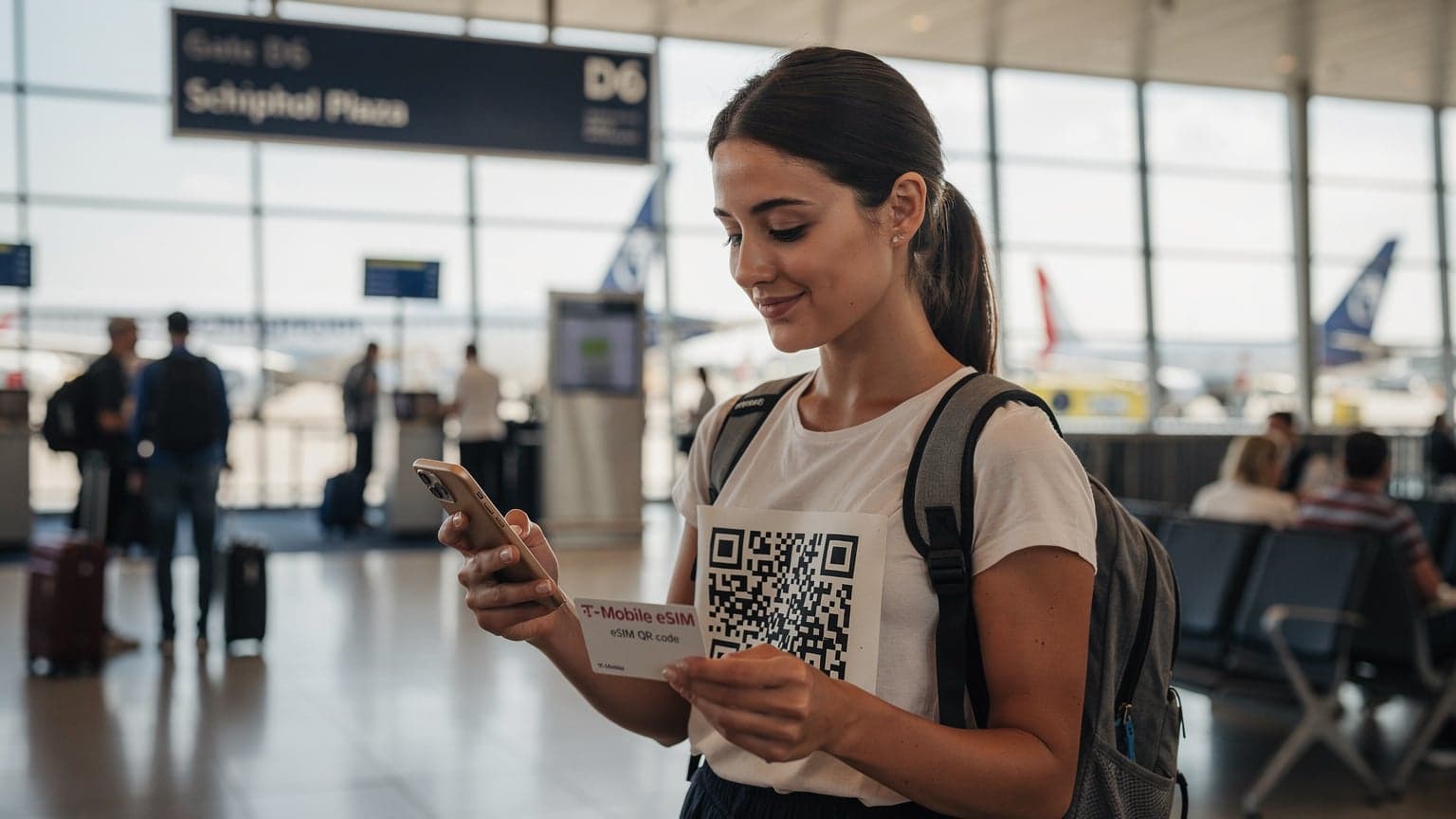
eSIM, on the other hand, is soldered into your device. You activate it by scanning a QR code or downloading a profile through your operating system's settings. No more tiny plastic cards to lose, no more fiddling with paperclip-sized ejector tools. It's a cleaner, more streamlined experience, especially when you're moving between countries every few weeks or months. For my recent stint in Bali, for example, switching between an eSIM for Bali and another for a quick hop to Singapore was effortless, all managed from my laptop's settings.
How eSIM Technology is Integrated into Modern PCs
Most modern laptops that support eSIM do so through an embedded Universal Integrated Circuit Card (eUICC) chip. This chip works with the operating system, usually Windows 10/11 or a compatible Linux distribution, to manage cellular profiles. It's similar to how an eSIM-enabled smartphone functions, providing a secure element for storing multiple network profiles. When you purchase an eSIM plan, Cellesim, for instance, provides a QR code or manual activation details. Your laptop's cellular settings then 'read' this information and configure the network profile.
The integration is designed to be seamless. Once activated, your laptop treats the eSIM like any other network connection, showing signal strength, data usage, and allowing you to switch between profiles if you have multiple plans stored. This is particularly useful for business travellers who might need separate data plans for different regions, or even different corporate policies.
Compatible Devices: Which Laptops and Tablets Support eSIM?
Not all laptops are created equal when it comes to eSIM support. While the technology has been around for a while, it's only in the last few years that it's become a standard feature in many business-grade and premium consumer devices. When you're looking for a new machine, specifically check for 'LTE' or '5G' cellular capabilities and 'eSIM support' in the specifications. Don't just assume; many models have Wi-Fi only variants.
I once recommended a colleague a sleek HP Spectre, only for him to discover it was the Wi-Fi only version after he'd already landed in Ho Chi Minh City. He ended up tethering from his phone the entire month, which was less than ideal for video calls from The Hive co-working space in District 1. Always verify the exact model number. (And yes, The Hive's Wi-Fi is generally good, but sometimes you just need that dedicated connection, especially during peak hours.)
Leading Laptop Brands with eSIM Capabilities
Several major manufacturers have embraced eSIM, particularly in their business and ultraportable lines. Here's a quick rundown of what to look for:
- Microsoft Surface: Models like the Surface Pro X, Surface Pro 9, and Surface Laptop Studio often come with built-in eSIM. These are usually specified as 'LTE Advanced' or '5G' versions.
- Lenovo: Their ThinkPad X series (e.g., X1 Carbon, X1 Yoga) frequently offer cellular options with eSIM. They're known for robust business features, and reliable connectivity is a big part of that.
- HP: Look for their Elite Dragonfly, Spectre x360, and specific Envy models. Again, ensure you're getting the 'LTE' or '5G' variant.
- Dell: The Latitude and XPS lines, particularly the more premium configurations, increasingly include eSIM support.
- Acer: Certain TravelMate and Swift models are also coming with cellular capabilities.
- Samsung: Their Galaxy Book series often includes eSIM, aligning with their strong mobile ecosystem.
It's worth noting that while Apple offers cellular iPads with eSIM, MacBooks do not currently have direct eSIM support. You'd still need to tether from your iPhone's eSIM, which is a decent workaround but not quite the same as a native connection.
| Manufacturer | Common eSIM-Enabled Models (Examples) | Operating System |
|---|---|---|
| Microsoft | Surface Pro X, Surface Pro 9, Surface Laptop Studio | Windows 10/11 |
| Lenovo | ThinkPad X1 Carbon, X1 Yoga, Z13 | Windows 10/11 |
| HP | Elite Dragonfly, Spectre x360, select Envy models | Windows 10/11 |
| Dell | Latitude 9000 series, XPS 13/15 (5G variants) | Windows 10/11 |
| Samsung | Galaxy Book 3/4 series (5G variants) | Windows 11 |
Tablets with eSIM Cellular Connectivity
Tablets, particularly those marketed for productivity and on-the-go work, have been quicker to adopt eSIM. This makes sense, as they often bridge the gap between smartphones and laptops in terms of portability.
- Apple iPad (Cellular Models): iPad Pro, iPad Air, iPad Mini, and standard iPad all offer cellular versions with eSIM. This has been a game-changer for me when I need to quickly respond to emails or check maps without pulling out my laptop.
- Microsoft Surface Pro: As mentioned, the Pro X and other Pro models are essentially tablets that can function as laptops.
- Samsung Galaxy Tab: Many of their premium Galaxy Tab S series tablets include eSIM support.
- Lenovo Tab: Select models within their P and X series also feature cellular connectivity with eSIM.
These devices are ideal for light work, presentations, or simply staying connected for navigation and communication without draining your phone's battery. A good eSIM plan for your tablet can be a lifesaver, especially if you're navigating a new city and relying on Google Maps or local transport apps.
Why Choose eSIM for Your Portable Workstation?
The benefits of eSIM for a laptop or tablet are pretty straightforward for anyone who's ever had to get actual work done while globetrotting. It boils down to reliability, flexibility, and security. After years of chasing down Wi-Fi signals in various cafes, from the 'Hubud' co-working space in Ubud (which, despite its reputation, could be patchy) to the Starbucks in Tokyo Station, I can tell you that dedicated cellular data is a blessing.
When I was living in Lisbon, paying about €800 a month for a decent studio in Arroios, I had reliable fibre at home. But the moment I stepped out, especially for client meetings or quick research at a new spot, I needed a connection that wouldn't drop. Tethering from my UK phone was out of the question; post-Brexit roaming charges from providers like EE and Vodafone are just daylight robbery. A quick data burst on EE could easily cost me £6 a day. That adds up fast. Using an eSIM from Cellesim for my laptop meant I could get a solid connection for a fraction of that, specifically designed for data-heavy use.

Uninterrupted Connectivity for Business Travelers
For business travelers, every minute of downtime is lost productivity. Relying on hotel Wi-Fi can be risky, both in terms of speed and security. Public Wi-Fi networks are notorious for being vulnerable to cyber threats. An eSIM provides a private, secure connection to a cellular network, which is far more robust for sending sensitive emails, accessing cloud drives, or participating in video conferences. Imagine needing to finalize a presentation from a train between London and Paris, or upload a crucial document from an airport lounge. A dedicated eSIM connection means you're not at the mercy of the local infrastructure.
Furthermore, many corporate VPNs perform better over a stable cellular connection than a variable Wi-Fi signal. As someone who's spent countless hours trying to troubleshoot a VPN connection from a dodgy hotel Wi-Fi, I can attest to the value of a solid cellular backbone.
Cost Efficiency Compared to Roaming or Local SIMs
This is where eSIMs really shine, especially for those of us from the UK. Since Brexit, our major carriers like Vodafone, EE, and O2 have reintroduced roaming charges, which can be brutal. A single day of roaming data can cost anywhere from £2 to £6, sometimes more, for limited data allowances. Multiply that by a two-week business trip, and you're looking at a bill that could easily fund a month's worth of Cellesim data.
Local physical SIMs can be cheaper, but they come with their own hassle: finding a store, activation delays, language barriers, and often needing a local address or ID. Plus, you're then tied to that one country's plan. An eSIM, especially a regional or global plan from a provider like Cellesim, offers competitive rates, immediate activation, and the flexibility to jump between networks or countries without a new purchase. It's a no-brainer for long-term travelers or frequent business trips.
Enhanced Security and Privacy
Public Wi-Fi networks are inherently less secure. They are often unencrypted, making it easier for malicious actors to intercept your data. When you're dealing with company secrets or personal financial information, this is a significant risk. An eSIM connects you directly to a trusted cellular network, which offers a much higher level of encryption and security.
While no connection is 100% immune, cellular data is far more difficult to compromise than an open Wi-Fi hotspot. For anyone handling sensitive information, or simply wanting peace of mind, an eSIM offers a crucial layer of protection that public Wi-Fi simply cannot match. It's not just about getting online, it's about getting online safely.
Setting Up eSIM on Windows Laptops
Getting your Windows laptop connected with an eSIM is usually a straightforward process, assuming your device supports it. I've walked friends through this in various co-working spaces, from 'The Commons' in Bangkok (which has excellent coffee, by the way) to a quieter spot in Da Nang. The steps are pretty consistent across Windows 10 and 11.

Step-by-Step Guide for Windows 10 and 11
Here's how you typically set it up. Make sure you have your eSIM QR code or activation details ready from your provider (like Cellesim).
- Access Network Settings: Click on the Start menu, then go to 'Settings' (the gear icon). Navigate to 'Network & Internet', then select 'Cellular'.
- Add an eSIM Profile: Under the 'Cellular' section, look for an option like 'Manage eSIM profiles' or 'Add an eSIM profile'. Click on it.
- Choose Activation Method: You'll usually be given two options: 'Use a QR code' or 'Enter an activation code manually'. If you have a QR code, choose that option and use your laptop's camera to scan it. If you have manual details, enter them carefully.
- Connect to the Network: Once the profile is added and activated, your laptop should detect the new cellular network. You might need to select it from the list of available networks and click 'Connect'.
- Configure Data Usage (Optional): In the 'Cellular' settings, you can often set data limits, choose which apps can use cellular data, and manage roaming preferences. This is crucial for avoiding unexpected bills, especially if you're on a pay-as-you-go plan.
Managing Multiple eSIM Profiles
One of the beauties of eSIM is the ability to store multiple profiles. This means you can have a Cellesim plan for Europe, another for Southeast Asia, and perhaps a local one for longer stays, all on the same device. When you move between regions, you simply switch profiles in your cellular settings. It's incredibly handy.
I've found this particularly useful when hopping between countries with different visa requirements. For example, during a three-month stay in Portugal, I used a Cellesim regional eSIM for initial setup, then picked up a local SIM for banking and official forms. But for quick trips to Spain, I'd just switch back to the Cellesim regional profile on my laptop. No physical cards, no fuss. Just remember to manage which profile is active to avoid unintended data usage on the wrong plan.
eSIM on MacBooks and iPads (Cellular Models)
Apple's approach to eSIM on its devices is a bit bifurcated. While iPads with cellular capabilities have been eSIM-enabled for a while, MacBooks currently don't have native eSIM support. This is a common point of confusion, so let's clarify.
iPad Cellular Models and eSIM Activation
If you have a cellular-enabled iPad (Pro, Air, Mini, or standard), it almost certainly supports eSIM. Activating it is very similar to setting up an eSIM on an iPhone:
- Go to Settings: Tap the 'Settings' app on your iPad's home screen.
- Navigate to Cellular Data: Tap 'Cellular Data' (or 'Mobile Data' in some regions).
- Add a New Plan: Tap 'Add a New Plan' or 'Add eSIM'.
- Scan QR Code or Enter Details: You'll be prompted to scan a QR code provided by your eSIM carrier (e.g., Cellesim) or to enter the details manually.
- Label Your Plan: After activation, you can label your new cellular plan (e.g., 'Cellesim Europe', 'Work Data') to easily distinguish it if you have multiple profiles.
- Set Default Line (Optional): If you have multiple plans, you can set a default for cellular data usage.
This makes the iPad an incredibly powerful portable workstation, especially when paired with a good keyboard case. I've used my iPad Pro with an eSIM extensively for lighter tasks, writing, and even some photo editing while travelling through Southeast Asia, where getting reliable Wi-Fi can be a toss-up depending on the area. In Canggu, Bali, for example, even though there are tons of cafes, their Wi-Fi can be overloaded, so having my iPad on its own data connection was invaluable for staying productive.
MacBooks and Tethering Alternatives
For MacBooks, as of 2026, there's still no direct eSIM support built into the hardware. This means your MacBook can't independently connect to a cellular network via eSIM. However, Apple's ecosystem offers a very slick workaround: Personal Hotspot. If you have an iPhone with an eSIM, you can easily tether your MacBook to your iPhone's cellular connection.
This works seamlessly with Instant Hotspot, where your MacBook automatically detects and connects to your iPhone's hotspot without you needing to touch your phone. While not native eSIM on the laptop, it's a highly reliable and secure way to get your MacBook online using your phone's data plan. Just keep an eye on your iPhone's battery life, as tethering can drain it quickly. For a long working session, you'll want to keep your phone plugged in.
Choosing the Right eSIM Provider for Your PC
Just like with phone eSIMs, the market for PC-compatible eSIM data plans is growing rapidly. It's not just about the cheapest plan; it's about coverage, reliability, and how well it fits your travel patterns. Do you need a global plan, or are you staying in one region? What's your data usage like? (Spoiler: streaming Netflix on your laptop will chew through data faster than browsing on your phone.)

Factors to Consider When Selecting an eSIM Plan
- Coverage: Does the provider offer strong coverage in the countries or regions you'll be visiting? Always check their coverage maps. There's nothing worse than landing somewhere and finding out your data plan barely works.
- Data Allowance: Be realistic about your data needs. Video calls, large file transfers, and streaming services consume a lot. It's often better to slightly overestimate than run out mid-project.
- Validity Period: How long do you need the data for? Some plans are for a few days, others for a month or more. Match the validity to your trip length.
- Speed: Does the provider offer 4G LTE or 5G speeds? For productivity, speed is paramount. Low speeds can make video conferencing a nightmare.
- Cost: Compare prices per GB, but don't just go for the cheapest. Value often includes reliability and coverage.
- Top-up Options: Can you easily top up your data if you run out? What are the top-up costs?
- Customer Support: If something goes wrong, can you get help quickly and in your language?
Comparing eSIM Providers for Laptops
When it comes to eSIMs for laptops, Cellesim is a strong contender due to its focus on global coverage and flexible plans. However, it's always good to compare.
| Provider | Key Features for Laptop Users | Typical Pricing Model | Target User |
|---|---|---|---|
| Cellesim | Extensive global and regional plans, competitive rates for large data bundles, strong network partnerships for reliability. Ideal for business travellers and digital nomads. | Fixed data bundles (e.g., 10GB, 20GB, 50GB) for varying validity periods (7, 15, 30 days). | Frequent international travellers, remote workers, business users needing reliable, cost-effective data. |
| Airalo | Local, regional, and global eSIMs. Good for short trips, but data bundles can be smaller. | Smaller data bundles (e.g., 1GB, 3GB, 5GB) for shorter validity. | Casual tourists, short business trips, users with lower data demands. |
| Nomad | Similar to Airalo, offers a range of local and regional plans. Interface is generally user-friendly. | Similar bundle sizes and validity periods to Airalo. | Similar to Airalo, good for mid-range data users on shorter trips. |
| Holafly | Known for unlimited data plans in some regions, but often throttled after a certain threshold. No hotspot capability on many plans. | Unlimited data for fixed validity periods. | Users who need 'unlimited' peace of mind, but should be wary of fair usage policies and lack of hotspot. (Note: Hotspot is crucial for a laptop!) |
When comparing, always look closely at the fine print. Holafly, for example, often advertises 'unlimited data' but their fair usage policy can throttle speeds significantly after a certain amount, and many of their plans don't allow tethering, which makes them essentially useless for a laptop. This is a critical detail that some travellers miss, especially when looking for Holafly discount codes 2026. For a laptop, hotspot capability is non-negotiable.
Real-World Scenarios: eSIM for Digital Nomads and Business Travelers
This is where the rubber meets the road. eSIM on your laptop isn't just a tech curiosity; it's a tool that solves real problems for people who live and work on the move. I've been doing this for four years, and the little things that break connectivity can derail an entire day's work. From missing a critical client email to struggling to book a Grab car because my phone's data just died, connectivity is everything.

Seamless Transitions Between Countries and Timezones
Consider a typical digital nomad journey: landing in a new country, let's say Italy, after a red-eye flight. You're tired, you need to check your emails, maybe book a taxi, and update your WhatsApp groups. With an eSIM on your laptop, you can literally be connected before you even clear customs. No need to find a SIM card vendor at the airport, no language barriers, no fumbling with tiny trays. You just land, open your laptop, and your pre-activated Cellesim Italy eSIM kicks in.
This is particularly valuable in places where local SIM acquisition can be cumbersome. I remember a colleague trying to get a SIM in Turkey; it involved a trip to a Vodafone shop, passport registration, and a good hour of waiting, all while battling jet lag. With an eSIM for your laptop, that hour is spent working or relaxing, not queuing.
Working from Anywhere, Beyond the Cafe
The notion of 'working from anywhere' often conjures images of beachside bungalows. The reality is usually a bit less romantic: an airport lounge, a train carriage, a park bench, or a co-working space that's unexpectedly packed. In these situations, reliable Wi-Fi is often a luxury. An eSIM liberates you from this dependency. I've written entire blog posts on long-haul trains across Europe, connected via my laptop's eSIM, while others around me were scrambling for a signal or struggling with the train's patchy Wi-Fi.
It's also about peace of mind. Knowing that you have a backup connection, even if the co-working space Wi-Fi goes down (which it inevitably does), means less stress and more consistent output. For instance, in places like Lisbon, where my rent for a one-bedroom in the city centre averaged €950-€1100 a month, I needed every minute of my work day to count. Having an eSIM on my laptop meant I wasn't wasting time hunting for a stable connection; I was just working.
Critical Backup for Unreliable Local Infrastructure
Let's be blunt: not every country has enterprise-grade internet everywhere. Sometimes, the local fibre goes down, the power cuts out, or the Wi-Fi at your Airbnb is just plain terrible. I've been in places where the internet felt like it was powered by hamsters on wheels. Having an eSIM in your laptop means you have a completely independent connection. This is invaluable when you have deadlines to meet, or if you need to access critical information quickly. It's a fundamental part of my digital nomad toolkit, right up there with a portable power bank and a good VPN.
It's also essential for tasks that require a secure connection to your home country. Some banking apps, for example, get very nervous if they see you logging in from a foreign IP address without a trusted local SIM. An eSIM provides that layer of consistent, verifiable connectivity. (Though, be aware of visa limitations too; some countries like India require a long-term visa to even consider getting a local SIM, so an eSIM is your primary option for short stays).
Troubleshooting Common eSIM Issues on Laptops
Even with the best technology, things can occasionally go sideways. I've seen it all, from eSIMs refusing to activate to sudden connection drops. The good news is that most issues are relatively easy to diagnose and fix. It's usually a software glitch or a simple setting oversight.
Activation Failures and Network Detection Problems
- Double-check the QR Code/Activation Code: The most common error is a typo in the manual code or a poorly scanned QR code. Re-enter or re-scan carefully.
- Internet Connection during Activation: While eSIMs are about cellular data, you often need an initial internet connection (Wi-Fi) to download the profile during setup. Ensure you're connected to Wi-Fi when adding a new eSIM.
- Device Compatibility: Re-verify that your specific laptop model actually supports eSIM. Some models have identical names but different cellular capabilities.
- Restart Your Device: The classic IT solution, but it often works. A full restart can resolve temporary software glitches.
- Check Your eSIM Provider's Status: Occasionally, there might be an issue on the provider's end. Check their website or social media for any service outages.
- Contact Cellesim Support: If all else fails, reach out to Cellesim's support. They can often provide specific troubleshooting steps or re-send activation details.
Data Connectivity and Speed Issues
- Signal Strength: Are you in an area with good cellular coverage? Check the signal bars in your taskbar. Concrete buildings or underground locations can block signals.
- Data Plan Active: Ensure your eSIM plan is active and has sufficient data remaining. Sometimes, auto-renewal fails, or you simply run out faster than expected.
- Correct Profile Selected: If you have multiple eSIM profiles, make sure the correct one is selected as active for data usage.
- APN Settings: Rarely, the Access Point Name (APN) settings might be incorrect. These are usually configured automatically, but if you're having persistent issues, your eSIM provider can give you the correct APN to enter manually in your cellular settings.
- Software Updates: Ensure your operating system and network drivers are up to date. Updates often include fixes for connectivity issues.
Future of eSIM in PCs: What to Expect
The trajectory for eSIM in laptops is clear: more widespread adoption and deeper integration. We're past the early adopter phase, and 2026 marks a point where it's becoming a standard expectation for premium and business-oriented devices. This isn't just about convenience; it's about the evolving nature of work and travel.
5G and Enhanced Connectivity
As 5G networks become more ubiquitous globally, eSIM-enabled laptops will fully leverage these speeds. Imagine downloading huge files or streaming 4K video seamlessly, even in remote locations. The low latency of 5G will also significantly improve video conferencing and cloud-based applications, making the distinction between working from an office and working from a co-working space in Bali (where a monthly rent for a decent villa might set you back $1500 USD, plus another $500 for food and transport) even blurrier.
We can expect to see more laptops with integrated 5G modems and eSIM support as standard, rather than as an optional upgrade. This will make mobile connectivity a given, much like Wi-Fi is today.
More Flexible and Global eSIM Plans
The eSIM market will continue to mature, leading to more competitive pricing and flexible plans. We'll likely see more providers offering truly global plans that seamlessly switch between networks in different countries, simplifying billing and management for ultra-frequent travelers. Data pooling across multiple devices (phone, tablet, laptop) under a single eSIM plan is also a strong possibility, further streamlining connectivity.
This evolution will benefit digital nomads immensely, simplifying the process of staying connected across continents. It will mean less time managing data plans and more time focusing on work, whether that's from a bustling food court in Bangkok or a quiet café in Medellín.
Final Thoughts on eSIM for Laptops
For anyone who relies on their laptop for work, whether you're a business traveler jetting between capitals or a digital nomad living out of a backpack, eSIM is no longer a niche feature. It's an essential tool that delivers reliable, secure, and flexible internet access, untethering you from the often-frustrating world of public Wi-Fi.
I've seen the shift firsthand over my four years on the road. The constant worry about finding good Wi-Fi, the wasted hours at internet cafes, the security risks of open networks, these are all becoming relics of a past era. With a compatible laptop and a solid eSIM plan from a provider like Cellesim, you're not just buying data; you're buying peace of mind and genuine productivity. It means less time troubleshooting and more time actually getting things done, wherever in the world your work takes you.
Frequently Asked Questions
Can all laptops use eSIM?
No, not all laptops support eSIM. Your laptop must have a built-in cellular modem (often specified as LTE or 5G support) and an eUICC chip. Always check your device's specifications before purchasing an eSIM plan. Apple MacBooks, for example, do not currently have native eSIM support, relying instead on tethering from an iPhone.
Is eSIM on laptops more secure than public Wi-Fi?
Yes, generally an eSIM connection on a cellular network is more secure than public Wi-Fi. Cellular data is encrypted, making it much harder for malicious actors to intercept your data. Public Wi-Fi networks, especially unencrypted ones, can be vulnerable to various cyber threats, posing a risk to sensitive information.
Can I use the same eSIM plan on my phone and laptop?
This depends on your eSIM provider and plan. Some providers offer data-only eSIMs for laptops, while others might allow you to share data across devices if your plan includes tethering. If your phone has an eSIM, you can often use its Personal Hotspot feature to share its cellular connection with your laptop, effectively using the same plan.
What data allowance should I get for my laptop eSIM?
Your data needs depend on your usage. For light browsing and email, 5-10GB per month might suffice. For regular video calls, large file transfers, and streaming, you'll likely need 20GB or more. Business travelers often opt for larger bundles, like 50GB, to avoid running out during critical work periods.
How do I know if my laptop has eSIM capability?
Check your laptop's specifications for 'eSIM support,' 'LTE,' or '5G cellular connectivity.' On Windows 10/11, you can also go to Settings > Network & Internet > Cellular. If you see an option to 'Manage eSIM profiles' or 'Add an eSIM profile,' your device likely supports it.
Are eSIM plans for laptops expensive?
eSIM plans for laptops can be very cost-effective, especially when compared to daily roaming charges from traditional carriers (which can be £2-£6 per day for UK users post-Brexit). Providers like Cellesim offer competitive data bundles for various regions, often much cheaper than buying local physical SIMs, particularly for shorter trips.