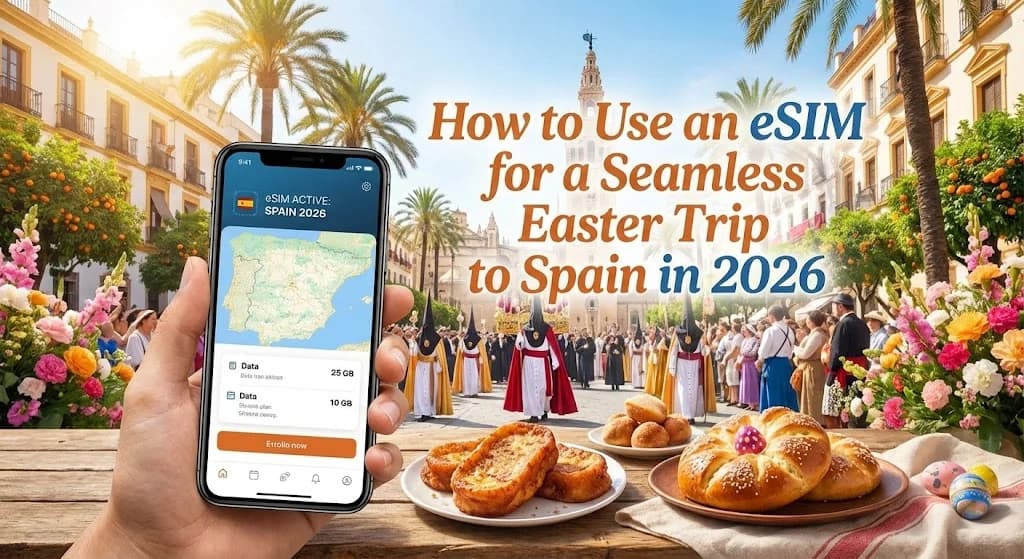
Spain during Easter, known as Semana Santa, is an experience steeped in profound tradition, vibrant processions, and cultural richness. As millions flock to cities like Seville, Málaga, and Valladolid in 2026, staying connected becomes crucial for navigating crowds, sharing moments, and accessing essential information. Traditional roaming plans often come with unexpected costs and unreliable service, while hunting for local SIM cards can be a hassle during peak travel times. This is where an eSIM offers a smart, seamless solution, ensuring your focus remains on the breathtaking festivities, not your phone bill.
- Why an eSIM is Essential for Easter in Spain 2026
- Understanding Cellesim eSIM Plans for Spain
- Step-by-Step: Activating Your Cellesim eSIM for Spain
- Maximizing Connectivity: Dual SIM Usage for Easter Travel
- eSIM vs. Traditional SIM Cards and Roaming in Spain
- Navigating Spain's Easter Festivities with Reliable Data
- Potential Downsides and Solutions for eSIM Users in Spain
- Practical Tips for a Connected and Memorable Easter in Spain 2026
- Frequently Asked Questions
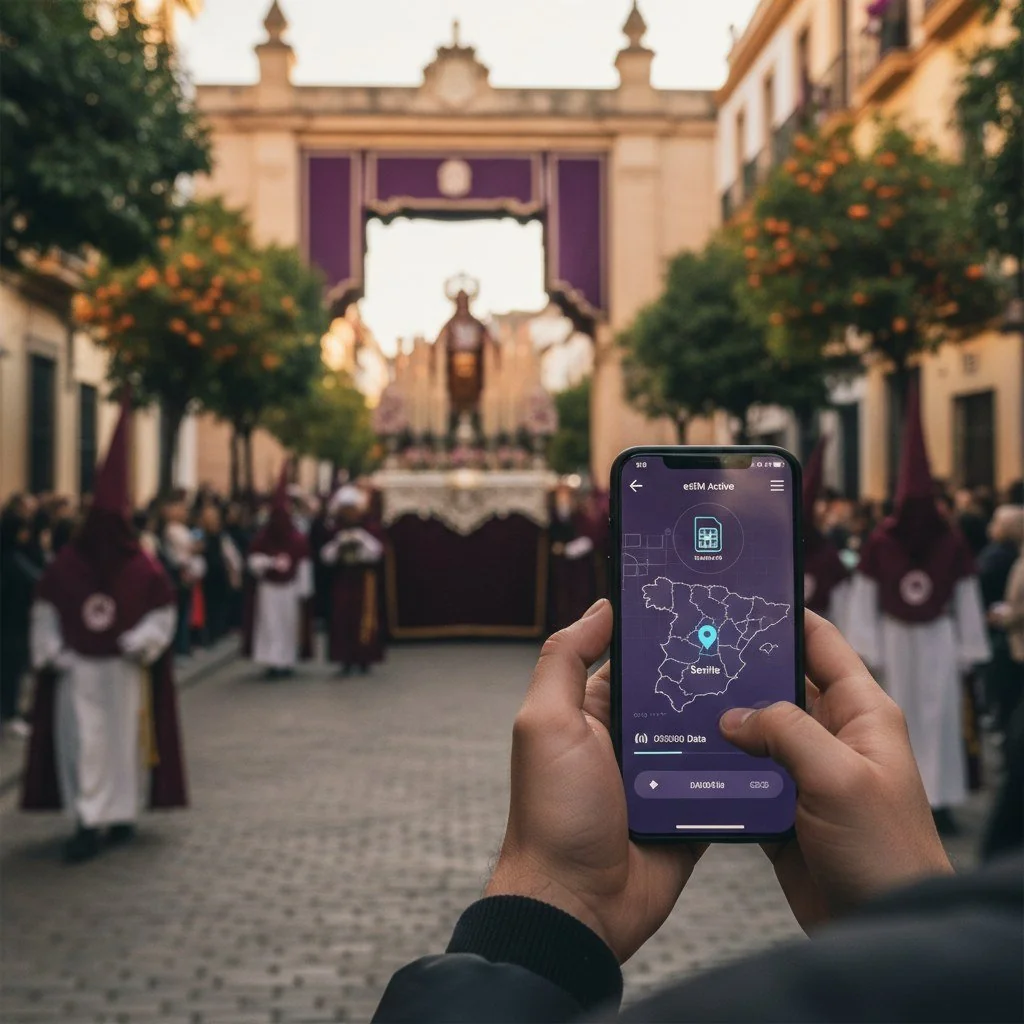
Why an eSIM is Essential for Easter in Spain 2026
An Easter trip to Spain in 2026 promises an immersive cultural experience, but it also brings logistical challenges, especially concerning mobile connectivity. This is where an eSIM truly shines, transforming your travel experience from potentially frustrating to flawlessly connected. First and foremost, eSIMs eliminate exorbitant roaming charges that traditional carriers impose. Imagine trying to capture the intricate details of a Semana Santa procession in Seville, only to receive a bill shock later because your phone unknowingly connected to an expensive partner network. With a Cellesim eSIM, you pay for your data upfront, offering complete cost control and transparency.
Beyond cost savings, convenience is a major factor. During Spain's busy Easter period, local shops might have extended closures or long queues, making it difficult to purchase a physical SIM card. An eSIM, being 100% digital, can be bought and activated minutes before your departure or even upon arrival, all from your smartphone. There is no need to swap tiny cards, risk losing your home SIM, or grapple with language barriers while trying to explain your data needs. This instant activation means you can land at Madrid-Barajas or Barcelona-El Prat airports in 2026 and immediately access maps, call a taxi, or connect with loved ones, streamlining your arrival process.
Furthermore, an eSIM provides unparalleled flexibility. Whether you are traversing multiple regions like Andalusia and Catalonia or simply staying in one city, Cellesim offers plans tailored to various durations and data needs. You can seamlessly switch between plans, top up data on the fly, or even use your eSIM alongside your physical SIM for dual functionality. This adaptability is particularly valuable during a dynamic trip like Easter in Spain, where your connectivity requirements might change depending on your itinerary. From checking parade routes to sharing live updates, an eSIM ensures you are always just a tap away from essential services and cherished connections.
Understanding Cellesim eSIM Plans for Spain
When planning your 2026 Easter trip to Spain, selecting the right eSIM plan is paramount for ensuring uninterrupted connectivity. Cellesim provides a range of flexible and affordable eSIM options specifically designed for travelers visiting Spain and the broader European region. Our plans are structured to cater to different data needs and trip durations, whether you are in Spain for a quick long weekend or an extended cultural immersion.
For travelers focused solely on Spain, Cellesim offers country-specific plans with various data allowances, typically ranging from 1 GB for a few days of light usage to 20 GB or more for heavier browsing, streaming, and navigation over several weeks. These plans connect you to robust local networks, ensuring reliable 4G LTE and often 5G coverage in major cities like Madrid, Barcelona, Seville, and Valencia, as well as popular tourist destinations. Our network partners in Spain are among the leading providers, guaranteeing strong signal strength even amidst the large crowds of Semana Santa.
Alternatively, if your Easter itinerary for 2026 includes exploring other European countries before or after Spain, Cellesim's regional Europe eSIM plans are an excellent choice. Our Europe 42 Countries eSIM covers Spain alongside 41 other nations, providing seamless connectivity across borders without needing multiple eSIMs. This is ideal for multi-city or multi-country European tours. Regardless of your choice, all Cellesim plans offer instant digital delivery of your eSIM QR code via email within minutes of purchase, meaning you can activate your data plan almost immediately. You can browse our available Spain and European plans on cellesim.com to find the perfect fit for your 2026 Easter adventure.
Stay Connected for Easter in Spain 2026
Don't miss a moment of Spain's vibrant Easter celebrations. Get instant data with Cellesim. Join 50,000+ travelers worldwide.
Buy Spain eSIM NowStep-by-Step: Activating Your Cellesim eSIM for Spain
Activating your Cellesim eSIM for your 2026 Easter trip to Spain is a straightforward process, designed for maximum convenience. The beauty of an eSIM is that you can purchase and install it well before you even depart, allowing you to land in Spain fully connected. Here’s a simple guide to get you started:
- Check Device Compatibility: First, ensure your smartphone is eSIM-compatible and unlocked. Most newer iPhone models (XS and later), Google Pixel phones (3 and later), and various Samsung Galaxy devices support eSIM technology. You can easily verify this on our eSIM compatible devices page.
- Purchase Your eSIM Plan: Visit cellesim.com and select the Spain-specific or Europe regional eSIM plan that best suits your data needs and trip duration. Complete your purchase securely using various payment methods, including credit/debit cards, PayPal, and Alipay.
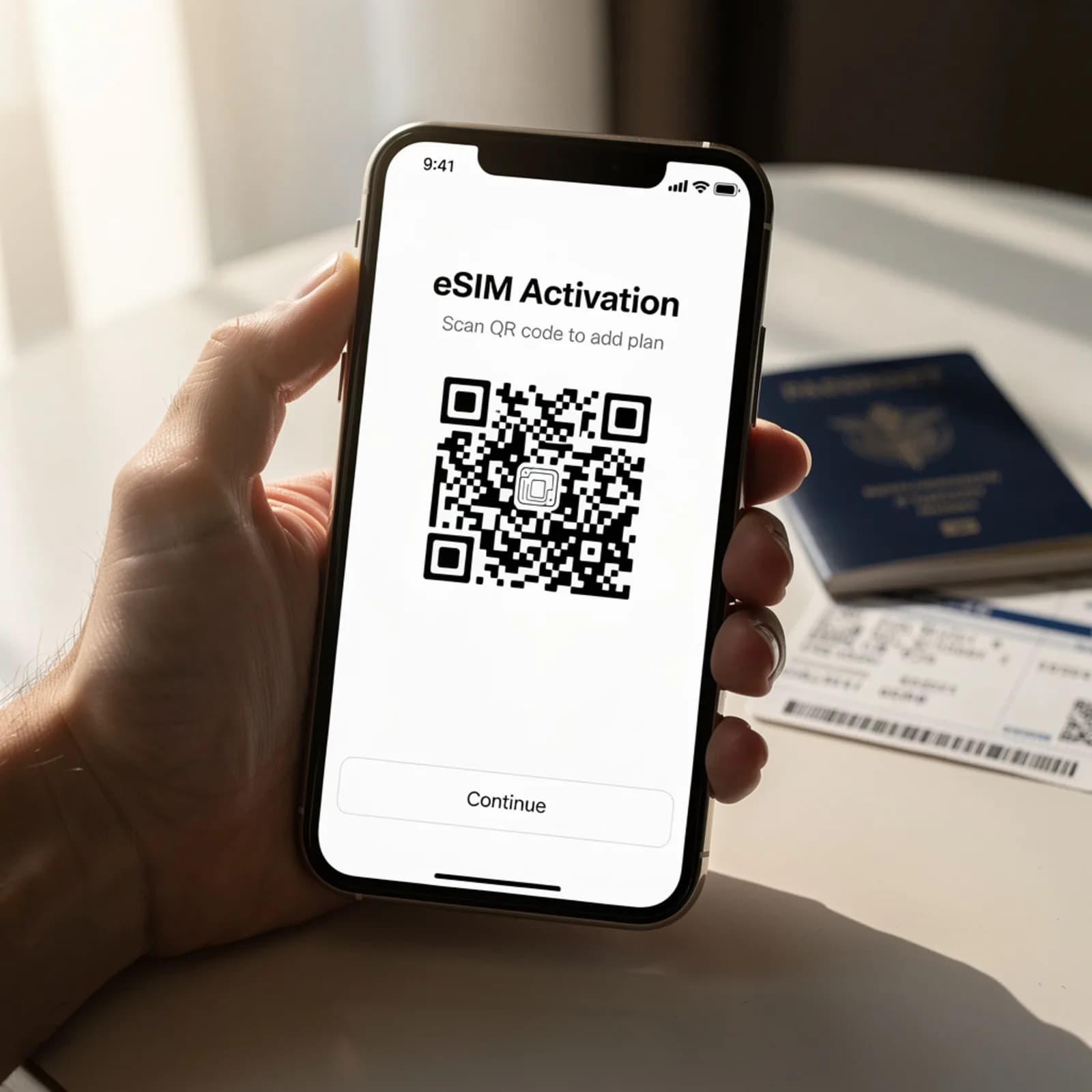
- Receive Your QR Code: Within minutes of your purchase, you will receive an email containing your eSIM QR code and detailed installation instructions. This instant delivery means no waiting for physical cards to arrive.
- Install Your eSIM:
- For iPhone: Go to Settings > Cellular (or Mobile Data) > Add eSIM. Choose "Use QR Code" and scan the QR code from your email. Follow the on-screen prompts to label your eSIM (e.g., "Spain Travel") and set it as your default for mobile data.
- For Android: Navigate to Settings > Network & Internet > SIMs (or Mobile Network) > Add eSIM (or Download a SIM). Scan the QR code and follow the instructions to activate and name your new eSIM.
- Activate Upon Arrival: While you can install the eSIM at home, activate it only when you land in Spain. Turn on your newly installed eSIM line, ensure Data Roaming is enabled for the eSIM (this is crucial for it to connect to local networks without incurring extra charges as it is a local data plan), and you should connect to a local network within minutes. Make sure your primary line (home SIM) is either turned off or set to only receive calls/SMS to avoid accidental roaming charges. For a more comprehensive guide, refer to our Complete eSIM Setup Guide.
Maximizing Connectivity: Dual SIM Usage for Easter Travel
One of the most significant advantages of an eSIM-compatible device is its dual SIM functionality, allowing you to use both your home physical SIM card and your Cellesim eSIM simultaneously. This setup is particularly beneficial for your 2026 Easter trip to Spain, as it enables you to stay connected to your usual number while enjoying affordable local data. Many travelers often wonder if they should turn off their primary line when using an eSIM abroad. The answer is nuanced, depending on your needs.
You do not necessarily need to turn off your primary line. Instead, you can configure your phone to use your Cellesim eSIM for all mobile data in Spain, while keeping your primary SIM active for incoming calls and text messages from your home country. This means you can still receive verification codes, calls from family, or urgent messages without incurring expensive roaming data charges. To set this up, go into your phone's cellular or mobile data settings. Designate your Cellesim eSIM as the primary line for "Mobile Data" and your physical SIM as the primary line for "Calls" and "SMS" (if you want to receive them).
This dual SIM capability ensures you maintain continuity with your existing contacts while leveraging the cost-effectiveness of an eSIM for internet access. You can easily switch between data lines if needed, providing ultimate control over your connectivity. For instance, if you anticipate needing to make international calls using your home number's minutes, you can temporarily switch the call priority. However, for all internet-based communication, from navigating Seville's intricate streets during a procession to sharing photos of the majestic paso, your Cellesim eSIM will handle the data traffic efficiently and affordably. Learn more about managing dual SIMs in our detailed guide on how to use an eSIM and a regular SIM at the same time.
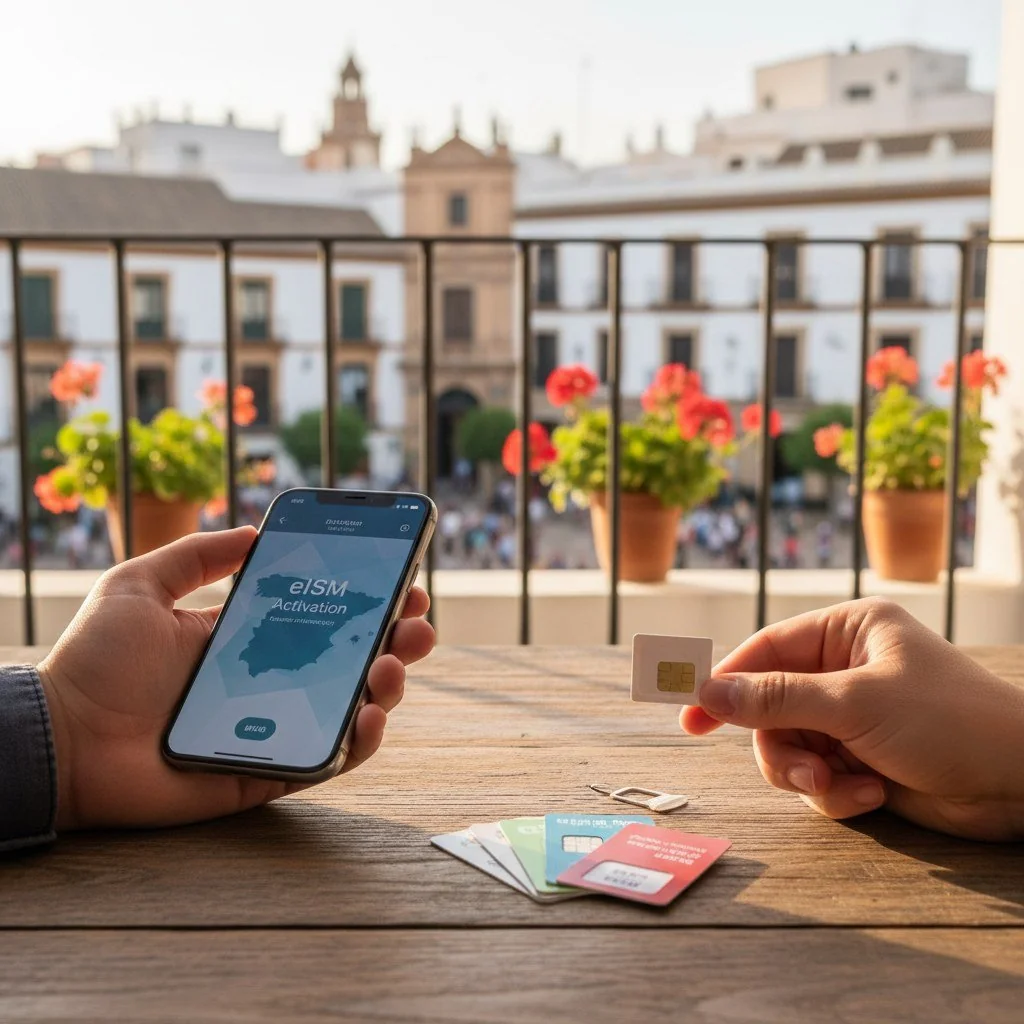
eSIM vs. Traditional SIM Cards and Roaming in Spain
When preparing for your 2026 Easter trip to Spain, a crucial decision involves how you will stay connected. The primary options are traditional physical SIM cards, international roaming from your home provider, or an eSIM. Understanding the distinctions will help you make the most cost-effective and convenient choice.
Traditional Physical SIM Cards:
Purchasing a local SIM card upon arrival in Spain might seem like a good option for travelers seeking local rates. Carriers like Orange, Vodafone, and Movistar offer prepaid tourist SIMs. However, this option requires you to find a store, often navigate language barriers, and physically swap out your home SIM. During the busy Easter season, stores might be crowded or have limited hours. Additionally, you risk losing your home SIM card, and you lose access to your primary number unless your phone supports dual physical SIMs, which is less common than eSIM compatibility. The initial setup can be time-consuming when you could be experiencing the vibrant atmosphere.
International Roaming:
Relying on your home provider's international roaming plan is often the most expensive choice. While convenient, daily passes (which can cost $10-$15 per day) or pay-as-you-go rates quickly add up, turning your data usage into an unforeseen expense. Many roaming plans also come with throttled speeds after a certain daily limit, which can be frustrating when you need reliable data for navigation or communication in crowded Easter processions. You can use our roaming savings calculator to see potential savings.
Cellesim eSIM:
An eSIM combines the best of both worlds. It offers competitive local data rates without the hassle of physical swaps or the shock of roaming bills. You can purchase and install it before you even leave home, activating it instantly upon arrival. Cellesim connects you to reliable local networks, ensuring fast and consistent data speeds for your entire trip. For a direct comparison, consider the following:
Ultimately, for a seamless and stress-free Easter trip to Spain in 2026, an eSIM presents itself as the superior choice, blending affordability, convenience, and robust connectivity. For a deeper dive, read our article eSIM vs. International Roaming: Which is Actually Cheaper for Travelers?
Navigating Spain's Easter Festivities with Reliable Data
Easter in Spain, particularly Semana Santa, transforms cities into living theaters of tradition, faith, and immense crowds. Having reliable mobile data is not just a convenience; it is an essential tool for navigating this unique experience in 2026. From the intricate parade routes of Seville's Brotherhoods to the solemn processions in Valladolid, real-time information can significantly enhance your trip.
Imagine being in the heart of Seville, trying to find your way to see a specific 'paso' (float). With an active Cellesim eSIM, you can use Google Maps or local navigation apps to track parade movements and find the best viewing spots. These apps often update in real-time, accounting for diversions and crowd density. Without consistent data, you might find yourself lost in a sea of people, missing key moments of the procession. Many Spanish cities also offer dedicated apps for Semana Santa, providing schedules, routes, and points of interest. An eSIM ensures you can download and utilize these invaluable resources.
Beyond navigation, reliable data facilitates seamless communication. You can easily coordinate with travel companions via messaging apps like WhatsApp, which is widely used in Spain. Sharing your location, sending photos or videos of the stunning religious art, or simply staying in touch if you get separated in the crowds becomes effortless. Social media is another significant aspect; live-streaming moments, posting updates, and interacting with the local culture are all possible with a robust data connection. For instance, consider checking out local Seville tourism resources like Visit Seville's Easter guide to plan your viewing spots. This connectivity also extends to practicalities like checking public transport schedules, booking last-minute restaurant reservations, or even translating phrases on the fly. An eSIM ensures you remain connected to every facet of your immersive Easter journey.
Potential Downsides and Solutions for eSIM Users in Spain
While eSIM technology offers numerous advantages for travelers heading to Spain for Easter 2026, it is also important to be aware of potential challenges and how to mitigate them. Understanding these minor hurdles ensures an even smoother experience.
One primary concern for some travelers is device compatibility. While a growing number of smartphones support eSIMs, older models might not. If your device is not eSIM-compatible, then a physical local SIM card or roaming might be your only options. Before purchasing any eSIM, always use the Cellesim eSIM Checker to confirm your phone is supported. Another potential downside could arise if you encounter an issue during installation. While Cellesim's process is designed to be straightforward, scanning a QR code can sometimes be tricky if you only have one phone and no secondary screen. Our blog post "How do I scan the QR code eSIM installation guide" provides helpful workarounds, such as printing the QR code or using another device to display it.
Furthermore, some travelers might be accustomed to having a local phone number for calls, which an eSIM data plan does not typically provide. While Cellesim eSIMs primarily offer data, you can still make calls and send messages using VoIP apps like WhatsApp, Skype, or Google Voice, leveraging your data connection. These apps are widely accepted in Spain. If a local Spanish number is absolutely essential for specific services (like booking local tours requiring a local callback, though this is rare for tourists), you might need to consider a physical SIM alongside your eSIM, using a dual SIM setup. However, for the vast majority of tourist activities, data-based communication is more than sufficient.
Finally, data coverage, while generally excellent in Spain's urban areas with Cellesim's robust network partners, might be spotty in very remote or mountainous regions. This is a challenge faced by all mobile services, not just eSIMs. If your Easter plans include venturing off the beaten path into remote Spanish countryside, downloading offline maps and communicating your itinerary to others beforehand is a good practice. Overall, with a bit of foresight, any potential downsides of using an eSIM in Spain can be easily managed.
Practical Tips for a Connected and Memorable Easter in Spain 2026
To ensure your 2026 Easter trip to Spain is as memorable and connected as possible, here are some practical tips to combine your Cellesim eSIM with smart travel practices:
- Pre-Download Essential Apps: Before you leave home, ensure you have crucial apps downloaded and updated. This includes mapping apps (Google Maps, Citymapper), translation tools (Google Translate), messaging apps (WhatsApp), and any specific local Semana Santa apps for parade routes and schedules. Your eSIM will then provide the live data they need to function optimally.
- Monitor Data Usage: While Cellesim offers generous data plans, it is always wise to keep an eye on your consumption, especially if you are sharing high-resolution videos or engaging in extensive video calls. Most smartphones provide a data usage tracker in their settings, and Cellesim also offers easy ways to check your remaining data and top up directly from your account.
- Utilize Personal Hotspot: Your Cellesim eSIM data can be shared with other devices, such as a tablet or laptop, by enabling your phone's personal hotspot feature. This is incredibly useful if you are traveling with companions who need internet access or if you are catching up on work during downtime between processions. Learn more in our ultimate guide to eSIM tethering.
- Carry a Portable Charger: Extensive use of navigation, photography, and data-intensive apps during long days of exploring Easter festivities can drain your phone's battery. A portable power bank is an indispensable accessory to keep your device charged and your eSIM connected throughout the day.
- Secure Your Device: With thousands of people gathering for processions, pickpocketing can be a concern in crowded areas. Be vigilant, keep your phone secure, and consider having a digital copy of important documents accessible online (e.g., in cloud storage) in case of loss or theft.
- Explore Regional Plans for Multi-Country Trips: If your 2026 Easter holiday extends beyond Spain to other European destinations, consider a Cellesim Europe regional plan. This saves you the trouble of purchasing multiple country-specific eSIMs and offers seamless transitions across borders.
By integrating these tips with your Cellesim eSIM, you will be well-equipped to experience Spain's magnificent Easter traditions in 2026 with confidence, convenience, and constant connectivity.
Discover Seamless Connectivity Across 200+ Countries
Your journey doesn't end in Spain. Explore Cellesim's global eSIM plans for your next adventure.
Trusted by 50,000+ travelers worldwide for instant, reliable data.
Frequently Asked Questions
Which eSIM card is best for Spain in 2026?
For most travelers to Spain in 2026, Cellesim offers some of the best eSIM options due to its extensive coverage (connecting to top local networks), flexible data plans, and transparent pricing. Cellesim provides both Spain-specific and Europe-wide regional eSIMs, catering to various travel needs and durations. The instant digital delivery and 24/7 multilingual support also make it a highly convenient and reliable choice.
Do I turn off my primary line when using an eSIM?
You do not necessarily need to turn off your primary line. Most eSIM-compatible phones support dual SIM functionality, allowing you to use your Cellesim eSIM for mobile data while keeping your physical SIM (primary line) active for incoming calls and texts. Simply configure your phone's cellular settings to prioritize the eSIM for data and your physical SIM for voice/SMS to avoid roaming data charges.
What are the downsides of using an eSIM?
The main downsides of using an eSIM include the requirement for an eSIM-compatible device (not all older phones support it), and primarily offering data services rather than a local Spanish phone number for traditional calls. While Cellesim aims for seamless installation, scanning a QR code might require a second screen if you only have one device. However, these are often minor issues compared to the cost and convenience benefits, and data-based calling/messaging apps easily overcome the lack of a local number.
Do you install eSIM before going abroad?
Yes, you can absolutely install your Cellesim eSIM before you travel to Spain. After purchasing your plan, you will receive a QR code via email. You can scan this QR code and complete the installation steps at home. It is generally recommended to only activate the eSIM (turn on the line in your phone's settings and enable data roaming for that profile) once you land in Spain to ensure your data validity period begins at the correct time.
How much data do I need for an Easter trip to Spain in 2026?
The amount of data you need depends on your usage habits. For a typical Easter trip of 7-10 days, if you primarily use data for navigation, messaging, social media browsing, and occasional photo uploads, a plan with 5-10 GB should be sufficient. If you plan extensive streaming, video calls, or heavy hotspot usage, consider a plan with 15-20 GB or more. Cellesim offers flexible plans to match your needs.
Can I top up my Cellesim eSIM data plan in Spain?
Yes, Cellesim makes it easy to top up your data plan if you run out during your Easter trip in Spain. You can simply log into your Cellesim account on cellesim.com and purchase an additional data package for your existing eSIM. The top-up will be applied almost instantly, ensuring you remain connected.