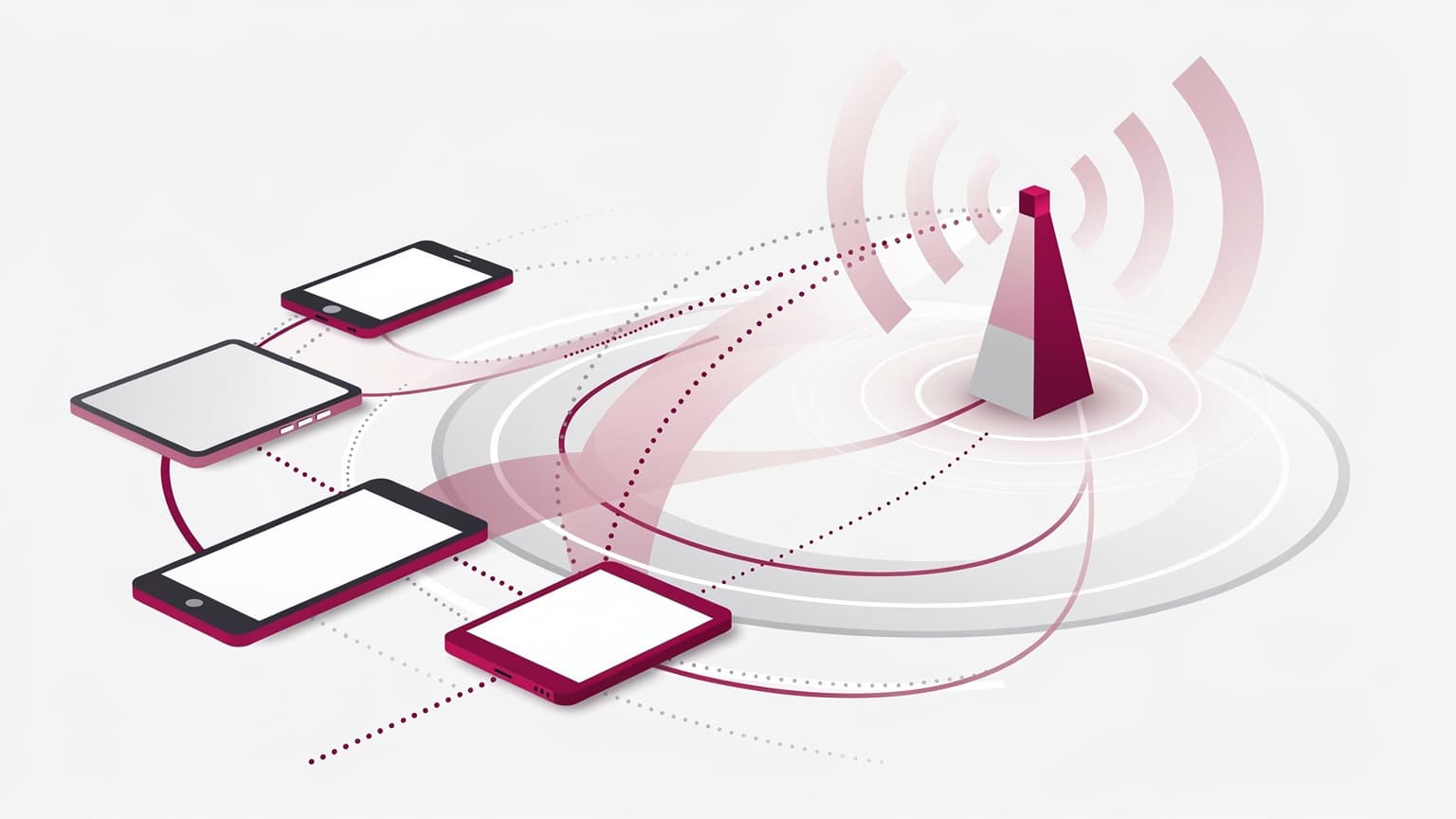
The Data-Only Reality: And Why It Matters
Most travel eSIMs you’ll encounter, like those from Cellesim for Indonesia, are provisioned as data-only. This means they provide internet access, allowing you to use apps like WhatsApp, iMessage (if linked to your Apple ID), Telegram, and Signal for messaging and even voice/video calls. What they typically lack is the underlying infrastructure for traditional SMS (Short Message Service) and circuit-switched voice calls.

Think of it like this: your phone is a powerful computer capable of many things. When you install a data-only eSIM, you're essentially giving it a high-speed Ethernet cable, but you haven't plugged in the old landline phone. The data connection is robust, often leveraging the latest 4G (LTE) or 5G (NR) bands, which we’ll discuss later. For example, when I was testing a Telkomsel eSIM in Bali, I was consistently getting speeds of 50-80 Mbps down and 15-25 Mbps up on B3 (1800MHz) and B8 (900MHz) in areas around Ubud, more than enough for video calls over WhatsApp. But try to send a plain SMS, and you'll find it won't go through.
This distinction is crucial for several reasons:
- Two-Factor Authentication (2FA): Many banks, email providers, and online services still rely on SMS for sending verification codes. If your travel eSIM is data-only and your primary physical SIM is deactivated or not roaming, you could be locked out of essential services. This was my problem in Marrakech.
- Local Contact: If you need to text a local number that doesn't use messaging apps, like a taxi driver who only communicates via SMS, a data-only eSIM won't help.
- Emergency Services: While data apps can be used for communication, traditional emergency calls (like 999 or 112) usually require a voice-enabled connection.
The solution? Keep your primary physical SIM active for these critical functions, even if it's just for receiving SMS. Most modern smartphones allow you to run an eSIM for data and a physical SIM for voice/SMS concurrently. Just be mindful of roaming charges on your primary SIM if you leave its data roaming turned off.
VoLTE and VoWiFi: The Real Deal with eSIM Calls
So, if a data-only eSIM doesn't support traditional voice calls, how do some eSIMs offer calling features? This is where Voice over LTE (VoLTE) and Voice over WiFi (VoWiFi) come into play. These technologies leverage your data connection to route voice calls.
VoLTE, as the name suggests, routes voice traffic over the LTE data network. It's essentially packaging your voice as data packets and sending them over the same high-speed connection you use for browsing. The benefit is much clearer call quality and faster call setup times compared to older 2G/3G circuit-switched calls. For an eSIM to support VoLTE, two conditions must be met: the local network provider must support VoLTE on its infrastructure, and the eSIM plan itself must be provisioned to allow VoLTE.
VoWiFi, or WiFi Calling, works similarly but uses any available Wi-Fi network. This is particularly useful in areas with poor cellular coverage but good Wi-Fi, like underground stations or within certain buildings. Both VoLTE and VoWiFi require support from the carrier and your device. It's not uncommon for a device to support VoLTE on one carrier but not another, depending on their specific IMS (IP Multimedia Subsystem) implementations.
I've seen some interesting APN edge cases here, especially with older Pixel phones or specific Android builds. Sometimes, even with a VoLTE-enabled eSIM, if the Access Point Name (APN) settings aren't precisely configured for IMS services, VoLTE won't activate. This usually manifests as calls dropping back to 3G or 2G, which is a tell-tale sign the voice component isn't running over LTE. Modern iPhones are generally better at automatically configuring these settings, but Android users sometimes need to manually check their APN types, ensuring 'ims' is listed.
When you're comparing eSIM plans, look carefully at the fine print. If a plan mentions