
Why Ditch Physical SIM Cards for USA Travel?
I’ve landed in countless airports over the years, from Frankfurt's sprawling Terminal 1 to the surprisingly efficient Narita outside Tokyo. One constant headache, especially after a long-haul flight, was always the hunt for a local SIM card. Remember those frantic searches for a kiosk, often only to find it closed by 6 PM, like the small telecom shop I once found in the Arrivals Hall at LAX's Tom Bradley International Terminal? Or worse, the language barrier when trying to explain what 'unlimited data' truly means?
eSIM technology has, thankfully, swept away those initial post-landing anxieties. Instead of fumbling with tiny plastic cards or waiting in line, you can have your data plan ready before you even board your flight. For anyone visiting the USA, whether it's a whirlwind business trip through Silicon Valley's tech campuses or a leisurely road trip across New England, an eSIM offers unparalleled convenience. No more worrying about losing your home SIM, or the baffling moment when a tiny paperclip is needed to eject a tray. I've been there, staring at my phone, trying to pry open the SIM slot with a dull pen, only to give up and try my luck with hotel Wi-Fi. (Never again, trust me.)
It’s also about flexibility. Traditional SIMs often lock you into contracts or rigid top-up systems. With an eSIM, you can often switch plans or providers with a few taps, a significant advantage if your travel plans suddenly extend from a week in Miami's South Beach to an unexpected detour through the national parks of Utah.

Understanding USA Mobile Networks, A Quick Primer
The United States is a vast country, and its mobile network landscape reflects that scale. Unlike some European nations where a handful of carriers offer near-ubiquitous coverage, the USA is dominated by three major players: AT&T, T-Mobile, and Verizon. Understanding their strengths and weaknesses is crucial for choosing an eSIM that won't leave you stranded in a data desert.
AT&T: Known for its strong coverage in urban areas and along major highways, AT&T generally offers reliable service. If you're planning to stick to major cities like New York, Chicago, or Los Angeles, or travel between them on interstates, AT&T-backed eSIMs are usually a safe bet. Their 5G network is extensive in metropolitan areas, ensuring good speeds for streaming or video calls from, say, a quiet corner café in Brooklyn's Dumbo neighborhood.
T-Mobile: This carrier has made significant strides in recent years, particularly with its mid-band 5G rollout. T-Mobile tends to excel in urban and suburban environments, often providing excellent speeds. However, their rural coverage can sometimes be spotter than Verizon's, especially in the more sparsely populated regions of the Midwest or mountain states. If you're exploring the breweries in Portland, Oregon, or navigating the MTA in New York, T-Mobile coverage will likely serve you well. For a deeper dive into T-Mobile's specific eSIM offerings, especially their QR code activation process, you might find T-Mobile eSIM QR Code: Hassle-Free Activation for Your Next Trip 2026 helpful.
Verizon: Often touted for its robust coverage, particularly in rural areas, Verizon tends to have the widest footprint across the entire US. This makes it a preferred choice for travelers venturing off the beaten path, perhaps into national parks or smaller towns. While its 5G rollout was initially slower than T-Mobile's, Verizon's network is now quite powerful, especially with its ultra-wideband (mmWave) 5G in dense city centers like downtown Dallas. If you're heading to places where cell towers are few and far between, an eSIM running on Verizon's network is usually your best bet. Keep in mind that Verizon's older CDMA network is largely phased out, so modern phones with LTE/5G are essential.
Many eSIM providers partner with one or more of these major networks. Cellesim, for instance, often leverages these networks to provide strong, reliable data. Always double-check which underlying network an eSIM provider uses, especially if you have a specific travel itinerary that includes remote locations.
Picking Your eSIM Plan: Key Considerations
Choosing the right eSIM for your USA trip isn't just about picking the cheapest option. It's about aligning the plan with your actual travel needs. A few factors should guide your decision, ensuring you don't overpay for data you won't use, or worse, run out when you need it most.
How Much Data Do You Really Need?
This is the golden question. Are you a minimalist who only checks emails and maps, or are you constantly streaming videos and video calling home? My rule of thumb, honed over years of trying to conserve data in remote corners of the world, is to overestimate slightly. It’s always better to have a little extra than to be scrambling for a top-up when you’re trying to book a ride-share from Nashville’s Music Row late at night. For most travelers, 10-20GB for a two-week trip is a comfortable range. Business travelers might need more, especially if relying on cloud services or frequent video conferencing.
Duration of Your Stay
eSIM plans are often structured around validity periods: 7 days, 15 days, 30 days. Match this to your trip length. If you're in the US for a brief stint, say a weekend conference in Seattle's Belltown district, a shorter, smaller data package makes sense. For longer stays, like a month-long sabbatical exploring the Pacific Northwest, a 30-day plan with more data will be more economical. Remember, some plans don't allow extensions, so plan accordingly.
Regional Coverage vs. Nationwide
The USA is vast. Some eSIM plans might offer excellent coverage in specific regions, perhaps only the East Coast or California, while others boast nationwide reach. If your trip involves hopping between, say, the beaches of San Diego and the historical sites of Boston, a nationwide plan is essential. Always check the coverage map of the underlying carrier (AT&T, T-Mobile, Verizon) for the specific areas you plan to visit. I once made the mistake of assuming a 'US plan' meant universal coverage, only to find myself without data in a small town outside Zion National Park, trying to navigate with a paper map (a true relic, that).
Pricing and Value
Compare not just the headline price, but the cost per GB. Sometimes a slightly more expensive plan offers significantly better value per gigabyte. Also, look for any hidden fees or activation charges. Most reputable eSIM providers, like Cellesim, are transparent about their pricing. Don't forget to consider bundles, which might include international calls if you need to make traditional phone calls within the US or back home. And for those keen on testing the waters, eSIM Free Trials: Are They Worth the Money-Saving Gamble in 2026? offers a good perspective on trial options.
Top eSIM Providers for USA Travel 2026: A Head-to-Head
The eSIM market has become quite competitive, which is great news for travelers. Here’s a look at some of the leading providers offering plans for the USA, focusing on what matters most: data, coverage, and flexibility.
| Provider | Network Partner(s) | Typical Data Plans | Key Features for USA Travel |
|---|---|---|---|
| Cellesim | AT&T, T-Mobile, Verizon (dynamic) | 1GB-100GB, 7-30 days | Excellent coverage via multiple networks, flexible durations, competitive pricing, easy top-ups. |
| Airalo | AT&T, T-Mobile | 1GB-20GB, 7-30 days | User-friendly app, good for short trips, wide range of global plans. |
| Holafly | AT&T, T-Mobile | Unlimited data, 5-90 days | 'Unlimited' data (with fair usage policy), good for heavy users, sometimes higher price point. |
| AloSIM | AT&T, T-Mobile | 1GB-20GB, 7-30 days | Competitive pricing, straightforward plans, good for basic connectivity. |
Cellesim, with its ability to intelligently switch between AT&T, T-Mobile, and Verizon networks, often provides the most robust coverage, especially for those venturing beyond major cities. I've found this particularly useful when driving between national parks in the Southwest, where coverage can be notoriously patchy. One minute you're on AT&T near Flagstaff, Arizona, the next you've seamlessly transitioned to Verizon as you approach the Grand Canyon, all without any manual intervention.
For families traveling together, especially those with multiple devices, comparing providers like Cellesim and Nomad becomes important. Our deep dive, Cellesim vs. Nomad: Family Travel Data, Which eSIM Wins for 2026?, might offer some useful insights there.
| Data Amount | Cellesim (Example Price, USD) | Airalo (Example Price, USD) | Holafly (Example Price, USD) |
|---|---|---|---|
| 5 GB, 15 Days | $16.00 | $17.00 | N/A (Unlimited plans only) |
| 10 GB, 30 Days | $28.00 | $30.00 | $39.00 (Unlimited, 15 Days) |
| 20 GB, 30 Days | $48.00 | $50.00 | $64.00 (Unlimited, 30 Days) |
These prices are illustrative for 2026 and can change, so always check the provider's website for the most current rates. What's clear is that Cellesim aims to be highly competitive, often offering slightly better value per gigabyte, especially for larger data packages. Holafly's 'unlimited' plans can be appealing for very heavy users, but always read the fine print regarding their fair usage policy, which might throttle speeds after a certain threshold.
Activation Made Easy: Your eSIM Setup Guide
One of the true joys of eSIMs is the straightforward activation process. No more tiny tools or trips to a phone store. Most of the time, you can get connected in minutes. This is particularly useful when you're dealing with jet lag and just want to get to your hotel in, say, Chicago's River North district without getting lost.
What You'll Need Before You Start:
- An eSIM-compatible device: Most modern smartphones, especially iPhones XR and newer, Google Pixels 3 and newer, and many Samsung Galaxy models, support eSIM. Double-check your device's specifications if you're unsure.
- A stable Wi-Fi connection: You'll need this to download the eSIM profile. Do this before you leave your home country or while connected to airport Wi-Fi.
- Your eSIM QR code or manual details: These are provided by your eSIM vendor, usually via email or within their app.
Step-by-Step Activation (iOS Example):
- Purchase Your eSIM Plan: Head to a reputable eSIM provider like Cellesim and select your desired USA data plan. Complete the purchase.
- Receive Activation Information: You'll typically get an email with a QR code and/or manual installation details. If you're using the Cellesim app, the process is often even more integrated.
- Add eSIM to Your iPhone: On your iPhone, go to Settings > Cellular (or Mobile Data) > Add eSIM.
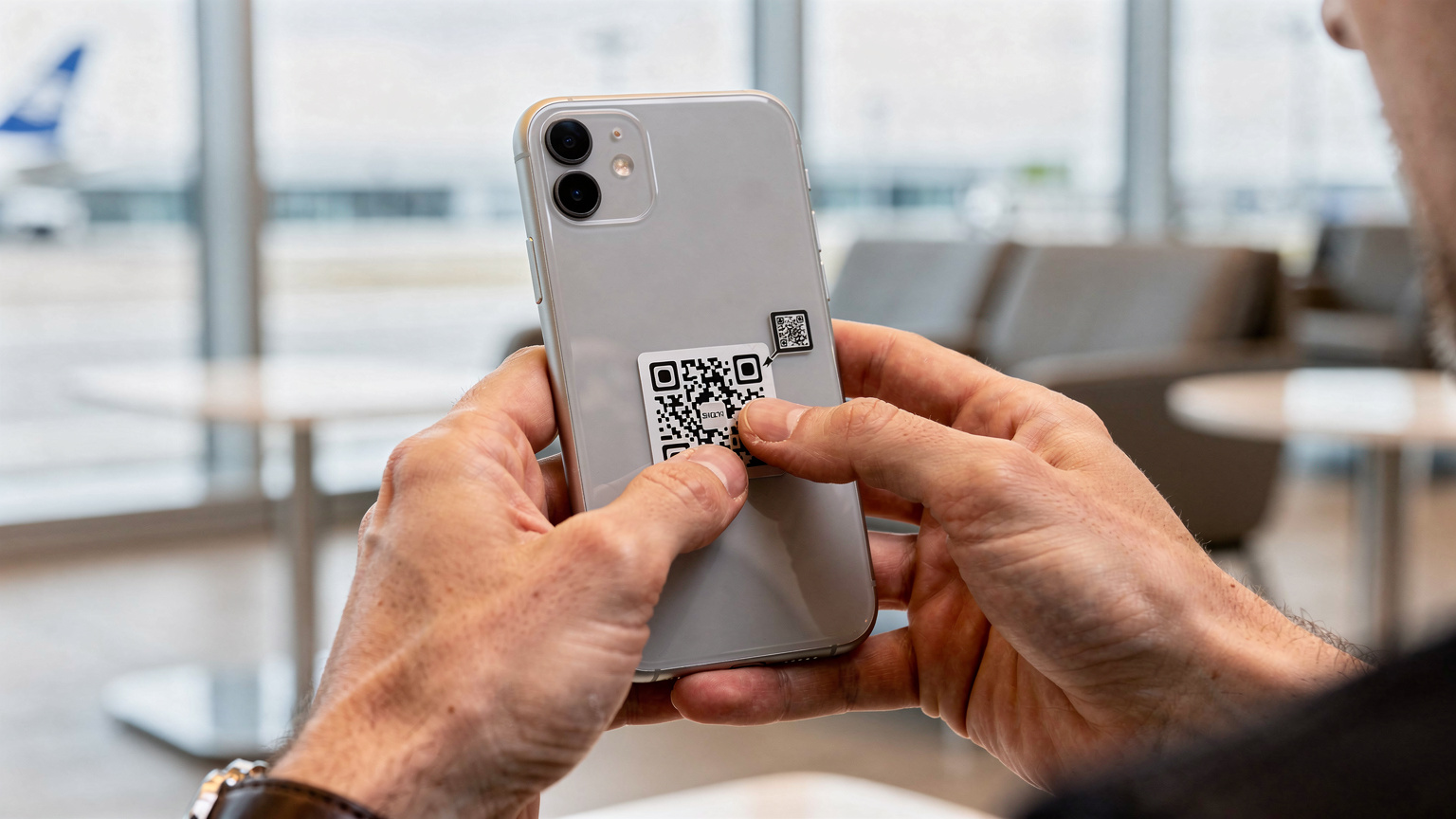
- Scan QR Code: Choose 'Use QR Code' and scan the code provided by Cellesim. If scanning isn't possible, select 'Enter Details Manually' and input the SM-DP+ Address and Activation Code.
- Label Your eSIM: Your phone will prompt you to label your new eSIM, perhaps 'USA Travel' or 'Cellesim USA'. This helps differentiate it from your primary SIM.
- Set Default Line: Decide which line you want for data. For travel, you'll usually want your new eSIM for data, while keeping your home SIM active for calls/texts (if you want to receive them).
- Enable Data Roaming (for eSIM): Crucially, once installed, ensure that 'Data Roaming' is turned ON for your eSIM profile in your Cellular/Mobile Data settings. This sounds counterintuitive, as the whole point is to avoid roaming fees, but for an eSIM from a third-party provider, it's often required for the data to work.
- Test Your Connection: Once activated, try browsing a website or using a mapping app. If you're in an area with good coverage, you should be online.
For a detailed guide on setting up eSIMs on iPhones specifically for international travel, iPhone eSIM Abroad: Your Essential Guide to Seamless Global Connectivity in 2026 is an excellent resource.
Troubleshooting Common eSIM Issues in the USA
Even with the best planning, sometimes technology throws a curveball. I've been there, staring at a 'No Service' message when I absolutely needed to confirm a reservation for a tiny, off-the-beaten-path restaurant in New Orleans' French Quarter (Commander's Palace, worth the panic, by the way). Here are some common issues and their quick fixes:
- No Data/No Service:
Check Data Roaming: As mentioned, ensure Data Roaming is ON for your eSIM profile. This is the most common oversight. Your eSIM is technically 'roaming' on the host US network.
Network Selection: Sometimes, your phone might try to connect to a weaker signal. Go to Cellular/Mobile Data settings, select your eSIM, and under 'Network Selection', try turning off 'Automatic' and manually selecting AT&T, T-Mobile, or Verizon.
APN Settings: Rarely, an eSIM might require manual APN settings. Check your provider's instructions for this, though most modern eSIMs auto-configure. - Slow Speeds:
Check Coverage: Are you in a known dead zone or a particularly congested area, like a busy Times Square on a Saturday night? Move to a different location.
Fair Usage Policy: If your plan is 'unlimited', you might have hit a fair usage threshold, leading to throttled speeds. Check your provider's terms.
Restart Your Phone: The classic IT fix. A quick restart can often clear up minor network glitches. - eSIM Not Installing:
Stable Wi-Fi: Ensure your Wi-Fi connection is strong and stable during installation.
QR Code Clarity: Make sure the QR code isn't blurry or damaged. Try re-downloading it if possible.
Device Compatibility: Double-check that your phone is indeed eSIM compatible and isn't locked to a specific carrier (though most unlocked phones purchased directly from manufacturers are fine).
If all else fails, contact your eSIM provider's customer support. They can often diagnose issues remotely. It's always a good idea to have their support contact information saved before you land.
Local Apps and Services That Thrive on Good Data
Having reliable data in the USA isn't just about making calls; it's about unlocking the full potential of your trip. The US relies heavily on mobile apps for almost everything, from navigation to ordering food. (Forget about finding a payphone, those are practically museum pieces.)
- Navigation: Google Maps, Apple Maps, and Waze are indispensable. Whether you're driving the Pacific Coast Highway or navigating the intricate subway lines of the NYC MTA, real-time traffic updates and public transit directions save you time and stress.
- Ride-Sharing: Uber and Lyft are ubiquitous. You'll use them to get from JFK Airport to your hotel in Midtown East, or to hop between neighborhoods in Austin's South Congress area after a show. Having instant access to these apps means shorter wait times and reliable pricing.
- Food Delivery & Reservations: DoorDash, Uber Eats, and Grubhub are popular for food delivery, while OpenTable is a must for restaurant reservations, especially in culinary hotspots like San Francisco's Mission District.
- Ticketing & Payments: Many attractions, particularly museums and theme parks, now use mobile ticketing. Apple Pay and Google Pay are widely accepted, making transactions quick and contactless. I've even seen street vendors in Philadelphia's Reading Terminal Market accept mobile payments.
- Travel & Accommodation: Airbnb, Booking.com, and various airline apps are vital for managing your itinerary, checking in, and even getting real-time flight updates. Nothing worse than missing a gate change at Denver International because your data cut out.

eSIM for Business Travelers: Keeping Connected on the Go
Business travel to the USA often means a tighter schedule, higher stakes, and an absolute necessity for uninterrupted connectivity. An eSIM isn't just a convenience; it's a productivity tool. Imagine having to hop from a meeting in downtown San Francisco to another in San Jose, then catch a flight from SFO, all while needing to stay in touch with your team. A reliable data connection is non-negotiable.
Why eSIM is a Business Travel Game-Changer:
- Instant Connectivity: Land at O'Hare in Chicago, and your eSIM is already active. No delays, no searching for SIM cards. You can immediately check emails, update colleagues, and call your Uber.
- Seamless Roaming Avoidance: Forget about bill shock from international roaming. eSIMs provide local rates, allowing you to use your phone for calls, messages, and data without worrying about exorbitant charges.
- Dual SIM Functionality: Most business travelers need to keep their primary number active for clients and colleagues. With an eSIM, you can use your home SIM for calls and texts while dedicating the eSIM for all your data needs, ensuring you're always reachable.
- Easy Expense Management: Digital receipts for eSIM purchases simplify expense reporting, a small but welcome detail for any corporate traveler.
- Reliable VPN Access: For secure corporate access, a stable data connection is paramount. eSIMs provide that foundation, allowing your VPN to operate smoothly for sensitive work.
I recall a particularly stressful trip to New York City where I had back-to-back meetings, from a startup in the Flatiron District to a venture capital firm in Midtown. My regular carrier's roaming was spotty, dropping calls and cutting out during video conferences. Switching to a local eSIM for data made all the difference, providing the consistent connection needed to navigate between appointments and stay on top of work. For business travelers, a strong connection is as vital as a good power bank. For those considering specific carrier options, AT&T eSIM for International Travel: A Parent's Guide to Seamless Connectivity in 2026 provides insight into a major network that often underpins business-friendly eSIMs.
Extending Your Stay or Your Data: What to Know
Sometimes, travel plans change. An unexpected extension to a project, a spontaneous decision to explore more of California's wine country around Napa Valley, or simply realizing you need more data than you initially bought. This is where the flexibility of eSIMs truly shines, though it's important to understand the nuances of extending your plan.
Topping Up Your Current Plan:
Many eSIM providers, Cellesim included, allow you to easily 'top up' your existing plan with more data or extend its validity period directly through their app or website. This is the simplest option if you're happy with your current provider and coverage. The process usually involves selecting your active eSIM, choosing a top-up package, and completing the payment. It's far less hassle than buying a new physical SIM or migrating to a different carrier entirely.
Switching to a New eSIM Plan:
If you're nearing the end of your original plan's validity and your needs have changed, or if you've found that your current provider's coverage wasn't ideal in a particular region (say, you initially went with T-Mobile-backed eSIM and found it weak in rural Montana, and now need Verizon-backed coverage), you can simply purchase a new eSIM plan from a different provider or even a different plan from the same provider. Remember, with eSIM, you can have multiple profiles stored on your device and switch between them as needed. This is particularly useful if you decide to extend your trip significantly, for example, from two weeks to two months, and a longer-term plan from a different provider offers better value. For more general information on eSIMs, don't hesitate to check out our eSIM FAQ.
The Future of Connectivity: eSIM and the USA in 2026 and Beyond
The trajectory of eSIM technology in the USA is only upward. With major carriers increasingly embracing it, and Apple pushing for eSIM-only iPhones in the US market, physical SIM cards are slowly becoming a relic of the past. By 2026, the landscape will be even more streamlined and user-friendly for travelers.
- Increased Competition: As more providers enter the eSIM market, expect even more competitive pricing and diverse plan options, tailored to specific travel needs, whether it's a short layover in Atlanta or an extended stay in Hawaii.
- Enhanced Network Integration: eSIMs will likely offer even smarter switching capabilities between the major US networks, ensuring travelers always connect to the strongest available signal, regardless of their location, from the dense streets of Manhattan to the quiet deserts of Arizona.
- Broader Device Compatibility: While most flagship phones already support eSIM, expect this compatibility to trickle down to mid-range devices, making the technology accessible to an even wider audience.
- Simplified Management: Future eSIM apps and device integrations will likely make managing multiple eSIM profiles, topping up, and switching plans even more intuitive, potentially integrating with travel apps or digital wallets.
The days of hunting for a local phone store, fumbling with paperclips, and deciphering complex pricing plans are fading. The eSIM future, especially for travel to a diverse and vast country like the USA, promises to be one of effortless, instant, and reliable connectivity. It's an evolution that genuinely enhances the travel experience, allowing you to focus on the sights and sounds of your journey, not the struggle for a signal.
Frequently Asked Questions
Can I keep my home phone number with an eSIM in the USA?
Yes, absolutely. One of the major advantages of an eSIM is its dual SIM capability. You can use your physical SIM for your home number (for calls and texts) and activate an eSIM for your data needs in the USA. This allows you to receive calls and texts on your primary number while enjoying local data rates.
Do I need a 5G compatible phone for USA eSIM plans?
While a 5G compatible phone will give you the fastest speeds in areas where 5G is available, it's not strictly necessary. 4G LTE coverage is still very robust and widely available across the USA, offering excellent speeds for most travelers' needs. Your eSIM will connect to the best available network, whether that's 4G or 5G.
Are there any 'unlimited' data eSIM plans for the USA?
Yes, some providers like Holafly offer 'unlimited' data plans for the USA. However, it's crucial to read their fair usage policies. Often, these plans will provide a certain amount of high-speed data (e.g., 20-30GB) before throttling speeds to a slower rate. For most users, a large fixed-data plan (e.g., 50-100GB from Cellesim) might offer more consistent high speeds.
Can I use an eSIM for calls and texts in the USA, or just data?
Most travel eSIMs are primarily data-only. For calls and texts, you would typically rely on internet-based apps like WhatsApp, FaceTime, or Google Voice, using your eSIM data. Some premium eSIM plans might include a local US number for calls and texts, but these are less common and usually come at a higher price point. Always check the plan details.
What if my phone is locked to my home carrier? Can I still use an eSIM?
Unfortunately, if your phone is locked to your home carrier, you won't be able to use an eSIM from a different provider. eSIMs, like physical SIMs, require an unlocked device to function with other networks. Before traveling, ensure your phone is unlocked, or contact your home carrier to request an unlock, which might be possible after fulfilling certain contract conditions.
Is eSIM activation difficult for non-tech-savvy travelers?
Not at all. The process is designed to be very user-friendly. Most eSIM providers offer clear, step-by-step instructions, often with QR codes that make activation as simple as scanning an image. If you can connect to Wi-Fi and open your phone's settings, you can activate an eSIM. Plus, customer support is always available if you get stuck.
See also: Oregon eSIM
See also: Texas eSIM