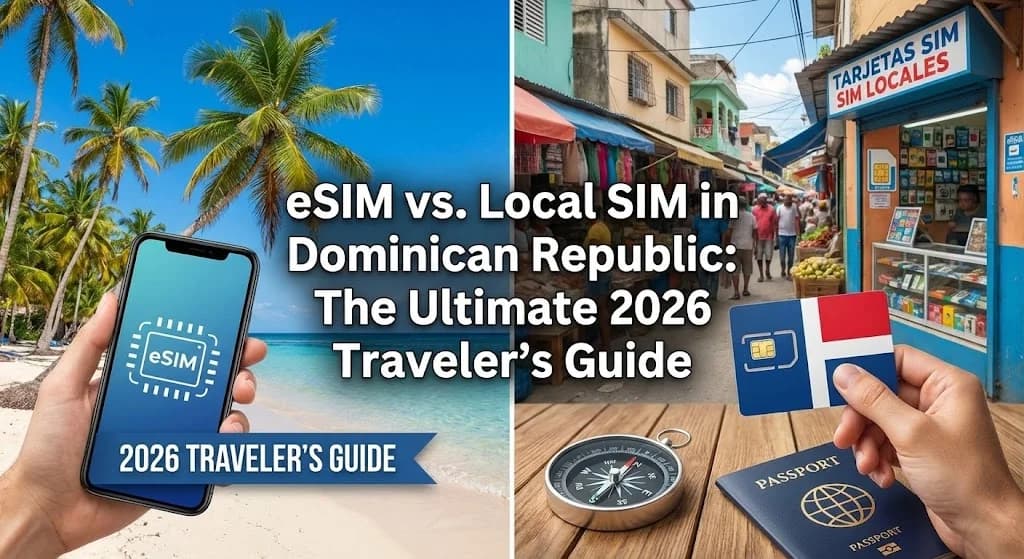
Embarking on a journey to the Dominican Republic in 2026 promises sun-drenched beaches, vibrant culture, and unforgettable experiences. Whether you are exploring the historic streets of Santo Domingo, relaxing on the shores of Punta Cana, or hiking through the lush mountains of Jarabacoa, staying connected is crucial for navigation, sharing memories, and staying in touch. The fundamental question for many travelers revolves around how best to achieve this connectivity: an eSIM or a traditional local SIM card? This ultimate guide will explore both options, offering a detailed comparison to help you make an informed decision for your 2026 trip.
- Navigating Connectivity for Your 2026 Dominican Republic Adventure
- eSIM Technology Explained for Your Dominican Republic Journey
- Local SIM Cards in the Dominican Republic: A 2026 Traveler's Perspective
- Why an eSIM is the Preferred Choice for 2026 Dominican Republic Visitors
- Cost Comparison: eSIM vs. Local SIM for Your Dominican Republic Trip in 2026
- Reliable Network Coverage Across the Dominican Republic with eSIM
- Activating Your Dominican Republic eSIM: A Simple 2026 Setup Guide
- Making Your Connectivity Decision for a Seamless 2026 Dominican Republic Trip
- Frequently Asked Questions
Dominican Republic eSIM Plans from $4.50
Connect instantly in the Dominican Republic without hunting for local SIMs. Join 50,000+ travelers who trust Cellesim for reliable connectivity.
Get Your Dominican Republic eSIMNavigating Connectivity for Your 2026 Dominican Republic Adventure
In 2026, traveling to a new country like the Dominican Republic without reliable internet can transform an exciting adventure into a logistical challenge. From navigating unfamiliar streets in Santo Domingo using GPS to finding the best local restaurants recommended by fellow travelers, or simply staying in touch with family, a stable internet connection is indispensable. Whether you are planning to immerse yourself in the vibrant nightlife of Sosúa, explore the natural parks, or conduct business remotely, seamless connectivity ensures peace of mind and enhances every aspect of your journey.
"Having instant internet access upon landing in the Dominican Republic was a game-changer. I could immediately call my taxi, check my hotel booking, and let my family know I arrived safely."
The choice between an eSIM and a traditional local SIM card impacts not just your data access but your entire travel experience. It influences convenience, cost, and the flexibility of your communication setup. Understanding the nuances of each option is key to selecting the best solution for your specific travel needs in the Dominican Republic.
eSIM Technology Explained for Your Dominican Republic Journey
An eSIM, or embedded SIM, is a digital SIM that allows you to activate a cellular plan from a carrier without needing a physical SIM card. For travelers heading to the Dominican Republic, this technology offers a modern and streamlined approach to mobile connectivity. Instead of swapping physical cards, you can download an eSIM profile directly to your compatible device, often by scanning a QR code or entering a few details.
The primary benefit for a Dominican Republic trip is the immediate access to local data networks. Upon arrival, your phone can connect to the internet within minutes, avoiding the need to find a local store, wait in line, or deal with potential language barriers. Cellesim offers eSIM plans covering over 200 countries, including the Dominican Republic, ensuring broad reach and consistent service for its 50,000+ happy customers worldwide.
Local SIM Cards in the Dominican Republic: A 2026 Traveler's Perspective
For decades, purchasing a local SIM card upon arrival has been the go-to method for international travelers seeking affordable connectivity. In the Dominican Republic, major mobile providers like Claro, Altice, and Viva offer prepaid SIM cards that can be acquired at airports, official carrier stores, and various retail outlets. This option provides direct access to local networks and sometimes includes local call and SMS bundles.
However, the process involves several steps that can consume valuable travel time. Upon landing at Las Américas International Airport (SDQ) or Punta Cana International Airport (PUJ), you would typically need to locate a vendor, present your passport for registration (a legal requirement), select a plan, and then physically swap out your home country's SIM card. This means potentially storing your original SIM safely and remembering to switch it back upon departure. For some, the initial setup can be complicated by language differences or unfamiliar sales procedures.
Furthermore, using a local SIM often means your primary phone number becomes inactive, which can be problematic for receiving verification codes, calls, or messages from home. This is a significant consideration for travelers who need to maintain access to their original number. For a detailed comparison, see our article on Airport SIM vs. eSIM.
Why an eSIM is the Preferred Choice for 2026 Dominican Republic Visitors
For many travelers to the Dominican Republic in 2026, an eSIM offers a compelling array of benefits that often outweigh the traditional local SIM. The primary advantage is unparalleled convenience. You can purchase and activate your eSIM plan online before you even depart, ensuring you are connected the moment your plane touches down in Santo Domingo or Punta Cana. No searching for stores, no waiting in lines, and no physical card swapping.
eSIMs also allow you to keep your original SIM card active. This means you can continue to receive calls and texts on your primary number while using your eSIM for data. This dual functionality is invaluable for maintaining contact with family and friends, receiving banking alerts, or using apps tied to your home number. With Cellesim, this seamless experience is supported by a robust network in the Dominican Republic.
Another benefit is cost transparency. eSIM plans typically offer clear data packages with no hidden fees, providing predictability for your travel budget. Unlike some international roaming plans from home providers, which can incur exorbitant charges, eSIMs offer competitive local rates. Cellesim boasts eSIM plans for 200+ countries, designed for straightforward pricing and easy management through its user-friendly platform.
Security is also enhanced with an eSIM. Since it's digital, there's no physical card to lose or have stolen, reducing the risk of unauthorized access if your phone is compromised. Activating your eSIM is often a simple QR code scan, and Cellesim's complete eSIM setup guide ensures a smooth process.
Find Your Dominican Republic eSIM Plan
Cost Comparison: eSIM vs. Local SIM for Your Dominican Republic Trip in 2026
When planning your 2026 trip to the Dominican Republic, understanding the cost implications of your connectivity choice is vital. While initial prices for local SIMs might seem slightly lower, the overall value and convenience of an eSIM often make it the more economical and stress-free option for tourists.
Consider the total cost, which includes not just the data plan itself, but also the time spent acquiring it, potential transport costs to a store, and any unforeseen hurdles. For instance, a basic local SIM might cost around $10-$20 USD for a few GBs, but this doesn't account for the time spent at the airport or a city store, navigating language differences, and the inconvenience of losing access to your primary number.
eSIMs from providers like Cellesim offer transparent pricing for specific data allowances and durations. For example, you can purchase a 5GB plan for 15 days, knowing exactly what you'll pay upfront, without unexpected charges. This eliminates the risk of expensive roaming fees from your home provider, which can quickly add up to $10-15 USD per day.
| Option | Price (7 days, ~5GB) | Setup Effort | Original Number |
|---|---|---|---|
| Cellesim eSIM | From $4.50 | Instant (Online) | Active |
| Local SIM (DR) | $10-20 | Moderate (Store visit, registration) | Inactive |
| Home Carrier Roaming | $70-105+ | None (Automatic) | Active |
The Roaming Savings Calculator can further illustrate the significant cost advantages of using an eSIM over traditional roaming, especially for extended stays or heavier data usage. For those unsure about data needs, Cellesim also provides a Smart Data Calculator to help estimate appropriate plan sizes.
Reliable Network Coverage Across the Dominican Republic with eSIM
Connectivity in the Dominican Republic relies heavily on the infrastructure provided by its main telecommunication companies: Claro, Altice, and Viva. When you use an eSIM from Cellesim, you gain access to these established local networks, ensuring robust 4G LTE coverage in urban centers, tourist areas like Punta Cana and Puerto Plata, and along major highways. 5G connectivity is expanding, particularly in larger cities and popular resorts, offering even faster speeds for streaming, video calls, and large downloads.
The beauty of an eSIM is its flexibility to leverage the best available network. Cellesim partners with top local providers to ensure optimal performance wherever you travel within the country. This means you can expect consistent and fast internet access whether you are enjoying a remote beach, exploring the historical Zona Colonial, or navigating between cities.
Before traveling, it is always a good practice to consult independent coverage maps (e.g., OpenSignal for Dominican Republic) to get a general understanding of network performance in your specific destination areas. However, with Cellesim, you can be confident that your eSIM will connect to a strong network, offering performance comparable to a local SIM, without the hassle.
Activating Your Dominican Republic eSIM: A Simple 2026 Setup Guide
One of the most appealing aspects of an eSIM for your 2026 Dominican Republic trip is the ease of activation. The process is typically quick and can be completed from the comfort of your home or hotel, eliminating any airport stress or local bureaucracy. Here is a simplified guide:
- Purchase Your eSIM Plan: Visit cellesim.com and select the Dominican Republic eSIM plan that best suits your data and duration needs.
- Receive QR Code/Activation Details: After purchase, Cellesim will send you an email containing a QR code or manual activation details.
- Install on Your Device: Go to your phone's settings, navigate to "Cellular" or "Mobile Data," and choose "Add eSIM" or "Add Data Plan." You will then scan the QR code or enter the provided details manually. Ensure you have a stable Wi-Fi connection during installation.
- Activate the Plan: Once installed, you can choose to activate the plan immediately or wait until you land in the Dominican Republic. It is often recommended to activate just before or upon arrival.
- Enjoy Connectivity: Your device will automatically connect to a local network, providing instant internet access.
Cellesim also provides an interactive setup guide and comprehensive support at [email protected] to assist with any questions during activation. This straightforward process contrasts sharply with the time and effort often required to purchase and register a physical SIM card.
Making Your Connectivity Decision for a Seamless 2026 Dominican Republic Trip
The ultimate choice between an eSIM and a local SIM for your 2026 Dominican Republic adventure hinges on your priorities. For travelers seeking maximum convenience, immediate connectivity upon arrival, the ability to retain their primary phone number, and transparent pricing, an eSIM from Cellesim presents a superior solution. It eliminates physical hurdles and offers a modern, efficient way to stay connected.
While a local SIM can be a viable option for longer stays (over a month) or for those who prefer handling physical cards and don't mind the registration process, its drawbacks in terms of time, effort, and temporary loss of your primary number are significant for most short-term tourists. Traditional roaming, with its high costs, remains the least advisable option for budget-conscious travelers.
By opting for a Cellesim eSIM, you join 50,000+ happy customers who enjoy reliable data in over 200 countries, supported in 24 languages. This choice not only simplifies your travel logistics but also enhances your ability to fully experience the beauty and excitement of the Dominican Republic, without connectivity worries.
Ready for Seamless Dominican Republic Connectivity in 2026?
Experience instant, reliable internet from the moment you land. No hidden fees, no SIM swapping.
Start Your Connected Journey to the DRTrusted by travelers worldwide. 24/7 Support.
Frequently Asked Questions
Is an eSIM better than a local SIM for the Dominican Republic?
For most short-term tourists (up to 3-4 weeks), an eSIM is generally better due to its convenience, instant activation, ability to keep your primary number active, and transparent pricing. Local SIMs require physical purchase and registration.
What major mobile networks support eSIM in the Dominican Republic?
Cellesim eSIMs connect to major local networks in the Dominican Republic, such as Claro and Altice, which provide robust 4G LTE and expanding 5G coverage in urban areas and popular tourist destinations.
Can I keep my WhatsApp number when using a Cellesim eSIM in the Dominican Republic?
Yes, absolutely. One of the key advantages of using an eSIM like Cellesim's is that you can keep your primary physical SIM card active in your phone, allowing you to continue using your WhatsApp number without interruption while using the eSIM for data.
How much data do I need for a trip to the Dominican Republic?
Data needs vary greatly. For light usage (maps, messaging, light browsing), 1-3 GB for a week might suffice. For moderate use (social media, some streaming), 5-10 GB is advisable. Cellesim's Smart Data Calculator can help estimate your specific needs.
When should I activate my Dominican Republic eSIM?
You can install your Cellesim eSIM anytime before your trip (e.g., at home via Wi-Fi). It is recommended to activate the data plan just before or upon your arrival in the Dominican Republic to ensure immediate connectivity and maximize your plan's duration.
Are there any disadvantages to using an eSIM in the Dominican Republic?
The main 'disadvantage' is that not all older phone models are eSIM compatible. Always check your device's compatibility before purchasing. Otherwise, for most modern travelers, eSIMs offer significant advantages over traditional SIM cards and roaming.
See also: Dominican Republic eSIM
See also: Punta Cana eSIM