
The Allure of Free Data: What's the Catch?
The promise of free international data is understandably enticing. As a telecom engineer, I'm always looking for efficiencies, and the idea of circumventing traditional roaming charges with a 'no-cost' solution holds a certain appeal. Carriers like T-Mobile have capitalized on this by offering free eSIM trials, primarily aimed at US residents testing their network stateside, but often perceived by travelers as a viable international data solution. The core of these offers usually revolves around a limited data allowance, typically 5GB or sometimes 30GB, valid for a short period, often 15 to 30 days.
However, the devil, as always, is in the specifications. These trials are designed to showcase a carrier's network capabilities, not to serve as a comprehensive travel data package. The 'free' aspect often comes with significant limitations on speed, coverage, and most importantly, the duration of service and the geographic scope. It is crucial to dissect these limitations before relying on such an offer for your critical travel connectivity needs.
Deciphering the Fine Print: Promotional vs. Functional
Most free eSIM trials are promotional tools. They are primarily designed to onboard new customers to a specific carrier's network ecosystem. For instance, T-Mobile's free eSIM trial in the US, while excellent for evaluating their domestic network, isn't explicitly crafted for international roaming, despite T-Mobile having a decent international roaming footprint for its paying customers. The data provided usually resides on a specific US network and only roams under specific, often restricted, conditions.
When these trials do offer international data, it is usually through a pre-negotiated roaming agreement with partner networks. These agreements often prioritize cost-efficiency for the originating carrier, which can translate to lower priority traffic, slower speeds, or limited access to advanced network features like 5G (n78, n258 bands, for example). It's a fundamental difference between a marketing-driven 'free' offering and a fully provisioned, paid international roaming or travel eSIM service.
T-Mobile's International eSIM Trial: A Technical Deep Dive
T-Mobile's 'Test Drive' or similar initiatives are well-known in the US. They allow potential customers to experience the T-Mobile network without committing to a contract. The typical offering is 30GB of high-speed data for 30 days. When taken abroad, however, the landscape shifts considerably. While T-Mobile does offer international roaming as part of its Magenta and Go5G plans, the free trial is not a direct replication of that service.
Network Affiliations and Band Support: What You're Actually Getting
For US-based T-Mobile customers on a paid plan, international roaming typically leverages local partner networks. For instance, in Japan, this would often be NTT DoCoMo or SoftBank, utilizing bands like B1 (2100MHz) for LTE or n77/n78 (3.7GHz) for 5G. In Australia, it might be Telstra or Optus. The free trial, however, might route traffic through a generic roaming hub, leading to higher latency and potentially lower throughput. I've personally observed situations where trial eSIMs were deprioritized, experiencing speeds well below the 10-20 Mbps download baseline one would expect even on LTE-Advanced (LTE-A) networks.
The critical point is that while your phone might register on a local partner network, the quality of service (QoS) profile assigned to your trial eSIM could be significantly different from a full-paying subscriber. This prioritization impacts your actual usable speeds, especially during peak network congestion, say, in a busy area like Shinjuku Station in Tokyo or near Circular Quay in Sydney. This is why a dedicated travel eSIM, which often provisions directly with local carriers or has better-negotiated QoS, usually performs more consistently.
| Carrier Trial | Data Allowance | Validity | Typical Roaming Partner | Observed Speed Range (Download) |
|---|---|---|---|---|
| T-Mobile (US) Test Drive | 30GB | 30 Days | Varies by country, often major local MNOs | 5-25 Mbps LTE; 0-5 Mbps 5G (deprioritized) |
| Three (UK) Pre-Paid Data Pack | 10GB | 30 Days | Varies by country, may exclude some regions | 3-15 Mbps LTE |
| Other Regional Trials | 1-5GB | 7-15 Days | Limited, often smaller regional carriers | 1-10 Mbps LTE (highly variable) |
The Data Budget Reality Check: Is 5GB Enough?
For many free eSIM trials, the data cap is often around 5GB, sometimes less. Let's be frank: 5GB for a typical international trip is extremely tight, bordering on insufficient for anything beyond emergency communication and very light browsing. For a digital nomad or anyone relying on connectivity for work, it's a non-starter.
What Does 5GB Actually Get You?
To put 5GB into perspective, here's a breakdown of common data consumption:
- Basic Navigation (Google Maps): Approximately 5MB per hour of active use. 5GB could cover about 1000 hours, which is generous for navigation alone.
- Email & Messaging (text-only): Negligible data, perhaps a few MBs per day.
- Social Media (browsing with images/video): Highly variable. Instagram/TikTok can consume 100-300MB per hour. 5GB might last 15-50 hours.
- Streaming Music (Spotify, standard quality): Around 40-60MB per hour. 5GB could cover 80-125 hours.
- Video Calls (Zoom/Teams): This is the big killer. A 720p video call consumes approximately 800MB-1.2GB per hour. Even one hour-long video call could deplete 20% of your 5GB allowance.
- Streaming Video (Netflix, standard definition): Roughly 1GB per hour. Your 5GB could be gone in 5 hours.
As you can see, if you plan to do any significant video streaming, video calls, or heavy social media use, 5GB will vanish rapidly. Even regular map usage combined with a few quick video calls to family could exhaust it in a few days. For longer trips, or those requiring any serious connectivity (like my remote work sessions from a cafe in Kyoto), 5GB is simply a trial, not a solution.
Network Performance: Expectations and Limitations of Trial eSIMs
When you're roaming, whether on a trial or a paid plan, your device connects to a local Mobile Network Operator (MNO). The quality of that connection is dependent on several factors: the roaming agreement between your home carrier and the local MNO, the local MNO's network infrastructure, and your device's support for the specific frequency bands in use.
Roaming Agreements and QoS Prioritization
My engineering background always brings me back to Quality of Service (QoS) profiles. These profiles determine how your data traffic is handled on the network. A trial eSIM, by its very nature, is often provisioned with a lower QoS priority. This means that during network congestion, which is common in urban centers or tourist hotspots, your data speeds will be throttled before a paying local subscriber's, or even a full-paying roaming customer's, traffic. Imagine trying to upload a large file for work from a bustling coffee shop in Rome, only to find your upstream choked to under 1 Mbps because the network is prioritizing local traffic. This is a common scenario with deprioritized trial services.
Furthermore, access to advanced network features like 5G (New Radio, or NR) might be limited or nonexistent on trial eSIMs. While local MNOs might have extensive 5G coverage on bands like n78 (3.5 GHz) or n28 (700 MHz), your trial eSIM might be capped at LTE speeds, even if your device supports 5G. This is a deliberate technical restriction to manage network resources and differentiate service tiers.
| Feature | Free eSIM Trial (Typical) | Dedicated Travel eSIM (Cellesim, etc.) |
|---|---|---|
| Data Allowance | Limited (e.g., 5-30GB) | Flexible (e.g., 1GB to unlimited) |
| Validity Period | Short (e.g., 15-30 days) | Configurable (e.g., 7 days to 90 days) |
| Network Prioritization (QoS) | Often Low | Standard/High |
| 5G Access | Limited or None | Often Included (if available locally) |
| Customer Support | Minimal | Dedicated (24/7) |
| Cost per GB (effective) | High (if you exceed trial, then pay premium) | Competitive, transparent |
Understanding APN and VoLTE Gotchas with Trial eSIMs
These are the little details that can trip up even experienced travelers. An Access Point Name (APN) is essentially the gateway between your phone's cellular network and the public internet. Most of the time, your phone automatically configures the correct APN. However, with some trial eSIMs, particularly those designed for specific domestic testing, the APN settings for international roaming might not auto-populate correctly.
APN Configuration for Seamless Connectivity
I've seen cases, especially with older Android devices or some non-mainstream phone models, where manual APN configuration was necessary for a trial eSIM to connect abroad. For example, if T-Mobile's trial eSIM defaults to a domestic APN like fast.t-mobile.com, but the roaming partner network expects a generic APN like internet or roaming.t-mobile.com, you'll be stuck without data. This isn't usually an issue with dedicated travel eSIMs, as they are pre-configured for international roaming. Always check your carrier's specific APN settings for international roaming if you encounter connectivity issues.
Here's a simplified procedure for checking and potentially adjusting APN settings (varies slightly by OS):
- Navigate to Cellular Settings: On iOS, go to Settings > Cellular > Cellular Data Network. On Android, go to Settings > Network & Internet > Mobile Network > Advanced > Access Point Names.
- Identify Active APN: Look for the currently selected APN profile. Note down its settings.
- Create New APN (if needed): If you suspect an issue, you might need to add a new APN. For many generic roaming scenarios, 'Name: Internet, APN: internet' works, but confirm with the trial provider.
- Save and Select: Save the new APN and select it as the active profile. Reboot your phone if connectivity doesn't immediately restore.
VoLTE and VoWiFi: The Voice Dilemma
Voice over LTE (VoLTE) and Voice over Wi-Fi (VoWiFi) are critical for making calls over 4G/5G and Wi-Fi, respectively. Without VoLTE, your phone has to drop down to 2G/3G for voice calls, which is becoming increasingly problematic as carriers worldwide sunset their legacy networks. For example, in many parts of Australia, 3G networks are being phased out in 2024-2025. If your trial eSIM doesn't support VoLTE roaming, you could find yourself unable to make or receive calls when the 2G/3G fallback isn't available, even if you have data. This is a common gotcha with many budget roaming plans, and trial eSIMs are no exception.
VoWiFi, while less common for international roaming, can be a lifesaver. However, enabling it often depends on your home carrier's specific support for VoWiFi roaming and the trial eSIM's provisioning. Always check if your trial eSIM explicitly supports VoLTE roaming in your destination. If it doesn't, consider alternative voice solutions like VoIP apps (WhatsApp, Signal, etc.) over data.
The Hidden Costs of 'Free': Beyond the Gigabytes
When something is 'free', it's rarely without some form of cost. In the case of free eSIM trials, the costs are often indirect, manifesting as inconvenience, limited functionality, or a gentle nudge towards a paid service.
The Cost of Inconvenience and Unreliability
Imagine being in a new city, trying to find your hotel, and your 5GB trial data runs out, or the connection is too slow to load maps. The stress and time lost have a real, albeit unquantifiable, cost. For instance, if you're exploring the markets of Montevideo during Uruguay Carnival and suddenly lose connectivity, that's not just an annoyance, it's a disruption to your travel experience. This unreliability is a significant hidden cost. The entire point of an eSIM for travel is seamless connectivity, and a trial might offer the opposite.
Another subtle 'cost' is the lack of robust customer support. Trial users typically have access to basic FAQs or community forums, not dedicated 24/7 support. If you encounter a technical issue, you're largely on your own, which can be particularly stressful when you're abroad and need to troubleshoot a critical connection.

Upgrade Pressure and Data Overage Charges
The primary goal of a free trial is conversion. Once your trial data is exhausted, you'll inevitably be prompted to purchase a paid plan from that carrier. These plans, while potentially offering better service, might not be the most competitive for international travel compared to dedicated eSIM Japan providers or regional eSIMs.
Moreover, some trial terms might have clauses for out-of-bundle data if you somehow manage to consume more than the allocated free data, or if the trial period expires and you haven't switched off the eSIM. While less common with eSIMs that simply cut off data, it's a possibility to be aware of. Always review the exact terms and conditions to avoid any unexpected charges.
When a Free eSIM Trial Might Actually Make Sense
Despite the caveats, there are specific, niche scenarios where a free eSIM trial could be a viable option. These are typically short, low-stakes trips with minimal data requirements.
- Very Short Trips (1-2 days): If you're on a quick layover or a border-town visit (say, a day trip from the US to Canada or Mexico), and only need data for essential navigation or a few messages, a 5GB, 15-day trial might just suffice.
- Emergency Backup: A free trial could serve as a last-resort backup if your primary connectivity solution fails. Install it, activate it, and keep it dormant until absolutely necessary.
- Testing Network Compatibility: If you're considering switching to a particular carrier domestically and want to test their network's performance in a specific area (e.g., your home or workplace), a trial is perfect for that. This isn't really an international travel use case, but it's the intended purpose.
- Limited Offline Plans: If your entire trip is pre-planned with offline maps and downloaded content, and you just need occasional online access, a small trial might work. This is a rare scenario for most modern travelers, however.
For almost any other scenario, particularly if you rely on connectivity for work, safety, or simply to enhance your travel experience, a dedicated travel eSIM is a far more robust choice. For example, if you're navigating the intricate train system in Japan or streaming content at a beach club in the Bahamas, you need more than a trial can offer. The Bahamas Spring Break 2026 guide explicitly highlights the need for reliable data.
The Case for Dedicated Travel eSIMs: Reliability and Value
This is where solutions like Cellesim truly shine. Dedicated travel eSIMs are built from the ground up to provide seamless, reliable, and cost-effective international data. They are not promotional tools; they are purpose-built connectivity solutions.
Why Dedicated Travel eSIMs Outperform Trials
The advantages are manifold:
- Tailored Data Plans: You can choose plans that precisely match your data needs and trip duration, from 1GB for a few days to unlimited plans for a month. This eliminates the guesswork and stress of running out of data.
- Optimized Network Access: Travel eSIM providers like Cellesim often have direct agreements with local MNOs, ensuring better network priority, consistent speeds (often including 5G where available), and robust coverage. You're less likely to experience the QoS deprioritization common with trial services. For example, in Australia, a dedicated eSIM would likely connect to Telstra, Optus, or Vodafone with full access to their 4G (B3, B7, B28) and 5G (n78, n258) bands, providing typical download speeds of 50-200 Mbps in metropolitan areas.
- Transparent Pricing: The cost per gigabyte is often significantly lower than what you'd pay for international roaming with your home carrier, and there are no hidden fees. You know exactly what you're getting.
- Dedicated Support: Should any issue arise, you have access to specialized customer support designed to resolve international connectivity problems quickly.
- VoLTE/VoWiFi Compatibility: Many dedicated travel eSIMs now support VoLTE roaming, ensuring you can make and receive calls without issue, even in countries phasing out 2G/3G networks.
For me, the peace of mind alone is worth the investment. As someone who works remotely, reliable internet isn't a luxury; it's a necessity. Being able to jump on a Zoom call from a cafe in Canggu, Bali, without worrying about my data running out or my connection dropping, is invaluable.
How to Choose the Right Travel eSIM Plan
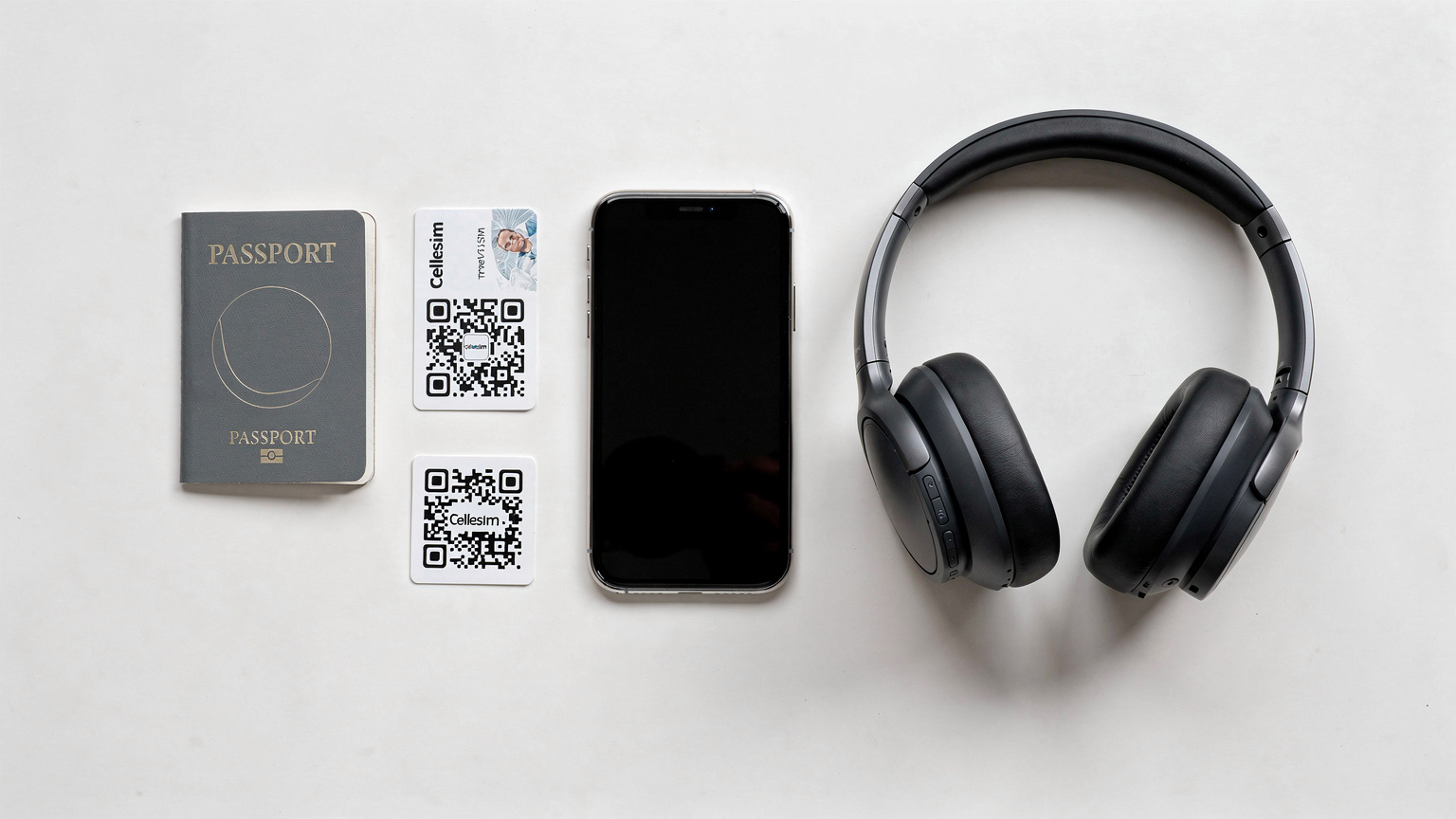
When selecting a travel eSIM, consider these factors:
- Destination Coverage: Ensure the eSIM covers all the countries you plan to visit. Regional or global plans can be very convenient.
- Data Allowance: Estimate your data needs realistically. If you're a heavy user, opt for higher data plans or even unlimited options.
- Validity Period: Match the plan's validity to your trip duration. Don't pay for unused days.
- Cost per GB: Compare the effective cost per gigabyte across different providers.
- Customer Reviews: Look for reviews that specifically mention network performance and customer support in your target destinations.
For a detailed comparison and recommendations, consider reading comprehensive guides like Your Ultimate eSIM Guide for Kosovo Travel in 2026.
Making the Right Connectivity Choice for Your Journey
The 'free' label on an eSIM trial can be seductive, particularly when budgeting for international travel. However, as an engineer who lives and breathes mobile networks, I can tell you that these trials are fundamentally different from a robust, paid travel eSIM service. They are designed to be a brief sample, not a comprehensive solution.
For truly reliable, stress-free connectivity when you're abroad, especially if your trip extends beyond a couple of days or if you have any critical data needs (like remote work, constant navigation, or regular video calls), a dedicated travel eSIM is the unequivocally superior choice. It offers predictable performance, tailored plans, and the peace of mind that comes with knowing your connection won't suddenly vanish when you need it most.
Don't let the allure of 'free' compromise your travel experience. Invest in a connectivity solution that empowers your journey, rather than leaving you searching for Wi-Fi in an unfamiliar city.
Frequently Asked Questions
How much data do free eSIM trials typically offer?
Most free eSIM trials, such as T-Mobile's 'Test Drive', offer a limited data allowance, usually around 5GB to 30GB, valid for a short period, typically 15 to 30 days. This is generally insufficient for extended international trips or heavy data usage.
Can I rely on a free eSIM trial for remote work while traveling?
No, relying on a free eSIM trial for remote work abroad is highly discouraged. The data caps are often too low, network prioritization can lead to inconsistent speeds, and lack of dedicated support means potential outages could severely impact your work. Dedicated travel eSIMs offer far greater reliability.
Do free eSIM trials support 5G speeds internationally?
While some local partner networks might offer 5G, free eSIM trials are frequently provisioned with lower Quality of Service (QoS) profiles, often limiting them to LTE speeds, even if your device supports 5G. Full 5G access (on bands like n78 or n258) is rarely guaranteed with trial offers.
What happens if my free eSIM trial data runs out abroad?
If your free eSIM trial data runs out abroad, your internet connectivity will cease. You will then need to purchase a paid data package from the trial provider, switch to another eSIM, or rely on Wi-Fi. This can be inconvenient and potentially more expensive than planning with a dedicated travel eSIM from the start.
Are there any voice call limitations with free eSIM trials?
Yes, many free eSIM trials do not guarantee VoLTE (Voice over LTE) roaming support. This means your phone might fall back to 2G/3G networks for calls, which are being phased out globally. Without VoLTE, you could find yourself unable to make or receive standard cellular calls in certain regions.
Should I use a free eSIM trial for a long trip to a single country, like Japan?
For a long trip to a single country like Japan, a free eSIM trial is generally inadequate. The limited data and short validity period will quickly expire, forcing you to find alternative solutions. A dedicated <a href="/en/esim-japan">Japan eSIM</a> with a tailored data plan for your entire trip is a much more practical and reliable choice.