Initial Setup and Activation Friction
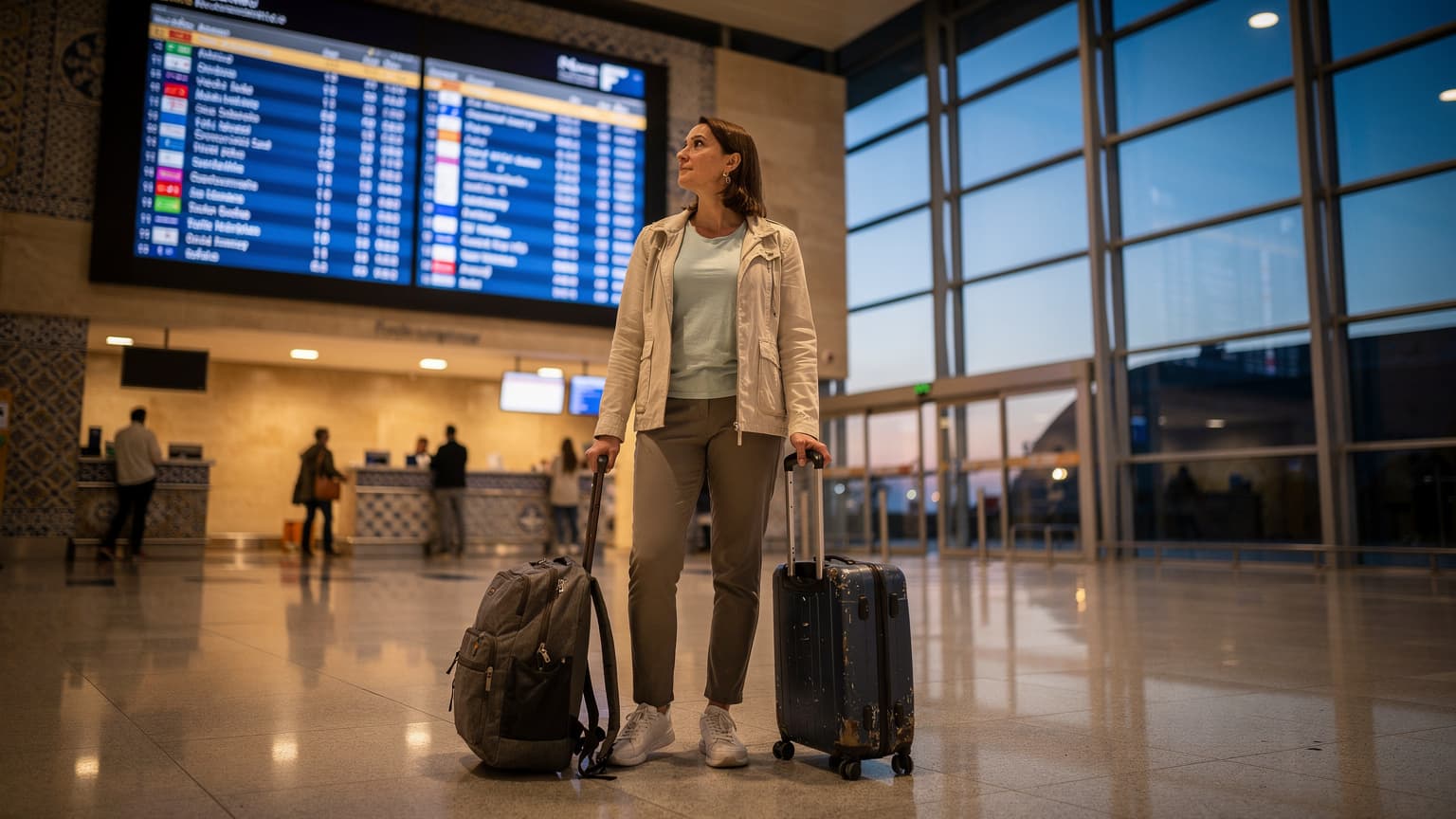
Getting your eSIM working should be simple. Nobody wants to deal with tech headaches right after landing. I've had my share of those frantic airport moments, trying to connect while juggling my bags and desperately needing coffee. Both Cellesim and Nomad eSIM make activation much easier than old-school physical SIMs, but a few small differences in how they work can totally change your first few hours in a new place.
Cellesim usually uses a simple QR code. You buy the plan, they send a QR code, you scan it, and if your phone is set up for eSIM, it just works. I've found this to be super reliable on various iPhones and Androids. It's a system I really appreciate, especially when I'm trying to book a Grab in Bangkok or find my Airbnb in Medellín without wasting time.
Nomad eSIM also mainly uses QR codes or manual installation. But sometimes, I've run into more steps with Nomad, especially with certain regional carriers. It might mean digging through a few extra settings in your phone's mobile data menu. It's not rocket science, but it's annoying when you're tired or in a rush. For example, some of my nomad friends in Brazil said they had trouble with Nomad eSIM connecting to local networks, especially when trying to sign up for apps like Nubank, which often demand a truly local SIM number. It's a small detail, but when you're trying to get settled somewhere new, these little frustrations add up.
Step-by-Step Activation: Cellesim
- Buy Plan: Pick your destination and data package on the Cellesim website or app.
- Get QR Code: You'll get an email with a QR code and clear instructions almost instantly.
- Scan QR Code: On your smartphone, go to Settings > Mobile Data > Add Data Plan (iOS) or Settings > Network & internet > SIMs > Add more (Android) and scan the QR code.
- Label eSIM: Give your new eSIM a clear name, like "Cellesim Italy" or "Cellesim Thailand."
- Turn on Data Roaming: Make sure data roaming is on for the Cellesim eSIM and set it as your main data line when you're abroad.
Step-by-Step Activation: Nomad eSIM
- Choose Plan: Select your plan on the Nomad eSIM website or app.
- Find Installation Info: You'll see installation instructions and QR code/manual details in your account or email.
- Install Profile: Scan the QR code or type in the details manually in your phone’s mobile data settings.
- Set APN: Sometimes, you might need to manually set the Access Point Name (APN) settings. Nomad will provide these. I rarely have to do this with Cellesim.
- Select as Data Source: Choose the Nomad eSIM for mobile data and turn on data roaming if it asks you to.
Pricing Models: Where Your Money Actually Goes
Step-by-Step Activation: Nomad eSIM
- Choose Plan: Select your plan on the Nomad eSIM website or app.
- Find Installation Info: You'll see installation instructions and QR code/manual details in your account or email.
- Install Profile: Scan the QR code or type in the details manually in your phone’s mobile data settings.
- Set APN: Sometimes, you might need to manually set the Access Point Name (APN) settings. Nomad will provide these. I rarely have to do this with Cellesim.
- Select as Data Source: Choose the Nomad eSIM for mobile data and turn on data roaming if it asks you to.
Pricing Models: Where Your Money Actually Goes
This is where it really matters for most long-term travelers. Every dollar, or euro, counts. I've spent hours comparing costs down to the byte. While both Cellesim and Nomad eSIM offer good prices, they're best for different kinds of trips.
Cellesim often wins for longer plans and multi-country packages. If you're like me, spending a month in Italy then hopping over to Greece, their regional bundles can save you a lot. For instance, a 30-day, 20GB Europe plan on Cellesim might cost you around €30-€35. That's a big deal when you're trying to keep your monthly expenses predictable. My rent for a decent studio in Lisbon's Arroios district is about €750-€850 these days, so any saving on data is welcome.
Nomad eSIM, on the other hand, sometimes has slightly better prices for shorter, smaller data packages, like 7 days with 1GB or 3GB. This can be good for very quick trips or if you're just passing through a country and only need basic internet. But when you go for 15GB or 30GB plans, especially for a month or more, Nomad's cost per GB can get higher. I've also noticed their regional bundles aren't always as broad or as well-priced as Cellesim's for large coverage areas. For example, their South America regional plan might be a bit more expensive than Cellesim’s for the same data and time, which can be a deal-breaker if you're planning a longer stay in, say, Argentina and Uruguay.
| Feature | Cellesim | Nomad eSIM |
|---|---|---|
| Pricing Structure | Often better for longer durations, multi-country bundles, and larger data packages. | Can be competitive for shorter trips, smaller data packages. Per-GB cost may rise with larger plans. |
| ~€30-€35 | ~€38-€45 | |
| ~€5-€8 | ~€4-€7 | |
| Flexible, often allows adding data to existing plans. | Available, but sometimes requires purchasing a new plan. | |
| Regular promotions and loyalty discounts. | Frequent discounts, but can be less predictable for specific regions. |
Hidden Costs and Fair Usage Policies
Always read the fine print. Both providers have fair usage policies, but how they actually enforce them can vary. I've never personally hit a hard data limit or seen throttling with Cellesim that wasn't clearly explained, but I've heard chatter in nomad WhatsApp groups about Nomad eSIM plans sometimes slowing down after a certain data amount, even if the plan was technically "unlimited." It's rare, but it happens. Also, watch out for activation fees or taxes that might not be clear upfront with some providers, though Cellesim and Nomad are usually pretty transparent.
Coverage and Reliability: What They Don't Tell You
Coverage maps look great, but real-world performance is what counts. I've found that both Cellesim and Nomad eSIM generally use big local carriers, so their theoretical coverage should be similar. Still, the details of network priority and roaming agreements make a difference.
Cellesim, in my experience, has always given me solid connections in cities and decent service in more rural areas, as long as the local partner network is strong. For instance, in Italy, Cellesim works with providers like TIM or Vodafone. That means you're basically getting the same strong service a local would. In Athens, using Cellesim meant I was on Cosmote, which is excellent, even when I was working from small cafes in Plaka or the busy 'The Cube' co-working space near Syntagma Square. My connection rarely dropped, even when things were busy.
Nomad eSIM also has good partnerships, but I've had more times where the network it chose felt weaker, or I had to manually switch between available networks to find a stable connection. This happened to me once in a less-traveled part of Portugal, near Coimbra. Cellesim would automatically switch to the stronger of two networks, but Nomad stuck to a weaker one until I forced the change in my phone settings. It's not a disaster, but it's annoying when you're trying to hit a deadline. Also, if you're in a country with strict data rules or very local apps, like some Indian government services that need an Aadhaar-linked phone number, neither global eSIM will completely replace a local physical SIM.

Speed and Latency: The Digital Nomad Test
For me, speed isn't just about downloading movies. It's about reliable video calls and uploading big files. Both providers offer 4G LTE, and more and more, 5G where it's available. Cellesim's speeds have always been exactly what I'd expect from a good local SIM. I've worked entire days from the 'Impact Hub' in Athens on a Cellesim connection without any problems, streaming video conferences and managing cloud files smoothly.
Nomad eSIM is generally fast too, but I've sometimes noticed slightly higher latency in certain areas. That can affect real-time apps like VoIP calls or gaming (if you're into that). It's not a constant problem, but it's something to know about if your work needs really low latency. Remember, actual speeds always depend a lot on the local network and how busy it is.
| Aspect | Cellesim Performance | Nomad eSIM Performance |
|---|---|---|
| Network Selection | Often connects to the strongest available local network automatically. | Generally good, but may sometimes require manual network selection for optimal performance. |
| Speed (4G/5G) | Consistently high speeds, ideal for video calls and large file transfers. | Good speeds, but occasional reports of slightly higher latency in specific regions. |
| Coverage Footprint | Extensive, leveraging primary local carriers for robust coverage. | Broad coverage, but localized performance can vary more. |
| Real-world Reliability | Very reliable, minimal drops or throttling in my experience. | Generally reliable, but some anecdotal reports of minor inconsistencies. |
Data Plan Flexibility and Top-Ups
Life on the road is never totally planned. Trips get longer, things change, and sometimes you just use way more data than you thought. How easily you can adjust your data plan is a big deal.
Cellesim is great for flexibility. Most of their plans let you top up easily through their app or website. You can often add more data to a plan you're already using, either extending its validity or simply getting more GBs without needing a whole new eSIM. This has saved me more than once when I decided to stay longer in Switzerland. A good monthly internet connection for my apartment in Bern and daily data for the SBB trains can cost a lot, easily CHF 80-100 for a decent plan. It's also fantastic for family travel, where data use can skyrocket.
Nomad eSIM also offers top-ups, but their system can sometimes be less straightforward. I've found that with some Nomad plans, topping up means buying a completely new plan. That's not as efficient if you just need a few extra gigabytes for a couple of days. This often means you end up with two active eSIMs for the same region, or you have to wait for your old plan to expire before activating a new one. It's a small hassle, but when you're trying to keep things simple, these details matter. The last thing you want is to be troubleshooting multiple eSIM profiles when you're trying to enjoy a sunset in the Algarve.
Data Rollover and Validity
Neither Cellesim nor Nomad eSIM typically offers data rollover. That's pretty standard for most travel eSIMs. Once your plan runs out, any unused data disappears. So, it's always smart to estimate your data needs carefully. However, Cellesim's option to add data to an existing plan gives you a similar benefit, letting you extend the life of your current bundle. Validity periods vary, from 7 days to 90 days, so pick what makes sense for your trip.
Customer Support: When Things Break
This is probably the most crucial thing many travelers forget until they're stuck somewhere without data. Good customer support isn't just about being polite. It's about being helpful, quick, and understanding the unique problems travelers face.
Cellesim’s customer support has always been excellent for me. They offer 24/7 chat support, and their agents usually know a lot about specific regional network issues. I once had trouble activating an eSIM in Bogotá because of a phone setting I missed, and their team walked me through it step-by-step at 2 AM my time. They even followed up to make sure it worked and offered a small credit for the trouble. That kind of service builds trust.
Nomad eSIM also offers support, mainly through email and an in-app chat. While I've generally had good interactions, response times can sometimes be a bit slower, especially during busy travel seasons. I've heard from others that fixing complicated issues with Nomad can sometimes mean a lot of back-and-forth emails. This can be frustrating if you're in a time-sensitive situation, like needing to book an emergency flight or access important banking apps that are region-locked.
Language Support and Accessibility
Both providers mainly work in English, but Cellesim often has more language support options. That can be a lifesaver if English isn't your main language, or if you're helping a local friend with their connection. Clear instructions and getting help in your own language really add a layer of comfort when you're far from home. A good FAQ section is also super helpful for quick answers on your own.
App Experience and User Interface
A poorly designed app can quickly ruin your day, especially when you're trying to manage data on the go. Both Cellesim and Nomad eSIM have mobile apps, but their design and features are different.
Cellesim’s app is clean, easy to understand, and focuses on being simple. Buying plans, managing active eSIMs, and checking data usage is straightforward. The design feels modern and quick, making it easy to use even on a small phone screen. This is key when you're quickly trying to check your data balance before a big meeting at a co-working space like 'The Great Room' in Singapore.
Nomad eSIM’s app also works, but I've found its interface can sometimes feel a bit more crowded. It has all the information you need, but finding specific settings or managing multiple eSIMs might take more taps. It's not bad, but it doesn't have the polished, smooth feel of Cellesim’s app. For an experienced nomad, these small differences in how the app looks and feels make for a smoother daily routine.
Additional Features
Neither app is overloaded with unnecessary features, which I actually prefer. They stick to their main job: giving you internet. Sometimes, Cellesim offers extra services like VPN integrations or local recommendations through partners, but these are usually optional add-ons, not core features. Nomad eSIM focuses purely on data plans.
Local SIM Card Compatibility Nuances
Sometimes, an eSIM just isn't quite enough. In some countries, especially developing ones or places with strict ID rules, a local physical SIM card is still a must for certain services. This often affects digital nomads more than tourists on short trips.
For example, in India, you need a local SIM card tied to your Aadhaar ID to use many essential services, including some banking apps, ride-sharing apps, and even some public Wi-Fi networks. Neither Cellesim nor Nomad eSIM can get around these rules, since they work as international roaming profiles. Similarly, in parts of Africa or South America, local banks might require a local phone number for two-factor authentication that won't accept international numbers.
However, having an eSIM from Cellesim or Nomad gives you instant internet when you arrive. This lets you look up local SIM options, find a store, and communicate while you get everything set up. It's a critical stepping stone. I usually get a Cellesim regional plan for immediate data, and then if I'm staying somewhere for a long time (over a month), I'll compare it to the cost of a local SIM. For a month in Vietnam, my local SIM cost about 150,000 VND (~$6 USD) for unlimited data, which is hard to beat, but I still landed with Cellesim already running.

Visa Limitations and eSIM Usage
It's important to remember that an eSIM doesn't change your visa status. If your visa limits your stay to 30 days, you can't just extend your data plan for 60 days and expect to stay. Always stick to your visa rules. An eSIM gives you data, but it doesn't give you a local phone number that can be used for official registrations where a local number is specifically required (like for some government websites or long-term apartment rentals). However, for everyday communication and most online tasks, an eSIM is totally fine.
Multi-Country Journeys: Seamless Transitions
One of the biggest advantages of eSIMs for long-term travelers is being able to cross borders without swapping physical cards. This is where multi-country plans really shine.
Cellesim is great for its regional and global plans. Their Europe-wide plans, for example, cover dozens of countries. That means you can travel from Germany to France to Italy without even thinking about your data. Switching between countries is usually smooth, automatically connecting to the best available network in each new place. I've used their European plan hopping from Berlin to Prague to Vienna, and the data just worked. I could focus on finding a good coffee shop (like 'Coffee Room' in Vienna's 7th district) instead of messing with my phone. If you're planning a trip through multiple countries, say, a family tour of Switzerland, a regional eSIM can save you a lot of grief. You can find more details on Swiss connectivity options here.
Nomad eSIM also offers regional and global plans. They are generally reliable for multi-country travel, but I've found Cellesim's network switching to be a bit more robust and consistent. On a recent trip through Southeast Asia, a friend using Nomad had a few times where their connection didn't automatically pick up the strongest local network after crossing a border. They had to manually restart their phone or select the network themselves. Again, not a huge problem, but it's an extra step you'd rather avoid.
My Personal Recommendations
After years of relying on eSIMs, both Cellesim and Nomad eSIM have earned their spot. But for my money and how I travel, Cellesim consistently comes out on top for a few key reasons.
For the long-stay digital nomad: Cellesim. If you're spending weeks or months in a region, moving between countries, or need a lot of data, Cellesim's pricing, strong coverage, and excellent customer support make it the better choice. Being able to easily top up existing plans and the smooth network changes mean less time troubleshooting and more time actually living. Plus, their regional bundles often give better value per GB for the data amounts I usually need.
For the short-term, casual traveler: Nomad eSIM (with a few things to keep in mind). If you're only on a very short trip, say a week, and need minimal data (1-3GB), Nomad eSIM can sometimes offer slightly cheaper starter plans. However, be aware of potentially complicated top-ups and slightly slower customer support if you run into problems.
Ultimately, always check the specific plan details for where and how long you're going. Prices and partnerships change, but these general observations have been true for me over the last couple of years. My advice? Get a Cellesim plan, land with confidence, and focus on finding that perfect local restaurant, not your internet connection.
Frequently Asked Questions
Can I use Cellesim or Nomad eSIM for calls and texts?
Both Cellesim and Nomad eSIM mainly provide data services. While some plans might include a local number for calls/texts, that's not typical. For voice calls, I use VoIP apps like WhatsApp, Google Meet, or Zoom, which work perfectly over the data connection. Most nomads do the same.
What happens if my Cellesim or Nomad eSIM doesn't activate?
If activation fails, first double-check your phone's settings. Make sure data roaming is on for the eSIM and it's set as your main data line. If it still doesn't work, contact customer support right away. Cellesim's 24/7 chat has been very helpful in these situations in my experience.
Can I use both a physical SIM and an eSIM at the same time?
Yes, most newer eSIM-compatible phones support dual SIMs. This lets you use a physical SIM (like your home country's SIM) and an eSIM at the same time. You can decide which one handles data, calls, and texts. I often keep my home SIM active for important calls while using an eSIM for data.
Are Cellesim and Nomad eSIM truly unlimited?
While some plans are advertised as 'unlimited,' they usually have fair usage policies. This means after you use a certain high amount of data (e.g., 20GB, 30GB), speeds might be slowed down. Always read the plan's specific terms to understand any limits. If you use a lot of data, look for high-GB plans instead of relying only on 'unlimited' claims.
Is eSIM better than a local physical SIM card?
For short to medium-term travel, an eSIM offers unmatched convenience, instant activation, and often good prices for data. For very long stays (multiple months) or if you need a local phone number for specific services (like banking or government apps in certain countries), a local physical SIM might still be necessary. I usually use an eSIM for the first month, then check out local options.