Movistar eSIM Spain 2026: Your No-Nonsense Guide to Data Abroad

Budget RoamingCost-per-GB AnalysisStudent Travel HacksT-Mobile Roaming vs. eSIMNYC Travel Tech

Based in New York City, Mike Donovan is the Budget Expert for Cellesim. Mike is dedicated to finding the absolute lowest cost per gigabyte for American travelers. He aggressively compares the hidden fees of US carriers and airport SIM kiosks against affordable eSIM plans. Mike’s breakdown tables are legendary among students and backpackers looking to save every dollar on connectivity while exploring Europe and South America.

This article was created with AI assistance and reviewed by our editorial team for accuracy.

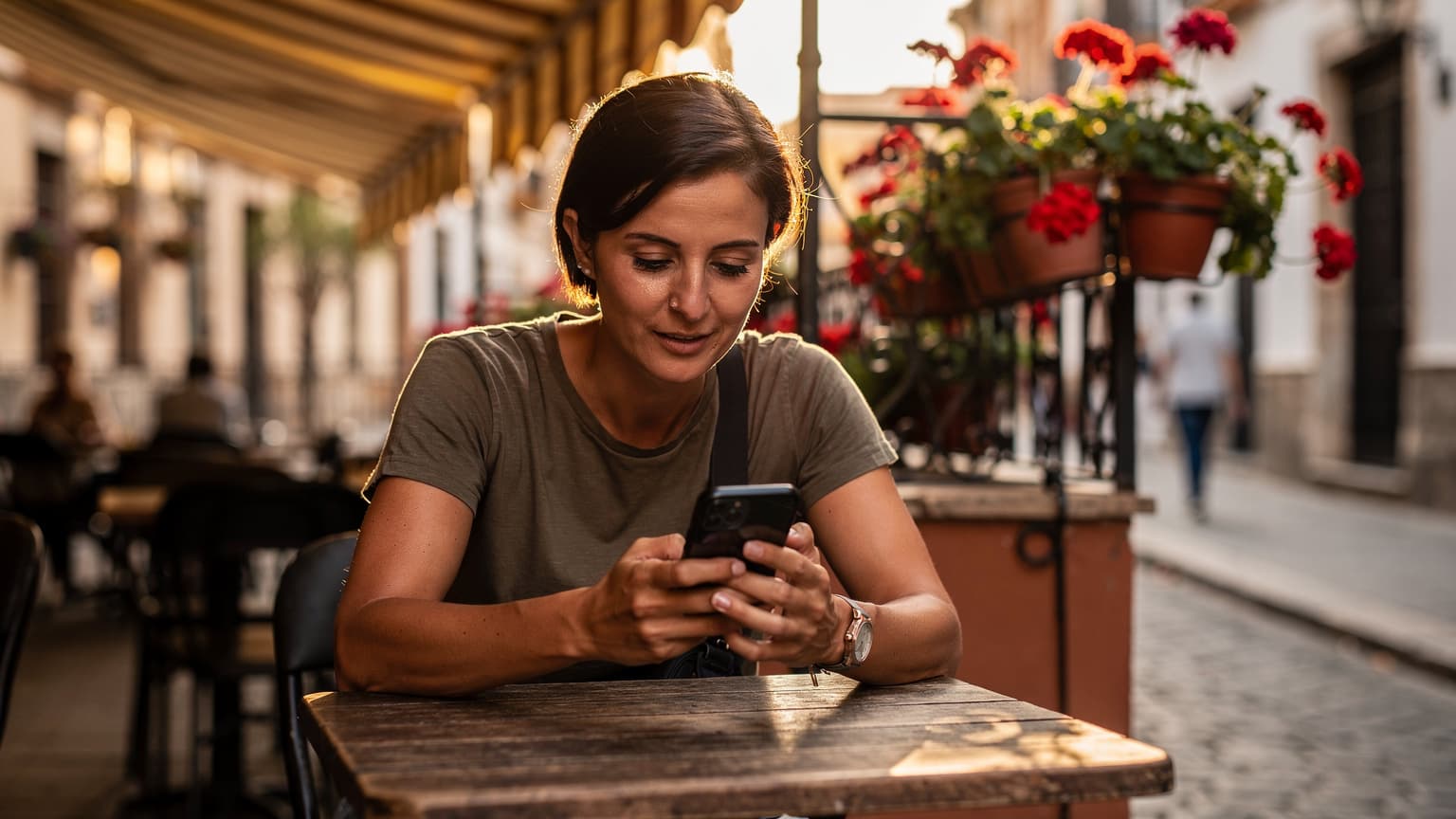
A woman sitting at a rustic wooden table in a sun-drenched cafe in Seville, Spain, looking at her phone with a focused expression, a half-eaten croissant and a coffee cup beside her.
Movistar eSIM for Spain in 2026 offers reliable connectivity for tourists and short-stay visitors through various prepaid plans, but direct eSIM sales for non-residents can be tricky, often requiring purchase via third-party providers or physical store visits for traditional SIM cards that can later be converted. Understanding the specific plan details and activation requirements is crucial for a smooth data experience.

Why Movistar Spain Still Matters for Tourists

Look, I've been doing this digital nomad thing for four years now, and the one constant pain point is always mobile data. You land, you're tired, and all you want is to hail a taxi or find your Airbnb without getting lost in a labyrinth of offline maps. In Spain, Movistar has historically been one of the big players, known for its extensive coverage, especially in rural areas where smaller carriers might drop off the grid. This matters more than you think when you're hiking the Camino de Santiago or exploring a remote pueblo in Andalusia.

While the market is flooded with eSIM providers these days, Movistar, as a native Spanish network, still holds an edge in terms of direct network access and reliability. You're not relying on a virtual network operator (MVNO) piggybacking on someone else's infrastructure, which sometimes means deprioritized speeds during peak hours. If you're planning on being in Spain for anything more than a week, or if you're venturing outside the major cities, a direct connection like Movistar's can be a lifesaver. I remember being stuck near a tiny village outside Granada, trying to upload some urgent work, and my budget eSIM just wouldn't connect. My friend, who had a local Movistar SIM, was streaming Netflix. It was a stark reminder of who gets priority on the network.

Coverage, Reliability, and Speed: What to Expect

Movistar's 4G and 5G coverage across Spain is generally excellent. In cities like Madrid, Barcelona, Valencia, and even smaller provincial capitals like Oviedo or Cádiz, you'll get blazing fast speeds. We're talking 100-200 Mbps easily, sometimes more. This is crucial for video calls back home, uploading large files, or just doom-scrolling on a slow afternoon. Outside of urban centers, their 4G network is robust, reaching most towns and major highways. There will always be dead zones, usually deep in the mountains or specific valleys, but compared to other carriers, Movistar is often the last one standing.

For instance, when I was staying in a tiny apartment in El Carmen, Valencia, running my business from my laptop's eSIM, I relied heavily on my phone's hotspot for backup when the building's fiber decided to take a siesta. Movistar's consistent speeds meant I never missed a deadline. I paid about 700 EUR a month for a decent two-bedroom in El Carmen, and the co-working space, Botánico Coworking, had excellent fiber, but sometimes you just need to work from home. Reliable mobile data is non-negotiable.

Navigating eSIM for Tourists: The Real Deal

Alright, let's get one thing straight: getting a direct Movistar eSIM as a tourist isn't as straightforward as some other countries (looking at you, Greece, with your easy Cosmote eSIMs). Spanish telecom regulations, like those in many EU countries, require identity verification for all SIM card activations. This applies whether you're getting a physical SIM or an eSIM. While this is standard practice, it means you can't just hop online, buy a Movistar eSIM, and expect it to work without some form of ID check. This is where many budget travelers get tripped up.

A weary female traveler, mid-20s, with a backpack, looking at her smartphone screen with a slightly frustrated expression, trying to find a Wi-Fi signal in the bustling arrivals hall of Madrid-Barajas Airport.
A traveler arriving at Madrid-Barajas Airport, looking slightly overwhelmed while trying to connect to Wi-Fi on their phone, surrounded by luggage and other passengers.

Direct vs. Third-Party Purchases

For a true Movistar eSIM, you'd typically need to visit a Movistar store in Spain with your passport. They'll activate a physical SIM for you, and then, if your phone supports it, you might be able to request an eSIM conversion. However, for tourists and short stays, the simpler route is often a third-party eSIM provider. These services bundle data plans from local carriers, including Movistar, Vodafone, or Orange, and sell them directly as eSIMs. They handle the backend registration, so you don't have to deal with the Spanish bureaucracy.

When I was in Mexico City, dealing with local SIM registration for some banking apps that needed a local number, I realized how much easier it is when you can bypass the local requirements. Mexico's system isn't as strict as Spain's, but it still added an hour to my day. For Spain, if you're just looking for data and don't need a local Spanish phone number for banking or a local WhatsApp verification, a third-party eSIM is probably your best bet for convenience.

What to Look For in a Tourist eSIM Plan

  • Data Allowance: How much do you really need? If you're just using maps and WhatsApp, 5-10GB might be fine for a week or two. If you're uploading photos, streaming, or working, aim for 20GB or more.
  • Validity Period: Most tourist plans are 7, 15, or 30 days. Match this to your trip length. Don't overpay for data you won't use.
  • Network Partner: For Spain, ensure the eSIM uses Movistar, Vodafone, or Orange for the best coverage.
  • Call/Text Options: Some plans include international calls or local Spanish numbers. Decide if you need this. Most people rely on WhatsApp for calls these days, but a local number can be handy for restaurant reservations or interacting with local services.
  • Price per GB: This is where you really need to compare. Don't just look at the total price. Divide by the gigabytes offered to get your true cost.

Movistar Prepaid Plans for Short Stays: What to Expect

Movistar's prepaid offerings, often called 'Tarifas Prepago', are your primary option if you want to go direct. They're designed for flexibility, which suits tourists. These plans are usually available as physical SIM cards in Movistar stores, and some can be converted to eSIM upon request, provided you meet the ID requirements.

Plan Name (Example)Data AllowanceValidityEstimated Cost (EUR)Local Calls/SMSNotes
Movistar Prepago 1010 GB30 Days10 - 15 EURLimited (e.g., 20 min)Good for light users, short trips.
Movistar Prepago 2020 GB30 Days15 - 20 EURModerate (e.g., 50 min)Most popular, balanced data & calls.
Movistar Prepago Total50 GB30 Days25 - 30 EURUnlimitedHeavy users, hotspotting.
Movistar Prepago Plus100 GB30 Days35 - 40 EURUnlimitedPower users, long stays, multiple devices.

These plans are subject to change, so always check the Movistar Spain website or inquire at a store for the latest offers. The costs mentioned are estimates for 2026, based on current trends. Remember, these are prepaid, so you top up credit, and then that credit is used to purchase the plan bundle. Don't expect to just buy a data plan directly, it's usually a two-step process: top-up, then activate bundle.

A close-up shot of human hands interacting with a smartphone, one finger tapping the screen to confirm an eSIM installation, with a blurred background of a brightly lit, modern train station platform in Spain.
A close-up of a person's hands holding a smartphone, with another hand gently tapping the screen to confirm an eSIM installation, set against a blurred background of a brightly lit train station platform.

Data Allowances and Rollover

Movistar often has promotions where unused data from one month rolls over to the next, provided you renew your plan within a certain timeframe. This is a nice perk, but as a tourist, your main concern is usually getting through your trip without running out. For example, if you get a 20GB plan for 30 days and only use 15GB, those 5GB might roll over if you purchase another 30-day plan immediately. For a typical two-week vacation, this might not be relevant, but it's good to know if you're planning a longer stay or frequent returns.

International Calls and SMS Considerations

Most prepaid plans include a small allowance for local calls and texts within Spain. Some higher-tier plans might even include a few minutes for international calls to select countries. However, for most travelers, WhatsApp, Telegram, or Facetime are sufficient for staying in touch. If you need to call Spanish landlines frequently (e.g., for apartment hunting, which I did a lot when I moved to Barcelona, paying 900 EUR for a tiny studio in Gràcia), then a plan with generous local call minutes is worth considering.

How to Get Your Movistar eSIM (or Physical SIM) in Spain

This is where the rubber meets the road. Forget trying to order a Movistar eSIM online from outside Spain. It just won't happen easily for a tourist. You need to be in the country.

Purchasing a Physical SIM Card

Your most reliable option for a direct Movistar connection is to buy a physical SIM card upon arrival. You can find Movistar stores in almost every major city and even in larger towns. Look for the distinctive blue 'M' logo.

  1. Locate a Movistar Store: Use Google Maps to find the nearest 'Tienda Movistar' at the airport (if available, though typically less choice), or once you're in the city. Major shopping centers often have them.
  2. Bring Your Passport: This is non-negotiable. They need to verify your identity to activate the SIM.
  3. Choose Your Plan: Tell the store assistant you need a 'tarjeta prepago' (prepaid card) and specify how much data you need or how long you're staying. Show them the plan name from the Movistar website if you've researched it.
  4. Activation: The assistant will register and activate the SIM for you. This usually takes 5-15 minutes. They'll put the SIM in your phone and ensure it's working before you leave.
  5. Payment: Pay with cash or card. Keep your receipt.

Converting to eSIM (Post-Purchase)

Once you have an active physical Movistar SIM, you might be able to convert it to an eSIM. This isn't guaranteed for all prepaid plans or all stores, but it's worth asking. I've had success with it in Italy, but it required a bit of persistence.

  1. Activate Physical SIM: Follow the steps above to get your physical SIM working.
  2. Return to a Movistar Store (or ask immediately): Go back to the store (or ask the same assistant) and inquire about converting your physical SIM to an eSIM. Use the phrase 'Quiero convertir mi tarjeta SIM a eSIM, por favor.'
  3. Provide ID Again: They'll likely need your passport again to process the conversion.
  4. Receive QR Code: If approved, they'll give you a QR code to scan. This QR code contains your eSIM profile.
  5. Scan and Install: Follow the on-screen prompts on your phone to install the eSIM. Ensure you have Wi-Fi connectivity during this process.

Activating Your Movistar eSIM: A Step-by-Step Guide

Whether you're activating a third-party eSIM or a Movistar-issued one, the process on your phone is largely the same. Just make sure you have a stable Wi-Fi connection, as you'll need to download the eSIM profile.

  1. Ensure Wi-Fi Connectivity: Before you begin, connect to a reliable Wi-Fi network. This could be your hotel, an airport hotspot, or a café like La Bicicleta in Madrid's Malasaña neighborhood (solid Wi-Fi there, and good coffee).
  2. Access eSIM Settings: On your iPhone, go to 'Settings' > 'Cellular' > 'Add Cellular Plan'. On Android, it's usually 'Settings' > 'Network & Internet' > 'SIMs' > 'Add More'.
  3. Scan QR Code: Use your phone's camera to scan the QR code provided by Movistar or your third-party eSIM provider. Make sure the code is well-lit and in focus.
  4. Confirm & Download: Your phone will detect the new cellular plan. Confirm you want to add it. The eSIM profile will download and install. This usually takes less than a minute.
  5. Configure Settings: Once installed, you'll be prompted to name your new plan (e.g., 'Spain Movistar'), choose if it's for primary data, and set your default line for calls/SMS. For data, make sure 'Cellular Data' is toggled ON for your Movistar eSIM and 'Data Roaming' is also enabled (even though you're on a local network, sometimes it needs to be on for initial connection).
  6. Test Connection: Turn off Wi-Fi and try to browse a website or send a message. If it works, you're good to go! If not, try restarting your phone.

Managing Your Movistar Plan: Recharges and Monitoring

Once you're set up, managing your Movistar prepaid plan is relatively straightforward, but it's essential to stay on top of your data usage to avoid unexpected cut-offs.

A person standing in front of a small, traditional Spanish 'locutorio' or convenience store, looking at a display of brightly colored prepaid top-up cards and phone services in the window.
A person standing in front of a small, traditional Spanish 'locutorio' or convenience store, looking at the various brightly colored top-up cards and phone services displayed in the window.

Topping Up Your Balance (Recargar)

You can recharge your Movistar balance in several ways:

  • Online: The Movistar España website has an online recharge portal. You'll need a Spanish bank card or a credit/debit card that supports international transactions.
  • Movistar App: Download the 'Mi Movistar' app (though it might require a Spanish phone number for full functionality).
  • Physical Stores: Any Movistar store, 'locutorio' (small phone shop), or even many supermarkets and kiosks (like those selling newspapers) will allow you to top up your Movistar balance. Just tell them your phone number and the amount you want to recharge.
  • ATMs: Many Spanish ATMs (cajeros automáticos) also offer mobile phone top-ups.

Checking Your Data and Balance

Keeping an eye on your remaining data and balance is crucial. Nothing worse than being halfway through ordering a taxi and your data dies.

  • Dial Code: Typically, you can dial a specific short code (e.g., *123# or *133#) from your Movistar number and follow the prompts to check your balance and data.
  • Mi Movistar App: If you managed to get it working, the app provides real-time usage stats.
  • SMS Notifications: Movistar usually sends SMS alerts when your data is running low or your plan is about to expire. Pay attention to these.

Movistar vs. Other Providers: A Cost-Per-Gigabyte Showdown

This is where my budget-expert hat comes on. When I'm in a new country, I'm constantly comparing the cost-per-gigabyte. It's not about who's cheapest overall, but who gives you the most bang for your buck on the data you actually need. Remember, prices are approximate and can vary.

ProviderTypical Data Plan (GB)Approx. Cost (EUR)Cost per GB (EUR)Network QualityTourist eSIM Availability
Movistar (Direct SIM)20 GB201.00ExcellentVia Physical SIM to eSIM conversion
Vodafone Spain (Direct SIM)25 GB251.00ExcellentVia Physical SIM to eSIM conversion
Orange Spain (Direct SIM)30 GB301.00ExcellentVia Physical SIM to eSIM conversion
Cellesim (Third-Party eSIM)10 GB (EU-wide)181.80Varies (uses local partners)Immediate via app/website
Holafly (Third-Party eSIM)Unlimited (Spain)34 (for 15 days)N/A (unlimited)GoodImmediate via app/website

As you can see, direct SIM purchases from Movistar, Vodafone, or Orange often give you a lower cost per gigabyte compared to third-party eSIM providers. However, the convenience factor of a Cellesim eSIM for Spain cannot be overstated. You can buy it before you leave home and activate it the moment you land, bypassing the need to find a store and deal with language barriers or ID checks. For short trips, this convenience often outweighs the slight cost difference.

When a Third-Party eSIM Makes More Sense

If you're only in Spain for a week or two, or if you're traveling across multiple European countries (say, Spain, then France, then Greece), a multi-country eSIM from a provider like Cellesim or Airalo often provides better value and less hassle. It means you don't have to swap SIMs or activate a new plan in each country. This can be a huge time-saver, especially if you're hitting up Europe's festival season and hopping from one country to the next.

An overhead flat-lay composition of essential travel items: a dark blue passport, a smartphone displaying a blank eSIM QR code on its screen, a pair of sleek wireless earbuds, and a small, folded paper map of Barcelona, all neatly arranged on a light wooden table.
An overhead flat-lay of travel essentials: a passport, a smartphone showing a blank eSIM QR code, a pair of wireless earbuds, and a small, folded map of Barcelona, all on a light wooden table.

The Long-Stay Dilemma: When to Skip Tourist eSIMs

This is where my nomad experience truly kicks in. If you're planning to stay in Spain for longer than a month, say 2-3 months in Barcelona or Madrid (where you're probably shelling out 800-1200 EUR for a decent one-bedroom, depending on the neighborhood), then tourist eSIMs start to look less appealing. The cost per gigabyte is higher, and they often don't provide a stable local phone number that you might need for things like signing up for local gym memberships, getting a Spanish bank account, or even just setting up delivery services like Glovo or Just Eat.

For longer stays, biting the bullet and getting a true local SIM (even if it means a physical one initially) is almost always the better financial and logistical choice. You get better rates, potentially more data, and a local number that integrates seamlessly with Spanish life. I've had issues trying to set up some utility accounts in Brazil with my international number, for example. Some apps just don't like it. Spain is similar, though less strict than India's Aadhaar system, which absolutely locks you to a local number.

Monthly Contracts vs. Prepaid for Long-Term

If you're settling in for several months, consider Movistar's contract plans. These generally offer even better value, but they come with commitments and often require a Spanish bank account and a longer-term address. This isn't for the casual tourist, but for the serious long-term digital nomad, it's the gold standard. When I lived in Lisbon for three months, I got a local MEO contract, and the difference in cost-per-GB was staggering compared to even the best prepaid options.

Common Pitfalls and How to Avoid Them with Movistar eSIM

Nobody wants to deal with tech issues when they're trying to enjoy a new country. Here are some common problems and how to dodge them.

  • ID Verification Issues: Always carry your physical passport when buying a SIM in Spain. A photocopy or digital image won't cut it.
  • Expired QR Codes: If you get an eSIM QR code, install it promptly. Some codes have a limited activation window.
  • Lack of Wi-Fi for Activation: Don't wait until you're in a dead zone to try and activate your eSIM. Do it at the airport with free Wi-Fi, or at your accommodation.
  • Forgetting Data Roaming: Even on a local eSIM, sometimes 'Data Roaming' needs to be enabled in your phone's settings for the initial connection. Check this if you have issues.
  • Not checking APN settings: While usually automatic, occasionally the Access Point Name (APN) settings for data need to be manually configured. Movistar's APN is typically 'telefonica.es' or 'movistar.es'. A quick Google search for 'Movistar Spain APN settings' can save you a headache.
Pro Tip

Before you even leave your home country, make sure your phone is unlocked. An unlocked phone is essential for using any foreign SIM or eSIM. If you're with a US carrier like T-Mobile, check their unlocking policies. Sometimes their 'free' international roaming isn't as free as it seems, and an unlocked phone gives you options, like trying a T-Mobile eSIM free trial to compare before committing to a local plan.

Final Thoughts on Movistar eSIM for Your Spanish Adventure

Movistar offers a solid network foundation in Spain, which is why it's a good choice for reliable data. For tourists and short stays, the trick is deciding between the direct, slightly more cumbersome Movistar physical SIM (with potential eSIM conversion) or the sheer convenience of a third-party eSIM that uses Movistar's network. My advice? For a week or two, especially if you're moving around a lot, just grab a Cellesim eSIM before you go. It's less hassle, you're connected the moment you land, and you can focus on finding the best tapas instead of navigating telecom stores. For longer stays, or if you plan to integrate deeply into Spanish life, the direct Movistar physical SIM and then attempting an eSIM conversion is likely your best long-term bet for cost and functionality. Either way, don't let connectivity be a source of stress, plan it out, and you'll be fine.

Frequently Asked Questions

Can I buy a Movistar eSIM directly online from outside Spain as a tourist?

No, Movistar's direct eSIM purchase and activation process for tourists typically requires in-person ID verification at a Movistar store in Spain. You cannot buy a Movistar eSIM directly online from outside the country without a Spanish address or existing customer status.

Do I need my passport to get a Movistar SIM or eSIM in Spain?

Yes, absolutely. Spanish telecom regulations mandate that all SIM card activations, whether physical or eSIM, require valid photo identification. You must present your physical passport at the Movistar store for verification.

Are Movistar prepaid plans good value for tourists?

Movistar's prepaid plans offer competitive cost-per-gigabyte, especially for higher data allowances, compared to many third-party eSIM providers. However, the convenience factor of activating a third-party eSIM before arrival often outweighs the slight cost difference for short stays.

Can I convert a Movistar physical SIM to an eSIM after purchase?

It is often possible to convert an active Movistar physical SIM to an eSIM by visiting a Movistar store and requesting the conversion. This process still requires your passport for verification and is subject to store policy and plan compatibility.

What Movistar network bands does my phone need to support in Spain?

For 4G LTE, Movistar primarily uses bands B3 (1800MHz), B7 (2600MHz), and B20 (800MHz). For 5G, they use n78 (3500MHz) and n28 (700MHz). Ensure your phone supports these bands for optimal coverage and speed, especially B20 for rural coverage.

What is the best way to top up my Movistar prepaid balance?

The most convenient ways to top up your Movistar balance are through the Movistar Spain website (if you have an international card that works), at any Movistar store, a local 'locutorio', or even many kiosks and ATMs across Spain. Just provide your Movistar phone number.

See all eSIM FAQs →

Movistar eSIM Spain 2026: Best Tourist Plans & Activation