

Mexico Has More Than 60 Indigenous Languages
While Spanish is the official language, Mexico is remarkably diverse linguistically, with 68 recognized indigenous languages, each with its own variations and dialects. Approximately 7.5 million people speak an indigenous language, making Mexico one of the most culturally rich nations globally in this regard. These languages are not merely historical relics, but living, evolving forms of communication integral to local identity and tradition, particularly in states like Oaxaca, Chiapas, and Yucatán. For instance, in Oaxaca, it's not uncommon to hear Zapotec or Mixtec spoken in daily interactions.
Understanding this linguistic tapestry can profoundly enhance your travel experience, as it speaks to the enduring heritage of pre-Hispanic civilizations. While Spanish will get you by in most tourist areas, a respectful attempt at a few phrases in a local indigenous language, even a simple greeting, can open doors and foster genuine connections.
Navigating Language Barriers and Connectivity
For travelers, this linguistic diversity sometimes presents a unique challenge, especially when trying to communicate with local artisans or in smaller, more traditional villages. This is where modern connectivity bridges gaps. While you might not master Mixtec overnight, having reliable data access allows for translation apps to function effectively. More critically, it ensures you can access mapping services, local transportation schedules, and emergency contacts, even if you are in an area where only an indigenous language is primarily spoken.
Ensuring you have a dependable data connection is paramount, particularly if you're venturing beyond major urban centers. Carriers in Mexico have invested heavily in expanding their network footprint, including rural areas. This means you can often find LTE (Long-Term Evolution) signals, typically on bands like B2 (1900 MHz) and B4 (1700/2100 MHz), even in surprisingly remote locations. For those on a budget or needing flexible options, a Cellesim Mexico eSIM starts at $1.05 with over 29 plans available, supporting SMS for critical verifications like ride-share apps or banking.
The Pyramid of Cholula is the Largest Monument on Earth
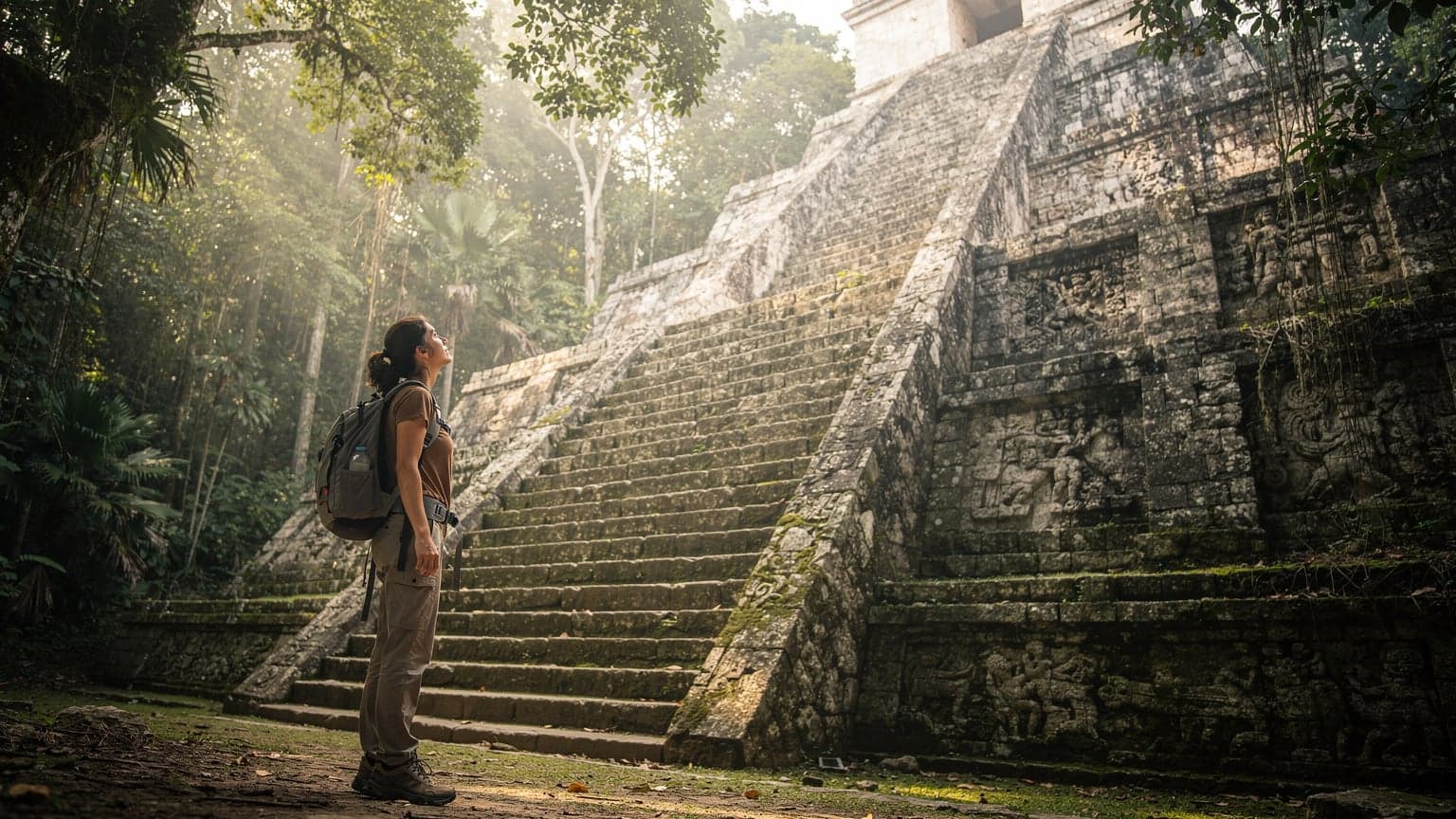
Forget the Great Pyramid of Giza. The Great Pyramid of Cholula, located near Puebla, is the largest pyramid in the world by volume, measuring an astonishing 4.5 million cubic meters. It's so vast that a Spanish colonial church, Iglesia de Nuestra Señora de los Remedios, was built on top of it, completely unaware of the massive pre-Hispanic structure beneath. The pyramid itself is an intricate series of superimposed structures, built over centuries by different civilizations, a true testament to the layers of history in Mexico.
Most of the pyramid remains unexcavated, covered by earth and vegetation, making it appear more like a natural hill than a man-made wonder. Visitors can, however, explore a network of tunnels running through its interior, offering a fascinating glimpse into its ancient construction and various phases. It's an archaeological marvel that consistently surprises visitors, providing a tangible connection to Mexico's deep historical roots.
Navigating Ancient Sites with Modern Tech
Exploring sites like Cholula, with its subterranean passages, demands reliable access to information, whether for historical context or simply finding your way. Modern smartphones, coupled with an eSIM for Mexico, become invaluable tools. Imagine standing inside those tunnels, pulling up a detailed architectural diagram, or even listening to an audio guide. Many archaeological sites now offer digital resources, often accessible via QR codes at entry points, which makes robust data connectivity more than a convenience, it's an enhancement to the educational experience.
The network coverage even within such sites is often surprisingly good. Major Mexican carriers have deployed small cell solutions and optimized macro sites to ensure that tourists can share their experiences and access necessary information. While you might not get peak 5G speeds (n78, 3.5 GHz) deep inside a pyramid, 4G LTE on bands like B7 (2600 MHz) or B28 (700 MHz APT) is typically sufficient for streaming audio guides or uploading photos.
Mexico City is Sinking, Yes, Really
Mexico City, built on the soft clay bed of what was once Lake Texcoco, is sinking at an alarming rate. Some areas are subsiding by as much as 50 centimeters per year. This phenomenon, known as subsidence, is primarily due to the extensive extraction of groundwater from the aquifer beneath the city, which compacts the porous clay layers. The consequences are visible everywhere, from leaning buildings in the historic center to cracked infrastructure and challenges for urban planning.
This unique geological situation presents ongoing engineering and environmental challenges. Walking through neighborhoods like Colonia Roma or Centro Histórico, you'll notice buildings with distinct tilts, some more pronounced than others. It's a constant reminder of the city's complex relationship with its natural environment and an architectural marvel in its own right, as engineers continuously adapt structures to these shifting foundations.
Urban Connectivity Challenges and Solutions
In a city grappling with such geological shifts, maintaining robust communications infrastructure is a significant feat. Optical fiber networks and cellular base stations must be designed with flexibility in mind to mitigate the impact of ground movement. For travelers, this means that while the city itself is sinking, your data connection generally remains stable.
Major carriers have dense network deployments across Mexico City, with widespread 4G and growing 5G coverage. In dense urban areas, you can expect average download speeds ranging from 50 Mbps to 200 Mbps on 4G LTE, and potentially higher on 5G. Upload speeds typically hover between 10-40 Mbps, which is more than adequate for sharing your experiences or participating in video calls. However, be aware that in older buildings, especially those with thick colonial-era walls, indoor signal penetration can be an issue, sometimes requiring you to be near a window for optimal performance. This is where a laptop eSIM could provide a stronger signal than relying on your phone's Wi-Fi hotspot, as modern laptops often have superior antenna designs.
The National University is the Oldest in North America
The National Autonomous University of Mexico (UNAM), founded in 1551, is the oldest university in North America. Its sprawling campus, Ciudad Universitaria, is a UNESCO World Heritage site, celebrated for its unique architecture and monumental murals by artists like Diego Rivera and David Alfaro Siqueiros. UNAM is not just an academic institution, it's a cultural icon, playing a pivotal role in Mexico's intellectual and political life.
The university's central library, adorned with a four-sided mural depicting Mexico's history, is a sight to behold and a testament to the country's commitment to education and art. Exploring the campus offers a glimpse into the intellectual heart of the nation, bustling with students, professors, and cultural events. It's a vibrant, dynamic space that embodies Mexico's enduring pursuit of knowledge and artistic expression.
Student Life and Digital Demands
University campuses globally are hotspots for data consumption, and UNAM is no exception. Students rely on constant connectivity for research, online courses, and social interaction. This high demand drives carriers to ensure robust infrastructure around such institutions. Data offloading to Wi-Fi networks is common, but seamless mobile data is still crucial.
For international students or researchers visiting UNAM, understanding how your device handles VoLTE (Voice over LTE) and VoWiFi (Voice over Wi-Fi) is important. Many older unlocked phones, particularly those not specifically provisioned for Mexico's networks, might struggle with VoLTE activation, forcing calls back to 3G or 2G networks, which can be less reliable and slower for call setup. Always check with your eSIM provider or device manufacturer for compatibility, especially if you plan on making frequent calls. This ensures that your voice calls remain on the faster, more efficient LTE network, rather than falling back to older, less robust standards.
Mexico's Flag Has a Legendary Origin
The design of Mexico's national flag, with its green, white, and red stripes and central coat of arms, is deeply rooted in Aztec mythology. The emblem depicts an eagle perched on a nopal cactus, devouring a serpent. This image is believed to mark the spot where the Aztecs were commanded by their god Huitzilopochtli to build their great city, Tenochtitlan, which is now modern-day Mexico City. It's a powerful symbol of the nation's indigenous heritage and its enduring connection to a foundational myth.
The green stripe represents hope and independence, white signifies unity and purity, and red symbolizes the blood shed by national heroes. The flag is not just a national symbol, it's a narrative, telling the story of Mexico's origins and its journey through independence. This rich symbolism is deeply ingrained in the national consciousness and visible in countless public spaces.
Cultural Symbols and Digital Expression
From social media to digital art, national symbols like the flag are frequently repurposed and reinterpreted in the digital realm. Travelers often capture and share these symbols, whether through photographs of public murals or by using culturally relevant emojis. The ability to instantly share these moments with friends and family back home is a key part of the modern travel experience.
When using an eSIM, it's worth noting the distinction between the physical SIM (pSIM) and the embedded SIM. While both provide network access, some older Android devices, particularly those with dual SIM functionality, might default to a specific APN (Access Point Name) configuration that isn't ideal for an eSIM from a non-native carrier. If you experience unusually slow speeds or connection drops, manually checking and configuring the APN settings (often found under 'Mobile Networks' in settings) to the recommended settings from your eSIM provider can significantly improve performance. This is a common edge case for certain phone models not primarily designed for global roaming with multiple virtual networks.
It Boasts an Incredible Number of Protected Natural Areas
Mexico is one of the world's most biodiverse countries, ranking among the top five. It's home to a staggering array of ecosystems, from deserts and cloud forests to coral reefs and mangrove swamps. To protect this natural heritage, Mexico has established an extensive network of protected natural areas, including national parks, biosphere reserves, and flora and fauna sanctuaries. These areas safeguard unique species and landscapes, making Mexico a prime destination for eco-tourism and scientific research.
The Monarch Butterfly Biosphere Reserve in Michoacán, a UNESCO site, is a prime example, where millions of monarch butterflies migrate annually from Canada and the US. Similarly, the Sian Ka'an Biosphere Reserve in Quintana Roo protects tropical forests, mangroves, and a vast marine section of the Mesoamerican Barrier Reef. These natural wonders offer unparalleled opportunities for wildlife observation and environmental immersion.
Remote Connectivity in Biosphere Reserves
While the primary goal in protected areas is conservation, there's a growing need for connectivity for park rangers, researchers, and responsible tourists. Emergency communications, data collection, and even simple navigation can rely on mobile networks. Carriers often deploy specialized solutions in these regions, sometimes using satellite backhaul for remote cell sites.
It's important to set realistic expectations for data speeds in these truly remote areas. You might not see the 100 Mbps-plus speeds common in Mexico City. Instead, expect reliable but slower LTE connections, perhaps in the 5-20 Mbps range for downloads and 2-8 Mbps for uploads. This is often sufficient for basic tasks like sending messages, checking weather, or using offline maps that have been pre-downloaded. For those venturing into such locations, consider pre-loading critical maps and guides to minimize reliance on real-time data, but still maintain a connection for safety. For those last-minute trips, an eSIM can be activated in minutes, making it ideal for impromptu escapes to nature.
Connectivity is Robust, Even in Remote Areas
Contrary to some perceptions, Mexico has made significant investments in its telecommunications infrastructure, leading to surprisingly robust mobile network coverage across much of the country. While major cities obviously boast the highest speeds and densest coverage, even many rural and remote areas now benefit from 4G LTE, and 5G expansion is rapidly underway. This widespread access is crucial for both locals and tourists, enabling everything from mobile banking to emergency services.
The Mexican government, alongside private carriers, has prioritized digital inclusion, recognizing connectivity as a fundamental right. This has led to innovative deployment strategies, including community networks and subsidized internet access in underserved regions. The result is a more connected nation, ready to support the demands of modern digital life, whether you're navigating bustling mercados or tranquil beaches.
Optimizing Your eSIM for Mexican Networks
When traveling to Mexico, ensuring your phone is configured to utilize the best available network is key. While eSIMs generally auto-configure, a quick manual check can sometimes make a difference. Here's a procedure to ensure optimal connectivity:
ensure automatic network selection is enabled. This allows your device to automatically connect to the strongest available network among Cellesim's partner carriers. However, if you experience intermittent connectivity in a specific area, you might try manually selecting a network from your phone's cellular settings. Look for options like "Network Operators" or "Carrier Selection." Experimenting with the available networks (usually Telcel, AT&T, or Movistar) can sometimes improve performance, especially if one carrier has better coverage in your immediate vicinity.
Additionally, while eSIMs typically auto-configure APN (Access Point Name) settings, it's worth knowing where to check them. On most devices, this is under cellular data options. If you ever encounter issues with data but can make calls, verifying the APN settings (which Cellesim provides) can be a troubleshooting step. A simple restart of your device after activating your eSIM or changing network settings can also often resolve minor connectivity glitches, ensuring your phone fully registers with the local network.
Mexico is a Major Player in Renewable Energy
Beyond its ancient history and vibrant culture, Mexico is making significant strides in modern sustainable development. By 2026, the country is projected to derive a substantial portion of its energy from renewable sources, particularly solar and wind power. Regions like Oaxaca, Baja California, and Yucatán are home to vast wind farms and solar parks, contributing to a greener grid. This push for renewables isn't just about environmental responsibility; it also drives innovation in infrastructure and technology, including smart grid solutions and remote monitoring systems.
For travelers, this focus on sustainability can be seen in eco-tourism initiatives and modern, energy-efficient accommodations. For businesses, it signifies a growing market for green technologies and related services, often requiring robust, reliable connectivity for data transmission, system management, and communication across vast, sometimes remote, energy sites.
Digital Nomads are Reshaping Mexican Cities
The global shift towards remote work has found a welcoming home in Mexico. Cities like Mexico City, Oaxaca, Mérida, and Puerto Vallarta have become hotspots for digital nomads, drawn by the vibrant culture, affordable living, and excellent climate. This influx is not just boosting local economies but also driving demand for high-quality internet infrastructure and co-working spaces. Expect to find a burgeoning ecosystem of cafes with reliable Wi-Fi, dedicated co-working facilities, and communities tailored to the remote worker lifestyle.
For digital nomads, reliable connectivity is non-negotiable. An eSIM from Cellesim provides instant, high-speed internet access across Mexico, allowing seamless video calls, large file transfers, and uninterrupted work from any location. This flexibility is key to enjoying the nomadic lifestyle without compromising professional commitments. Explore the best destinations for your remote work adventure with an eSIM, ensuring you stay connected wherever you roam. Discover more about connectivity in top destinations.
Mexico's Street Food Scene is a UNESCO Heritage
Mexican cuisine, particularly its street food, is not just delicious; it's a UNESCO Intangible Cultural Heritage. From the iconic tacos al pastor in Mexico City to cochinita pibil in Yucatán and tlayudas in Oaxaca, the diversity and flavors are endless. Exploring Mexico's culinary landscape means diving into bustling markets and unassuming street stalls. By 2026, many vendors are increasingly embracing digital tools, from QR code menus to mobile payment options.
Navigating this gastronomic paradise is made easier with a reliable data connection. Use your eSIM to quickly look up reviews, translate menu items, find the most authentic local spots via mapping apps, or even pay for your meal. Sharing your culinary discoveries with friends and family back home through photos and videos is also a breeze, making your food journey as connected as it is flavorful.
The Monarch Butterfly Migration is a Natural Wonder
Every year, millions of monarch butterflies undertake an epic migration from Canada and the U.S. to the oyamel fir forests in the mountains of Michoacán and Estado de México. This incredible natural spectacle, primarily occurring from November to March, is a protected biosphere reserve and a UNESCO World Heritage site. Witnessing the trees blanketed in orange and black is an unforgettable experience.
For visitors to these sanctuaries, maintaining connectivity is important for several reasons. While deep within the forests, coverage might be sparse, the visitor centers and surrounding towns often have reliable service. This allows you to check sanctuary opening times, access digital guides, share the breathtaking sights with loved ones, and ensure safety in these beautiful, yet sometimes remote, natural settings. Always download maps and essential information offline before venturing into the heart of the reserves.
Mexico is Home to the World's Smallest Volcano
Puebla, a city renowned for its colonial architecture and culinary traditions, also boasts a geological marvel: Cuexcomate, often dubbed the "world's smallest volcano." Standing at just 13 meters (43 feet) tall, it's technically an inactive geyser that formed a cone-like structure, making it unique and explorable from the inside. Visitors can descend a spiral staircase into its chamber, a truly surprising experience.
While not a towering peak, this quirky attraction is a popular stop for tourists. Reliable mobile data ensures you can easily navigate to Cuexcomate, learn about its geological history on the go, and instantly share your unique photos and videos of exploring a "volcano" that fits in a city park. It's a testament to Mexico's diverse attractions, where even the smallest wonders can offer big surprises.
Mexico's Public Transportation is Extensive and Tech-Enabled
Getting around Mexico, especially in its major cities, is surprisingly efficient thanks to an extensive public transportation network that is increasingly integrated with modern technology. Mexico City, for example, boasts one of the largest metro systems in the world, complemented by Metrobús (BRT), light rail, and a growing network of bike-sharing programs. By 2026, expect even more seamless integration with digital payment options and real-time tracking apps.
Using your eSIM, you can effortlessly navigate these systems. Apps like Google Maps, Moovit, and local transit apps provide real-time routes, schedules, and estimated travel times. Many systems now accept cashless payments via rechargeable cards, which can be topped up using mobile apps. For added convenience and safety, ride-sharing services like Uber, Didi, and Cabify are widely available and easily accessible with a consistent data connection, making urban exploration both easy and secure.
Mexico is a Global Leader in Silver Production
Mexico has a rich history intertwined with silver, dating back to colonial times. Today, it remains the world's largest producer of silver, with significant mining operations in states like Zacatecas, Chihuahua, and Sonora. This industry not only contributes significantly to the national economy but also shapes the character of historic "Pueblos Mágicos" like Taxco, known for its exquisite silver jewelry and artisanal craftsmanship.
For business travelers involved in mining, trade, or related industries, reliable connectivity is paramount for communication, data exchange, and remote monitoring of operations. Even for tourists exploring the silver towns, an eSIM ensures you can research local artisans, find reputable shops, and share the beauty of these historic mining communities without interruption. The blend of ancient heritage and modern industry makes Mexico a fascinating destination for both leisure and business.
Mexico Has a Thriving Startup Ecosystem
Beyond its traditional industries, Mexico has rapidly emerged as a dynamic hub for innovation and entrepreneurship. Mexico City, in particular, is home to a burgeoning startup ecosystem, attracting venture capital and fostering growth in sectors like FinTech, e-commerce, AI, and sustainable technology. The government and private incubators are actively supporting new businesses, creating a vibrant environment for innovation that rivals other major global tech centers.
For entrepreneurs, investors, and business travelers, this means a demand for robust, high-speed, and reliable internet connectivity. Attending virtual meetings, collaborating with international teams, and accessing cloud-based resources are daily necessities. An eSIM from Cellesim provides the essential digital backbone, ensuring you stay connected and productive, whether you're pitching an idea in a co-working space or managing operations remotely from a bustling café.
Mexico in 2026 is a country of fascinating contrasts and constant evolution. From ancient pyramids to cutting-edge tech hubs, and from vast natural wonders to bustling urban centers, it offers an incredibly rich and diverse experience. Understanding these surprising facts helps you appreciate the depth of this vibrant nation.
To truly immerse yourself in all that Mexico has to offer, seamless connectivity is your best travel companion. Stay connected, navigate with ease, and share your incredible journey without interruption. Get your Cellesim eSIM today and unlock Mexico's wonders with reliable, high-speed data.