Planning a safari in Kenya or Tanzania for 2026 sounds like an incredible adventure. Imagine spotting the Great Migration in the Serengeti or Maasai Mara, exploring the Ngorongoro Crater, or even tackling Mount Kilimanjaro. While the wildlife and landscapes will steal the show, staying connected is a practical necessity for modern travelers. You'll want to share that perfect lion photo, navigate to your lodge, or just check in with family back home. Traditional international roaming can be shockingly expensive, and buying local SIM cards often means dealing with airport queues and confusing registration forms after a long flight into Nairobi or Dar es Salaam. That's where an eSIM comes in, giving you easy, instant connectivity. Cellesim offers excellent Kenya eSIM and Tanzania eSIM options, making sure you stay online without any fuss.
- Why an eSIM is Essential for Your Kenya & Tanzania Safari in 2026
- Understanding Mobile Network Coverage in East Africa (2026)
- Choosing the Best eSIM Plan for Your Safari Adventure
- Cellesim vs. Local SIM Cards in Kenya & Tanzania: A 2026 Comparison
- Easy eSIM Activation: Your Step-by-Step Guide for Safari Goers
- Optimizing Your Phone Settings for Safari Connectivity (2026)
- Beyond Data: Staying Safe and Connected on Your East African Safari
- Regional Connectivity: Combining Your Safari with Neighboring Countries
- Customer Support and Emergency Assistance for Cellesim Users
- Frequently Asked Questions
Why an eSIM is Essential for Your Kenya & Tanzania Safari in 2026
If you're heading to East Africa in 2026, you're probably asking yourself, "Should I get an eSIM for Kenya?" or Tanzania. The old ways of staying connected, like expensive international roaming or fumbling with physical SIM cards, just don't cut it anymore. Roaming charges from your home carrier can quickly hit you with a huge bill when you get back. Imagine paying $10-15 a day for limited data, which really adds up over a 7-10 day safari. On the flip side, buying a local SIM card when you land usually means waiting in long airport lines, dealing with potential language issues, and filling out lots of paperwork, including passport scans and sometimes even giving biometric data. After a long international flight, that's the last thing you want to do before your safari even begins.
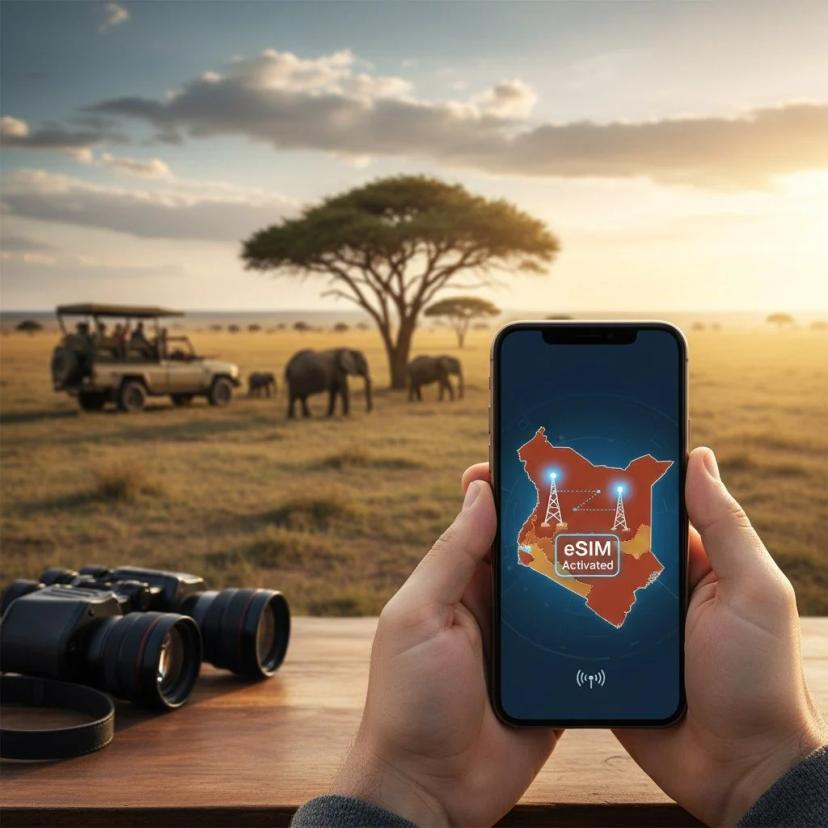
An eSIM, or embedded SIM, is a much better option. It's a digital SIM profile you can download right to your eSIM-compatible smartphone or tablet. This means no physical card, and you can often activate it before you even leave home. With an eSIM, you can keep your main phone number for calls and texts while using the eSIM for data, thanks to its dual SIM capabilities. This way, important contacts can still reach you, and you get affordable, fast data for maps, social media, and staying in touch with your safari guides. Want to know more about this tech? Check out our guide, What is eSIM? An eSIM offers unmatched convenience and saves you money, making it the best way to stay connected on your amazing 2026 safari. For a closer look at how it saves you cash, read eSIM vs. International Roaming: Which is Cheaper?
Understanding Mobile Network Coverage in East Africa (2026)
East Africa's mobile networks have come a long way by 2026. Big cities and popular tourist spots, including national parks, generally have good 4G LTE coverage. However, truly remote areas, which are often where you find the best safari experiences, can still be tricky for connectivity. In Kenya, the main network providers are Safaricom, Airtel, and Telkom Kenya. Safaricom usually has the broadest coverage, especially in rural spots and parks like the Maasai Mara. In Tanzania, you'll find Vodacom, Tigo, Airtel, and Halotel. Vodacom often leads in terms of reach and reliability, particularly around the Serengeti and Ngorongoro regions.
While 5G networks are slowly appearing in major cities like Nairobi and Dar es Salaam, 4G is still the primary internet access across most of the safari circuit. When picking an eSIM for Kenya and Tanzania, it's really important to choose a provider that partners with these top local networks. Cellesim does exactly that, ensuring you get the best possible connection, even when you're deep in the bush. It's smart to expect that high-speed internet won't be in every single corner of a huge national park, but for most places you'll be staying or traveling through, you should get decent data speeds to keep you online. For detailed network maps, look at local carrier websites or global telecommunications reports.
For more details on network performance, including East Africa, you can check independent analyses from groups like GSMA. Their reports often share insights into network growth and coverage in different regions. The GSMA Mobile Economy Africa 2025 Report shows that mobile broadband is continuing to grow across Africa, meaning even better connectivity for travelers in 2026.
Choosing the Best eSIM Plan for Your Safari Adventure
Picking the right eSIM plan for your Kenya and Tanzania safari in 2026 means finding a good balance between how much data you need, how long you're staying, and your budget. Your data usage really depends on how you use your phone. A week-long safari where you occasionally upload photos, check emails, and do a little browsing might only need 5-10 GB of data. If you plan to heavily use navigation apps, video call family often, stream high-quality wildlife videos, or post daily on social media, you might need a bigger plan, like 15-30 GB or even more. Cellesim has a variety of flexible eSIM plans for both Kenya and Tanzania, from smaller packages for quick trips to larger bundles for longer stays, usually valid for 7, 15, or 30 days.
If you're visiting both Kenya and Tanzania, or even adding on nearby countries like Uganda for gorilla trekking, a regional eSIM plan can be incredibly handy. Cellesim's Africa 29 Countries eSIM lets you use one data plan across many nations. This makes managing your connectivity much simpler and often costs less than buying separate plans for each country. No need to swap eSIMs or juggle multiple accounts when you cross borders, meaning uninterrupted service for your entire multi-country trip. Before you buy, think about your usual daily data usage. Our Smart Data Calculator can help you figure out your exact needs, so you can find the perfect Cellesim plan for your safari without any connectivity worries. This smart approach helps answer the question "Which SIM card is best for Kenya and Tanzania?" by highlighting the convenience of eSIMs for varied travel plans.
Cellesim vs. Local SIM Cards in Kenya & Tanzania: A 2026 Comparison
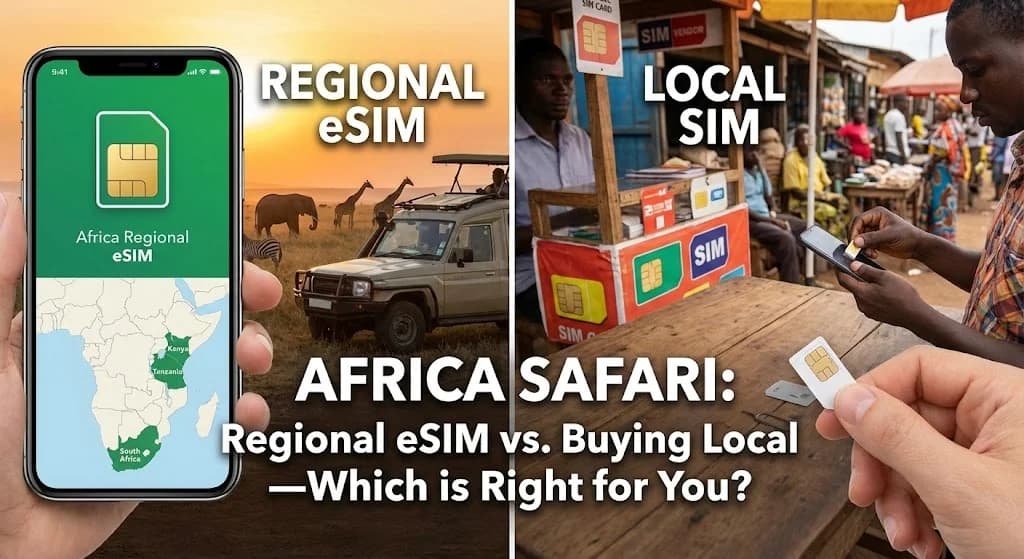
When planning your 2026 safari, travelers often think about whether to get an eSIM before they go or buy a local SIM card when they arrive. Local SIM cards from providers like Safaricom or Vodacom might look cheaper per gigabyte, but the process of getting one can be a real headache and take up valuable time. Landing at Jomo Kenyatta International Airport (NBO) in Nairobi or Julius Nyerere International Airport (DAR) in Dar es Salaam, you'd typically need to find a mobile store, wait in line, and go through a registration process. This usually means showing your passport, giving personal details, and sometimes even doing a biometric scan, which can eat into your precious travel schedule.
Cellesim eSIMs, however, are all about making things easy. You can buy your eSIM plan online days or weeks before your trip, get the QR code instantly by email, and activate it with just a few taps on your phone. This means you land in East Africa already connected, ready to call your safari guide, check maps, or message loved ones without any delay. There's no physical card to switch, no registration lines, and no language barriers. Plus, an eSIM gives you dual SIM functionality, so you can keep your home SIM active for important calls or messages while using the eSIM for all your data needs. This flexibility is a huge plus compared to a physical local SIM, especially if you need to keep your main number. For more on this comparison, see our article Airport Sim Card Prices Vs Esim.
Here’s a comparison table to help you decide:
Safari-Ready Connectivity for Kenya & Tanzania
Ensure seamless internet from the moment you land. Get your Cellesim eSIM for Kenya & Tanzania and join 50,000+ travelers worldwide.
Buy Kenya eSIM Now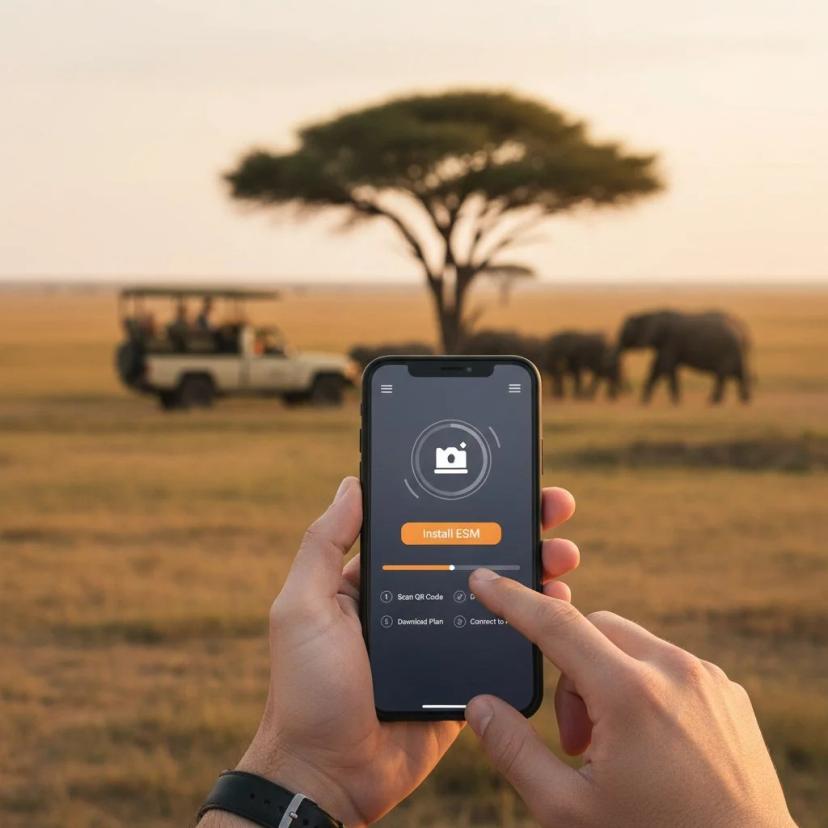
Easy eSIM Activation: Your Step-by-Step Guide for Safari Goers
Activating your Cellesim eSIM for your 2026 Kenya or Tanzania safari is super easy and designed for ultimate convenience. After buying your data plan at cellesim.com, you'll instantly get an email with your eSIM QR code and clear instructions. The great thing about an eSIM is that it's digital, so no physical card needed. For a visual guide, Cellesim even has an Interactive Setup Guide that shows you exactly what to do for different devices.
Here’s a general guide to activation:
- Buy Your eSIM: Head to cellesim.com and pick your Kenya, Tanzania, or Africa 29 Countries eSIM plan.
- Get Your QR Code: In just a few minutes, your eSIM QR code will arrive in your email inbox.
- Scan and Install: On an eSIM-compatible phone (check Cellesim's Compatible Devices list), go to your phone's settings, find 'Cellular' or 'Mobile Data,' and choose 'Add eSIM' or 'Add Data Plan.' Then, scan the QR code from your email.
- Name Your eSIM: Give it a clear name like "Kenya Data" or "Tanzania Safari" so you can easily tell it apart.
- Activate Your Plan: Make sure data roaming is on for your eSIM profile (not your primary SIM) in your phone settings. Your Cellesim eSIM will connect automatically once it finds a local network.
If you hit any snags during setup, like "no service" or connection troubles, Cellesim offers 24/7 email support at [email protected]. Their team is ready to help you in 24 languages, ensuring a smooth start to your safari. For more specific instructions for your phone, take a look at our detailed guide on How to Install Cellesim eSIM on iPhone & Android.
Optimizing Your Phone Settings for Safari Connectivity (2026)
A safari means spending long days without easy access to charging points, so getting your phone settings right is key to staying connected in Kenya and Tanzania in 2026. Battery life is a major concern. To make your phone's charge last longer, turn on Low Power Mode for iPhones or Battery Saver for Androids. Also, turning off background app refresh for apps you don't really need can greatly cut down on data usage and save power. For apps that do need regular updates, make sure they're set to only refresh when you're on Wi-Fi.
When you're out on a game drive, it's tempting to constantly check your phone, but a spotty signal can drain your battery faster as your device keeps searching for a network. If you know you'll be in an area with little to no signal for a while, switching to Airplane Mode can stop that unnecessary battery drain. Remember to turn off data roaming for your home SIM to avoid accidental charges, but do make sure data roaming is enabled specifically for your Cellesim eSIM. If you're traveling with friends or have multiple devices, your eSIM's personal hotspot feature is incredibly useful. It lets you share your data connection with other phones, tablets, or laptops, turning your device into a portable Wi-Fi hub. Learn how to get the most out of this feature with our guide: How to Use Your eSIM Personal Hotspot and Share Data Anywhere. Since messaging apps are widely used in East Africa, have WhatsApp installed and ready to chat with guides or other travelers. For more tips on managing data efficiently, check out How to Save Data Abroad.
Beyond Data: Staying Safe and Connected on Your East African Safari
While a safari in East Africa is all about getting away from it all, having a reliable connection is important for more than just sharing photos. In the huge and sometimes remote landscapes of Kenya and Tanzania, your phone can be a crucial safety tool. Having consistent data access in 2026 means you can use GPS for navigation, even if offline maps struggle with exact locations or up-to-date info. It also allows for quick communication with your safari guides, lodge staff, or emergency services if anything unexpected happens. That peace of mind is priceless when you're far from city centers.
Beyond safety, connectivity just makes your trip better. You can quickly look up facts about the animals you see, use an app to identify bird species, or translate phrases for talking with locals. Staying in touch with family and friends back home is easy, letting you share your amazing sightings in real time and make them feel like they're part of your journey. Many travelers also find it useful for banking apps, booking future travel, or using ride-hailing services in cities like Nairobi. As for the best time to visit, "Which month is best for safari in Kenya and Tanzania?" is a common question. Generally, the dry season from June to October is perfect for seeing wildlife, as animals gather around water sources and there's less dense vegetation. This time also includes the spectacular Great Migration across the Serengeti and Maasai Mara. However, the 'green season' (November-May) offers lush landscapes and newborn animals, though rain can affect road conditions. For current travel advice and safety info, always check official government travel advisories and tourism board websites before your trip. Kenya's Official Tourism Website and Tanzania's Official Tourism Website are great resources for planning your 2026 adventure.
Regional Connectivity: Combining Your Safari with Neighboring Countries
Many travelers extend their Kenyan and Tanzanian safari to visit nearby East African countries for different sights and experiences. For instance, some might head to Uganda for its famous gorilla trekking or go to Rwanda. Managing your phone connection across multiple borders with traditional SIM cards can be a real logistical headache. You'd have to buy a new local SIM in each country or rely on expensive international roaming plans that can quickly drain your wallet and your patience.
Cellesim makes this much easier with its regional eSIM options. The Africa 29 Countries eSIM plan is perfect for multi-country East African trips in 2026. With just one eSIM, you get continuous data access across Kenya, Tanzania, Uganda eSIM, Rwanda, and many other countries in the region. This means no more hunting for local SIM card vendors, enduring lengthy registration processes, or worrying about losing your connection as you cross borders. Imagine going from a hot air balloon safari over the Maasai Mara to tracking gorillas in Bwindi Impenetrable National Park without any interruption to your internet service. This single plan gives you consistent, reliable data, so you can fully enjoy your incredible travel experiences. It's an affordable and convenient way to stay connected, making sure you capture and share every moment of your diverse East African adventure.
Customer Support and Emergency Assistance for Cellesim Users
Even with the best plans, you might have a technical question or a connection hiccup while traveling, especially in remote safari spots. Knowing that help is just a message away brings huge peace of mind. Cellesim is proud to offer fantastic customer service to make sure your safari connectivity is as smooth as possible through 2026. Our dedicated support team is available 24/7 via email at [email protected], ready to help with any questions or troubleshooting you might need.
What makes Cellesim stand out is our dedication to travelers worldwide, offering live support in all 24 languages our platform supports. This means you can get help in your preferred language, ensuring any issue you face is resolved clearly and effectively, no matter where you're from. Whether it's help with eSIM activation, monitoring your data usage, or understanding your plan, our expert team is there for you. We know that staying connected is essential on your safari, not just for convenience, but also for safety. Rest assured that when you choose Cellesim, you have a strong support system working to keep you online, even when you're off the beaten path in the heart of Kenya or Tanzania.
Explore the World Connected: Your Ultimate Travel Companion
Don't let connectivity woes spoil your adventure. Cellesim offers eSIM plans for 200+ countries, ensuring you're always connected, wherever your travels take you.
Explore All eSIM PlansJoin 50,000+ satisfied customers worldwide. Instant setup in 2 minutes.
Frequently Asked Questions
Which SIM card is best for Kenya and Tanzania?
For most travelers in 2026, an eSIM is the best choice for Kenya and Tanzania. You get instant activation, avoid high roaming fees, and don't have to deal with the hassle of buying and registering a physical local SIM card when you arrive. Cellesim has reliable eSIM plans specifically for both countries, or a regional Africa plan if you're traveling to multiple places.
What's the best eSIM for Kenya?
The best eSIM for Kenya in 2026 really depends on how much data you need and how long you'll be there. Cellesim offers various Kenya-specific eSIM plans, working with top local networks like Safaricom for the best coverage. Think about a plan with enough data for your expected usage, whether that's 5GB for light browsing or 20GB+ for lots of sharing and streaming.
Which month is best for safari in Kenya and Tanzania?
The dry season, from June to October, is generally considered the top time for a safari in Kenya and Tanzania in 2026. During these months, it's easier to spot wildlife as animals gather around waterholes, and the vegetation isn't as thick. This period also gives you the chance to see the spectacular Great Migration.
Should I get an eSIM for Kenya?
Yes, absolutely! Getting an eSIM for Kenya in 2026 is highly recommended. It saves you both time and money compared to traditional roaming or dealing with local SIM card purchases. With an eSIM, you'll have instant, reliable internet from the moment you land, letting you stay connected for navigation, communication, and sharing all your amazing safari experiences.
How much data do I need for a safari trip?
For a typical 7-10 day safari in 2026, a 5-10 GB eSIM plan is usually enough for moderate use, like checking maps, messaging, and uploading a few photos. If you plan to make video calls, stream content, or share lots of high-resolution videos and photos, a 15-30 GB plan or more would be a safer bet. Cellesim's Smart Data Calculator can help you estimate exactly what you need.
Can I use my Cellesim eSIM for calls and texts?
Cellesim eSIM plans mainly provide data services. While you won't be able to make traditional cellular calls or send SMS with a data-only eSIM, you can easily use internet-based communication apps like WhatsApp, FaceTime, Skype, or Google Meet for calls and messages. This lets you stay in touch with your contacts using your data plan, often at no extra cost.
See also: Rwanda eSIM