The T-Mobile Trial: What It Actually Offers in 2026
Let's cut to the chase: T-Mobile's free eSIM trial for 2026 is for US residents to test their network at home. It's not really a traveler's perk, but people always try to use it for international trips. The trial usually gives you a solid amount of data, often 30GB, for 30 days. Sounds amazing, right? Unlimited data for a month, for free, while backpacking through Southeast Asia. Nope, that's not how it works.
The big catch is that this "free" data is mostly for use in the United States. While T-Mobile does offer international roaming with its regular plans, the free trial often has huge limits on what you can use abroad. Expect slow, throttled data, or even no data at all in some countries, even those listed as "included" in their full Magenta Max plans. It's a classic bait-and-switch if you don't read the fine print.
What's included in the 2026 T-Mobile eSIM trial?
As of early 2026, the T-Mobile free eSIM trial usually gives you:
- 30GB of high-speed data: This is for US domestic use. It's plenty for a month if you're stateside.
- 30 days of service: A full month to test the network, make calls, send texts, and use data.
- Unlimited talk and text: Again, mainly for US domestic use.
- No credit card required: This is a real bonus, meaning no sneaky auto-renewals or charges.
The problem for international travelers is that the free data from the trial doesn't magically extend to all the 215+ countries T-Mobile's full plans boast. You're getting a taste of their domestic service, not their global roaming giant. If you're a US resident planning a short domestic trip, this could be perfect. For anyone else, keep your wallet ready.
The fine print: Where the 'free' falls short for global travelers
I've seen too many backpackers get burned by assuming "free" means "global." T-Mobile's free trial clearly states it's for experiencing their network. This means you're generally tied to their towers or partner networks in the US, Canada, and Mexico. Step outside those borders, and your "free" data either grinds to a halt, or you're hit with crazy pay-as-you-go roaming charges. These charges will blow your €40/day budget faster than a night bus breaking down in Laos.
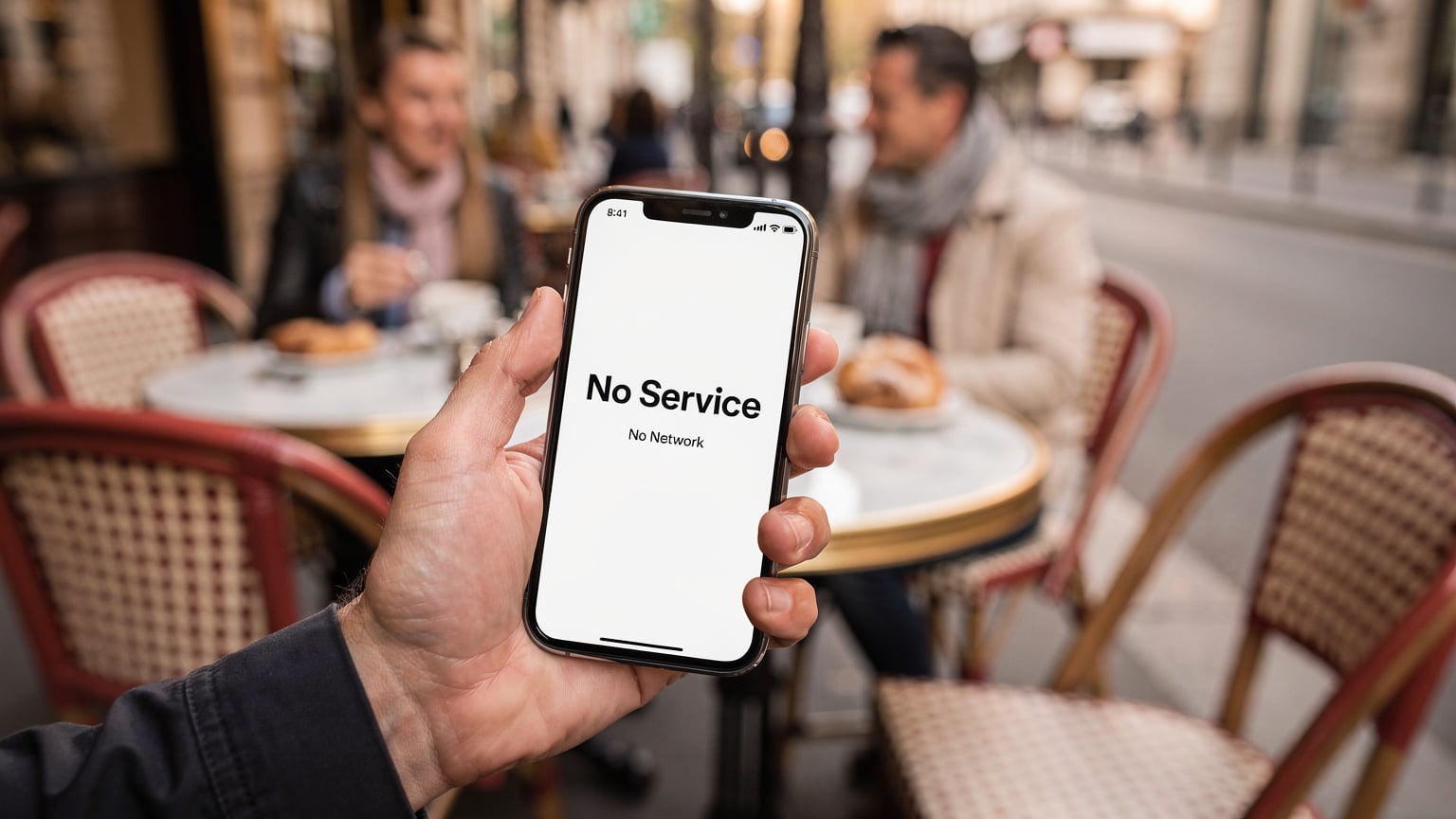
Even if you somehow activate the trial before leaving the US, don't expect it to work smoothly when you land at, say, Narita International Airport. You'll probably see a "No Service" message or painfully slow 2G speeds, barely enough to load a text, let alone find your hostel. For reliable connectivity abroad, a dedicated travel eSIM is the smarter choice, as I covered in T-Mobile eSIM QR Code: Getting & Activating for Global Roaming 2026.
My Real-World Test: Border Crossings and Bad Signals
I don't just read the fine print; I put these things through their paces. Last month, I decided to test the T-Mobile free eSIM trial while jumping between the US, Canada, and then trying to use it in Europe. My goal: see if it could really replace a dedicated travel eSIM for a budget traveler.
"8 days, €280 spent on data across three countries, trying to make the 'free' T-Mobile trial work. It wasn't free. It was a headache."
I activated the T-Mobile trial on my iPhone 14 Pro in Austin, Texas. Speeds were good, as expected, around 100-150 Mbps down. Then I flew to Vancouver, Canada. Immediately, the speeds dropped. I got some data, but it was throttled, maybe 5-10 Mbps on Rogers' network. Enough for WhatsApp, but Zoom calls were impossible. Then came the real test: flying to Amsterdam for a quick stopover before heading to Berlin. The second I landed at Schiphol, my T-Mobile eSIM died. Completely. No data, no text, no calls. It was just a useless piece of software on my phone.
Border-crossing edge cases: When 'roaming' isn't really roaming
This is where things get tricky. T-Mobile's full plans offer roaming in Canada and Mexico, but the free trial is specifically for "experiencing their network." While I did get some data in Vancouver, it felt like a courtesy, not a full roaming agreement. Imagine relying on this for critical navigation while crossing the land border from Tijuana into San Diego, or trying to confirm a hostel booking in Mérida. It's a gamble. The last thing you need at a border crossing, especially one with a sketchy bus operator like ADO or Estrella Blanca, is unreliable data.
For border crossings, especially those into countries where local SIM cards can be a pain (like some parts of Central Asia where registration is complicated), I always recommend a strong, multi-country eSIM. You don't want to be stuck at a checkpoint trying to figure out why your "free" trial isn't connecting. It's not just about money; it's about safety and getting things done.
The data math: GB consumed / day × days = total disaster for long trips
Let's talk numbers. My typical data use on the road is about 3-5GB per week. That's for Google Maps, WhatsApp messages, checking hostelworld.com, the occasional Instagram story, and maybe a few hours of Spotify. On a 30-day trip, that's roughly 12-20GB. The T-Mobile trial's 30GB sounds generous, but if it only works reliably in the US, it's useless. If you're using it as your main connection for even a short international trip, you'll burn through any limited roaming data and then get hit with daily charges that quickly dwarf the cost of a proper travel eSIM.
Think about this: a 10GB regional eSIM for Europe costs around €25-€30 for 30 days. That's about €0.83-€1.00 per day. My trial experience in Europe would have cost me nothing because it didn't work. But if I were paying T-Mobile's standard international roaming rates (which can be €10-€15 per day for a few MB of data), my 8-day trip would have racked up €80-€120 just trying to stay connected. That's a huge chunk of change that could have gone to actual experiences, not wasted data. It's why I always stress the importance of understanding your actual data needs, as discussed in Free eSIM Trial Unlimited Data: A Nomad's Reality Check for 2026.
The Hidden Costs of 'Free': When It Adds Up
Nothing in life is truly free, especially with phone companies. The T-Mobile free eSIM trial is a marketing tool, and while it's genuinely free for its intended purpose, trying to use it beyond that can lead to unexpected costs.
Throttling and overage charges: The silent killers of your budget
If you're lucky enough to get some international roaming data on the T-Mobile trial, expect it to be throttled to painfully slow speeds. We're talking 128 kbps or 256 kbps. That's dial-up speeds in 2026. Forget streaming, forget video calls, forget even reliably loading Google Maps in a busy city. It's barely enough for text-based WhatsApp messages. If you try to use more, you might get hit with daily data pass charges, often €10-€15 for a few hundred MB. That's more expensive than any local SIM or travel eSIM plan out there.
I once saw a guy in a hostel in Krakow who thought he was "saving money" by sticking with his US carrier's roaming. He ended up with a €300 bill for a week. He could have bought a local Polish SIM card for €10 with 10GB of data. Always know your options.
The opportunity cost: Time wasted troubleshooting connectivity
Time is money, especially when you're traveling. Every minute you spend fixing a dead eSIM, searching for Wi-Fi, or trying to talk to customer service (who will likely tell you the trial isn't for international roaming) is time you're not spending exploring a new city, trying local food, or just relaxing. This "opportunity cost" is often overlooked by budget travelers, but it's very real. My time trying to get T-Mobile to work in Amsterdam was easily worth €50 in lost productivity and stress.
Comparison: T-Mobile Trial vs. Dedicated Travel eSIMs
This is where we get down to brass tacks. For most international travelers, dedicated travel eSIMs like those from Cellesim or Airalo are simply better than trying to squeeze international data out of a T-Mobile free trial. They're built for your specific needs, clear about costs, and reliable.
| Feature | T-Mobile Free eSIM Trial | Dedicated Travel eSIM (e.g., Cellesim, Airalo) |
|---|---|---|
| Cost | €0 (US domestic only) | Starts from ~€5-€10 for basic plans |
| Coverage | Primarily USA, limited/throttled in Canada/Mexico, unreliable elsewhere | Global, regional, and single-country plans available (e.g., Japan eSIM) |
| Data Speed | High-speed in USA, severely throttled or non-existent internationally | Typically high-speed (4G/5G) via local partner networks |
| Duration | 30 days | Flexible, from 7 days to 30 days or more, depending on plan |
| Setup Difficulty | Relatively easy (QR code activation) | Very easy (QR code activation) |
| Best For | US residents testing T-Mobile network domestically, very short US trips | International travelers, digital nomads, multi-country trips |
Cellesim vs. T-Mobile: A clear winner for global data
When you compare Cellesim's offerings, which are specifically built for international travelers, against the T-Mobile trial, there's no contest. Cellesim focuses on giving you reliable, high-speed data in specific countries or regions. You know exactly what you're paying for, how much data you get, and where it will work. No surprises. For example, a Cellesim plan for Europe in 2026 will give you proper 4G/5G across multiple countries, while T-Mobile's trial will leave you stranded outside North America. This is vital for anyone trying to navigate new cities, book last-minute hostels, or arrange meetups.
For a detailed look at how dedicated travel eSIMs compare to US carriers, check out T-Mobile eSIM vs. Airalo: Uncapped Data Benchmarks for Power Users (2024).
Why pay for an eSIM when a trial is 'free'?
You pay for reliability, peace of mind, and predictable costs. For a few euros, a dedicated travel eSIM guarantees you'll have data when you land. No hunting for Wi-Fi, no worrying about roaming charges, no dead zones when you most need to check Google Maps. For a backpacker trying to stick to €40/day, knowing exactly what your data costs upfront is priceless. It's like paying for a reliable bus ticket instead of hitchhiking and hoping you don't get stuck.
The Budget Backpacker's Alternative: Local Physical SIMs
To be fair, it's always worth mentioning the cheapest local physical SIM alternative. If you're staying in one country for a long time (say, a month or more), and you're truly pinching pennies, a local physical SIM card is often the absolute cheapest choice.
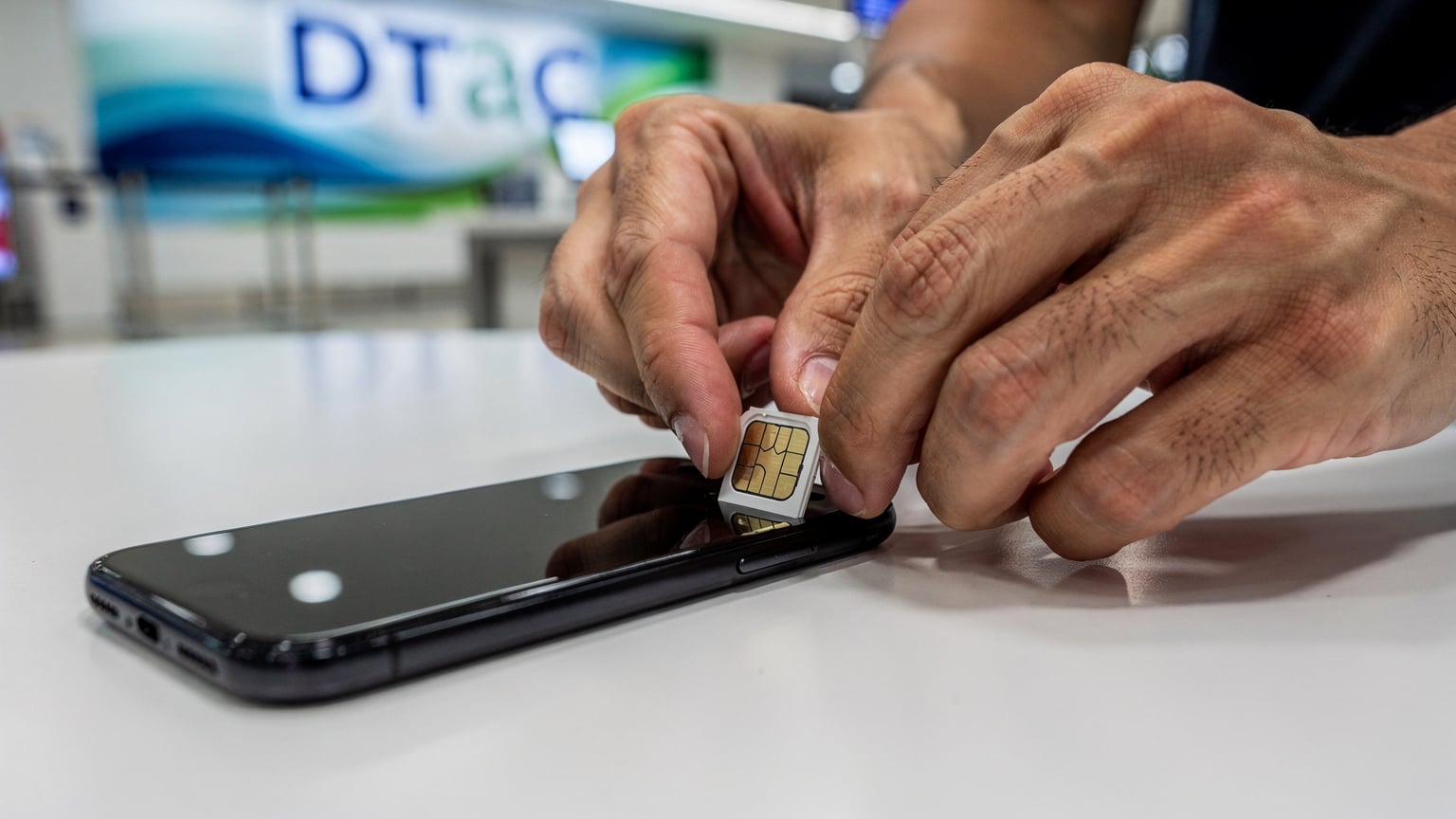
The classic move: Buying a local SIM at the airport (or in town)
In many countries, especially in Southeast Asia, you can grab a local SIM card right at the airport or from a local convenience store like 7-Eleven in Thailand. For example, in Bangkok, a real budget option is a DTAC or AIS SIM from a 7-Eleven: for about 200-300 THB (around €5-€8), you can get 8GB-15GB of data for 7-15 days. This is often cheaper per GB than any eSIM, if you consider the base cost.
However, there are downsides: you need to find a store, deal with language barriers, possibly register your passport, and then swap out your physical SIM, which means you might miss calls to your primary number. For shorter trips or multi-country hops, the convenience of an eSIM often outweighs the small cost saving of a local physical SIM.
| Factor | Local Physical SIM | Travel eSIM (e.g., Cellesim) |
|---|---|---|
| Cost | Often cheapest per GB for single-country, long stays | Slightly more expensive, but saves time/hassle |
| Convenience | Requires finding store, registration, physical swap | Buy online, activate with QR code before you land, no physical swap |
| Multi-Country | Not practical, requires new SIM for each country | Excellent, regional plans cover many countries seamlessly |
| Primary Number | Replaces your primary SIM, missing calls/texts | Runs alongside primary SIM, keep your number active |
| Best For | Long stays (1+ month) in a single, easy-to-get-SIM country | Short trips, multi-country travel, need for immediate connectivity |
When to choose a local SIM over an eSIM
You should definitely consider a local physical SIM if:
- You're staying in one country for more than three weeks: The cost savings per GB will start to add up significantly.
- You're comfortable with the process: Buying, registering, and swapping SIMs isn't for everyone.
- You don't need to keep your primary number active: If missing calls/texts isn't a problem.
- You're in a region with very cheap local data: Like parts of Asia or Latin America where 10GB can be had for a few euros.
For example, in Japan, you can get a Sakura Mobile SIM at Narita for around ¥4,000 (about €25) for 8GB over 30 days. This is a good deal, but an eSIM for Japan offers instant connectivity on landing, which can be a lifesaver when navigating Tokyo's complex train system for the first time.
Who Should Consider the T-Mobile Free eSIM Trial?
Despite my criticisms for international use, the T-Mobile free eSIM trial isn't completely useless. It has its place, mostly for people who are already in the US or planning a very short trip within North America.
US residents testing the network
If you live in the United States and are thinking about switching to T-Mobile, this trial is perfect. It lets you test their network coverage and speeds in your home area, at work, and on your commute for a month without any commitment. This is its intended purpose, and for this, it's a fantastic, truly free offer.
Short trips to the USA, Canada, or Mexico
For US citizens traveling within the USA, or maybe a quick jump across the border to Canada or Mexico, the trial might offer some limited value. Just be aware of the potential throttling in Canada/Mexico. If you're on a road trip, say, from Seattle to Vancouver, it could be a decent temporary fix. But for anything more extensive, especially outside the US, I wouldn't count on it.
As an absolute emergency backup (if you're already in the US)
In a pinch, if your main data source dies while you're in the US and you're desperate, you could try to activate the T-Mobile trial. But remember, it's a temporary fix, not a strong solution. You'd be better off getting a proper US eSIM that's designed for travelers and offers more reliable coverage.
How to Get and Activate Your T-Mobile eSIM Trial
If you fall into one of the specific categories where the T-Mobile trial makes sense, setting it up is pretty easy. Just make sure you're doing this from within the United States.
Step-by-step activation guide
- Download the T-Mobile App: Search for 'T-Mobile Network Test Drive' or 'T-Mobile Prepaid eSIM' in your phone's app store.
- Follow On-Screen Prompts: The app will walk you through entering some basic information (no credit card, remember).
- Install the eSIM Profile: Your phone will ask you to install the eSIM. This usually means clicking a few 'Continue' or 'Accept' buttons.
- Activate the Line: Once installed, make sure the T-Mobile eSIM line is set as your data line in your phone's settings. You might need to restart your phone.
- Test Connectivity: Immediately try browsing a website or sending a message to confirm it's working.
This process usually takes less than 10 minutes. If you hit any snags, remember that customer support for a free trial might not be as good as for a paying customer.
Troubleshooting common issues (and why it's not worth it for travelers)
The most common issue for international travelers trying to use this trial is a complete lack of service abroad. If you're outside the US and your T-Mobile trial eSIM isn't working, it's not a glitch; it's by design. Don't waste your precious travel time trying to fix it. Just switch to a proper travel eSIM or find a local SIM. The effort isn't worth the "free" aspect.
Making Your Data Last on the Road: My Top Tips
Whether you're using a T-Mobile trial, a dedicated travel eSIM, or a local physical SIM, saving data is crucial for budget backpackers. Every MB saved is a euro not spent.
Tactics for conserving data on a tight budget
- Download Offline Maps: Before you leave your hostel's Wi-Fi, download entire regions or cities on Google Maps or Maps.me. This saves huge amounts of data for navigation.
- Pre-Download Entertainment: Movies, music, podcasts, and e-books should all be downloaded over Wi-Fi. Streaming on mobile data quickly burns through your allowance.
- Disable Background App Refresh: Go into your phone settings and turn off background refresh for most apps. They eat data even when you're not actively using them.
- Use Wi-Fi Whenever Possible: Hostels, cafes, train stations, libraries, McDonald's. Always connect to free Wi-Fi for heavy data usage.
- Monitor Data Usage: Regularly check your phone's settings to see which apps are using the most data. This helps you find and stop data hogs.
- Turn Off Auto-Play Videos: On social media apps like Facebook, Instagram, and X (formerly Twitter), disable auto-play for videos. This can save huge amounts of data.
These small habits add up. I've stretched a 5GB eSIM over two weeks in Europe by being careful with these tips. It means I'm not stressing about finding Wi-Fi in a pinch and can always rely on my eSIM for essential tasks.
The apps that secretly gobble your GBs
Watch out for these data vampires:
- Social Media Apps (Instagram, TikTok, Facebook): Video auto-play and endless scrolling are massive data sinks.
- Streaming Services (Netflix, YouTube, Spotify, Apple Music): High-quality streaming can chew through GBs in minutes.
- Cloud Backups (Google Photos, iCloud, Dropbox): Make sure these are set to Wi-Fi only for uploads.
- Navigation Apps (Google Maps, Waze): While essential, they can use a lot of data, especially if you haven't downloaded offline maps.
Remember, your phone is a tool, not an open faucet for data. Use it smartly, and your budget will thank you. For more tips on managing data for remote work on the go, I often refer to insights from Europe in 2026: The Engineer's Multi-Country eSIM Strategy.
Final Verdict: Is It Worth It for Travelers in 2026?
So, after all that, is the T-Mobile free eSIM trial worth it for international travelers in 2026? My honest, practical answer is: No, not for most international trips outside of the US.
For US residents wanting to test T-Mobile's domestic network, absolutely, go for it. It's free, no commitment. But for a global backpacker, someone counting every euro and needing reliable data for navigation, hostel bookings, and communication, it's a false economy. The chance of no service, slow speeds, and unexpected roaming charges far outweighs the "free" aspect.
Your peace of mind and reliable connectivity are worth the small cost of a dedicated travel eSIM. For €5-€10, you can get a week or more of dedicated, high-speed data in almost any country, purpose-built for travelers. Don't let a "free" offer ruin your trip or blow your budget.
Frequently Asked Questions
Can I use the T-Mobile free eSIM trial for international travel outside the USA?
No, the T-Mobile free eSIM trial is mainly for use within the USA. While some limited, throttled roaming might happen in Canada or Mexico, it likely won't work or will cost a lot in other international places. It's not made for global travel.
How much data does the T-Mobile free eSIM trial offer?
The T-Mobile free eSIM trial usually gives you 30GB of high-speed data for 30 days. However, this data is mostly for use within the United States. Any international use will be very limited or simply unavailable.
Is the T-Mobile free eSIM trial truly free, or are there hidden fees?
The trial itself is free, and you don't need a credit card to activate it. But if you try to use it for international roaming outside North America, you risk big pay-as-you-go charges or just having no service at all. The "hidden cost" is often losing reliable connectivity and potentially getting unexpected bills.
What's a better alternative for international data than the T-Mobile trial?
For international data, dedicated travel eSIMs (like those from Cellesim or Airalo) or local physical SIM cards are much better choices. They offer reliable, high-speed data with clear pricing for specific countries or regions, making sure you stay connected without surprises.
Can I activate the T-Mobile free eSIM trial outside the USA?
No, you must activate the T-Mobile free eSIM trial while you are physically in the United States. Trying to activate it from abroad will probably fail or give you an error message.
How long does the T-Mobile free eSIM trial last?
The T-Mobile free eSIM trial typically lasts for 30 days from the day you activate it. After this time, the service will end, and you won't be automatically charged or signed up for a paid plan.