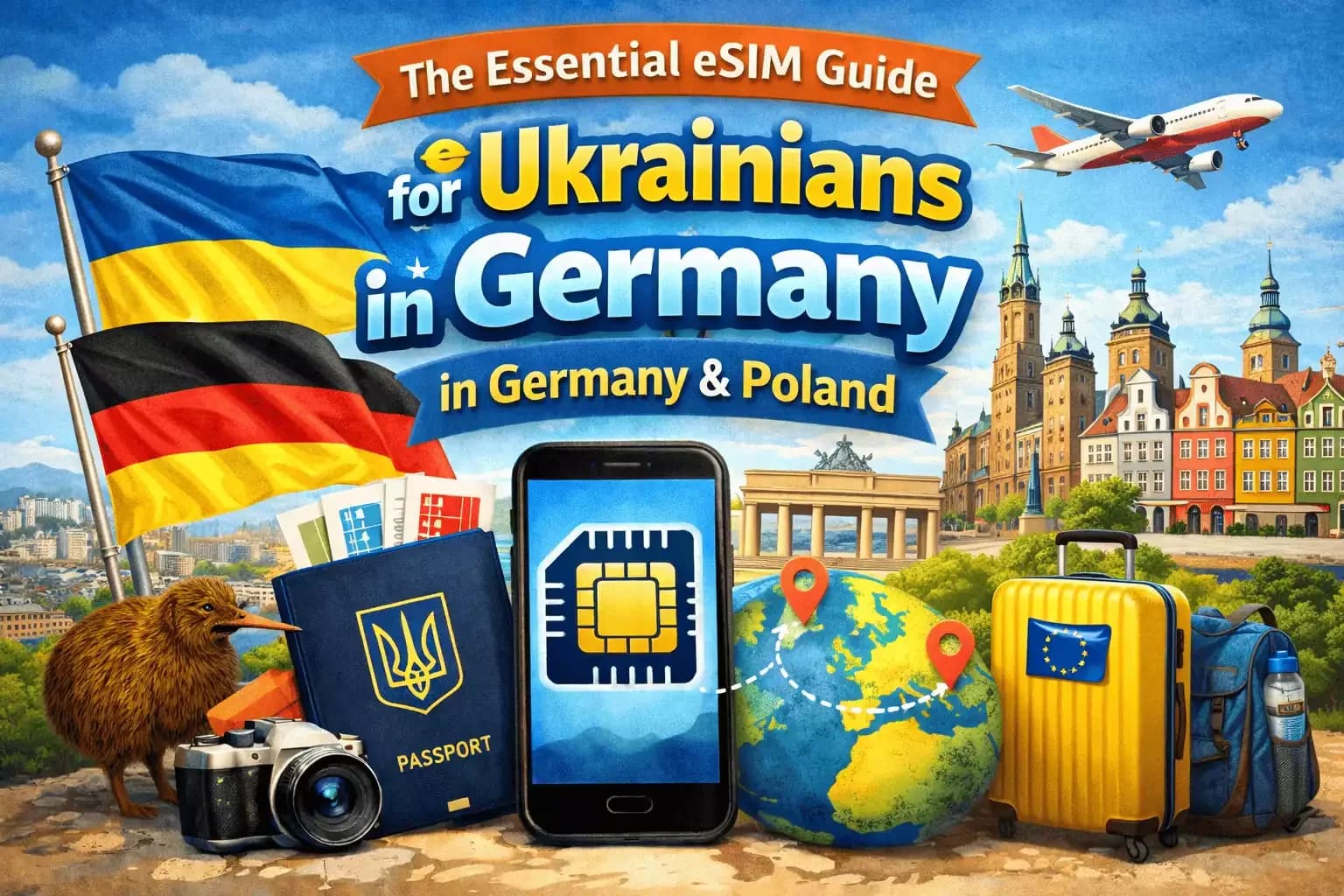
Imagine this: you've just landed at Berlin Brandenburg Airport (BER) or Warsaw Chopin Airport (WAW). The first thing you need is to connect, to contact family, check the train schedule, or pull up the address of your accommodation. For many, this is a moment of stress, fumbling with expensive roaming or searching for a physical SIM card vendor. But it doesn’t have to be. This guide is specifically designed to address the need for a reliable eSIM for Ukrainians in Germany and Poland, ensuring you have instant, affordable internet from the moment you arrive. We'll explore exactly why an eSIM is your best choice, how to pick the right plan, and provide practical tips for a seamless experience. Having reliable internet is a modern necessity, and understanding your options provides essential connectivity for Ukrainian travelers, whether you're visiting, working, or starting a new chapter.
- Why an eSIM is the Ideal Choice for Ukrainians in Germany & Poland
- Understanding Connectivity Needs: Germany vs. Poland
- Choosing Your Cellesim Plan for Germany & Poland
- Network Coverage and Reliability for Ukrainian Travelers
- eSIM vs. Traditional Options: A Cost Comparison
- Activating Your Cellesim eSIM: A Step-by-Step Guide
- Pro Tips for Staying Connected While in Germany or Poland
- Frequently Asked Questions
Connect Instantly in Germany & Poland
Get seamless connectivity from the moment you land. Join 50,000+ travelers in 200+ countries with Cellesim.
Get Your Germany eSIM Get Your Poland eSIMWhy an eSIM is the Ideal Choice for Ukrainians in Germany & Poland
For Ukrainians navigating travel or relocation to Germany and Poland, reliable connectivity is more than a convenience; it is a vital tool. An eSIM offers distinct advantages over traditional physical SIM cards, particularly in situations that demand flexibility and immediate access.
Firstly, an eSIM eliminates the need for a physical SIM card. This means no searching for local stores, no dealing with language barriers at an airport kiosk, and no fumbling with tiny plastic cards. You can purchase and activate your eSIM digitally, often before you even depart. This is especially beneficial for those arriving with urgent communication needs or limited time.
Secondly, eSIMs provide unparalleled flexibility. Many modern phones support multiple eSIM profiles, allowing you to easily switch between a Cellesim plan for Germany or Poland and your home country's number, without physically swapping cards. This feature is crucial for maintaining contact with family and friends back home while using a local data plan abroad. It also supports dual SIM functionality, enabling you to receive calls or messages on your Ukrainian number while actively using your Cellesim data plan.
Lastly, eSIMs often present a more cost-effective alternative to international roaming. Roaming charges from your home provider can quickly accumulate, leading to unexpected bills. Cellesim offers competitive data packages tailored for various travel durations and data needs, ensuring predictable and affordable costs. This financial clarity is particularly valuable for individuals managing budgets during international travel or relocation.
Understanding Connectivity Needs: Germany vs. Poland
While both Germany and Poland are European Union members offering robust telecommunications infrastructure, the specific needs and experiences for Ukrainians can vary slightly. Understanding these differences can help you choose the most appropriate eSIM plan and manage your expectations.
Germany, as a larger and more economically developed country, generally boasts excellent 4G/5G coverage across urban centers and major transport routes. Providers like Deutsche Telekom, Vodafone, and O2 ensure high speeds and reliable connections. For Ukrainians settling in larger cities like Berlin, Munich, or Frankfurt, connectivity will be seamless. However, rural areas might still see some variability in speeds, a common aspect of any extensive network.
Poland also offers strong 4G/5G networks, particularly with major carriers such as Play, Orange, T-Mobile, and Plus. Cities like Warsaw, Krakow, and Wrocław are well-covered, with connectivity extending significantly to smaller towns and villages. For many Ukrainians, Poland serves as a primary transit or settlement country, making reliable internet crucial for administrative tasks, communication with support networks, and navigating daily life. The cost of data in Poland can sometimes be slightly lower than in Germany, reflecting different market dynamics.
When selecting your eSIM, consider your primary destination and anticipated usage. If you plan to travel extensively between both countries, a regional Europe eSIM might offer greater convenience. However, if your focus is primarily on one country, a dedicated Germany or Poland eSIM plan from Cellesim provides optimized local service.
"Maintaining contact with my family back home was my top priority when I arrived in Poland. My eSIM made it incredibly easy to stay connected without worrying about expensive roaming fees."
Choosing Your Cellesim Plan for Germany & Poland
Selecting the right eSIM plan is crucial for a stress-free experience in Germany and Poland. Cellesim offers various options designed to meet different data needs and durations, ensuring you only pay for what you use.
Consider your travel duration and intended data usage. Are you on a short visit, a transit, or a longer stay? For brief trips or light usage, a plan with 1-5 GB of data for 7-15 days might suffice. This is ideal for essential messaging, map navigation, and occasional browsing. If you anticipate heavy usage, such as video calls, streaming, or working remotely, opting for a larger data package (10-30 GB) for 30 days will provide peace of mind. Cellesim also offers flexible plans that can be topped up if you run out of data sooner than expected.
Here’s a general guide to help estimate your data needs:
| Activity | Estimated Data Usage (per hour) | Recommendation |
|---|---|---|
| Messaging (WhatsApp, Telegram) | ~5-10 MB | Minimal data plan |
| Browsing Websites | ~60 MB | Standard data plan |
| Social Media | ~100-200 MB | Standard to High data plan |
| Video Calls (SD) | ~300 MB | High data plan |
| Streaming Music | ~150 MB | Standard data plan |
| Streaming Video (SD) | ~700 MB | High data plan |
| Online Gaming | ~50-100 MB | High data plan |
For an accurate estimate based on your habits, consider using an online Smart Data Calculator. Cellesim's plans are designed to be transparent, with no hidden fees, providing you with clear costs upfront. This allows you to manage your budget effectively, a significant advantage for those navigating new financial landscapes.
Network Coverage and Reliability for Ukrainian Travelers
Connectivity reliability is paramount, especially when you are in a new country. Cellesim partners with leading local network providers in Germany and Poland to ensure you receive the best possible coverage and speed.
In Germany, Cellesim leverages the robust networks of major carriers. This typically means access to 4G LTE and often 5G services in urban and suburban areas. You can expect strong signals for calls, messages, and internet access in cities like Berlin, Hamburg, Munich, and across the Autobahn network. Rural regions, while generally covered, might experience variations in data speeds. For specific coverage details, it's always advisable to check the coverage maps provided by the local network operators.
Similarly, in Poland, Cellesim connects to top national networks, providing extensive 4G LTE coverage throughout the country. Whether you are in Warsaw, Krakow, or visiting smaller towns in the countryside, you can anticipate reliable connectivity. Poland has invested significantly in its digital infrastructure, making it one of the better-connected countries in Central Europe. This strong infrastructure ensures that Ukrainians can depend on their eSIM for essential communications, online banking, and staying updated with news.
Both countries benefit from modern network infrastructure, which minimises disruptions and ensures consistent service. This stable connectivity is crucial for tasks like using navigation apps, accessing public transport schedules, communicating with employers or support services, and making video calls to loved ones. The aim is to provide a seamless online experience, mirroring the reliability you might expect from a domestic service.
eSIM vs. Traditional Options: A Cost Comparison
When planning connectivity for Germany or Poland, Ukrainians have several options: international roaming, local physical SIM cards, or an eSIM. A clear cost comparison highlights why an eSIM often presents the most economical and convenient choice.
International Roaming: Your home provider's roaming services can be convenient for short, infrequent use, but they are typically the most expensive option for data. Daily passes or per-MB charges can quickly lead to high bills, making it unsustainable for longer stays or heavy data users. While some Ukrainian operators might offer relatively competitive roaming packages, they generally cannot match the per-gigabyte cost of a dedicated local plan.
Local Physical SIM Card: These can be affordable and offer good local rates. However, purchasing one requires finding a retail store, providing identification (which can be complex for newcomers), and potentially dealing with contract terms or language barriers. This option also means physically swapping your SIM card, which might cause you to miss calls or messages on your primary Ukrainian number. For more details on this comparison, see our guide on Airport SIM vs. eSIM.
Cellesim eSIM: eSIMs combine the affordability of local rates with the convenience of digital activation. You can purchase your plan online before you even travel and activate it upon arrival. Cellesim offers clear, upfront pricing, eliminating hidden fees. This approach allows you to stay connected on a budget, without compromising on data speed or reliability. Furthermore, the dual SIM functionality of most eSIM-compatible phones lets you keep your Ukrainian number active for calls and messages while using your Cellesim plan for data.
Here’s a simplified cost comparison for a typical 10GB data package over 30 days:
| Option | Typical Cost (10GB/30 Days) | Setup Difficulty | Flexibility |
|---|---|---|---|
| Cellesim eSIM | From $10 - $25 | Instant Online | High (Digital, Dual SIM) |
| Roaming (Home Provider) | $100 - $300+ | Automatic | Low (Expensive) |
| Local Physical SIM | $15 - $40 | Moderate (In-store, ID) | Medium (Physical Swap) |
These figures are estimates and can vary, but they illustrate the significant savings and convenience an eSIM offers. You can also use a Roaming Savings Calculator to see how much you could save with Cellesim.
Activating Your Cellesim eSIM: A Step-by-Step Guide
Activating your Cellesim eSIM for use in Germany or Poland is a straightforward process, designed for quick and easy setup. You can complete most of it before you even leave your home country, ensuring you are connected the moment your plane lands.
- Purchase Your Plan: Visit the Cellesim website (cellesim.com) and select an eSIM plan for Germany, Poland, or a regional Europe plan if you plan to visit both countries and more.
- Receive Activation QR Code: After purchase, you will receive an email containing a QR code and manual installation details.
- Install the eSIM:
- iPhone: Go to Settings > Cellular/Mobile Data > Add eSIM. Choose "Use QR Code" and scan the code. Follow the prompts.
- Android (e.g., Samsung, Google Pixel): Go to Settings > Network & Internet > SIMs > Add eSIM. Scan the QR code.
- Activate Your eSIM: Once installed, ensure your eSIM profile is turned on in your phone's settings. You may need to enable data roaming for the eSIM specifically (this uses your Cellesim data, not your home provider's roaming).
- Connect Upon Arrival: When you arrive in Germany or Poland, your phone will automatically connect to the local partner network. If it doesn't, a quick restart often resolves the issue.
It's important to install the eSIM *before* you travel, but only activate the data plan when you are ready to start using it in Germany or Poland. This prevents the plan's validity period from beginning prematurely.
Pro Tips for Staying Connected While in Germany or Poland
Beyond the technical setup, several practical tips can enhance your connectivity experience as a Ukrainian traveler in Germany and Poland.
1. Maintain Your Ukrainian Number: Utilize the dual SIM capabilities of your phone. Keep your physical Ukrainian SIM card active (if applicable) or configure your Ukrainian number as an eSIM if your device supports it, and use your Cellesim eSIM for data. This ensures you can receive important calls or SMS from home without incurring roaming data charges.
2. Utilize Wi-Fi When Available: While your eSIM provides freedom, public Wi-Fi in cafes, hotels, and public spaces can supplement your data plan. Always use a Virtual Private Network (VPN) when connecting to public Wi-Fi for enhanced security, especially when accessing sensitive information.
3. Monitor Data Usage: Regularly check your data consumption through your phone's settings or the Cellesim customer portal. This helps you manage your plan and avoid unexpected data depletion. Adjust your habits if needed, for example, by downloading maps or media over Wi-Fi.
4. Emergency Contacts: Ensure you have critical emergency contacts stored both on your phone and written down. These include local emergency services (112 in the EU), the Ukrainian embassy or consulate in Germany/Poland, and trusted family or friends.
5. Explore Local Digital Services: Both Germany and Poland have advanced digital ecosystems. Familiarize yourself with local transport apps, banking apps, and communication platforms (e.g., official government portals for residence permits or social support) that might be essential for your stay. Reliable eSIM data will make accessing these services straightforward.
For official information regarding visas, residency, or support for Ukrainians in Germany, consult the German Federal Office for Migration and Refugees (BAMF) website (bamf.de). For Poland, refer to the Polish government's official portals for foreigners (gov.pl).
Ready for Seamless Connectivity in Germany & Poland?
Stay connected with Cellesim. Instant activation, reliable networks, and plans tailored for your journey.
Start Your Connected JourneyTrusted by 50,000+ travelers worldwide. 24/7 Support.
Frequently Asked Questions
Is an eSIM better than a physical SIM card for Ukrainians in Germany and Poland?
For many, yes. An eSIM offers immediate digital activation, eliminates the need for physical card swaps, and provides flexibility to keep your Ukrainian number active for calls while using a local data plan. It's often more convenient and can be more cost-effective than roaming.
Which Cellesim plan is best for me if I'm traveling between Germany and Poland?
If you plan to visit both countries, a Cellesim regional Europe eSIM plan is likely your best option. It provides continuous coverage across multiple European countries, simplifying your connectivity as you cross borders. Alternatively, you can purchase separate eSIMs for Germany and Poland.
Can I keep my Ukrainian phone number active with a Cellesim eSIM?
Yes, absolutely. Most modern eSIM-compatible phones support dual SIM functionality. You can keep your physical Ukrainian SIM card in your phone (or your Ukrainian number as an eSIM) for calls and texts, and use your Cellesim eSIM for all your data needs in Germany and Poland.
How do I know if my phone is compatible with an eSIM?
Most newer smartphone models from Apple (iPhone XR and later), Samsung (Galaxy S20 and later), Google Pixel (Pixel 3 and later), and others are eSIM compatible. You can quickly check your device's compatibility using the Cellesim eSIM Checker on our website.
What if I run out of data on my Cellesim eSIM plan?
If your data runs low, Cellesim offers easy top-up options. You can simply purchase additional data directly from your Cellesim account or by visiting our website, ensuring you remain connected without interruption.
Is Cellesim support available in Ukrainian?
Cellesim is available in 24 languages, but direct support in Ukrainian depends on agent availability. Our primary support is in English, and you can reach us via email at [email protected] for any assistance with your eSIM.
See also: Ukraine eSIM