

 eSIM Destination
Germany eSIM
Germany: compare travel eSIMs for maps, messages, and mobile data.
Germany: mobile networks
2 carriers supported
- O25G
- Vodafone5G
Highest generation per operator is displayed; some plans may use a fallback band based on local conditions.
Free VPN with your eSIM
Every active Cellesim eSIM comes with a free VPN. Browse securely on public Wi-Fi and reach the apps you rely on from anywhere, at no extra cost and with no separate signup.
Germany: choose an eSIM for your trip
Choose how much data you need and for how long. Before you buy, check that your phone is compatible and that the plan covers where you're going. Germany: plans start from $4.04. 4.4/5 · Based on 453 reviews Compare the plans below, including details on activation, hotspot use, and top-ups.
- Compare price and how much data you get
- Check networks and coverage
- Contact support if you need help
Frequently Asked Questions
It depends. Germany is in the EU, so "Roam Like at Home" applies only to EU citizens.
- If you are from the UK (Post-Brexit): Most UK carriers (like O2, Vodafone, Three) have reintroduced daily roaming fees (e.g., £2-£6 per day).
- If you are from the USA/Canada/Asia: Your home carrier will charge expensive international rates (e.g., $10-$14 per day).
A Cellesim eSIM is a one-time prepaid fee that is significantly cheaper than these roaming charges.
Planning the trip? See our Germany eSIM plans, install in one tap before you fly, and land online. Free VPN included.
This specific plan is valid only within Germany (or, if it's a regional plan, you'd say "Yes"). This is the most important question for "Euro-trip" travelers.
- For France/Austria/Netherlands (EU): Your connection will stop at the border unless you buy our Europe Regional eSIM.
- For Switzerland (non-EU): This is a major roaming trap. You must get our Europe Regional eSIM that explicitly includes Switzerland, or you will face massive fees.
Yes, but with limitations. German high-speed (ICE) train Wi-Fi is famously unreliable. Our eSIM (on premium networks like Telekom) provides a strong 4G/5G signal for most of the journey, but you must expect the signal to drop inside the long rural tunnels. It is far more reliable than the onboard Wi-Fi.
Yes, 100%. Buying a physical "prepaid" SIM at a German airport (from Telekom, Vodafone, etc.) requires you to find the shop, wait in line, and go through a mandatory passport/ID registration process as required by German law. Our eSIM is 100% digital, requires no ID registration, and can be installed before you fly, so you are connected the moment you land.
Planning the trip? See our Frankfurt eSIM plans, install in one tap before you fly, and land online. Free VPN included.
To give you the best speed and coverage, our eSIM connects to Germany’s premium Tier-1 networks, typically Deutsche Telekom (T-Mobile) or Vodafone. Telekom is widely regarded as the #1 provider with the fastest 5G network and the most extensive coverage, especially in rural areas.
Planning the trip? See our Germany eSIM plans, install in one tap before you fly, and land online. Free VPN included.
Yes, in all towns and key areas. Germany has an excellent network. You will have a strong signal for Google Maps while driving the Romantic Road, in the villages of the Black Forest, and at tourist sites in the Bavarian Alps (like Neuschwanstein Castle). You may lose signal only on very remote hiking trails.
Yes, absolutely. Germany is a major business hub. Our eSIM provides high-speed, low-latency 5G/LTE data, perfect for Zoom/Teams calls, remote work, and using Google Maps, DB Navigator (train app), or Uber/FreeNow (ride-hailing) without lag.
Yes. Free Now is the most popular taxi app in Germany (often more than Uber), and reliable data is essential to book rides in Berlin or Munich.
Planning the trip? See our Germany eSIM plans, install in one tap before you fly, and land online. Free VPN included.
Yes. Stable data is crucial for Google Maps or Waze to avoid traffic jams ("Stau") and find rest stops while driving on the German Autobahn.
Planning the trip? See our Germany eSIM plans, install in one tap before you fly, and land online. Free VPN included.
Look up your phone’s exact model number with the manufacturer to see if it’s listed as compatible, and make sure your phone is not carrier-locked. Seeing an EID number or an “Add eSIM” option in your settings is a good sign, but some phones have regional restrictions. If you’re not sure, please contact our support team before you buy.
About Germany eSIM
Germany eSIM — Data plans
$4.04. Compare data allowance, validity and the total package price in the plan list. Check coverage, hotspot support and any fair-use limits before buying.
Install with Wi-Fi before departure. Check when your selected plan starts; installation and activation are not always the same. Network speed varies by location, device and plan.
eSIM Germany: Unlimited Data & 5G for Berlin, Munich & Hamburg
Exploring the vibrant streets of Berlin, the historic charm of Munich, or the bustling port of Hamburg? Stay connected effortlessly across Europe's economic powerhouse. Cellesim Germany eSIM plans provide instant connectivity starting at just $4.04. Choose from 21 flexible data packages and 15 unlimited plans designed for every traveler.
🧭 Related eSIM destinations: eSIM Sweden · eSIM Russia · eSIM Cyprus · eSIM Europe
German Engineering (Enterprise-Grade Connectivity)
Germany is known for quality, and your connection should be no different. Cellesim connects you to the country's top-tier networks: Telekom (Deutsche Telekom) and Vodafone.
- Full-Speed 5G & 4G LTE: Reliable speeds for Zoom calls on the ICE train, sharing Oktoberfest moments on Instagram, and streaming in 4K.
- Hotspot Enabled: Turn your phone into a Wi-Fi router for your laptop or share data with travel companions.
Germany Tourist Line (eSIM): The Digital Evolution
Gone are the days of landing at Frankfurt (FRA) or Munich (MUC) and dealing with strict German bureaucracy to buy a SIM card.
What is it? A Cellesim eSIM works exactly like a traditional German SIM, but 100% digital.
- No Physical Card: No need to fumble with tiny plastic chips. It's a virtual profile that connects instantly.
- Skip the "Video-Ident": Buying a local SIM in Germany often requires annoying video ID verification or a trip to the post office. Cellesim eSIMs are instant and require no complex registration.
Why Cellesim is the Smarter Choice
Don't get hit with massive roaming bills or slow data speeds. See the difference:
- Instant Activation: Scan the QR code and go online. (vs. Filling out paperwork at airport kiosks).
- Best Price: Plans start at $4.04. (vs. Expensive international roaming fees from your home carrier).
- Keep Your Number: Your WhatsApp and iMessage stay active on your primary number. (vs. Losing contact by switching to a temporary German number).
- Email Delivery: Arrives in your inbox in seconds. (vs. No shipping or store hunting required).
Connect Across Germany's Key Cities
- Berlin: Navigate the complex U-Bahn system with Google Maps and find the best hidden techno clubs.
- Munich: Live-stream the atmosphere from the Marienplatz or Oktoberfest beer tents without buffering.
- Hamburg: Stay connected for business meetings near the Speicherstadt harbor.
- Frankfurt: Reliable data for finance professionals and travelers passing through the EU's busiest transit hub.
Visiting Munich for Oktoberfest 2026?
Stay connected on the Wiesn with one Germany eSIM — see our Oktoberfest 2026 eSIM guide.
Best eSIM for Germany Travel
Planning your trip to Germany? Get the best connectivity with an eSIM! Forget about searching for a local SIM card; our prepaid eSIMs offer seamless travel data. Enjoy peace of mind knowing you can buy your data plan online before you even depart, making it the ideal choice for any tourist.
- Cheap prepaid plans, no hidden fees
- Unlimited data options available
- Instant QR code delivery to your email
- Avoid expensive international roaming charges
How much does an eSIM for Germany cost?
Our Germany eSIM plans start from just $4.04, offering excellent value for your travel data needs. You can choose from various packages, including options for unlimited data, depending on your trip duration and usage.
Is an eSIM worth it in Germany?
Absolutely! An eSIM for Germany is incredibly convenient. It saves you time and hassle, allowing you to activate your data plan instantly upon arrival. It's a smart, modern solution for staying connected without the need to swap physical SIM cards or worry about roaming fees.
Can I buy a Germany eSIM online before travel?
Yes, you can easily buy your Germany eSIM online before you travel. Simply choose your desired plan, complete the purchase, and you'll receive an instant QR code via email. Activate it when you're ready, and you'll have data as soon as you land in Germany.
Germany eSIM reviews from real travelers
Based on 453 reviews
Would buy again
traveler·Jul 3, 2026Would buy again. Used in DE, great experience. Setup was fine. The coverage was excellent. Brilliant! I set up without any issues.
- Jess K.·Jul 1, 2026
Setup was brilliant. The data was solid. Would buy again
Total waste of
chris·Jun 30, 2026Total waste of money in DE.
Support was awful
Anonymous·Jun 20, 2026Support was awful. Do not recommend. Couldn't get it to work. 🙄
Super connection.
Chris L.·Jun 18, 2026Super connection. !!
- Mike714·Jun 14, 2026
Used in DE, awesome experience. Would buy again.
Дуже добре
Mariya L.·Jul 8, 2026·ukДуже добре. Швидко
Fungerer perfekt WiFi
Ole·Jun 30, 2026·noFungerer perfekt WiFi. Anbefales 👍
- Mehmet P.·Jun 27, 2026·tr
DE içinde sürekli koptu. 🙄
- Kullanıcı K.·Jun 27, 2026·tr
DE seyahatimde denedim, sorunsuz.
- Aki·Jun 19, 2026·ja
素晴らしい。 完璧です。 とても良いです。
Tudo certo
Ana·Jun 18, 2026·pt-BRTudo certo ...
Germany eSIM guides:what travellers ask before they go
Coverage, install steps, real connection speeds, and the small stuff that ruins a trip if you skip it. Curated for Germany.
 Travel Tips
Germany Travel Safety & Advisory 2026: Navigating with Confidence
Germany in 2026 remains a remarkably safe and welcoming destination, but like any seasoned traveler knows, a little preparation goes a long way. From navigating Berlin's U-Bahn after a late night in Kreuzberg to understanding local customs in Bavaria, this guide is your companion for a smooth journey.
Read the guide Destination Guides
Fun Facts Germany: 15 Surprising Things to Know Before You Go
Planning a family trip to Germany? Beyond the iconic castles and delicious pretzels, there's a treasure trove of quirky facts and practical insights waiting to be uncovered. From unique cultural norms to unexpected daily routines, knowing these details can make your adventure smoother and more memorable, especially when you're juggling kids and their digital needs.
Read the guide Events & Festivals
European Christmas Markets 2026: eSIM Savings for Germany, Austria, France & Czechia
There's a magic to Europe's Christmas markets, a whisper of old-world charm amidst the scent of mulled wine and gingerbread. But even in this festive haze, staying connected on a budget is key. From the bustling squares of Nuremberg to the historic heart of Strasbourg, I'll show you how an eSIM can be your savviest travel companion, keeping those roaming charges at bay.
Read the guide How-to & Guides
The Ultimate Guide to Manage Dual SIMs for Business Travel in Germany
Traveling to Germany for business? Learn how to manage dual SIMs on your phone to keep your home number active, access affordable local data with an eSIM, and completely avoid expensive roaming charges.
Read the guide Events & Festivals
EURO 2028 with family: travel plans and mobile data
Plan family connectivity for EURO 2028 in the UK and Ireland: check coverage, device support, hotspot needs and match-day backups.
Read the guide Savings & Comparisons
Stop Overpaying for Europe Roaming in 2026: eSIM vs. The Rest
Europe roaming costs $15/day for 2GB. Cellesim eSIM? $5. Compare carrier plans, local SIMs, and pocket WiFi to save up to 80% on your 2026 trip.
Read the guide Destination Guides
T-Mobile International Data Pass vs. Cellesim eSIM: Save More Abroad in 2026
Compare T-Mobile's International Data Pass with Cellesim eSIM in 2026. Discover how to get reliable data, avoid roaming, and save money on your next international trip.
Read the guide How-to & Guides
The Traveler’s Guide to the Best eSIM for Multi-Country Trips
Planning a trip across multiple countries? Our guide breaks down how to choose the best eSIM for international travel, ensuring seamless and affordable connectivity in Europe, Asia, and beyond.
Read the guide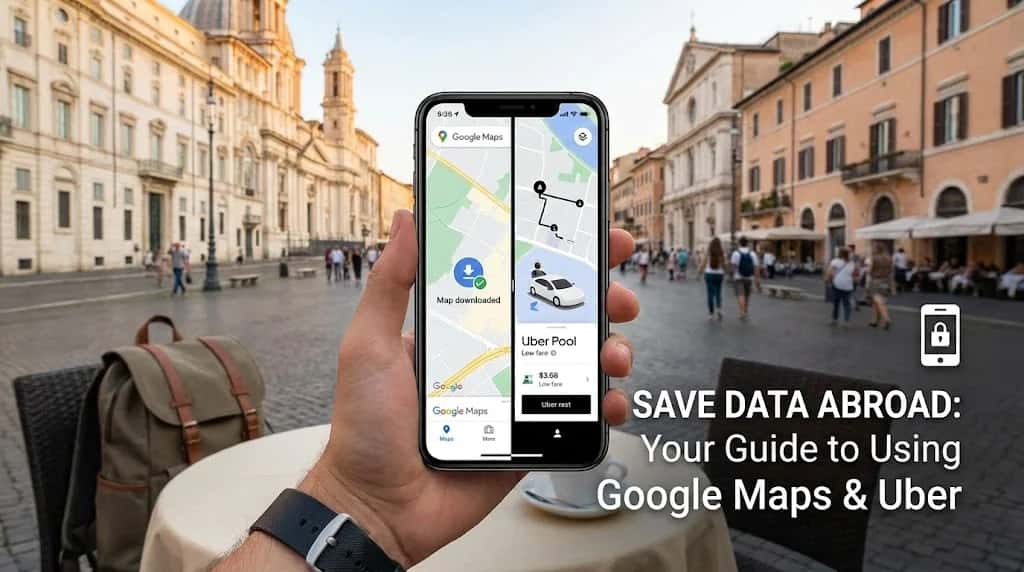 How-to & Guides
How to Save Data Abroad: Your Guide to Using Google Maps & Uber
Don't let data roaming charges ruin your trip. Our expert guide shows you how to use Google Maps and Uber abroad while saving data with offline maps, smart strategies, and travel eSIMs.
Read the guide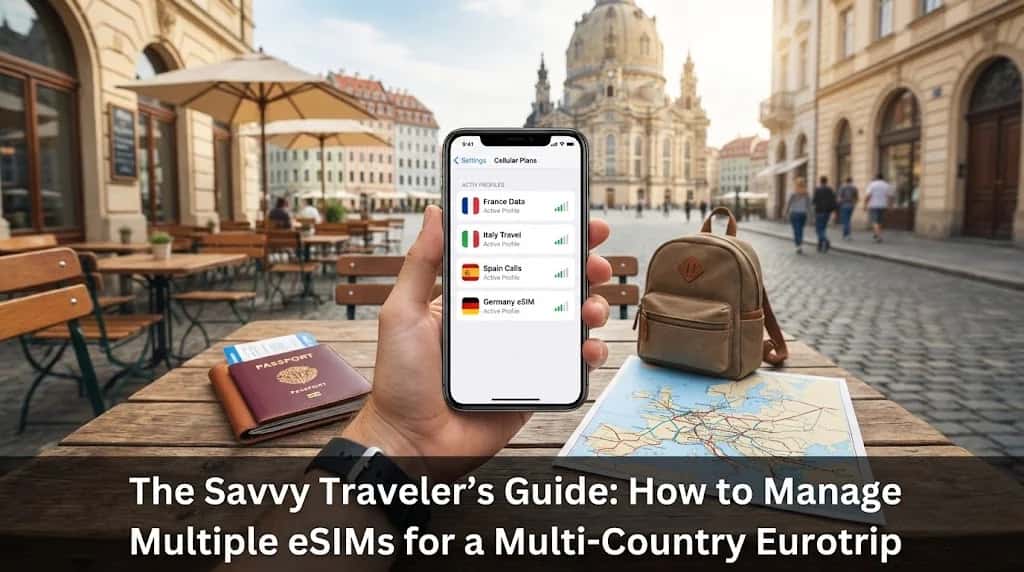 How-to & Guides
The Savvy Traveler's Guide: How to Manage Multiple eSIMs for a Multi-Country Eurotrip
Planning a multi-country Eurotrip? Our expert guide shows you how to strategically manage multiple eSIMs for seamless, affordable data from Paris to Prague.
Read the guide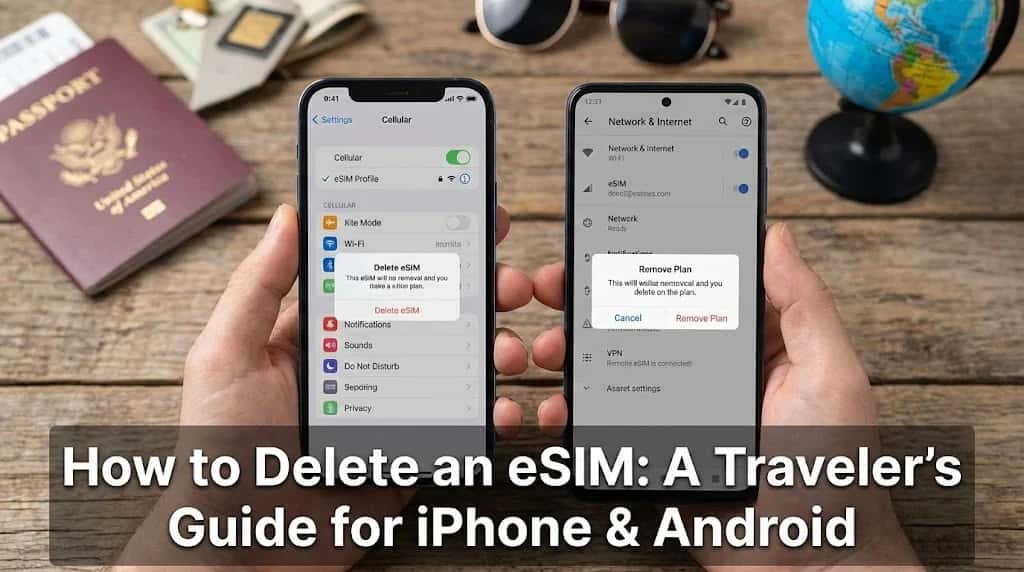 How-to & Guides
How to Delete an eSIM: A Traveler's Guide for iPhone & Android
Keep your phone organized by learning how to delete an eSIM after your trip. Our step-by-step guide for iPhone and Android makes travel eSIM management simple.
Read the guide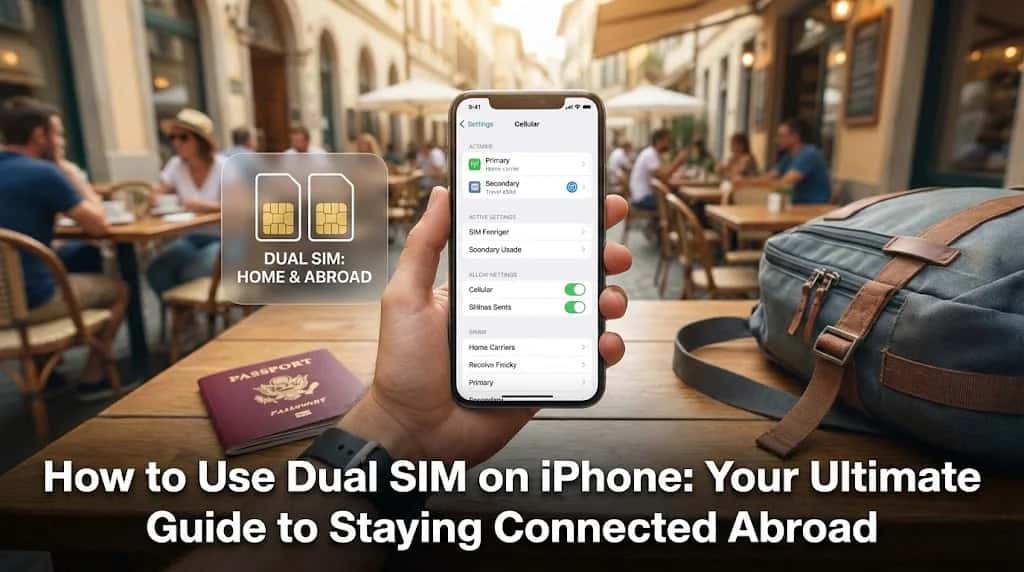 How-to & Guides
How to Use Dual SIM on iPhone: Your Ultimate Guide to Staying Connected Abroad
Unlock your iPhone's full potential for travel. This guide provides step-by-step instructions on how to use dual SIM to make calls on your home number while using affordable data from a travel eSIM abroad.
Read the guide
Germany: Popular cities
City-specific connectivity guides


Nearby Countries
Check coverage for every stop on your trip.


