TIM Tourist SIM: What It Actually Is in 2026
Let's cut through the marketing fluff. The TIM Tourist SIM, or often simply a prepaid TIM plan marketed to tourists, is basically a short-term data, call, and SMS package designed for visitors to Italy. In 2026, these packages typically offer a set amount of data, usually between 50GB and unlimited, along with some domestic and international minutes, valid for 30 days. You're looking at prices ranging from around €25 to €40, depending on the current promotions and where you buy it. (Yes, those airport booths always charge more, we'll get to that.)
The main draw is that it's supposed to be plug-and-play, offering peace of mind compared to trying to find free Wi-Fi everywhere. For someone like me, who relies on a stable connection for client calls and uploading blog posts from places like the Combo Firenze co-working space, a reliable local SIM is non-negotiable. I've been burned too many times by hotel Wi-Fi that flakes out just when you need it most. Plus, some local apps, like booking specific regional train tickets or even some food delivery services, sometimes act up with non-Italian numbers. It's not as strict as, say, Brazil's banking apps that absolutely demand a local CPF and SIM, but it can be an annoyance.
What Do You Get, Exactly?
Most TIM Tourist SIM packages in 2026 bundle a few key things:
- Data: This is the big one. Typically, you'll find plans with 50GB, 100GB, or even advertised as 'unlimited.' Be wary of 'unlimited' claims. Often, there's a fair usage policy that throttles you after a certain threshold (e.g., 200GB), which is still plenty for most travelers, but not truly unlimited in the way T-Mobile might offer at home.
- Local Calls & SMS: Usually a generous allowance, sometimes unlimited, for calls and texts within Italy. Handy for calling your Airbnb host or a local restaurant.
- International Calls: Some plans include a small bundle of international minutes to select countries, often including the US, UK, and other major European nations. Always double-check the included countries if this is important to you.
- EU Roaming: By EU law, a portion of your data and calls will be usable in other EU countries without extra charge. This is a huge plus if you're hopping across borders, say, into France or Austria, after your Italian stint.
Remember, these packages are specifically tailored for tourists, so they don't require the same long-term residency verification that a standard contract SIM would. This is crucial for anyone on a short-term Schengen visa, which usually limits your stay to 90 days out of 180. You won't be setting up a full-blown Italian bank account that needs a local phone number, which is a relief.

Where to Buy It, and Where to Avoid the Scams
This is where things get tricky. The convenience of buying a SIM right after landing at Leonardo da Vinci-Fiumicino Airport (FCO) is tempting, but it often comes with a hefty 'convenience fee.' I've seen airport kiosks charge up to €60 for a plan that costs €30 in a city center store. My advice, honed over years of dealing with airport markups: avoid it if you can.
Best Places to Buy a TIM SIM
- Official TIM Stores (Recommended): This is your safest bet. You'll find TIM stores in almost every major Italian city, often in city centers, shopping malls, and near train stations. The staff are usually helpful, speak some English, and can guide you through the process. You'll pay the standard price, and they'll handle the activation and registration. Just look for the distinctive blue TIM logo.
- Authorized Resellers: Smaller phone shops or electronics stores might also sell TIM SIMs. While generally reliable, always ensure they are an authorized reseller to avoid activation issues or inflated prices.
- Tabaccherie (Tobacco Shops): In smaller towns, some tabaccherie (identified by a white 'T' on a black or blue sign) might sell basic top-ups or even SIM cards. However, they're less likely to offer the full tourist packages or provide extensive setup assistance. This is more of a last resort if you're in a remote area.
What to Bring When Buying
You absolutely need your passport. Italian law requires all SIM card users to register their identity. They'll scan your passport and sometimes take a photo. This is standard procedure, so don't be alarmed. Also, have some cash or a credit card ready. While most places accept cards, a small, independent shop might prefer cash.
I remember one time in Naples, trying to get a SIM, and the small shop insisted on taking a photocopy of my passport. Turns out their scanner was broken, and they just needed it for their records. Always allow a bit of extra time for this process, it's rarely as quick as buying a coffee.
Activating Your TIM SIM: A Step-by-Step Reality Check
Getting your TIM SIM up and running isn't always instant, especially if you're used to the seamless experience of popping in a new eSIM. There are a few hoops to jump through, but knowing them beforehand saves a lot of frustration.
The Process:
- Purchase & Registration: As mentioned, this is done at the store. They'll insert the SIM into your phone to check compatibility and register it with your passport.
- Wait for Activation: This is the part that catches people off guard. Activation isn't always immediate. It can take anywhere from a few minutes to a few hours, sometimes even overnight. You might receive an SMS confirming activation. Don't panic if you don't have service right away.
- APN Settings: Most modern smartphones will automatically configure the Access Point Name (APN) settings. However, if you have no data after activation, you might need to manually set it. For TIM, the APN is usually 'ibox.tim.it' or 'wap.tim.it'. You can find this in your phone's cellular settings (e.g., iPhone: Settings > Cellular > Cellular Data Network).
- Top-Ups (Ricarica): If your plan expires or you run out of data, you'll need to 'ricarica' (top-up) your SIM. You can do this at TIM stores, tabaccherie, or online via the TIM website or app (though the app can be finicky with non-Italian payment methods).
I've seen fellow nomads lose their minds over this, especially when they're trying to hail a taxi to their Airbnb in a new city. That's why I often recommend having a backup plan, like a small, regional eSIM, just for those first few hours. It’s like having a spare tire, you hope you don’t need it, but you’re grateful when you do. For those who prioritize immediate connectivity, especially upon arrival, considering a Turkcell eSIM Tourist for Turkey or a generic European eSIM can bridge that gap.
Data Coverage and Speeds: The Unvarnished Truth
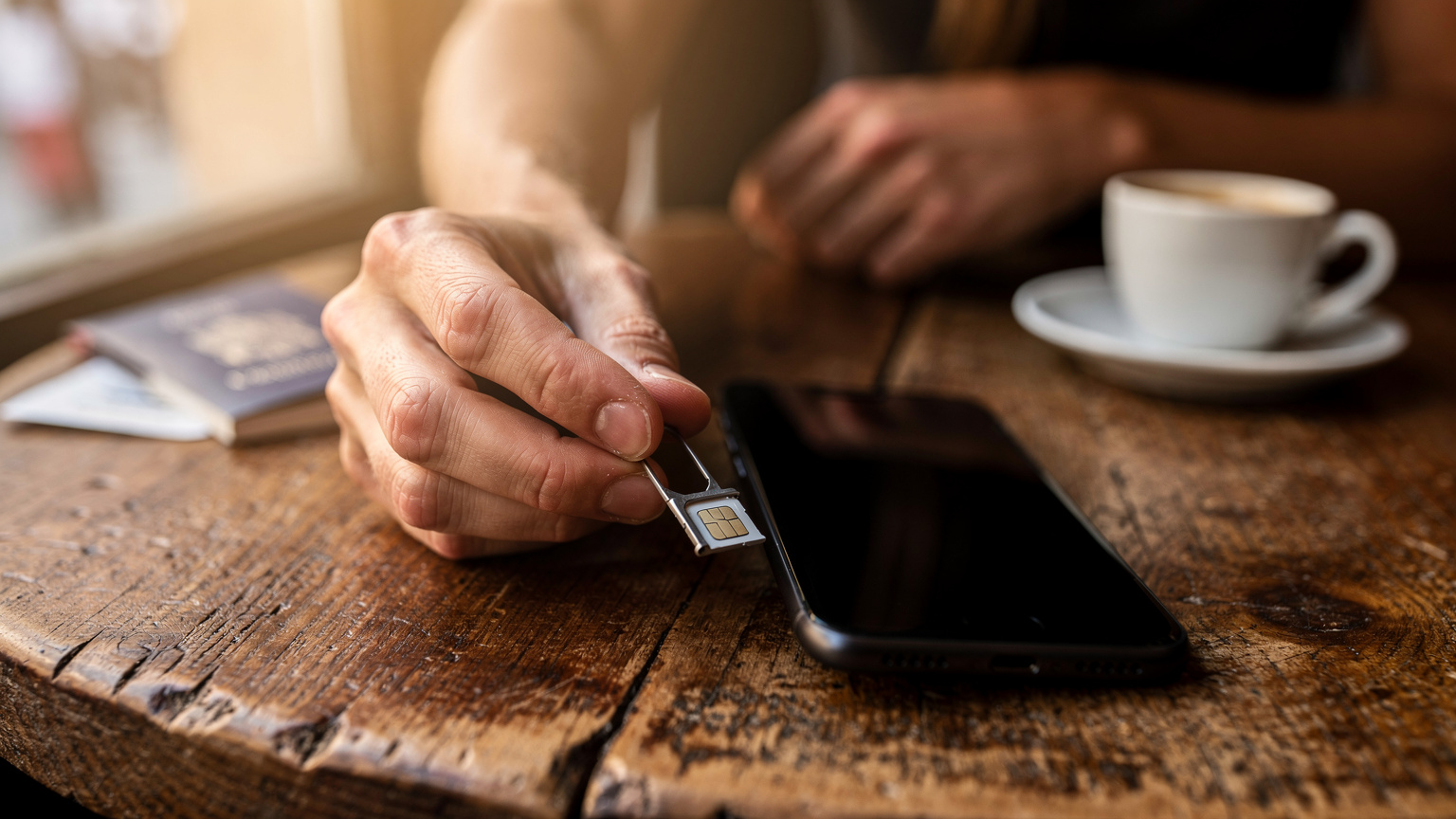
TIM generally has excellent coverage across Italy, especially in urban areas and along major transportation routes. You'll find strong 4G LTE signals in cities like Rome, Milan, Florence, and Venice. Even in smaller towns and rural areas, TIM's network is usually robust. However, there are always dead zones, particularly in mountainous regions or inside very old, thick-walled buildings.
Speeds are typically good enough for streaming, video calls, and heavy browsing. I regularly use TIM's network for video calls with family back home while in Florence, and for uploading large photo files from my camera. In a typical co-working space like Impact Hub in Milan, where I spent a month last year, I found TIM's speeds comparable to the fiber optic Wi-Fi, often hitting 80-100 Mbps download. In Palermo, however, in an old apartment in Kalsa, it was a different story, sometimes dropping to 20 Mbps inside.
I distinctly remember a Thanksgiving trip where I tried to video call my family from a train between Bologna and Padua. The signal was patchy in some tunnels, but overall, it held up well enough for a decent chat. It was a far cry from the frustration of trying to stream anything with my old T-Mobile day pass, which always seemed to throttle me just when I needed it most.
The main issue isn't usually the speed itself, but consistency. Network congestion can happen, especially in very tourist-heavy areas or during major events. Think about trying to use your phone at Glastonbury or Tomorrowland, and you get the idea. For situations where network congestion is a real concern, especially at festivals, dedicated eSIM GPS tech can sometimes provide a more stable connection for tracking or specific data needs.
TIM vs. Vodafone vs. WindTre: Who Wins for Long Stays?
Italy has three main mobile operators: TIM, Vodafone, and WindTre. Each has its strengths and weaknesses, and what's 'best' often depends on your specific needs and travel patterns. For long-stay digital nomads, consistency and value are paramount.
Comparison Table: Italian Mobile Operators (2026 Tourist Plans)
| Operator | Coverage (4G/5G) | Typical Tourist Plan (30 days) | Pros | Cons |
|---|---|---|---|---|
| TIM | Excellent 4G, Good 5G in major cities | 50GB-100GB data, unlimited local calls, some international mins (€25-€40) | Broadest 4G coverage, good speeds, reliable in most areas. Often offers good EU roaming allowances. | Can be slightly more expensive than WindTre. Activation can take a few hours. |
| Vodafone IT | Excellent 4G, Strong 5G in major cities | 50GB-80GB data, unlimited local calls, competitive international mins (€30-€45) | Often considered premium for speed and reliability, especially in urban centers. Strong 5G network. | Usually the most expensive. Tourist plans might offer less data for the price. |
| WindTre | Good 4G, Expanding 5G | 80GB-Unlimited data, unlimited local calls (€20-€35) | Often the cheapest option, offering generous data bundles for the price. Good value. | Coverage can be spottier in very rural or mountainous areas compared to TIM/Vodafone. Customer service can be less responsive. |
From my experience, if you're planning to stick to cities and well-traveled routes, any of the three will likely serve you well. TIM and Vodafone generally offer the most reliable connections, with Vodafone often having a slight edge on raw speed in densely populated areas. However, for sheer value, WindTre can be very appealing if your budget is tight. I’ve known nomads who’ve used WindTre for a month in Palermo, paying around €25 for a generous data plan, while their rent in the Kalsa neighborhood was about €600-€800 for a furnished studio, demonstrating how network costs fit into the overall cost of living.
For anyone needing consistent connectivity for work, I'd generally lean towards TIM or Vodafone. The slight price difference is usually worth the peace of mind. I once had a WindTre SIM that struggled in the Apennine mountains while on a hiking trip, making it impossible to coordinate with friends. Not ideal when you're trying to meet up for an Aperol Spritz after a long trek.

eSIM Alternatives to Physical TIM SIMs: A Smarter Move?
This is where my personal preference comes in, especially for longer stays and multi-country trips. While TIM Tourist SIMs are solid, physical SIMs have their downsides: you need to find a store, deal with activation times, and swap cards. For those of us who carry multiple devices or frequently cross borders, eSIMs are a game-changer.
An eSIM (embedded SIM) is a digital SIM that allows you to activate a cellular plan without needing a physical nano-SIM card. Most modern smartphones, including all recent iPhones (since the iPhone XS) and many Android flagships, support eSIM technology. When you buy an eSIM, you typically receive a QR code via email that you scan to activate the plan on your phone. This means you can buy and activate your data plan before you even leave Heathrow, connecting the moment your plane touches down in Italy.
Why eSIMs Often Win for Nomads:
- Instant Activation: No hunting for stores, no waiting for activation. Buy online, scan QR, get connected.
- Dual SIM Functionality: Keep your home T-Mobile SIM active for receiving important texts or calls (though roaming charges apply for calls/SMS), while using your eSIM for data. This is invaluable.
- Flexibility: Easily switch between plans or carriers. If TIM isn't working for you in a specific region, you can quickly buy another eSIM from a different provider.
- Multi-Country Plans: Many eSIM providers offer regional or global plans that cover Italy and other European countries, perfect for a Thanksgiving trip that might include Italy and then a quick hop to Germany.
For Italy specifically, many providers offer eSIMs that use the underlying networks of TIM, Vodafone, or WindTre. So, you're getting the same network quality, but with the convenience of a digital setup. I've personally used Cellesim's European eSIMs across multiple countries, and the ability to land and immediately have data for Google Maps or ordering a taxi is priceless. It removes that initial travel friction that can really set the tone for your arrival.
For a detailed breakdown of whether a specific eSIM provider offers good value, you might want to check out an honest take on Holafly discount codes 2026: Is it worth it, or is there a cheaper eSIM?, which goes into the real costs and alternatives.
The Bottom Line: Is TIM Tourist SIM Right for You?
The TIM Tourist SIM is a perfectly viable option for travelers to Italy in 2026, especially if you're staying for a week or more and want a local number. It offers good coverage and decent data allowances at a reasonable price, provided you buy it from an official store in a city center.
However, for the true digital nomad, or anyone who values immediate connectivity and flexibility, an eSIM is often the smarter choice. The ability to activate before you land, avoid airport queues, and retain your home SIM for authentication codes (some apps, like specific Indian Aadhaar-linked services, absolutely need your home number) makes it a more streamlined experience. Plus, for those of us who've had to contend with the dreaded carrier day-pass karşılaştırması back home, a dedicated local or regional data plan is almost always more cost-effective.
Ultimately, whether you choose a physical TIM SIM or an eSIM, the goal is reliable, affordable data. Do your research, know your options, and don't let connectivity be a source of stress on your Italian adventure. Safe travels.
Frequently Asked Questions
What identification do I need to buy a TIM Tourist SIM in Italy in 2026?
You absolutely need your passport to purchase and register a TIM Tourist SIM in Italy. Italian law requires all SIM card users to register their identity. They will scan your passport and keep a record.
How long does it take to activate a TIM Tourist SIM?
Activation can take anywhere from a few minutes to several hours, sometimes even overnight. While often quick, it's not always immediate, so plan accordingly and don't expect instant service right after purchase.
Can I use my TIM Tourist SIM in other European countries?
Yes, by EU law, a portion of your TIM Tourist SIM data and calls will be usable in other EU countries without extra roaming charges. Always check the specific allowance included with your package.
Is it cheaper to buy a TIM Tourist SIM at the airport or in the city?
It is almost always cheaper to buy a TIM Tourist SIM from an official TIM store in a city center. Airport kiosks typically charge a significant premium for the convenience, sometimes almost double the price.
What if I run out of data on my TIM Tourist SIM?
If you run out of data or your plan expires, you'll need to 'ricarica' (top-up) your SIM. You can do this at any official TIM store, many tabaccherie (tobacco shops), or online via the TIM website or app, though the app can be tricky with non-Italian payment methods.
Does the TIM Tourist SIM offer 5G access in 2026?
Yes, TIM offers 5G access in many major Italian cities and expanding areas in 2026. If your phone supports 5G and you're in a covered zone, you should be able to access the faster network speeds with a compatible TIM plan.